197 kingdoms, empires, republics and short-lived states from Europe that no
longer exist, with the flags they flew and the story behind each one.
1920–1992
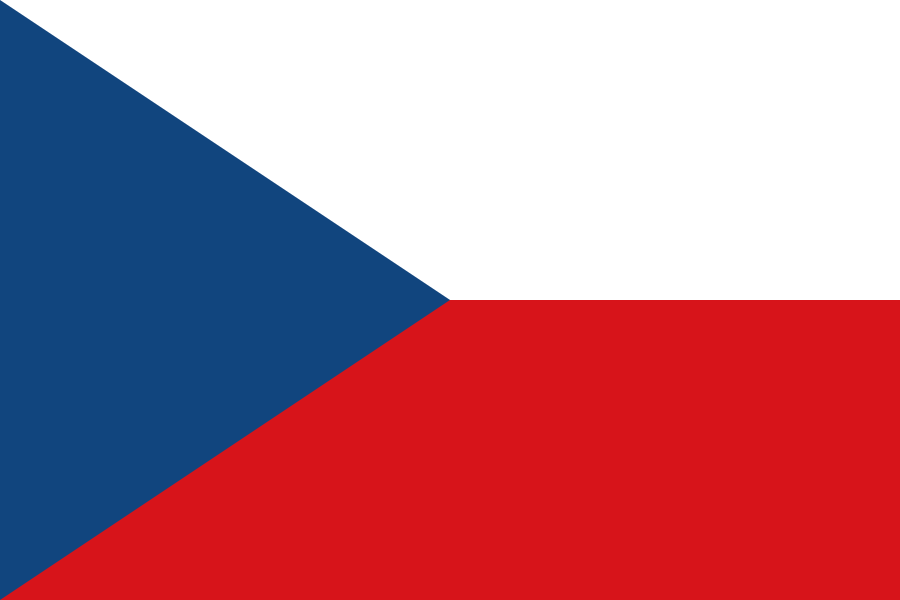
Czechoslovakia
Adopted in 1920 with a blue hoist wedge to tell it apart from Poland's flag. Czechia kept it after the 1993 split, despite a clause meant to bar successor states from reusing it.
Today part of: Czech Republic, Slovakia
1871–1918
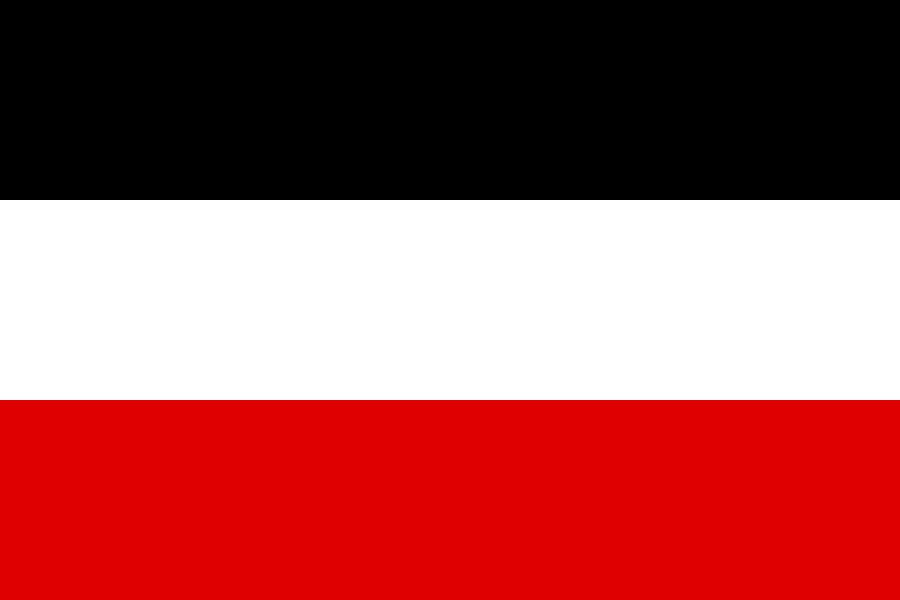
German Empire
The black-white-red tricolor combined Prussia's black-and-white with the Hanseatic red-and-white. It was officially adopted as the national flag only in 1892.
Today part of: Germany
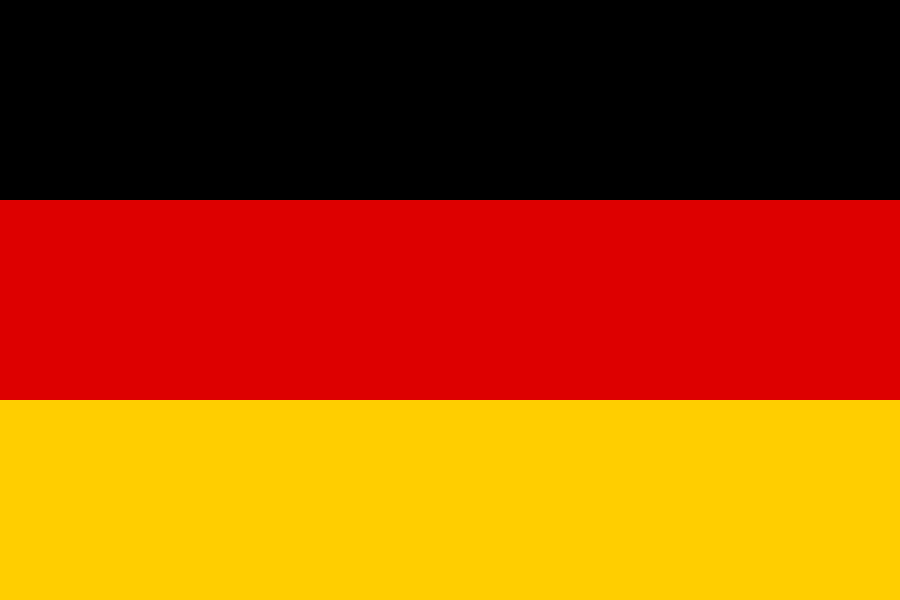
1919–1933
Weimar Republic
The black-red-gold tricolor revived the colors of the 1848 liberal revolution, deliberately tying the new democracy to earlier anti-autocratic movements.
Today part of: Germany
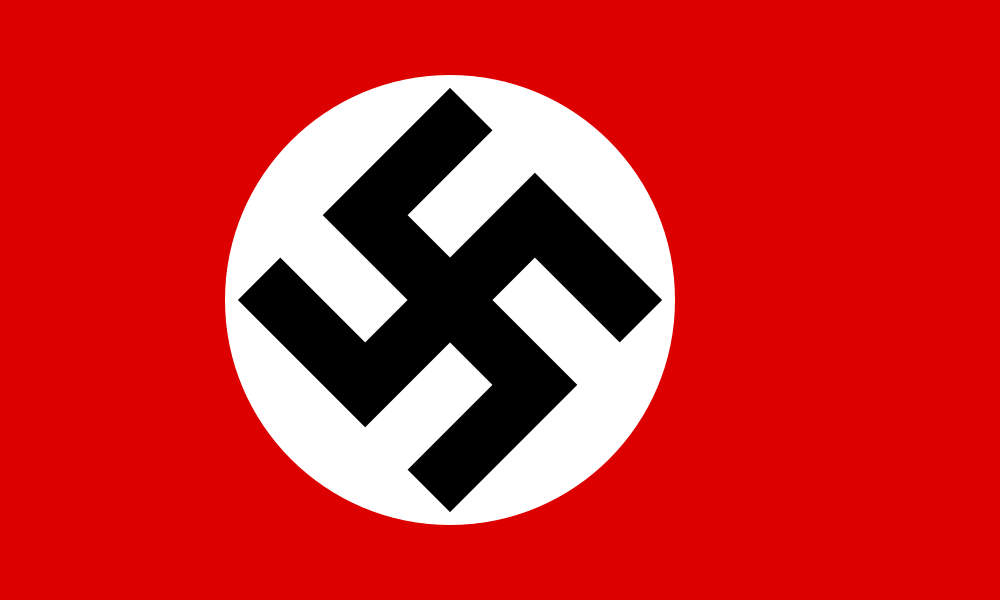
1935–1945
Nazi Germany
The swastika flag of the Nazi regime, which started the Second World War in Europe and carried out the Holocaust, became Germany's sole national flag in 1935. It was banned after the regime's defeat in 1945; its public display is banned in Germany outside education, art and research, and the country returned to the black-red-gold of the Weimar era.
Today part of: Germany
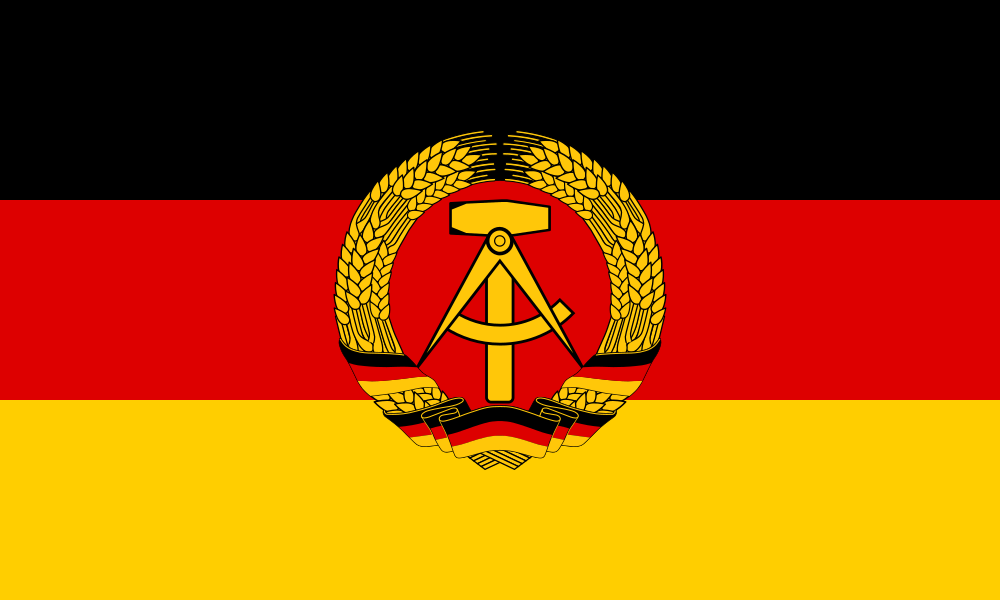
1959–1990
East Germany (GDR)
The hammer-and-compass-in-wheat emblem represented workers, intelligentsia, and farmers. Before 1959 East and West Germany flew the identical plain tricolor.
Today part of: Germany
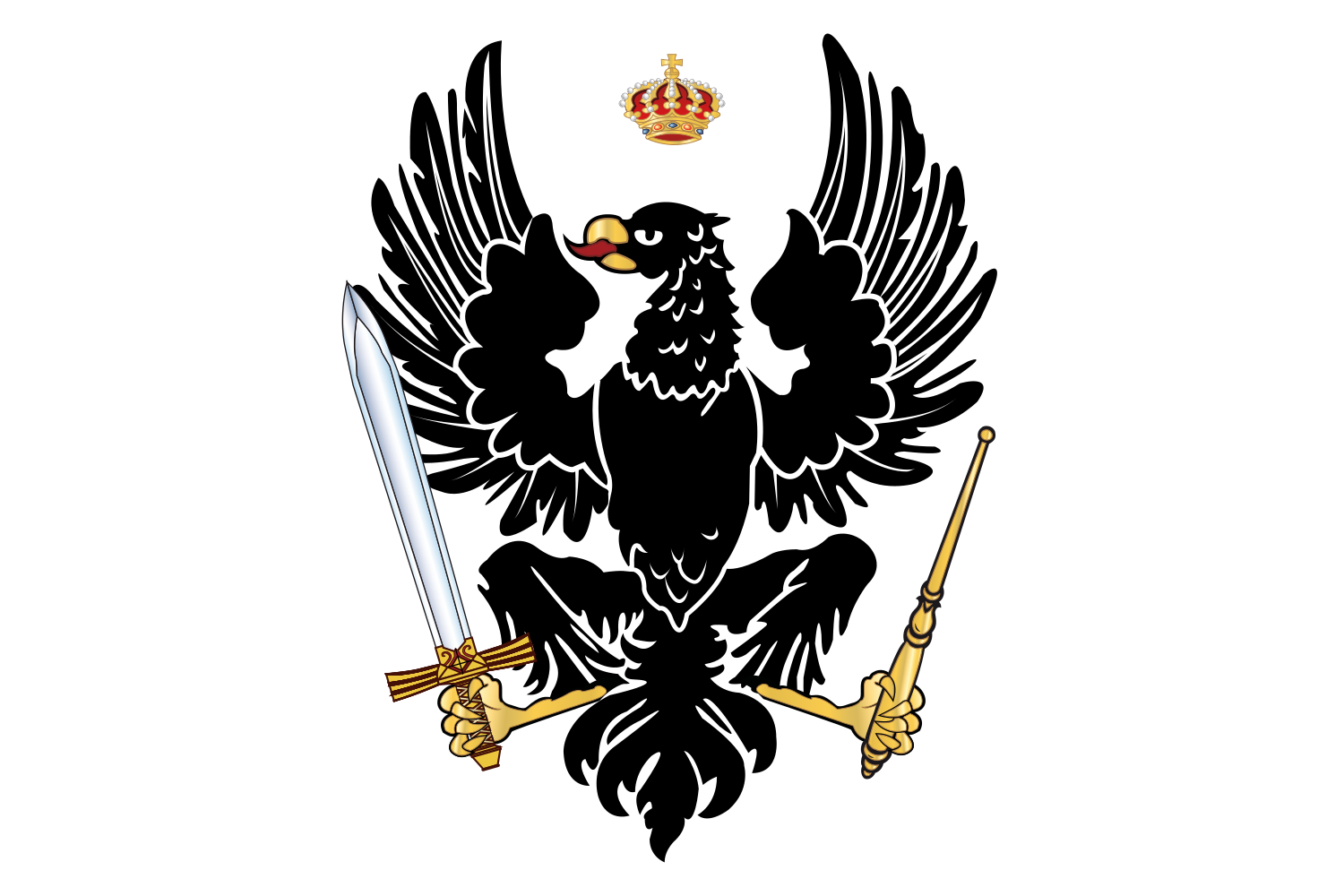
1701–1918
Kingdom of Prussia
The black eagle on a white field derives from the Teutonic Knights. Prussia's black-and-white later supplied two of the three colors of the German Empire's flag.
Today part of: Germany
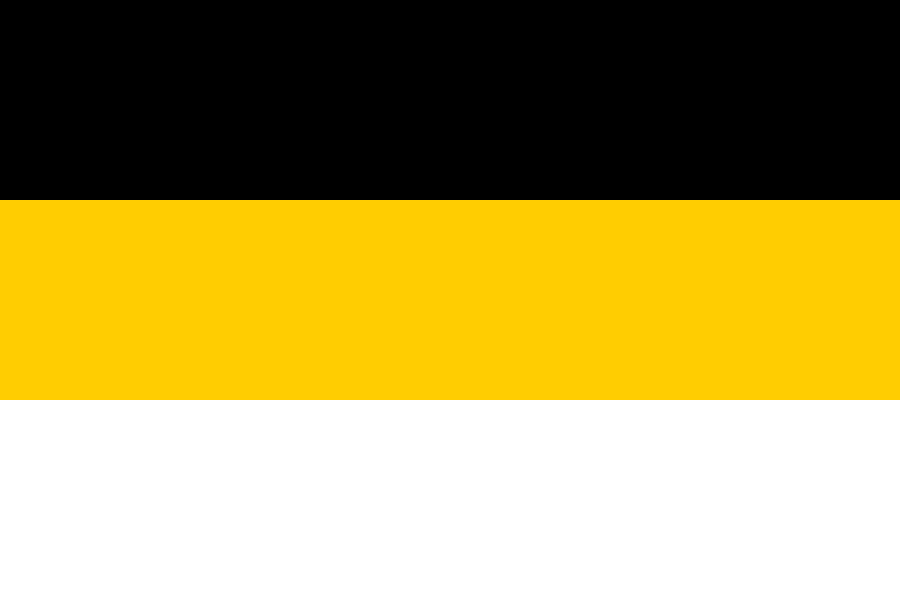
1858–1896
Russian Empire
The black-yellow-white 'imperial colors' were drawn from the state coat of arms by Alexander II, before Nicholas II demoted them for the white-blue-red tricolor.
Today part of: Finland, Ukraine, Belarus
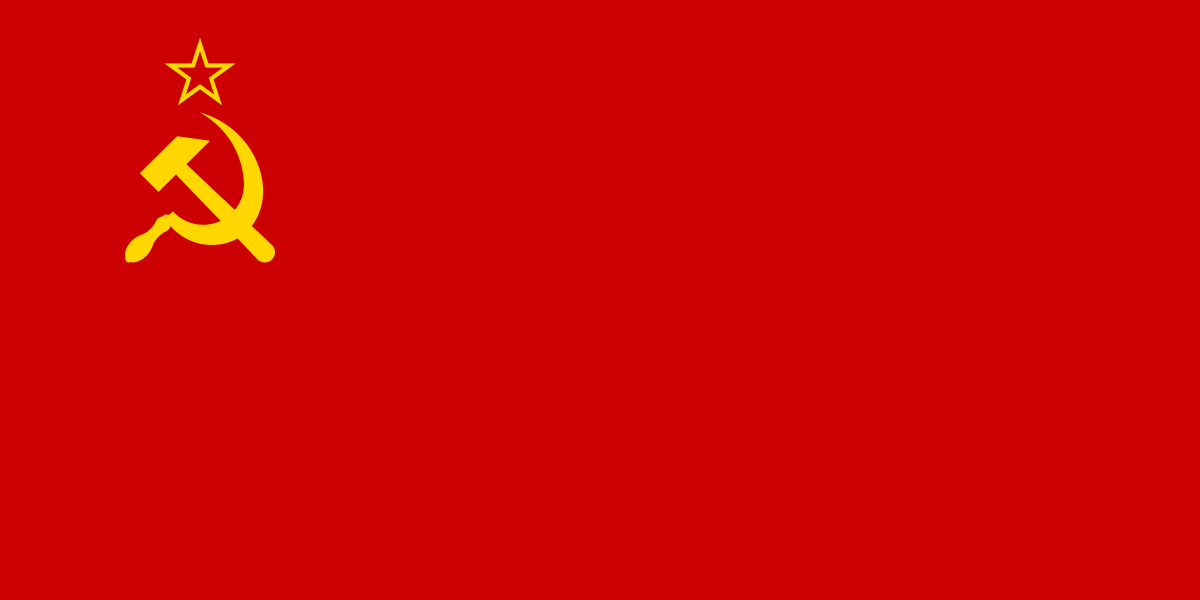
1922–1991
Soviet Union
The gold hammer and sickle beneath a red star stood for the worker-peasant alliance. The exact shade and proportions were fixed by Soviet law in 1955.
Today part of: Ukraine, Belarus, Moldova, Georgia, Armenia, Azerbaijan, Kazakhstan, Kyrgyzstan, Tajikistan, Turkmenistan, Uzbekistan, Lithuania, Latvia, Estonia
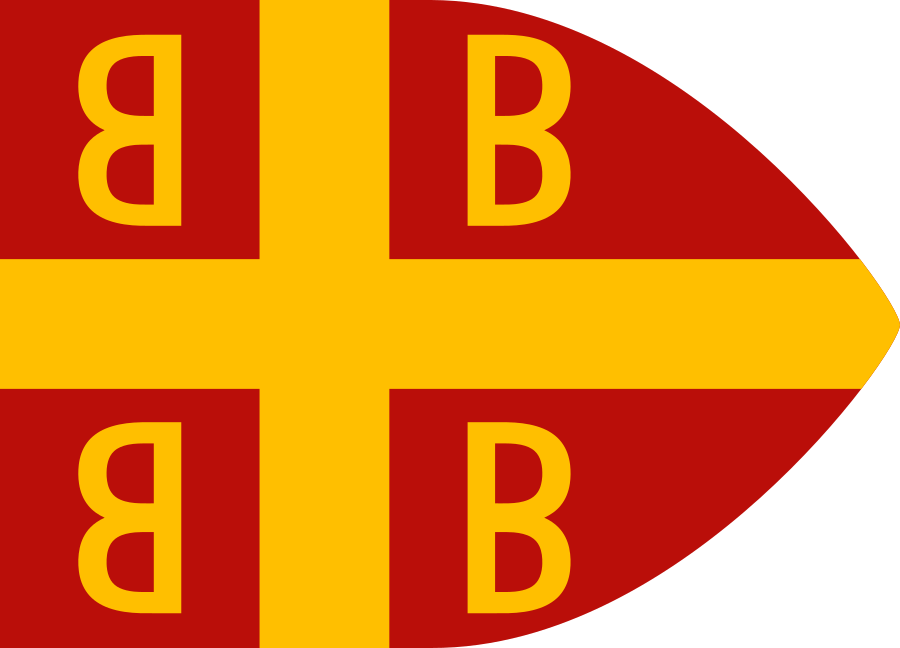
1261–1453
Byzantine Empire
The four gold firesteels (often glossed 'King of Kings, Ruling over Kings') were the emblem of the Palaiologos dynasty, the last imperial house, which fell with Constantinople in 1453.
Today part of: Greece, Turkey
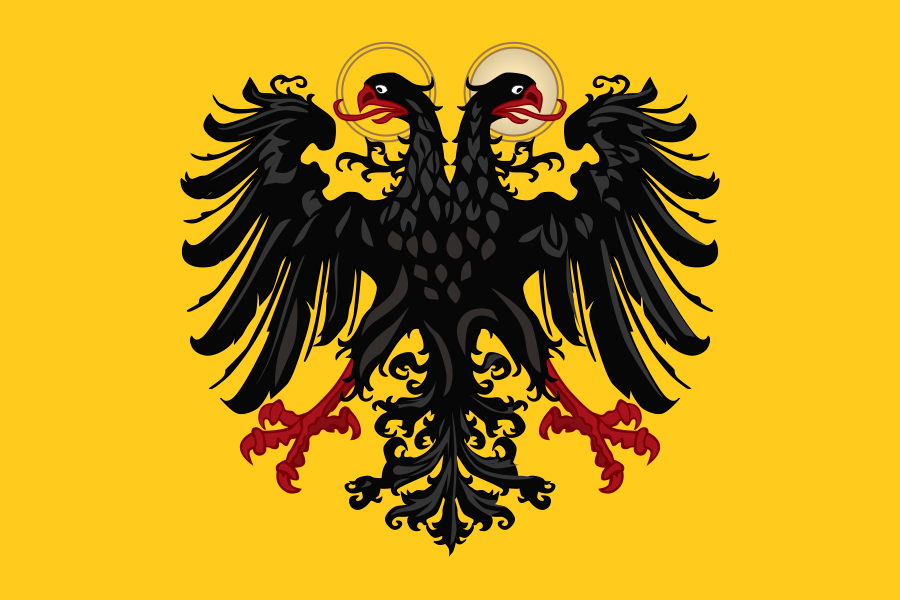
962–1806
Holy Roman Empire
The black double-headed eagle on gold was the Emperor's banner. Its two heads symbolized claimed authority over both the secular and the spiritual realms.
Today part of: Germany
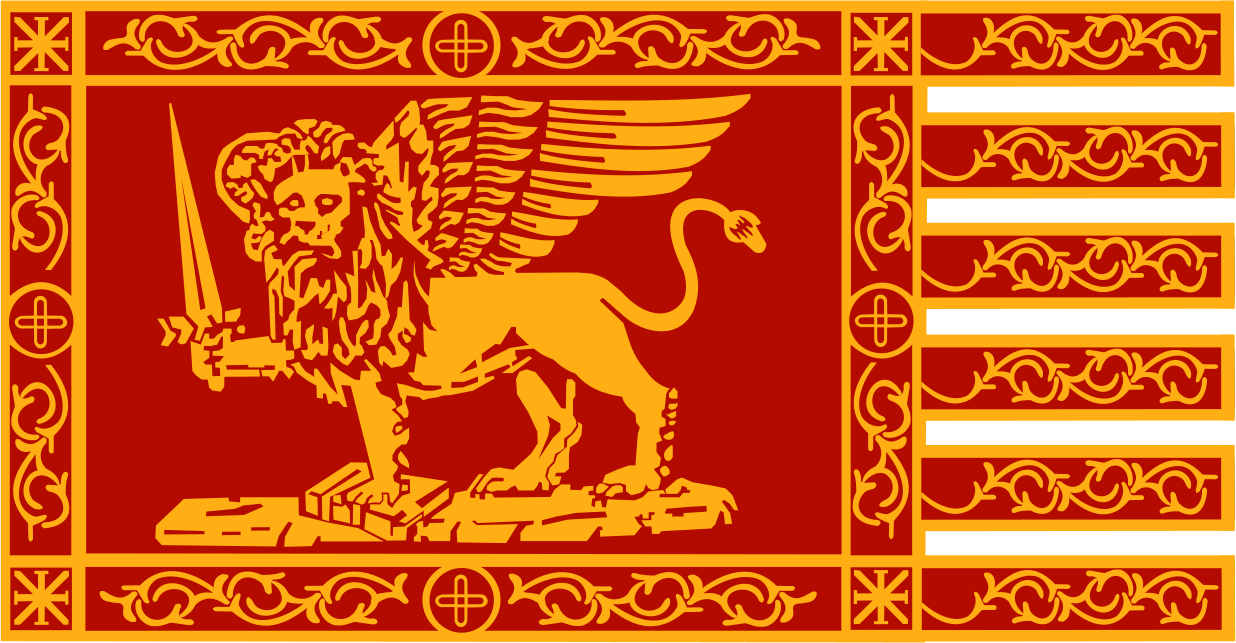
697–1797
Republic of Venice
The golden winged Lion of St Mark holds an open Gospel; by tradition the book was shown open in peacetime and the lion grasped a sword in war.
Today part of: Italy
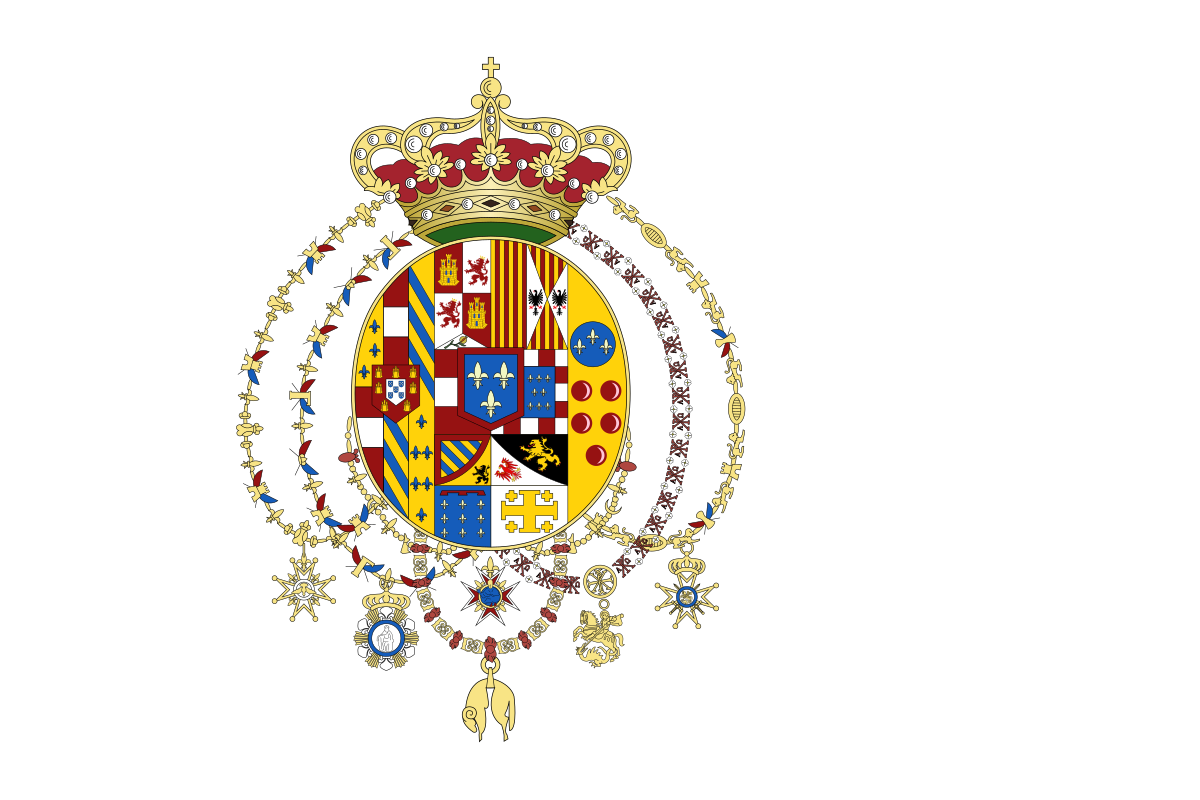
1816–1861
Kingdom of the Two Sicilies
The white Bourbon field carries an elaborate coat of arms of the many southern Italian domains the dynasty ruled, until Garibaldi's forces conquered it in 1860–61.
Today part of: Italy
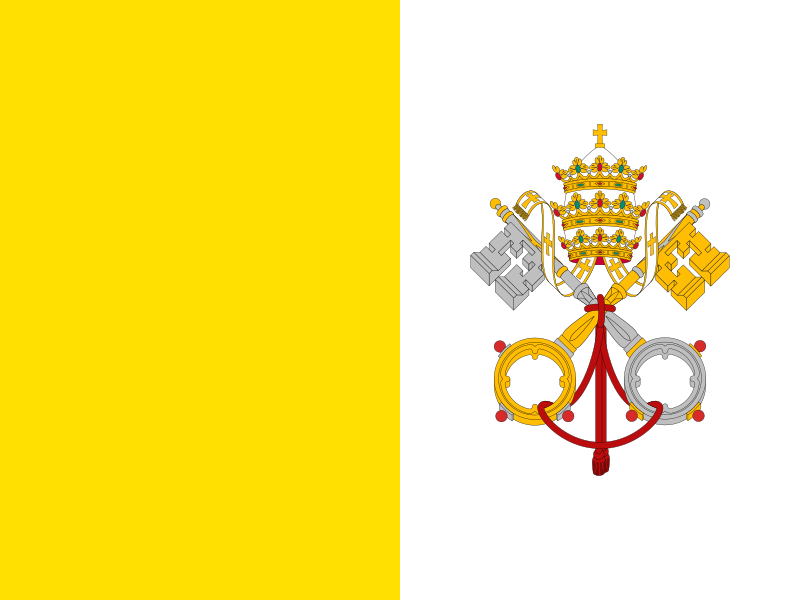
1825–1870
Papal States
The yellow-and-white vertical bicolor with the crossed keys of St Peter beneath the papal tiara is the direct ancestor of today's Vatican City flag.
Today part of: Vatican City
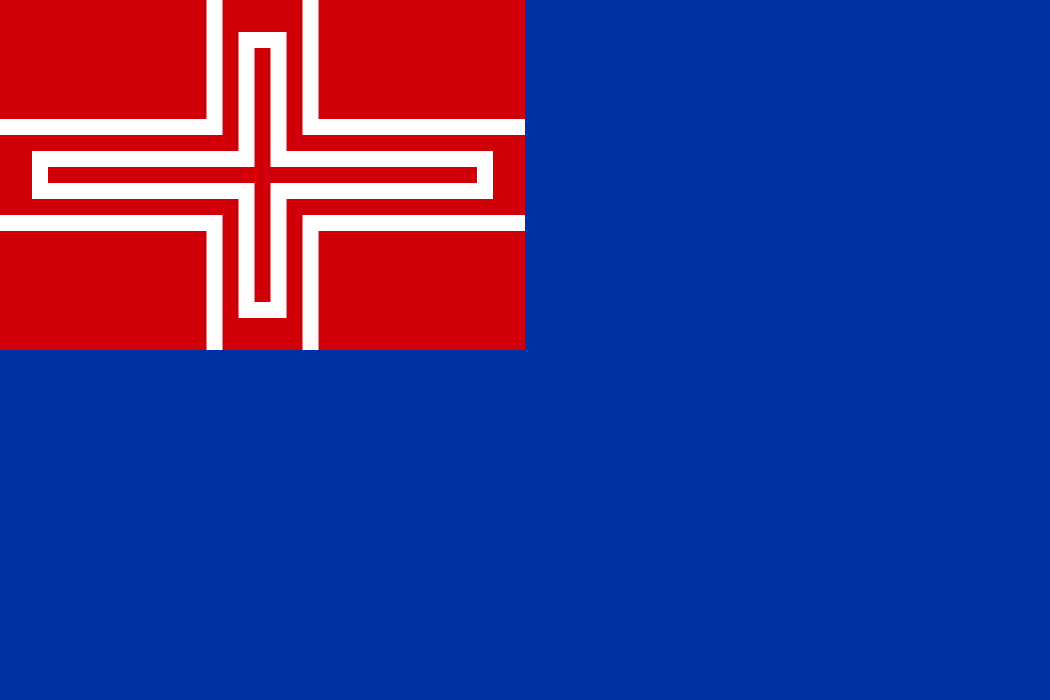
1816–1848
Kingdom of Sardinia
A white field with the red Savoy cross in a blue border. After 1848 Sardinia switched to the tricolor with the Savoy shield, which became the basis of the Kingdom of Italy's flag.
Today part of: Italy
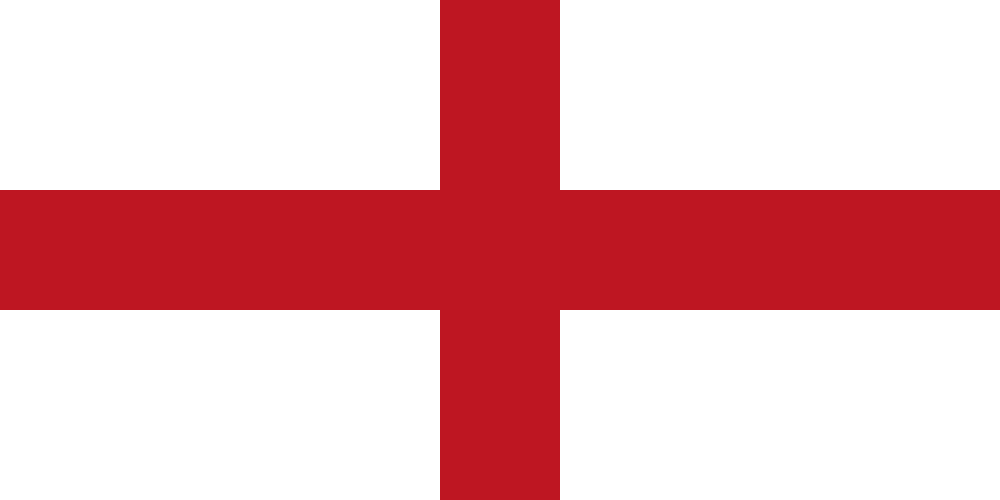
1099–1797
Republic of Genoa
The red cross of St George on white was Genoa's medieval ensign. By one account England paid Genoa in 1190 for the right to fly it for naval protection.
Today part of: Italy
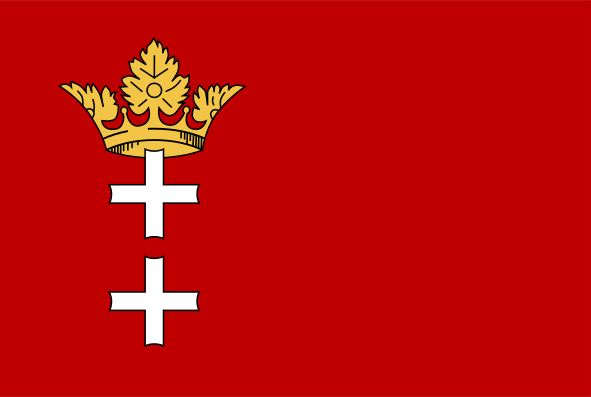
1920–1939
Free City of Danzig
Two white crosses and a gold crown on red, from the city's medieval arms. This League of Nations-administered free city was the flashpoint where World War II began.
Today part of: Poland
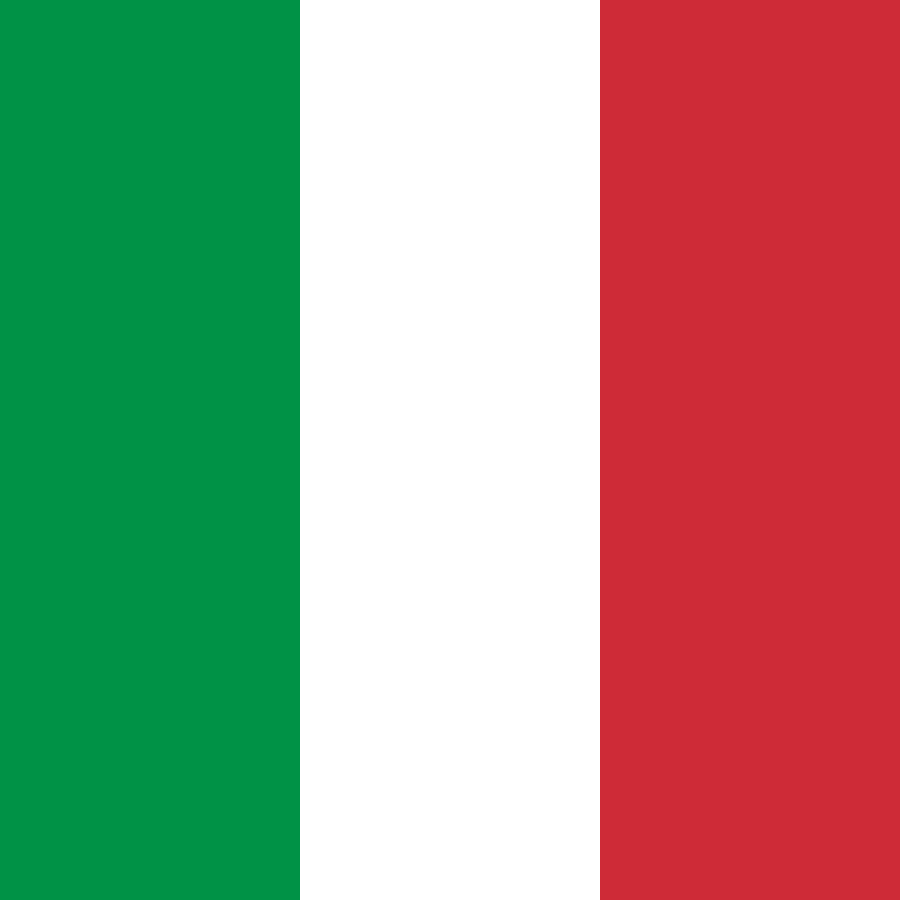
1797–1802
Cisalpine Republic
This Napoleonic sister republic in northern Italy flew a vertical green-white-red tricolor modeled on revolutionary France — a direct forerunner of the modern Italian flag.
Today part of: Italy
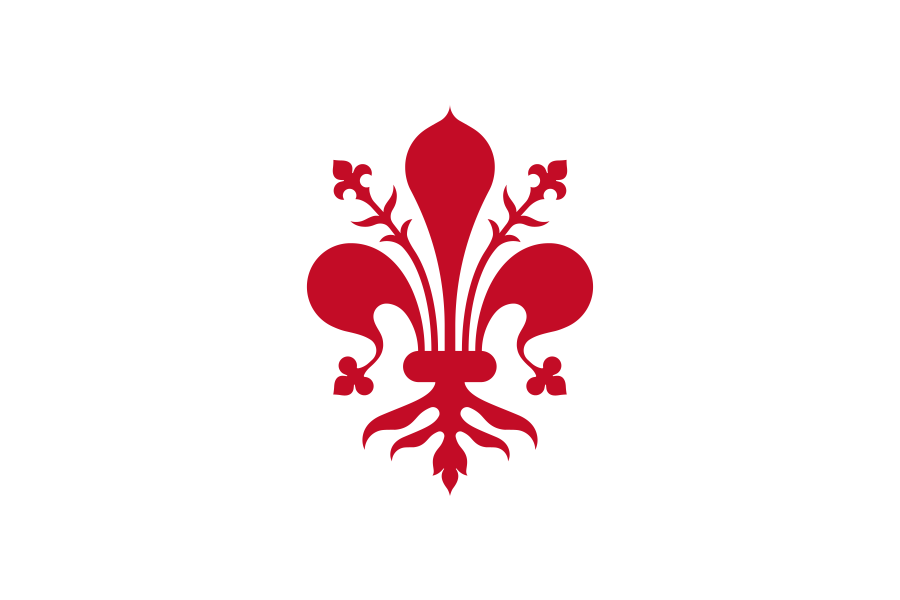
1115–1532
Republic of Florence
The red giglio — a stylized lily — on white was the emblem of the medieval commune. Florence reversed the earlier white-on-red Ghibelline lily to mark its Guelph allegiance.
Today part of: Italy

1125–1555
Republic of Siena
The black-and-white Balzana is said to recall the white and black smoke that rose when Siena's legendary founders Senius and Aschius made sacrifices on the city's hills.
Today part of: Italy
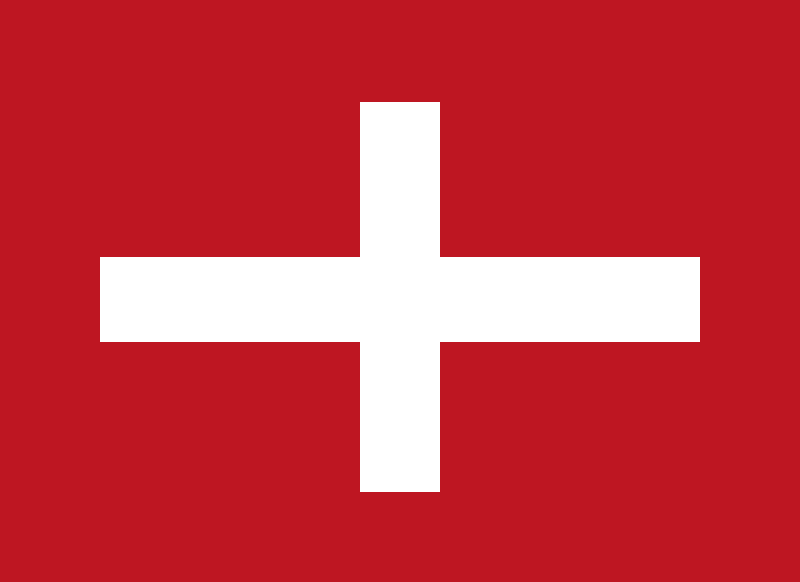
1192–1797
Republic of Noli
One of the smallest and least-known Italian maritime republics, this tiny Ligurian town governed itself for six centuries under the protection of allied Genoa.
Today part of: Italy
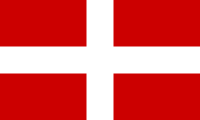
1416–1860
Duchy of Savoy
The white cross on red of the House of Savoy, the dynasty that ruled an Alpine state straddling France and Italy and eventually became the royal house of a united Italy.
Today part of: Italy
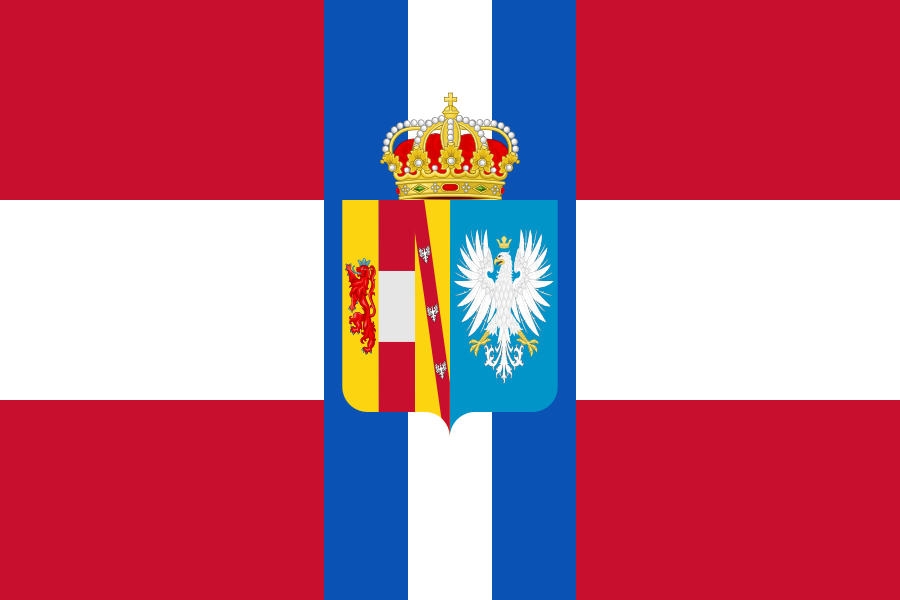
1452–1859
Duchy of Modena and Reggio
Ruled by the Este dynasty and later the Austrian Habsburg-Este line, the duchy flew a tricolour charged with the Este eagle until it was absorbed into unified Italy.
Today part of: Italy
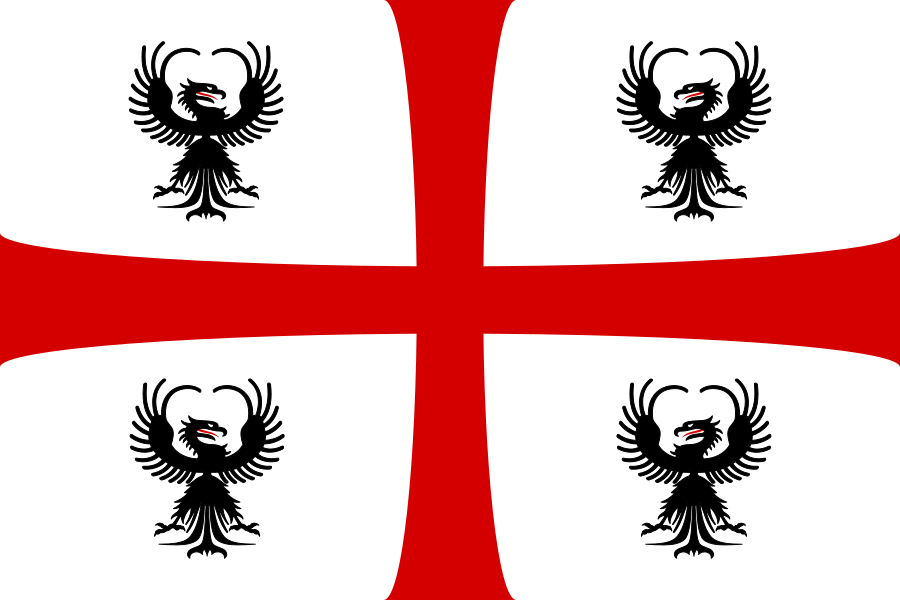
1530–1708
Duchy of Mantua
The Gonzaga dynasty's duchy in the Po plain, a great Renaissance art and music centre, flew a flag quartered with their eagles and lions before passing to Austria.
Today part of: Italy

1471–1598
Duchy of Ferrara
The Este capital and a brilliant Renaissance court; when the last legitimate Este duke died without heirs in 1597, the Pope reclaimed Ferrara for the Papal States.
Today part of: Italy
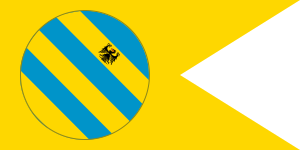
1443–1631
Duchy of Urbino
The Montefeltro and later Della Rovere dukes made Urbino one of the foremost humanist courts of the Renaissance, birthplace of the painter Raphael.
Today part of: Italy

961–1574
Marquisate of Montferrat
A long-lived northern Italian march whose Aleramici marquises led crusades and even briefly held the throne of the Kingdom of Thessalonica.
Today part of: Italy
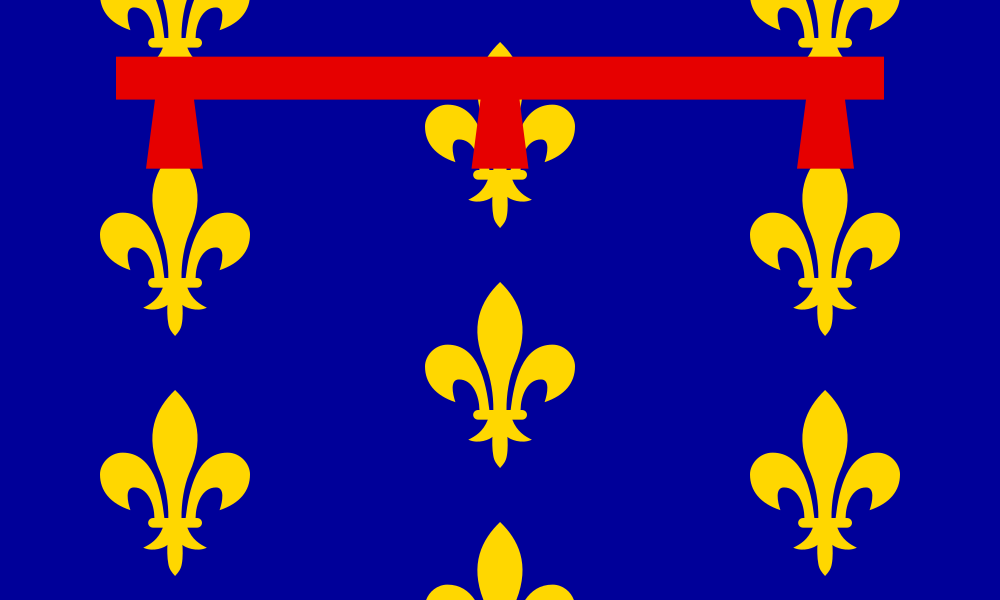
1442–1816
Kingdom of Naples
The independent southern kingdom before its 1816 merger with Sicily; its white flag bore the arms of the successive Aragonese, Spanish, and Bourbon dynasties that ruled it.
Today part of: Italy
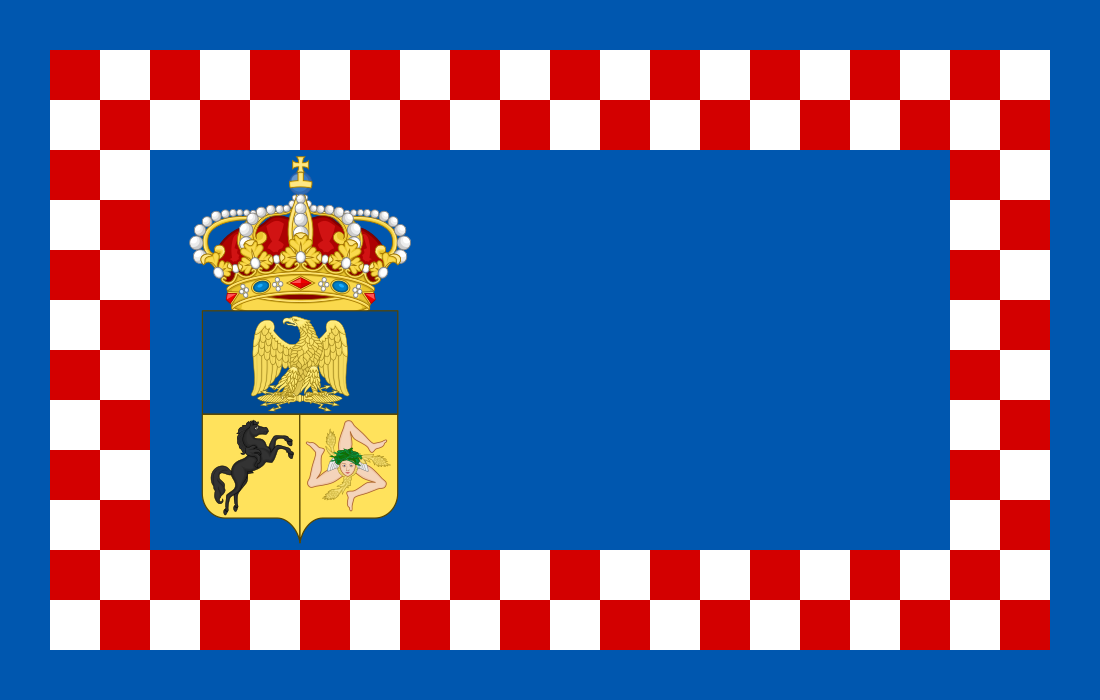
1808–1815
Kingdom of Naples (Napoleonic)
Under Napoleon's marshal Joachim Murat, Naples flew a white field with a red border and a central emblem, before Murat was deposed and executed in 1815.
Today part of: Italy
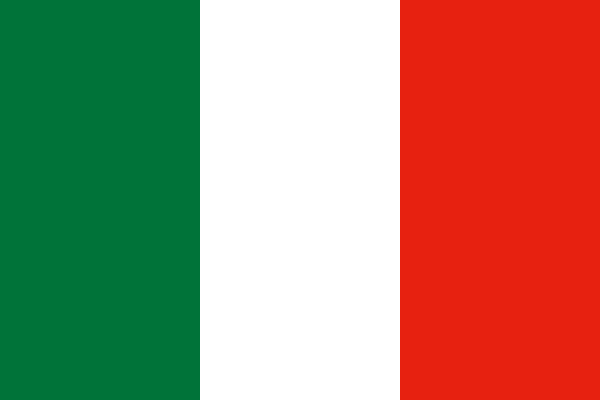
1796–1797
Transpadane Republic
A short-lived Napoleonic sister republic around Milan that flew a vertical green-white-red tricolour, soon merged with the Cispadane Republic to form the Cisalpine Republic.
Today part of: Italy

1798–1799
Roman Republic (1798)
A Napoleonic republic proclaimed after French troops seized Rome and deposed Pope Pius VI; its black-white-red tricolour flew until Neapolitan and Austrian forces restored papal rule.
Today part of: Italy
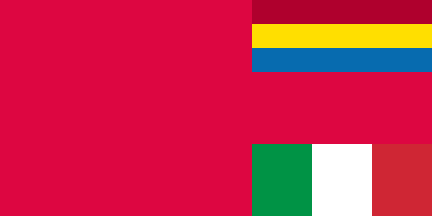
1919–1920
Italian Regency of Carnaro
Poet Gabriele D'Annunzio's quasi-anarchic statelet at Fiume, whose flag bore the constellation of Ursa Major and the motto 'Quis contra nos?' — 'Who is against us?'.
Today part of: Croatia
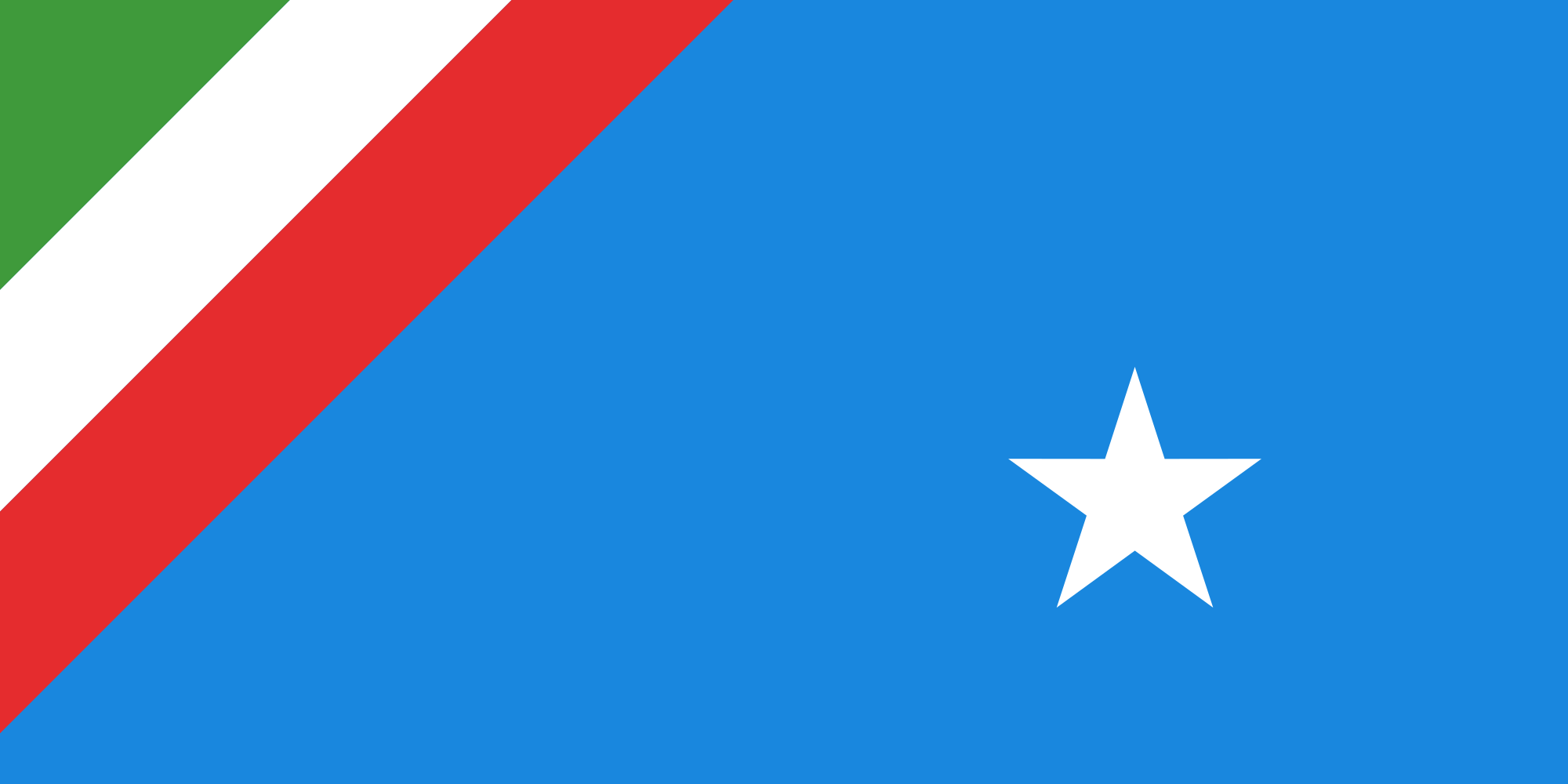
1944
Partisan Republic of Ossola
A free zone liberated by anti-Fascist partisans in the Alps near the Swiss border, self-governing for forty days in 1944 before German and Fascist forces retook it.
Today part of: Italy
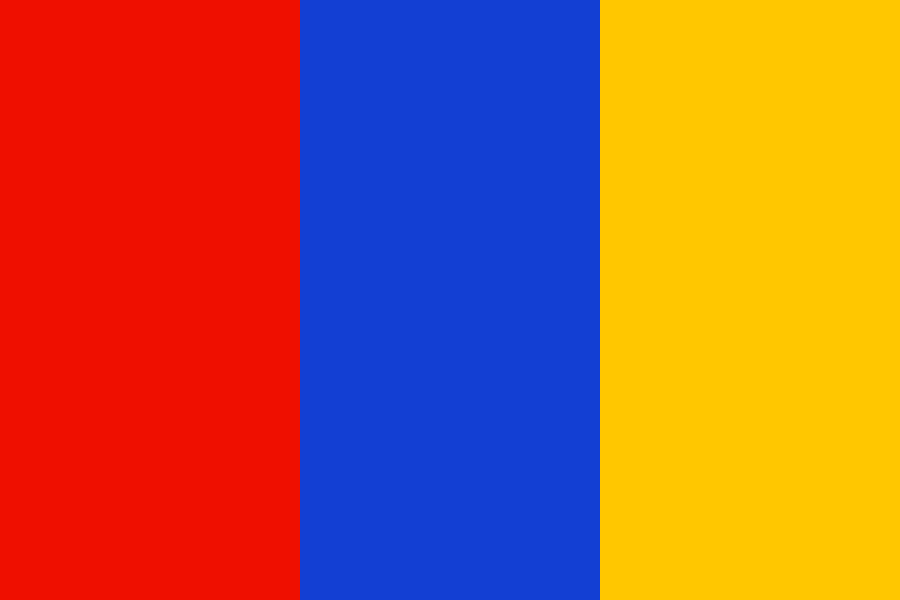
1944
Partisan Republic of Alba
A Piedmontese town held free by partisans for 23 days in 1944, immortalized in Beppe Fenoglio's novel 'I ventitré giorni della città di Alba'.
Today part of: Italy
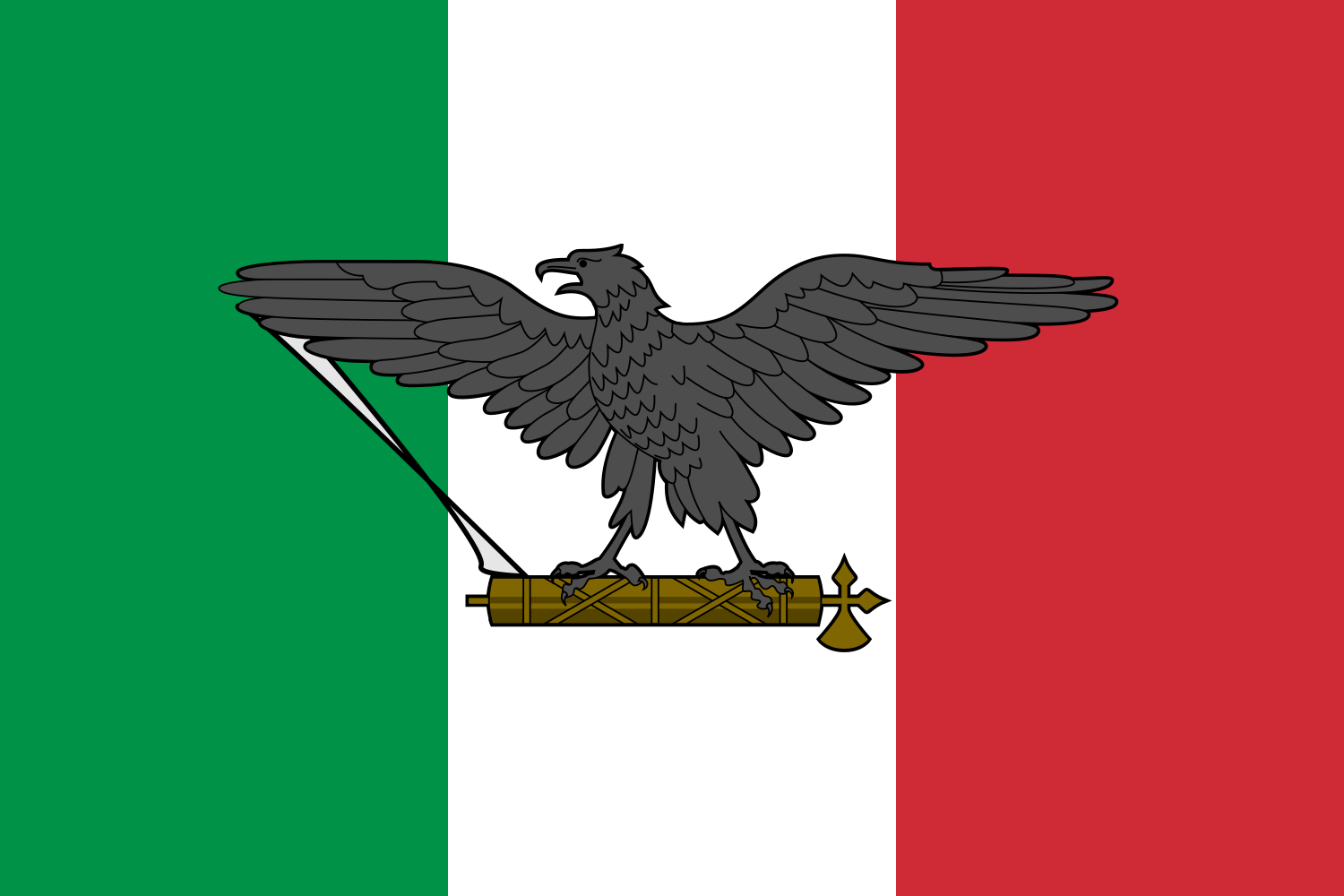
1943–1945
Italian Social Republic
Mussolini's German-backed rump state in northern Italy, often called the Republic of Salò; its war flag added a fasces-clutching eagle to the tricolour.
Today part of: Italy
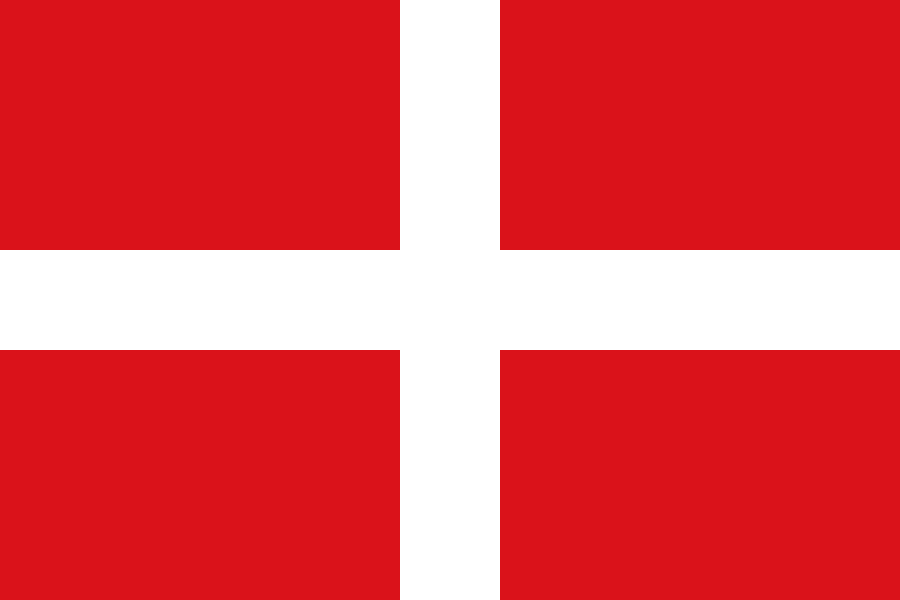
1113–present
Sovereign Military Order of Malta
The white eight-pointed Maltese cross on red is the Knights Hospitaller's 'works' flag; the eight points are traditionally said to represent the eight Beatitudes.
Today part of: Malta
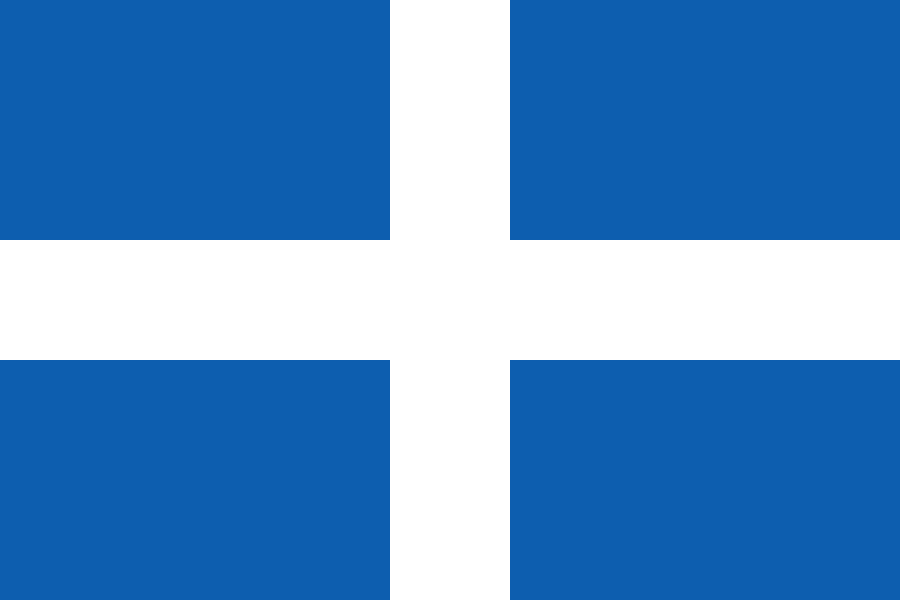
1822–1978
Kingdom of Greece
The plain blue field with a white cross was the official land flag from 1822. The blue-and-white striped version initially served only as the naval ensign.
Today part of: Greece
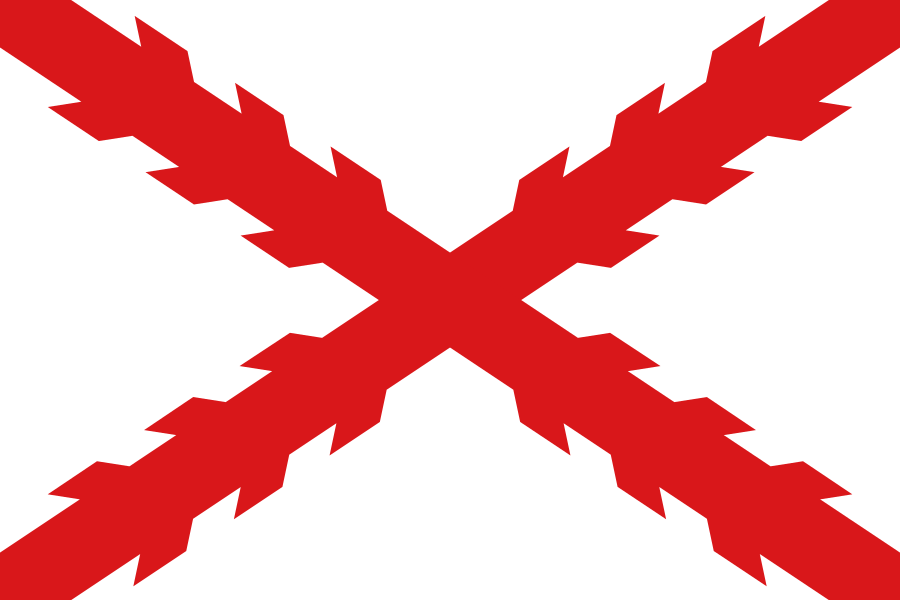
1506–1785
Cross of Burgundy
The red saw-tooth saltire represents two crossed, roughly-pruned branches. It flew over Spanish armies and colonies across the Americas for nearly three centuries.
Today part of: Spain
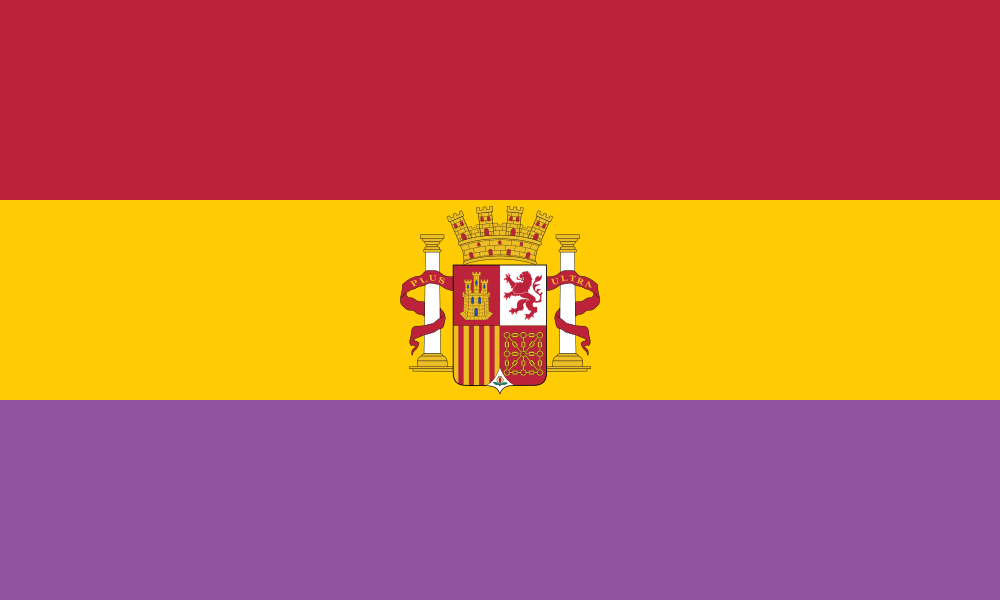
1931–1939
Second Spanish Republic
The republican tricolor added a purple lower band popularly linked to Castile, replacing the red-yellow monarchist flag until Franco's victory in 1939.
Today part of: Spain
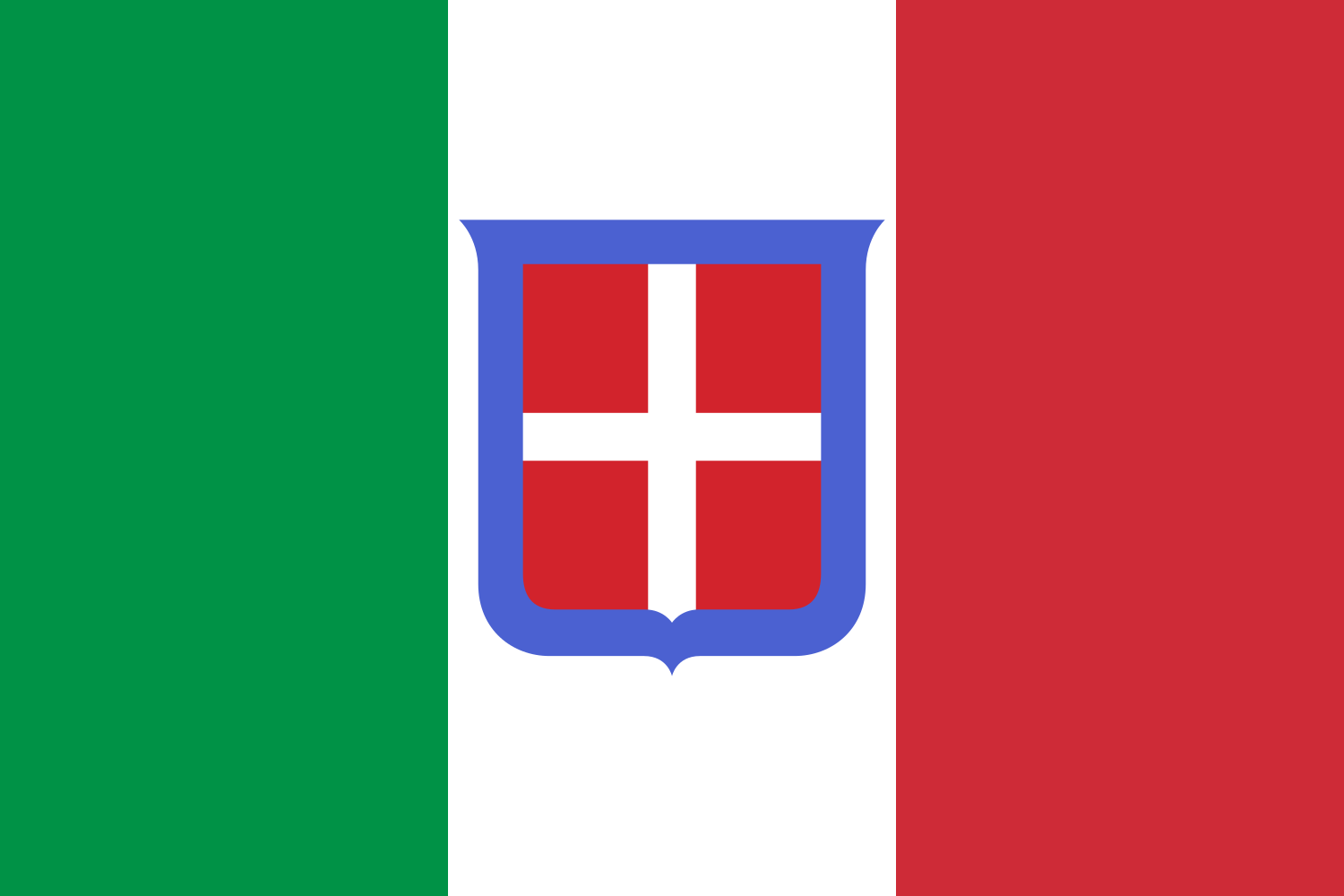
1861–1946
Kingdom of Italy
The green-white-red tricolor charged with the crowned shield of the House of Savoy, flown through both World Wars until the 1946 referendum abolished the monarchy.
Today part of: Italy
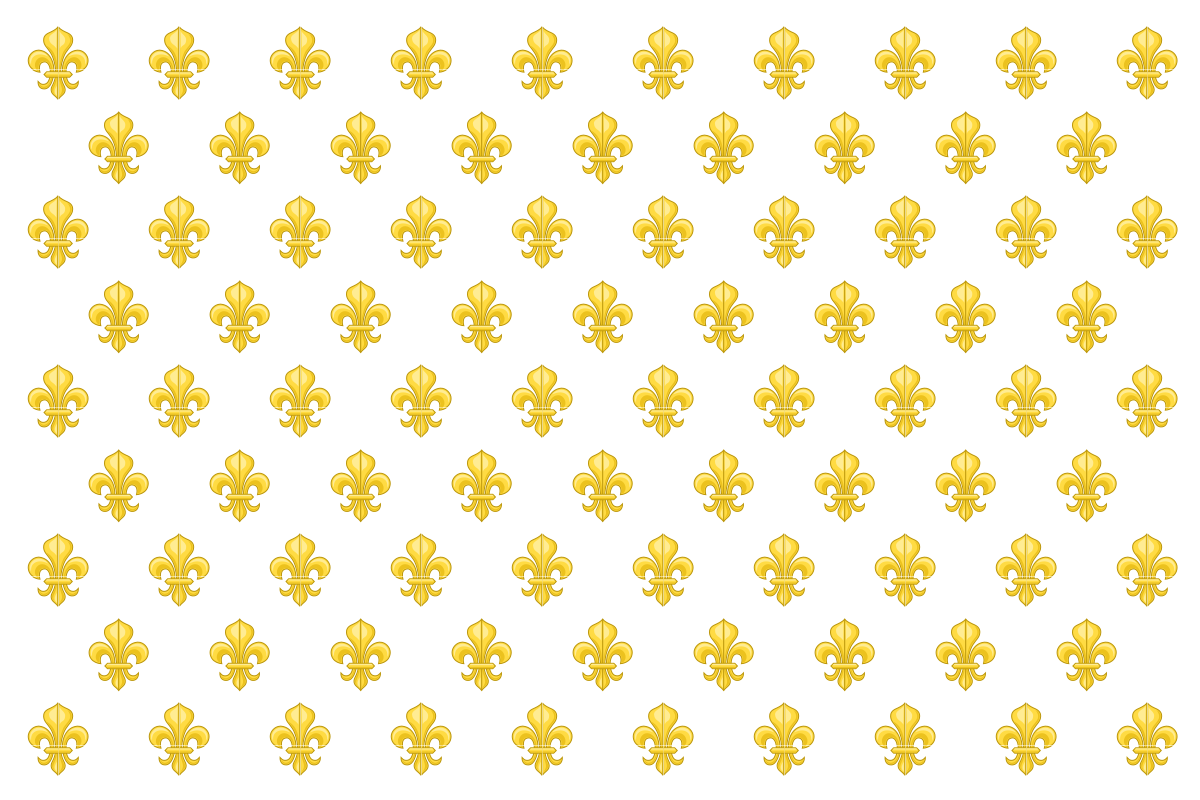
987–1792
Kingdom of France
The white field strewn with golden fleurs-de-lis was the banner of the Bourbon monarchy. White, not a tricolor, symbolized the king before the Revolution.
Today part of: France
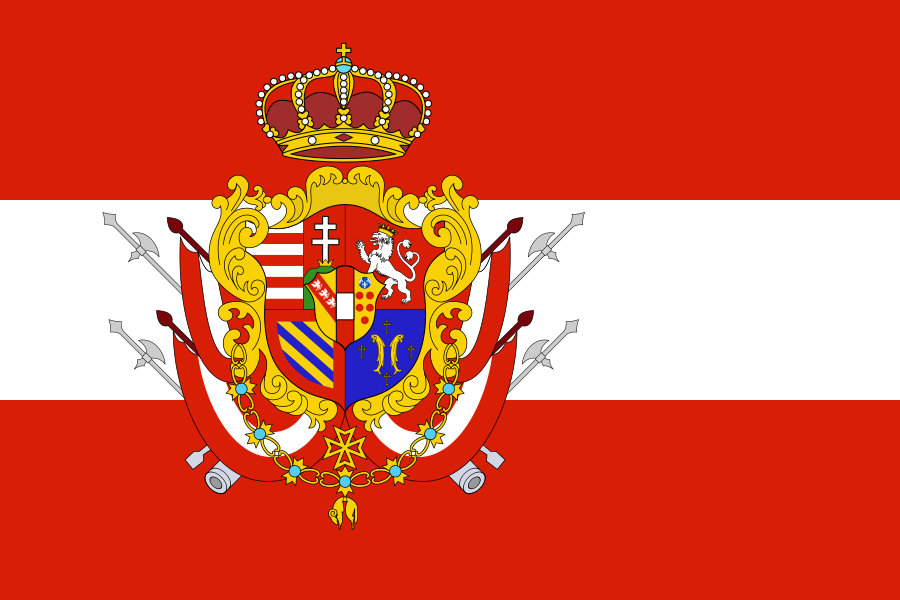
1765–1860
Grand Duchy of Tuscany
The red-white-red triband charged with the grand-ducal crown was used by the Habsburg-Lorraine grand dukes who ruled Florence and Tuscany.
Today part of: Italy
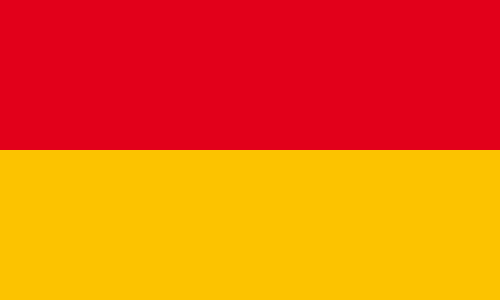
1855–1891
Grand Duchy of Baden
The red-over-yellow bicolor was Baden's flag from 1855. The southwestern grand duchy was one of the states that unified into the German Empire in 1871.
Today part of: Germany
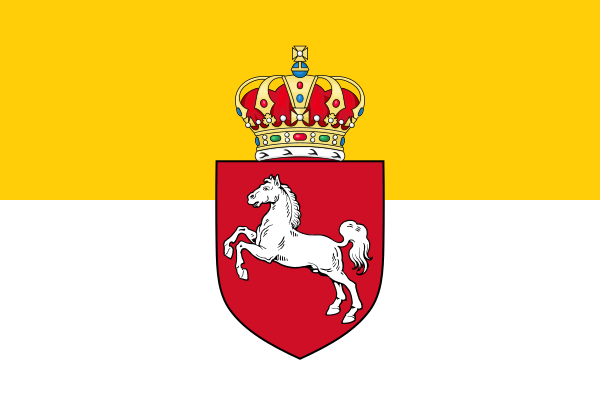
1837–1866
Kingdom of Hanover
King Ernst August introduced the yellow-over-white bicolor in 1837 when Hanover's personal union with Britain ended. Its emblem was the white Saxon horse.
Today part of: Germany
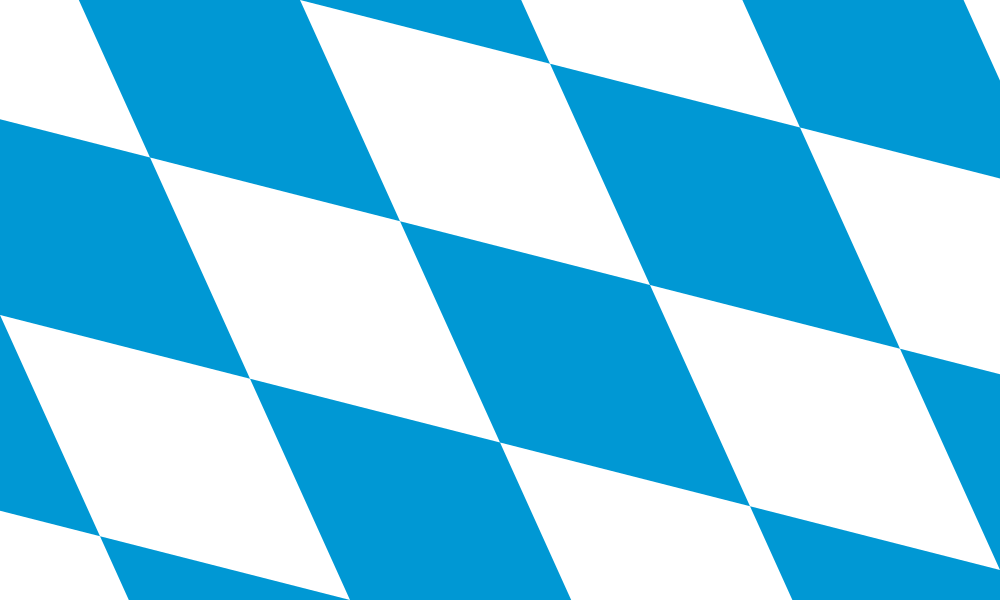
1806–1918
Kingdom of Bavaria
The white-and-blue lozenge 'Rautenflagge' derives from the medieval arms of the Wittelsbachs. By rule it must show at least 21 lozenges with a white one in the top-right.
Today part of: Germany

1807–1813
Kingdom of Westphalia
This Napoleonic kingdom, ruled by Jérôme Bonaparte, flew a white-and-blue bicolor with crowned arms combining a Napoleonic eagle with the silver Saxon horse.
Today part of: Germany
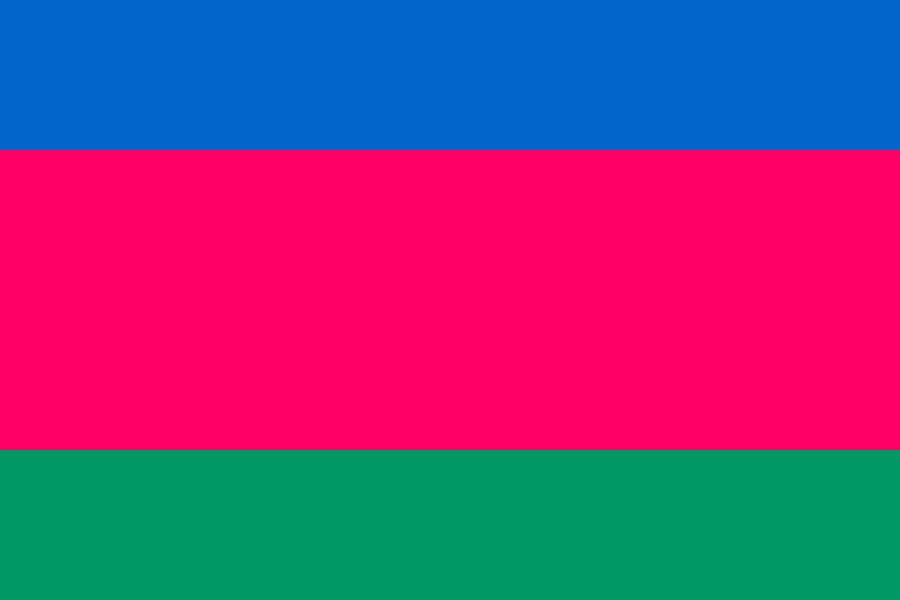
1918–1920
Kuban People's Republic
An anti-Bolshevik Cossack state on the Kuban river; its blue-raspberry-green bands stood for Cossacks, non-Cossack residents, and highlanders.
Today part of: Russia
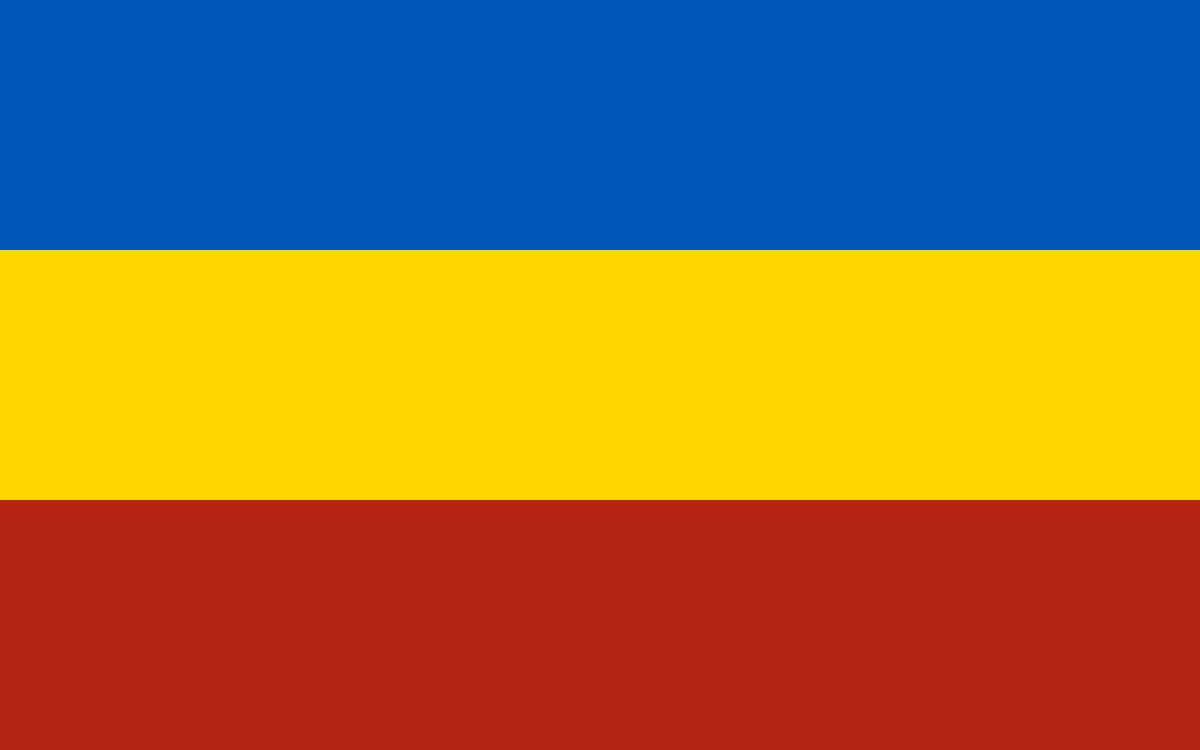
1918–1920
Don Republic
The Don Cossack state's blue-yellow-red tricolor stood for the Don Cossacks, Kalmyks, and Russian non-Cossack residents during the Russian Civil War.
Today part of: Russia
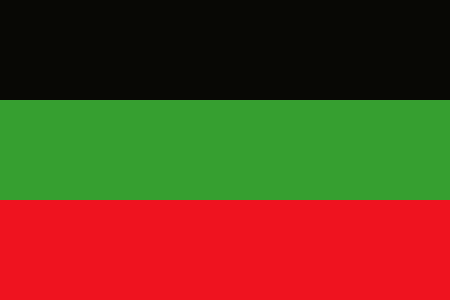
1917–1921
Mountainous Republic of the Northern Caucasus
Green and white stripes with a blue canton bearing seven stars for the seven main highland peoples of the North Caucasus.
Today part of: Russia
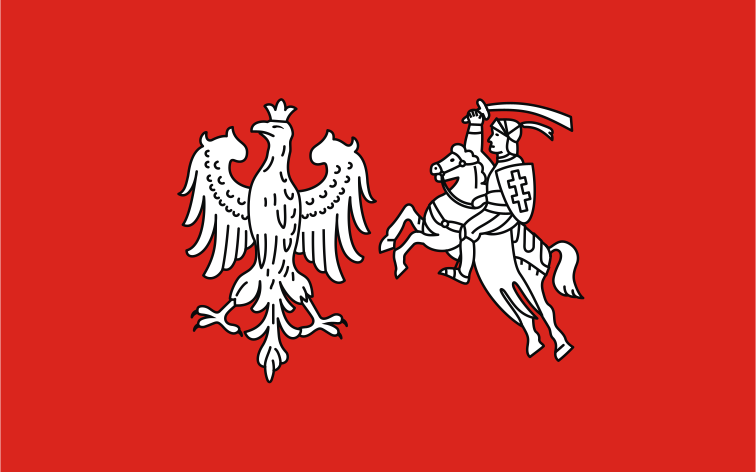
1920–1922
Republic of Central Lithuania
A Polish client state around Vilnius; its red field bore the Polish White Eagle and the Lithuanian Vytis knight side by side, before annexation by Poland in 1922.
Today part of: Lithuania

1918–1920
Lemko-Rusyn Republic
A pro-Russian Rusyn republic centered on Florynka in the western Lemko region, flying a blue-yellow-green tricolor after the collapse of Austria-Hungary.
Today part of: Poland
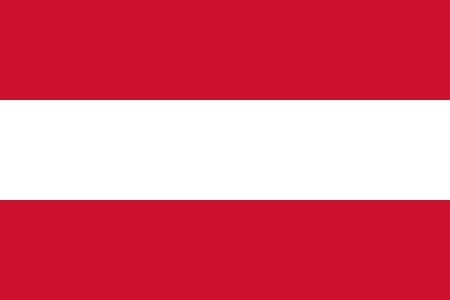
medieval–present
City of Gouda
Red-and-white vertical stripes with three silver six-pointed stars — the civic banner of the Dutch cheese city of Gouda, of medieval origin.
Today part of: Netherlands
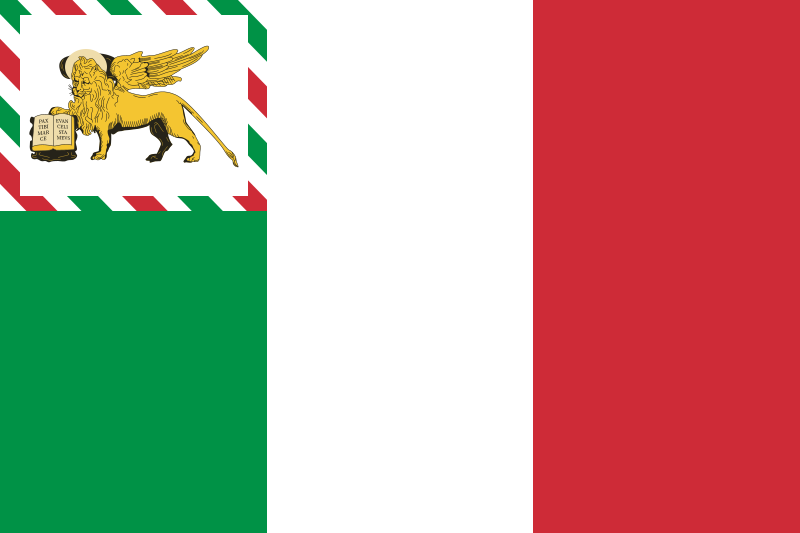
1848–1849
Republic of San Marco
Daniele Manin's revolutionary Venetian republic flew the Italian tricolor with the winged Lion of St Mark in the canton, until Austria retook Venice in 1849.
Today part of: Italy
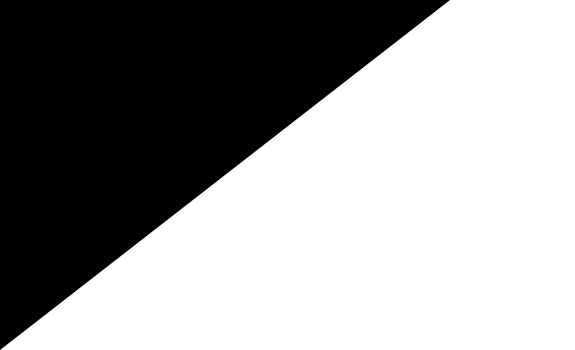
1440–1826
Republic of Cospaia
A tiny accidental republic on the Tuscan–Papal border, created by a surveying error and famous for freely growing tobacco. Its flag is divided black and white diagonally.
Today part of: Italy
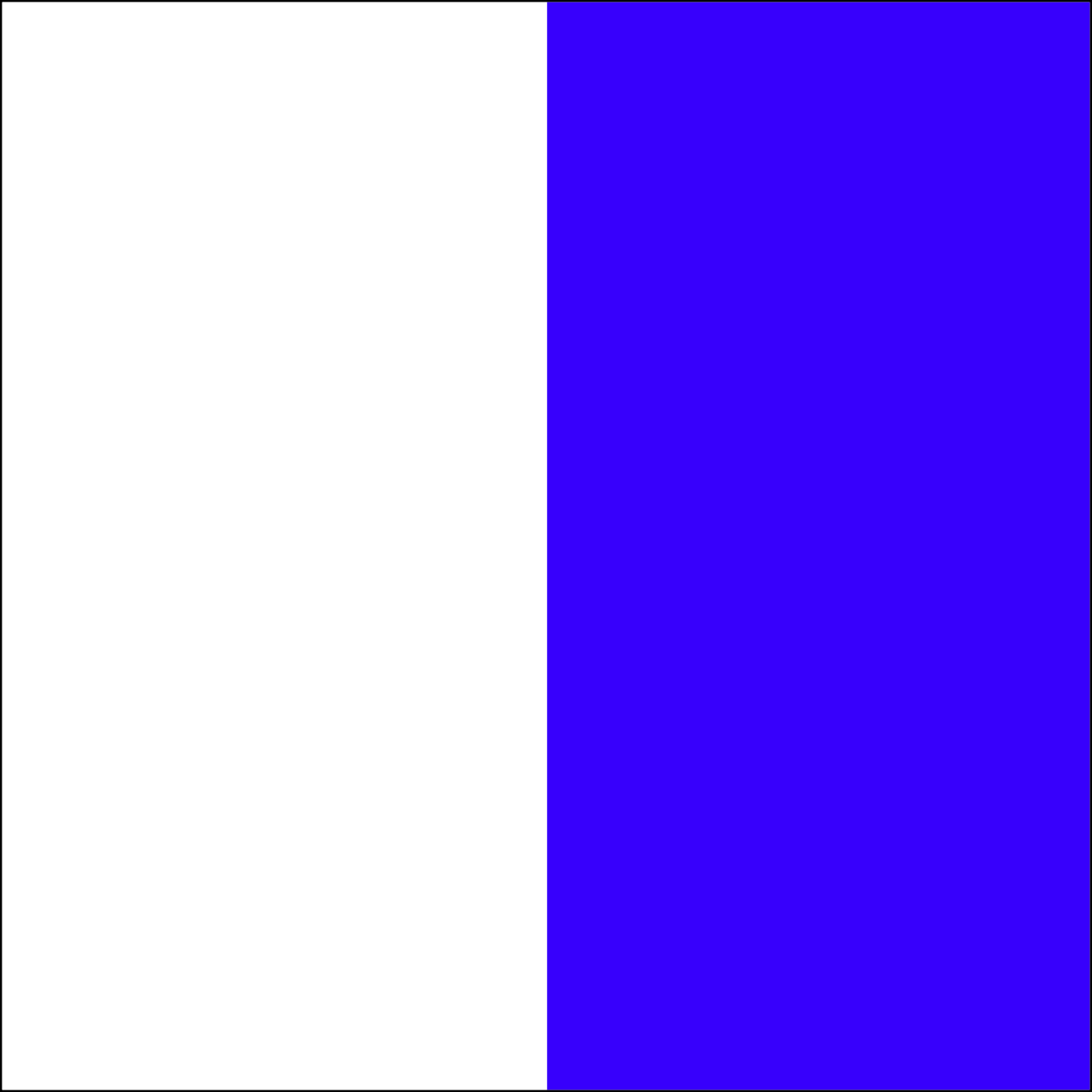
medieval–1868
Couto Misto
A self-governing 'mixed county' of three villages on the Galicia–Portugal border with its own asylum rights, partitioned between Spain and Portugal in 1864.
Today part of: Spain
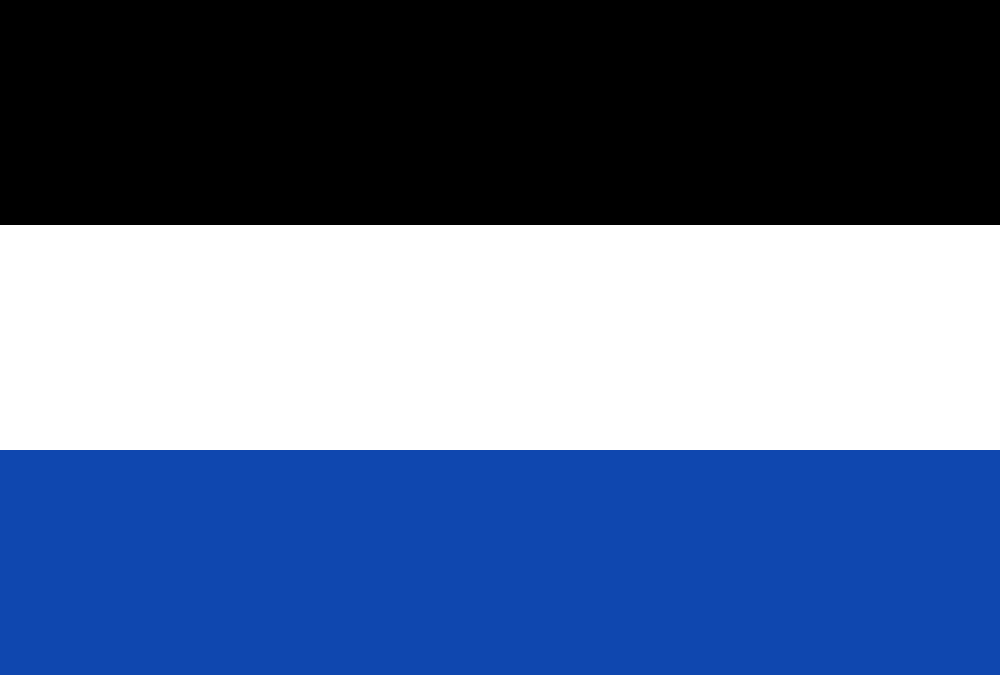
1816–1920
Neutral Moresnet
A neutral zinc-mining territory jointly administered by Prussia and the Netherlands (later Belgium) after the Congress of Vienna. Its flag is a black-white-blue tricolor.
Today part of: Belgium
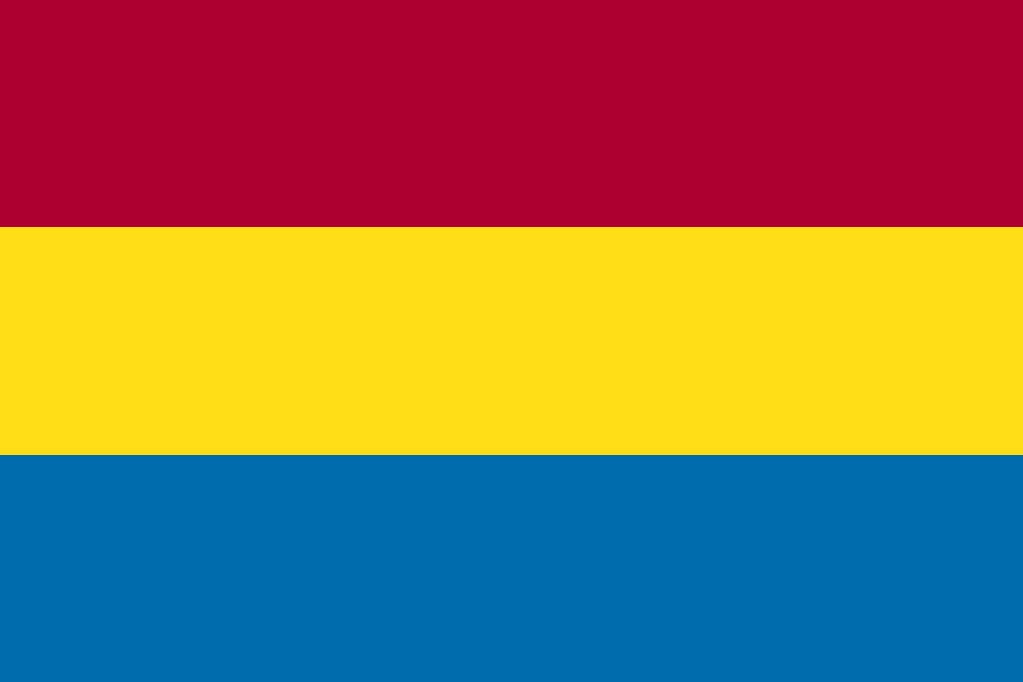
1920–1924
Free State of Fiume
A short-lived independent city-state — modern Rijeka, Croatia — created by the Treaty of Rapallo and annexed by Italy in 1924. Its flag is a burgundy-yellow-blue tricolor.
Today part of: Croatia
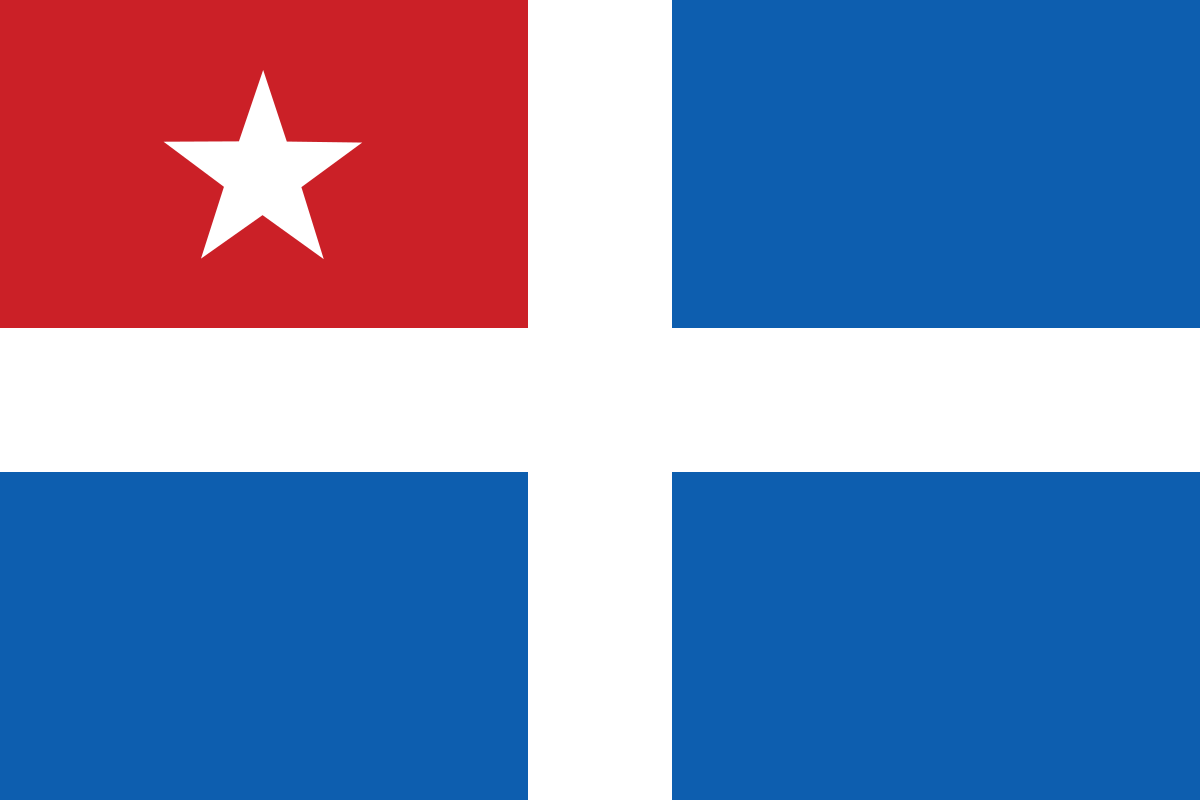
1898–1913
Cretan State
Autonomous Crete under Prince George of Greece; its blue flag with a white cross adds a red canton with a white star, symbolizing remaining Ottoman suzerainty.
Today part of: Greece
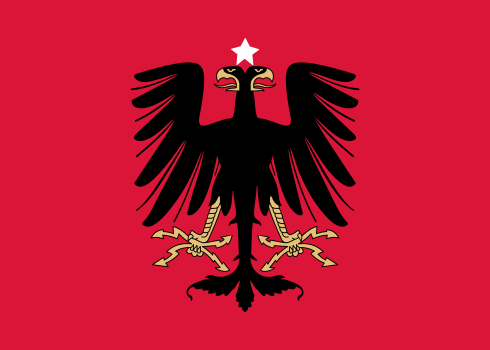
1914
Principality of Albania (1914)
The brief principality under Prince Wilhelm of Wied: a deep-red field with a large black double-headed eagle, established just after Albanian independence.
Today part of: Albania
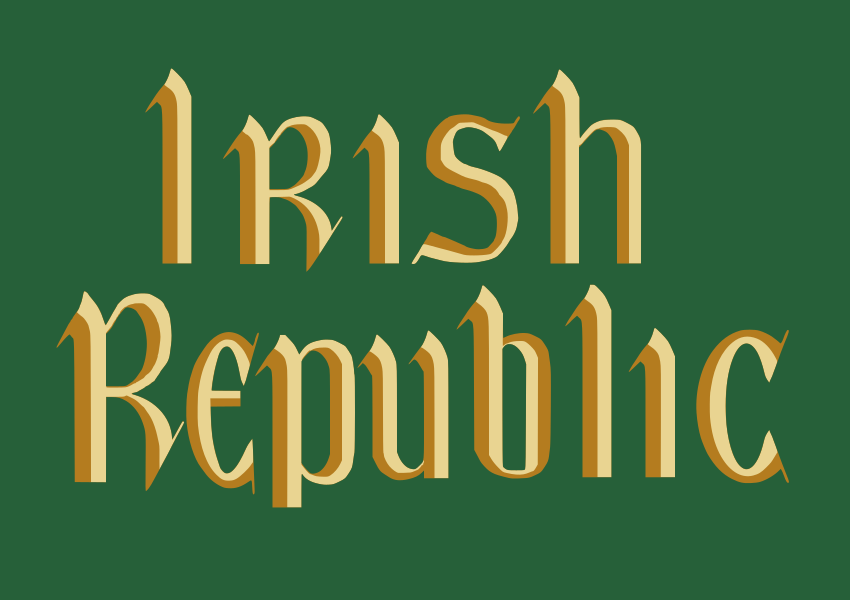
1916
Irish Republic (1916)
The green flag with gold lettering 'Irish Republic' flown over Dublin's General Post Office during the Easter Rising. The original captured banner survives in Dublin.
Today part of: Ireland
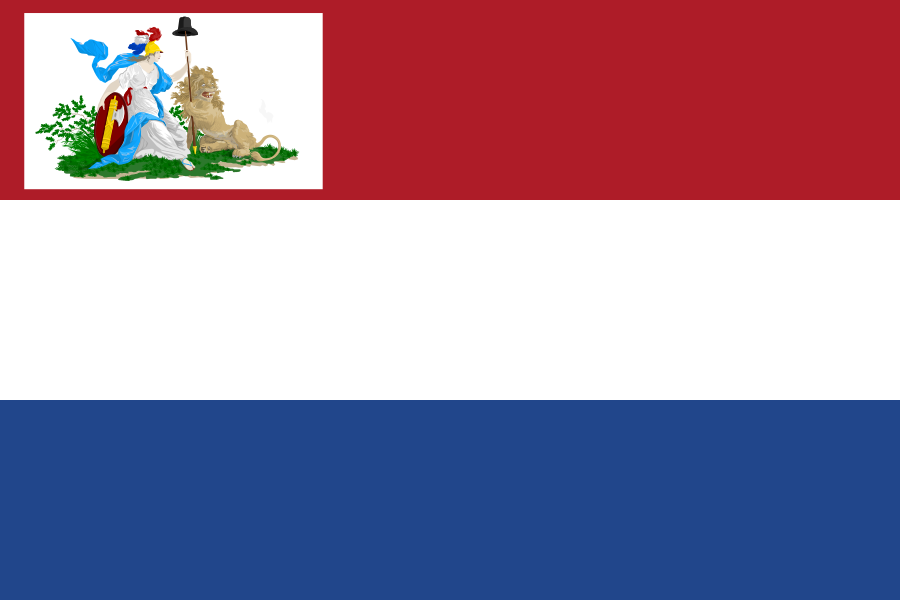
1795–1806
Batavian Republic
The Dutch revolutionary republic's flag placed a white canton on the tricolor enclosing a seated liberty maiden with a liberty-cap spear and the Dutch lion.
Today part of: Netherlands
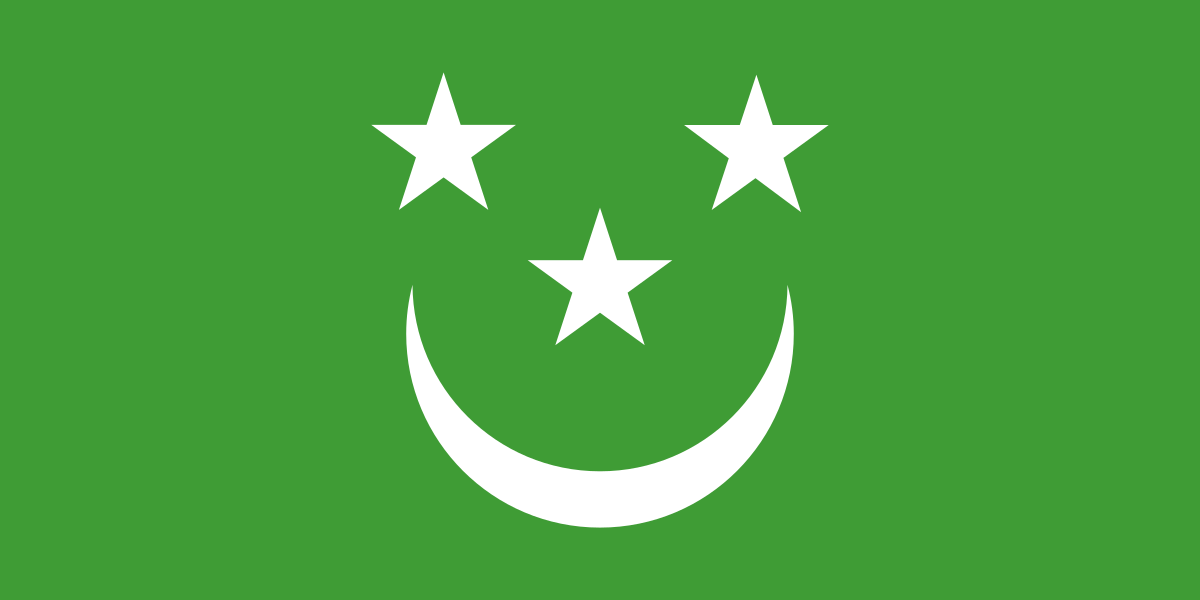
1919–1920
North Caucasian Emirate
A short-lived theocratic emirate under Uzun Hajji spanning Chechnya and Dagestan during the Russian Civil War; its green flag bears three white stars above a crescent.
Today part of: Russia

1918–1921
Free Territory (Makhnovshchina)
The Ukrainian anarchist movement under Nestor Makhno flew black banners reading 'Liberty or Death'. The popular skull-and-crossbones version is a debunked Soviet-propaganda myth.
Today part of: Ukraine
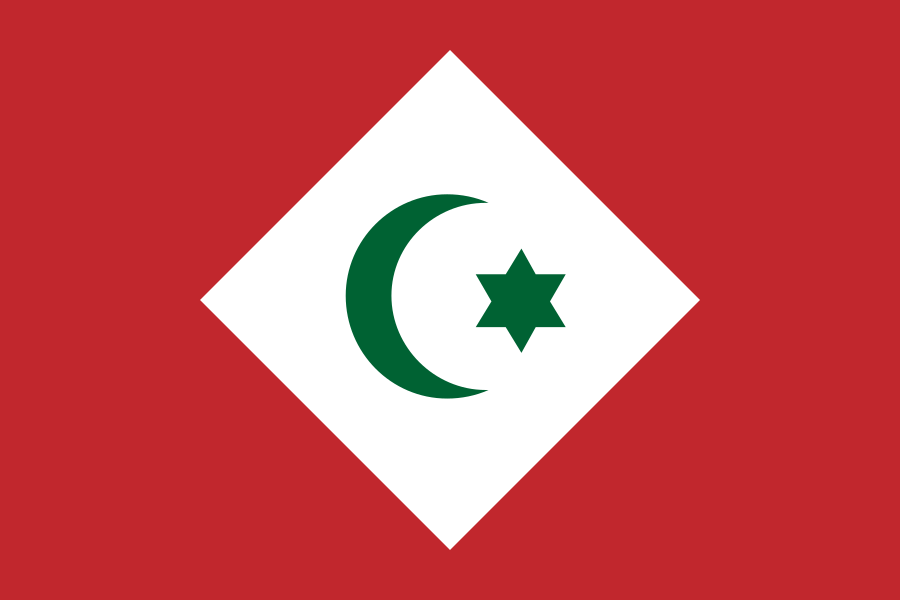
1921–1926
Republic of the Rif
Abd el-Krim's Berber state during the Rif War: a red field with a white diamond holding a green crescent and a six-pointed star.
Today part of: Morocco
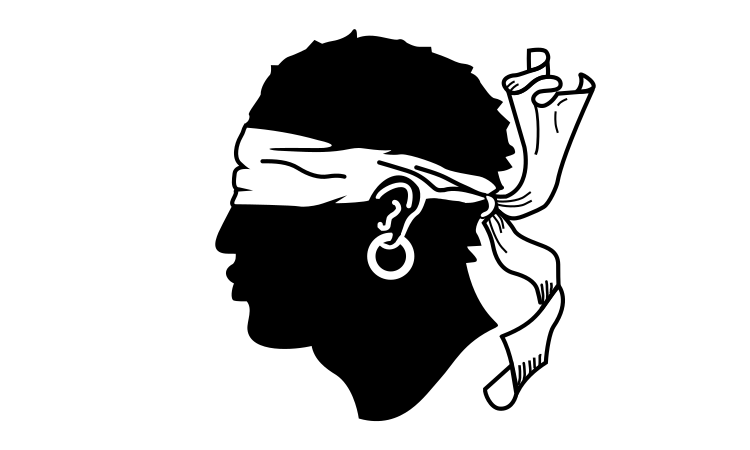
1736
Kingdom of Corsica (1736)
The white Moor's-head flag of the brief kingdom created when German adventurer Theodore von Neuhoff was crowned King of Corsica for a few months in 1736.
Today part of: France
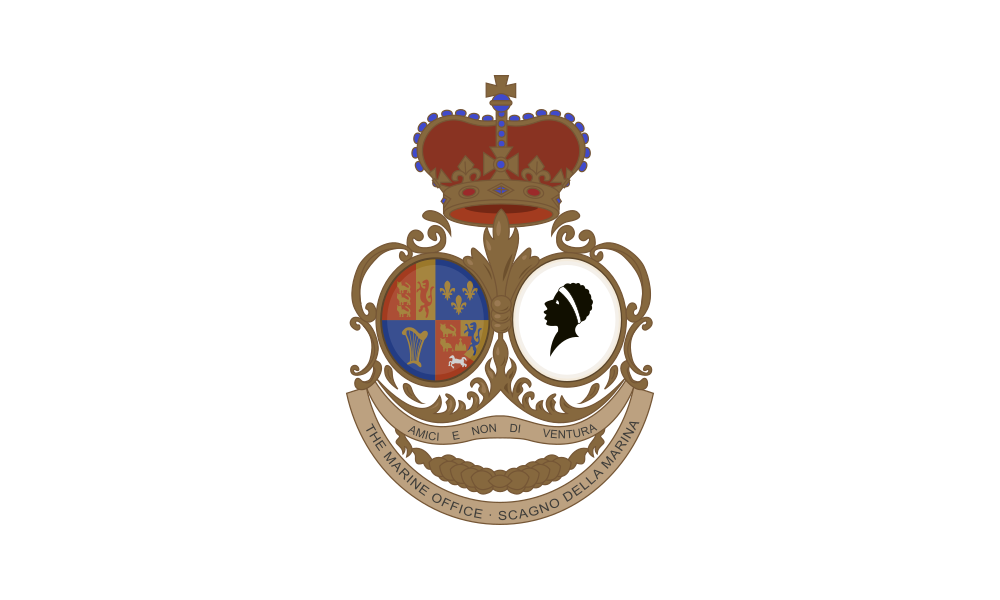
1794–1796
Anglo-Corsican Kingdom
Combined the British Union Jack with the Corsican Moor's head during the brief union under George III in the French Revolutionary Wars.
Today part of: France
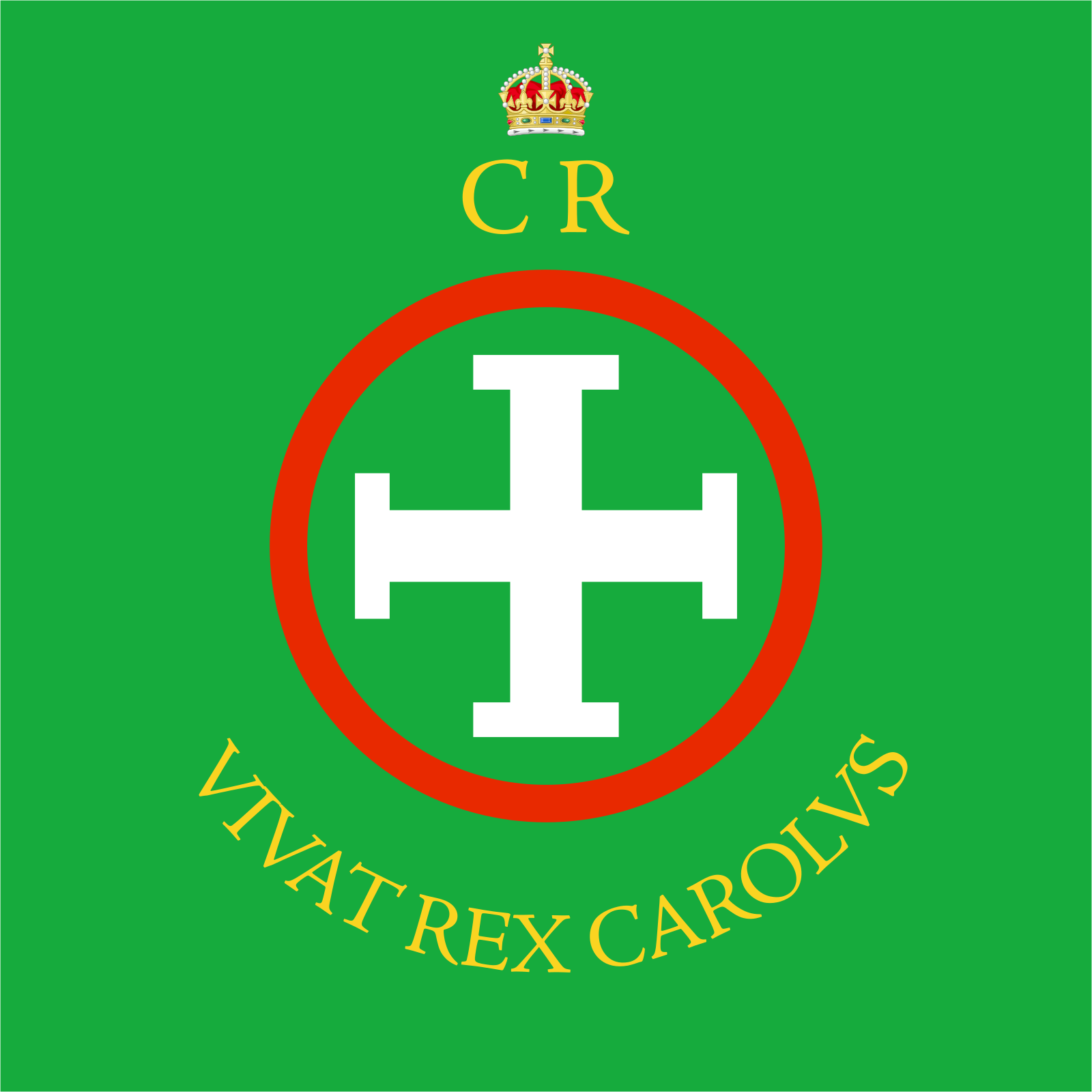
1642–1652
Confederate Ireland
The Catholic Confederation based at Kilkenny flew a green field with a gold harp and a white canton bearing a red cross during the Eleven Years' War.
Today part of: Ireland
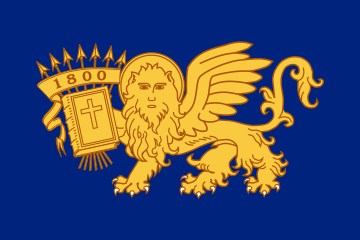
1800–1807
Septinsular Republic
A blue field with the golden Lion of St Mark holding seven arrows for the seven Ionian islands — the first autonomous Greek state of the modern era.
Today part of: Greece
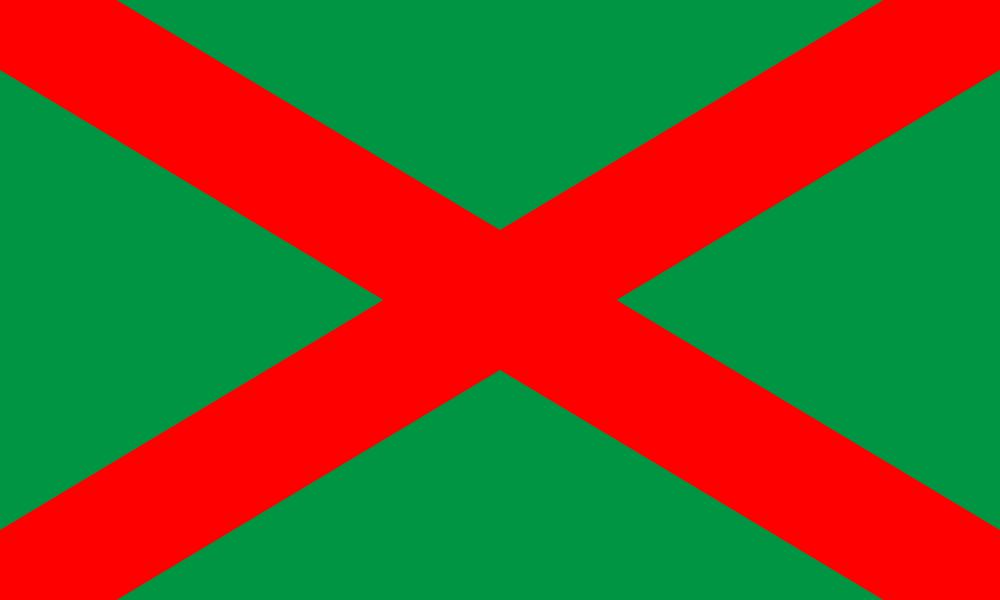
1941–1944
Principality of Pindus
A green-white-blue flag tied to a WWII Axis-sponsored Aromanian (Vlach) state in the Pindus mountains, whose actual existence is disputed by historians.
Today part of: Greece
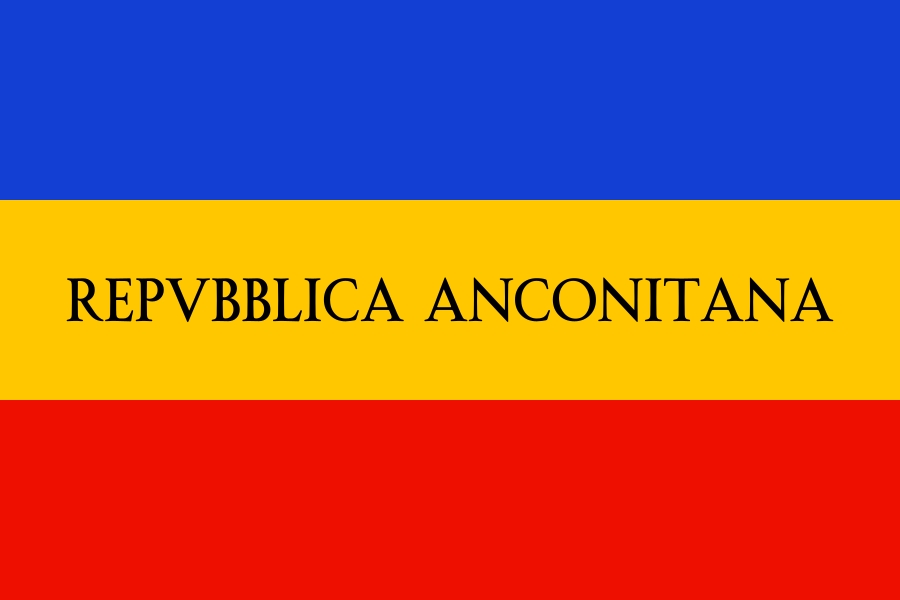
1797–1798
Anconine Republic
A Napoleonic sister republic around the Adriatic port of Ancona, flying a light blue–yellow–red tricolor with the republic's name lettered across it.
Today part of: Italy
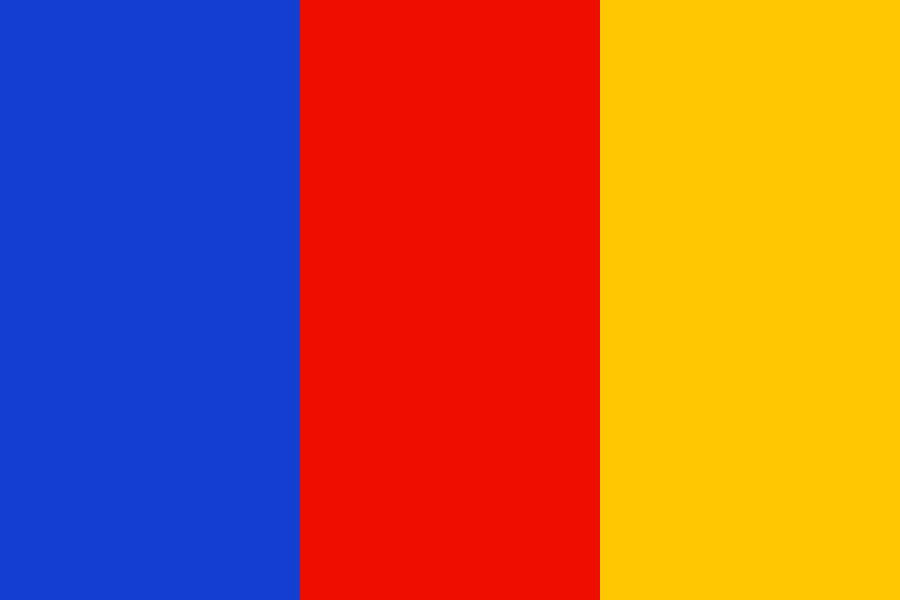
1799
Parthenopean Republic
A short-lived Neapolitan sister republic that joined French blue with the yellow and red of Naples, crushed within months by a royalist peasant army.
Today part of: Italy
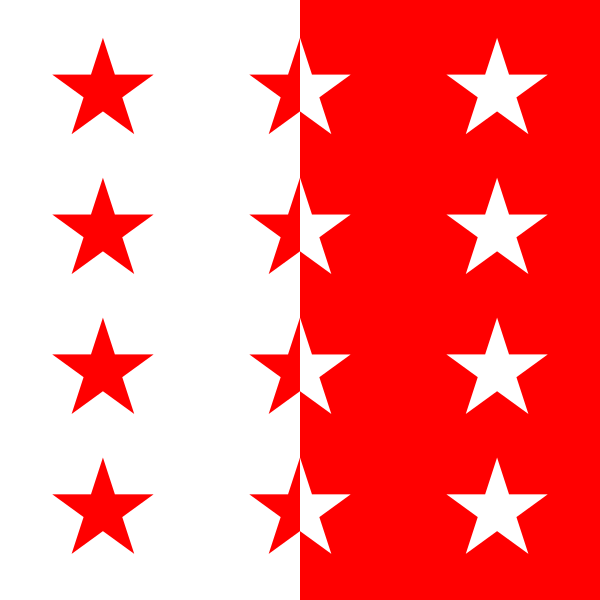
1802–1810
Rhodanic Republic
The Napoleonic-era republic of Valais flew a vertical red-and-white field with stars for its districts, before being absorbed directly into France.
Today part of: Switzerland
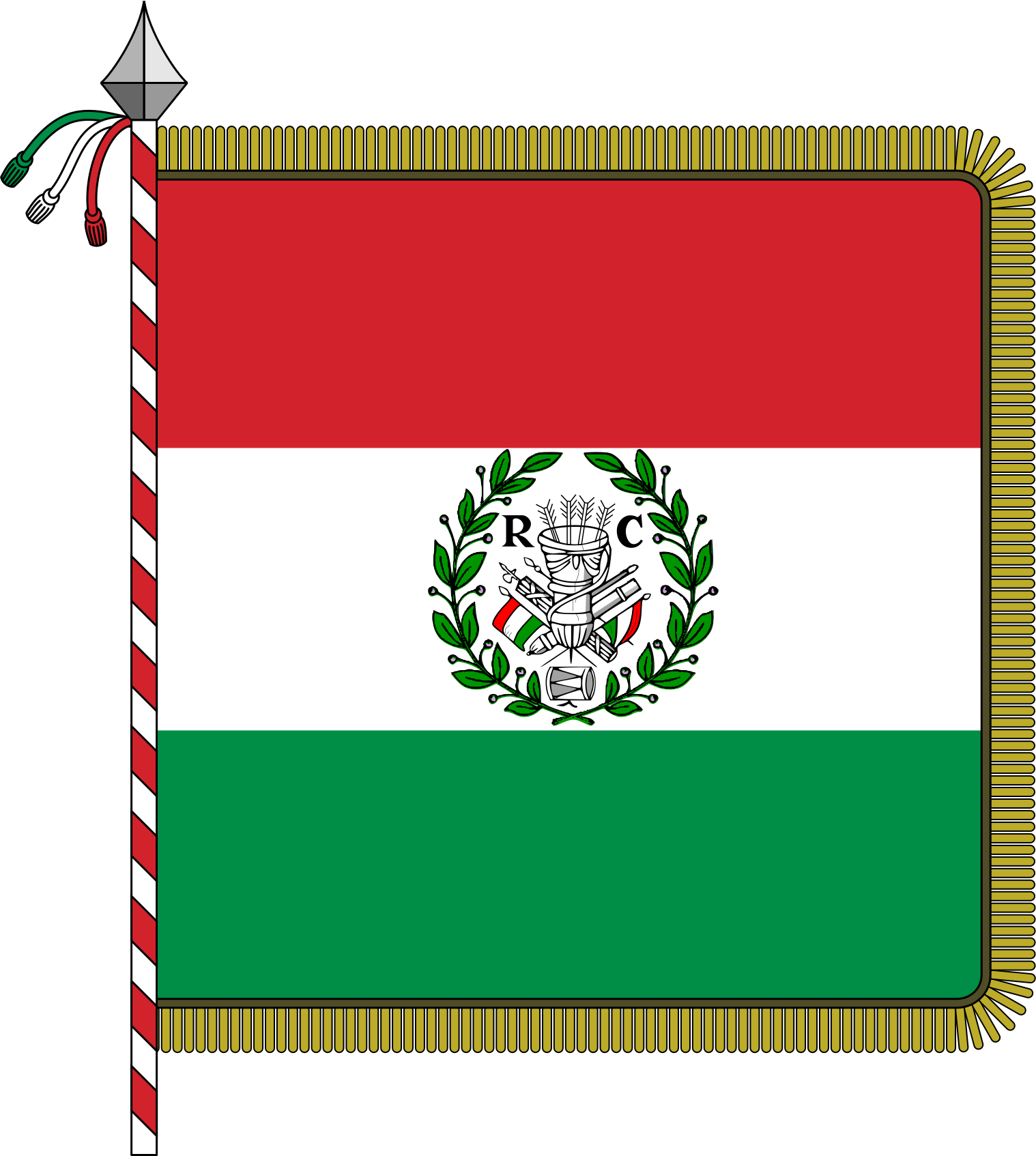
1796–1797
Cispadane Republic
The first Italian horizontal red-white-green tricolor, with a central quiver of four arrows. Adopted on 7 January 1797, it is commemorated as Italy's Tricolour Day.
Today part of: Italy
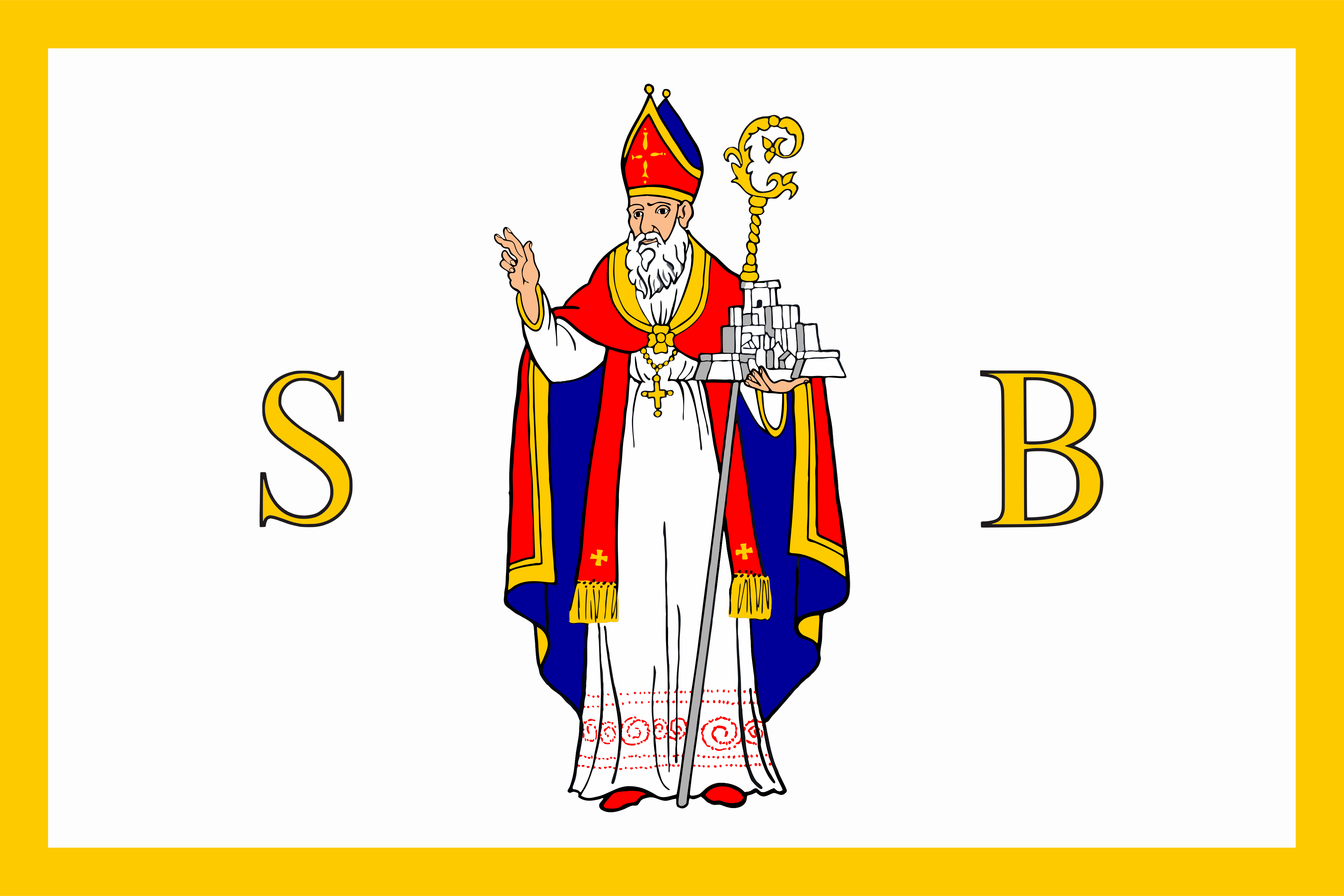
1358–1808
Republic of Ragusa
The Adriatic merchant republic of Dubrovnik flew a white flag bearing St Blaise, its patron, holding a model of the walled city. Its motto was 'Libertas'.
Today part of: Croatia
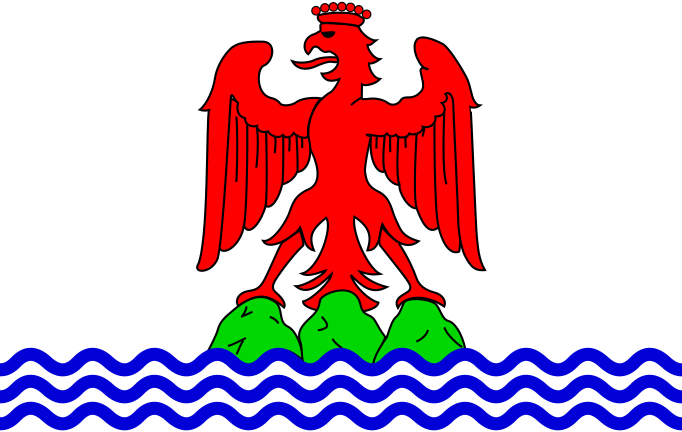
1388–1860
County of Nice
A red eagle perched on three green hills on white — the arms of Nice during its centuries under the House of Savoy, before France annexed it in 1860.
Today part of: France
1180–1918
Duchy of Styria
The white-over-green Landesfarben of the Habsburg duchy; its arms bear a white fire-breathing panther. Styria is now split between Austria and Slovenia.
Today part of: Austria

976–1918
Duchy of Carinthia
The yellow-red-white crown-land flag of one of the oldest duchies of the Holy Roman Empire, whose arms show three black lions on gold.
Today part of: Austria
1500–1918
County of Gorizia (Görz)
A white-and-red bicolour for the Habsburg princely county on the Adriatic frontier, whose arms feature a gold lion. Its land is now split between Italy and Slovenia.
Today part of: Slovenia
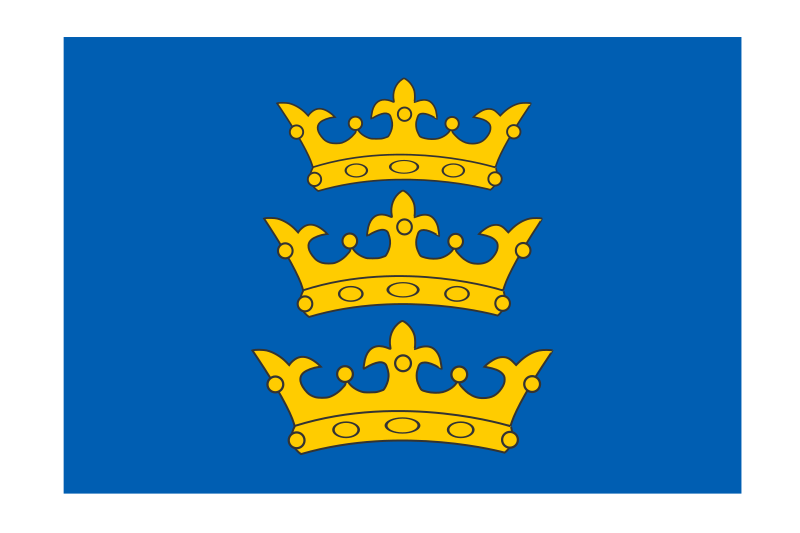
1171–1541
Lordship of Ireland
Three gold crowns on light blue with a white border, the banner of the medieval English lordship before the gold-harp arms replaced it under Henry VIII.
Today part of: Ireland
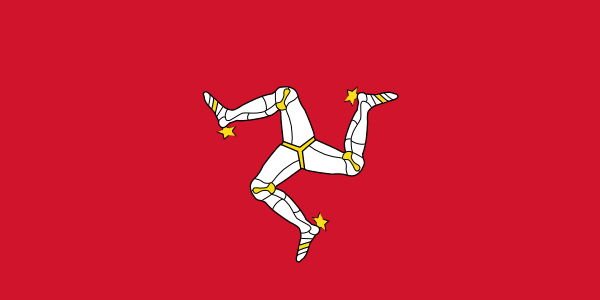
1079–1265
Kingdom of Mann
The gold three-legged triskelion on red descends from the Norse-Gaelic Kingdom of Mann and the Isles, which once ruled the Irish Sea from the Isle of Man.
Today part of: United Kingdom

1557–1867
Principality of Mingrelia
A white flag with a St George crest, flown by the Dadiani princes of western Georgia until the principality was absorbed by the Russian Empire.
Today part of: Georgia
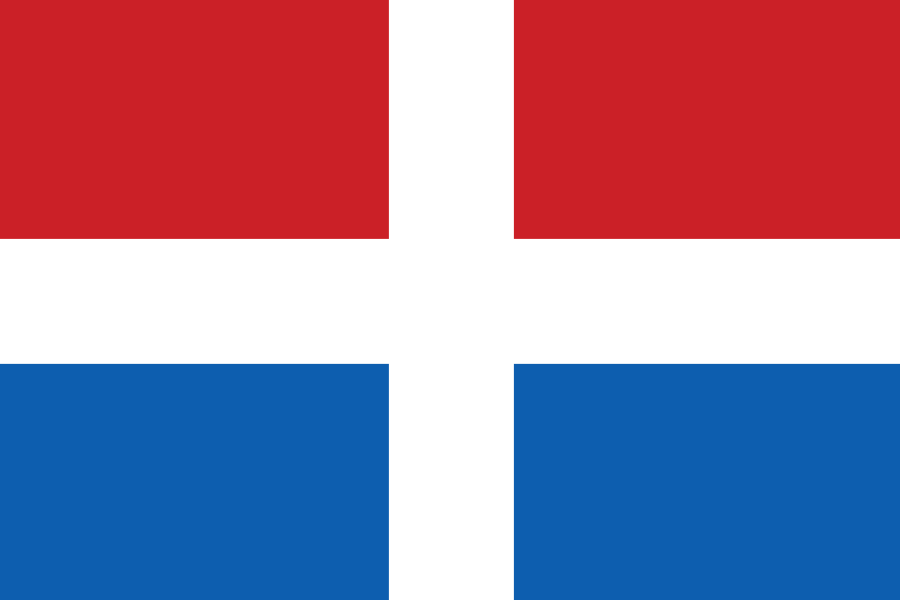
1834–1912
Principality of Samos
A cross flag with two red and two blue quarters, the red marking Ottoman suzerainty over this autonomous Greek island principality, which united with Greece in 1912.
Today part of: Greece

1339–1881
Monaco (Grimaldi lozenge banner)
The Grimaldi armorial banner of red-and-white lozenges, the dynasty's historic flag before Monaco adopted its plain red-over-white bicolour in 1881.
Today part of: Monaco
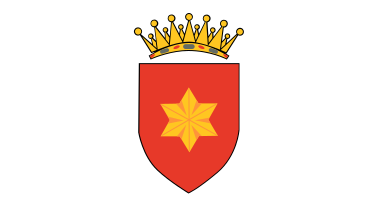
1836–1934
Kingdom of Tavolara
A tiny island kingdom off Sardinia ruled by the Bertoleoni family, sometimes called the smallest kingdom in the world. Its flag bears a gold star beneath a crown.
Today part of: Italy

1561–1795
Duchy of Courland and Semigallia
A Polish-Lithuanian vassal duchy in modern Latvia that — astonishingly — founded colonies on Tobago in the Caribbean and an island in the Gambia in the 1650s.
Today part of: Latvia
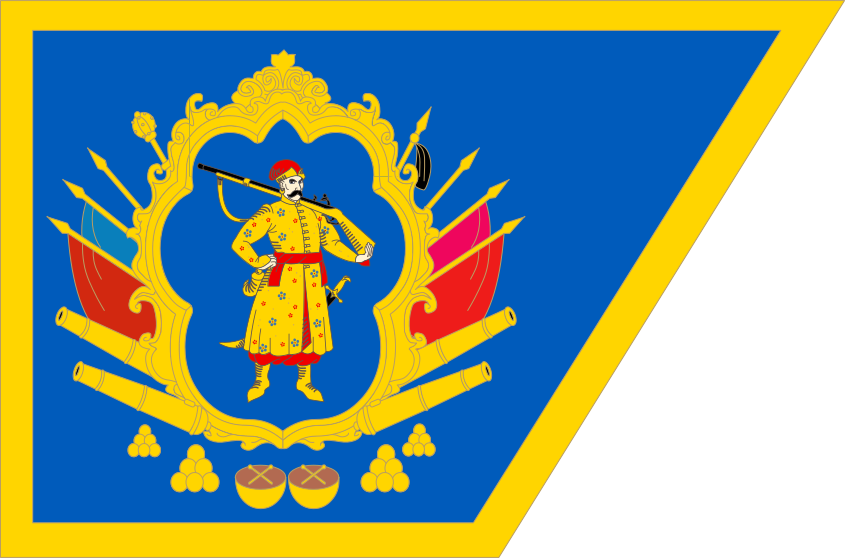
1649–1764
Cossack Hetmanate
The Cossack state of central Ukraine, founded by Bohdan Khmelnytsky's uprising, flew a crimson banner with a Cossack bearing a musket.
Today part of: Ukraine
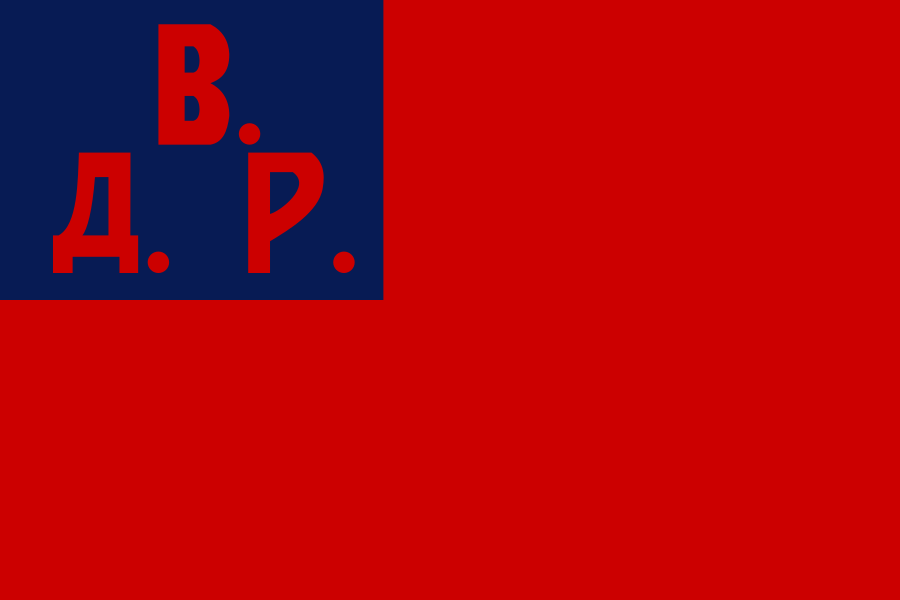
1920–1922
Far Eastern Republic
A nominally independent buffer state the Bolsheviks set up across Siberia to avoid war with Japan; once the Japanese withdrew, it was absorbed into Soviet Russia.
Today part of: Russia
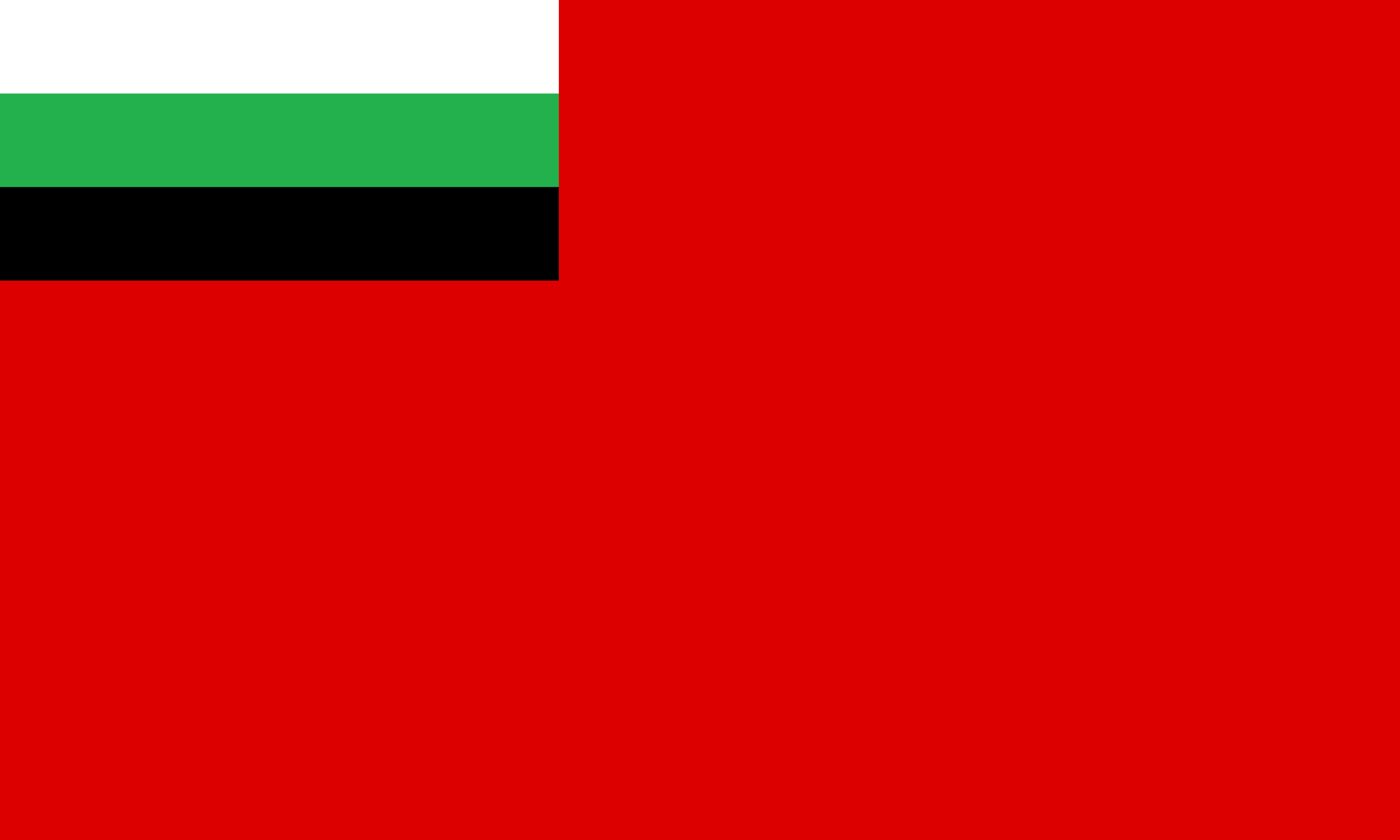
1918
Donets–Krivoy Rog Soviet Republic
A short-lived Bolshevik republic in the Donbas industrial basin that tried to stay part of Soviet Russia rather than join Ukraine — dissolved within months.
Today part of: Ukraine
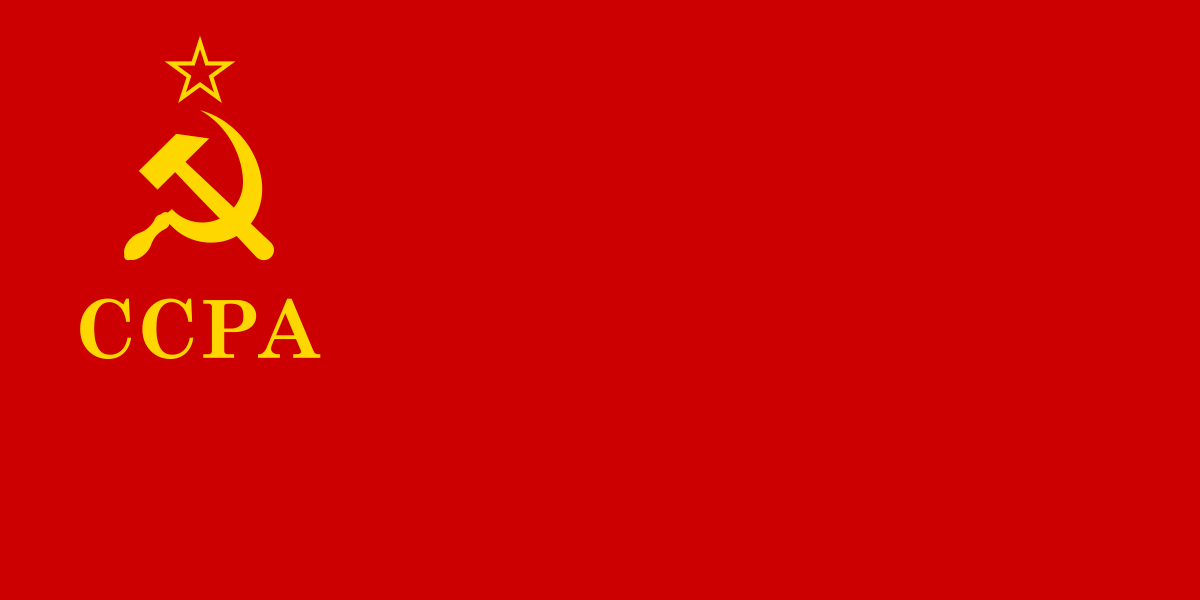
1921–1931
SSR of Abkhazia
For a decade Abkhazia was a full Soviet republic with a hammer-and-sickle flag, before Stalin downgraded it to an autonomous republic within Georgia.
Today part of: Georgia
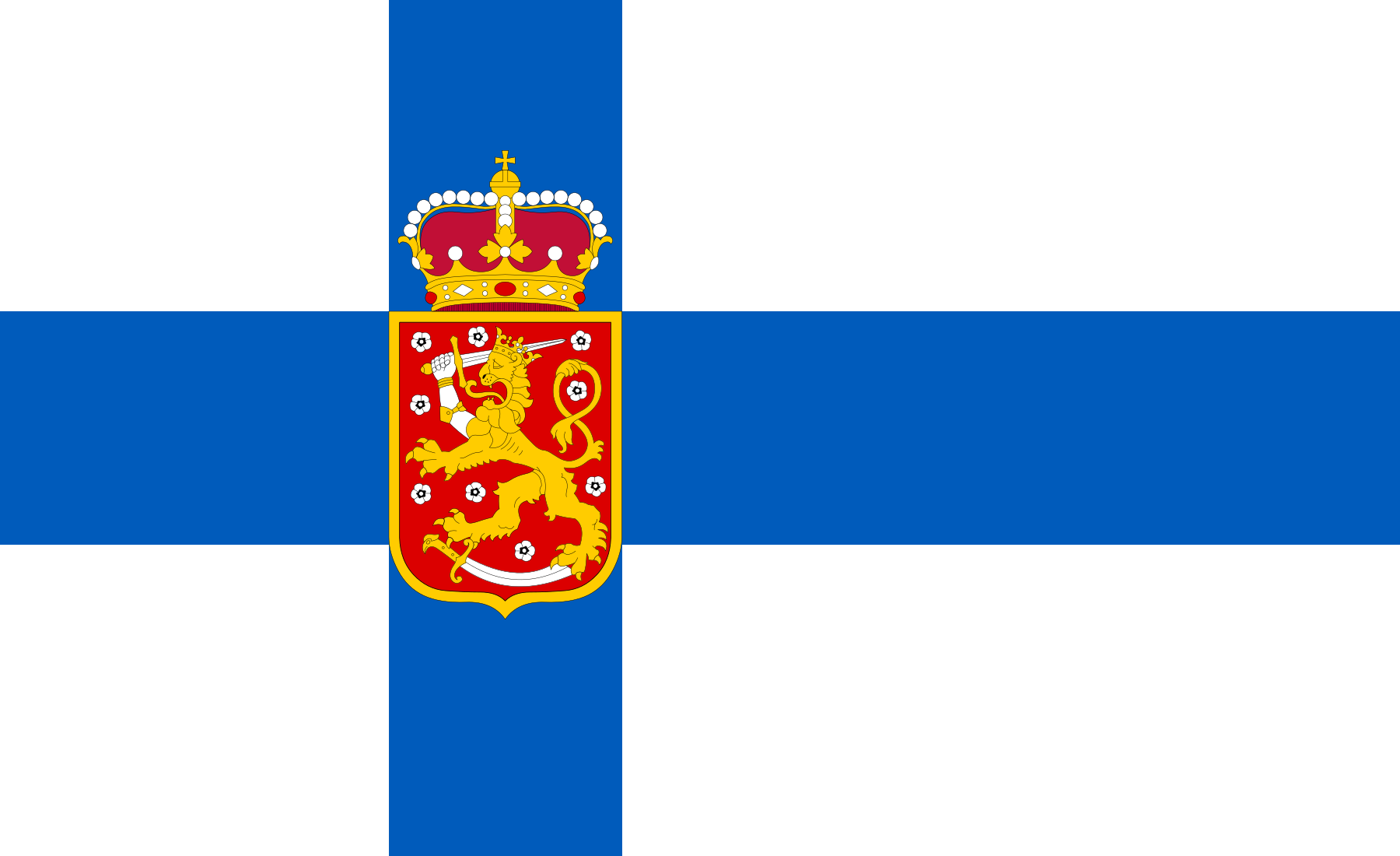
1918
Kingdom of Finland
After independence Finland briefly elected a German prince as king and designed lion-bearing royal flags — but Germany's defeat in WWI ended the monarchy before he ever arrived.
Today part of: Finland
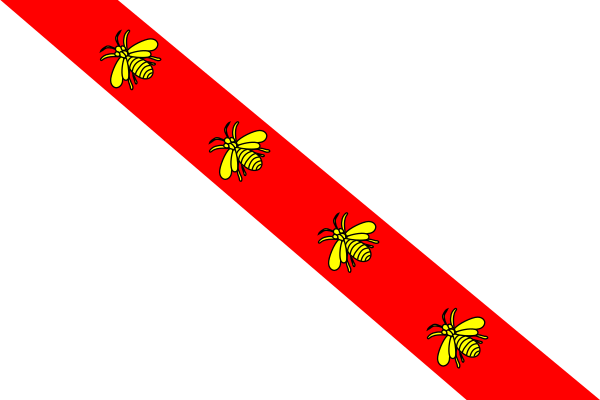
1814–1815
Principality of Elba
The tiny Mediterranean island Napoleon was given to rule during his first exile; he designed its white flag with a red bar and three gold bees before escaping to retake France.
Today part of: Italy
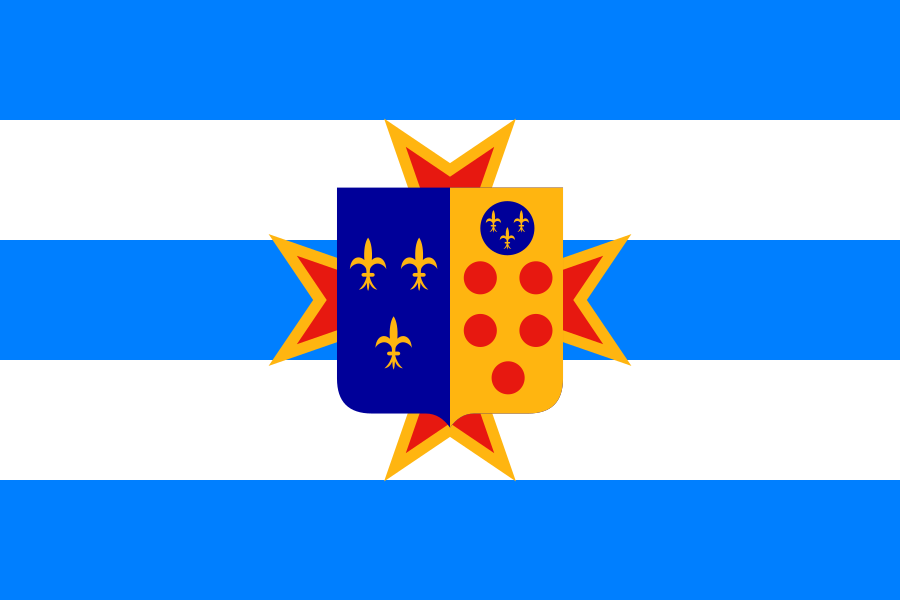
1801–1807
Kingdom of Etruria
A short-lived Napoleonic client kingdom in Tuscany under the Bourbon-Parma dynasty, before Napoleon annexed it directly into France.
Today part of: Italy
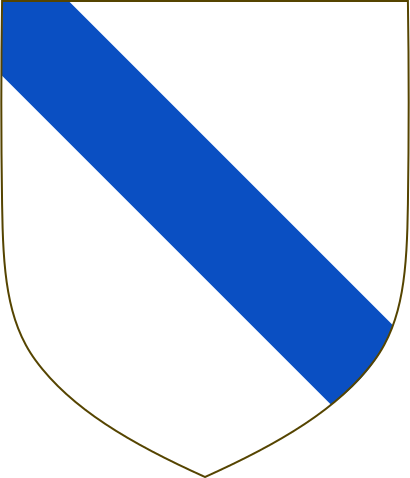
1207–1579
Duchy of the Archipelago
A Venetian crusader state ruling the Cyclades from Naxos, under the Sanudo dynasty whose white banner bore a red cross and four black crosslets.
Today part of: Greece
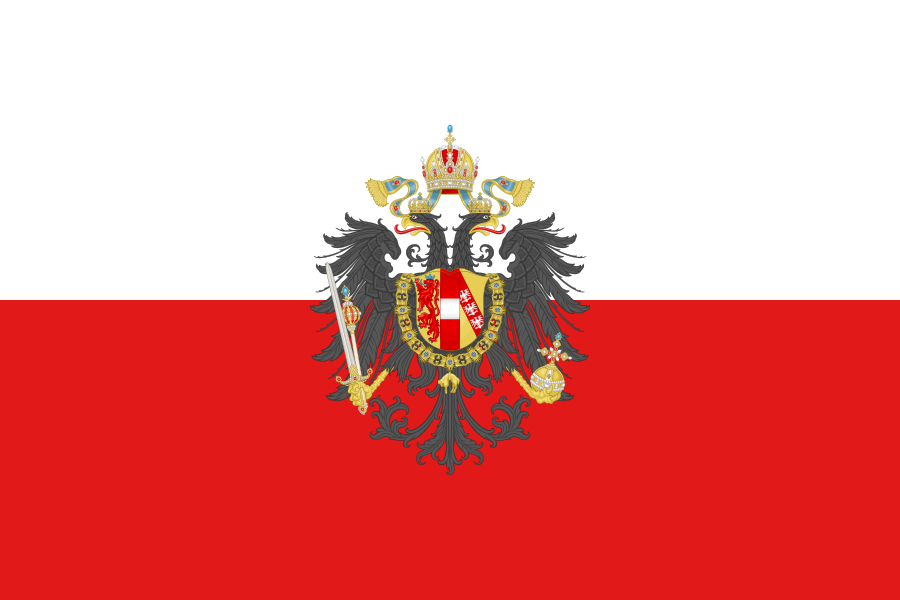
1816–1849
Kingdom of Illyria
An Austrian crown land carved from former Napoleonic territory along the Adriatic, covering parts of modern Slovenia, Croatia, and Austria.
Today part of: Slovenia

1913–1914
Republic of Central Albania
Warlord Essad Pasha Toptani's short-lived statelet around Durrës during Albania's chaotic birth, flying a red flag with a white star.
Today part of: Albania
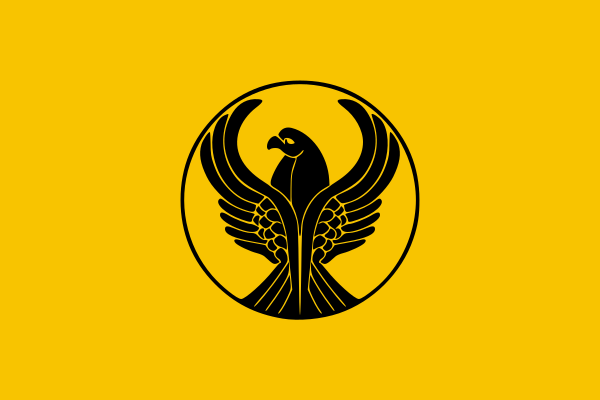
1917–1922
Republic of Pontus
A proposed homeland for the Pontic Greeks of the Black Sea coast, never realized; its black flag bore the eagle of the medieval Empire of Trebizond.
Today part of: Greece

1917–1918
Crimean People's Republic
One of the first secular Muslim-led republics in the world, flying the sky-blue Kök Bayraq with a golden Tatar tamga, before the Bolsheviks crushed it within months.
Today part of: Ukraine
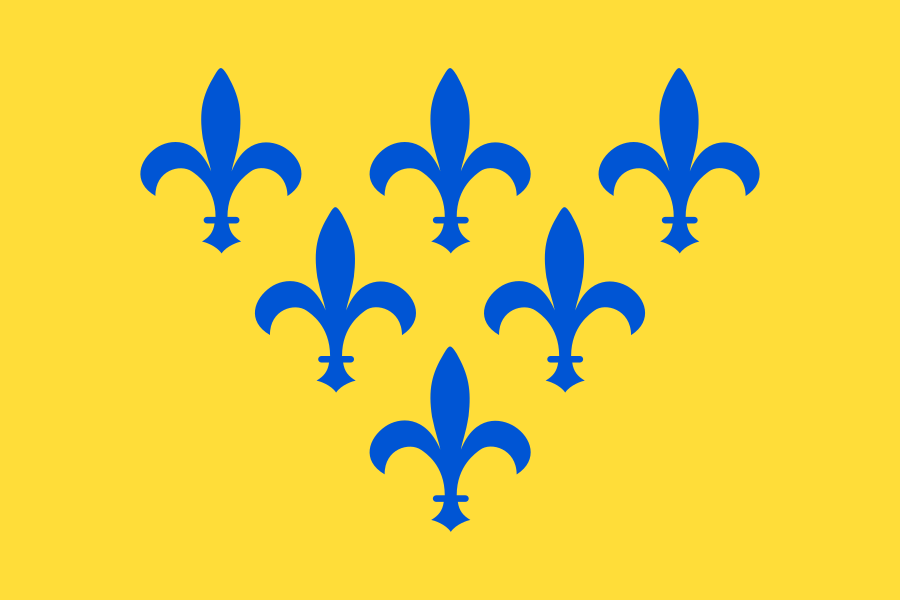
1545–1859
Duchy of Parma
A northern Italian duchy long ruled by the Farnese and later Bourbon-Parma dynasties, its yellow flag bearing a blue fleur-de-lis shield, absorbed into unified Italy.
Today part of: Italy
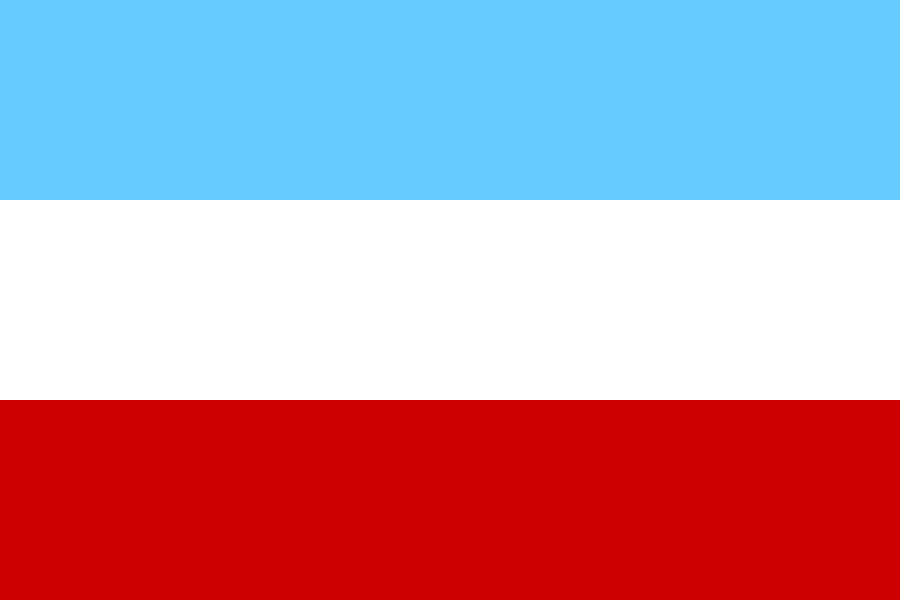
1805–1809
Principality of Lucca and Piombino
A Napoleonic state given to the emperor's sister Elisa Bonaparte, the only one of his siblings to rule in her own right.
Today part of: Italy

1806–1918
Kingdom of Saxony
The white-over-green bicolor of the Wettin kings, who ruled from Dresden and joined the German Empire in 1871 while keeping their own monarch until 1918.
Today part of: Germany
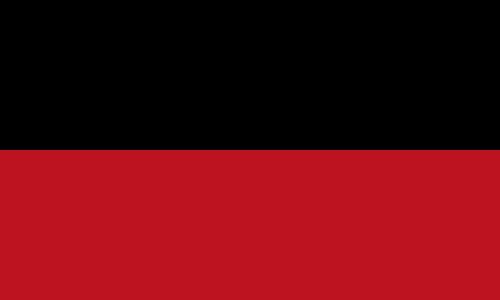
1806–1918
Kingdom of Württemberg
Napoleon elevated the duchy of Württemberg to a kingdom in 1806; its black-over-red bicolor flew over Stuttgart until the monarchy fell at the end of World War I.
Today part of: Germany
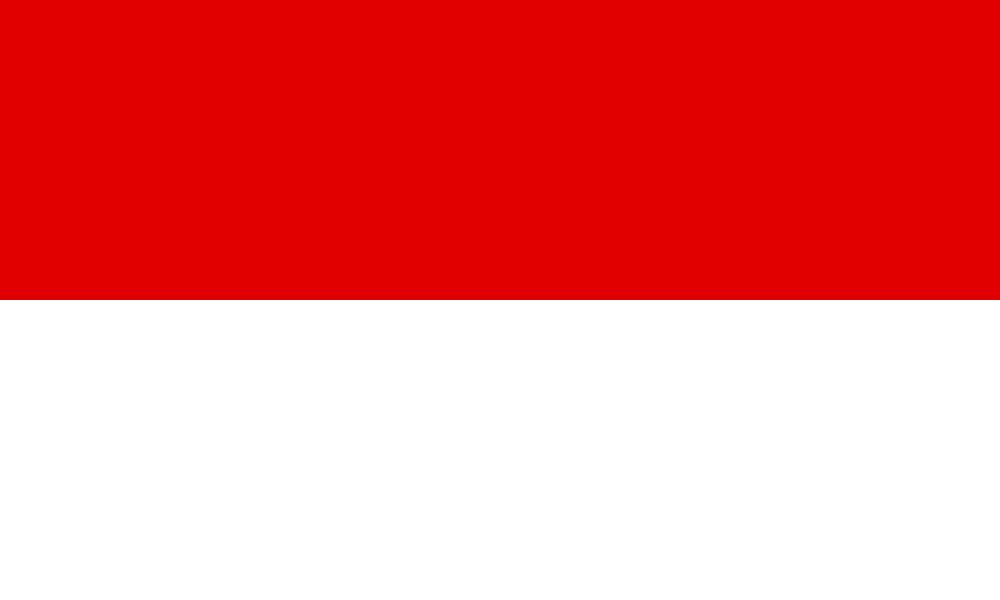
1806–1918
Grand Duchy of Hesse
A red-over-white bicolor for the Hesse-Darmstadt grand dukes, whose dynasty married into Europe's thrones — the last Tsarina of Russia was a Hessian princess.
Today part of: Germany
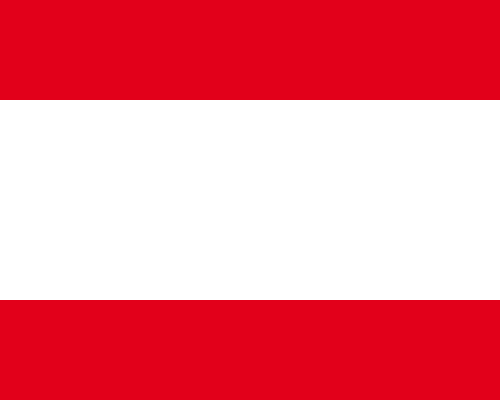
1803–1866
Electorate of Hesse
The Hesse-Kassel state, the only German principality to keep the title 'Elector' after the Holy Roman Empire dissolved, until Prussia annexed it in 1866.
Today part of: Germany
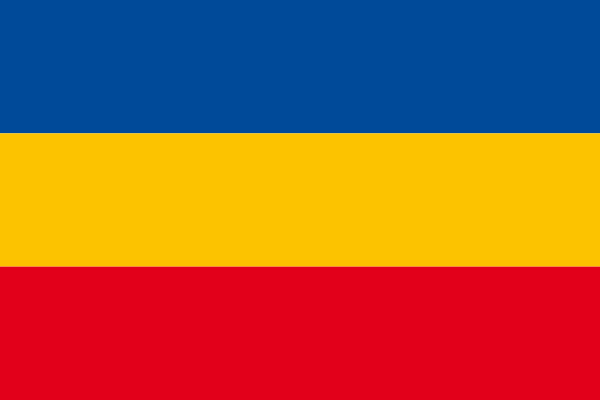
1815–1918
Grand Duchies of Mecklenburg
The blue-yellow-red tricolor shared by the two Mecklenburg grand duchies (Schwerin and Strelitz) on the Baltic coast, ruled by branches of the same Obotrite dynasty.
Today part of: Germany
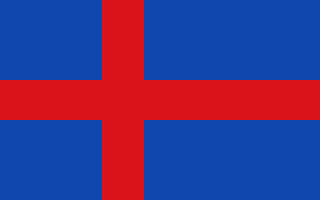
1815–1918
Grand Duchy of Oldenburg
A blue-red bicolor for the northwest German grand duchy whose ruling house also briefly held the thrones of Denmark, Greece, and Russia through dynastic marriage.
Today part of: Germany
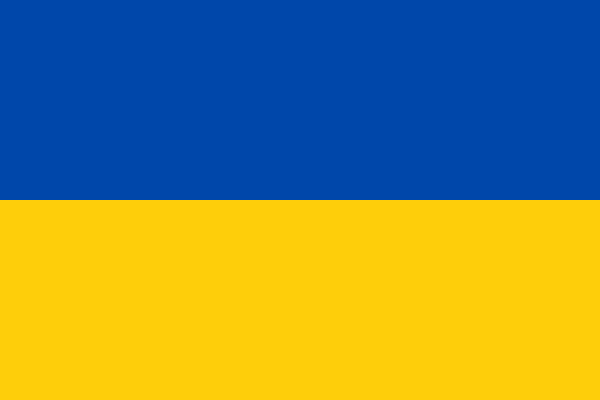
1815–1918
Duchy of Brunswick
The blue-over-yellow bicolor of the Welf dukes; its 'Black Duke' Frederick William raised a famous corps of black-clad hussars to fight Napoleon and died at Quatre Bras.
Today part of: Germany
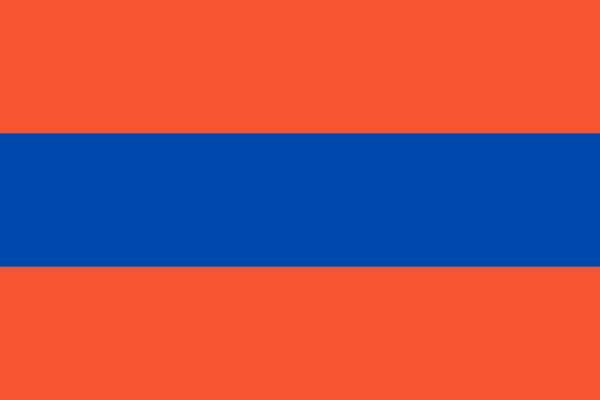
1806–1866
Duchy of Nassau
An orange-blue bicolor for the duchy on the Rhine and Lahn; its ruling house gave the Netherlands its royal dynasty, the House of Orange-Nassau.
Today part of: Germany

1809–1918
Grand Duchy of Saxe-Weimar-Eisenach
The black-yellow-green flag of the Thuringian grand duchy whose Weimar court, under Goethe and Schiller, became the cultural heart of German classicism.
Today part of: Germany

1826–1918
Duchy of Saxe-Coburg and Gotha
A green-white bicolor for the small Thuringian duchy that became the 'stud farm of Europe' — its princes married into the British, Belgian, Portuguese, and Bulgarian thrones.
Today part of: Germany
1778–1918
Principalities of Reuss
The tiny Thuringian principalities famous for naming every male ruler Heinrich and numbering them in sequence — the elder line ran the count up to Heinrich LXVII.
Today part of: Germany

1816–1918
Principalities of Schwarzburg
A blue-white bicolor for the two small Thuringian principalities of Rudolstadt and Sondershausen, ruled by one of Germany's oldest comital dynasties.
Today part of: Germany
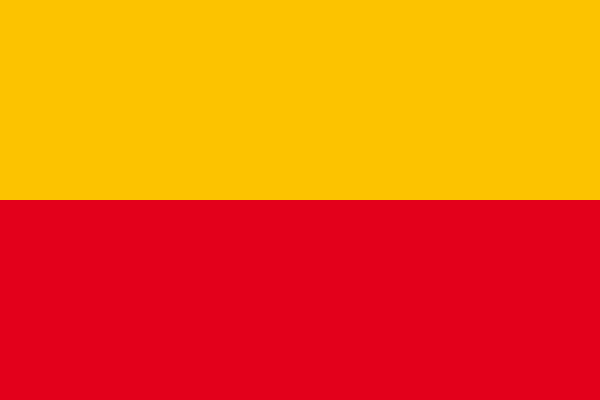
1815–1918
Principality of Lippe
A yellow-red bicolor for the small principality around Detmold, near the Teutoburg Forest where Germanic tribes annihilated three Roman legions in AD 9.
Today part of: Germany
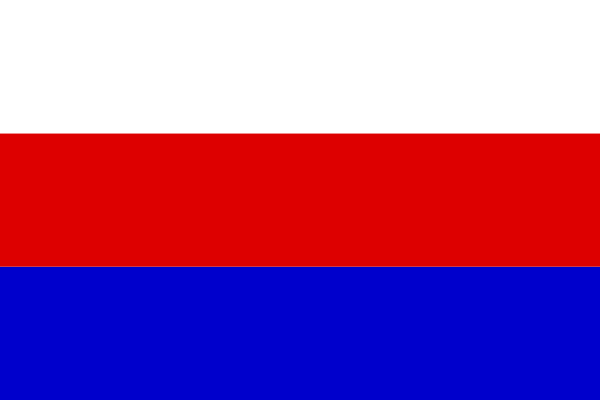
1807–1918
Principality of Schaumburg-Lippe
One of the smallest German states, a blue-red-white tricolor principality of barely 50,000 people that nonetheless survived as a sovereign state until 1918.
Today part of: Germany
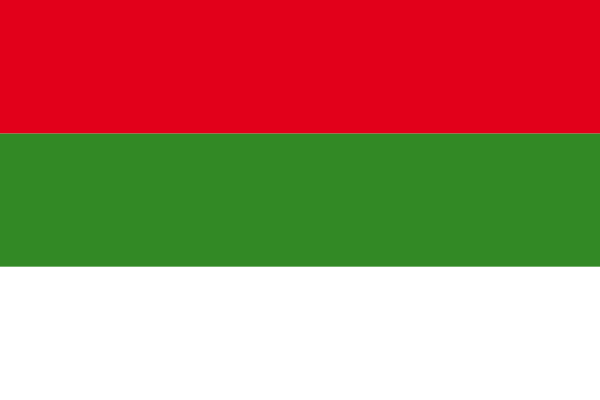
1863–1918
Duchy of Anhalt
A green-white bicolor for the central German duchy, ancestral home of the Ascanian dynasty and birthplace of Catherine the Great of Russia.
Today part of: Germany
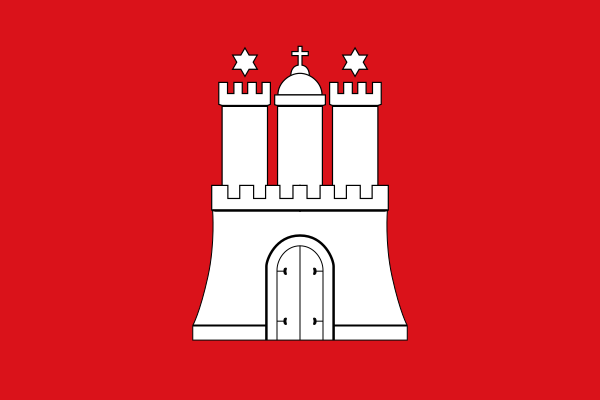
1819–1919
Free City of Hamburg
The white castle on red is the Hanseatic city-state's medieval emblem; its three towers and the cross-topped gate symbolize the free port's civic independence.
Today part of: Germany
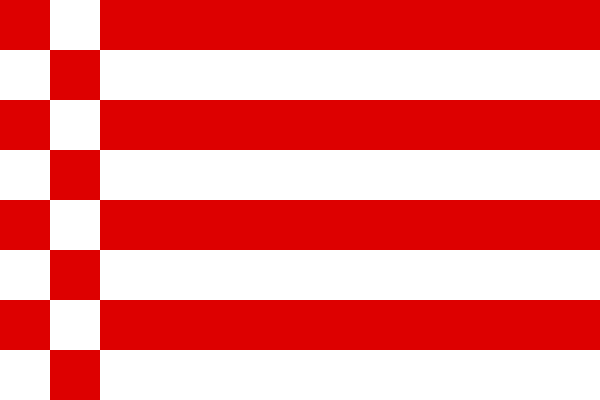
1813–1919
Free City of Bremen
The red-and-white 'Speckflagge' (bacon flag) of checkered stripes flew over the Hanseatic port-republic, one of the founding member states of the German Empire.
Today part of: Germany
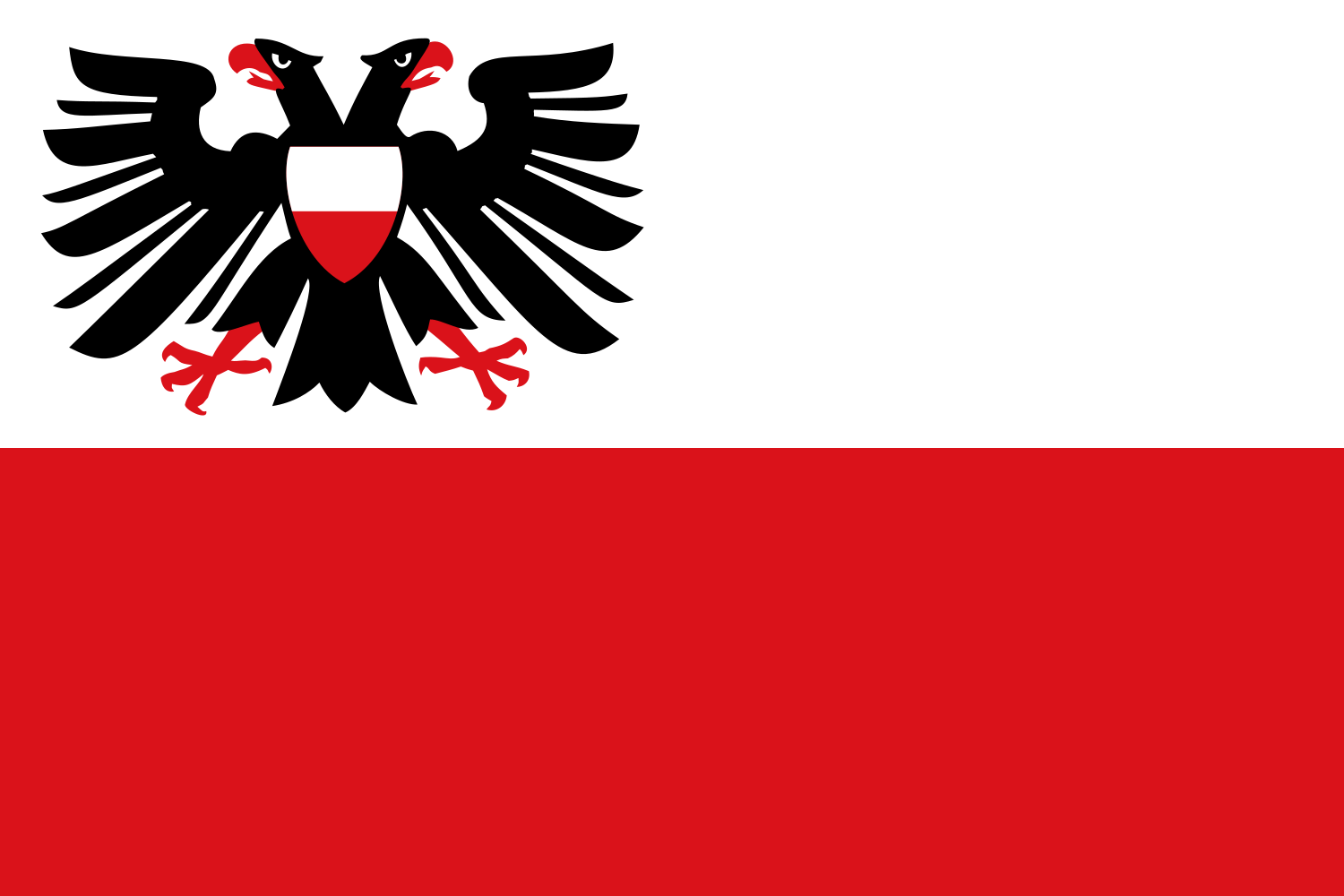
1226–1937
Free City of Lübeck
The white-over-red bicolor of the 'Queen of the Hanseatic League', the city that led the medieval Baltic trade network before the Nazis stripped its statehood in 1937.
Today part of: Germany
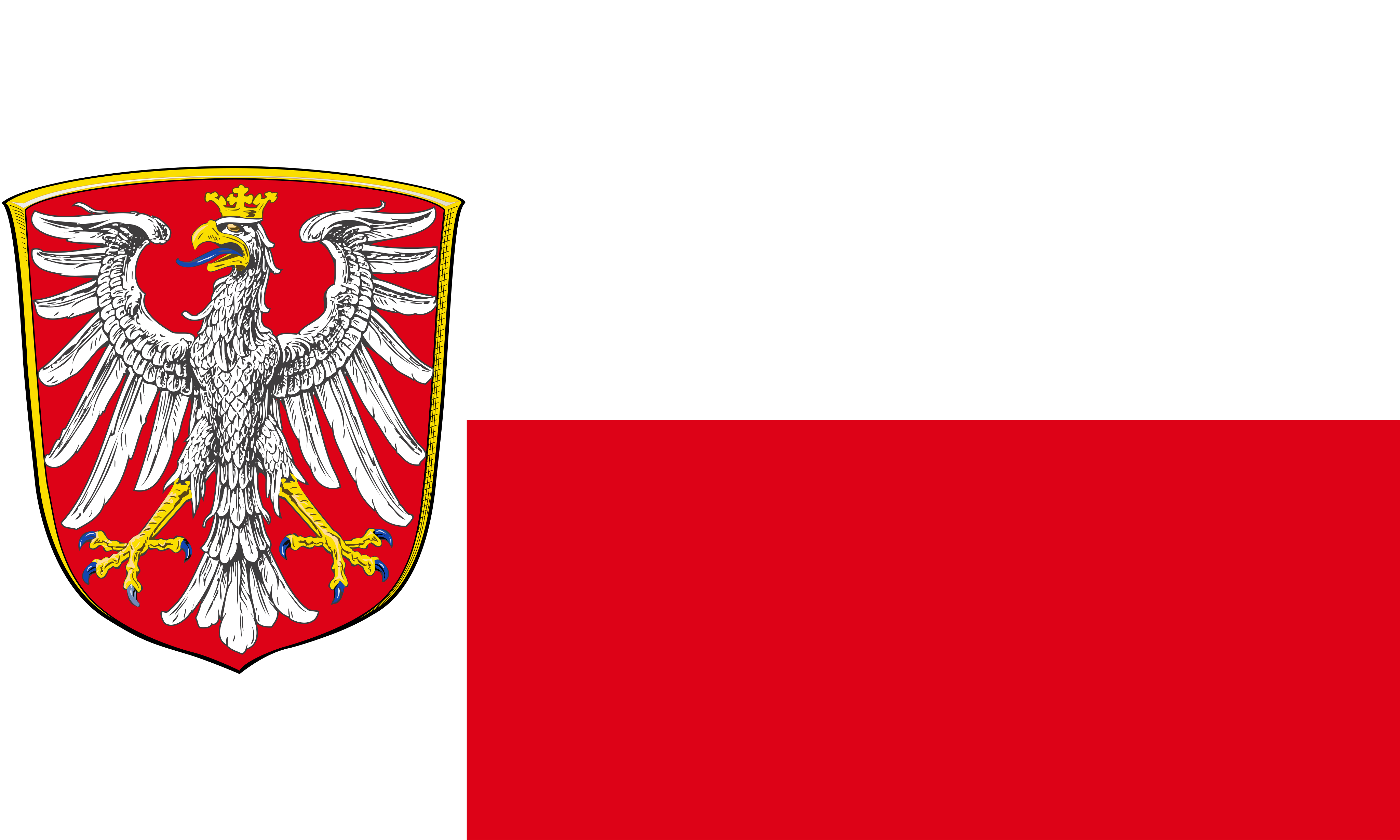
1815–1866
Free City of Frankfurt
The white-over-red city republic that hosted the German Confederation's parliament, until Prussia annexed it for siding against it in the 1866 war.
Today part of: Germany
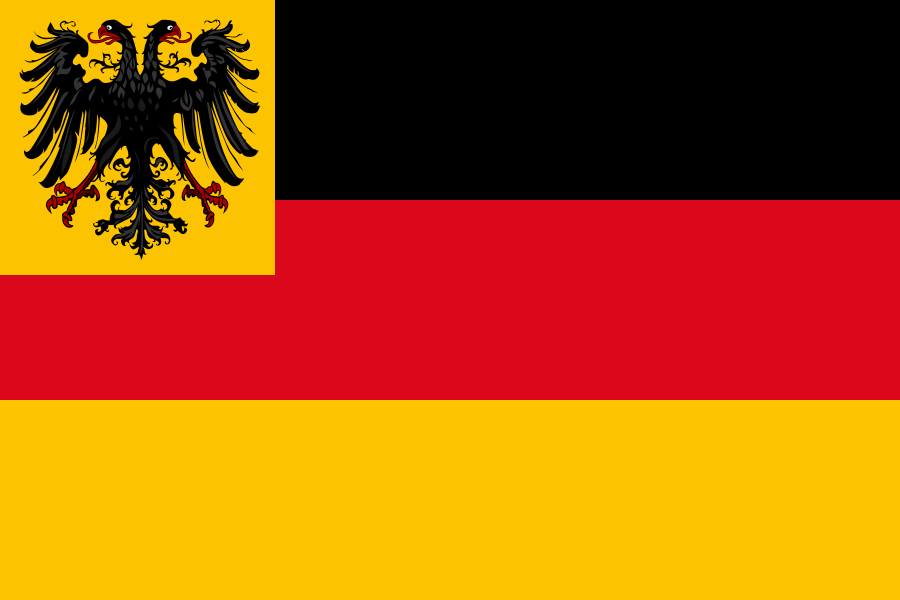
1815–1866
German Confederation
The loose league of German states formed after Napoleon's defeat flew a black-red-gold war flag — the same liberal colors later adopted by unified Germany.
Today part of: Germany
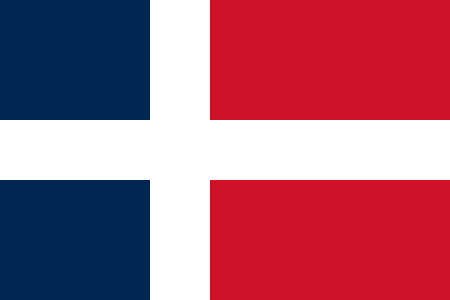
1947–1956
Saar Protectorate
A French-administered, semi-autonomous state after WWII, its flag a Nordic cross in French blue and red. A 1955 referendum returned the coal-rich Saar to West Germany.
Today part of: Germany
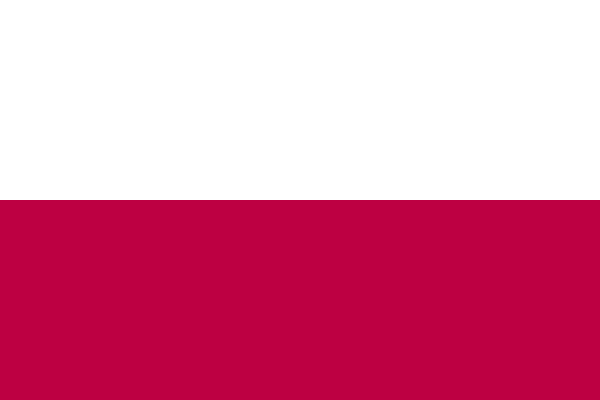
1806–1813
Grand Duchy of Berg
A Napoleonic client state on the Rhine, first ruled by Marshal Murat; its white flag bore a red lion before it was dissolved after Napoleon's defeat.
Today part of: Germany
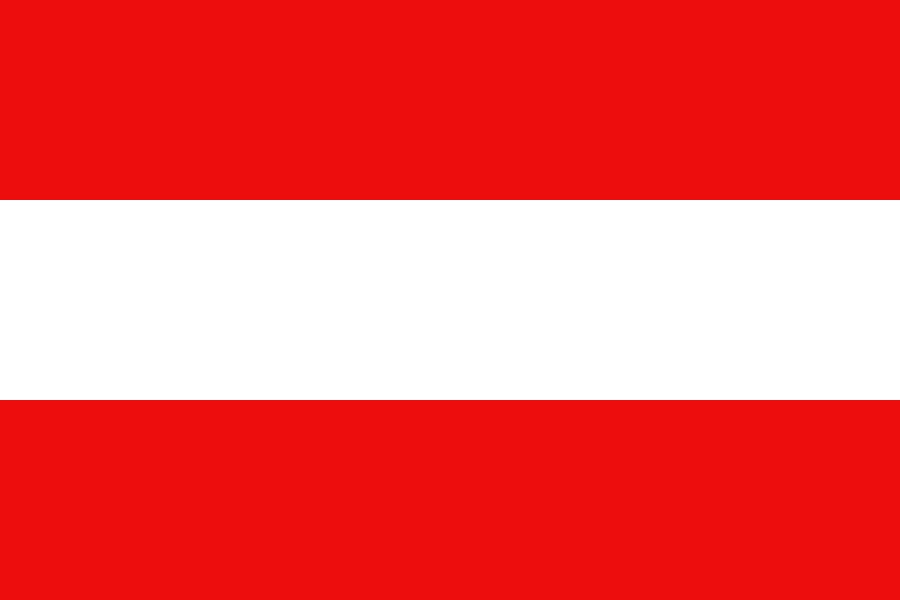
1032–1477
Duchy of Burgundy
The Valois dukes of Burgundy built one of the richest states in late-medieval Europe, rivaling the French crown, until Duke Charles the Bold fell at the Battle of Nancy in 1477.
Today part of: France
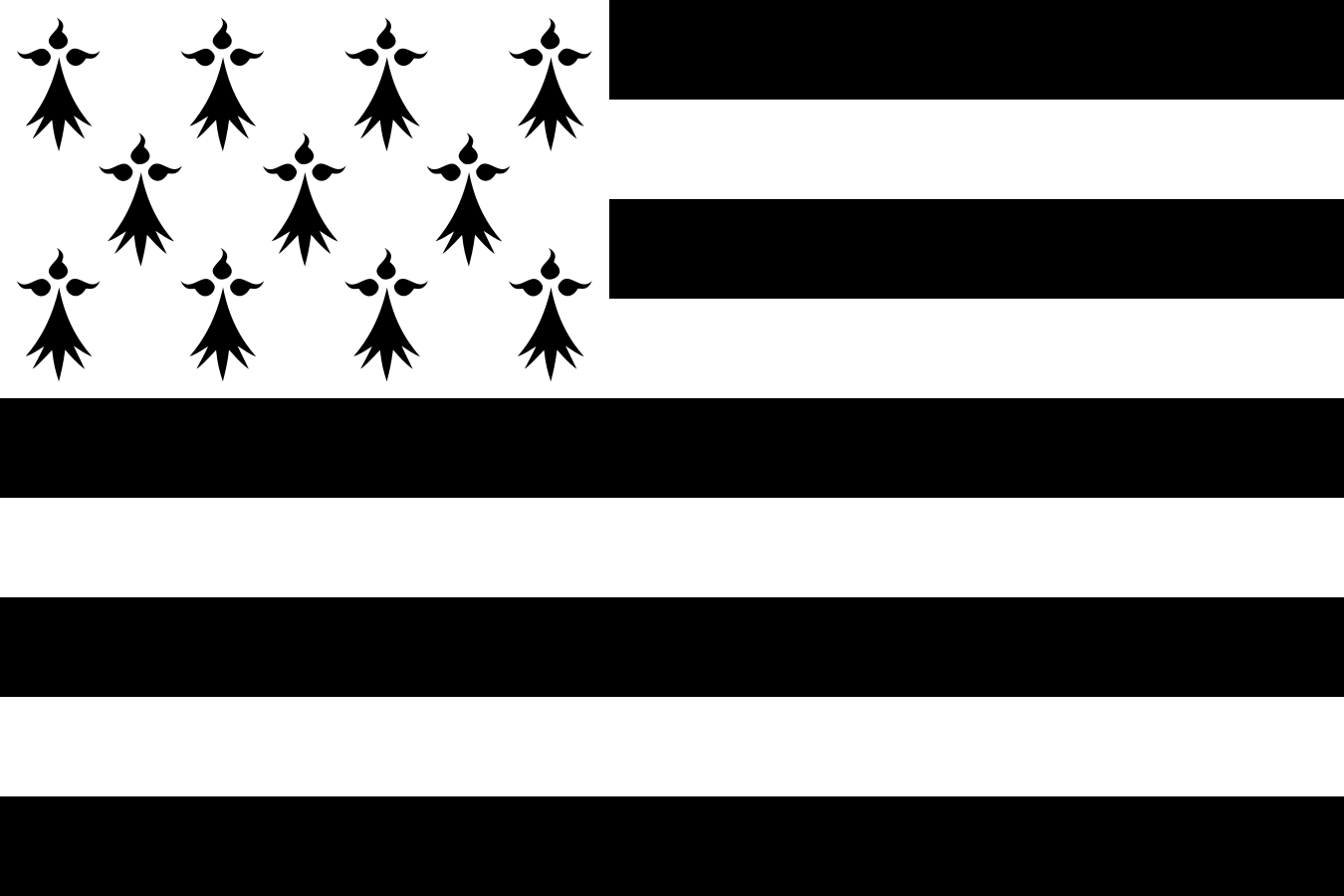
939–1547
Duchy of Brittany
The independent Breton duchy on France's Atlantic peninsula; its modern black-and-white 'Gwenn ha du' flag recalls the duchy absorbed into France through royal marriage in 1532.
Today part of: France
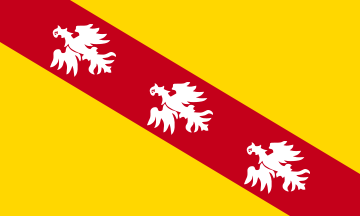
959–1766
Duchy of Lorraine
A gold flag with a red diagonal band and three white eaglets; the duchy on the German frontier passed to France only after its last duke became Holy Roman Emperor.
Today part of: France
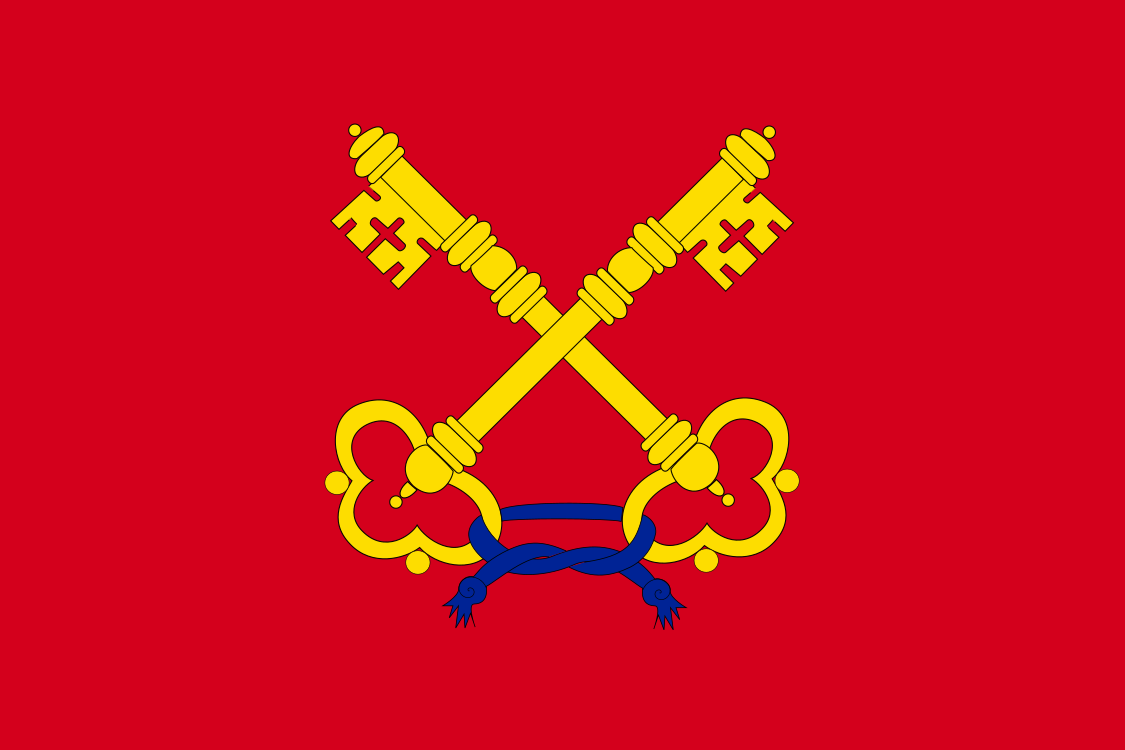
1274–1791
Comtat Venaissin
A papal enclave around Avignon ruled directly by the Popes for over five centuries — even surrounding the Avignon papacy — until France annexed it during the Revolution.
Today part of: France
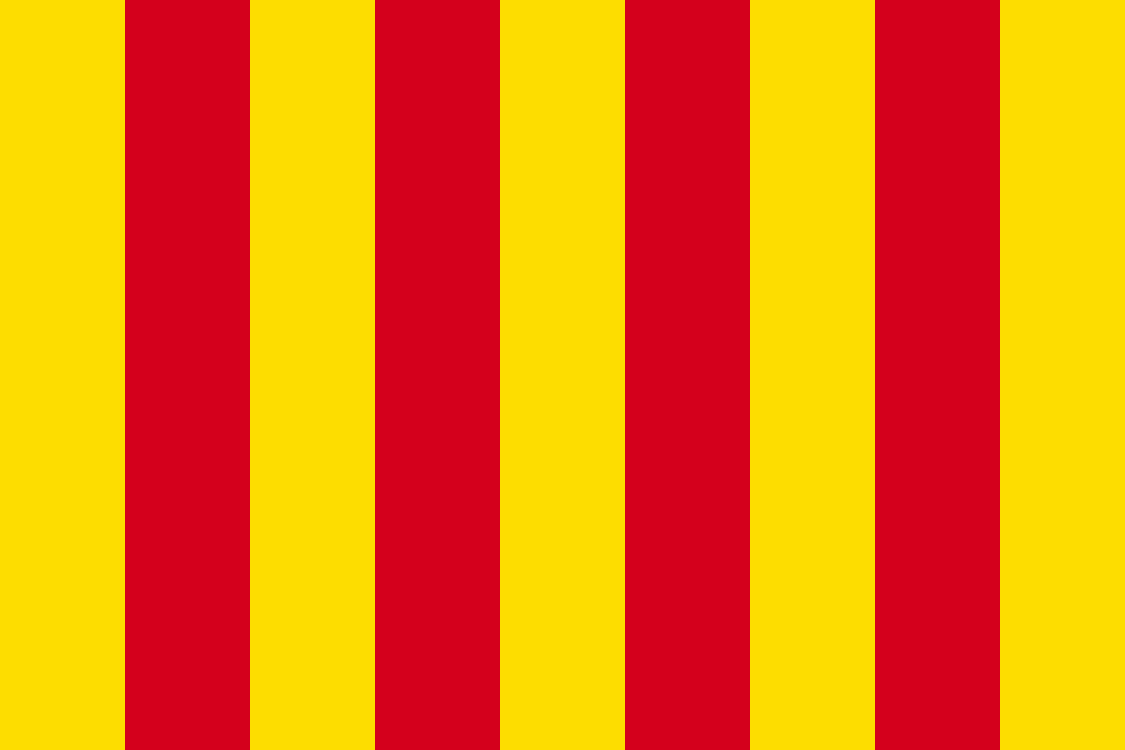
972–1481
County of Provence
The gold-and-red striped banner of the medieval county, ruled by the House of Barcelona and then Anjou, before it was bequeathed to the French crown in 1481.
Today part of: France
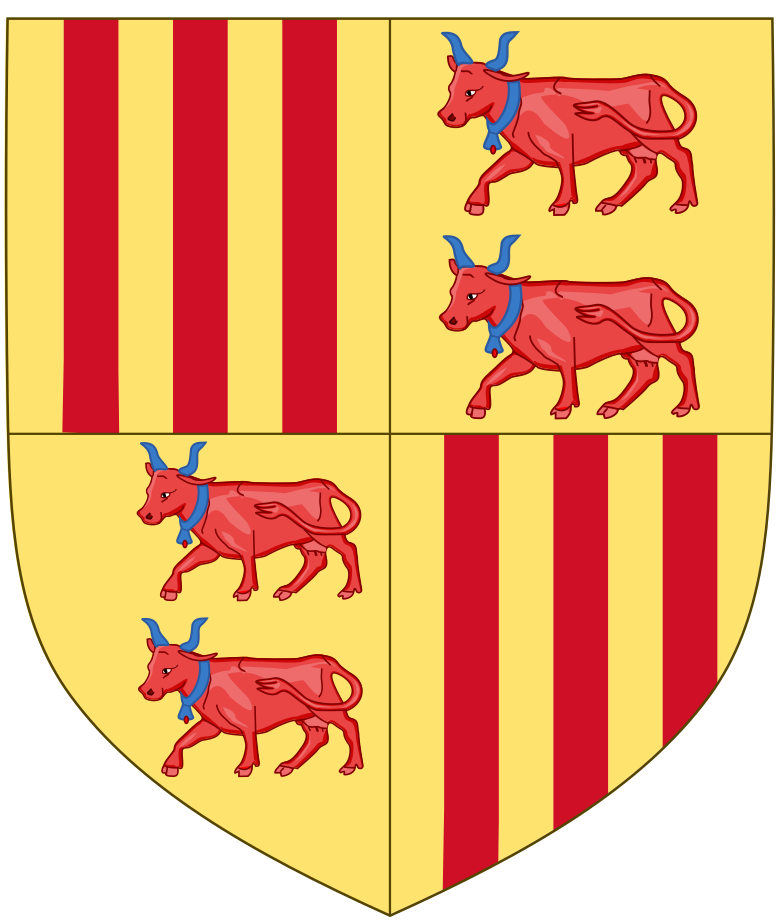
1011–1607
County of Foix
A Pyrenean county whose arms joined the gold-and-red pales of Foix with the cows of Béarn; its counts became kings of Navarre, and one, Henry, became King of France.
Today part of: France
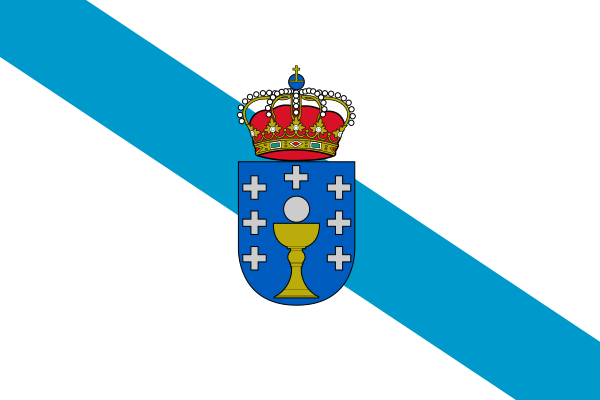
910–1833
Kingdom of Galicia
One of medieval Europe's oldest kingdoms, in Spain's far northwest; its modern white flag with a blue diagonal recalls the realm home to the pilgrim shrine of Santiago de Compostela.
Today part of: Spain
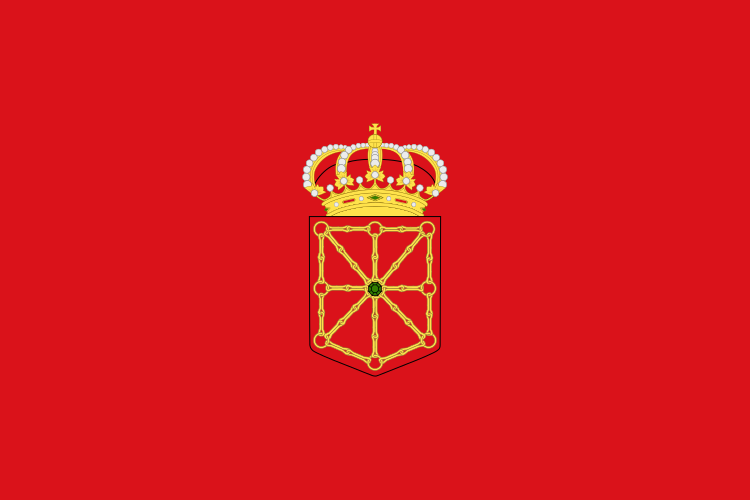
824–1620
Kingdom of Navarre
The Basque Pyrenean kingdom whose red flag bears golden chains, said to commemorate Navarrese knights breaking the chains around the Almohad caliph's tent in 1212.
Today part of: Spain
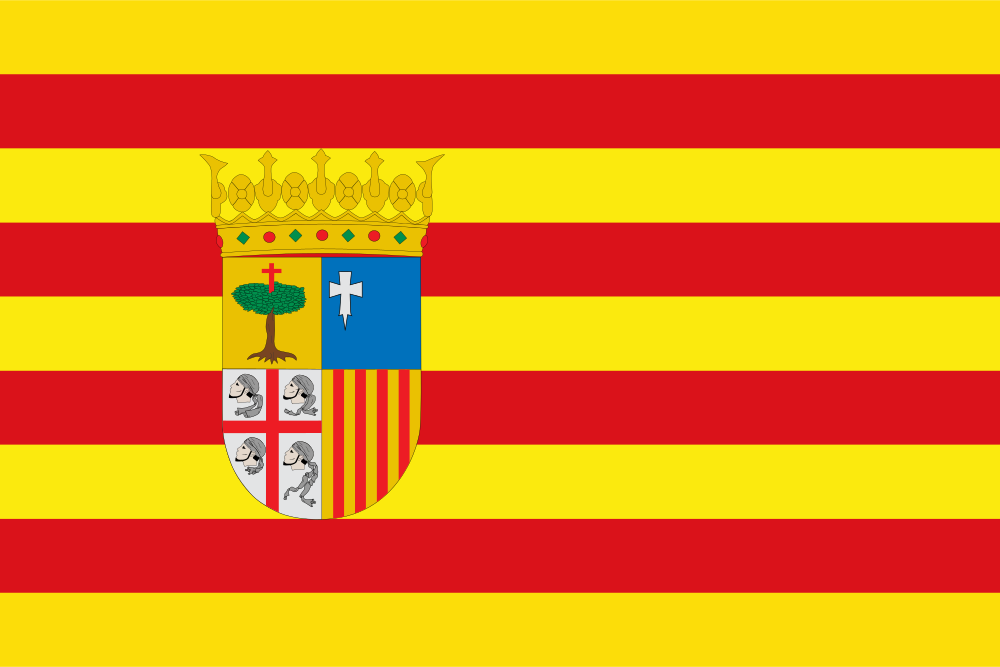
1162–1716
Crown of Aragon
The four red bars on gold — the Senyera — flew over a Mediterranean empire that ruled Catalonia, Valencia, the Balearics, Sardinia, Sicily, and at times Naples and Athens.
Today part of: Spain
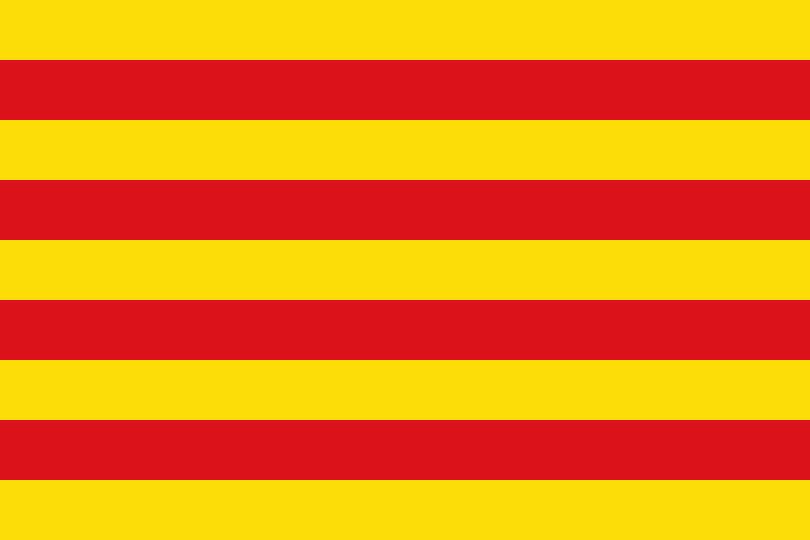
1162–1714
Principality of Catalonia
The Senyera of four red bars on gold flew over the Catalan lands within the Crown of Aragon; Barcelona's fall in 1714 ended its self-government, an event still marked each September 11.
Today part of: Spain
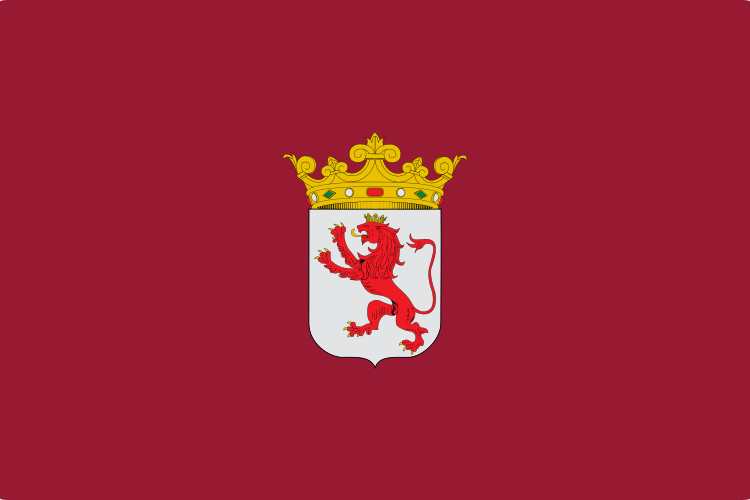
910–1230
Kingdom of León
The purple lion on white of the early medieval Christian kingdom that drove the Reconquista; its parliament of 1188 is often called the oldest in Europe.
Today part of: Spain
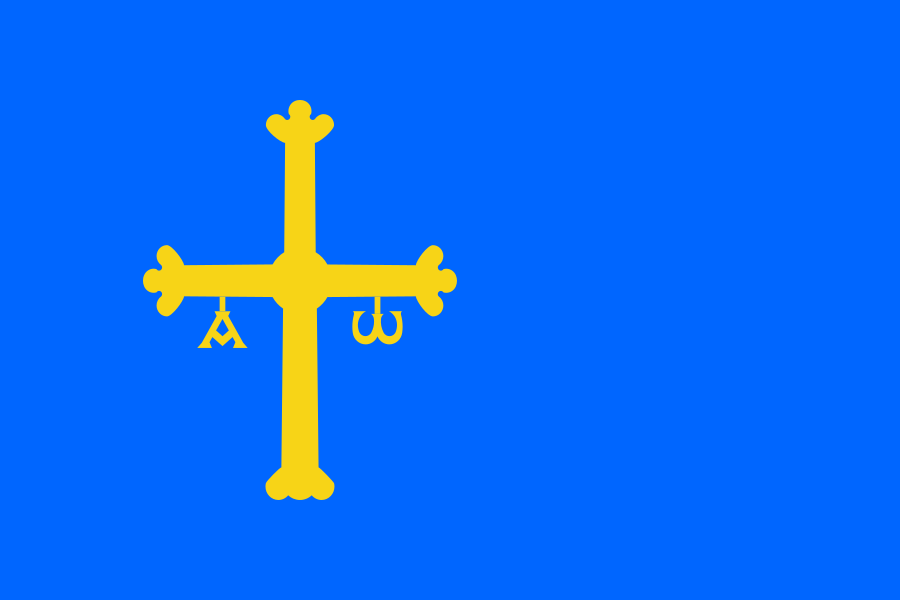
718–924
Kingdom of Asturias
The blue flag with the gold Victory Cross marks the first Christian kingdom of the Reconquista, founded by Pelagius after his victory at Covadonga against the Moors.
Today part of: Spain
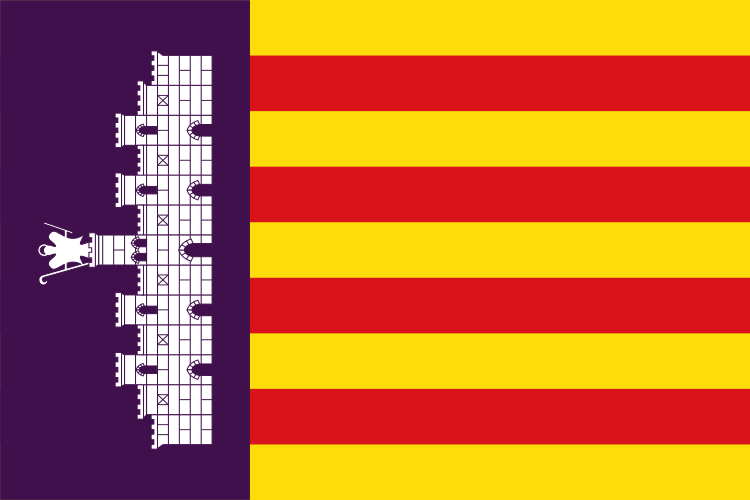
1231–1715
Kingdom of Majorca
A short-lived independent Balearic kingdom carved out by James I of Aragon for a younger son, ruling the islands plus Roussillon and Montpellier on the mainland.
Today part of: Spain
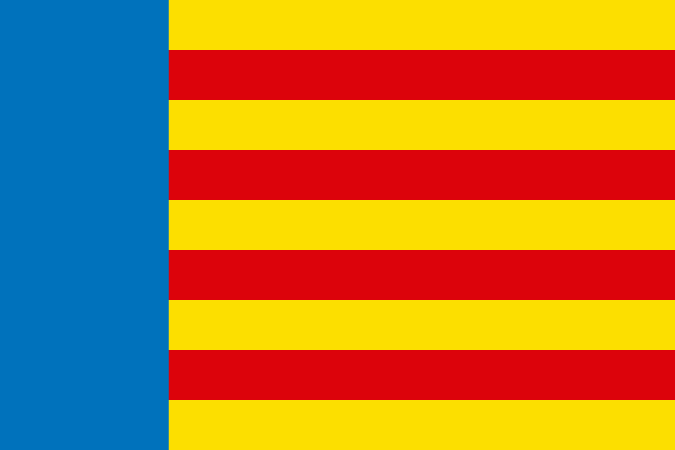
1238–1707
Kingdom of Valencia
A realm of the Crown of Aragon whose Senyera added a crowned blue stripe at the hoist; it was abolished by the Bourbons after backing the losing side in the War of Spanish Succession.
Today part of: Spain
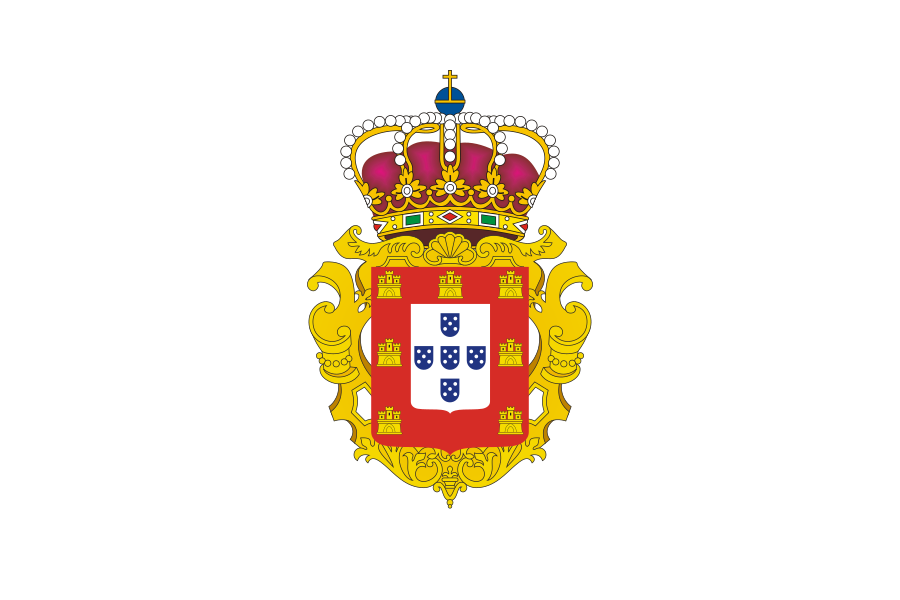
1139–1910
Kingdom of Portugal
The white-and-blue royal banner with the shield of five 'quinas' flew over the seafaring kingdom that launched the Age of Discovery, until the 1910 republican revolution.
Today part of: Portugal
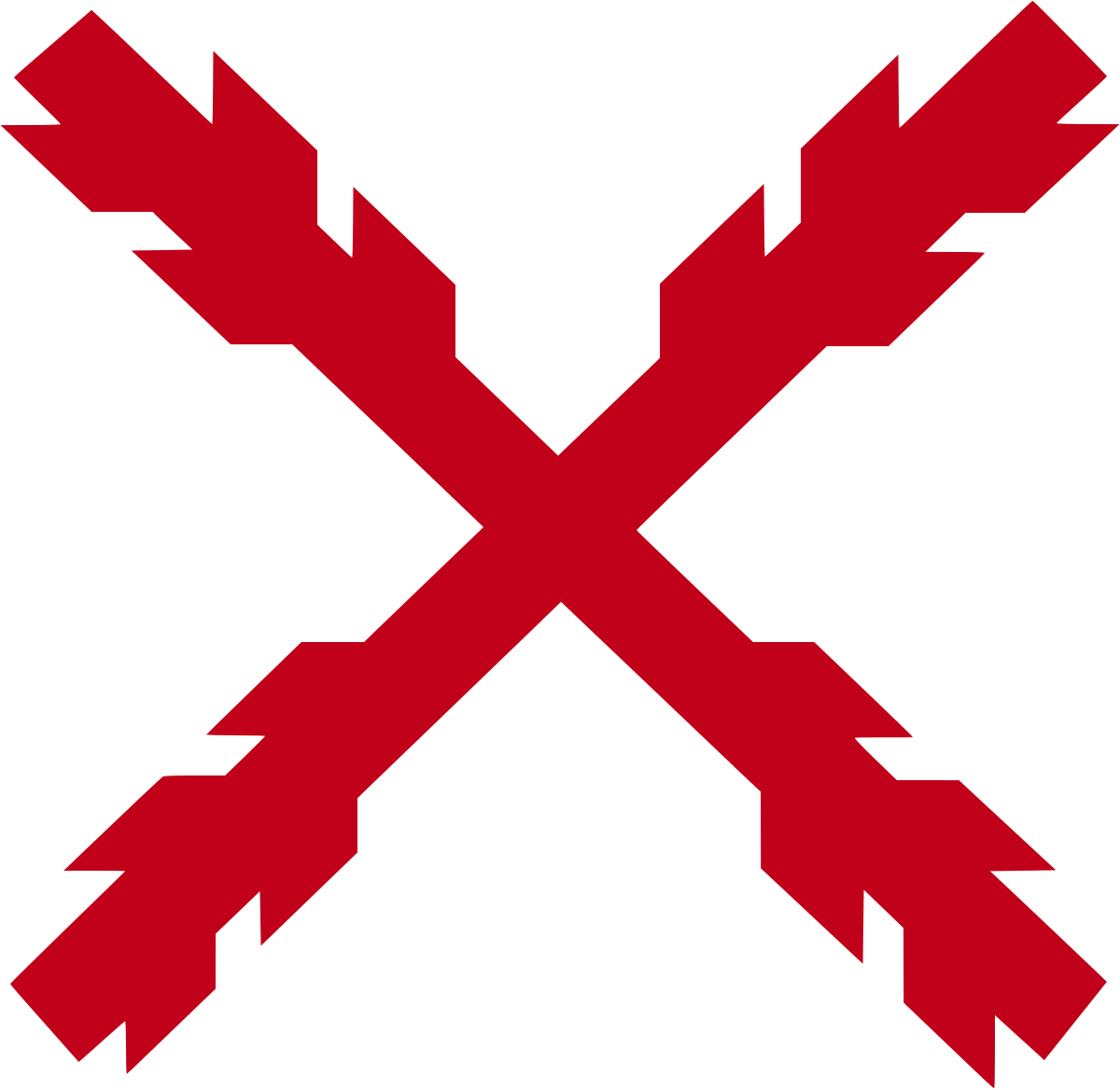
1580–1640
Iberian Union
For sixty years the Spanish and Portuguese crowns were joined under one Habsburg king, briefly creating a single empire spanning the globe, until Portugal revolted in 1640.
Today part of: Spain, Portugal

1807–1815
Duchy of Warsaw
Napoleon's Polish client state, a brief restoration of statehood after the Partitions; its white-and-crimson flag preceded the modern Polish flag by a century.
Today part of: Poland
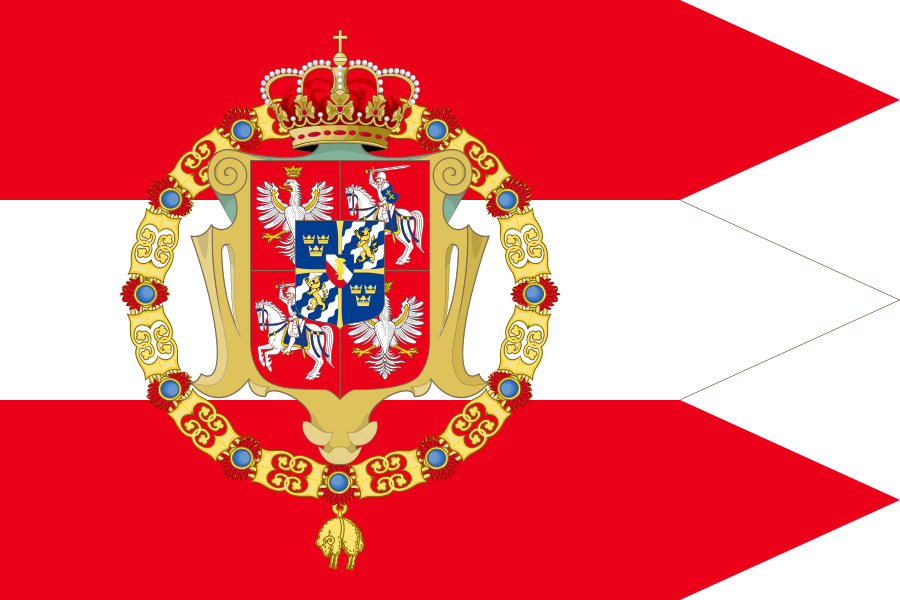
1569–1795
Polish–Lithuanian Commonwealth
One of the largest states in Europe, an elective monarchy with an early constitution and a 'noble democracy', partitioned out of existence by Russia, Prussia, and Austria.
Today part of: Poland, Lithuania

1815–1846
Free City of Kraków
A tiny independent city-republic created at the Congress of Vienna, the last fragment of sovereign Poland, until Austria annexed it after a failed 1846 uprising.
Today part of: Poland
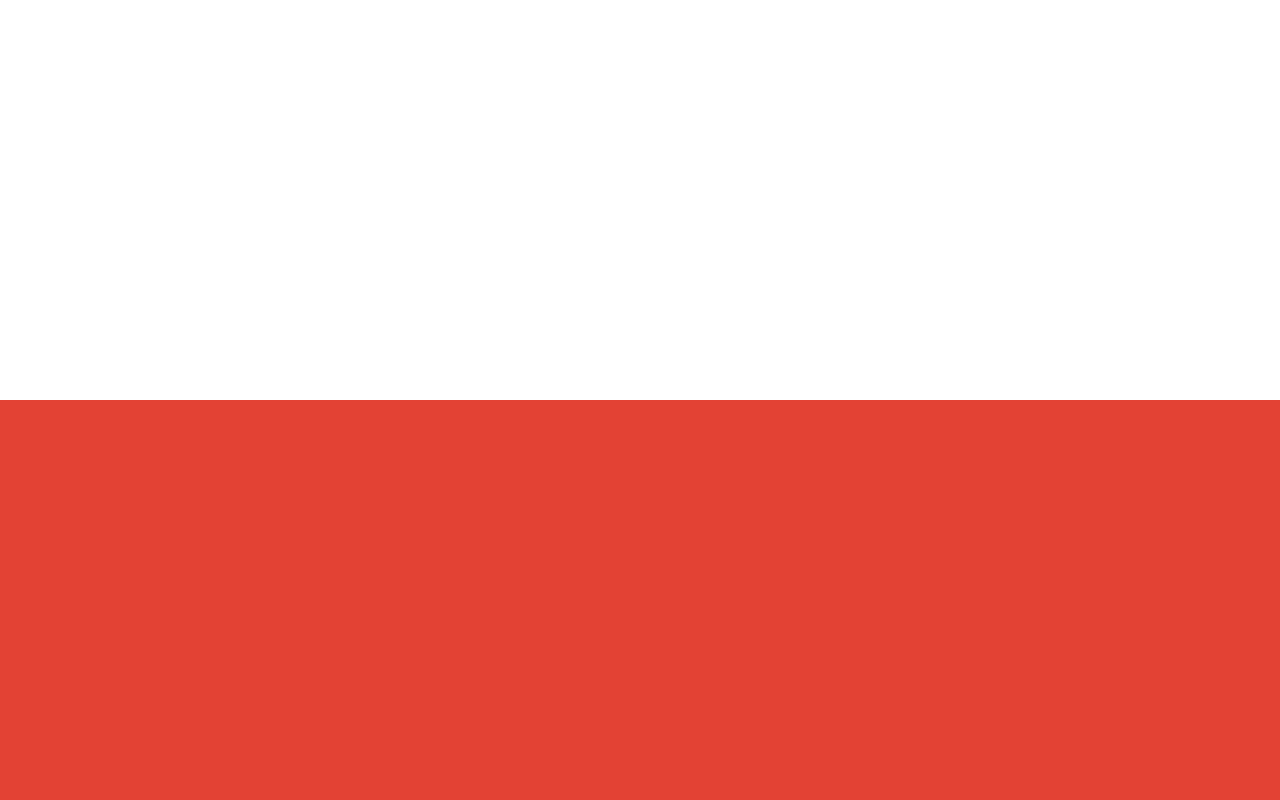
1947–1989
Polish People's Republic
The Soviet-aligned communist state flew the same white-and-red bicolor as the republic before and after it, the eagle on its arms shorn of its royal crown until 1989.
Today part of: Poland
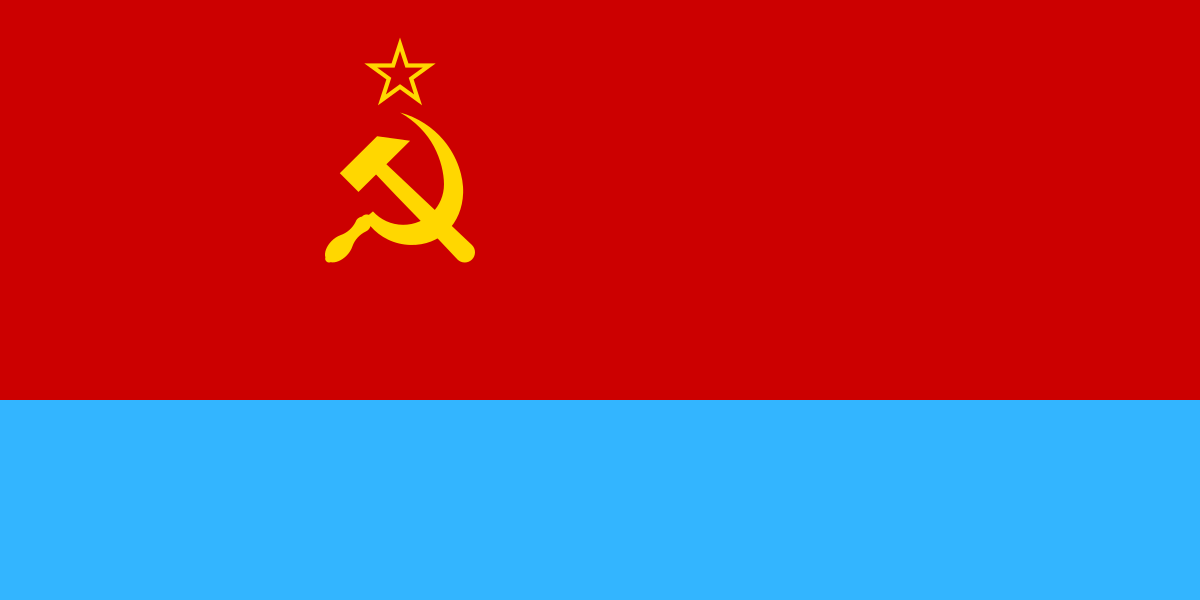
1949–1991
Ukrainian SSR
A red flag with a lower azure band and a gold hammer, sickle and star, flown by Soviet Ukraine — which, unusually, held its own seat at the United Nations.
Today part of: Ukraine
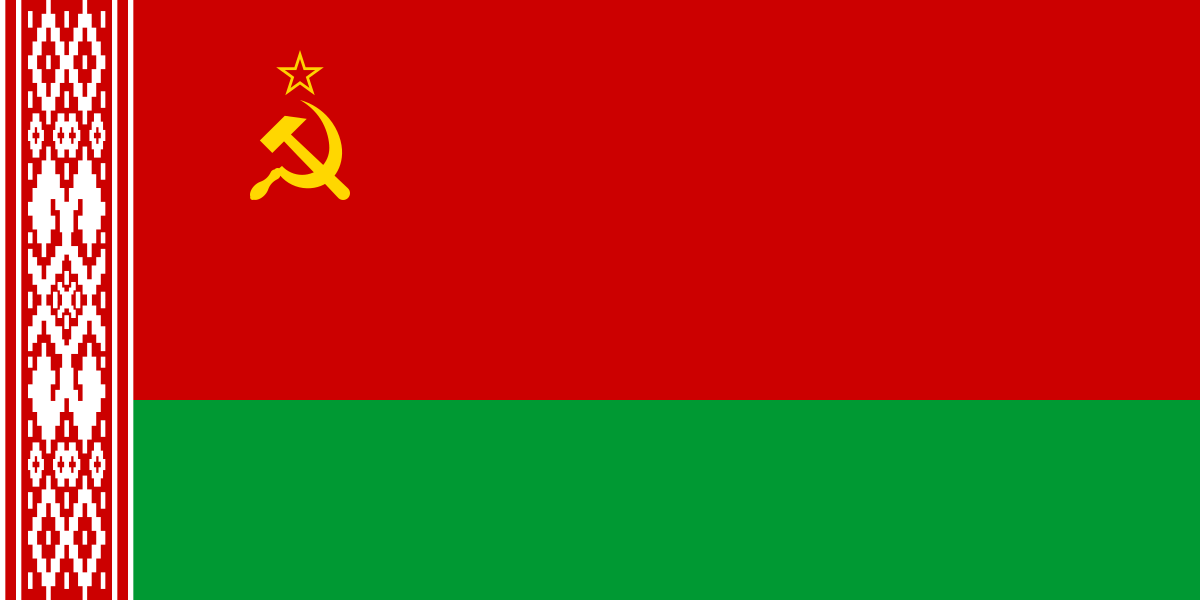
1951–1991
Byelorussian SSR
Red over a green band with a white folk-ornament stripe at the hoist; modern Belarus readopted a near-identical design in 1995, dropping only the hammer and sickle.
Today part of: Belarus
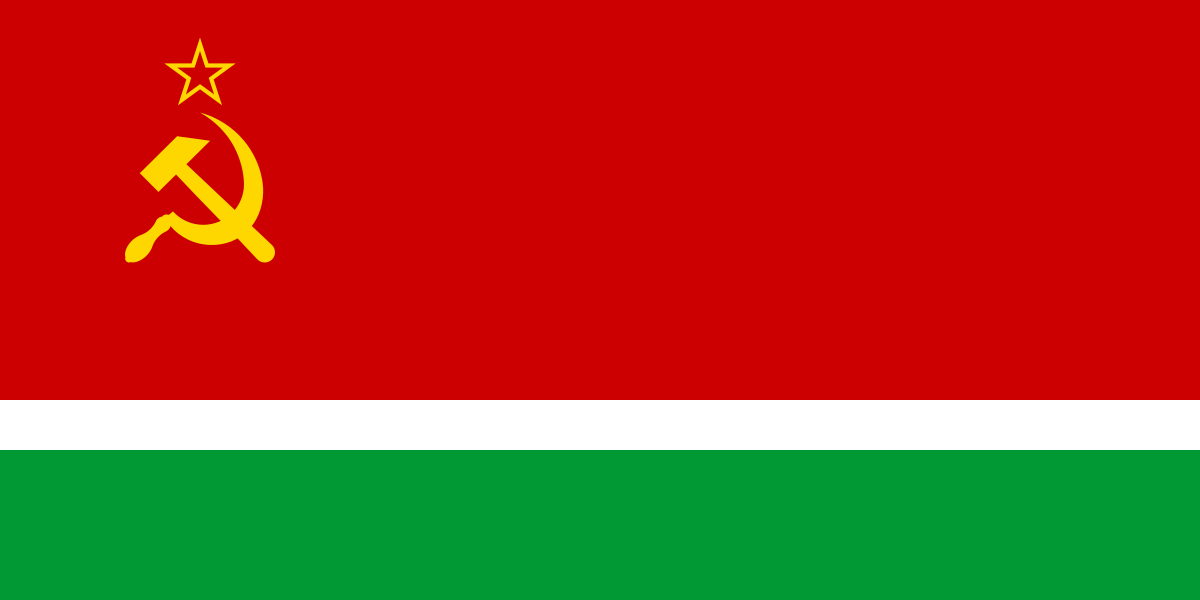
1953–1990
Lithuanian SSR
A red flag with white and green lower bands, flown over Soviet Lithuania until the republic became the first to declare independence from the USSR in 1990.
Today part of: Lithuania
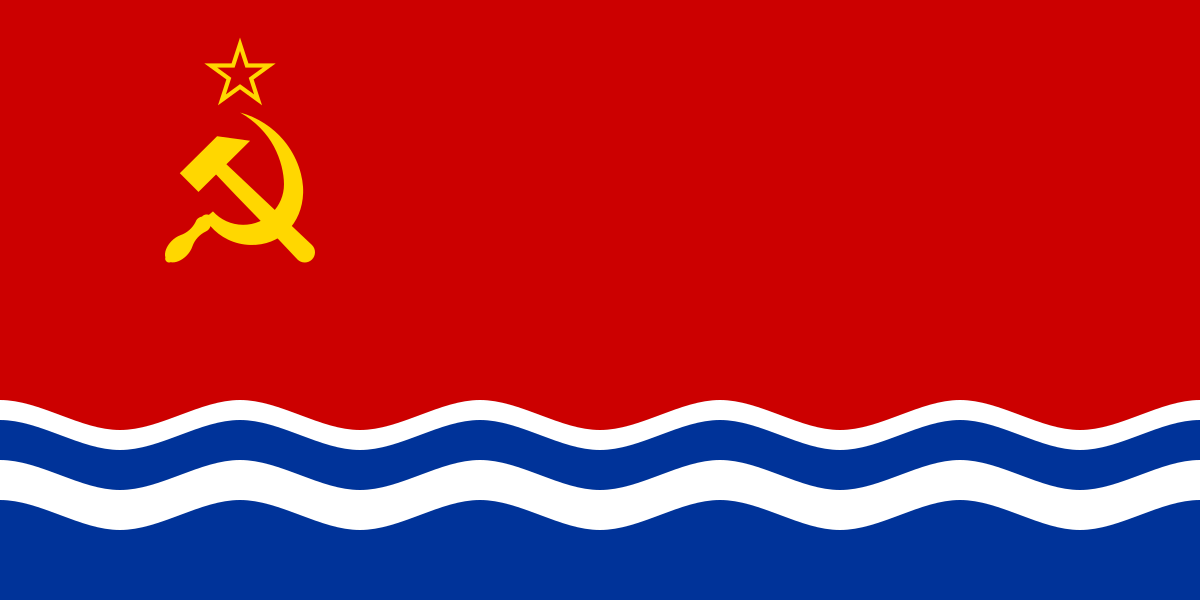
1953–1990
Latvian SSR
A red flag whose lower edge bore stylized white waves of the Baltic Sea beneath the hammer, sickle and star, used until Latvia restored its independence.
Today part of: Latvia
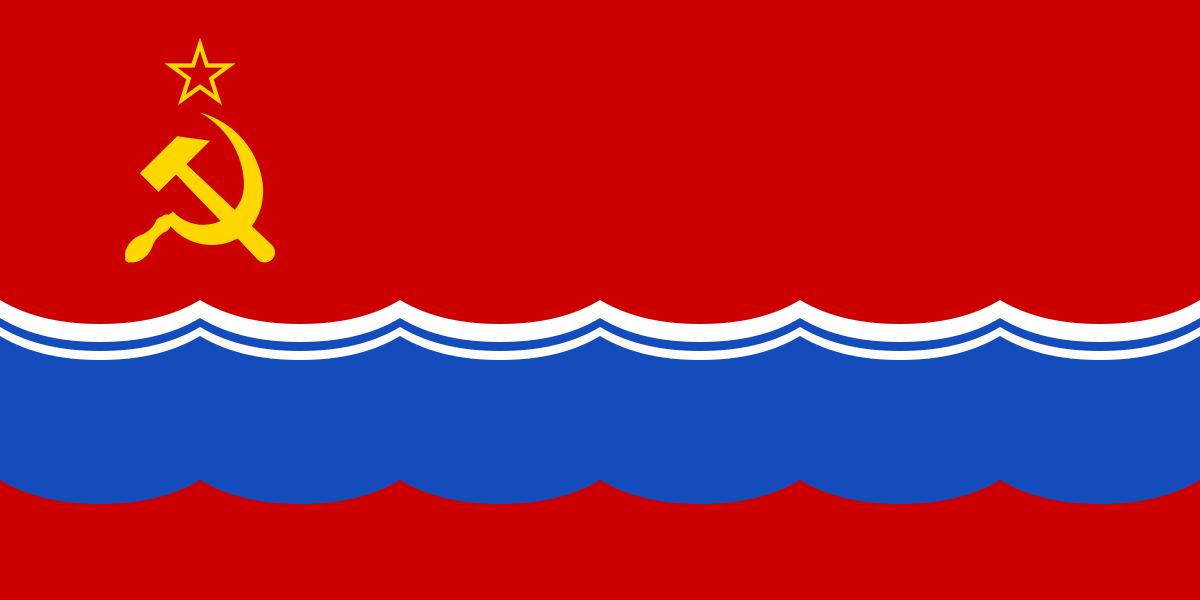
1953–1990
Estonian SSR
A red flag with a wavy blue-and-white Baltic band at the base, the Soviet flag of Estonia, replaced when the blue-black-white national tricolor was restored in 1990.
Today part of: Estonia
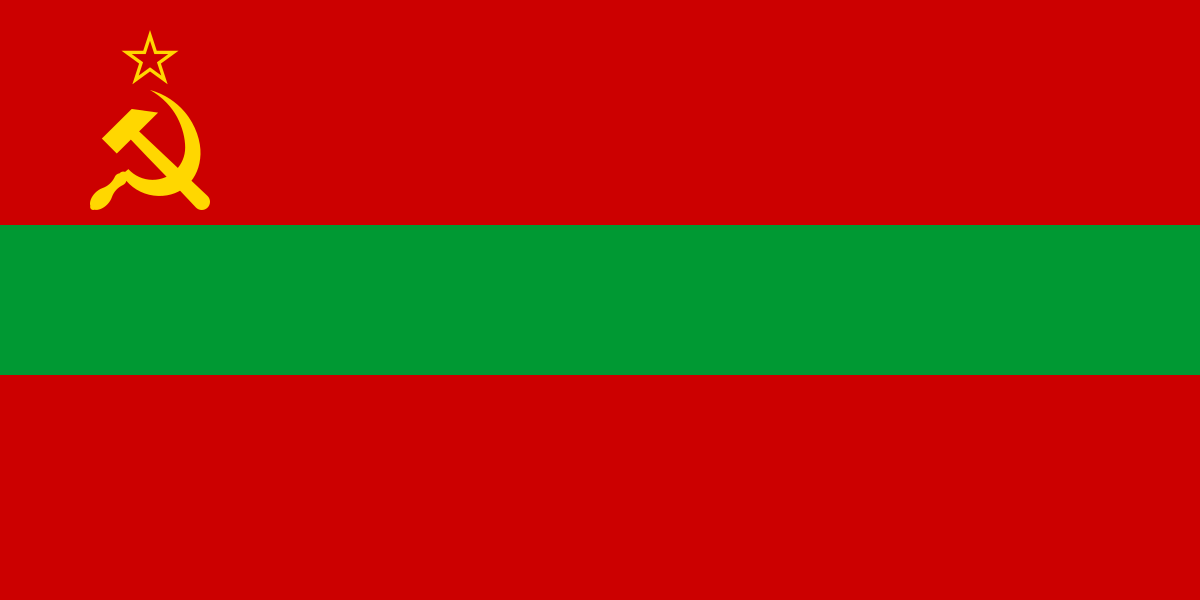
1952–1990
Moldavian SSR
A red flag with a central green stripe and the hammer, sickle and star, flown by Soviet Moldova before the country adopted a Romanian-style tricolor in 1990.
Today part of: Moldova
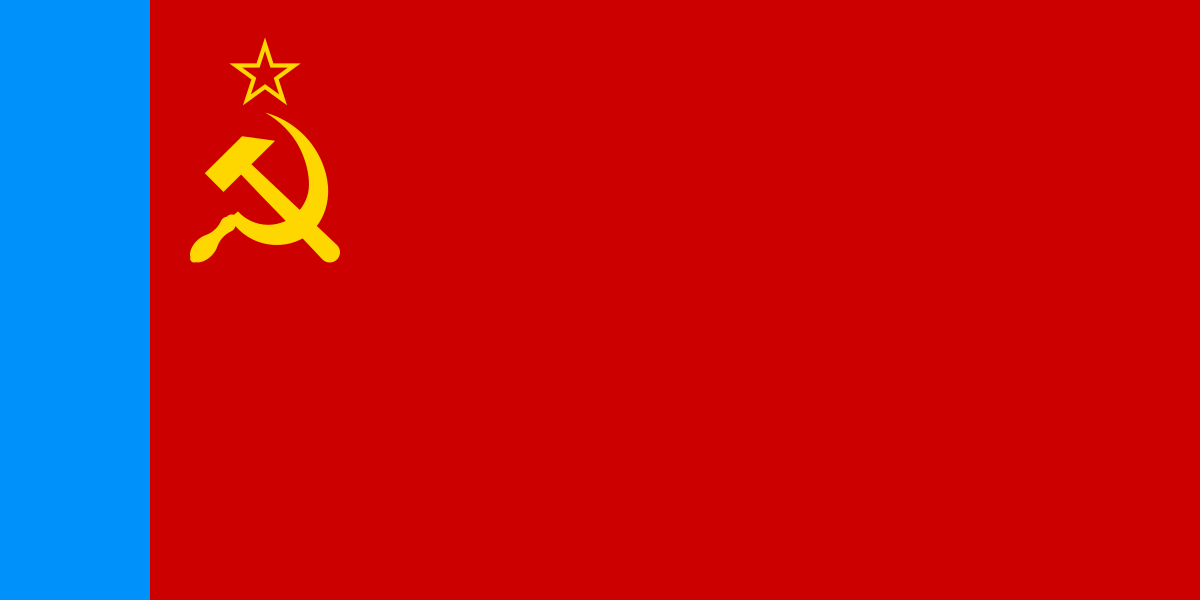
1954–1991
Russian SFSR
The largest Soviet republic flew a red flag with a thin blue stripe down the hoist; the RSFSR was the core of the USSR and became the Russian Federation in 1991.
Today part of: Russia
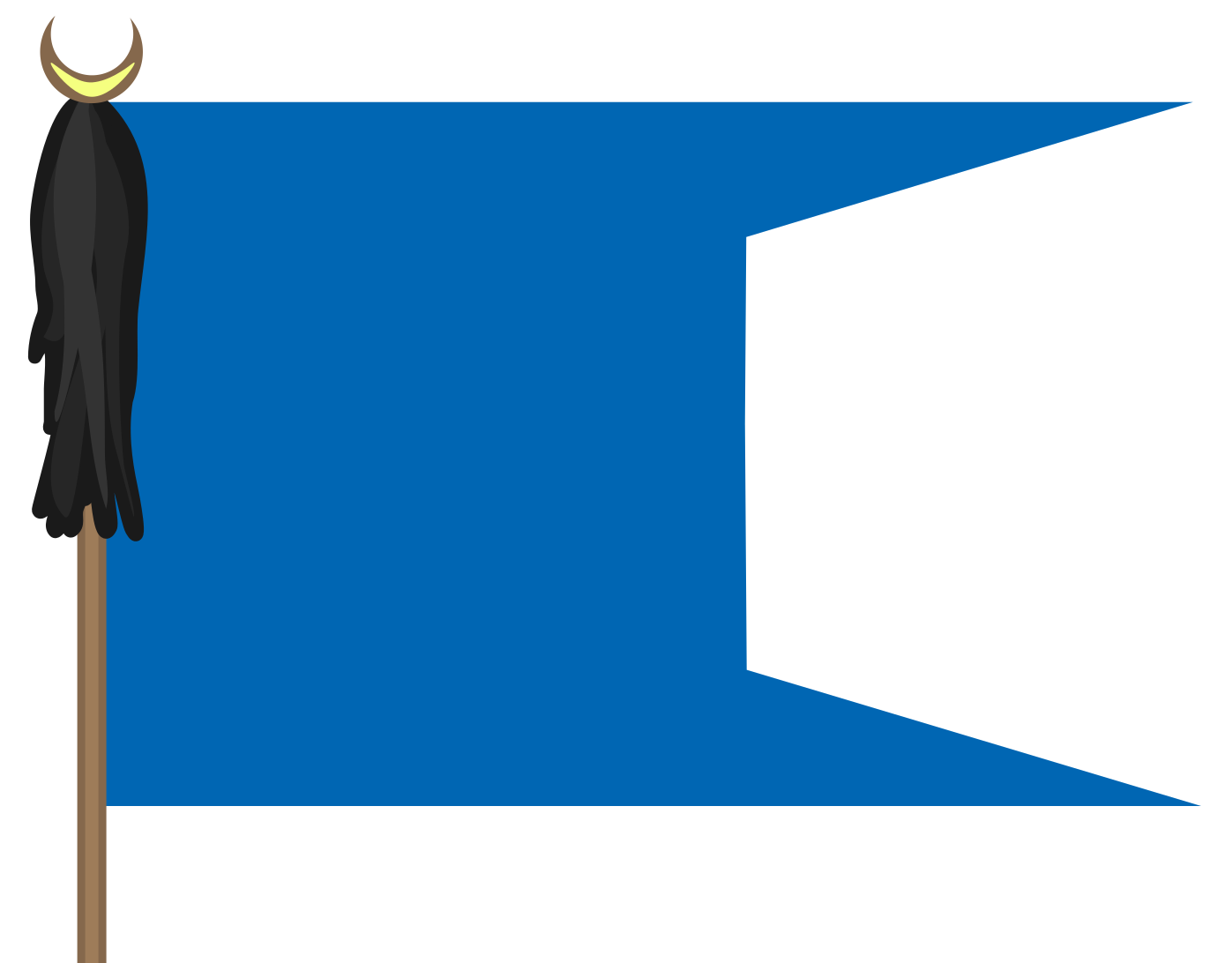
1438–1552
Kazan Khanate
A Tatar successor state of the Golden Horde on the Volga, conquered by Ivan the Terrible in 1552 — a turning point in Russia's eastward expansion.
Today part of: Russia
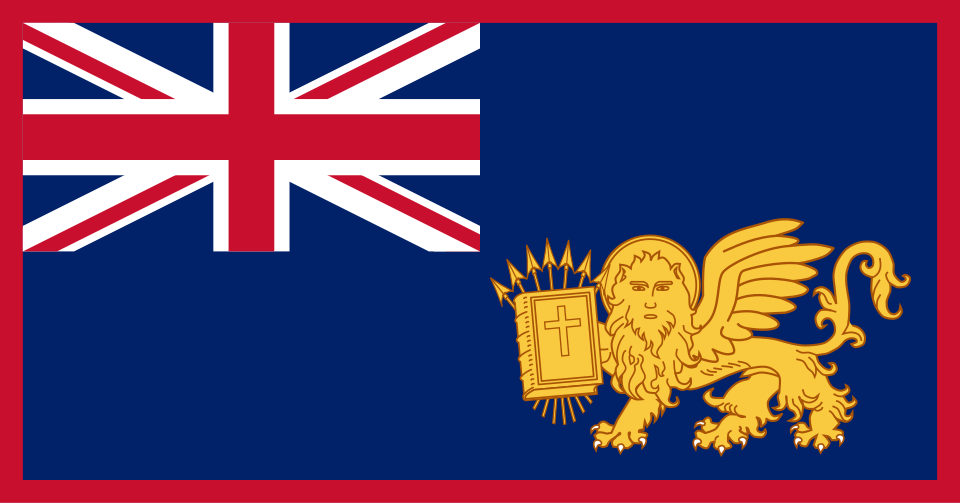
1815–1864
United States of the Ionian Islands
A British protectorate over the Ionian Islands, flying the Lion of St Mark on a Union-Jack-cantoned flag, until the islands were ceded to Greece in 1864.
Today part of: Greece
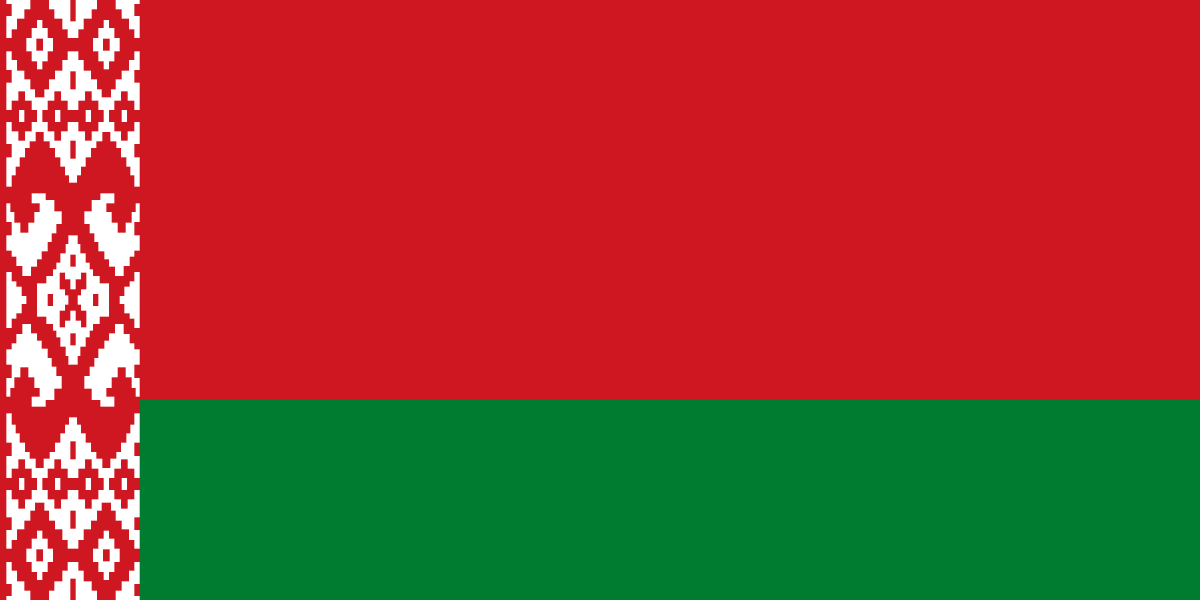
1918–1919
Belarusian People's Republic
The white-red-white flag of the short-lived republic declared during WWI; suppressed by the Bolsheviks, it returned as independent Belarus's flag from 1991 to 1995.
Today part of: Belarus
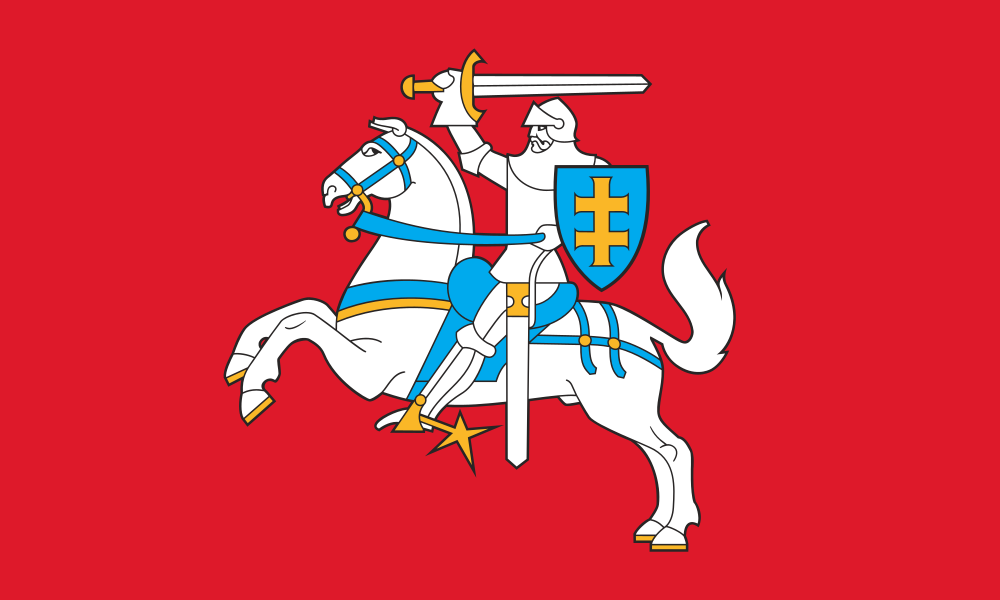
1236–1795
Grand Duchy of Lithuania
The red banner with the white Vytis — an armored knight on a charging horse — flew over a realm that at its height stretched from the Baltic to the Black Sea.
Today part of: Lithuania
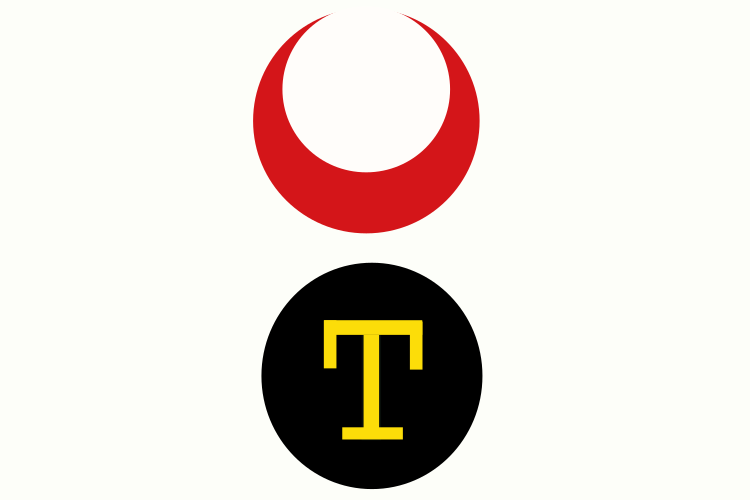
1441–1783
Crimean Khanate
A blue flag with the golden Giray-dynasty tamga; the last remnant of the Golden Horde, it dominated the northern Black Sea steppe until Catherine the Great annexed it.
Today part of: Ukraine
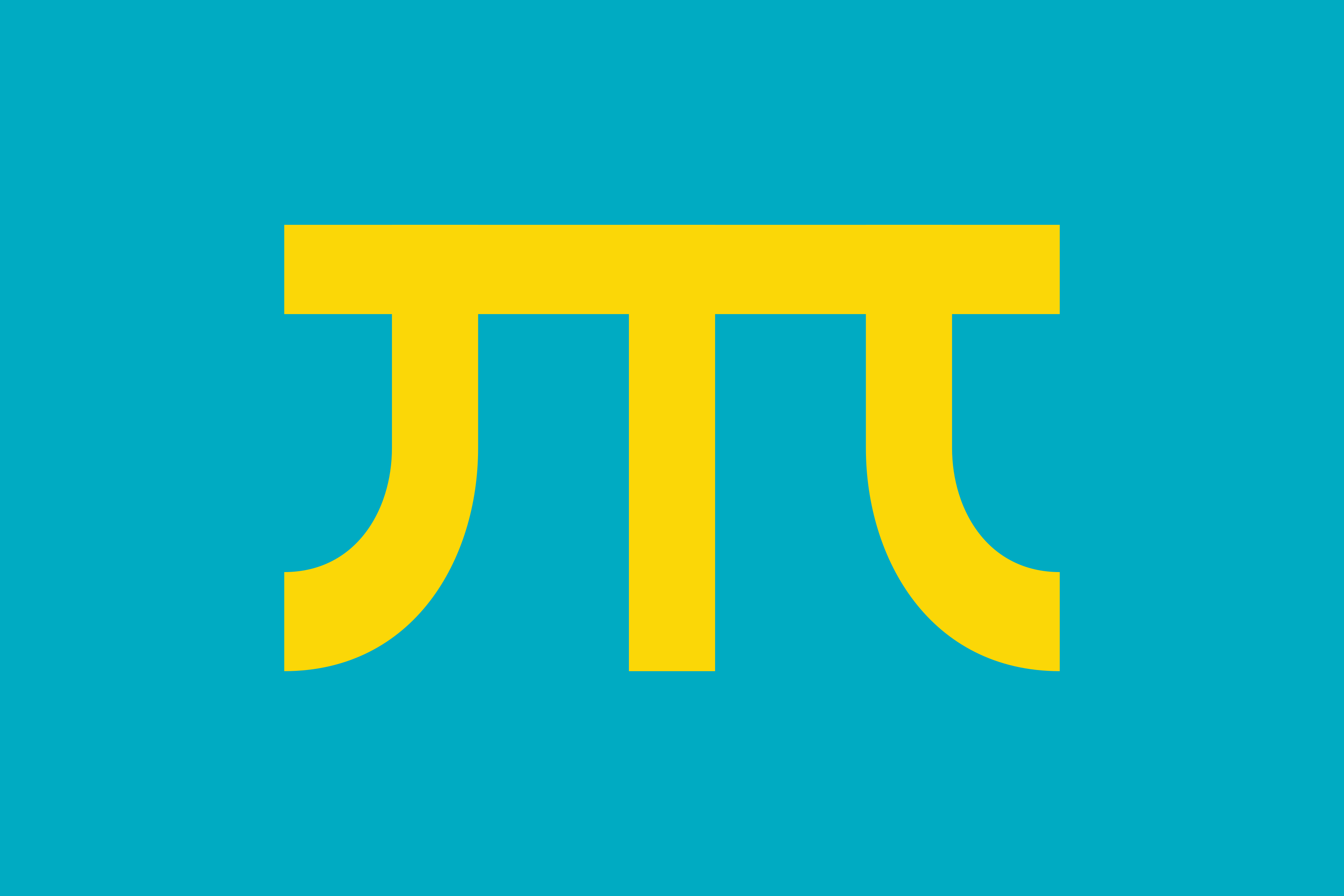
1490–1598
Khanate of Sibir
The Turco-Mongol khanate beyond the Urals that gave Siberia its name; its conquest by the Cossack Yermak opened Russia's vast eastward expansion across Asia.
Today part of: Russia
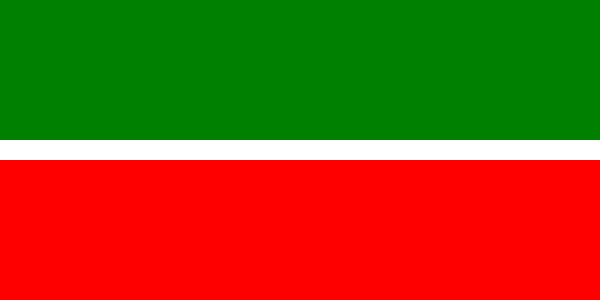
1438–1552
Khanate of Kazan
A Tatar successor state of the Golden Horde on the Volga; Ivan the Terrible's bloody siege and capture of Kazan in 1552 is commemorated by Moscow's St Basil's Cathedral.
Today part of: Russia
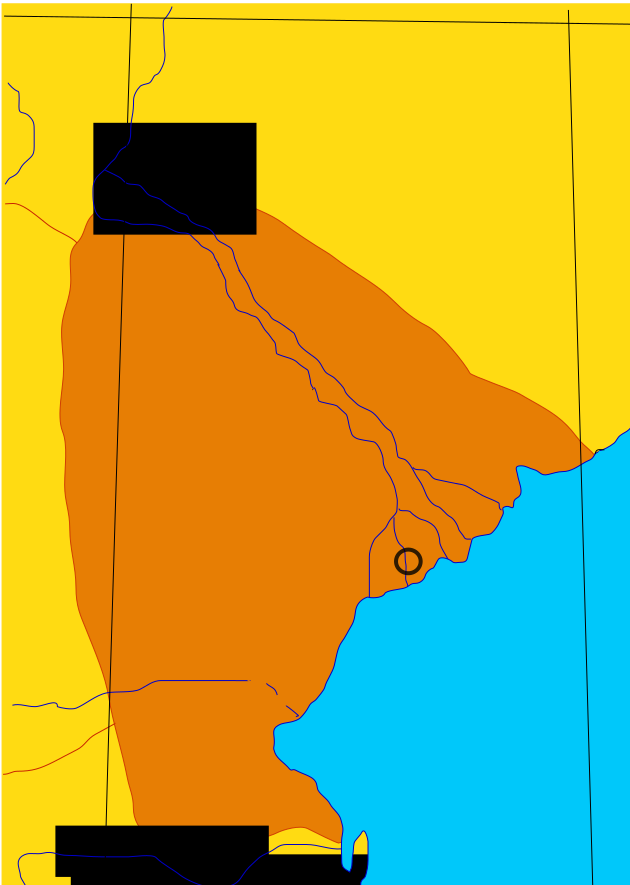
1466–1556
Khanate of Astrakhan
A small Tatar khanate guarding the Volga delta and the Caspian trade, the last of the Golden Horde's successors, annexed by Ivan the Terrible four years after Kazan.
Today part of: Russia
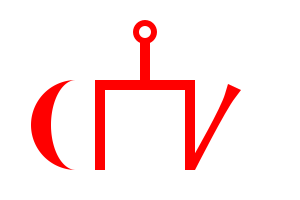
1242–1502
Golden Horde
The Mongol khanate that held the Russian principalities under the 'Tatar Yoke' for over two centuries; this white banner with a crescent appears on a 1339 Genoese map.
Today part of: Russia

1918
Idel-Ural State
A short-lived Tatar-Bashkir republic on the Volga proclaimed amid the Russian Revolution, crushed by the Bolsheviks within weeks of its declaration.
Today part of: Russia
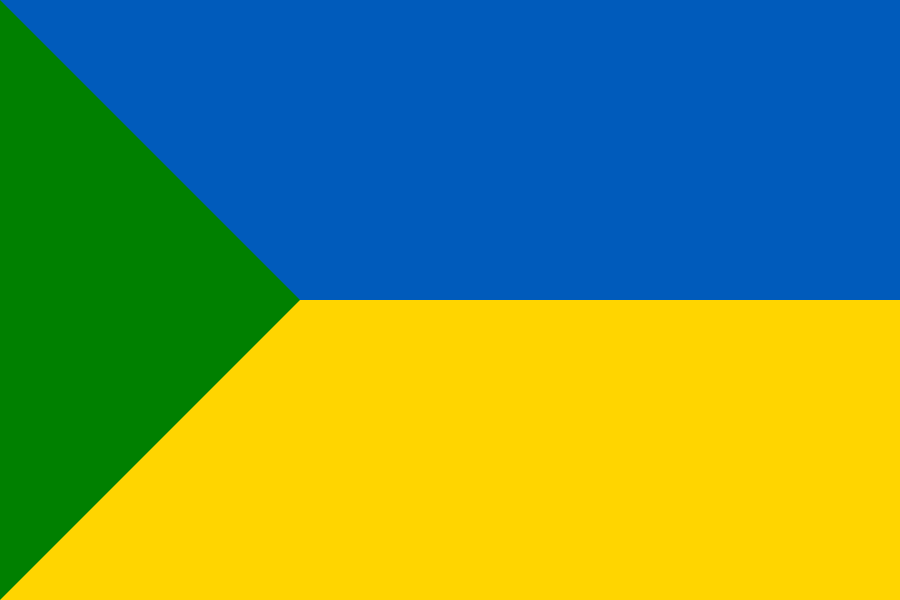
1918–1922
Green Ukraine
An attempt by Ukrainian settlers in the Russian Far East to form an autonomous state around the Amur and Pacific coast, suppressed by the Bolsheviks.
Today part of: Russia

1919
Hungarian Soviet Republic
Béla Kun's plain red communist state, the second Soviet republic in the world after Russia, which lasted just 133 days before Romanian troops toppled it.
Today part of: Hungary
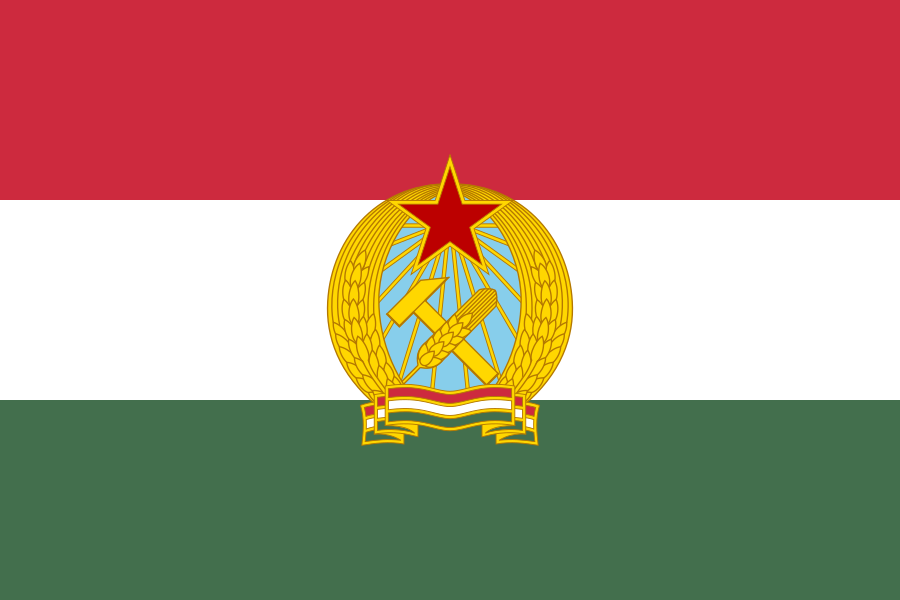
1949–1989
Hungarian People's Republic
The communist 'Rákosi coat of arms' on the tricolor was so hated that 1956 revolutionaries cut it out, leaving a hole-in-the-flag that became the uprising's emblem.
Today part of: Hungary
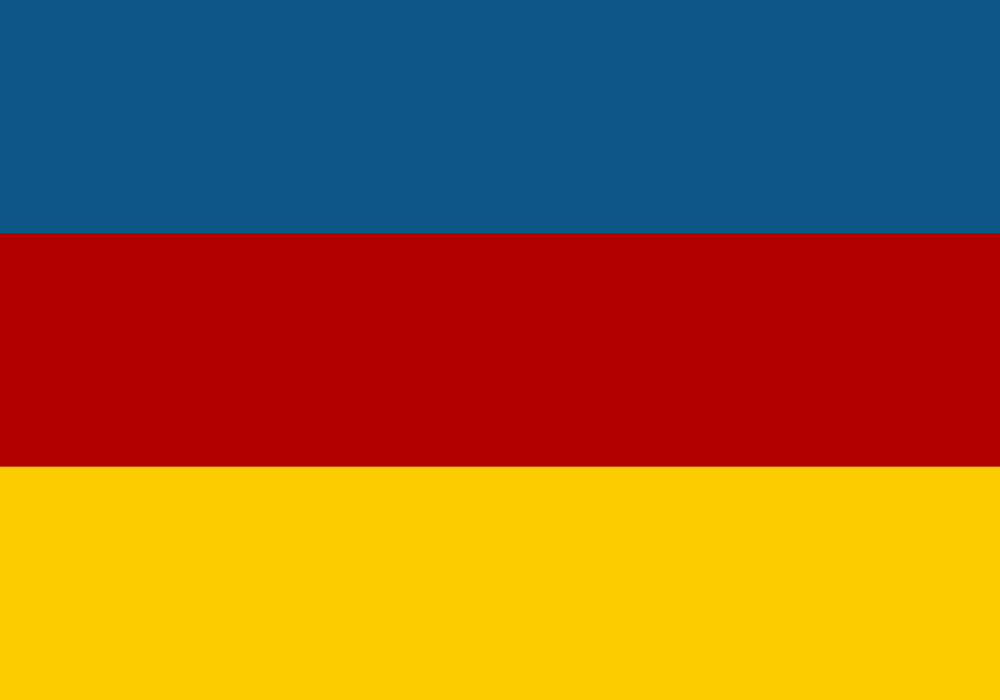
1570–1711
Principality of Transylvania
A largely autonomous Ottoman vassal principality and Protestant stronghold; its blue-and-gold flag joined the symbols of its Hungarian, Székely, and Saxon 'nations'.
Today part of: Romania
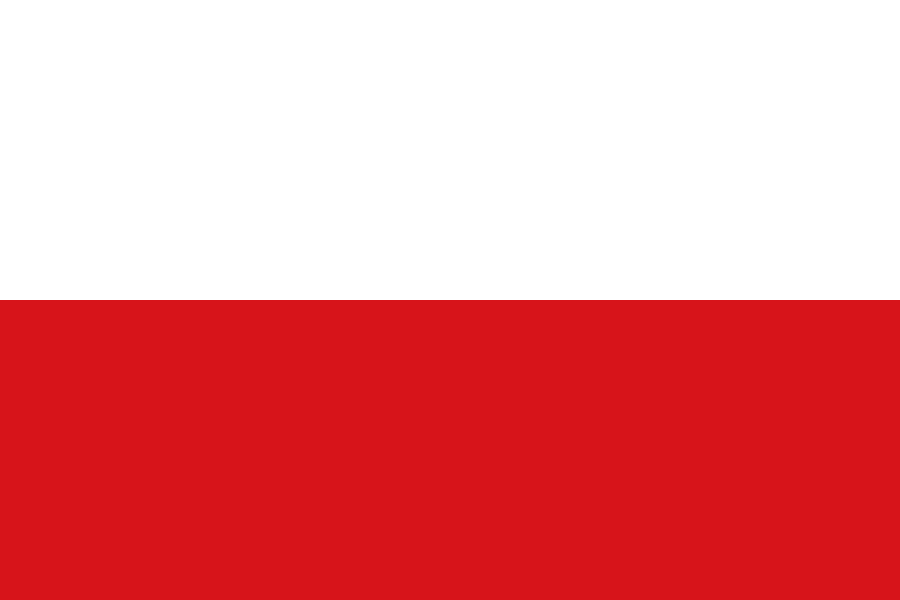
1198–1918
Kingdom of Bohemia
The white-over-red bicolor of the Czech lands ruled from Prague; its kings were prince-electors of the Holy Roman Empire, and one, Charles IV, became Emperor himself.
Today part of: Czech Republic
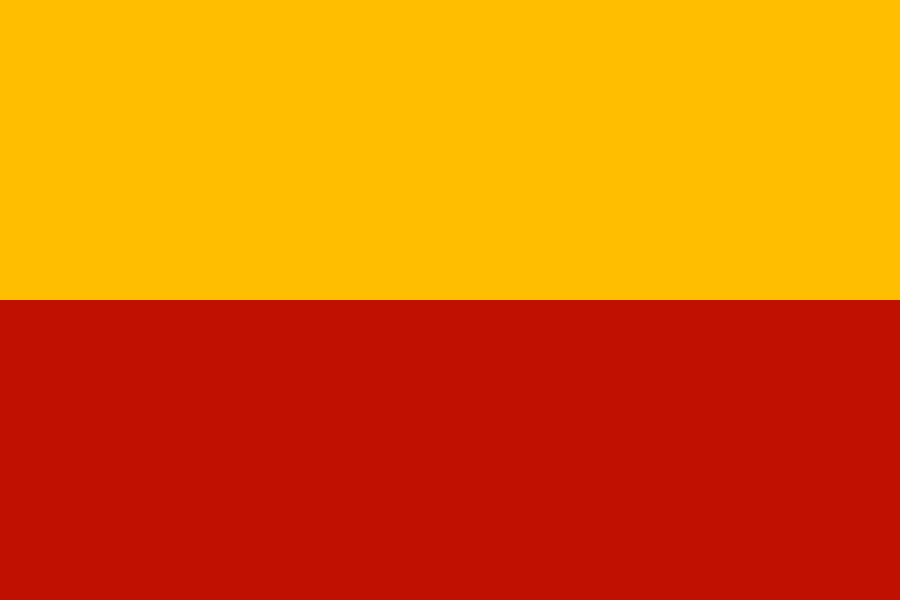
1182–1918
Margraviate of Moravia
The eastern Czech land, a margraviate within the Bohemian crown; its yellow-and-red checkered eagle gives the modern Moravian flag its distinctive look.
Today part of: Czech Republic
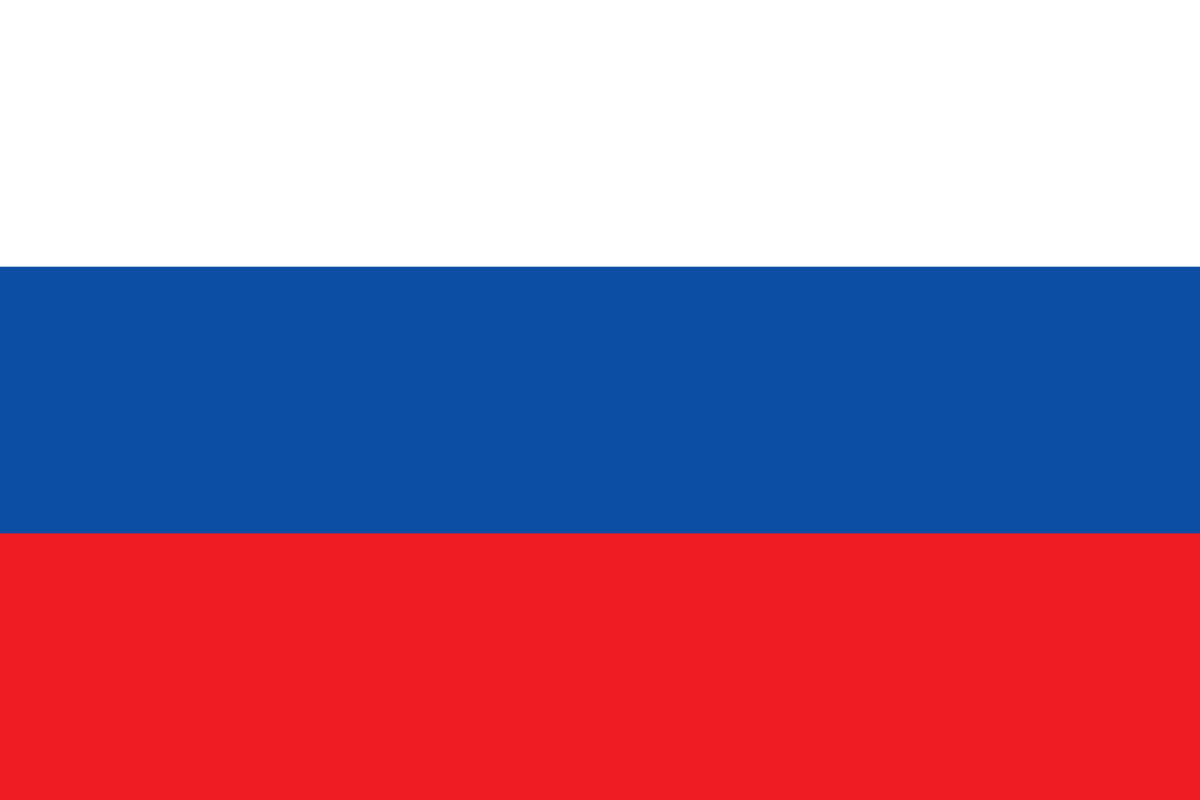
1939–1945
First Slovak Republic
A clerical-nationalist client state of Nazi Germany under Jozef Tiso, the first time Slovakia existed as a separate state; it flew a plain white-blue-red tricolor.
Today part of: Slovakia
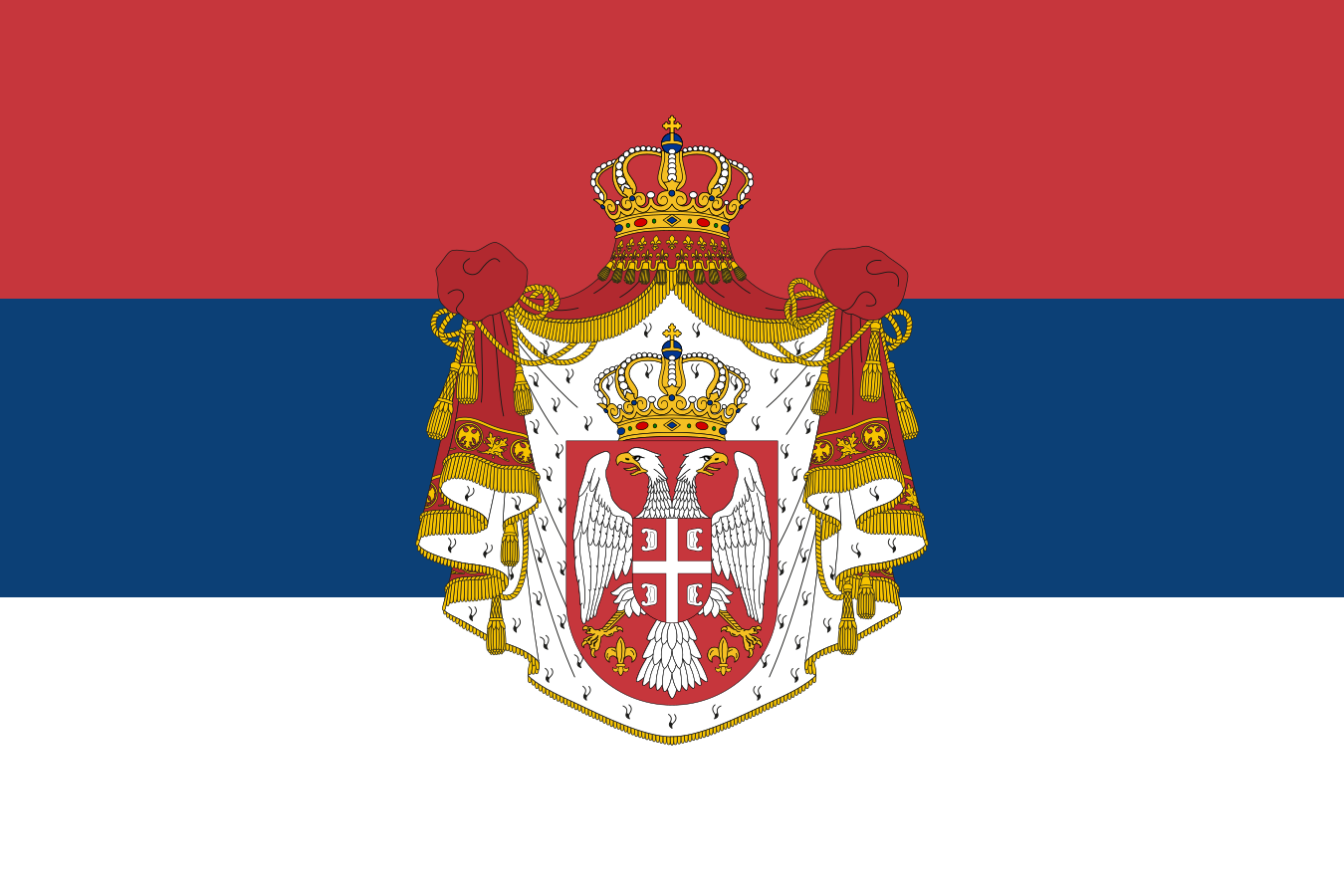
1882–1918
Kingdom of Serbia
The red-blue-white tricolor with the royal arms flew over the independent Serbian kingdom whose alliances and crisis with Austria-Hungary helped ignite World War I.
Today part of: Serbia
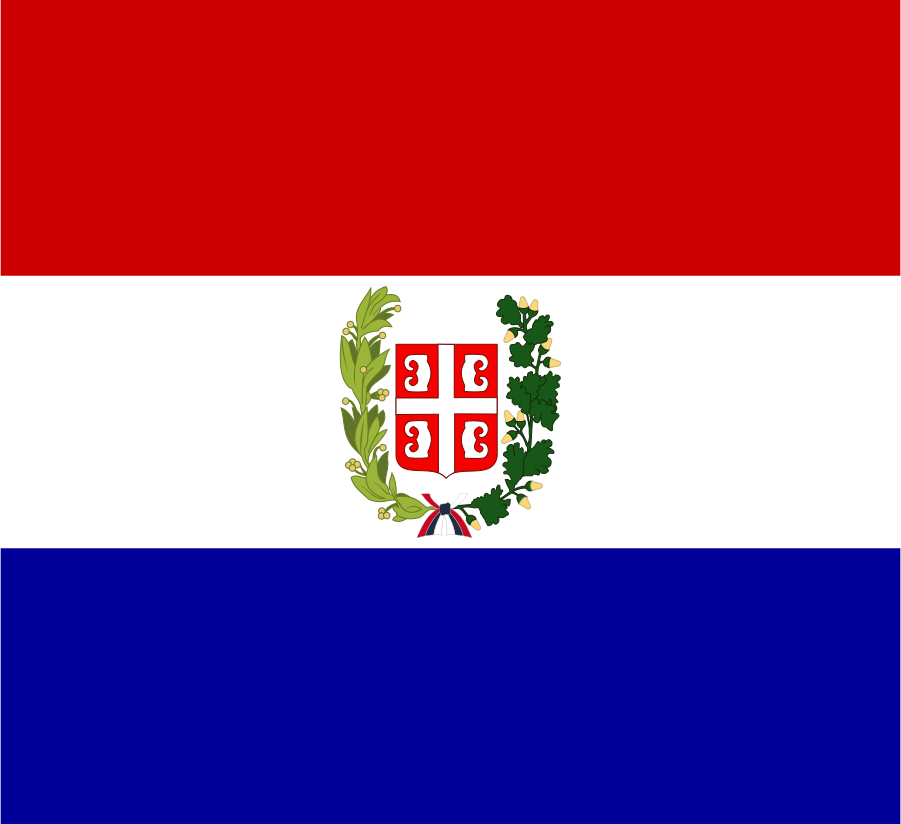
1835–1882
Principality of Serbia
An autonomous principality that won self-rule from the Ottomans under the rival Obrenović and Karađorđević dynasties before being raised to a kingdom in 1882.
Today part of: Serbia
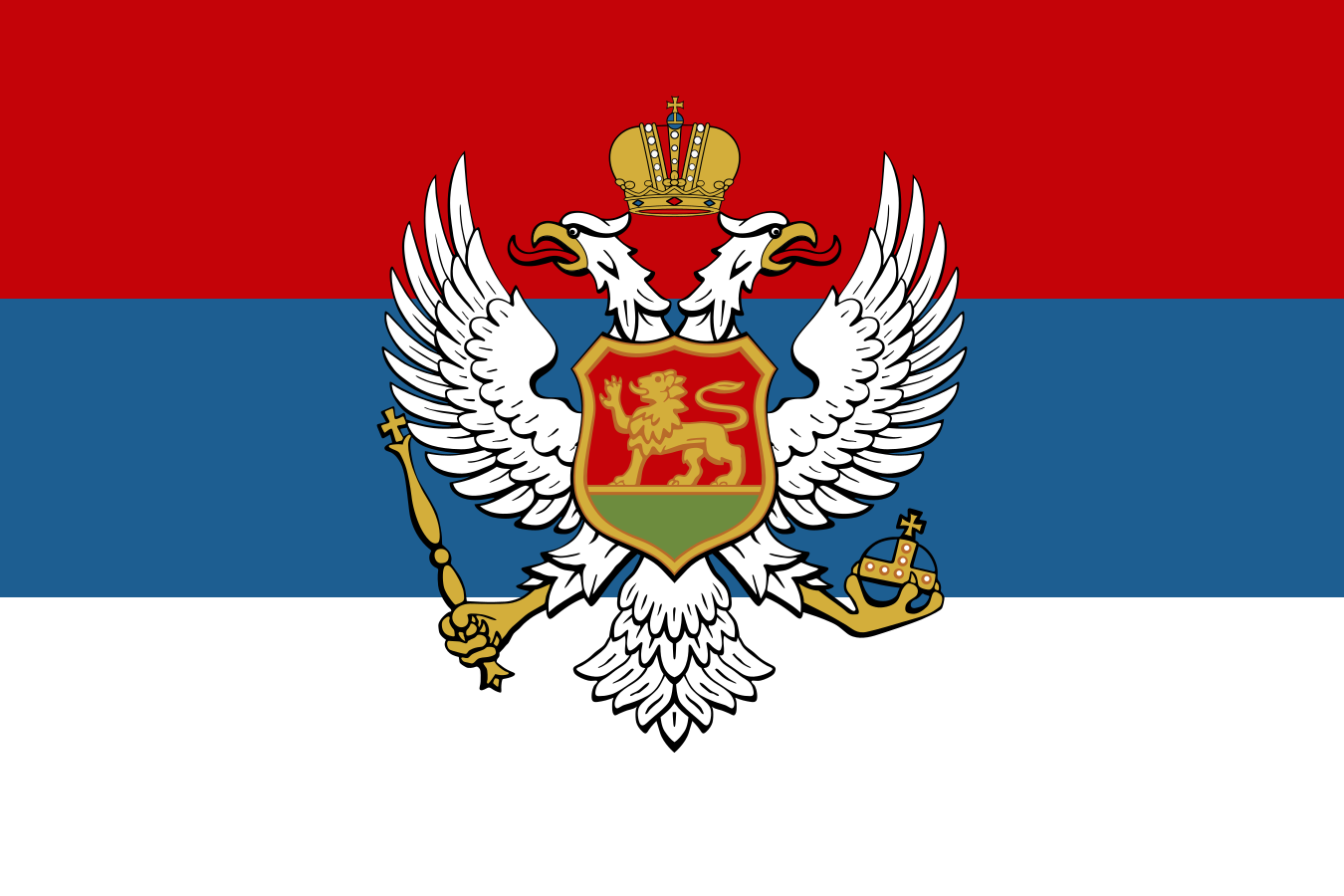
1905–1918
Kingdom of Montenegro
The red flag bearing the crowned cypher of King Nikola I, ruler of the small Balkan mountain kingdom that merged into Yugoslavia after World War I.
Today part of: Montenegro
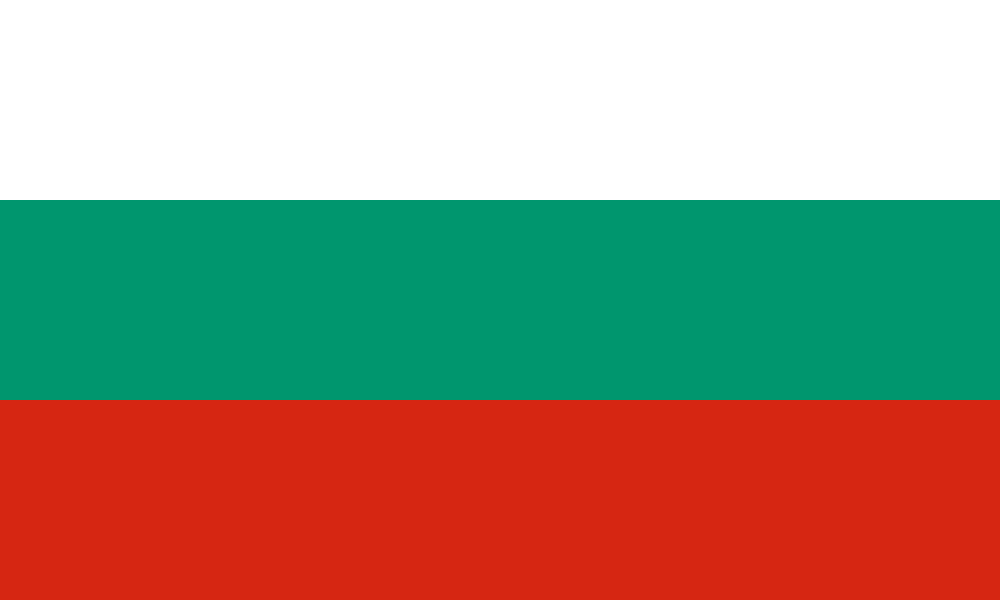
1908–1946
Kingdom of Bulgaria
The white-green-red tricolor of the 'Third Bulgarian State', a kingdom under the Saxe-Coburg-Gotha tsars, abolished by referendum in favor of a communist republic in 1946.
Today part of: Bulgaria
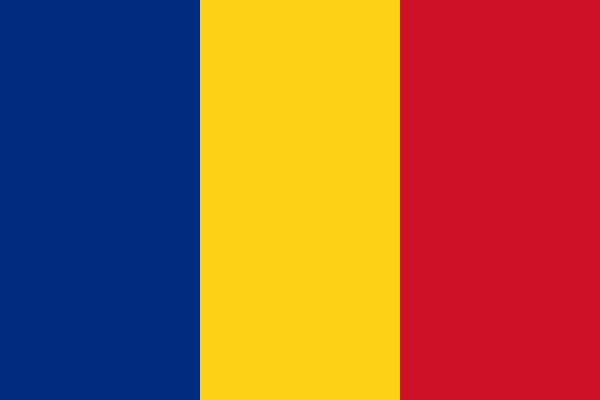
1881–1947
Kingdom of Romania
The blue-yellow-red tricolor of the Hohenzollern-Sigmaringen kings, who doubled the country's size after World War I before the communists forced King Michael to abdicate.
Today part of: Romania
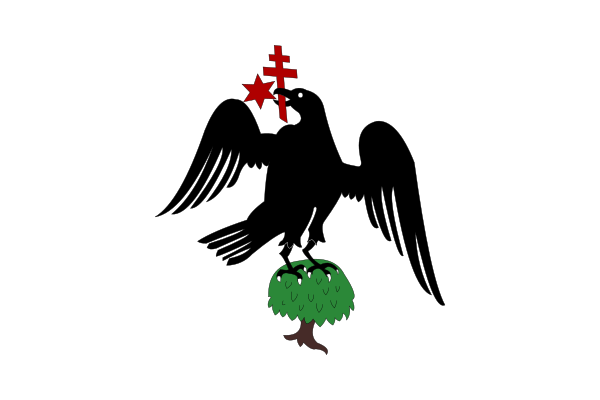
1330–1859
Principality of Wallachia
A Danubian principality long under Ottoman suzerainty, ruled by voivodes including Vlad the Impaler; it united with Moldavia in 1859 to form modern Romania.
Today part of: Romania
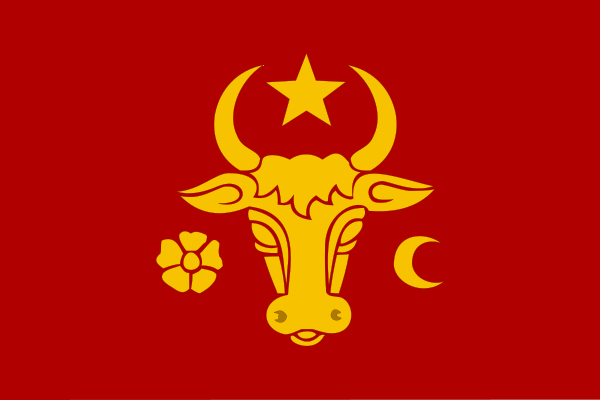
1346–1859
Principality of Moldavia
The eastern Romanian principality of Stephen the Great, who held off the Ottomans for decades; its union with Wallachia created the United Principalities of Romania.
Today part of: Romania
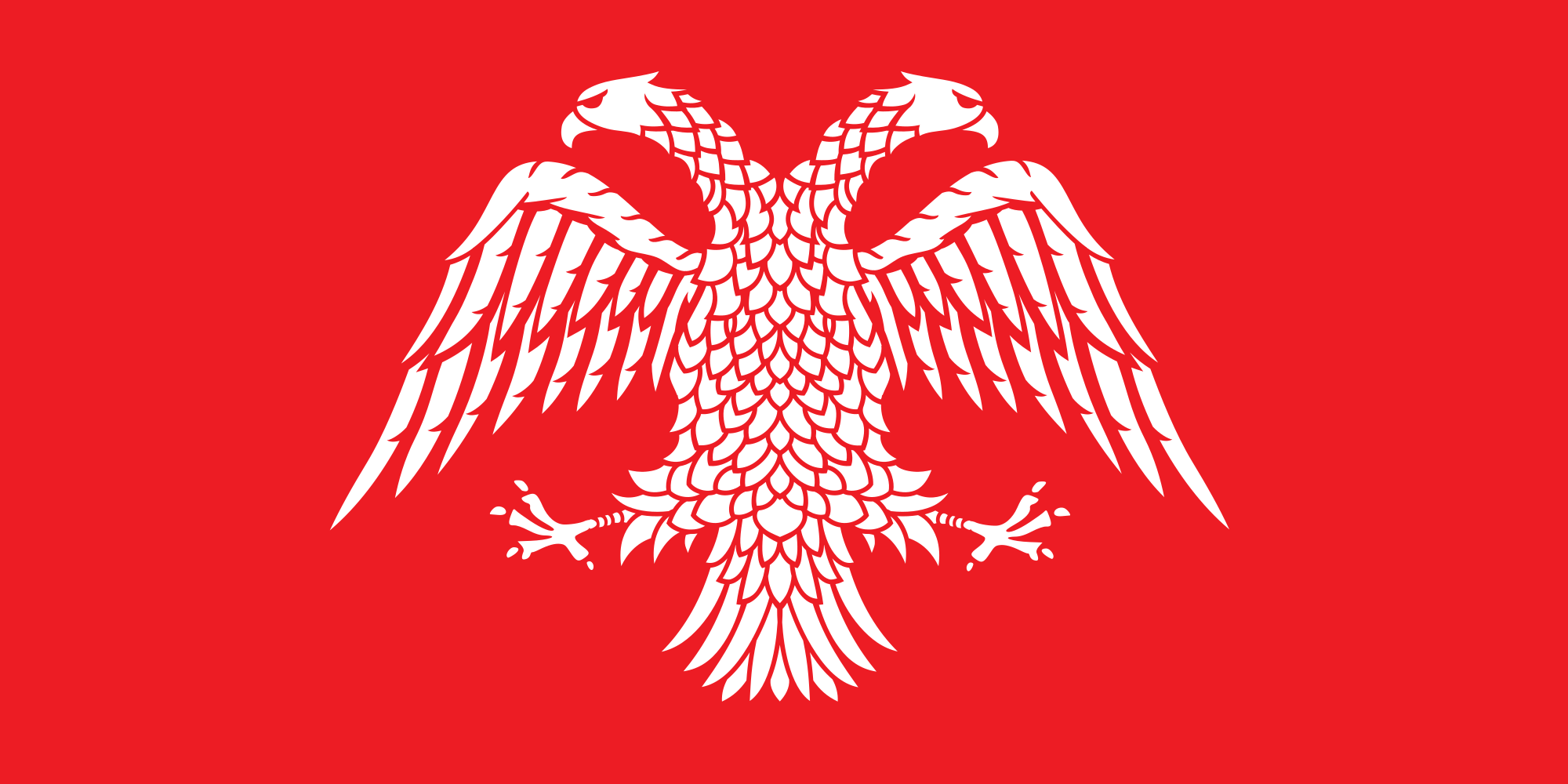
1402–1459
Serbian Despotate
The last independent medieval Serbian state, a despotate that briefly flourished at Smederevo before the Ottomans conquered it, ending Serbian statehood for centuries.
Today part of: Serbia
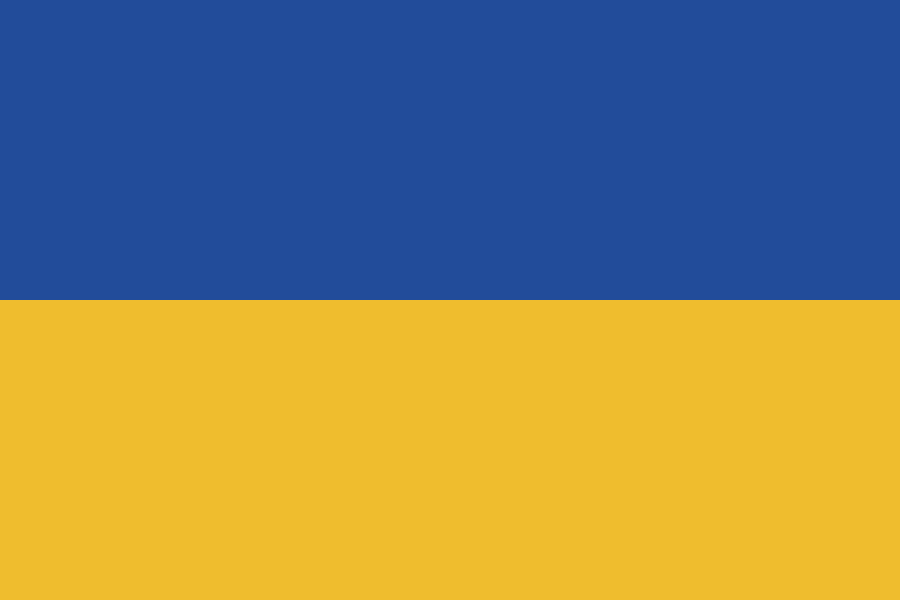
1815–1918
Kingdom of Dalmatia
A blue-and-yellow flag for the Habsburg crown land along the Adriatic coast, governed from Zadar, whose territory is now part of Croatia.
Today part of: Croatia
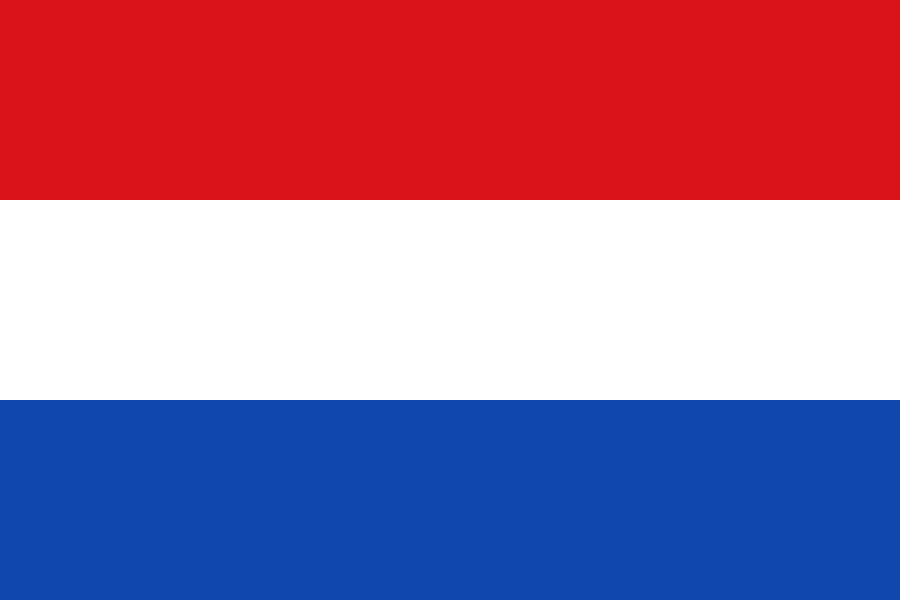
1878–1885
Eastern Rumelia
An autonomous Ottoman province created by the Congress of Berlin, with a white flag and green canton; it unilaterally united with Bulgaria after a bloodless 1885 coup.
Today part of: Bulgaria
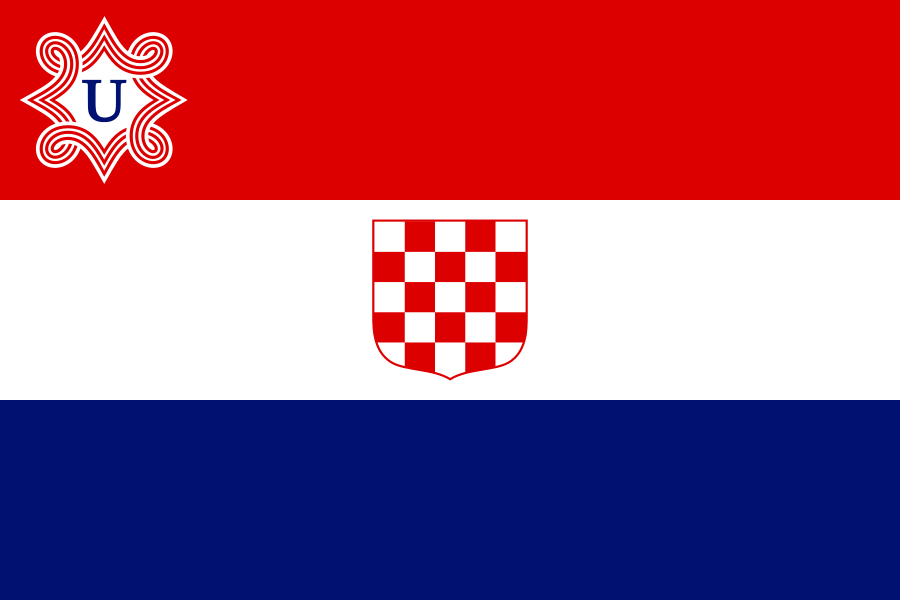
1941–1945
Independent State of Croatia
The Axis puppet state run by the fascist Ustaše, responsible for atrocities against Serbs, Jews, and Roma; its flag added the Ustaše's 'U' badge to the Croatian checkerboard.
Today part of: Croatia
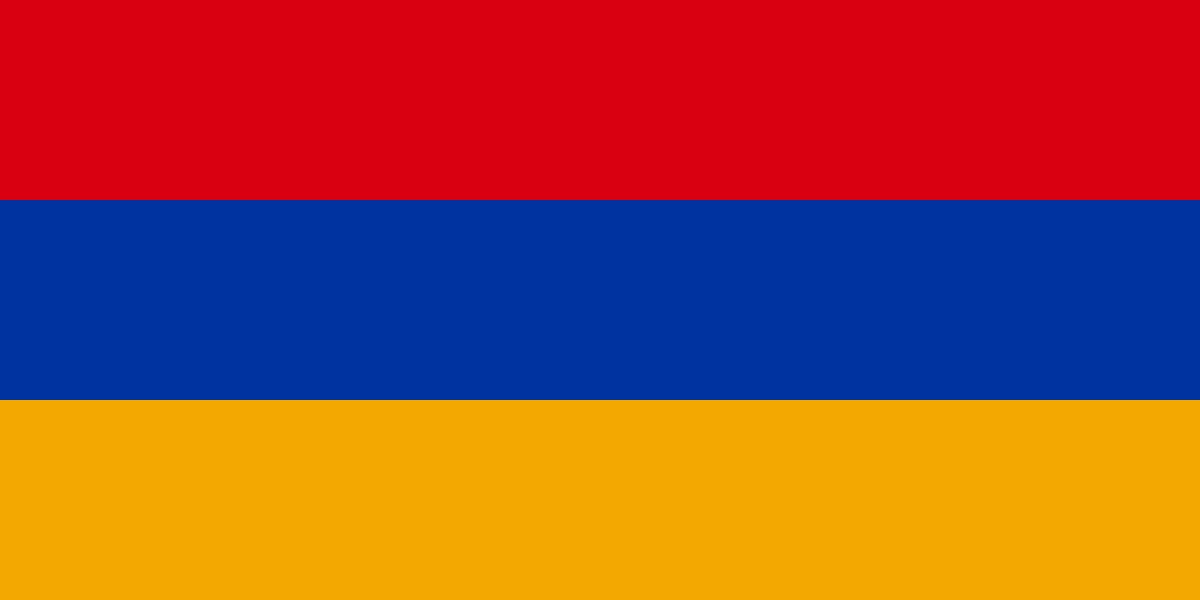
1918–1920
First Republic of Armenia
The brief independent republic born from the collapse of the Russian and Ottoman empires; its red-blue-orange tricolor was readopted when Armenia regained independence in 1991.
Today part of: Armenia
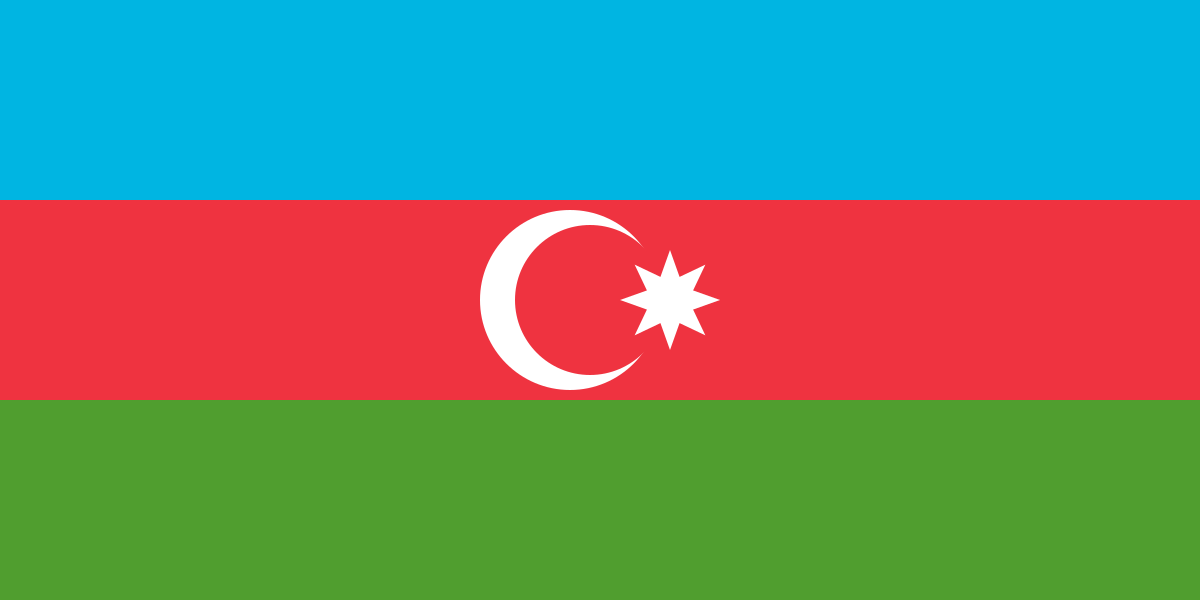
1918–1920
Azerbaijan Democratic Republic
The first secular democratic republic in the Muslim world, which gave women the vote before many Western states; its blue-red-green flag flies over independent Azerbaijan again today.
Today part of: Azerbaijan
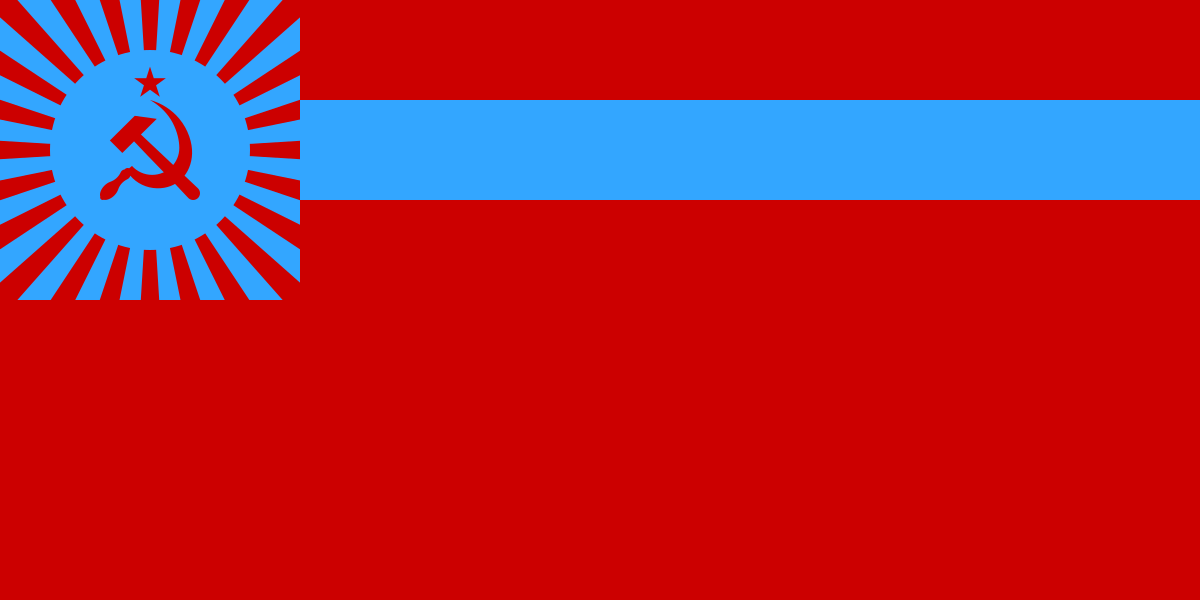
1951–1990
Georgian SSR
A red flag with a sunburst-and-hammer roundel in a blue canton; Soviet Georgia was the birthplace of Joseph Stalin, in the town of Gori.
Today part of: Georgia
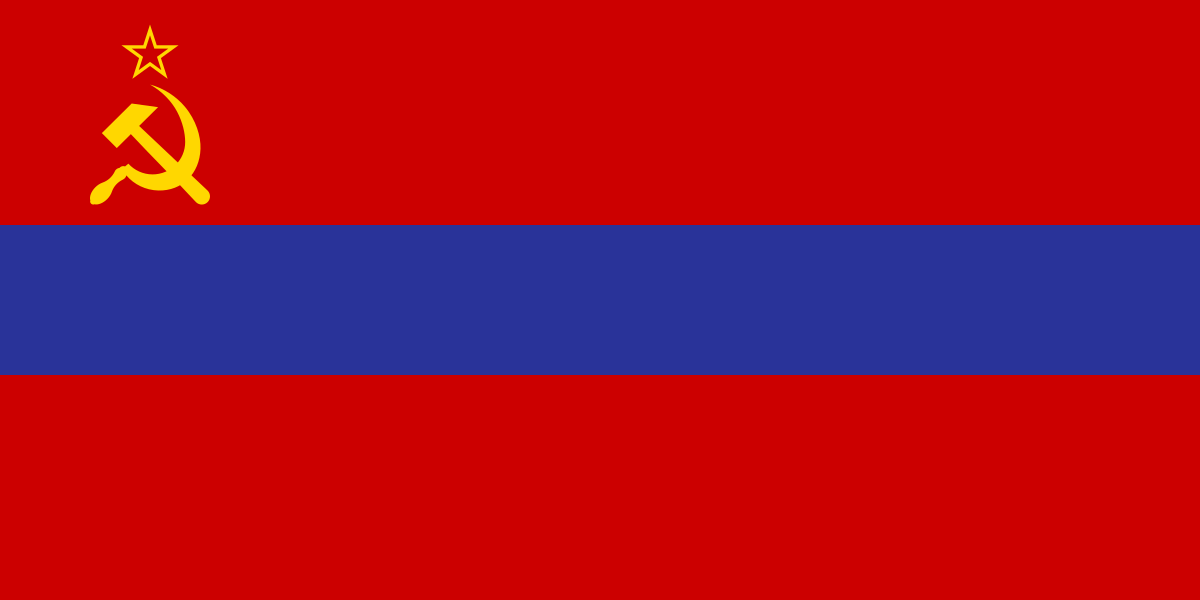
1952–1990
Armenian SSR
A red flag with a horizontal blue stripe and the hammer, sickle and star, flown over Soviet Armenia until the national tricolor was restored in 1990.
Today part of: Armenia
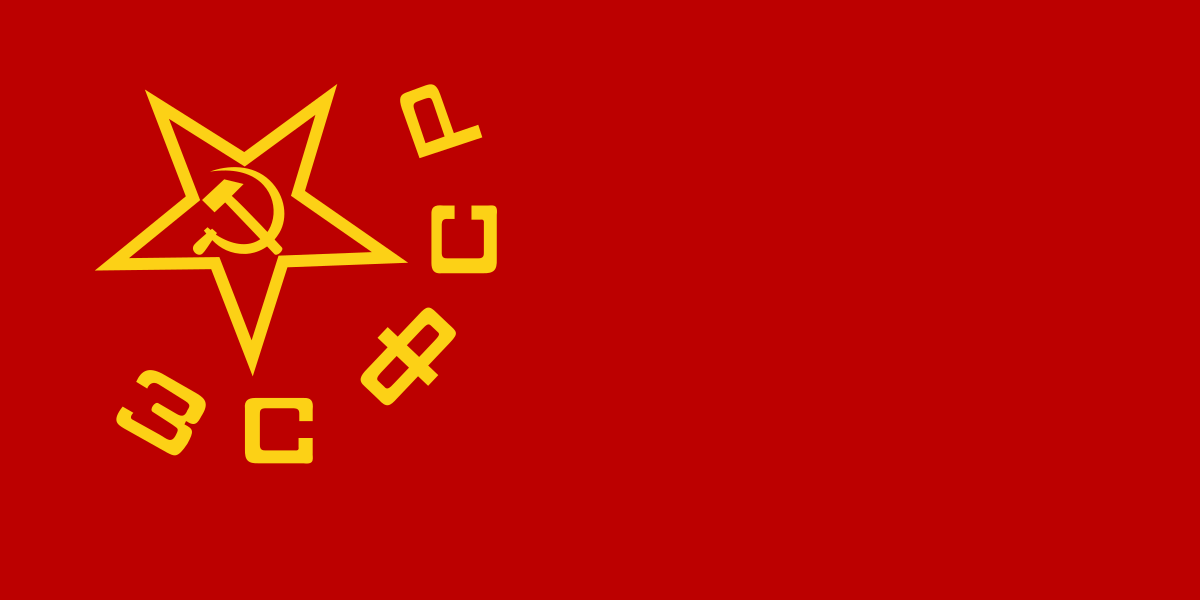
1922–1936
Transcaucasian SFSR
For 14 years Georgia, Armenia, and Azerbaijan were fused into a single Soviet republic — one of the four founding members of the USSR — before Stalin split them apart.
Today part of: Georgia, Armenia, Azerbaijan
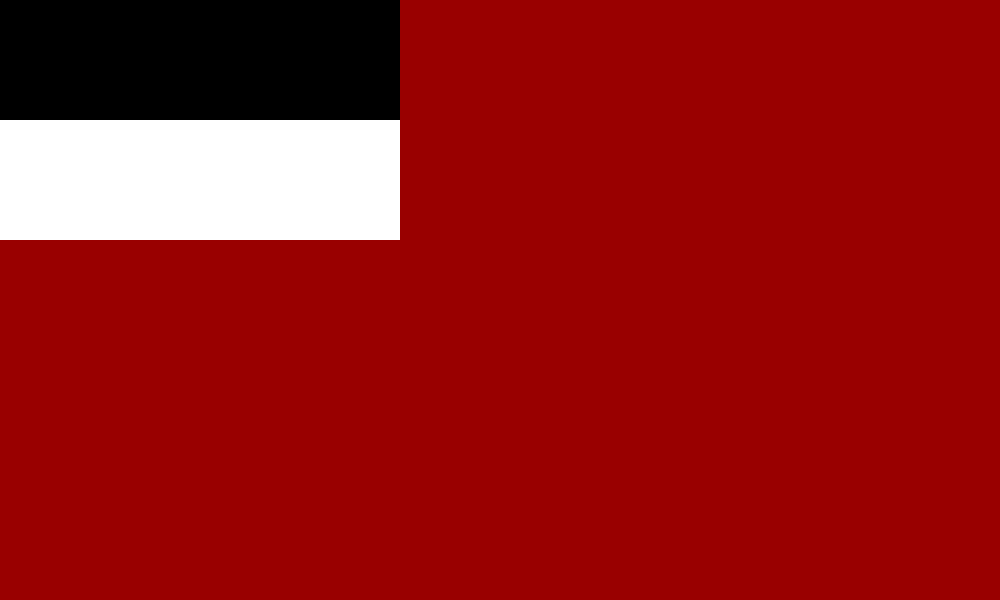
1918–1921
Democratic Republic of Georgia
A Menshevik-led social-democratic republic with a wine-red flag, conquered by the Red Army in 1921; its flag flew again over independent Georgia from 1990 to 2004.
Today part of: Georgia
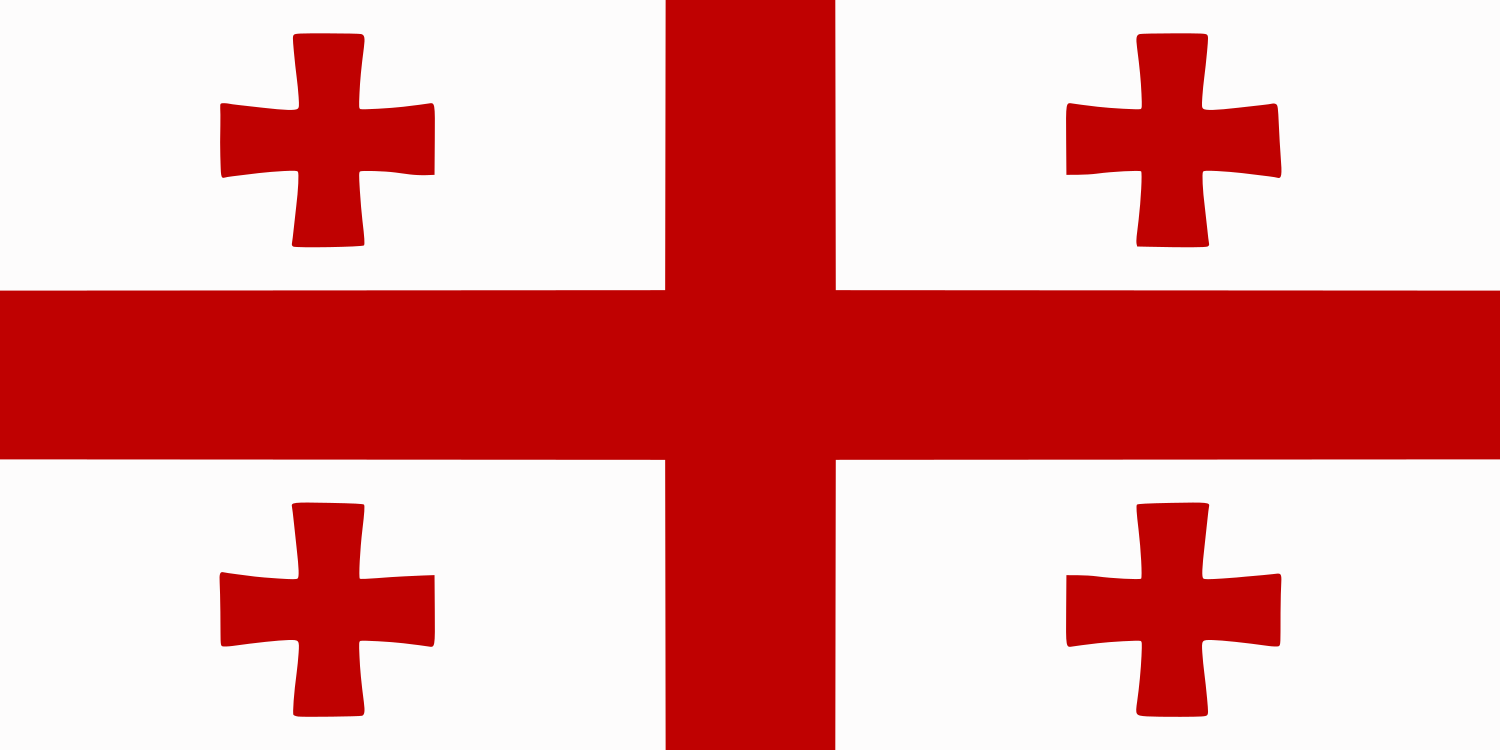
1008–1490
Kingdom of Georgia
The medieval Christian kingdom that reached its 'Golden Age' under Queen Tamar, ruling much of the Caucasus before Mongol invasions fractured it into rival realms.
Today part of: Georgia
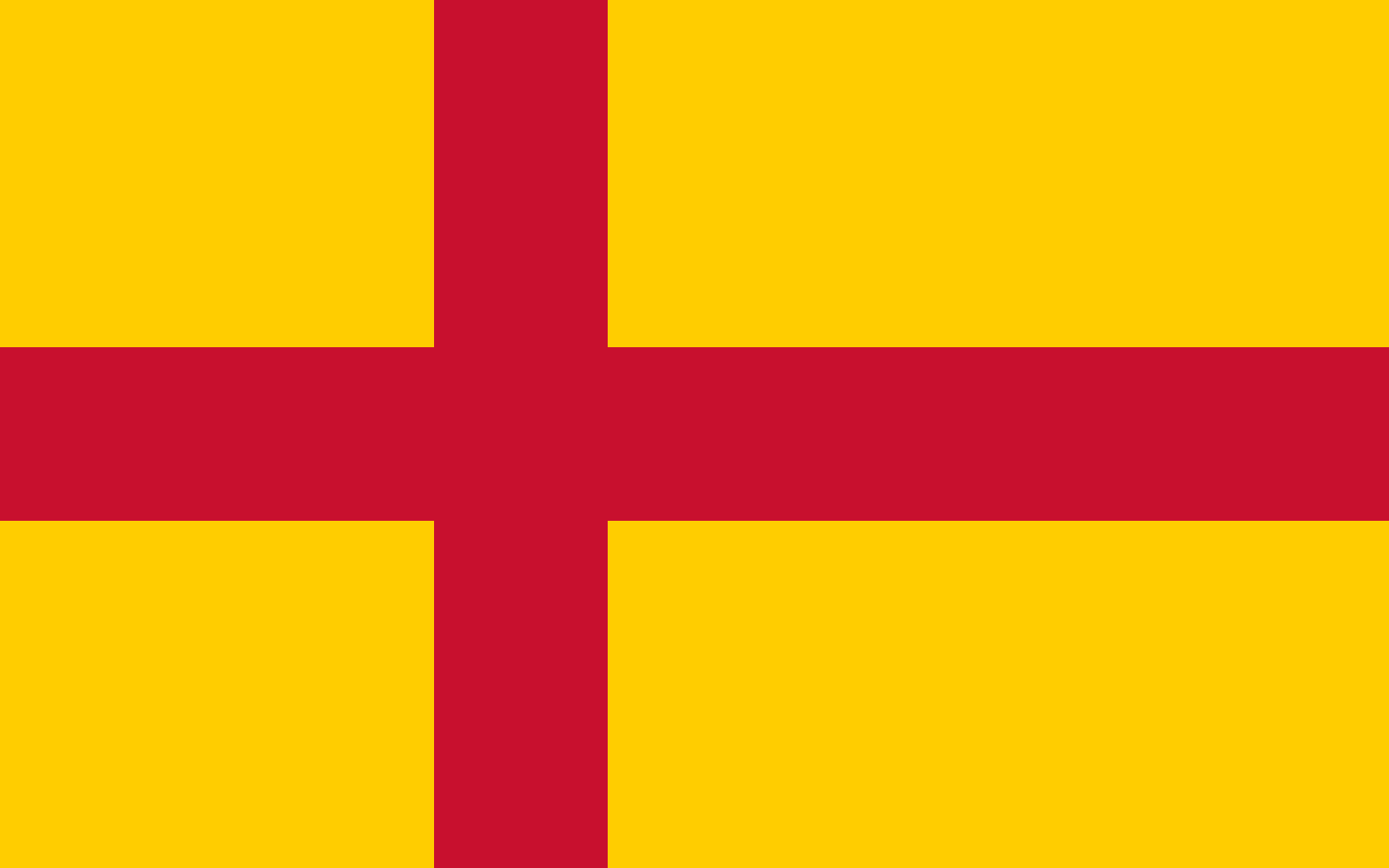
1397–1523
Kalmar Union
The dynastic union that joined Denmark, Sweden, and Norway under a single monarch for over a century, until Gustav Vasa led Sweden to break away in 1523.
Today part of: Denmark, Sweden, Norway
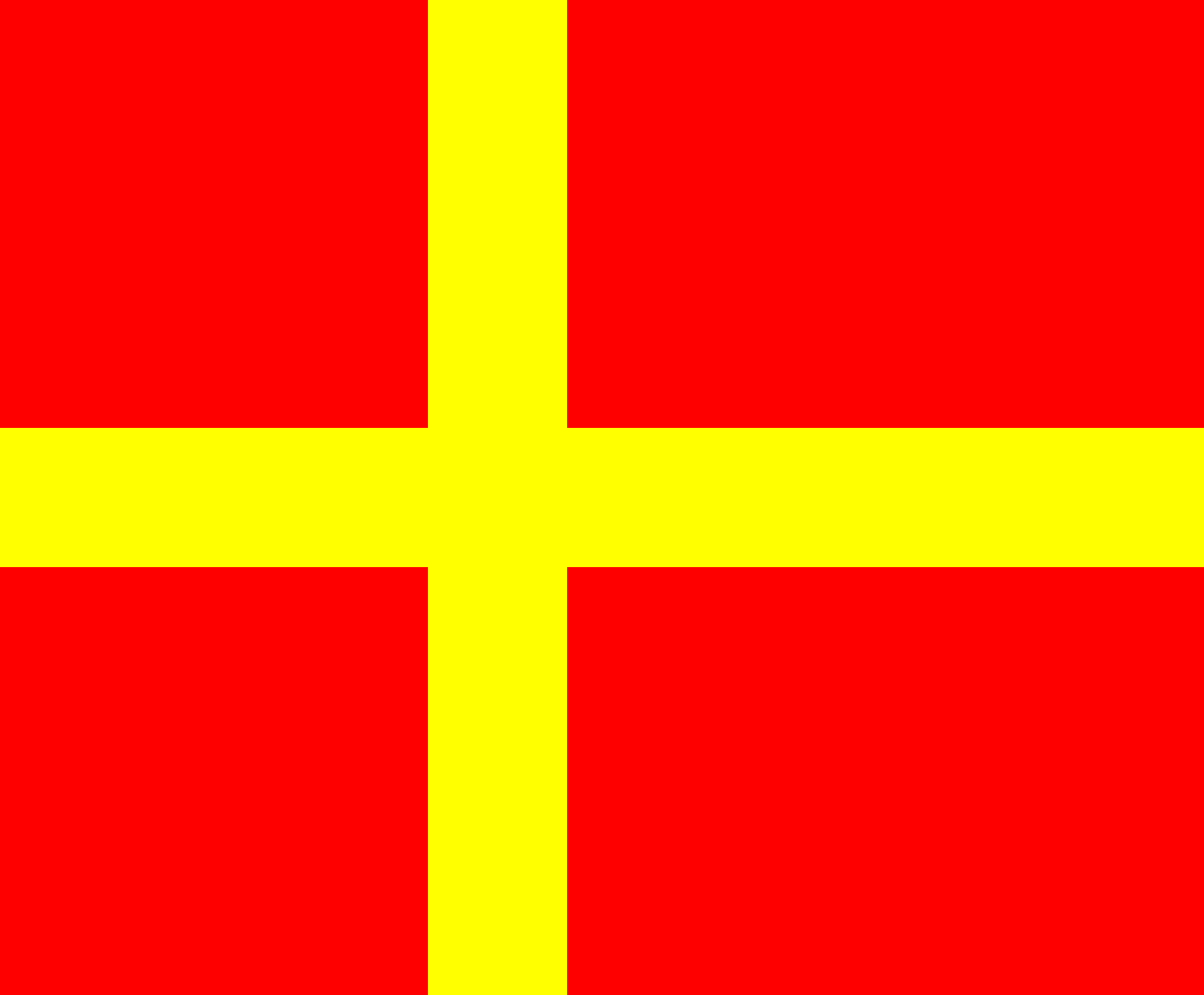
medieval–1658
Scanian Lands
A red-and-yellow Nordic-cross flag for the southern provinces that were Danish for centuries before Sweden conquered them in 1658 — a frontier fought over for generations.
Today part of: Sweden
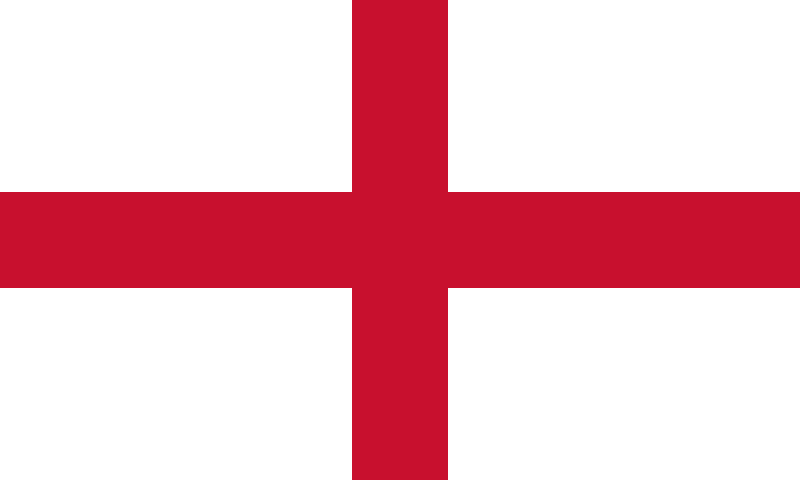
927–1707
Kingdom of England
The red St George's Cross on white became England's flag in the late Middle Ages; the kingdom merged with Scotland in 1707 to form Great Britain.
Today part of: United Kingdom
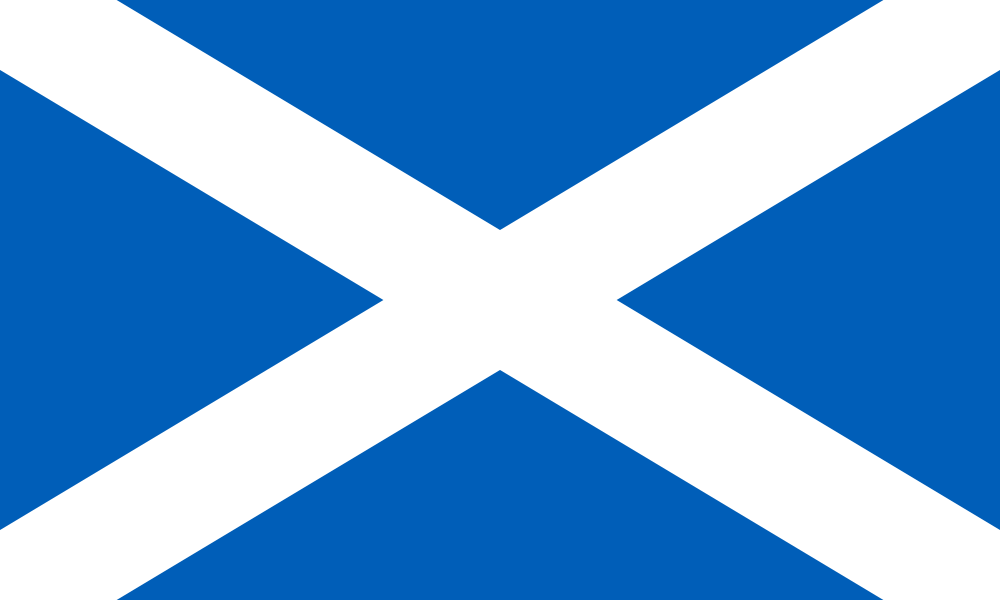
843–1707
Kingdom of Scotland
The white Saltire of St Andrew on blue, one of the oldest national flags in the world, flew over independent Scotland until the union with England in 1707.
Today part of: United Kingdom
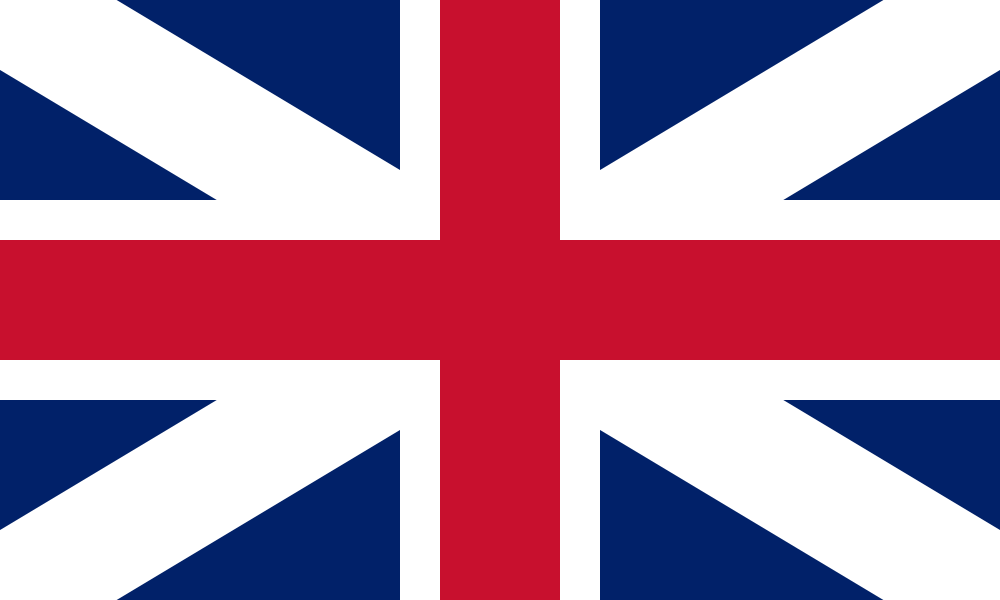
1707–1800
Kingdom of Great Britain
The first Union Flag, combining the crosses of St George and St Andrew, flew over the merged kingdom until Ireland's 1801 union added St Patrick's saltire to make the modern flag.
Today part of: United Kingdom
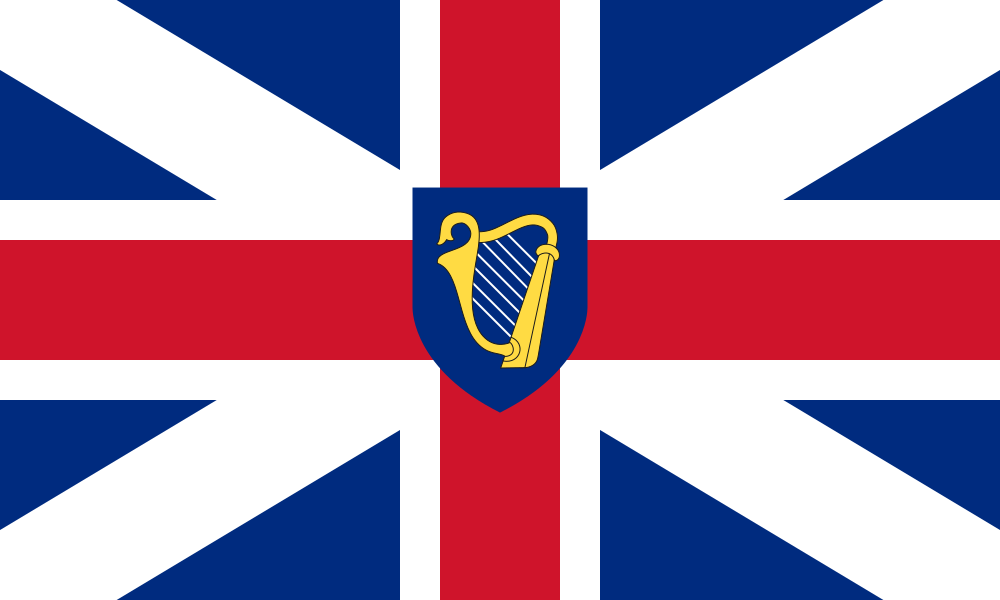
1649–1660
Commonwealth of England
England's brief republic after the execution of Charles I, ruled by Oliver Cromwell as Lord Protector; its flag combined the crosses of England, Scotland, and Ireland with his arms.
Today part of: United Kingdom
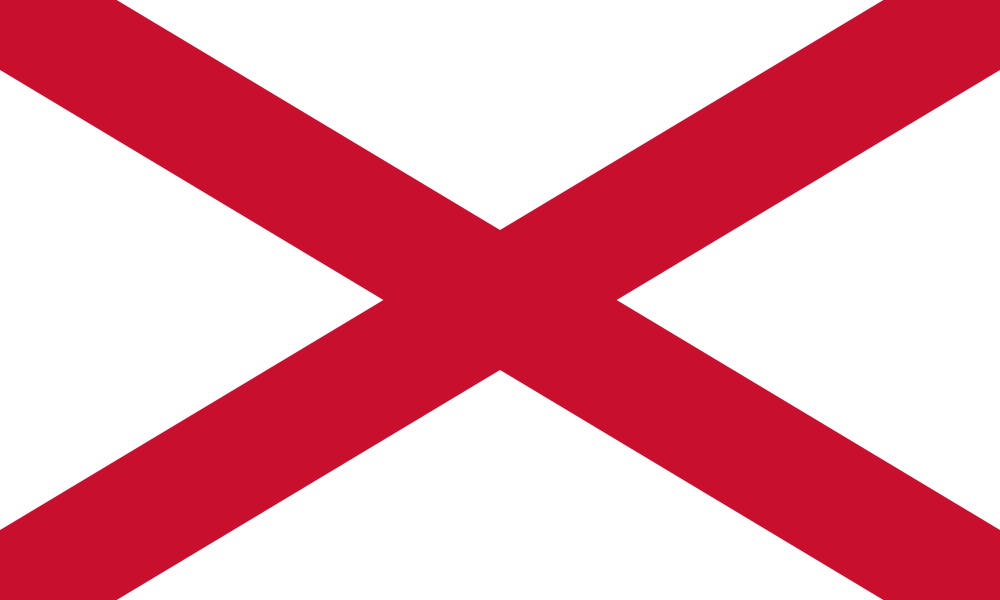
1542–1801
Kingdom of Ireland
The red saltire of St Patrick on white represented the kingdom under the English (later British) crown; it survives as the Irish element of the modern Union Flag.
Today part of: Ireland
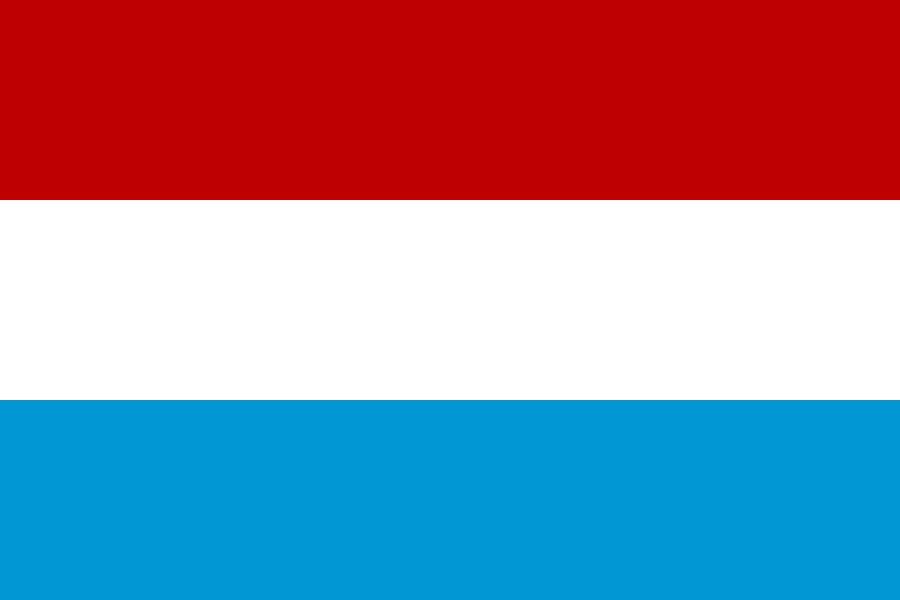
1581–1795
Dutch Republic
The red-white-blue 'Statenvlag' of the Seven United Provinces, a merchant republic that became a 17th-century global trading and naval superpower in its Golden Age.
Today part of: Netherlands
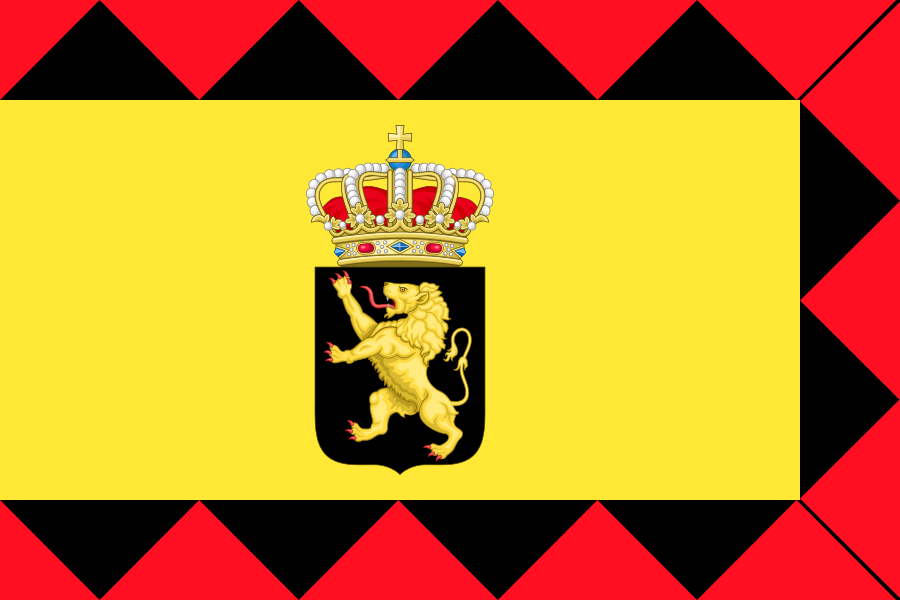
1790
United Belgian States
A short-lived confederation born of the Brabant Revolution against Austrian rule; its black-yellow-red colors were the direct forerunner of the modern Belgian flag.
Today part of: Belgium
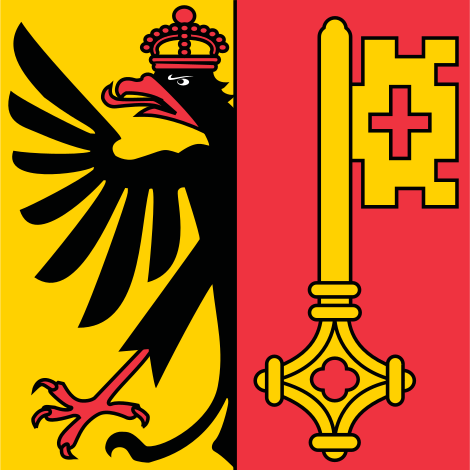
1541–1798
Republic of Geneva
An independent Calvinist city-republic — the 'Protestant Rome' — until France annexed it; it later joined the Swiss Confederation as a canton in 1815.
Today part of: Switzerland
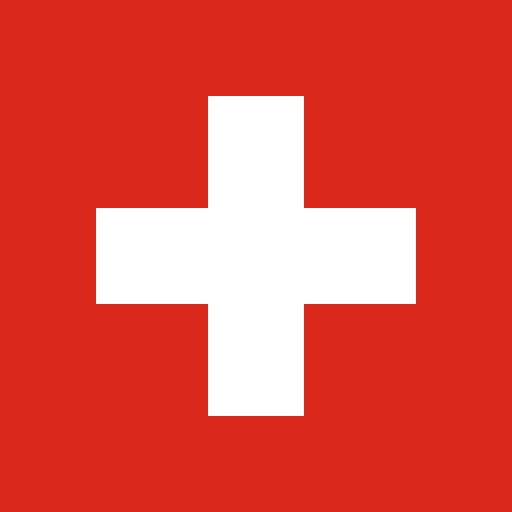
1300–1798
Old Swiss Confederacy
The loose alliance of cantons that grew from the legendary 1291 oath; the white cross on red it fought under at Morgarten and Sempach became the modern Swiss flag.
Today part of: Switzerland
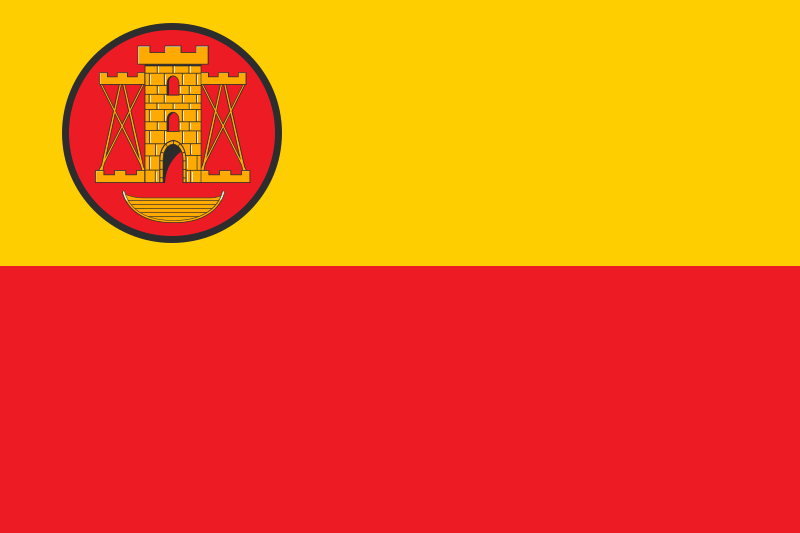
1920–1939
Memel Territory
A League of Nations territory around the Baltic port of Klaipėda, seized by Lithuania in 1923; Nazi Germany forced its cession in 1939, one of the last crises before WWII.
Today part of: Lithuania