 Latvia
 Ethiopia

1988–present
Flag of Lithuania (restored)
Yellow for the sun and prosperity, green for forests and hope, red for blood shed for the nation. It was the first Baltic flag readopted during the independence movement, restored in 1988.
Lithuania is the southernmost and largest of the three Baltic states and was historically the centre of the Grand Duchy of Lithuania, one of the largest states in medieval Europe. It was the first Soviet republic to declare independence in 1990 and joined both NATO and the EU in 2004. Vilnius, the capital, is known for its remarkably well-preserved Baroque old town, a UNESCO World Heritage Site.
Population and area are rounded.
Yellow stands for the sun and prosperity, green for the forests and hope, and red for courage and the blood shed for the country. The tricolour was adopted in 1918 when Lithuania declared independence, banned during the Soviet occupation and legalised again in 1988. Lithuania also has a historical state flag showing the white knight, Vytis, on red, which flies at a few official sites.
Horizontal yellow-green-red — the only flag in Europe with these three colours in this order.
Lithuania was the last country in Europe to officially adopt Christianity, in 1387.
Lithuania's flag is often mixed up with these. Learn to tell them apart:
Every flag that has flown over Lithuania, from today back through time.
Yellow for the sun and prosperity, green for forests and hope, red for blood shed for the nation. It was the first Baltic flag readopted during the independence movement, restored in 1988.
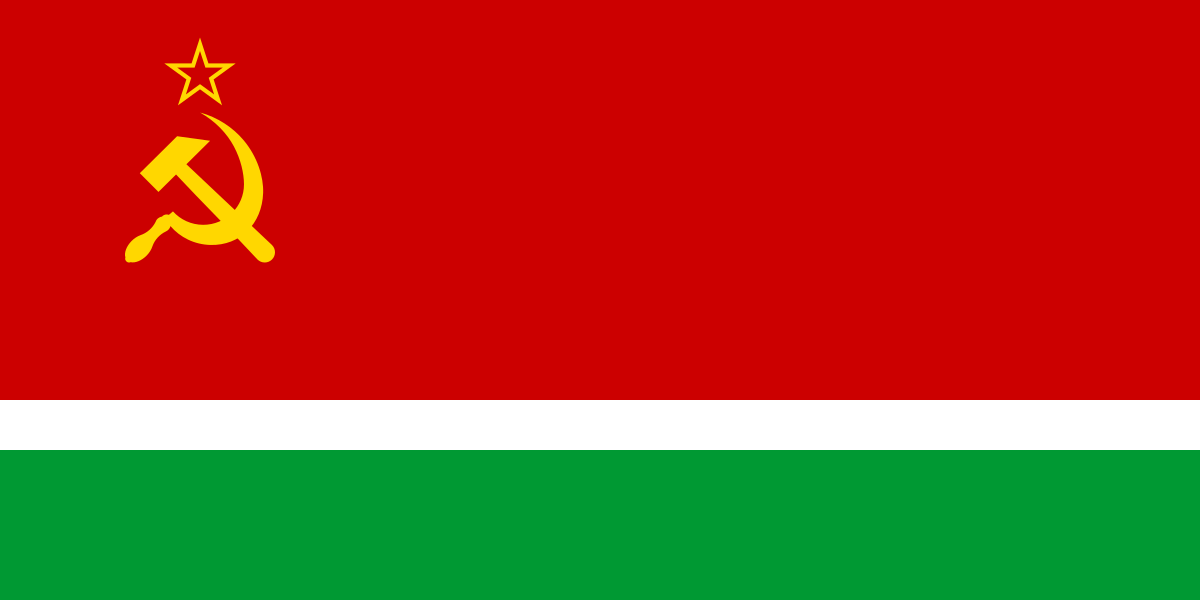
A gold hammer, sickle, and star on a red field above white and green horizontal bands.
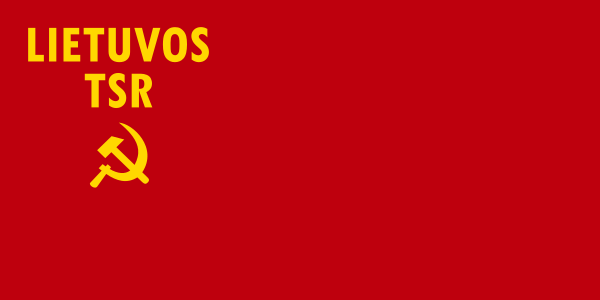
After the 1940 Soviet occupation, a plain red flag with gold "LIETUVOS TSR" lettering and a hammer and sickle, used until the 1953 redesign.
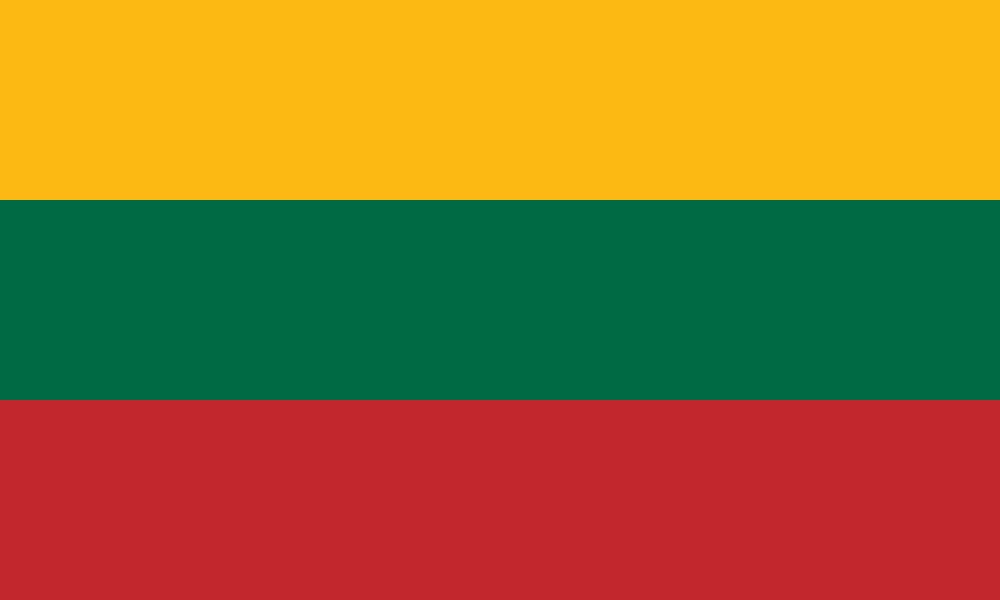
The yellow-green-red tricolour was adopted at independence in 1918, banned under Soviet rule, and restored identical in 1988.
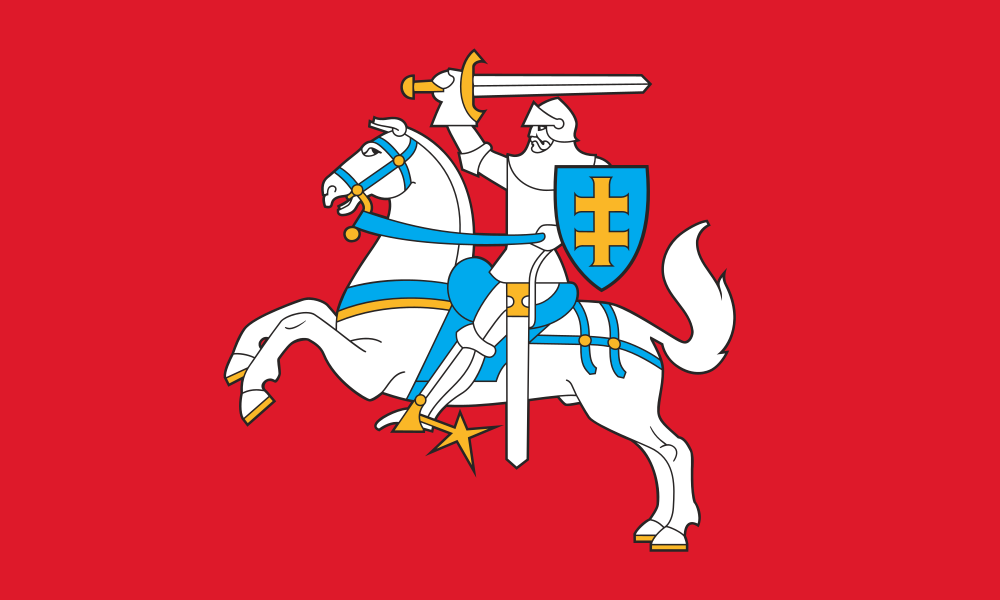
For centuries Lithuania was not a small Baltic state but one of medieval Europe's largest countries — the Grand Duchy of Lithuania, stretching from the Baltic nearly to the Black Sea. Its banner was the Vytis: a white armoured knight charging on horseback against a red field. After union with Poland it shared in the Polish-Lithuanian Commonwealth until the partitions erased both in 1795. The red Vytis flag survives today as Lithuania's official historical state flag.
Empires, kingdoms and republics that once covered part of Lithuania.
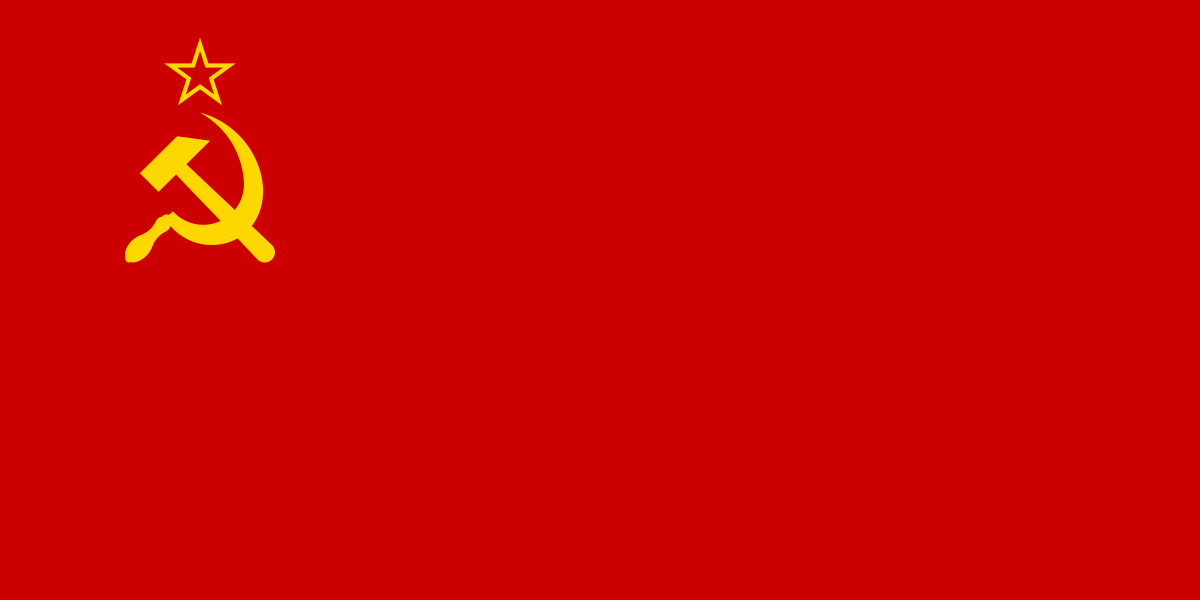
The gold hammer and sickle beneath a red star stood for the worker-peasant alliance. The exact shade and proportions were fixed by Soviet law in 1955.
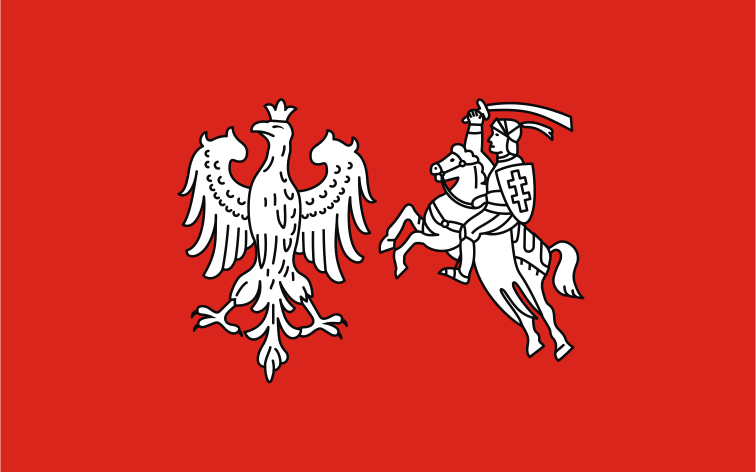
A Polish client state around Vilnius; its red field bore the Polish White Eagle and the Lithuanian Vytis knight side by side, before annexation by Poland in 1922.
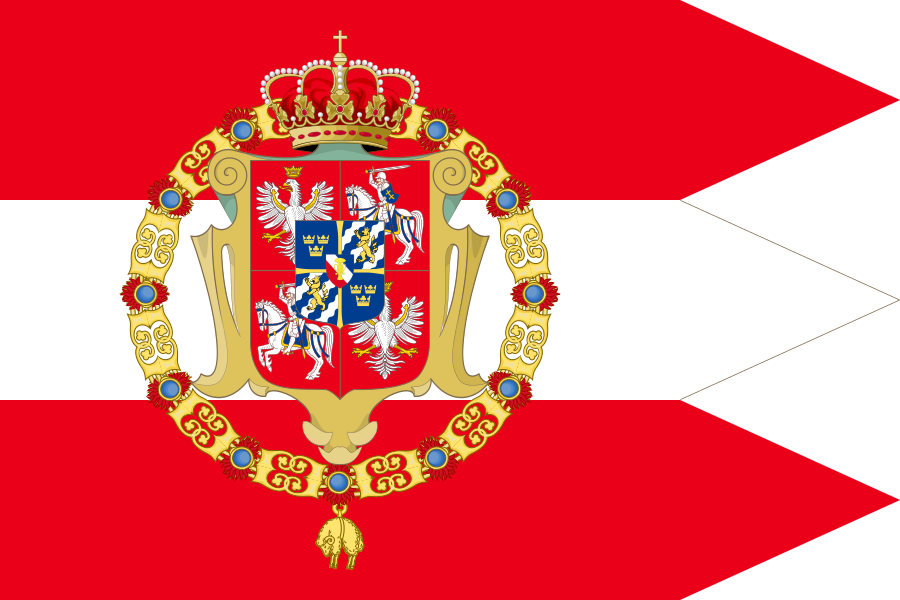
One of the largest states in Europe, an elective monarchy with an early constitution and a 'noble democracy', partitioned out of existence by Russia, Prussia, and Austria.
A red flag with white and green lower bands, flown over Soviet Lithuania until the republic became the first to declare independence from the USSR in 1990.
The red banner with the white Vytis — an armored knight on a charging horse — flew over a realm that at its height stretched from the Baltic to the Black Sea.
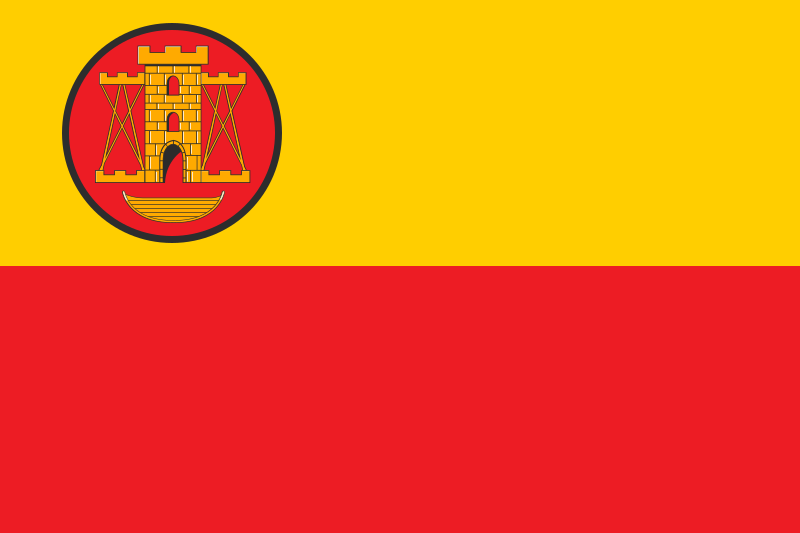
A League of Nations territory around the Baltic port of Klaipėda, seized by Lithuania in 1923; Nazi Germany forced its cession in 1939, one of the last crises before WWII.
The 10 states, provinces and regions of Lithuania with their own flags.
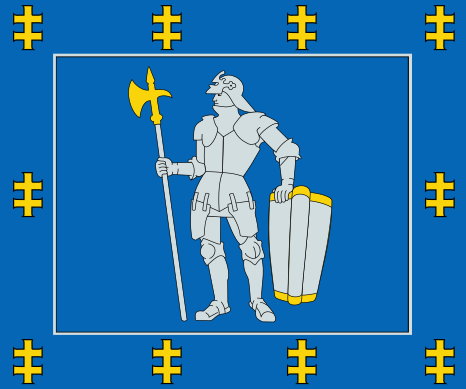 Alytus
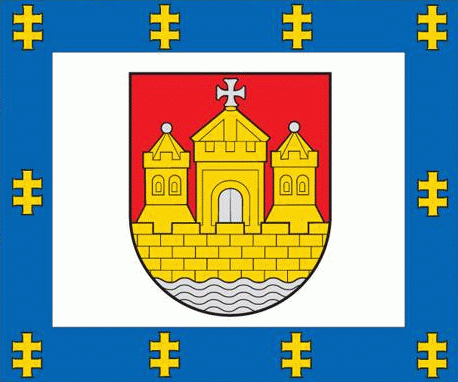 Klaipėda
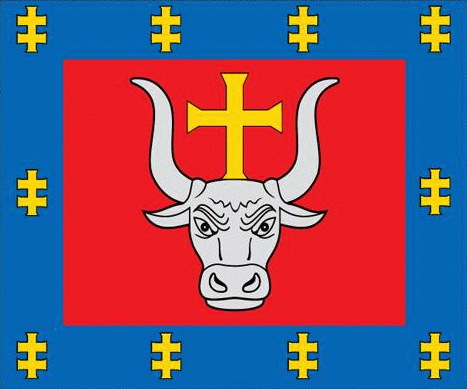 Kaunas
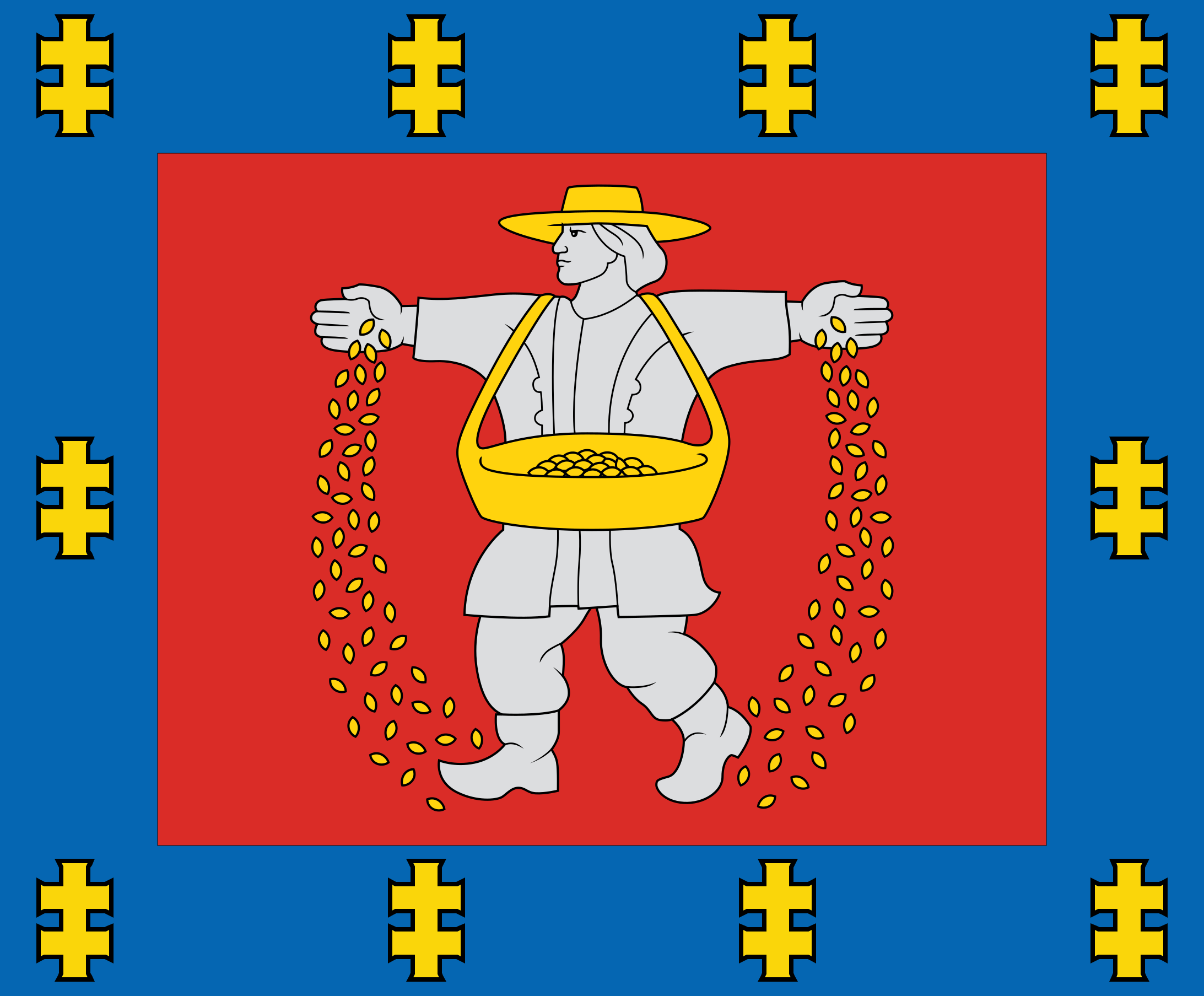 Marijampolė
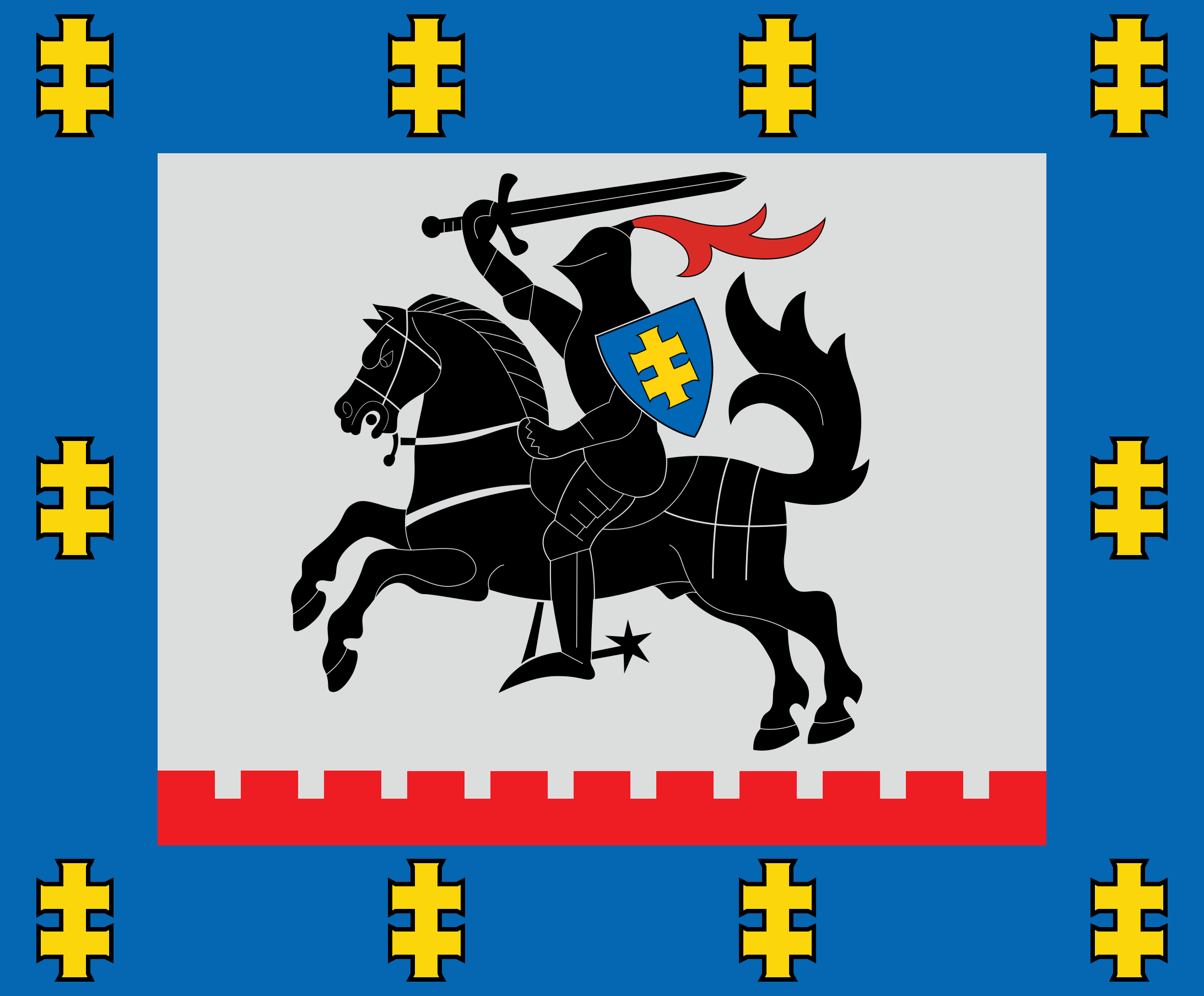 Panevėžys
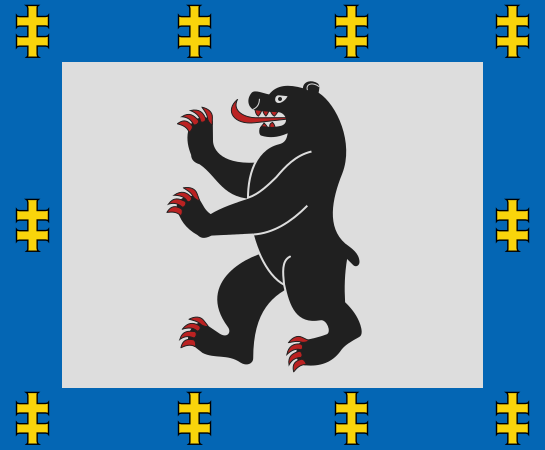 Šiauliai
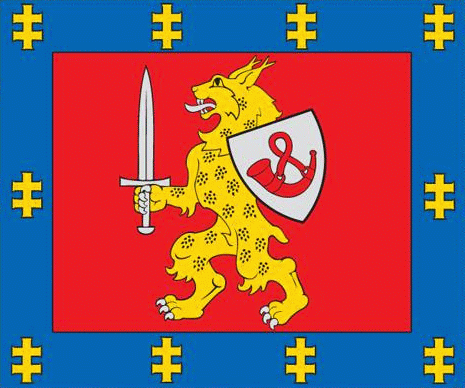 Tauragė
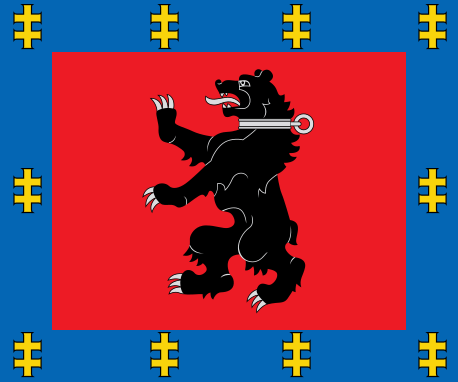 Telšiai
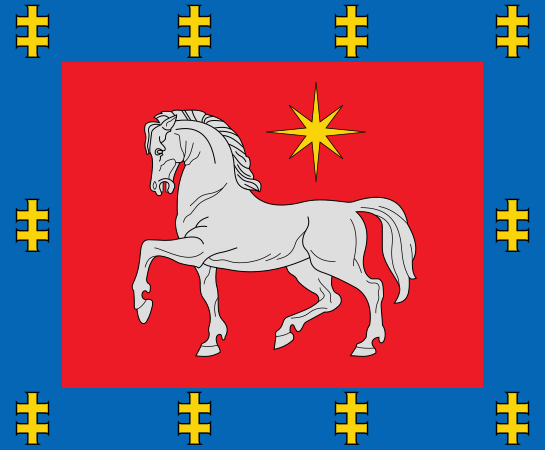 Utena
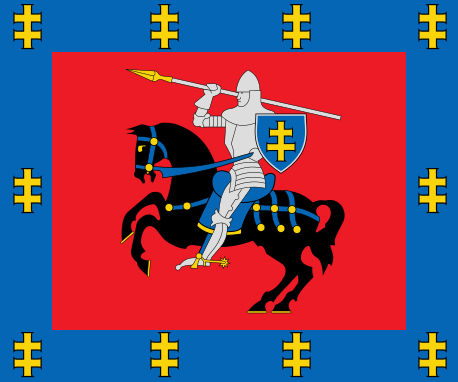 Vilnius
Lithuania shares a land border with 4 countries: Belarus, Latvia, Poland and Russia.
11 other national flags use the same main colours as Lithuania's.
 Benin
 Bolivia
 Burkina Faso
 Cameroon
 Grenada
 Guinea
 Mali
 Mauritania
 Portugal
 Republic of the Congo
 Senegal
 Belarus
 Poland
 Russia