Europe
Flag of Denmark
Denmark is a Nordic nation comprising the Jutland Peninsula and numerous islands, consistently ranking among the world's happiest and most prosperous countries. The Danish flag, the Dannebrog, is the oldest national flag still in use by an independent nation, dating to at least 1370. Denmark is a constitutional monarchy with a long maritime trading tradition, and its territories include Greenland, the world's largest island.

- CapitalCopenhagen
- RegionEurope
- Current flag since1370
- Main coloursRed, White
- Populationabout 5.9 million
- Areaabout 43,000 km²
- Flags in history1
Population and area are rounded.
What the flag of Denmark means
The Dannebrog is said to have fallen from the sky during the Battle of Lyndanisse in Estonia in 1219, turning the battle for the Danes. Historians date the earliest clear record of it to the 14th century, but it is still regarded as the oldest national flag in continuous use. Its off-centre cross became the model for the Nordic cross flags of Sweden, Norway, Finland, Iceland and the Faroe Islands.
More about the flag
Denmark's flag is flown more widely than in most countries: Danes raise it on birthdays and family celebrations, and it decorates cakes and Christmas trees. A long, swallow-tailed version, the Splitflag, is used by the state and the navy. On 15 June, Valdemarsdag, Denmark marks the legendary fall of the flag from the sky in 1219. The design's off-centre cross gave its name to the Nordic cross used across Scandinavia.
How to recognise it
Red with a white Nordic cross. The oldest national flag in the world, dating to 1219.
Did you know?
Denmark consistently ranks as one of the happiest countries in the world.
Easily confused with
Denmark's flag is often mixed up with these. Learn to tell them apart:
Flag history of Denmark
Every flag that has flown over Denmark, from today back through time.
1370–present
The Dannebrog
The Dannebrog — a white Nordic cross on red — is the oldest national flag still in continuous use by an independent nation, reliably documented from at least 1370. Legend holds it fell from the sky during the Battle of Lyndanisse in 1219. Whatever its origin, the design has remained essentially unchanged for over 650 years, making it the template for every other Nordic cross flag.
Related historical states
Empires, kingdoms and republics that once covered part of Denmark.
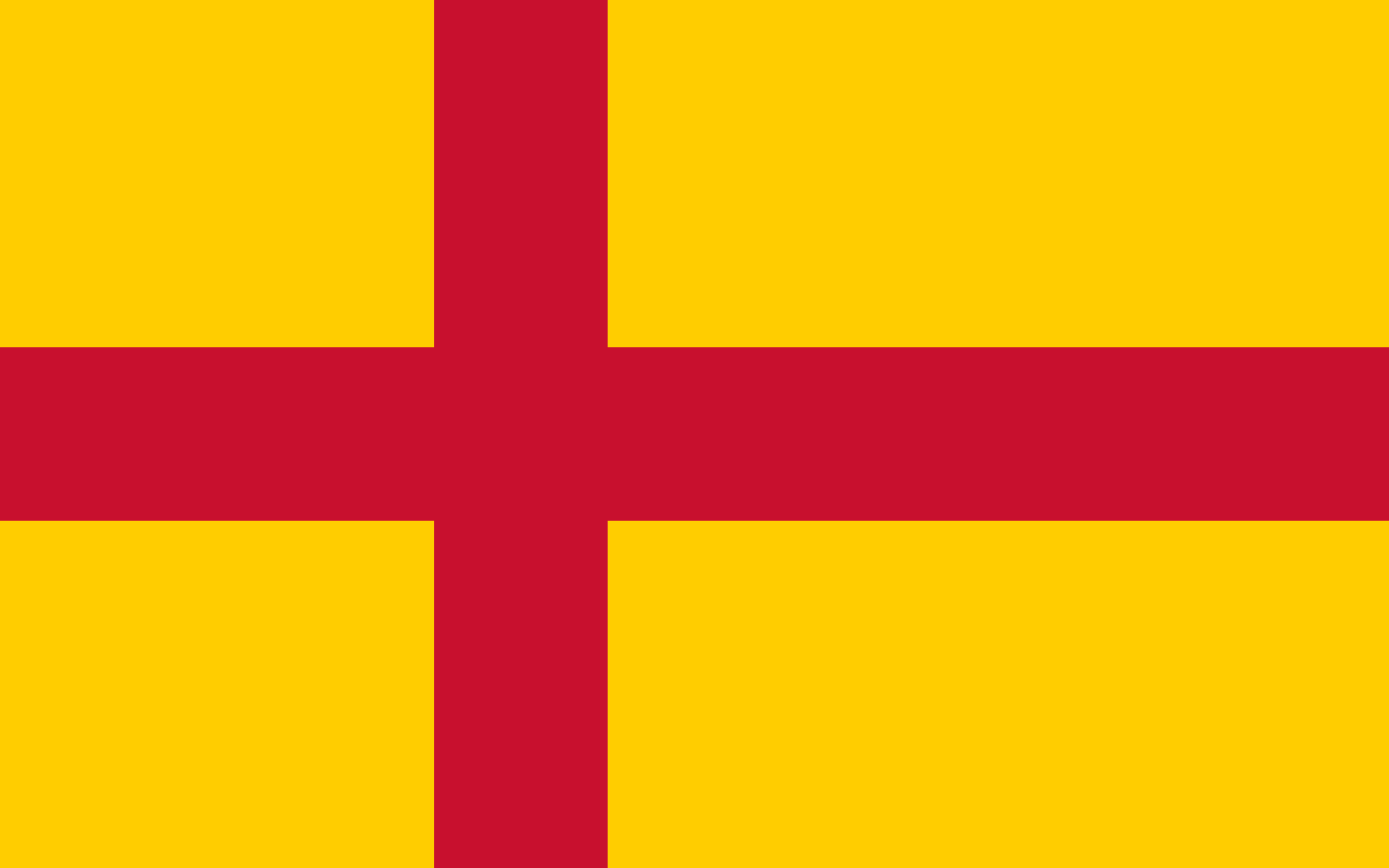
1397–1523
Kalmar Union
The dynastic union that joined Denmark, Sweden, and Norway under a single monarch for over a century, until Gustav Vasa led Sweden to break away in 1523.
Territories & dependencies
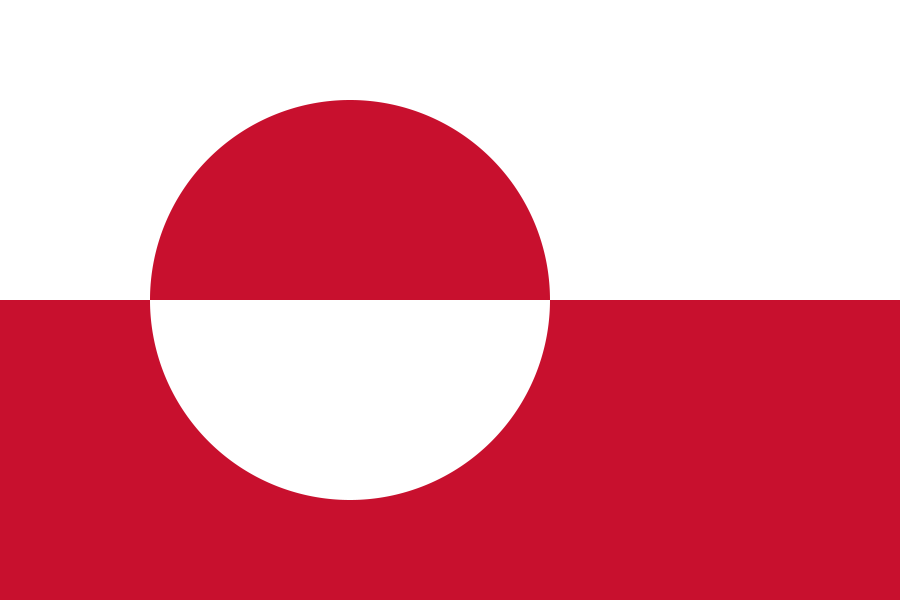
Autonomous territory
Greenland
The world's largest island, self-governing since 1979 with a path to full independence. Its red-and-white 'Erfalasorput' is the only Nordic flag without a cross.
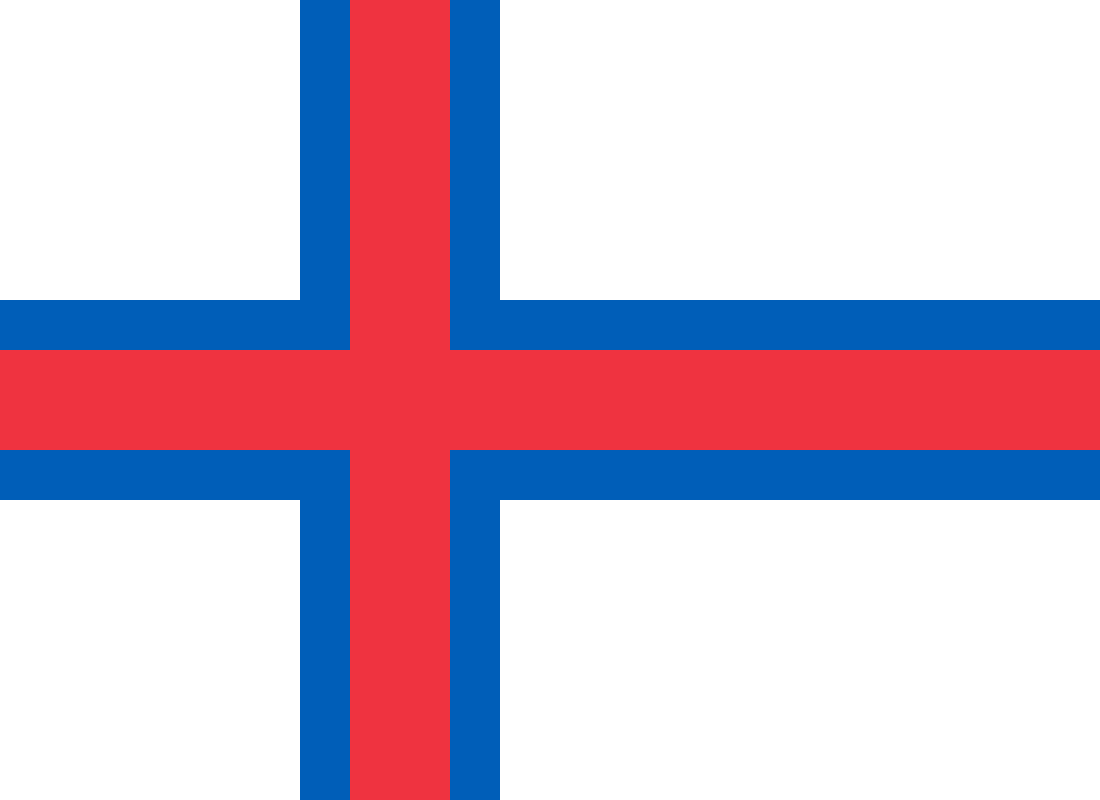
Autonomous territory
Faroe Islands
A self-governing North Atlantic archipelago between Scotland and Iceland. Its 'Merkið' is a Nordic cross flag, like Denmark's but red-and-blue on white.
Regional flags of Denmark
The 7 states, provinces and regions of Denmark with their own flags.
North Denmark
Central Denmark
Southern Denmark

Capital Region
Zealand
Greenland
Faroe Islands
Neighbouring countries
Denmark shares a land border with one country: Germany.
Other flags in red and white
17 other national flags use the same main colours as Denmark's.
Play Globalio and learn Denmark's flag
 Norway
 Switzerland
 Iceland
 Germany
 Austria
 Bahrain
 Canada
 Georgia
 Indonesia
 Japan
 Latvia
 Malta
 Monaco
 Peru
 Poland
 Qatar
 Singapore
 Tonga
 Tunisia
 Turkey