Europe
Flag of the Netherlands
The Netherlands is a densely populated country in Western Europe famous for its flat landscape, extensive canal systems, windmills, tulip fields, and masters of Dutch Golden Age painting such as Rembrandt and Vermeer. A historically significant maritime and trading nation, the Netherlands built a major colonial empire during its 17th-century Golden Age. Amsterdam is the constitutional capital while The Hague is the seat of government and home to the International Court of Justice.

- CapitalAmsterdam
- RegionEurope
- Current flag since1796
- Main coloursRed, White, Blue
- Populationabout 18 million
- Areaabout 42,000 km²
- Flags in history3
Population and area are rounded.
What the flag of the Netherlands means
The Dutch flag descends from the orange, white and blue “Prince's flag” of William of Orange, who led the revolt against Spain in the 16th century. During the 17th century orange gave way to red, possibly because orange dye faded quickly and red was easier to see at sea. The red-white-blue was formally confirmed in 1937, and an orange pennant is still flown above it on royal birthdays.
How to recognise it
Horizontal red-white-blue. Luxembourg looks identical but has lighter blue. Russia's is also red-white-blue.
Did you know?
The Netherlands has more bicycles than people — about 23 million bikes for 17 million residents.
Easily confused with
The Netherlands' flag is often mixed up with these. Learn to tell them apart:
Flag history of the Netherlands
Every flag that has flown over the Netherlands, from today back through time.
1796–present
Red-white-blue tricolour
The modern red-white-blue continued through the Batavian Republic, Kingdom, and present day; its bright vermilion red was officially fixed by royal decree in 1937. Orange survives in the pennant flown above the flag on royal occasions.
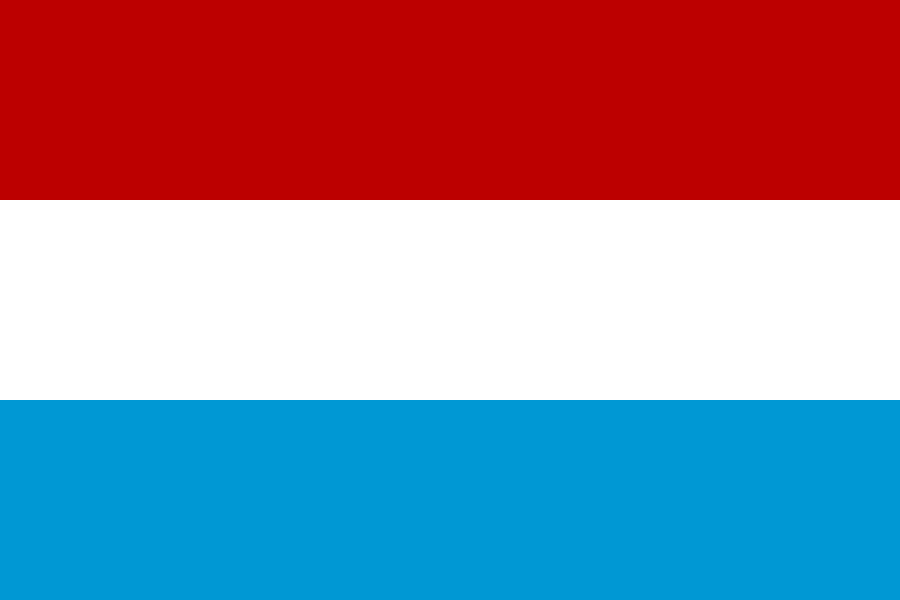
1660–1795
Statenvlag (States Flag)
Orange was gradually swapped for red between roughly 1630 and 1660 — partly because red was more visible at sea, partly to signal the Republic's growing distance from the House of Orange. A 1664 resolution formally named the red-white-blue the "Statenvlag".
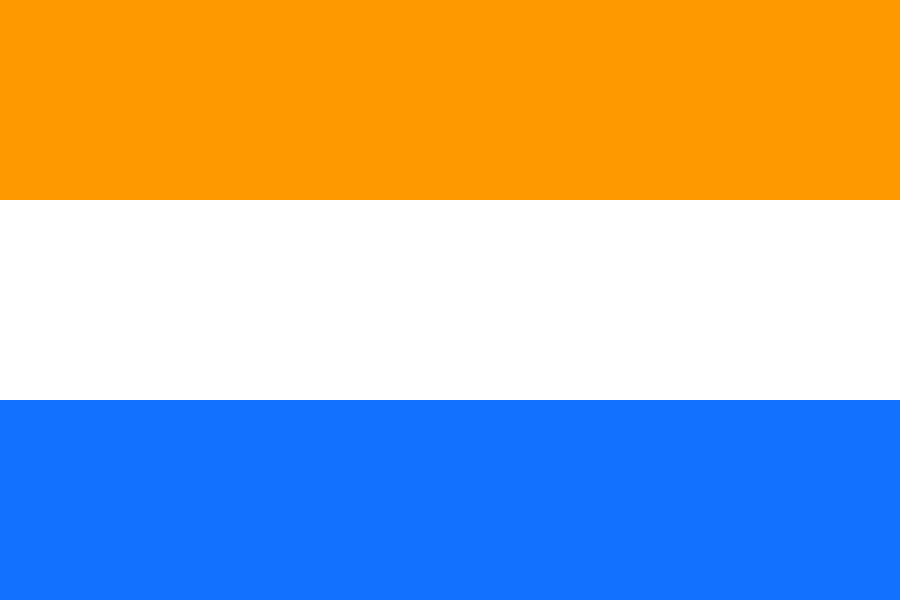
1572–1660
Prinsenvlag (Prince's Flag)
An orange-white-blue tricolour tied to William of Orange and the Dutch Revolt against Spain. It is the direct ancestor of today's flag and remains an emblem of the House of Orange.
Related historical states
Empires, kingdoms and republics that once covered part of the Netherlands.
medieval–present
City of Gouda
Red-and-white vertical stripes with three silver six-pointed stars — the civic banner of the Dutch cheese city of Gouda, of medieval origin.
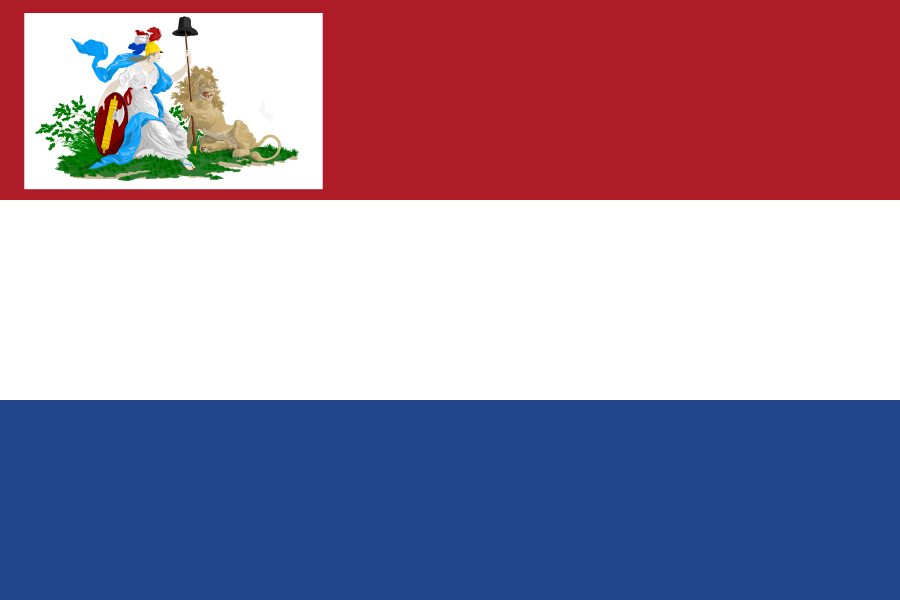
1795–1806
Batavian Republic
The Dutch revolutionary republic's flag placed a white canton on the tricolor enclosing a seated liberty maiden with a liberty-cap spear and the Dutch lion.
1581–1795
Dutch Republic
The red-white-blue 'Statenvlag' of the Seven United Provinces, a merchant republic that became a 17th-century global trading and naval superpower in its Golden Age.
Territories & dependencies
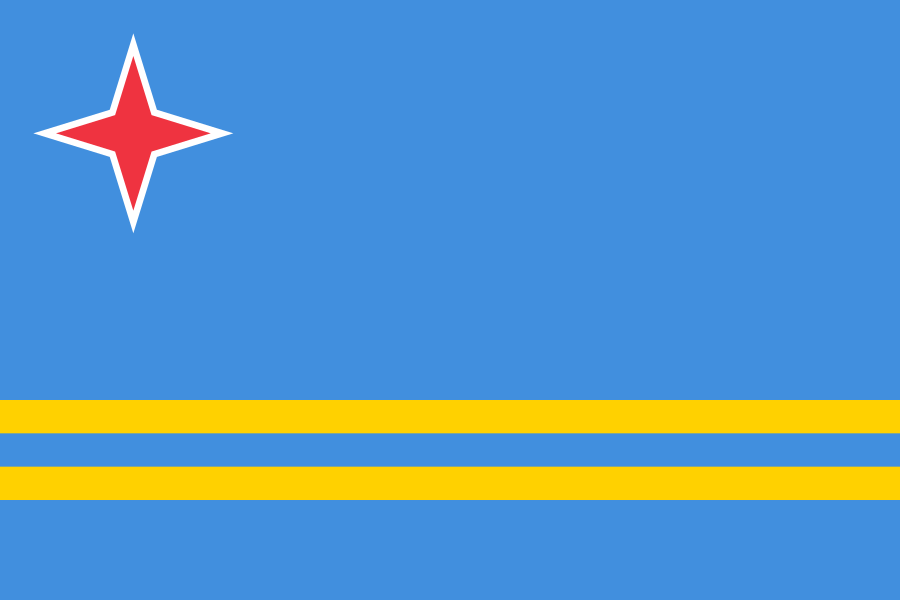
Constituent country
Aruba
An autonomous country within the Kingdom of the Netherlands since 1986, off the Venezuelan coast. Its light-blue flag has two yellow stripes and a red star.
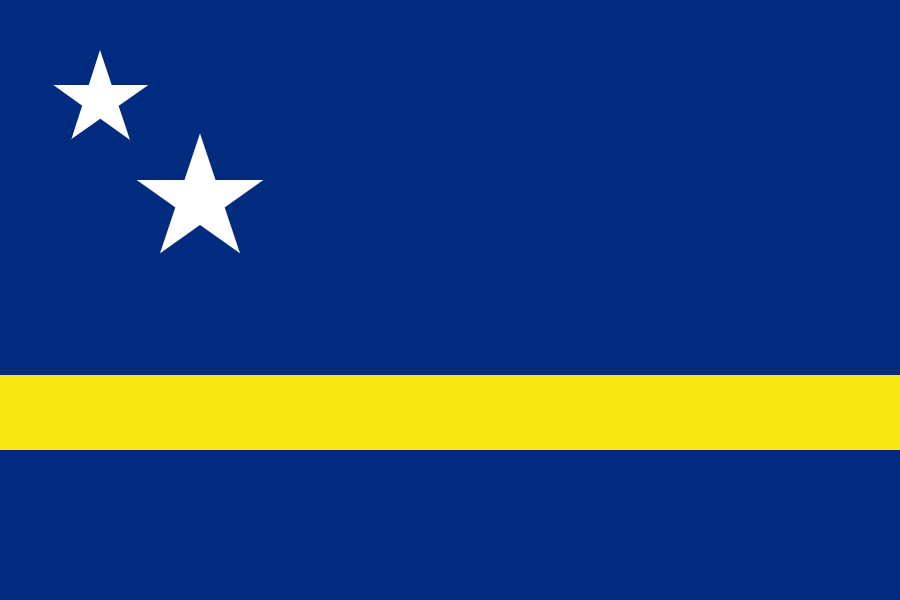
Constituent country
Curaçao
An autonomous country within the Kingdom since the 2010 break-up of the Netherlands Antilles. Two stars on its flag stand for Curaçao and Klein Curaçao.
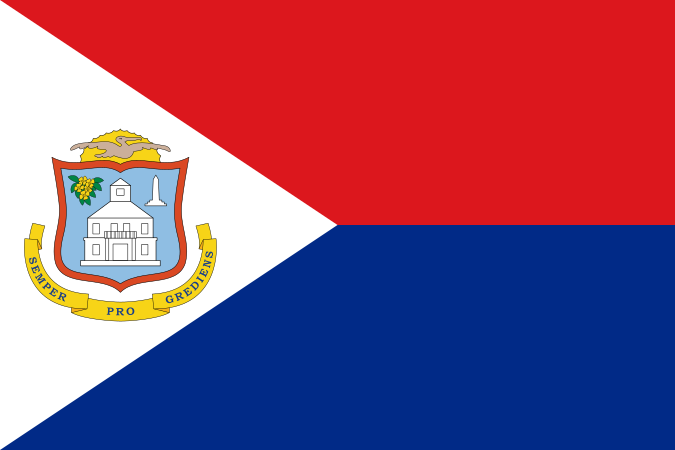
Constituent country
Sint Maarten
The Dutch southern half of the island of Saint Martin — the smallest land mass shared by two nations, with French Saint-Martin to the north.
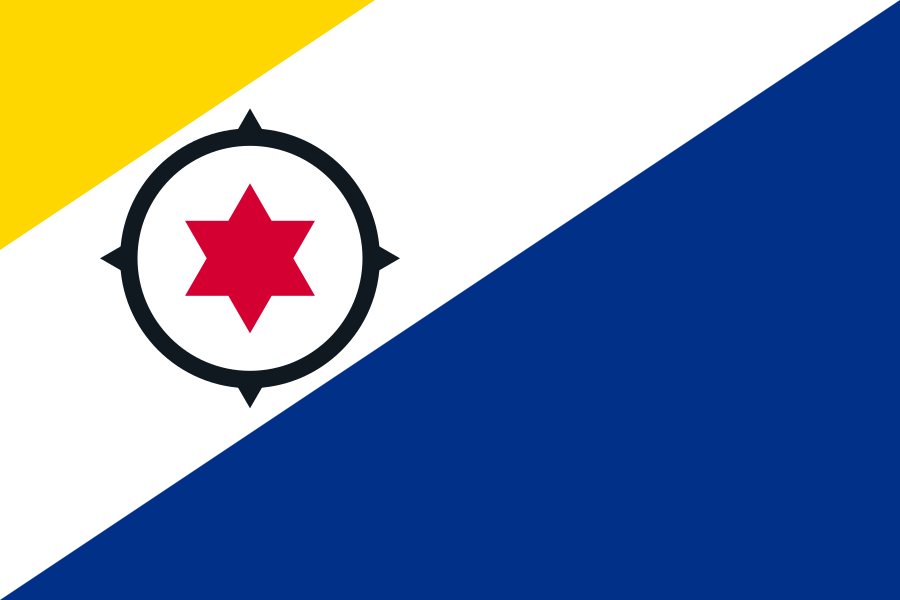
Special municipality
Bonaire
A 'BES island' that became a special municipality of the Netherlands proper in 2010, governed much like a Dutch town despite lying in the Caribbean.
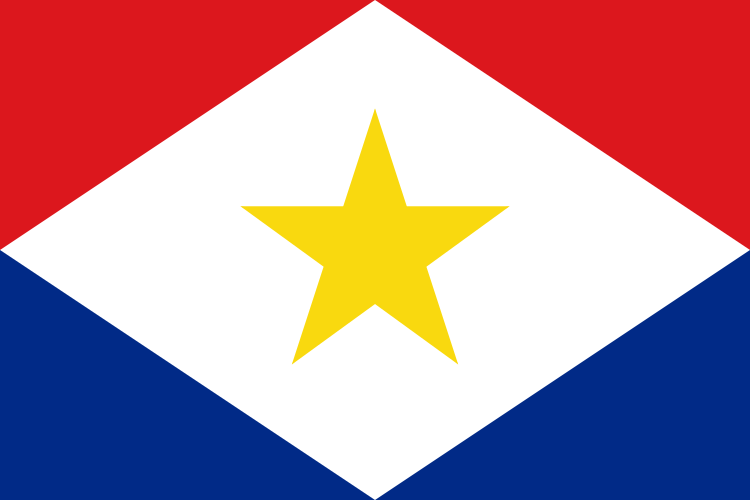
Special municipality
Saba
The smallest special municipality, a single volcanic peak. Its flag's gold star sits on a diamond of red and blue.
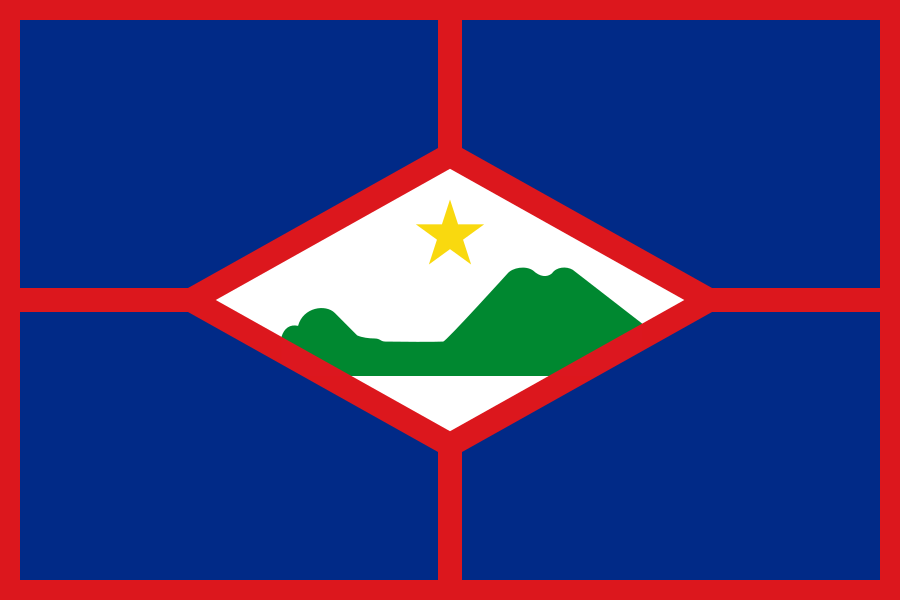
Special municipality
Sint Eustatius
Known as 'Statia', once a booming free port that was the first to salute the American flag in 1776. A special municipality since 2010.
Regional flags of the Netherlands
The 12 states, provinces and regions of the Netherlands with their own flags.
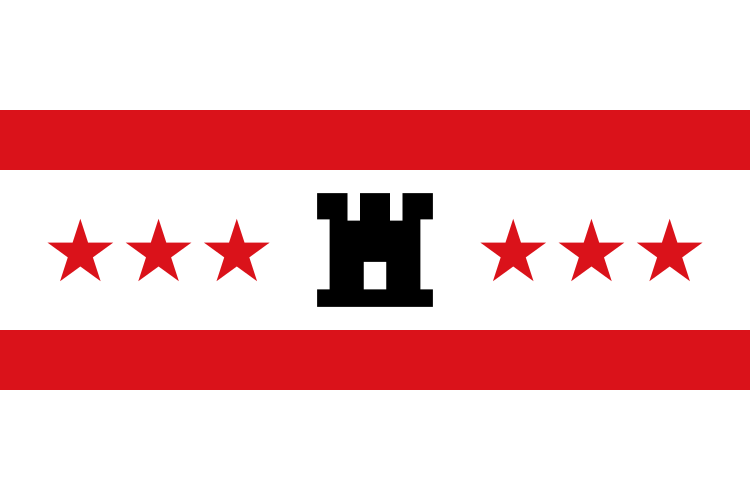
Drenthe
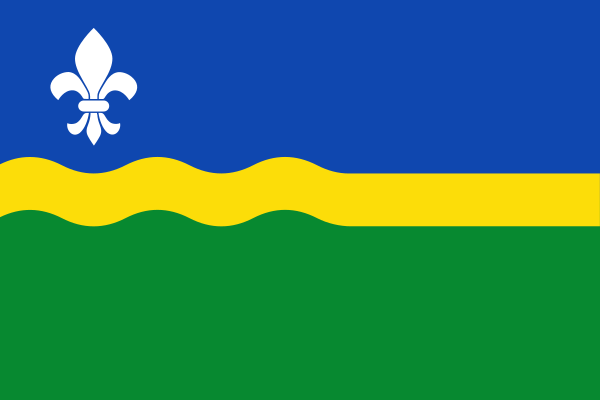
Flevoland
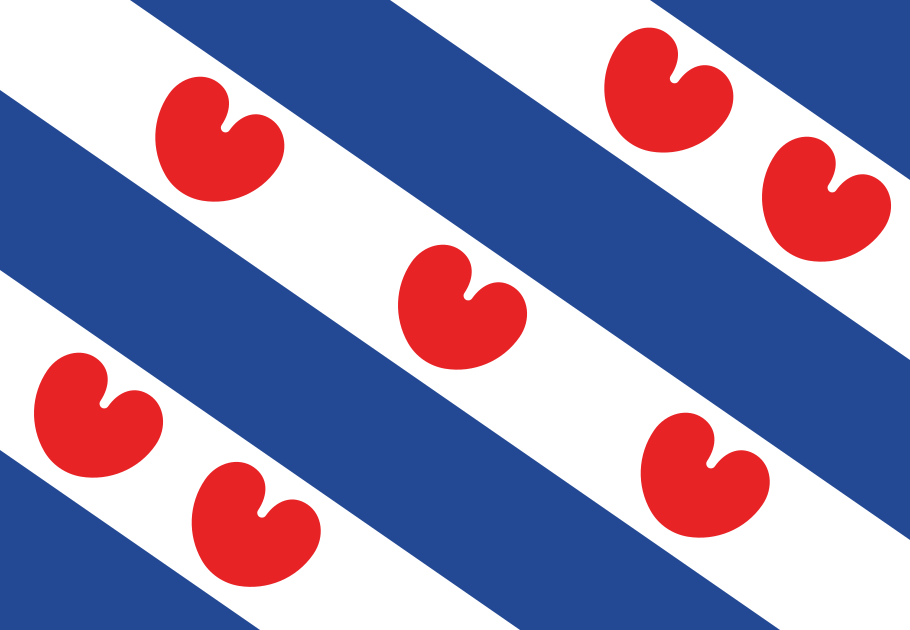
Friesland

Gelderland
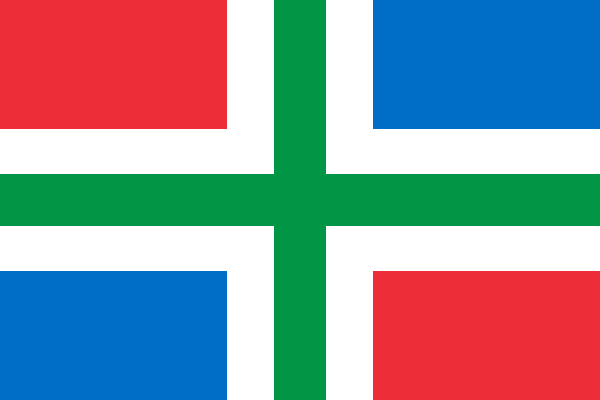
Groningen
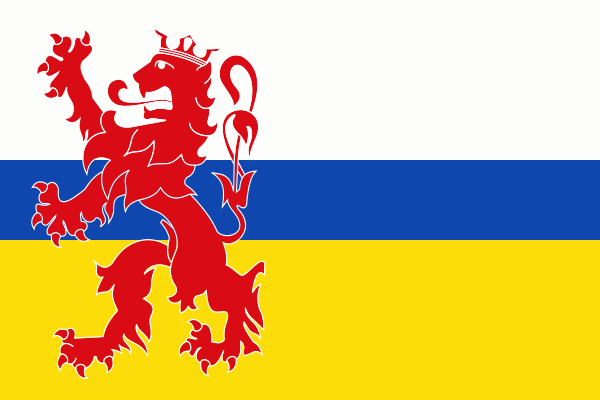
Limburg
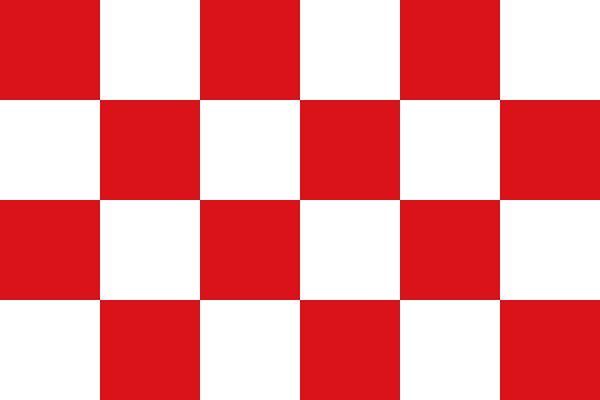
North Brabant
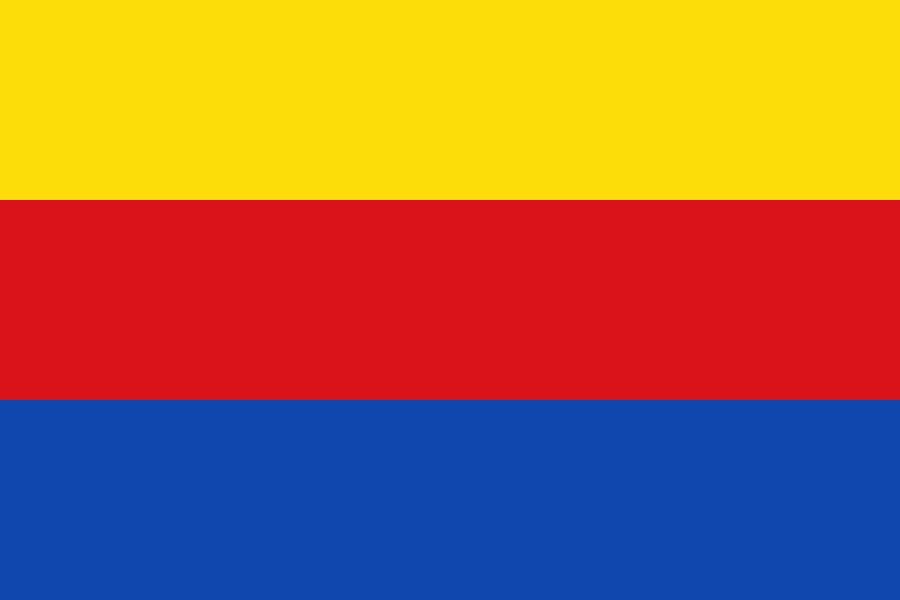
North Holland
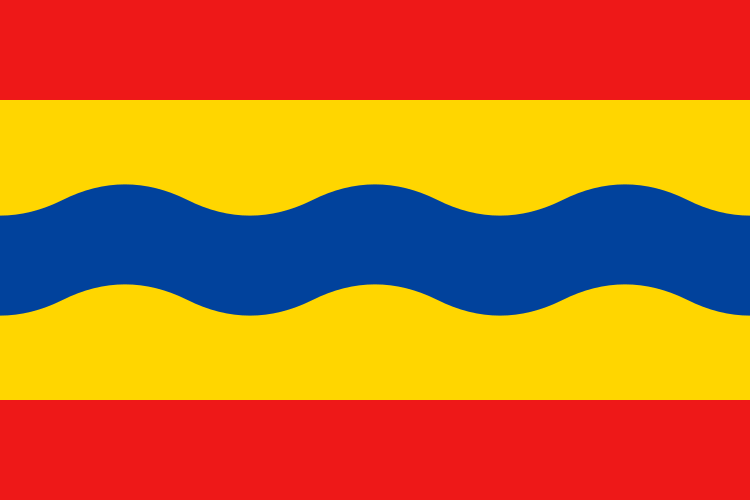
Overijssel
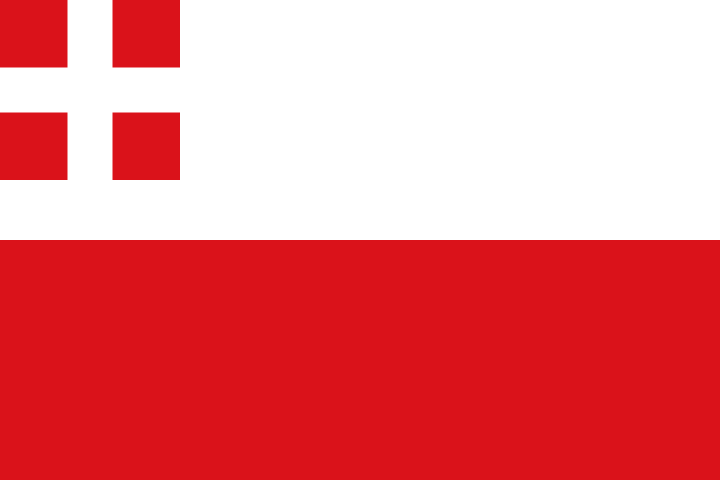
Utrecht
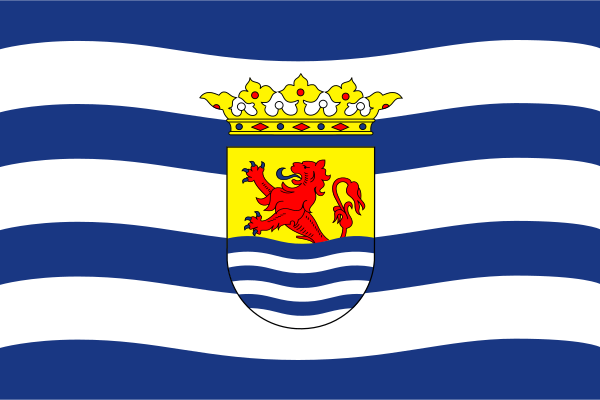
Zeeland
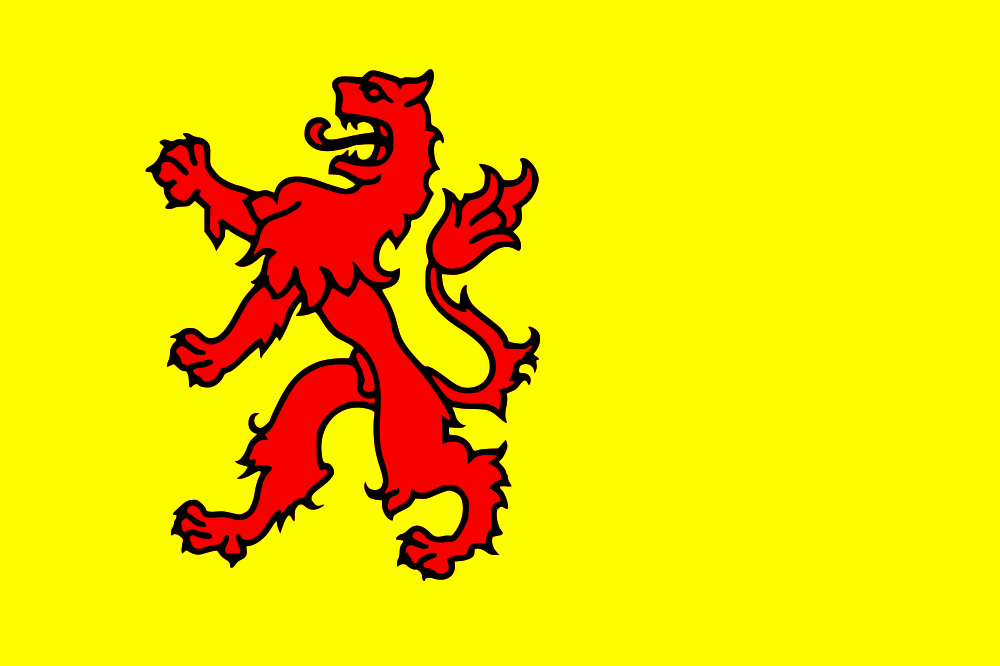
South Holland
Neighbouring countries
The Netherlands shares a land border with 2 countries: Belgium and Germany.
Other flags in red, white and blue
30 other national flags use the same main colours as the Netherlands'.
Play Globalio and learn the Netherlands' flag
 Luxembourg
 Russia
 France
 Belgium
 Germany
 Australia
 Belize
 Cambodia
 Chile
 Costa Rica
 Croatia
 Cuba
 Czech Republic
 Dominican Republic
 Fiji
 Iceland
 Laos
 Liberia
 Nepal
 New Zealand
 North Korea
 Norway
 Panama
 Paraguay
 Samoa
 Serbia
 Slovakia
 Slovenia
 Taiwan
 Thailand
 United Kingdom
 United States