 Turkmenistan
 Kyrgyzstan

1992–present
Republic of Tajikistan
Adopted in 1992, a red-white-green tricolour with a central gold crown beneath an arc of seven stars. It has one of the widest middle stripes of any national flag.
Tajikistan is the smallest country in Central Asia by area yet has the highest proportion of mountainous territory, with more than 93% covered by mountains including the Pamir range — often called the 'Roof of the World.' It is the poorest of the former Soviet Central Asian republics. Tajikistan is the only Persian-speaking country in Central Asia and has heritage closely tied to ancient Persian civilisation; the Sogdian people, ancestors of modern Tajiks, played a major role on the Silk Road.
Population and area are rounded.
Red stands for the unity of the nation, white for cotton, the country's main crop, and purity, and green for its fertile valleys. The crown and seven stars refer to the name Tajik, popularly linked to taj, crown; seven is a lucky number in Tajik tradition. The flag was adopted in 1992.
Tajikistan became independent from the Soviet Union in 1991 and adopted its flag in November 1992, during its civil war. The flag's colours resemble those of Iran, reflecting their shared Persian language and culture; Tajik is a form of Persian. More than 90 per cent of the country is mountainous, and the Pamirs are often called the roof of the world.
Horizontal red-white-green with a gold crown and seven stars in the centre white stripe.
Tajikistan is about 93% mountainous — more than any other country on Earth.
Tajikistan's flag is often mixed up with these. Learn to tell them apart:
Every flag that has flown over Tajikistan, from today back through time.
Adopted in 1992, a red-white-green tricolour with a central gold crown beneath an arc of seven stars. It has one of the widest middle stripes of any national flag.
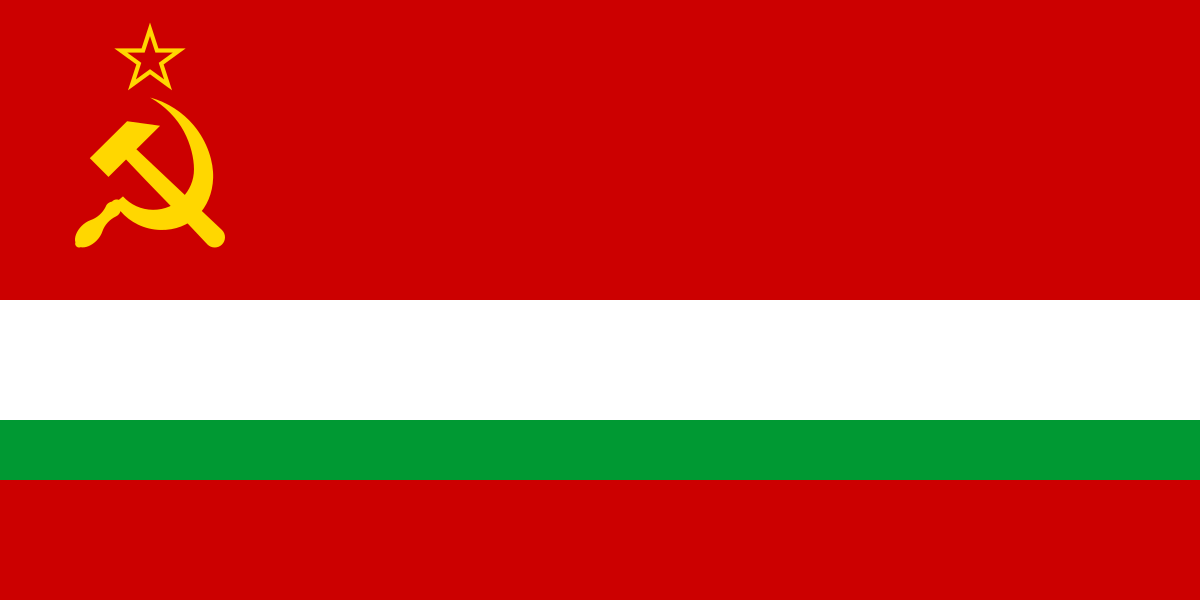
A red flag with central white and green horizontal stripes, which remained in use after the 1991 independence declaration until the new flag of 1992.
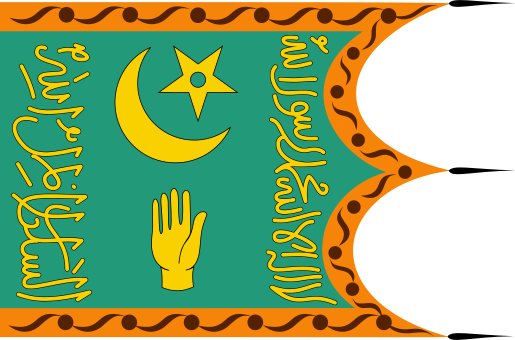
The Tajik lands were the eastern half of the Emirate of Bukhara, the last great Persian-speaking Muslim state of Central Asia. Tajiks look back further still to the Samanid Empire (9th–10th centuries), centred on Bukhara and Samarkand — the golden age of Persian-Tajik culture, honoured today in the name of Tajikistan's currency, the somoni.
Empires, kingdoms and republics that once covered part of Tajikistan.
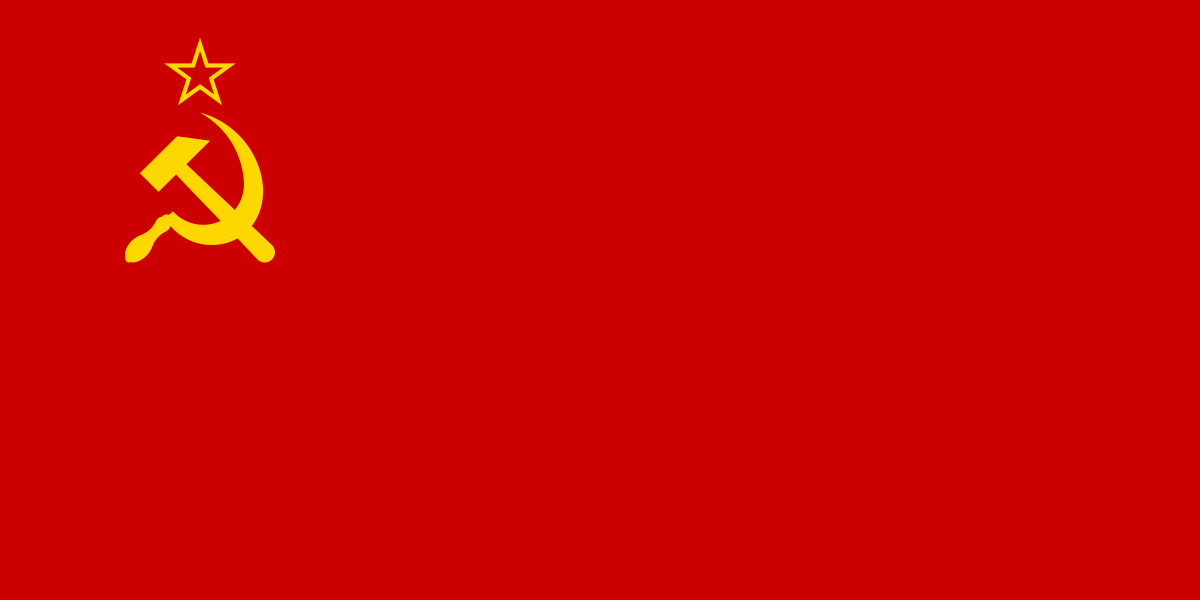
The gold hammer and sickle beneath a red star stood for the worker-peasant alliance. The exact shade and proportions were fixed by Soviet law in 1955.
A red flag with white and green horizontal bands beneath the hammer, sickle and star — the Soviet flag of Tajikistan, carved out of the Uzbek SSR in 1929.
Tajikistan shares a land border with 4 countries: Afghanistan, China, Kyrgyzstan and Uzbekistan.
3 other national flags use the same main colours as Tajikistan's.
Play Globalio and learn Tajikistan's flag Afghanistan
 China
 Uzbekistan
 Myanmar
 Suriname
 Togo