 Slovakia
 Slovenia

1991–present
Flag of Ukraine
The blue-and-yellow bicolour was restored at independence in 1991, reviving the 1917 design. It is widely read as blue sky above golden wheat fields.
Ukraine is the largest country situated entirely within Europe, a vast nation with a rich agricultural tradition — it was once called the 'breadbasket of Europe' — and significant mineral and industrial resources. Kyiv, one of Eastern Europe's oldest and most historic cities, was the capital of the medieval Kyivan Rus state, a major cultural and political centre of early medieval Europe. Ukraine declared independence from the Soviet Union in 1991 and has a population of around 40 million people.
Population and area are rounded.
Blue and yellow were the colours of the coat of arms of the medieval Kingdom of Galicia–Volhynia and were used by Ukrainians during the revolutions of 1848. The flag is widely read as a blue sky above golden wheat fields. It was used by the Ukrainian People's Republic in 1918, banned in Soviet times, and officially adopted again in January 1992 after independence.
Horizontal blue-over-yellow — the only European flag with exactly this simple two-colour horizontal split.
Ukraine has the largest territory of any country located entirely within Europe.
Ukraine's flag is often mixed up with these. Learn to tell them apart:
Every flag that has flown over Ukraine, from today back through time.
The blue-and-yellow bicolour was restored at independence in 1991, reviving the 1917 design. It is widely read as blue sky above golden wheat fields.
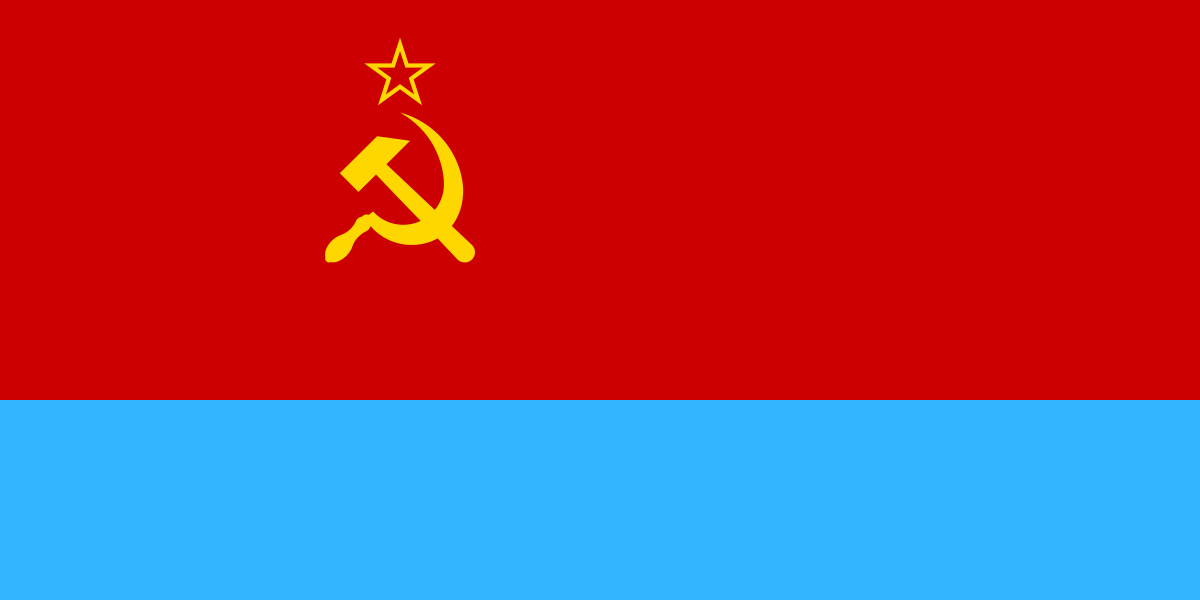
A red flag with a light-blue band along the bottom third and a gold hammer, sickle, and star. The blue stripe set it apart from other Soviet republic flags.
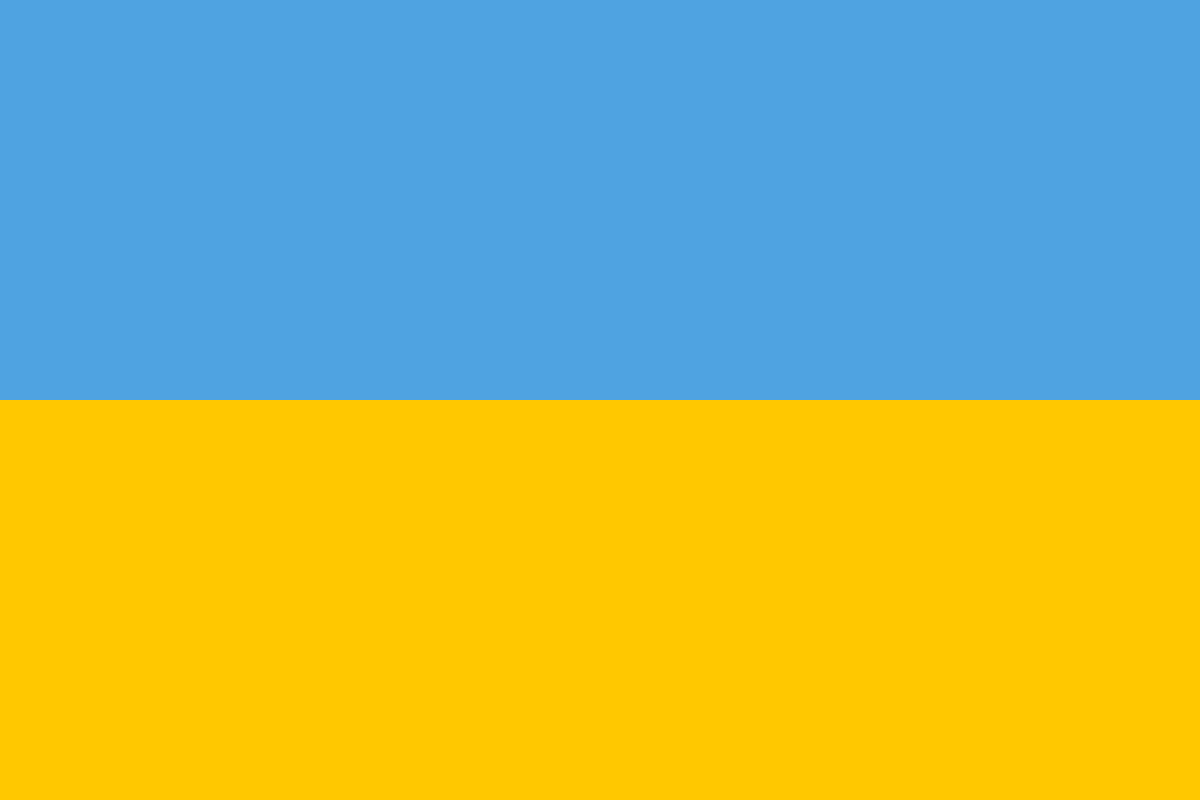
The blue-over-yellow bicolour served the short-lived Ukrainian People's Republic during the revolutionary period, drawing on Ukrainian heraldic tradition.
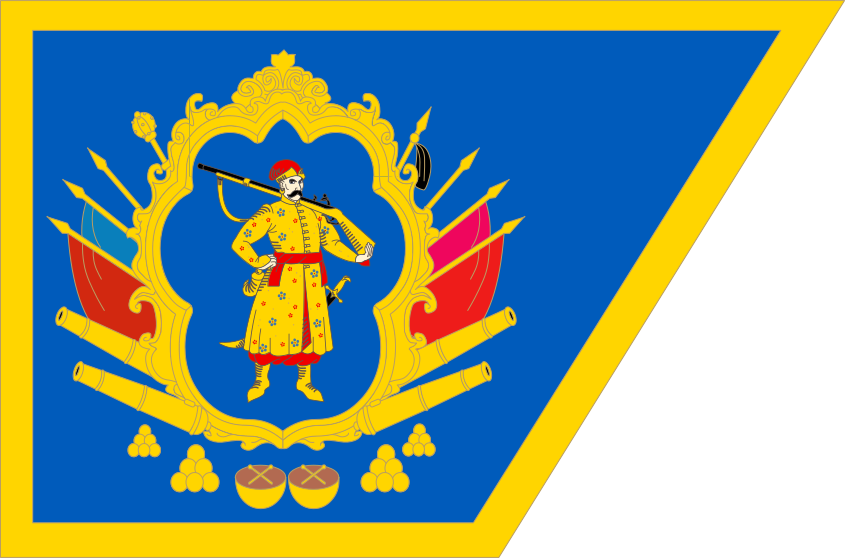
The Cossack Hetmanate, founded by Bohdan Khmelnytsky in 1649, was a self-governing Cossack state that is widely regarded as a forerunner of Ukrainian statehood. Its banners were typically crimson with a cross and Cossack devices. Squeezed between Poland, the Ottomans and Muscovy, it was gradually absorbed by the Russian Empire, which abolished it in 1764.
Empires, kingdoms and republics that once covered part of Ukraine.
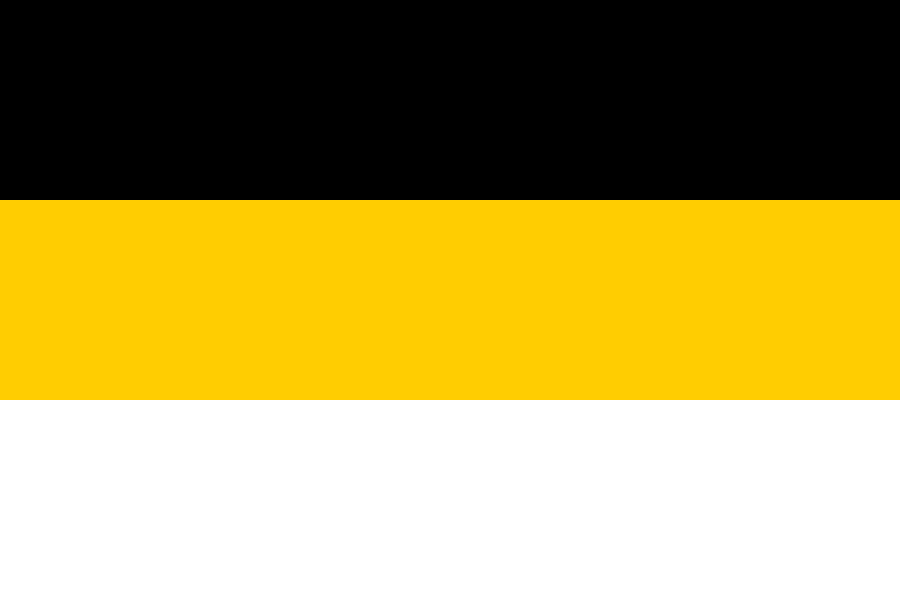
The black-yellow-white 'imperial colors' were drawn from the state coat of arms by Alexander II, before Nicholas II demoted them for the white-blue-red tricolor.
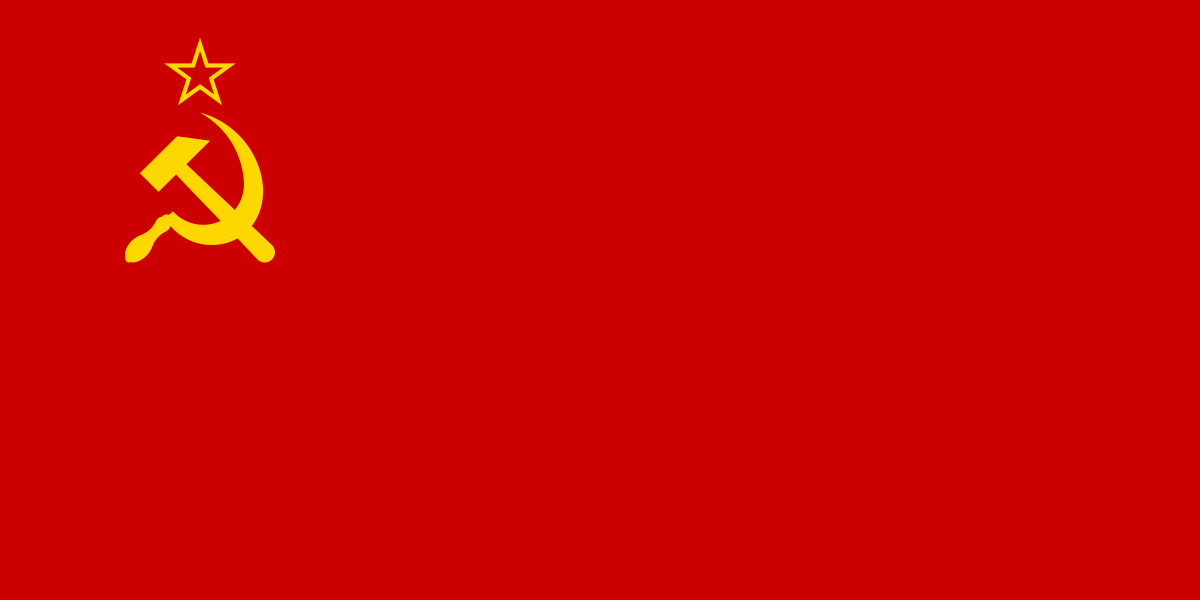
The gold hammer and sickle beneath a red star stood for the worker-peasant alliance. The exact shade and proportions were fixed by Soviet law in 1955.
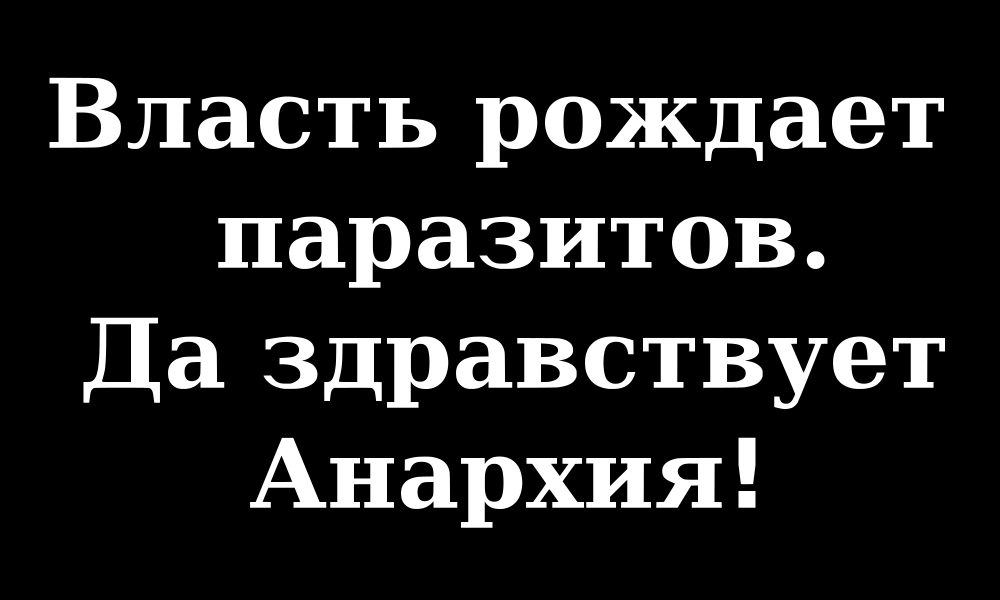
The Ukrainian anarchist movement under Nestor Makhno flew black banners reading 'Liberty or Death'. The popular skull-and-crossbones version is a debunked Soviet-propaganda myth.
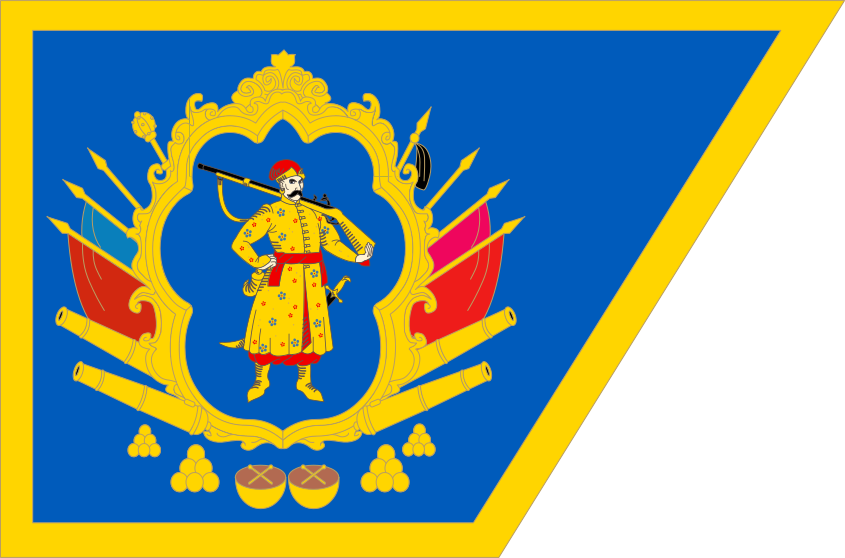
The Cossack state of central Ukraine, founded by Bohdan Khmelnytsky's uprising, flew a crimson banner with a Cossack bearing a musket.
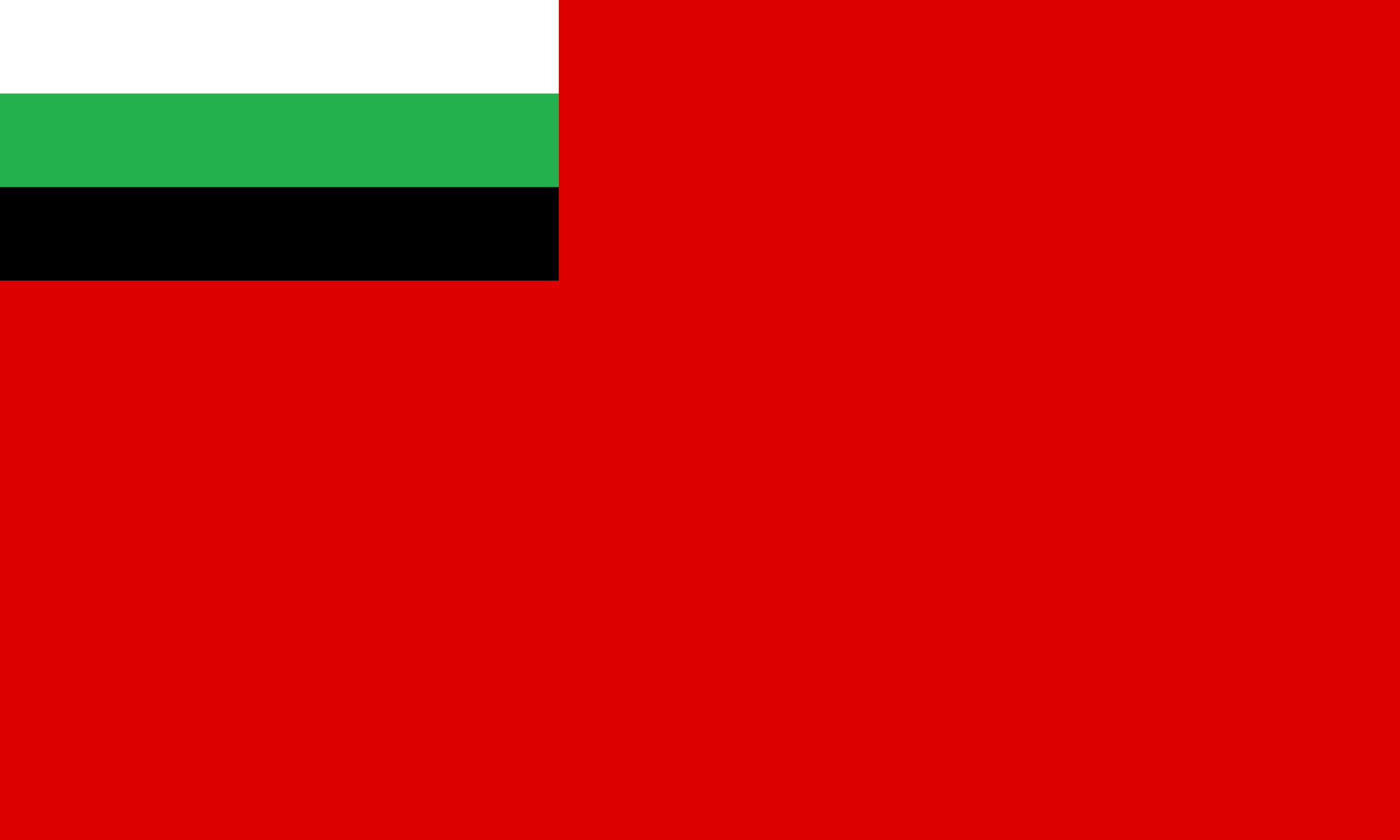
A short-lived Bolshevik republic in the Donbas industrial basin that tried to stay part of Soviet Russia rather than join Ukraine — dissolved within months.

One of the first secular Muslim-led republics in the world, flying the sky-blue Kök Bayraq with a golden Tatar tamga, before the Bolsheviks crushed it within months.
A red flag with a lower azure band and a gold hammer, sickle and star, flown by Soviet Ukraine — which, unusually, held its own seat at the United Nations.
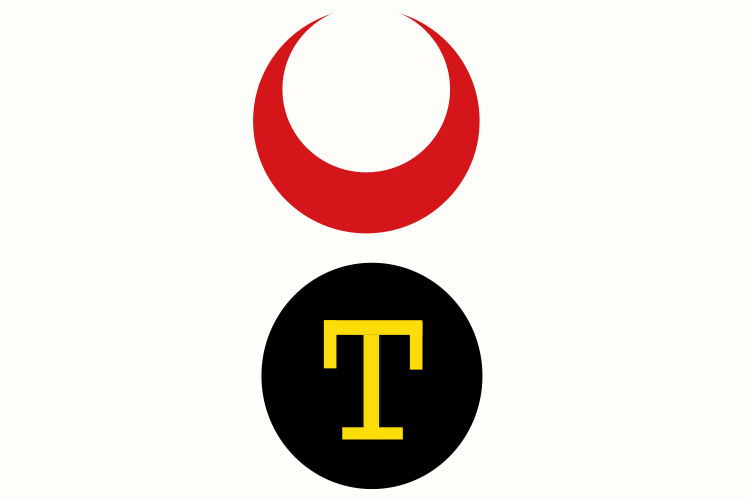
A blue flag with the golden Giray-dynasty tamga; the last remnant of the Golden Horde, it dominated the northern Black Sea steppe until Catherine the Great annexed it.
The 27 states, provinces and regions of Ukraine with their own flags.
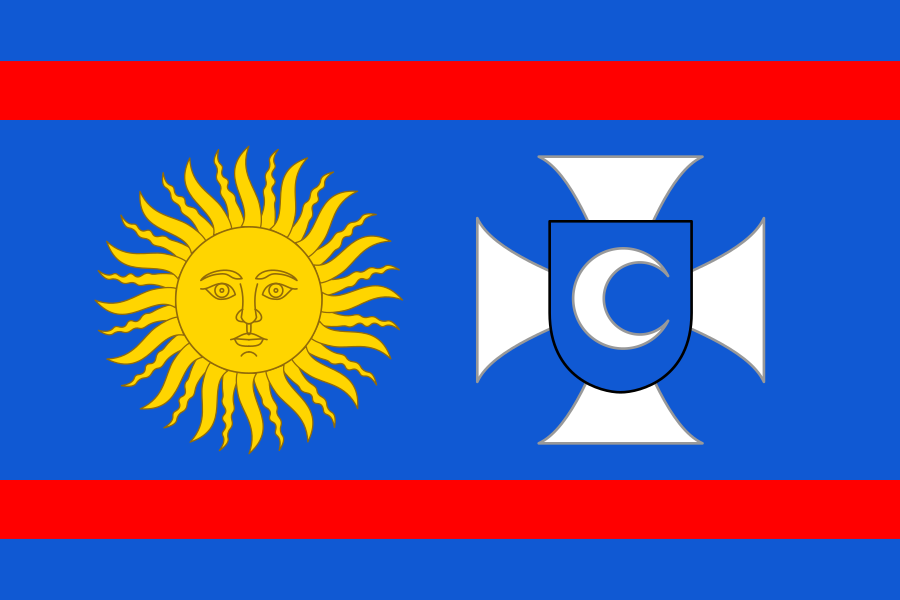 Vinnytsia
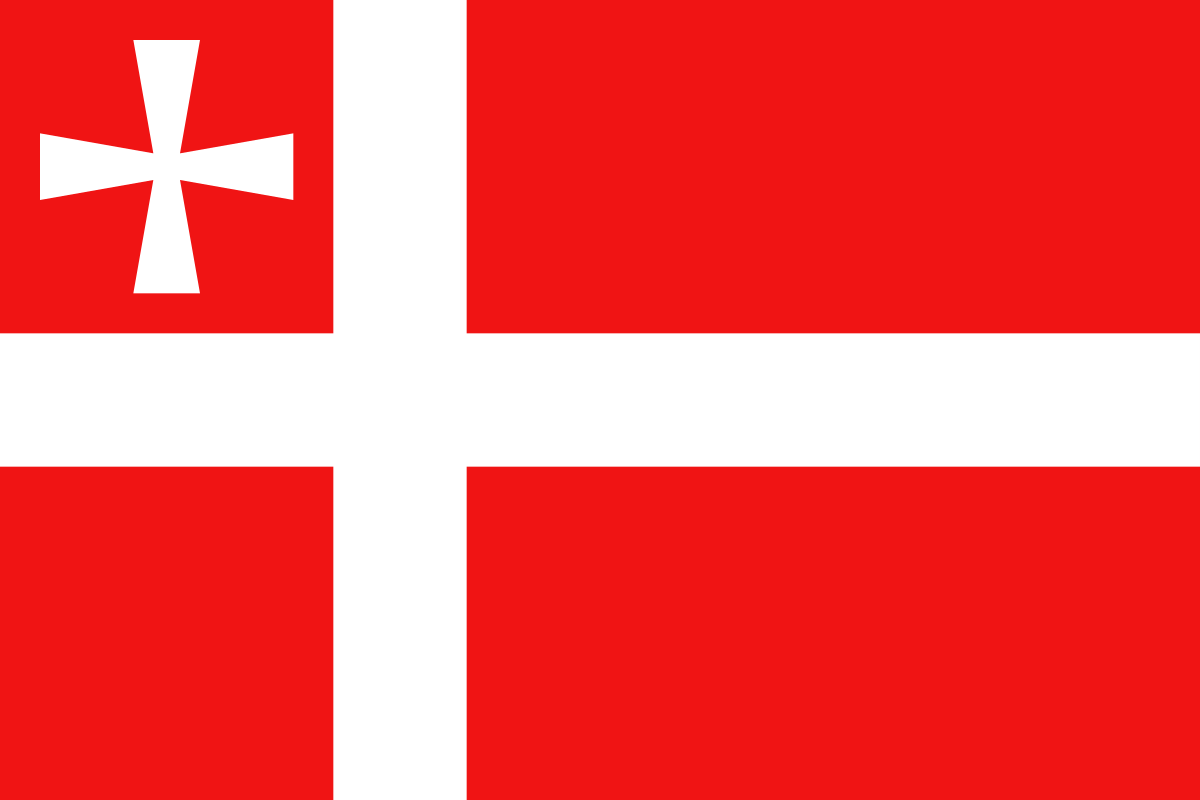 Volyn
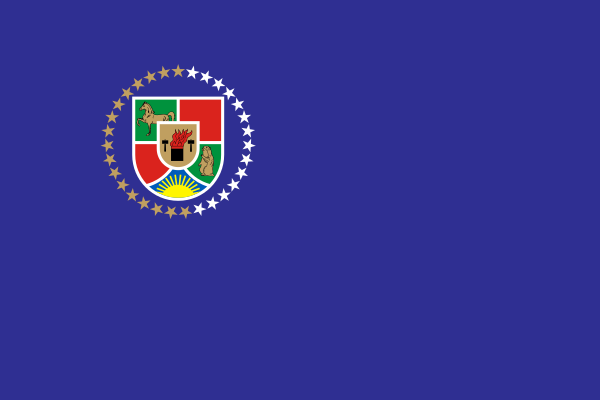 Luhansk
 Dnipropetrovsk
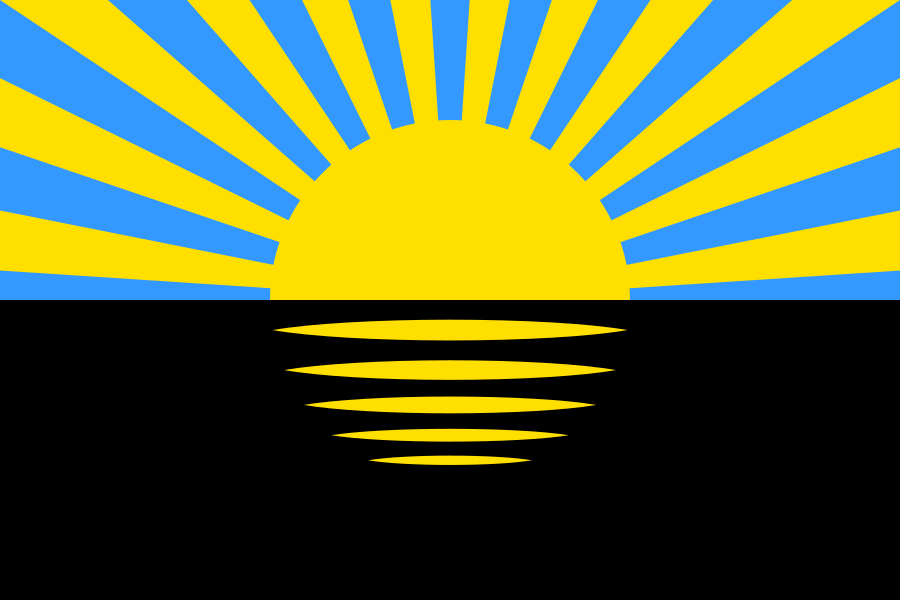 Donetsk
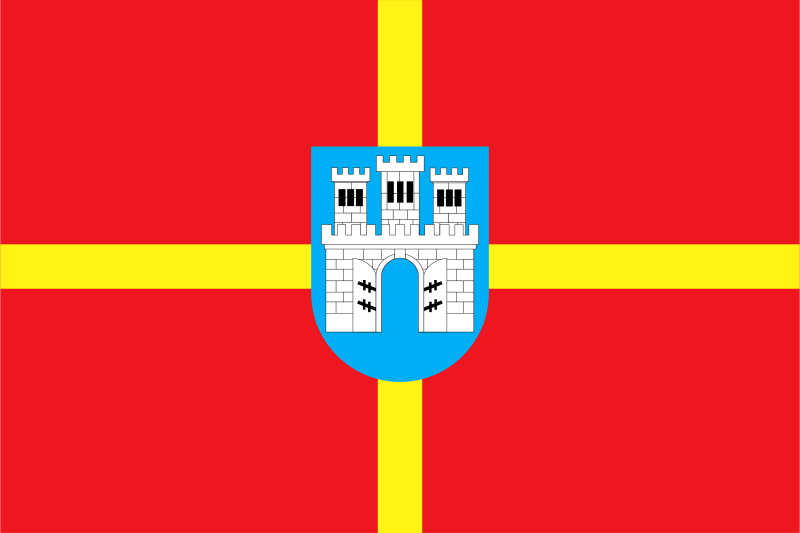 Zhytomyr
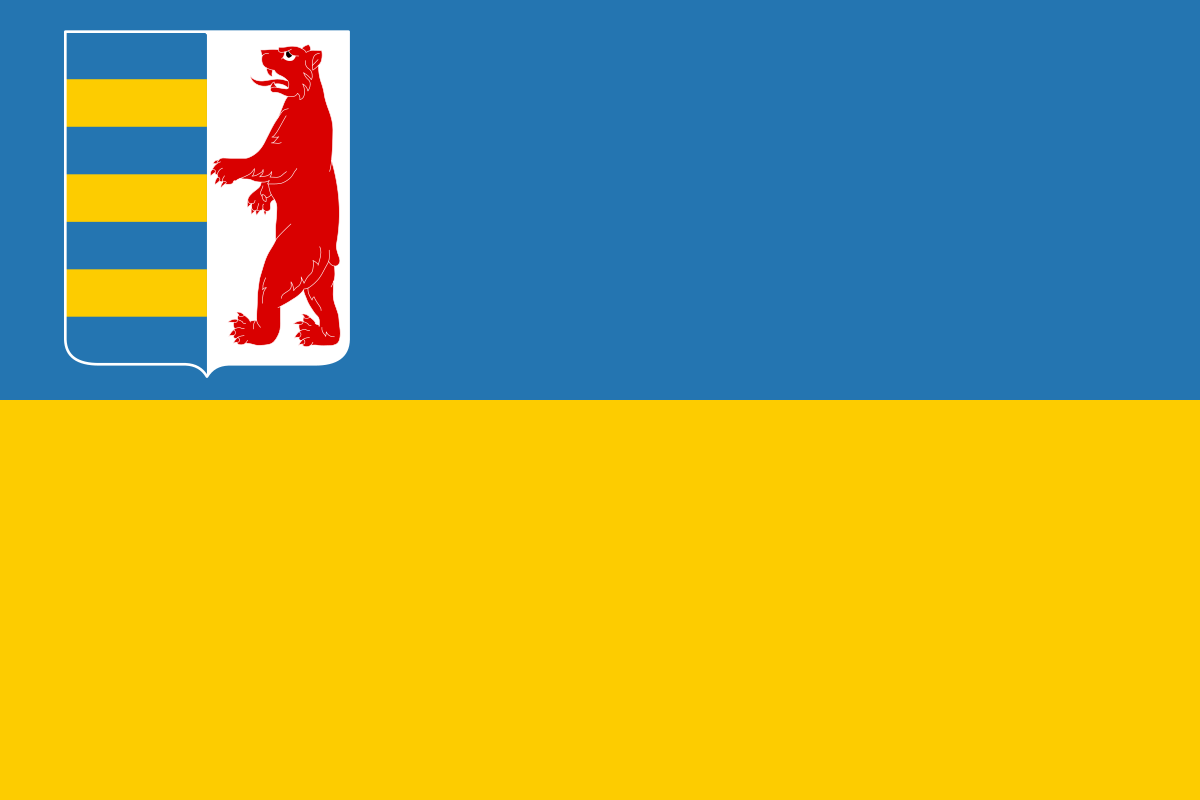 Zakarpattia
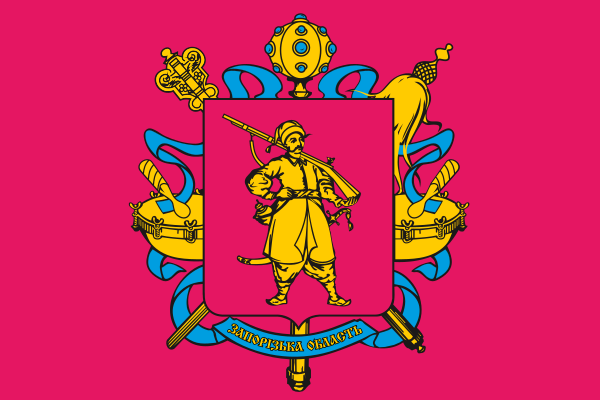 Zaporizhzhia
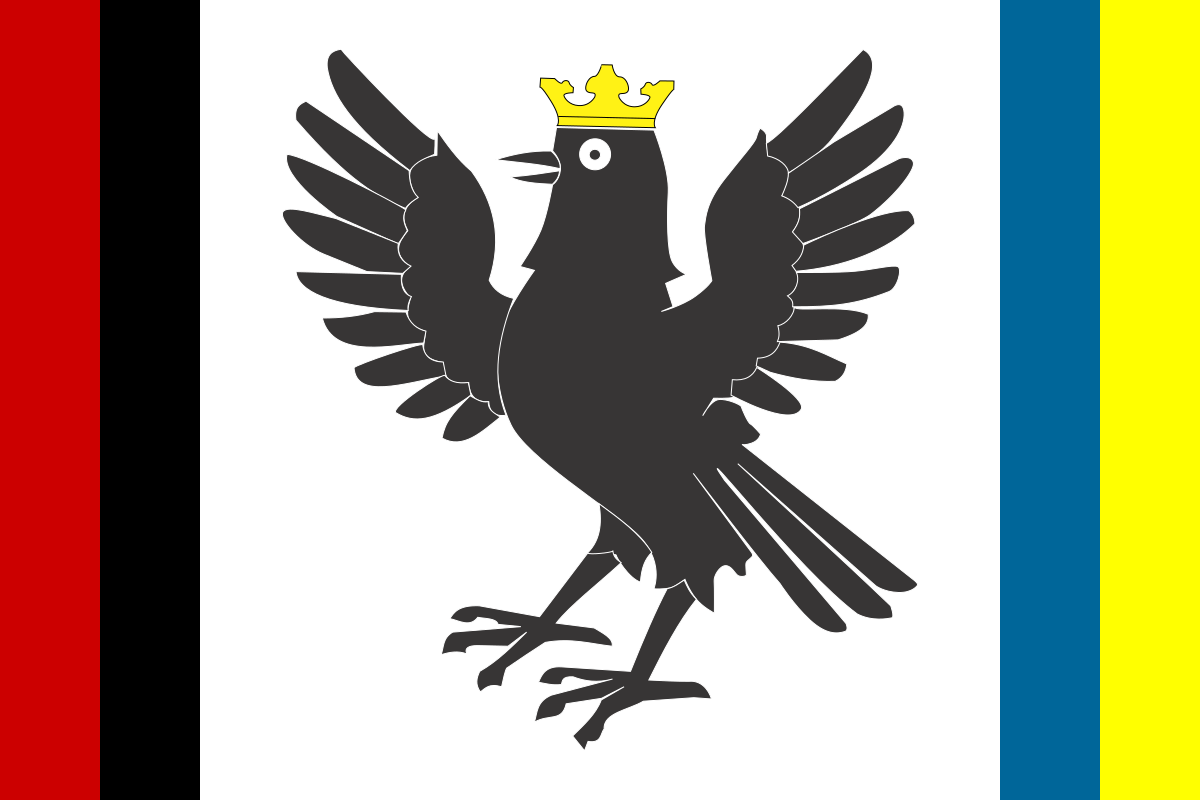 Ivano-Frankivsk
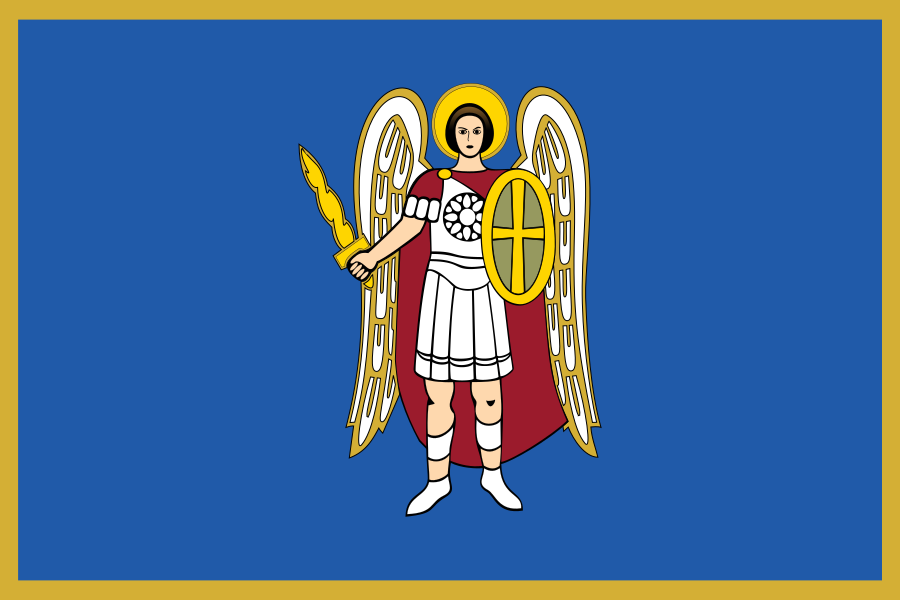 Kyiv City
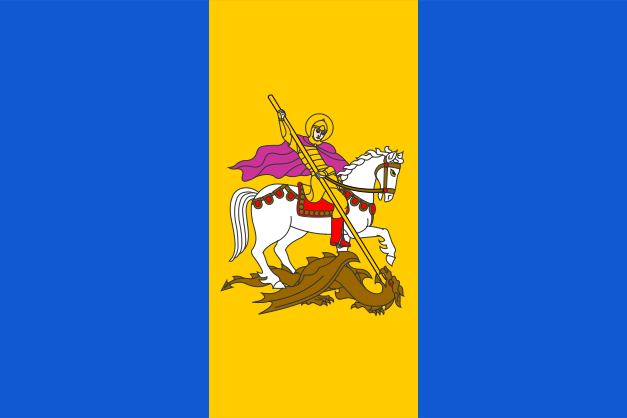 Kyiv Oblast
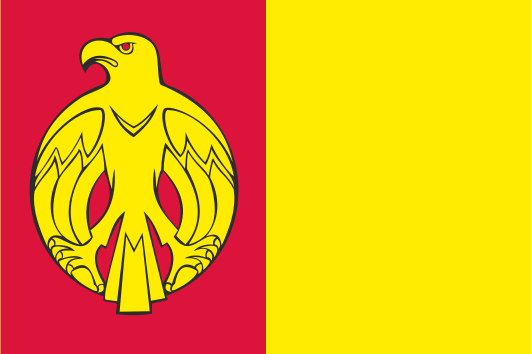 Kirovohrad
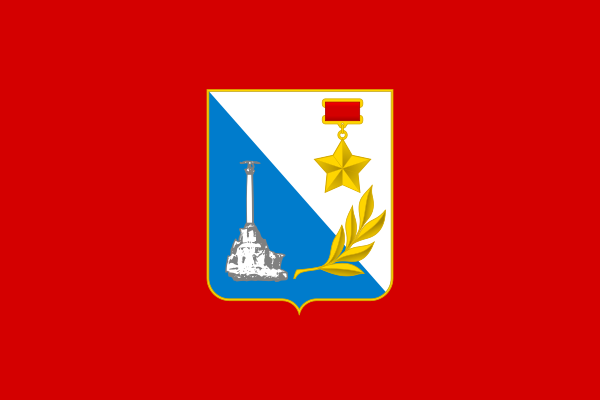 Sevastopol
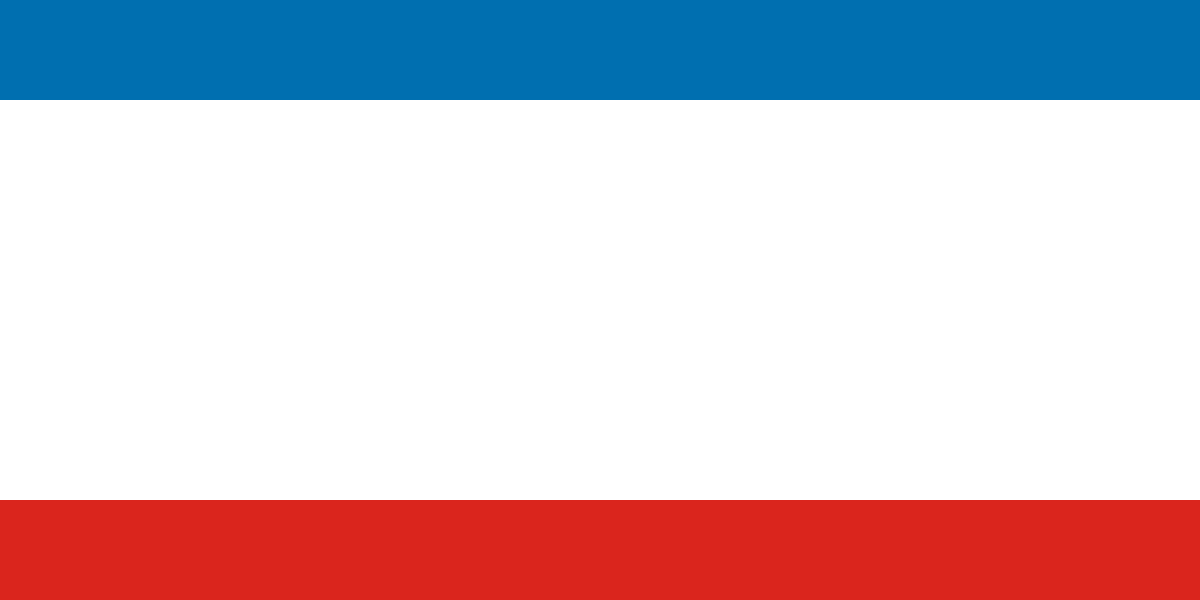 Crimea
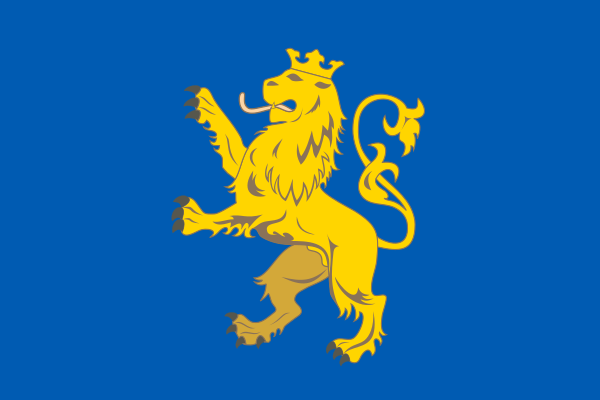 Lviv
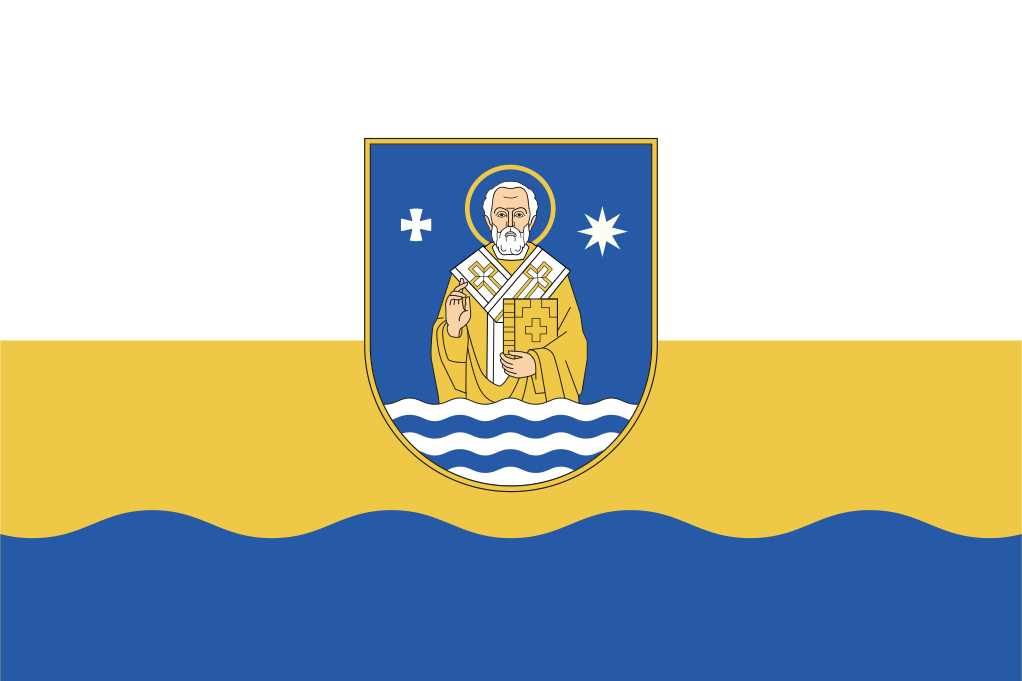 Mykolaiv
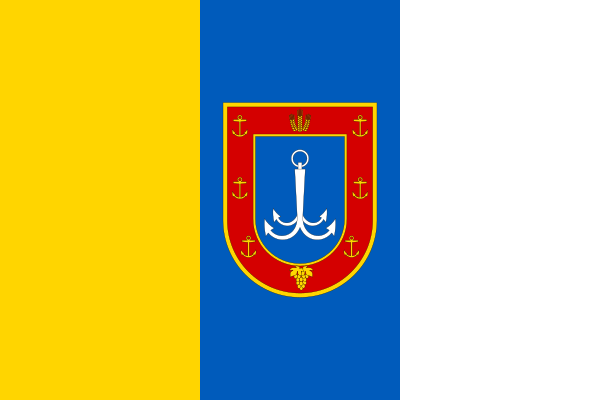 Odessa
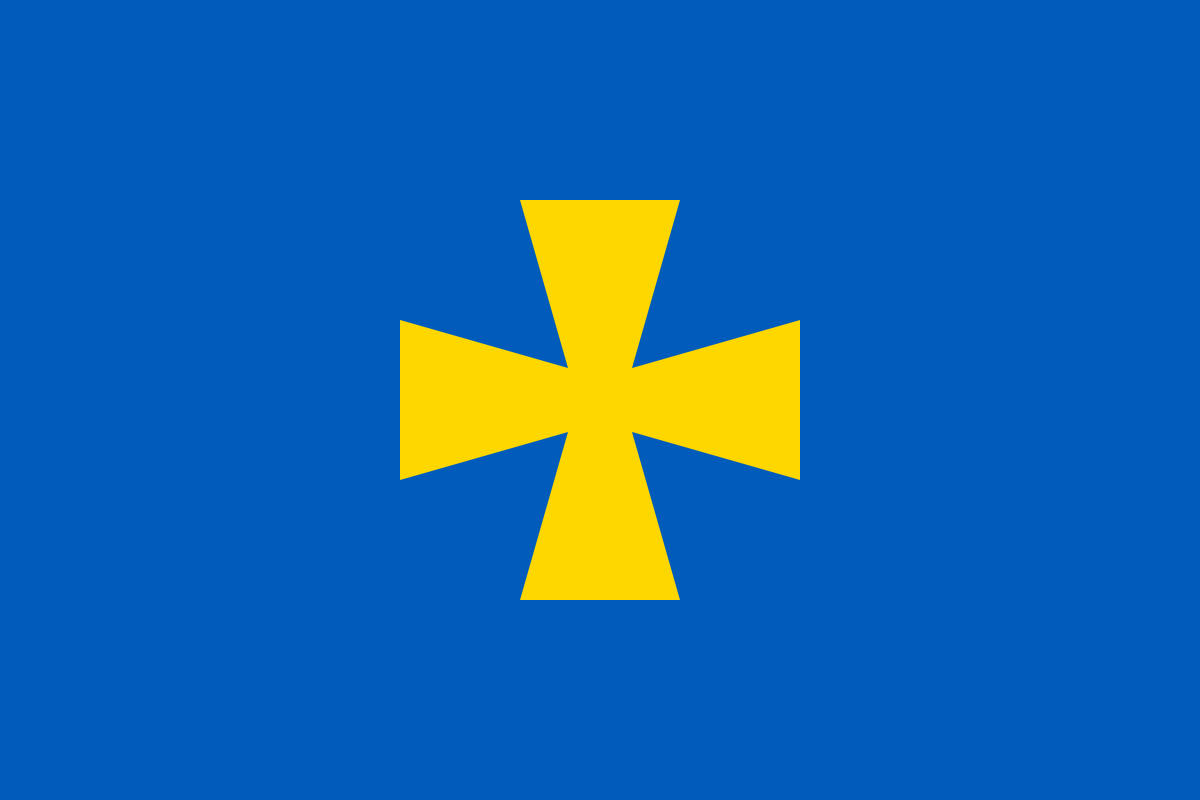 Poltava
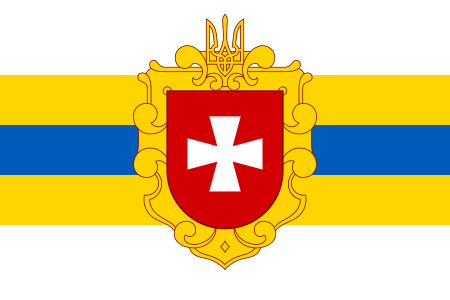 Rivne
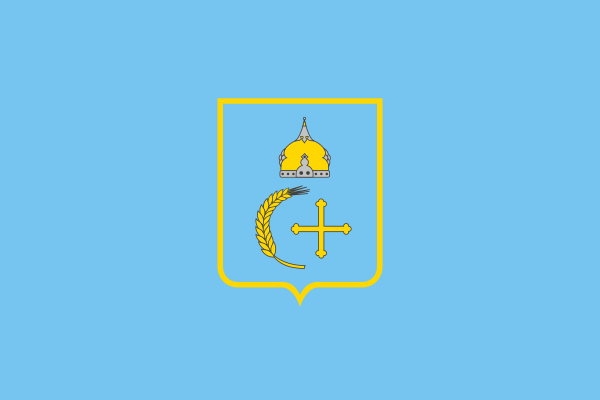 Sumy
 Ternopil
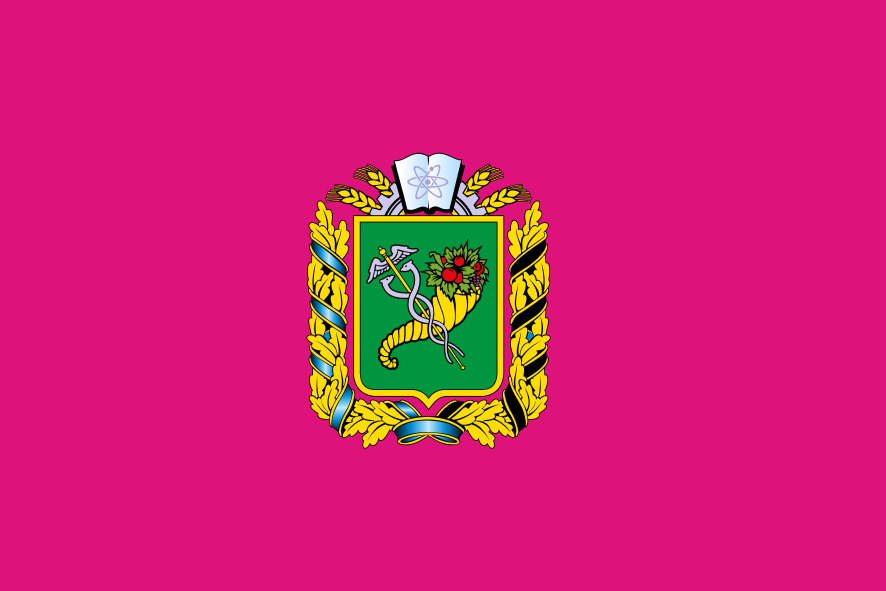 Kharkiv
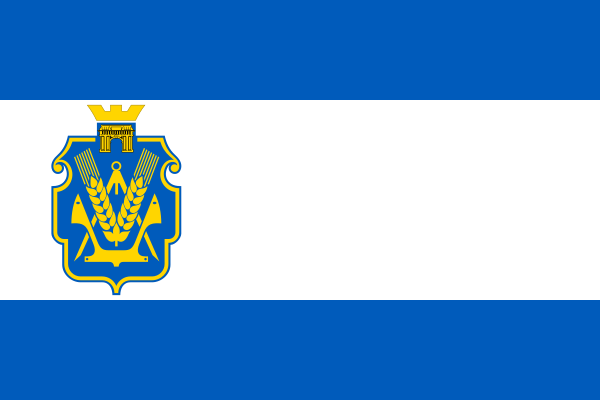 Kherson
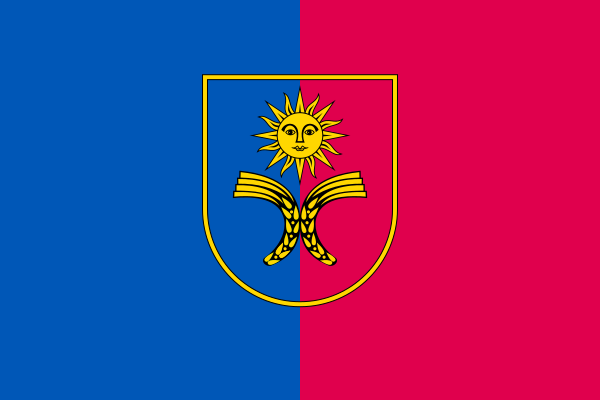 Khmelnytskyi
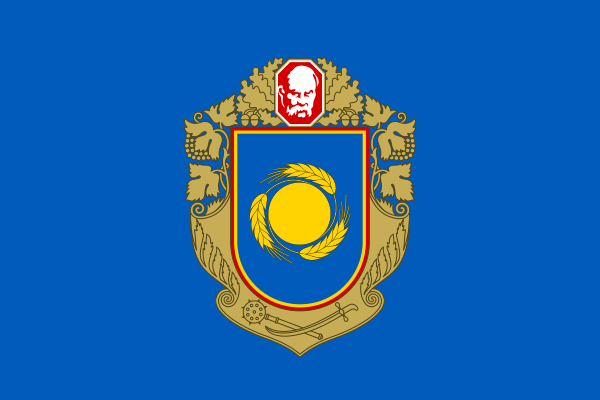 Cherkasy
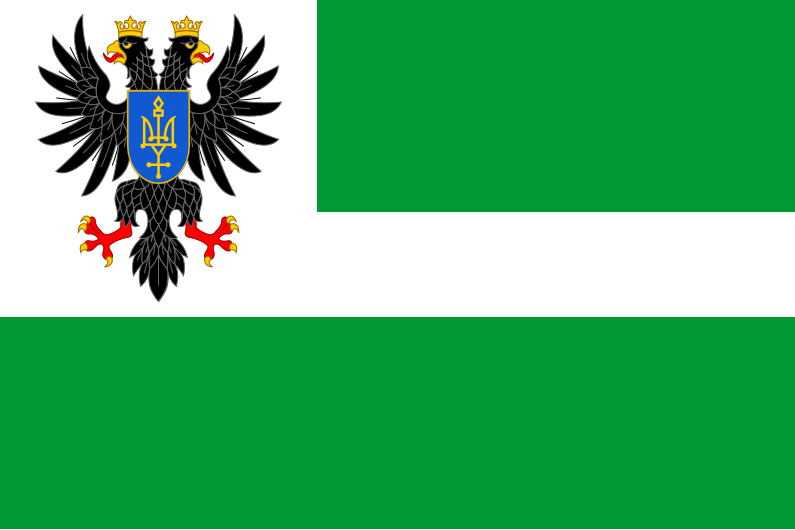 Chernihiv
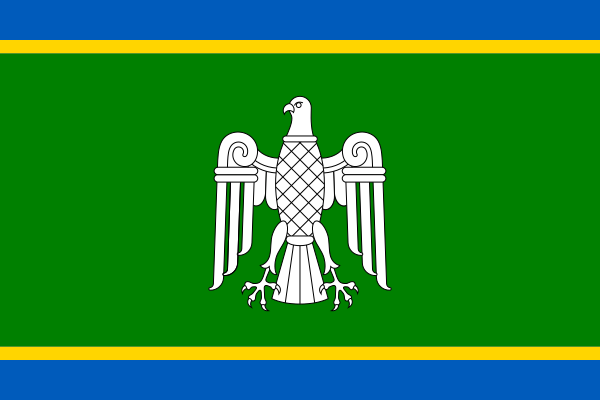 Chernivtsi
Ukraine shares a land border with 7 countries: Belarus, Hungary, Moldova, Poland, Romania, Russia and Slovakia.
3 other national flags use the same main colours as Ukraine's.
Play Globalio and learn Ukraine's flag Belarus
 Hungary
 Moldova
 Poland
 Romania
 Russia
 Kazakhstan
 Palau
 Sweden