 Belgium
 Yemen

1990–present
Germany (reunified)
On reunification in 1990 the West German black-red-gold tricolour became the flag of the whole country, with no change to the design. The colors are tied to the liberal revolutions of 1848.
Germany is the most populous country in the European Union and the largest economy in Europe, known worldwide for its engineering, automotive industry, and precision manufacturing. Reunified in 1990 after four decades of division, Germany became a leading force in European politics and global trade. Berlin, the capital, is one of Europe's most culturally vibrant cities with a history that spans Prussian grandeur, division, and remarkable reunification.
Population and area are rounded.
Black, red and gold trace back to the uniforms of the Lützow Free Corps that fought Napoleon, and became the colours of the 1848 revolutionaries who wanted a united, democratic Germany. The Weimar Republic adopted the flag in 1919 and the Nazi regime abolished it. Both West and East Germany restored it in 1949, the East later adding its hammer-and-compass emblem, and reunified Germany has flown the plain tricolour since 1990.
Horizontal black-red-gold. Belgium's similar colours are vertical.
Germany invented the printing press, the automobile, and has more UNESCO sites than almost any country.
Germany's flag is often mixed up with these. Learn to tell them apart:
Every flag that has flown over Germany, from today back through time.
On reunification in 1990 the West German black-red-gold tricolour became the flag of the whole country, with no change to the design. The colors are tied to the liberal revolutions of 1848.
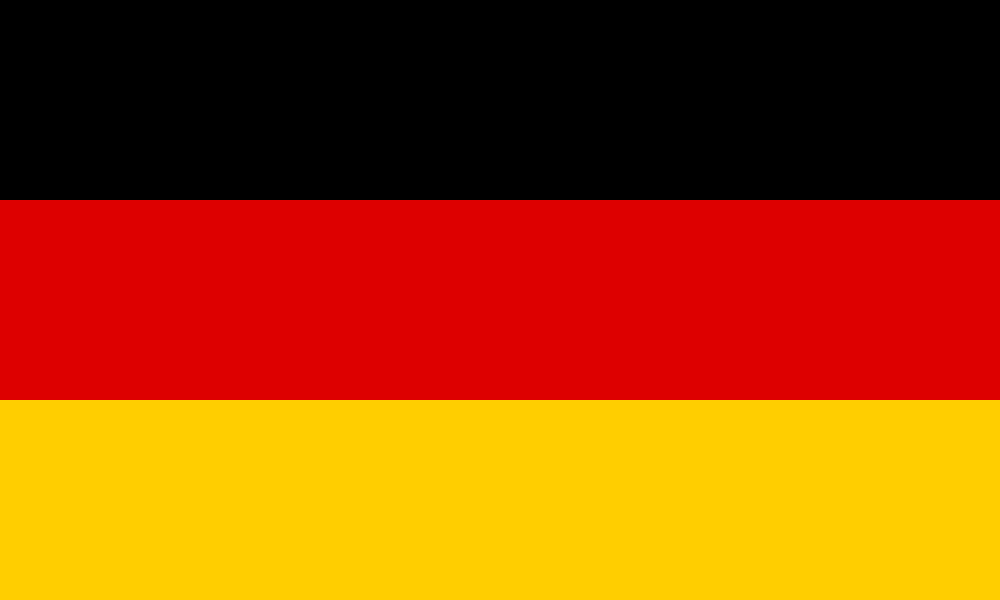
The Federal Republic readopted the Weimar black-red-gold tricolour in 1949. This plain flag won out as the flag of the reunified nation in 1990 and is still used today.
Germany divided — East & West (1949–1990):
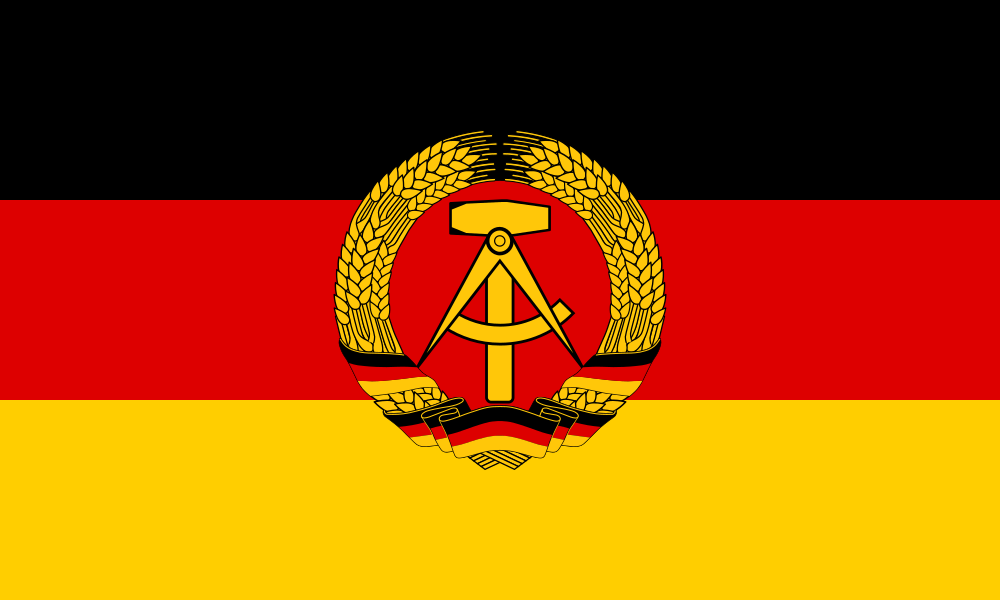
The communist East used the same tricolour as the West until 1959, when it added the socialist emblem of hammer, compass and rye wreath. The flag vanished with reunification in 1990.
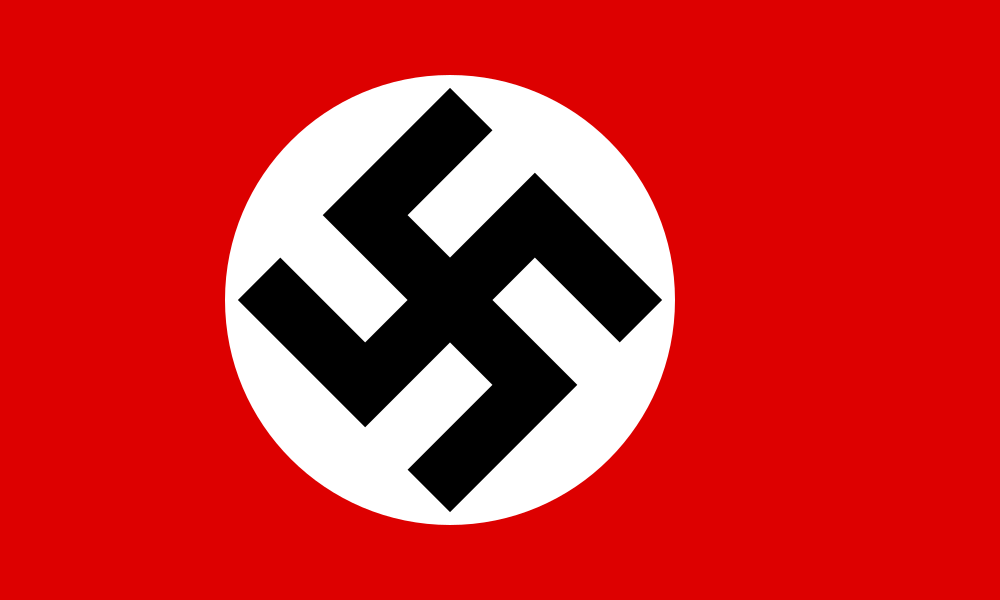
The 1935 Reich Flag Law made the swastika banner the sole national flag of Nazi Germany, the regime that started the Second World War in Europe and carried out the Holocaust. The Allies abolished it after the regime's defeat in 1945, and its public display is banned in Germany today outside education, art and research.

After Hitler took power in 1933 the black-red-gold flag was banned, and for two years the old imperial black-white-red tricolour flew alongside the Nazi Party swastika as co-equal national flags.
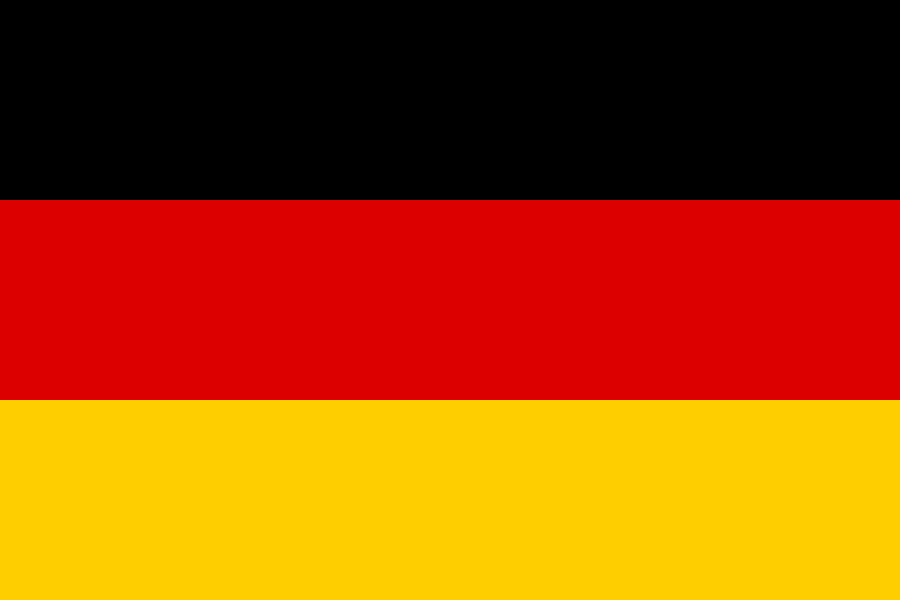
The Weimar Constitution of 1919 adopted the black-red-gold tricolour, colors of the 1848 democratic movement. The choice was bitterly fought by conservatives who favored the old imperial colors.
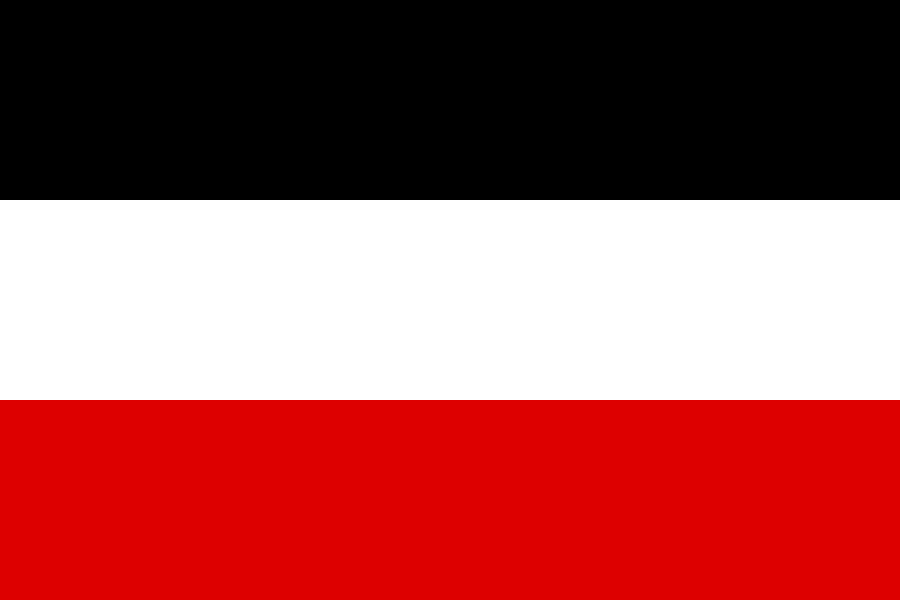
The black-white-red tricolour served the North German Confederation from 1867 and then the unified German Empire from 1871, until the monarchy collapsed at the end of World War I.

The Duchy of Anhalt was a sovereign German state — ancestral home of the House of Ascania, from which Catherine the Great of Russia descended. Its green-white-red tricolor flew until the German monarchies fell in 1918. Anhalt is today part of Saxony-Anhalt.
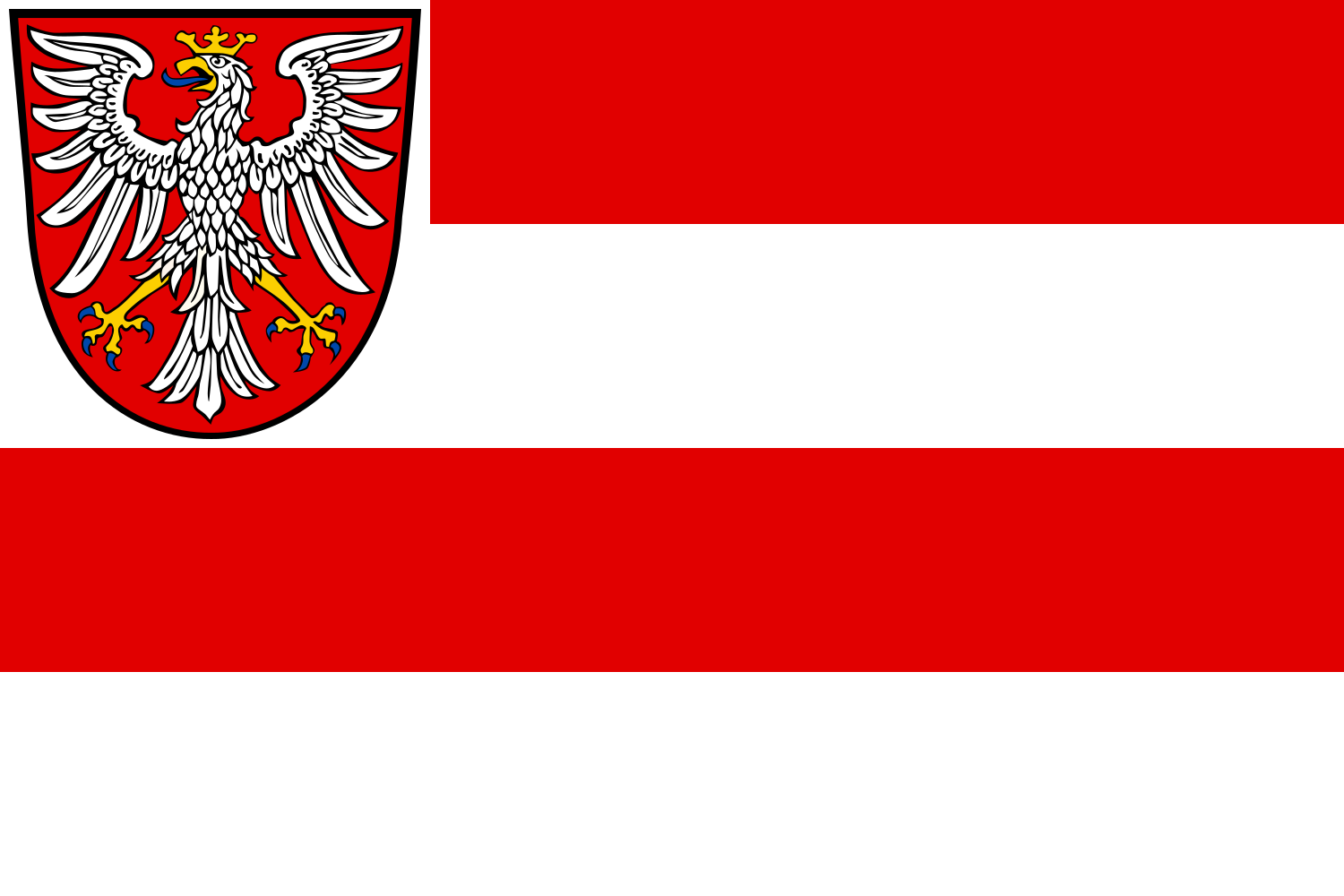
Before unification, Frankfurt was a sovereign city-state and seat of the German Confederation's parliament, flying a white-and-red civic flag until Prussia annexed it in 1866 for siding with Austria. It was one of the historic Free Cities, alongside Hamburg and Bremen.
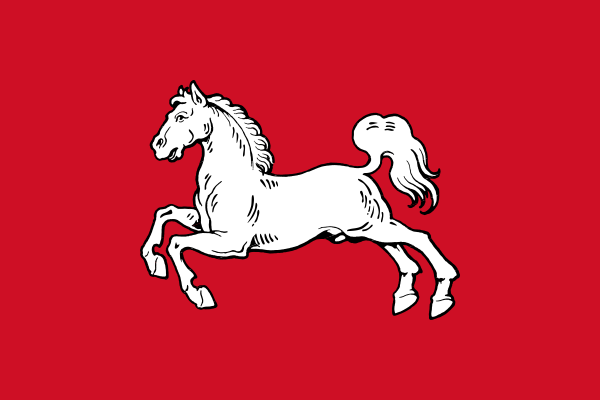
A north German kingdom in personal union with the British crown until 1837, annexed by Prussia after backing the losing side in 1866.
A short-lived Napoleonic client kingdom in western Germany, ruled by Napoleon's brother Jérôme Bonaparte as a 'model state'.

The second-largest kingdom of the German Empire, ruled from Munich by the Wittelsbachs, whose white-and-blue lozenges are still Bavaria's emblem.
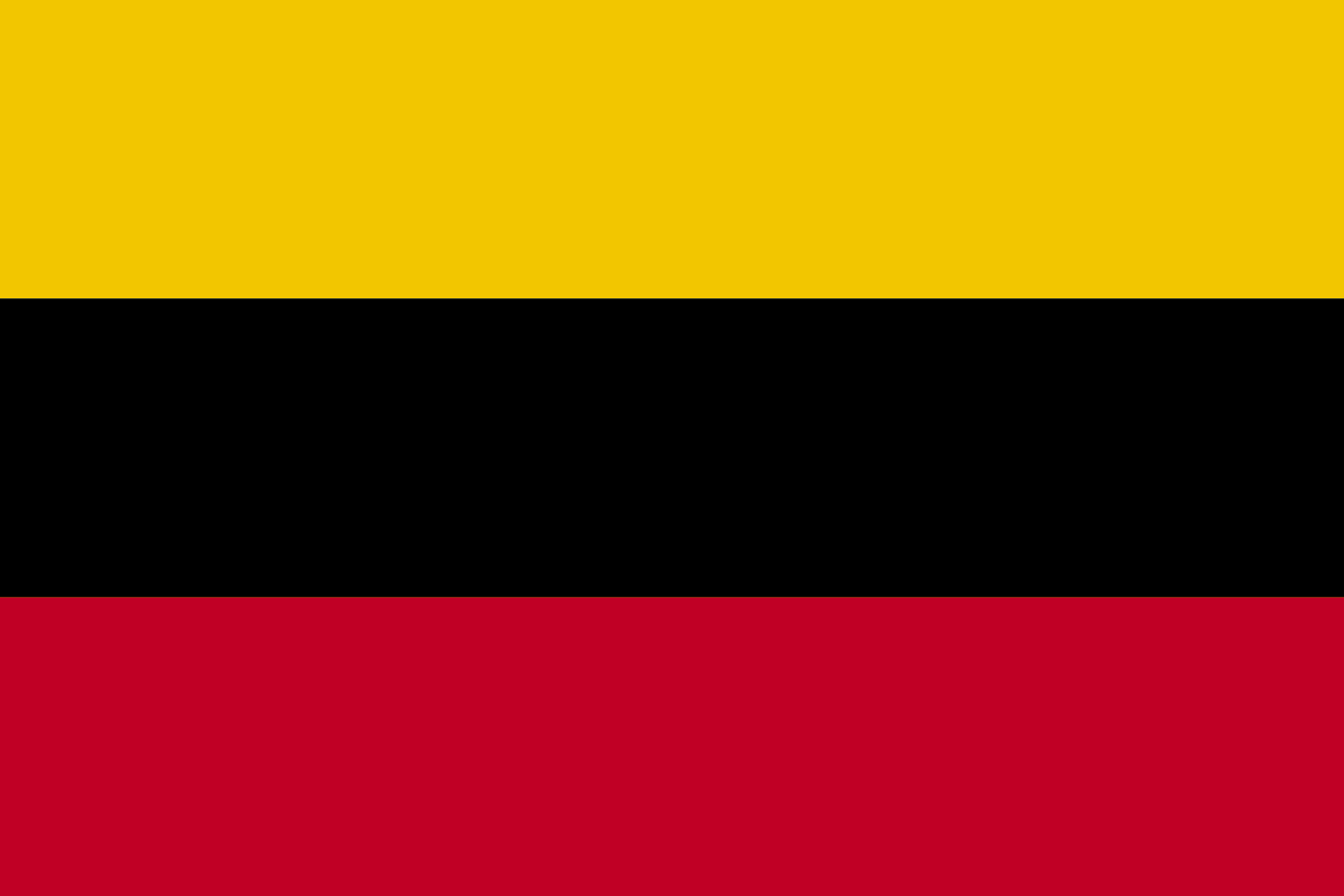
A south-western German kingdom centred on Stuttgart, a constituent state of the German Empire until the 1918 revolution.
Empires, kingdoms and republics that once covered part of Germany.
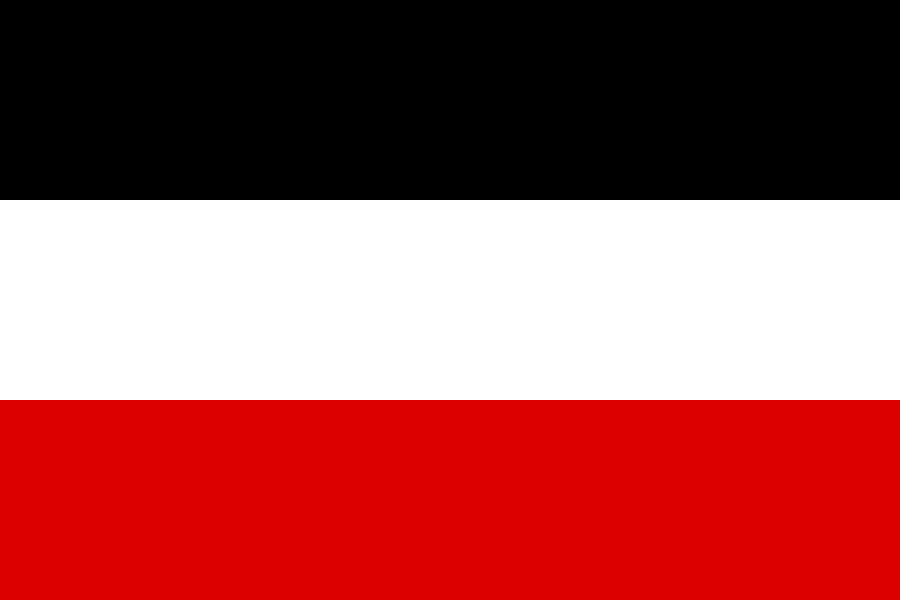
The black-white-red tricolor combined Prussia's black-and-white with the Hanseatic red-and-white. It was officially adopted as the national flag only in 1892.
The black-red-gold tricolor revived the colors of the 1848 liberal revolution, deliberately tying the new democracy to earlier anti-autocratic movements.
The swastika flag of the Nazi regime, which started the Second World War in Europe and carried out the Holocaust, became Germany's sole national flag in 1935. It was banned after the regime's defeat in 1945; its public display is banned in Germany outside education, art and research, and the country returned to the black-red-gold of the Weimar era.
The hammer-and-compass-in-wheat emblem represented workers, intelligentsia, and farmers. Before 1959 East and West Germany flew the identical plain tricolor.
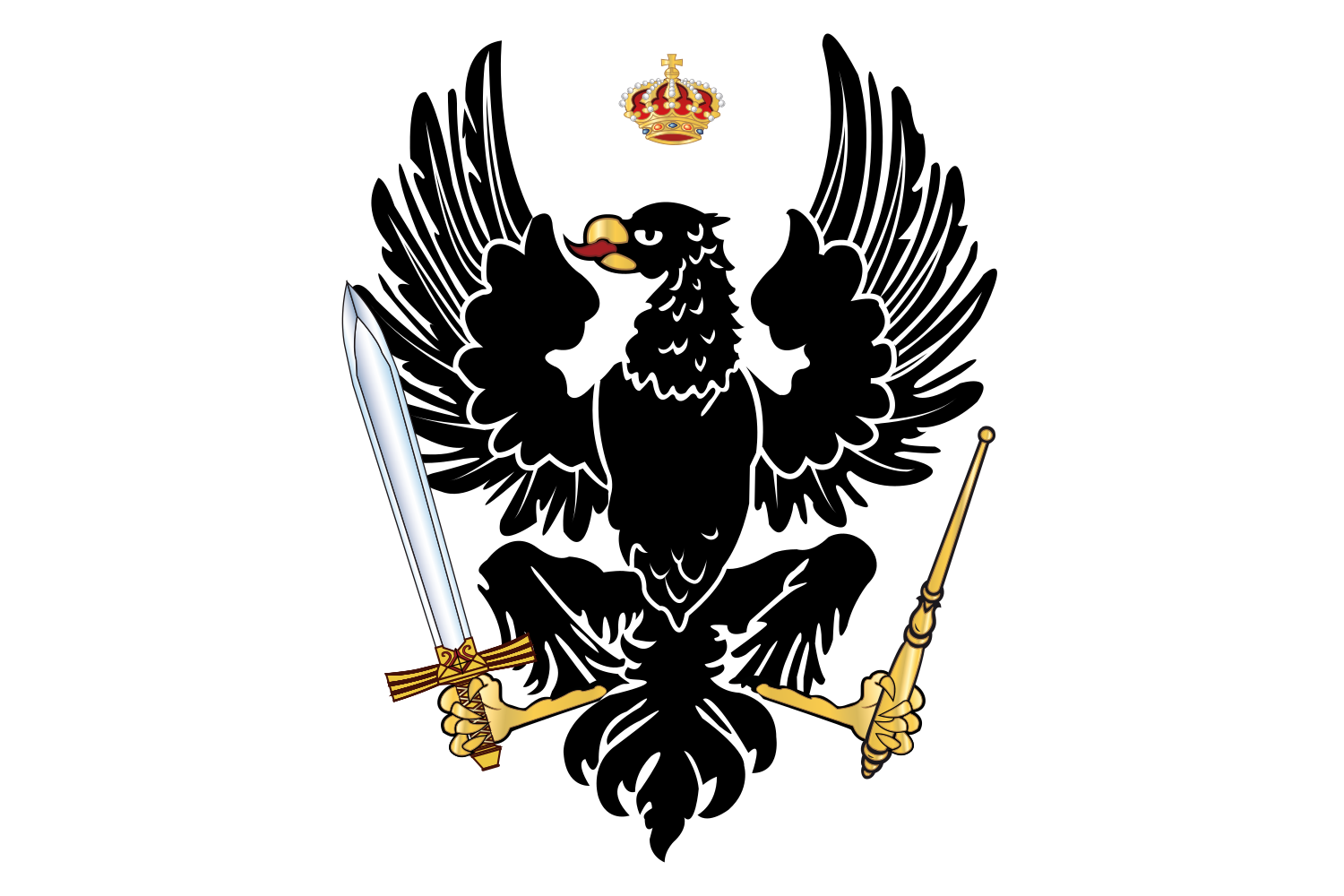
The black eagle on a white field derives from the Teutonic Knights. Prussia's black-and-white later supplied two of the three colors of the German Empire's flag.
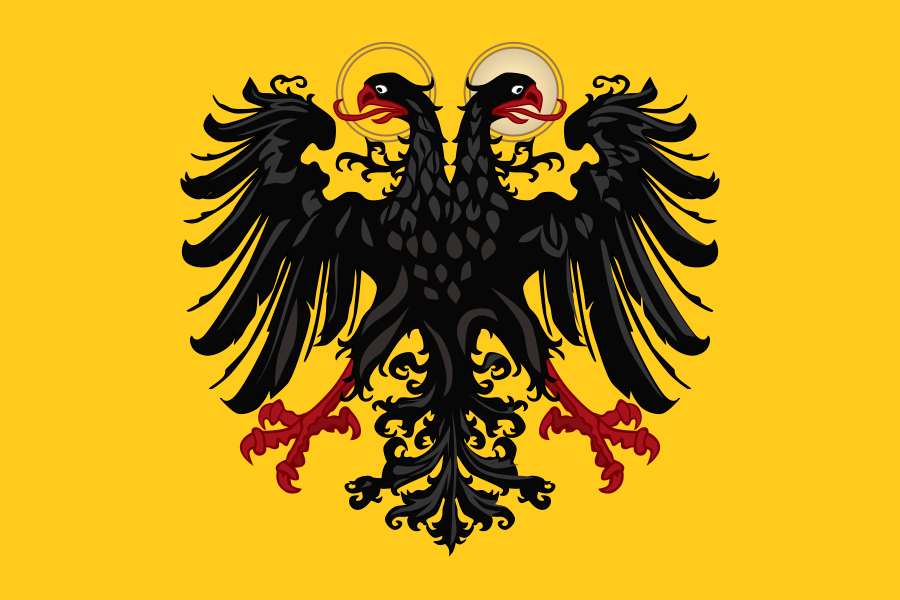
The black double-headed eagle on gold was the Emperor's banner. Its two heads symbolized claimed authority over both the secular and the spiritual realms.
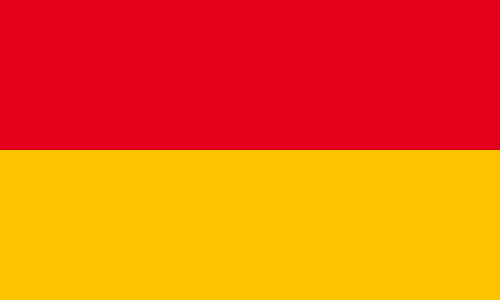
The red-over-yellow bicolor was Baden's flag from 1855. The southwestern grand duchy was one of the states that unified into the German Empire in 1871.
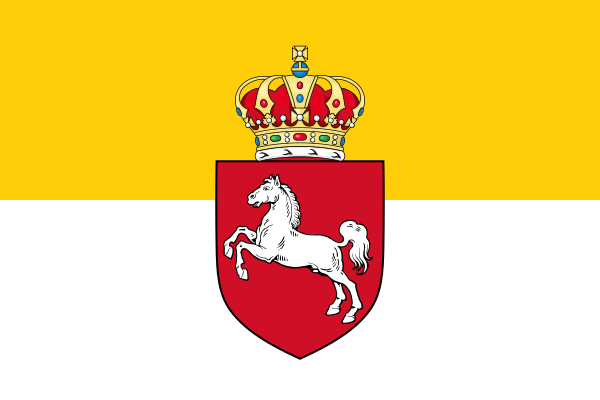
King Ernst August introduced the yellow-over-white bicolor in 1837 when Hanover's personal union with Britain ended. Its emblem was the white Saxon horse.
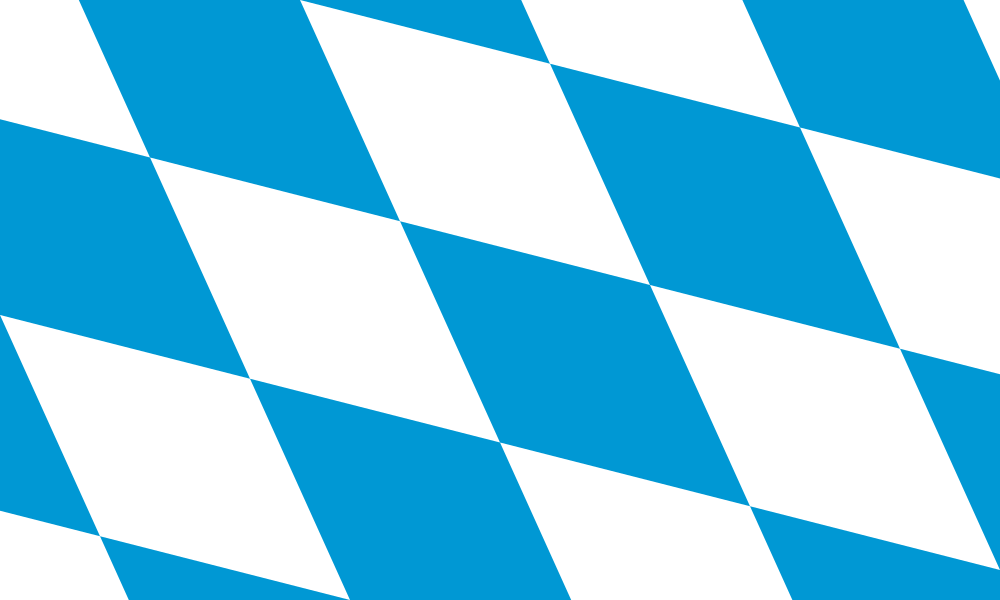
The white-and-blue lozenge 'Rautenflagge' derives from the medieval arms of the Wittelsbachs. By rule it must show at least 21 lozenges with a white one in the top-right.

This Napoleonic kingdom, ruled by Jérôme Bonaparte, flew a white-and-blue bicolor with crowned arms combining a Napoleonic eagle with the silver Saxon horse.

The white-over-green bicolor of the Wettin kings, who ruled from Dresden and joined the German Empire in 1871 while keeping their own monarch until 1918.
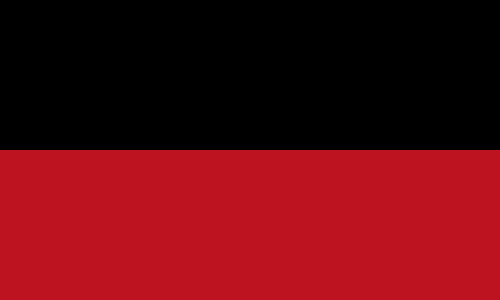
Napoleon elevated the duchy of Württemberg to a kingdom in 1806; its black-over-red bicolor flew over Stuttgart until the monarchy fell at the end of World War I.
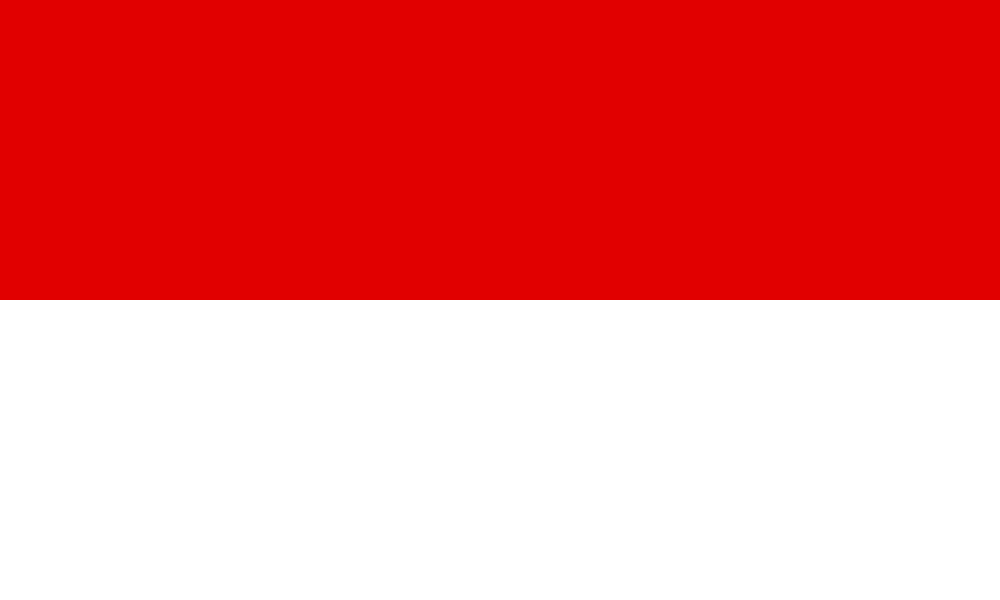
A red-over-white bicolor for the Hesse-Darmstadt grand dukes, whose dynasty married into Europe's thrones — the last Tsarina of Russia was a Hessian princess.
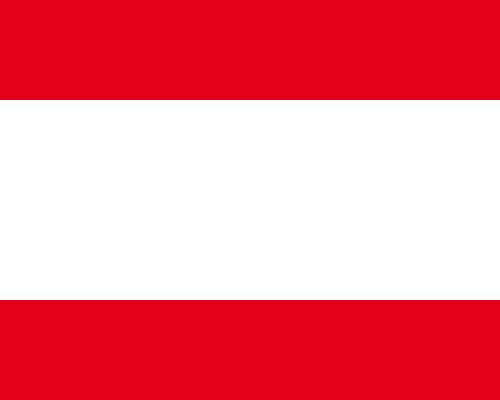
The Hesse-Kassel state, the only German principality to keep the title 'Elector' after the Holy Roman Empire dissolved, until Prussia annexed it in 1866.
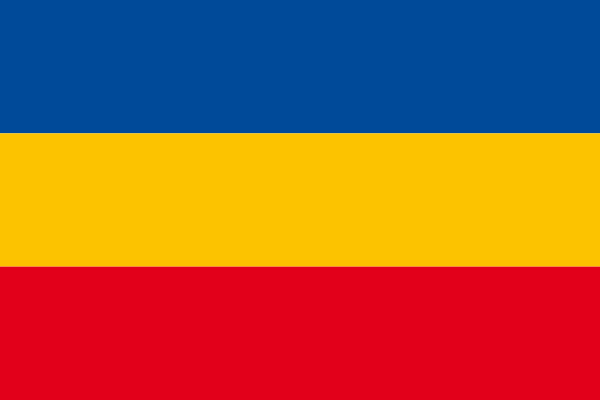
The blue-yellow-red tricolor shared by the two Mecklenburg grand duchies (Schwerin and Strelitz) on the Baltic coast, ruled by branches of the same Obotrite dynasty.
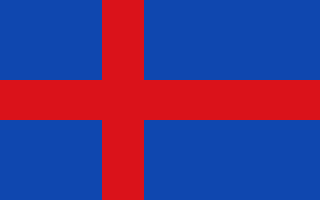
A blue-red bicolor for the northwest German grand duchy whose ruling house also briefly held the thrones of Denmark, Greece, and Russia through dynastic marriage.
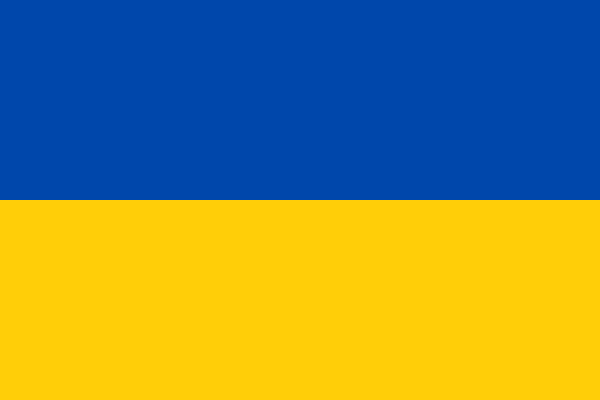
The blue-over-yellow bicolor of the Welf dukes; its 'Black Duke' Frederick William raised a famous corps of black-clad hussars to fight Napoleon and died at Quatre Bras.
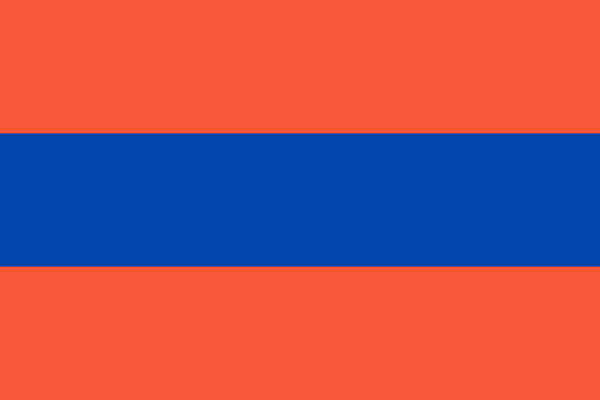
An orange-blue bicolor for the duchy on the Rhine and Lahn; its ruling house gave the Netherlands its royal dynasty, the House of Orange-Nassau.

The black-yellow-green flag of the Thuringian grand duchy whose Weimar court, under Goethe and Schiller, became the cultural heart of German classicism.

A green-white bicolor for the small Thuringian duchy that became the 'stud farm of Europe' — its princes married into the British, Belgian, Portuguese, and Bulgarian thrones.
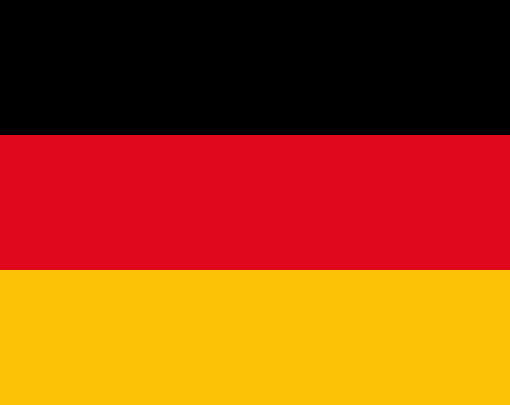
The tiny Thuringian principalities famous for naming every male ruler Heinrich and numbering them in sequence — the elder line ran the count up to Heinrich LXVII.

A blue-white bicolor for the two small Thuringian principalities of Rudolstadt and Sondershausen, ruled by one of Germany's oldest comital dynasties.
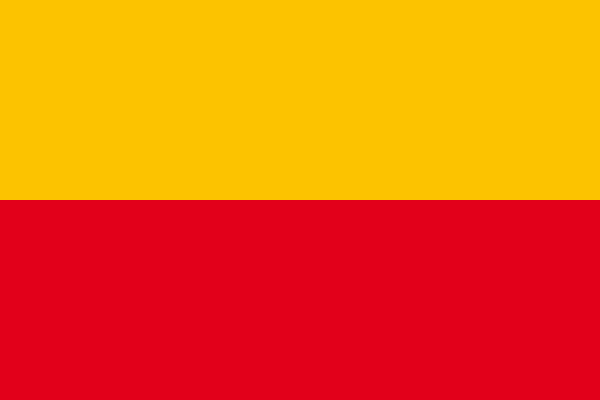
A yellow-red bicolor for the small principality around Detmold, near the Teutoburg Forest where Germanic tribes annihilated three Roman legions in AD 9.
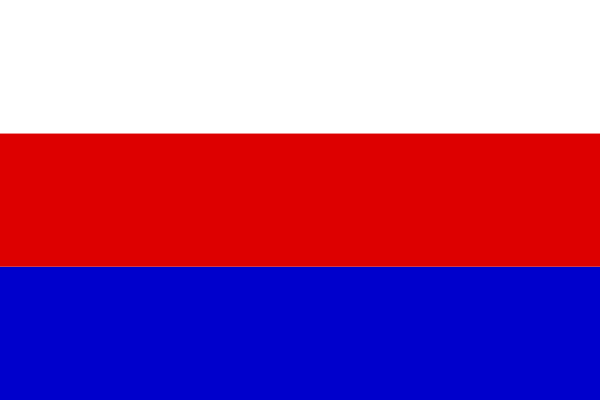
One of the smallest German states, a blue-red-white tricolor principality of barely 50,000 people that nonetheless survived as a sovereign state until 1918.
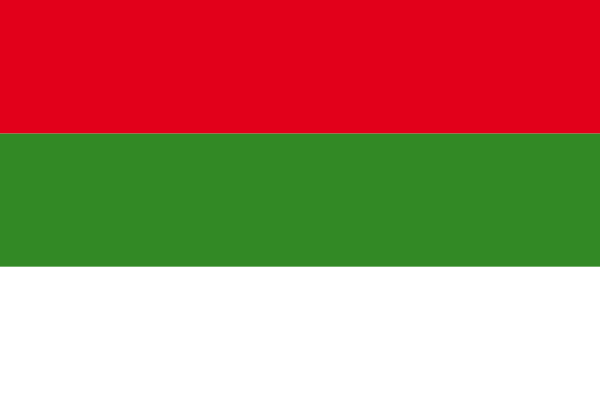
A green-white bicolor for the central German duchy, ancestral home of the Ascanian dynasty and birthplace of Catherine the Great of Russia.
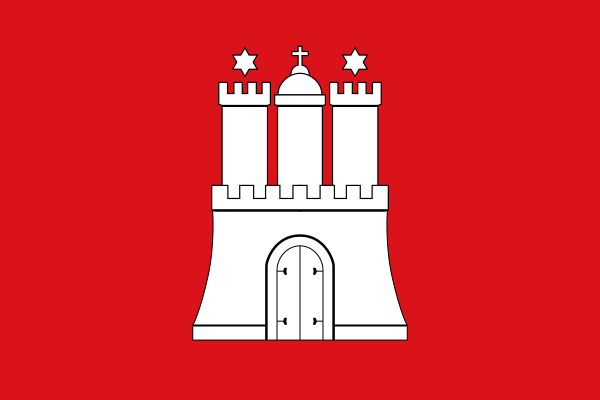
The white castle on red is the Hanseatic city-state's medieval emblem; its three towers and the cross-topped gate symbolize the free port's civic independence.
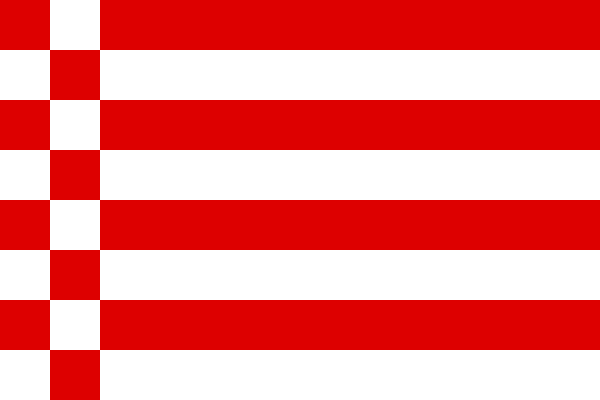
The red-and-white 'Speckflagge' (bacon flag) of checkered stripes flew over the Hanseatic port-republic, one of the founding member states of the German Empire.
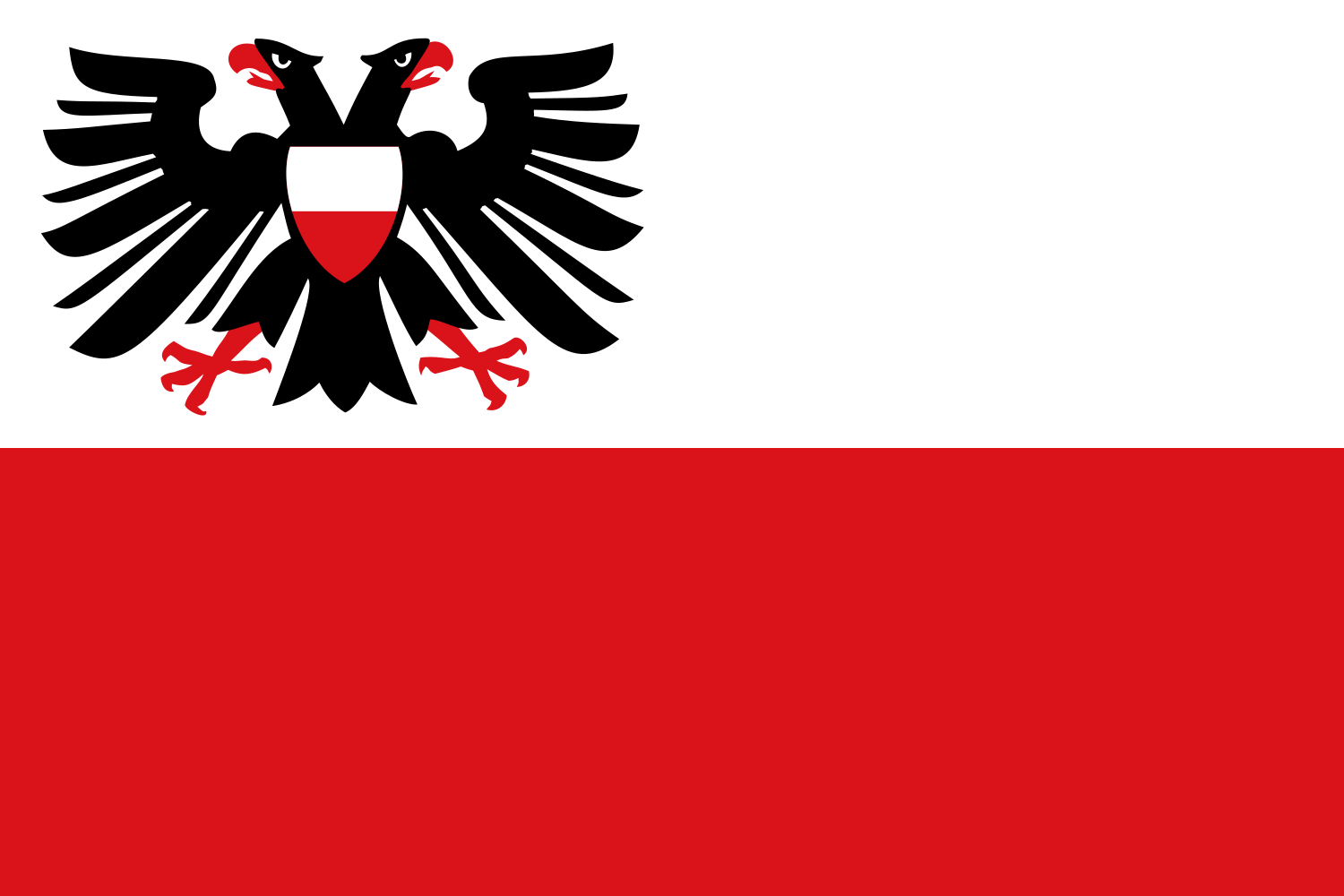
The white-over-red bicolor of the 'Queen of the Hanseatic League', the city that led the medieval Baltic trade network before the Nazis stripped its statehood in 1937.
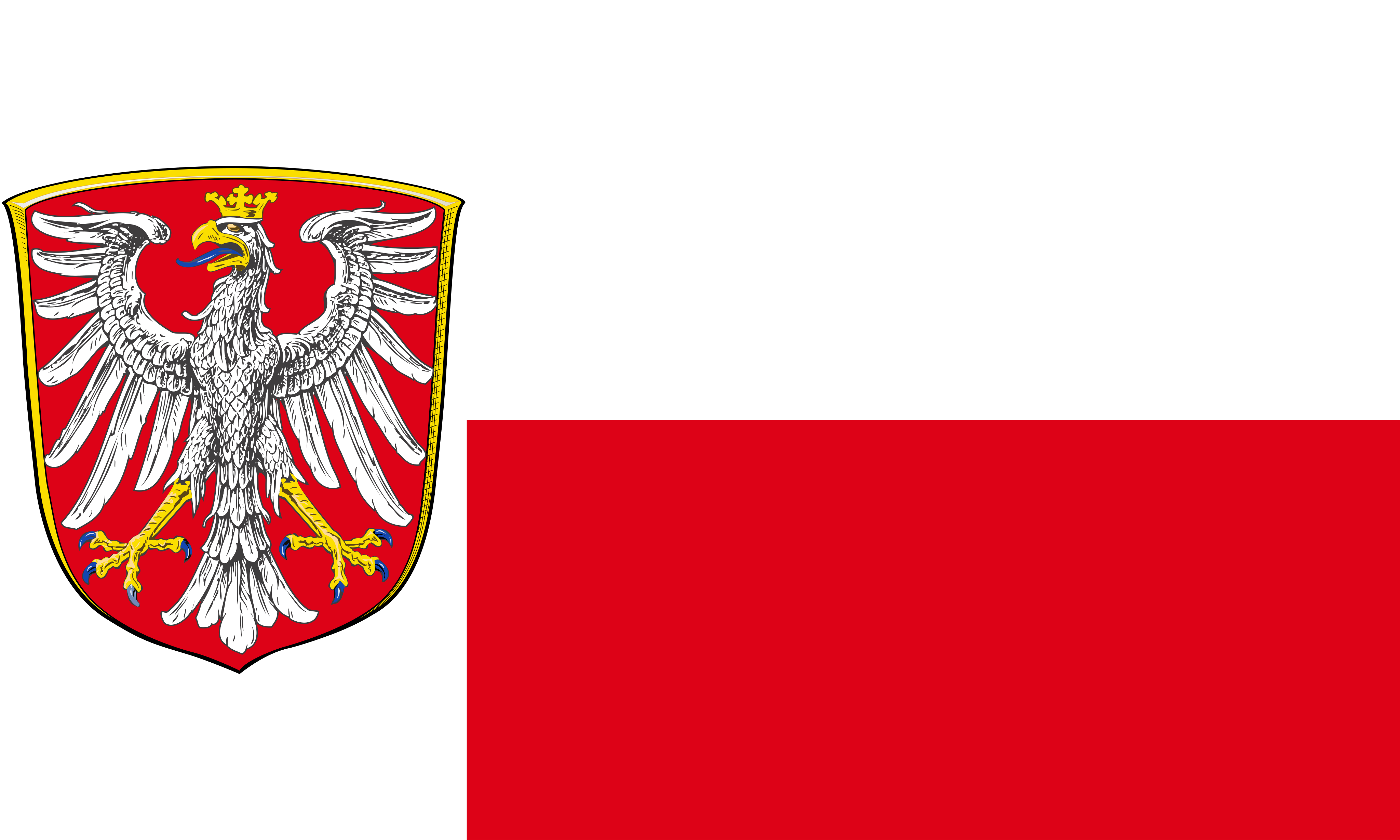
The white-over-red city republic that hosted the German Confederation's parliament, until Prussia annexed it for siding against it in the 1866 war.
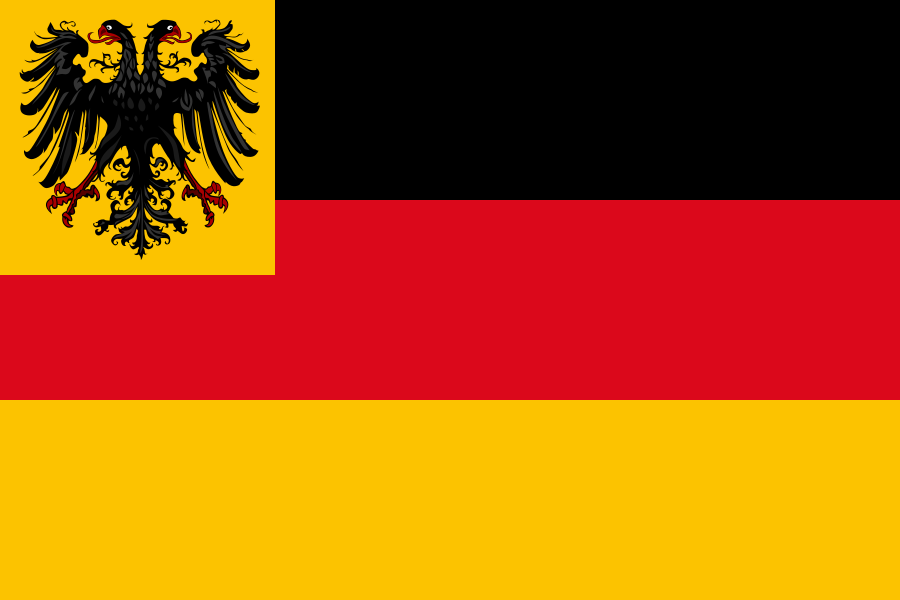
The loose league of German states formed after Napoleon's defeat flew a black-red-gold war flag — the same liberal colors later adopted by unified Germany.
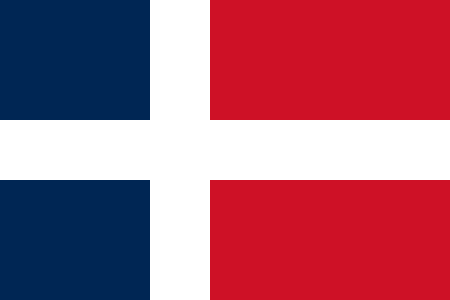
A French-administered, semi-autonomous state after WWII, its flag a Nordic cross in French blue and red. A 1955 referendum returned the coal-rich Saar to West Germany.
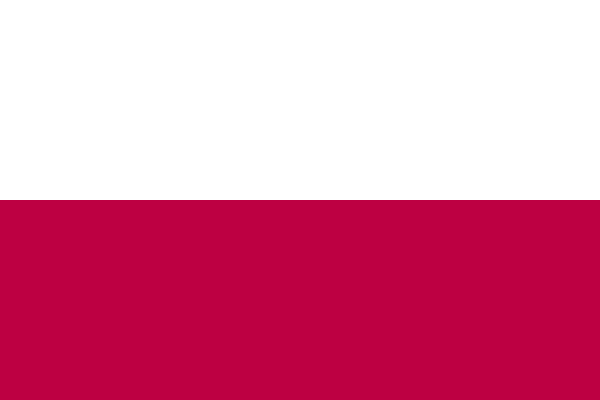
A Napoleonic client state on the Rhine, first ruled by Marshal Murat; its white flag bore a red lion before it was dissolved after Napoleon's defeat.
The 16 states, provinces and regions of Germany with their own flags.
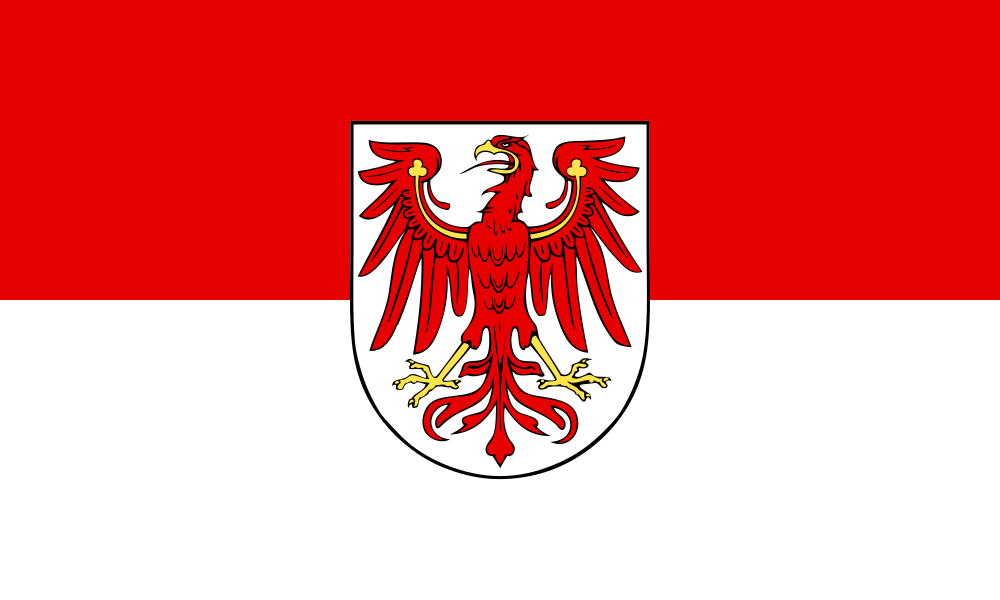 Brandenburg
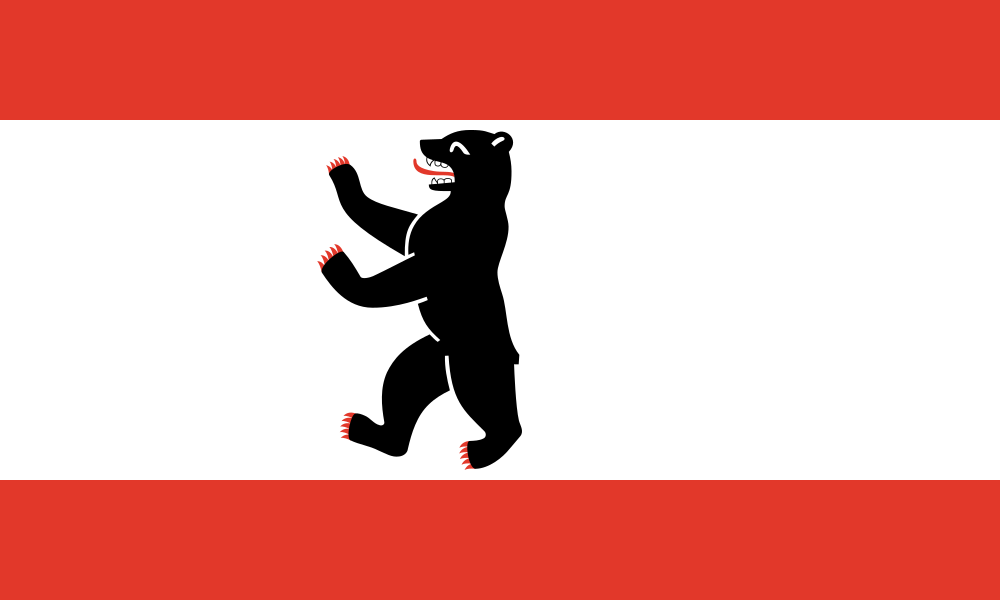 Berlin
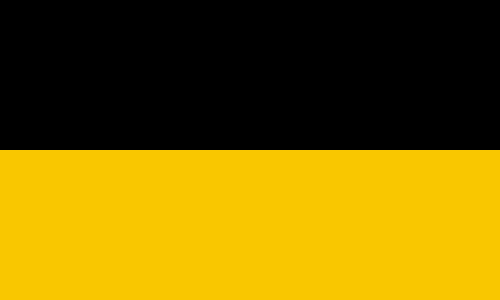 Baden-Württemberg Bavaria Bremen Hesse Hamburg
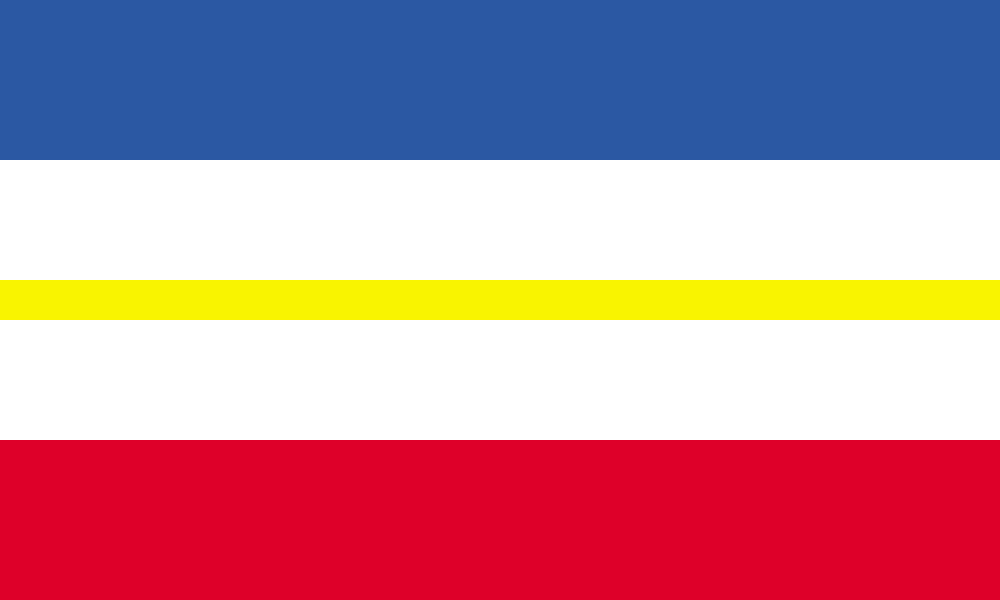 Mecklenburg-Vorpommern
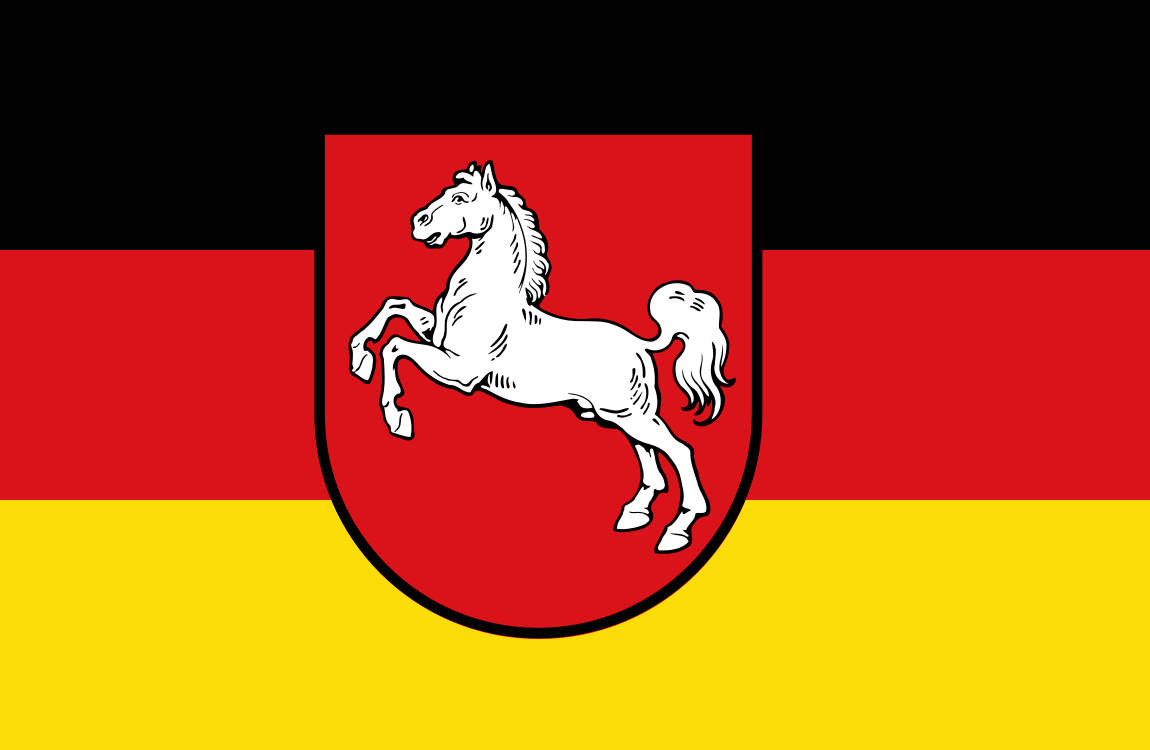 Lower Saxony
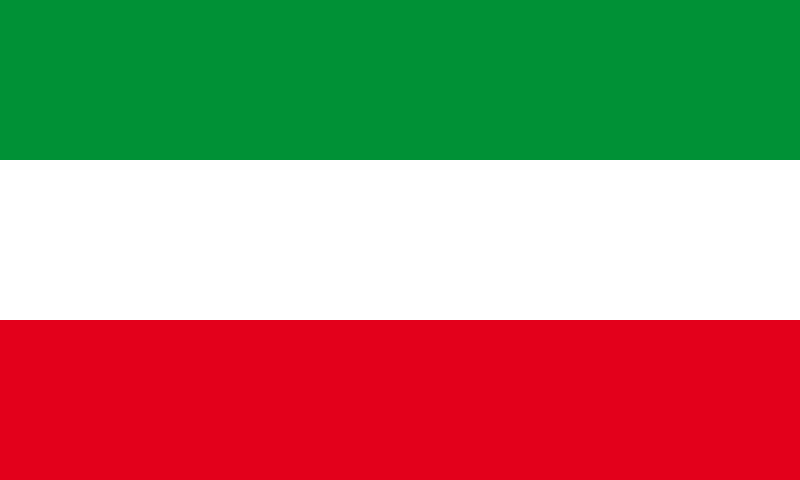 North Rhine-Westphalia
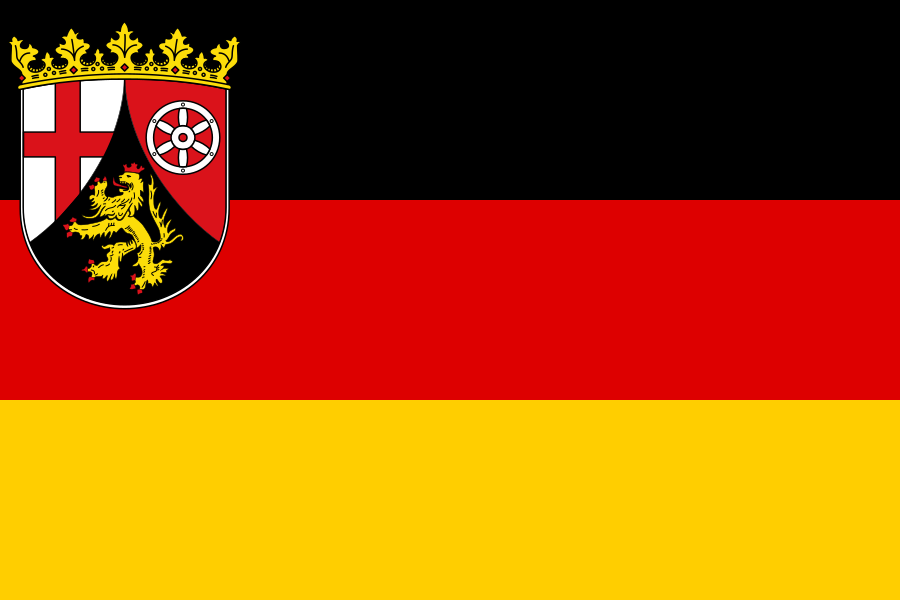 Rhineland-Palatinate
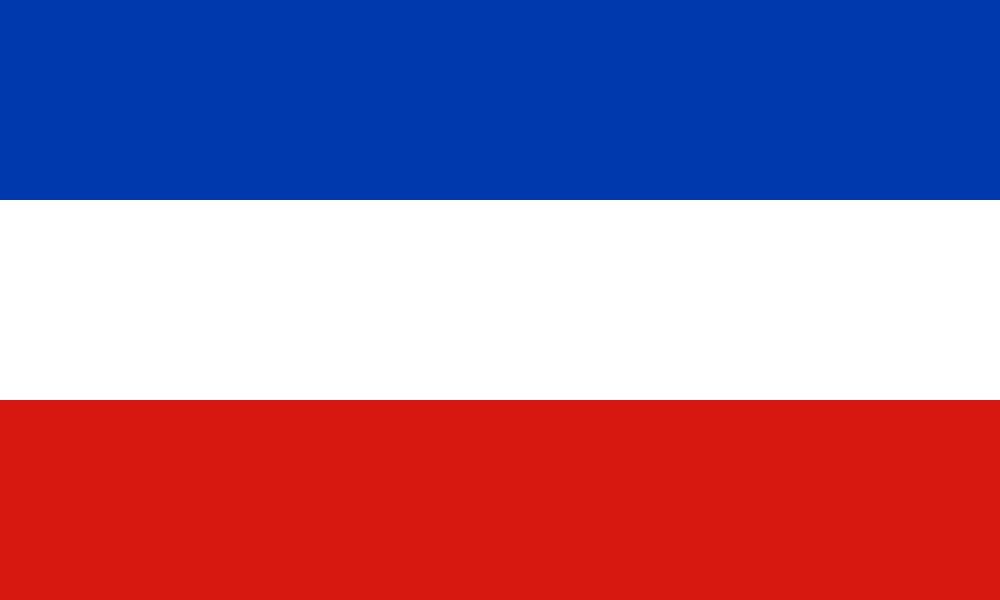 Schleswig-Holstein
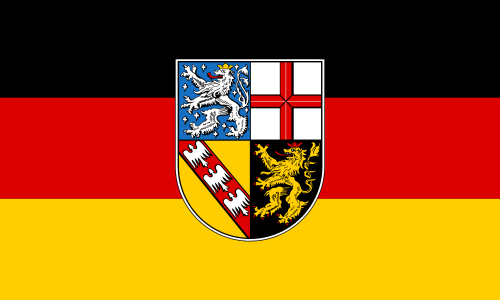 Saarland Saxony
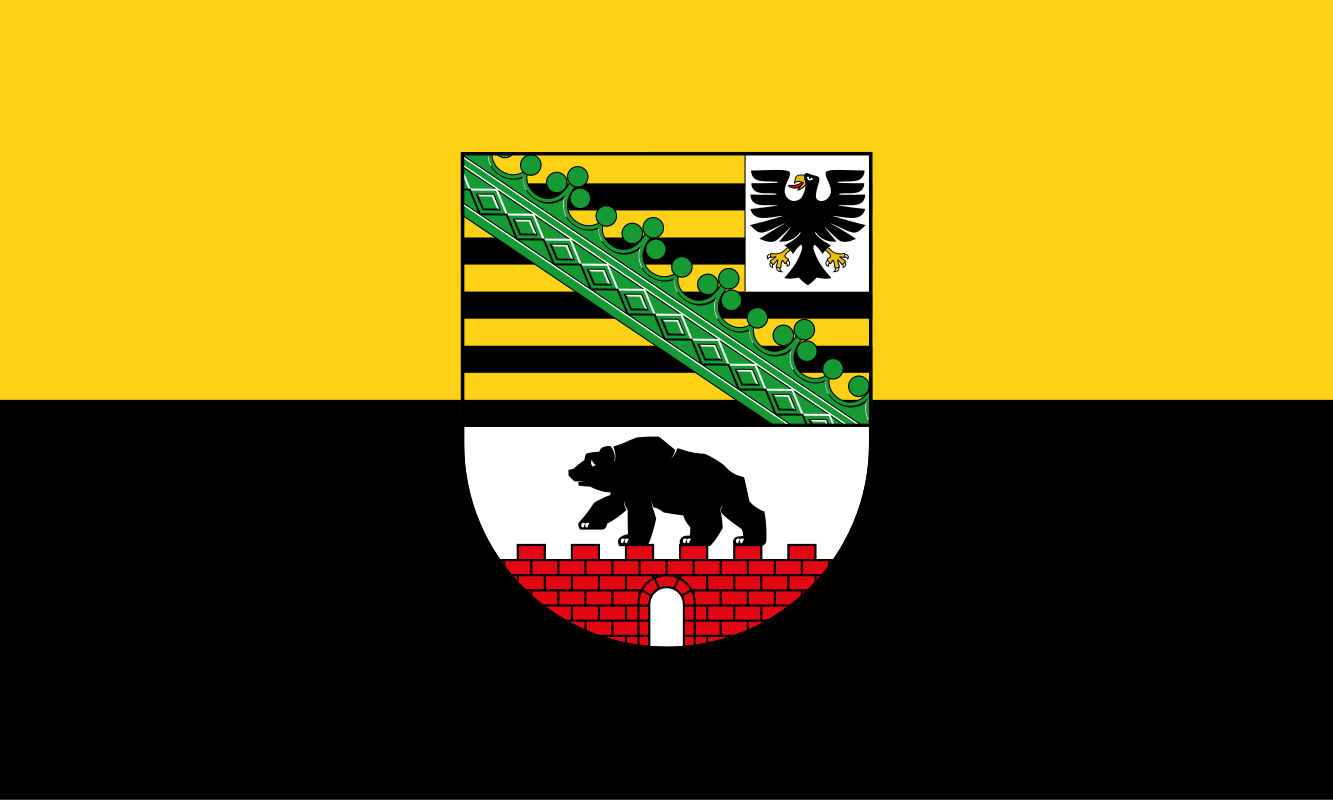 Saxony-Anhalt
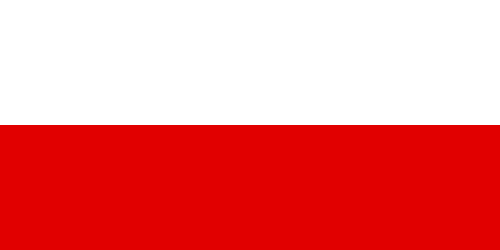 Thuringia
Germany shares a land border with 9 countries: Austria, Belgium, the Czech Republic, Denmark, France, Luxembourg, the Netherlands, Poland and Switzerland.
2 other national flags use the same main colours as Germany's.
Play Globalio and learn Germany's flag Austria
 Czech Republic
 Denmark
 France
 Luxembourg
 Netherlands
 Poland
 Switzerland
 Angola