 Kazakhstan
 Tajikistan

1991–present
Republic of Uzbekistan
Adopted in 1991, the first ex-Soviet Central Asian republic to introduce a new national flag. It bears blue, white, and green stripes with red fimbriations, a white crescent, and twelve stars.
Uzbekistan is a double-landlocked Central Asian country that was the heartland of the ancient Silk Road, the trade network connecting China to the Mediterranean world. Cities like Samarkand and Bukhara were among the medieval world's greatest centres of Islamic scholarship, architecture, and commerce, with breathtaking tilework that rivals anything on Earth. Uzbekistan is also the birthplace of medieval mathematician al-Khwarizmi, from whose name the word 'algorithm' is ultimately derived.
Population and area are rounded.
Blue stands for the sky and water, white for peace and purity, and green for nature; the thin red lines represent the life force. The crescent stands for the newly independent republic, and the twelve stars are said to represent the months of the year. The flag was adopted in November 1991.
Horizontal blue-white-green with thin red borders and a crescent with twelve stars on the blue stripe.
Uzbekistan is the world's sixth-largest producer of gold.
Uzbekistan's flag is often mixed up with these. Learn to tell them apart:
Every flag that has flown over Uzbekistan, from today back through time.
Adopted in 1991, the first ex-Soviet Central Asian republic to introduce a new national flag. It bears blue, white, and green stripes with red fimbriations, a white crescent, and twelve stars.
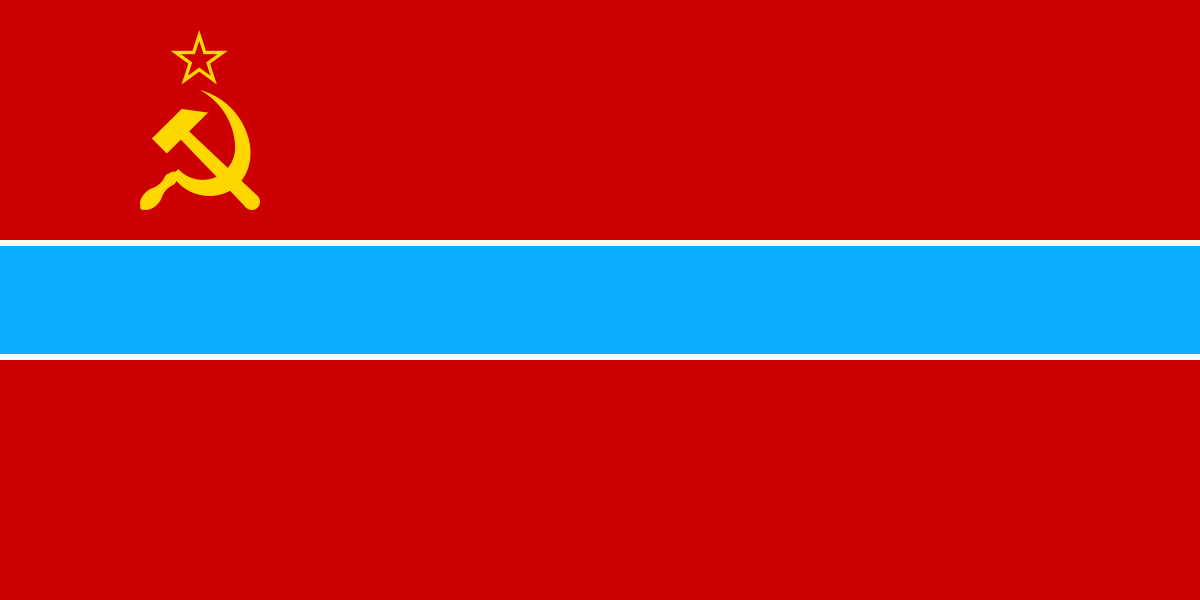
The final Soviet-era design: a red flag with a central light-blue band edged by thin white stripes, plus the hammer, sickle, and star in the canton.
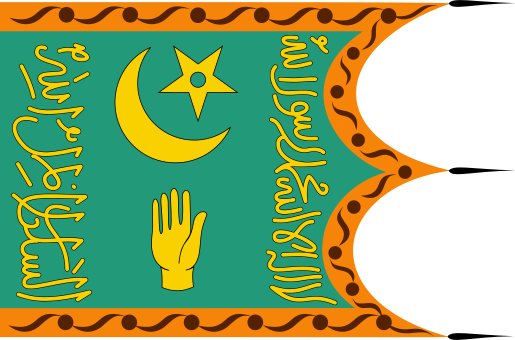
Before the Soviets, the great oasis cities of Uzbekistan were ruled by the Emirate of Bukhara — heir to the empire of Timur (Tamerlane), whose capital Samarkand was one of the jewels of the Islamic world. The emirate flew a green flag and survived as a Russian protectorate until the Red Army stormed Bukhara in 1920, ending a line of Central Asian Muslim states stretching back centuries.
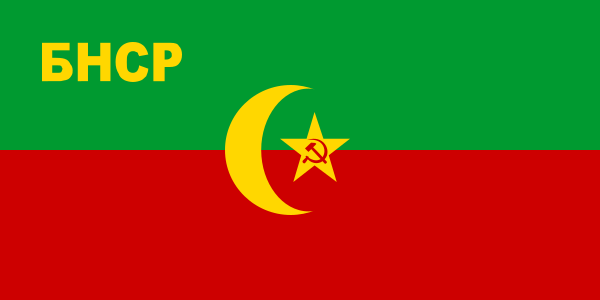
The Soviet client state that replaced the Emirate of Bukhara before being carved into the Central Asian SSRs.
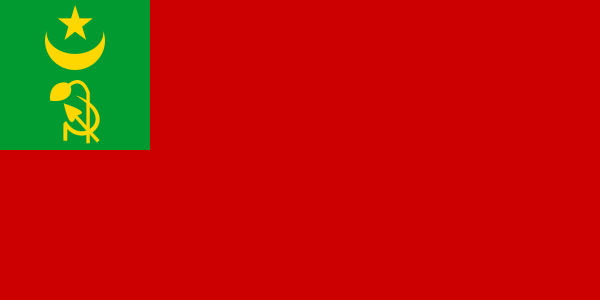
The Soviet successor to the Khanate of Khiva, dissolved into the new Uzbek and Turkmen republics.
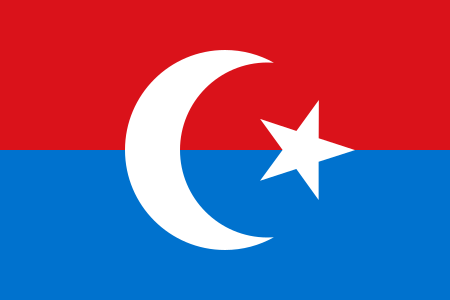
A short-lived Muslim autonomous government at Kokand, crushed by the Bolsheviks within months — a founding memory of Central Asian nationalism.

A khanate of the fertile Fergana Valley, the last Central Asian state conquered by the Russian Empire.
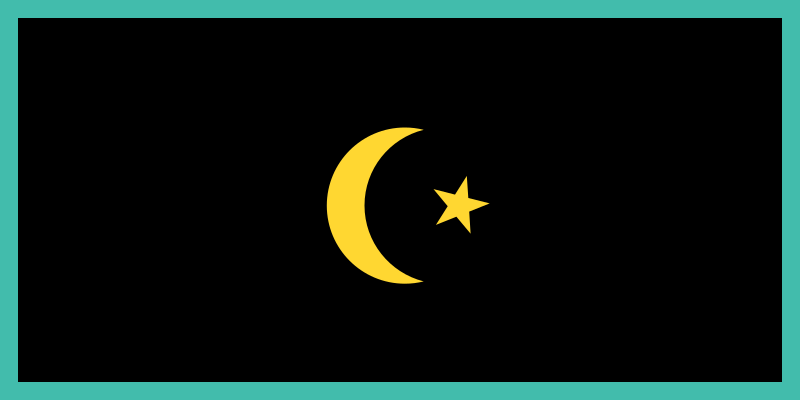
A Central Asian khanate of the Khorezm oasis, a slave-trading power on the Amu Darya until the Red Army took it.
Empires, kingdoms and republics that once covered part of Uzbekistan.
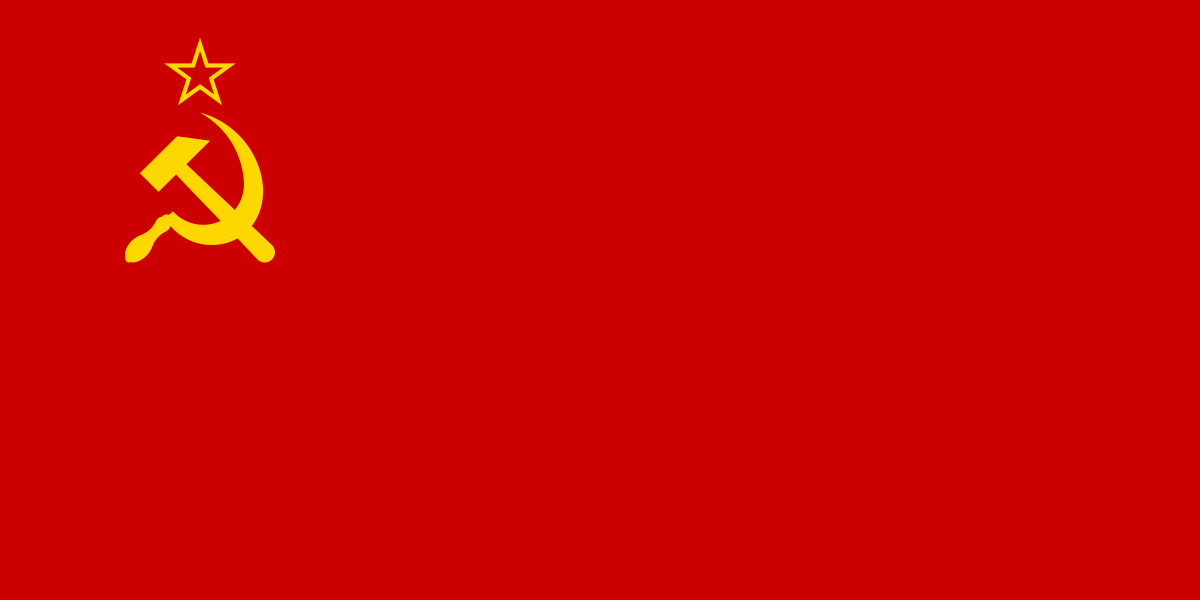
The gold hammer and sickle beneath a red star stood for the worker-peasant alliance. The exact shade and proportions were fixed by Soviet law in 1955.
A Central Asian khanate on the oasis of Khwarezm, a major Silk Road and slave-trade center, which became a Russian protectorate before the Bolsheviks toppled its khan in 1920.
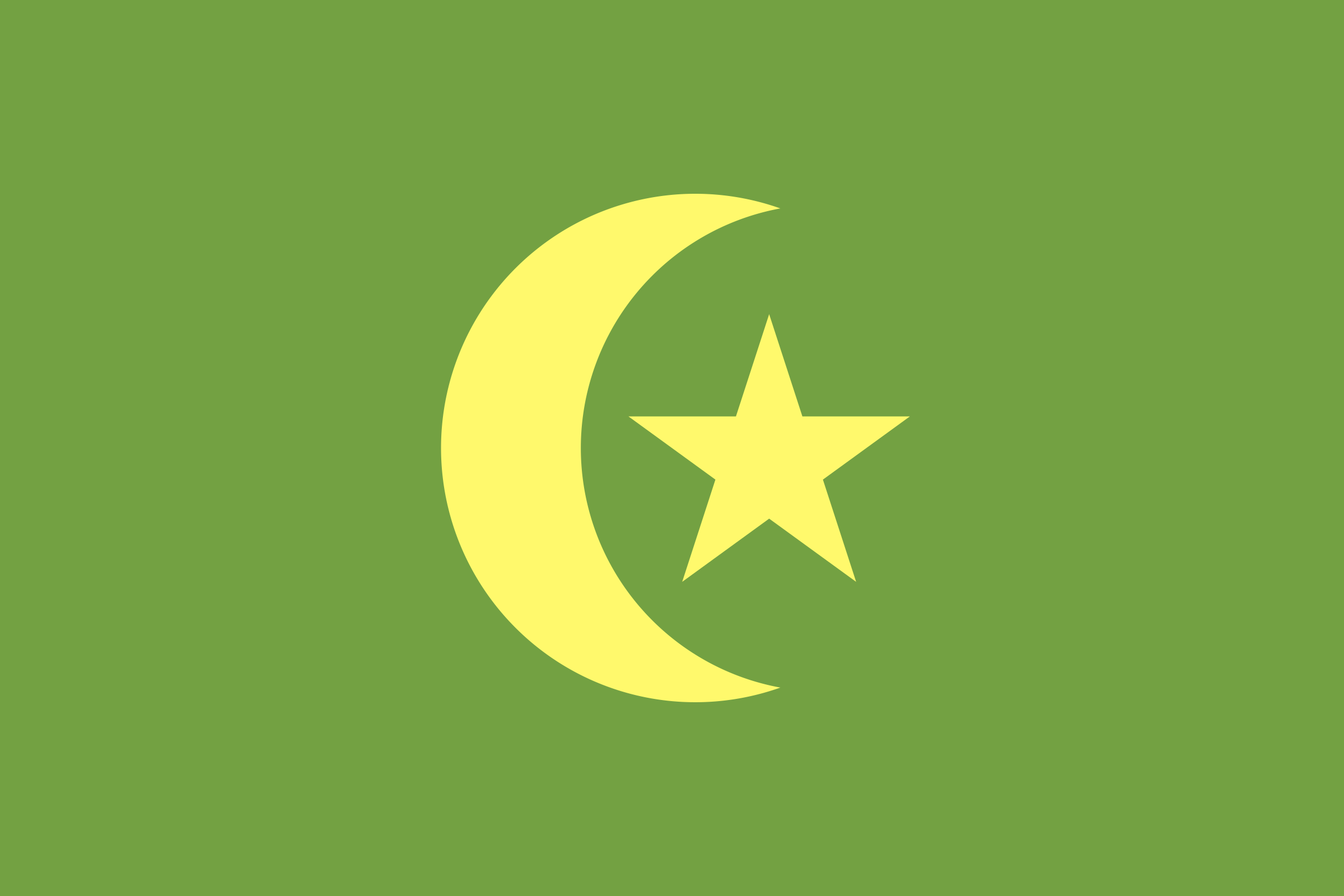
A khanate in the fertile Fergana Valley, one of the three great Uzbek states, conquered and annexed by the Russian Empire in 1876 during its advance across Central Asia.
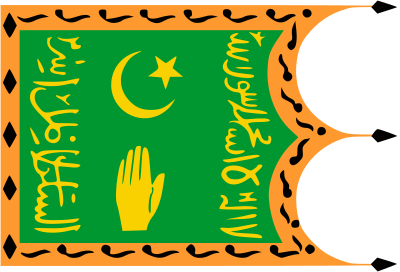
The last emir of this ancient Central Asian state, a Russian protectorate, fled when the Red Army stormed Bukhara in 1920, ending centuries of Uzbek dynastic rule.
The Soviet-aligned republic that replaced the Emirate of Bukhara, flying a red flag with Arabic-script and a crescent, before being partitioned into the Uzbek and Turkmen SSRs.
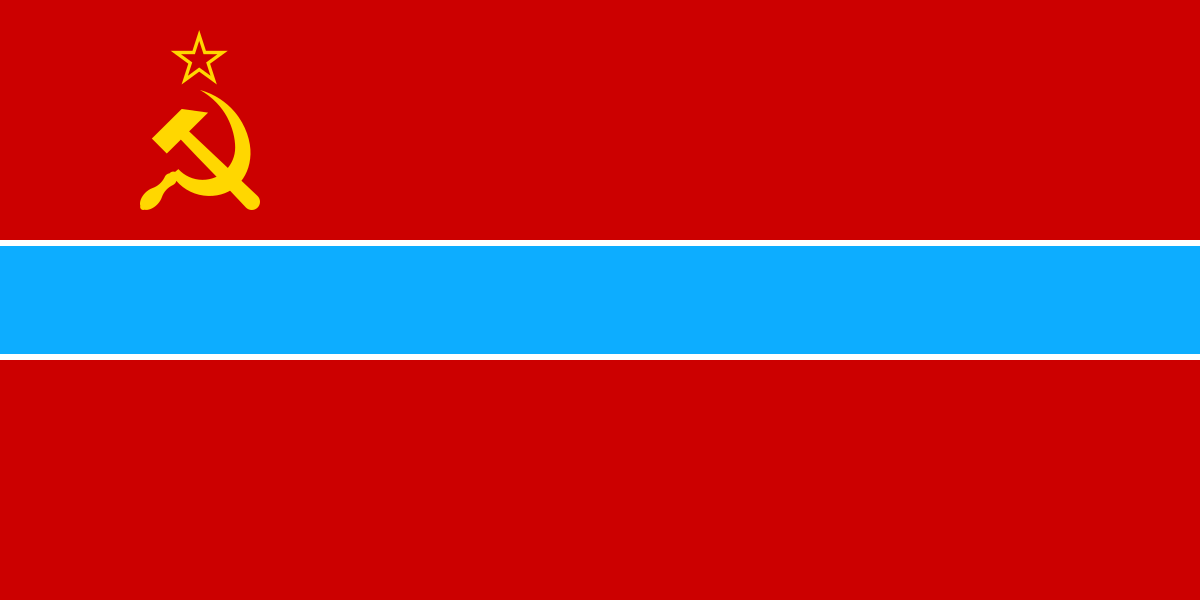
A red flag with a central blue band edged in white above and below the hammer, sickle and star — the Soviet flag of Uzbekistan until independence.
The 2 states, provinces and regions of Uzbekistan with their own flags.
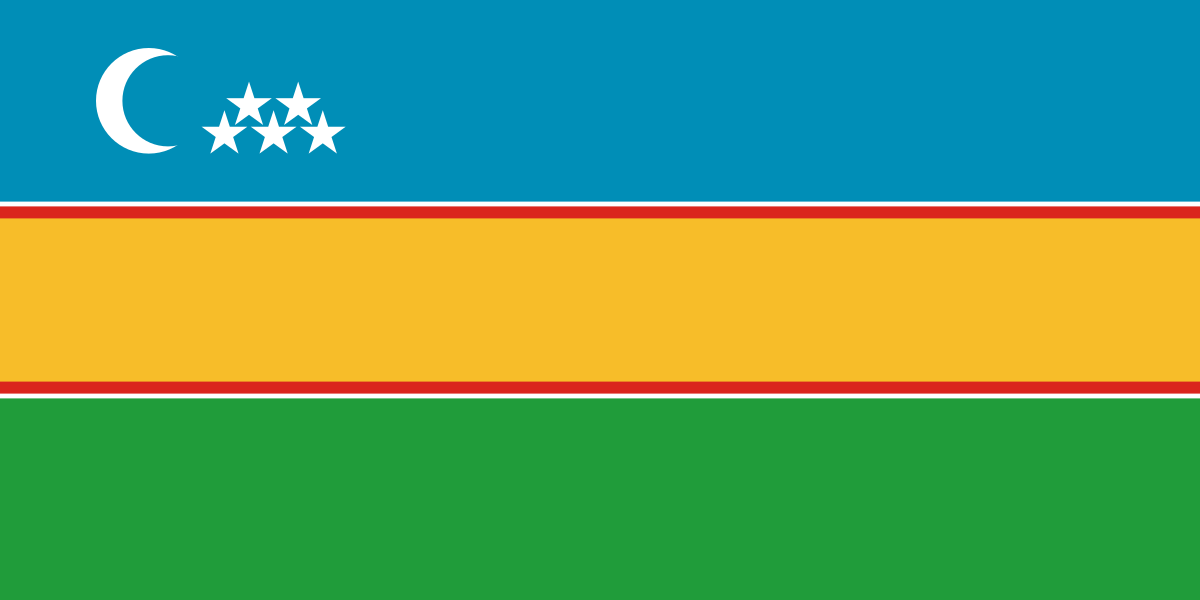 Karakalpakstan
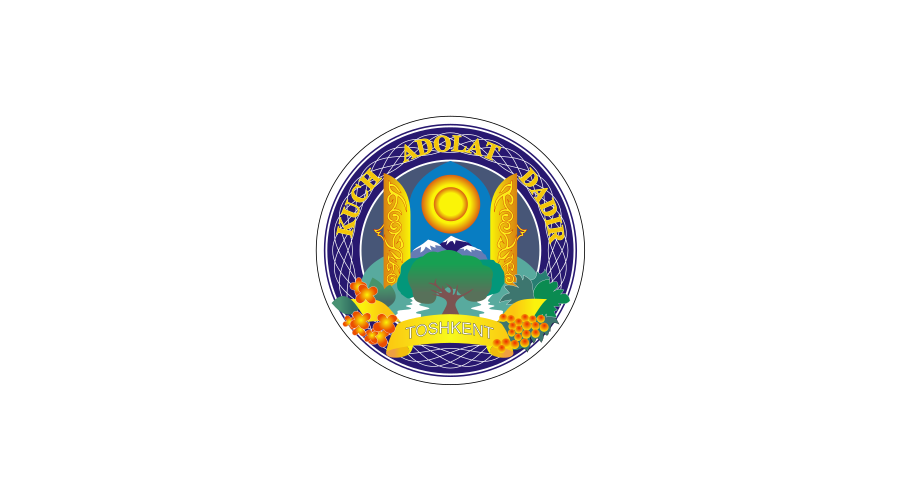 Tashkent City
Uzbekistan shares a land border with 5 countries: Afghanistan, Kazakhstan, Kyrgyzstan, Tajikistan and Turkmenistan.
4 other national flags use the same main colours as Uzbekistan's.
Play Globalio and learn Uzbekistan's flag Afghanistan
 Kyrgyzstan
 Turkmenistan
 Azerbaijan
 Djibouti
 Equatorial Guinea
 Gambia