 Portugal
 Colombia
 Ecuador

1981–present
Kingdom of Spain
The current flag, fixed in 1981, bears the constitutional coat of arms with the Pillars of Hercules and the quartered arms of Castile, León, Aragón, and Navarre. The red-yellow-red scheme dates to 1785.
Spain is the second-largest country in the European Union by area, situated on the Iberian Peninsula with additional territory in the Canary Islands, Balearic Islands, and two cities on the North African coast. It has a rich cultural heritage blending Roman, Moorish, and Christian traditions, visible in its architecture, art, cuisine, and festivals. Spain has more UNESCO World Heritage Sites than almost any other country and is one of the world's most visited nations.
Population and area are rounded.
Red and yellow come from the arms of the Crown of Aragon and were chosen by King Charles III in 1785 for Spanish warships, so they could be told apart at sea from other Bourbon kingdoms that flew white. The coat of arms combines Castile, León, Aragon, Navarre and Granada, with the Pillars of Hercules and the motto “Plus Ultra”, further beyond. The current version dates from 1981.
Horizontal red-yellow-red with the Spanish coat of arms in the centre.
Spain is home to La Tomatina — an annual festival where participants throw tomatoes at each other.
Spain's flag is often mixed up with these. Learn to tell them apart:
Every flag that has flown over Spain, from today back through time.
The current flag, fixed in 1981, bears the constitutional coat of arms with the Pillars of Hercules and the quartered arms of Castile, León, Aragón, and Navarre. The red-yellow-red scheme dates to 1785.
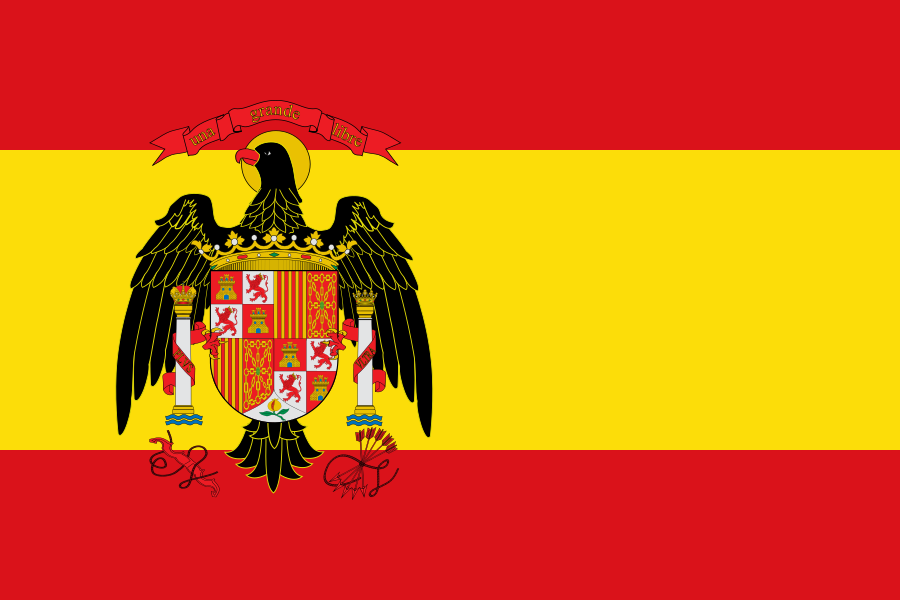
After Franco's death the eagle of the dictatorship's flag was widened and the design softened, a transitional step while the new democratic constitution of 1978 took shape.
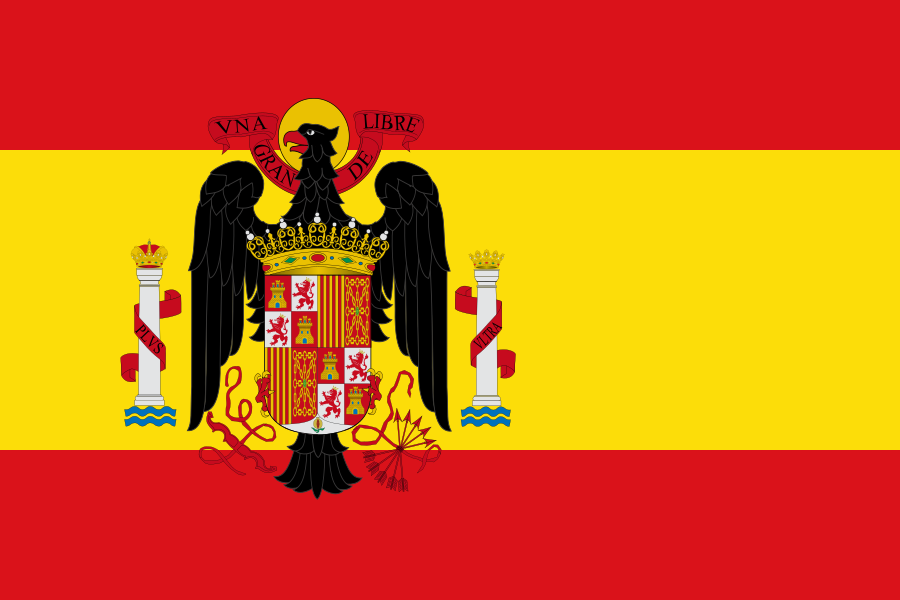
Franco's flag restored the red-yellow-red bands and added the Eagle of Saint John bearing the medieval royal arms with the yoke-and-arrows of the Catholic Monarchs. It flew for most of his dictatorship.
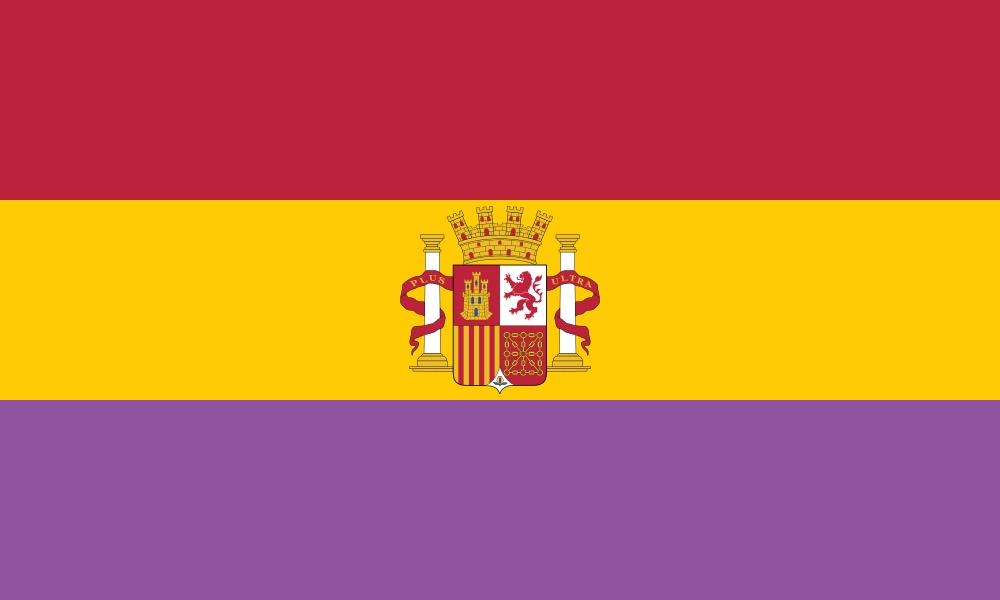
The Republic replaced the red-yellow-red with a tricolour of red, yellow, and murrey (purple), the purple honouring the Castilian Comuneros. It was abolished by Franco's victory in the Civil War.
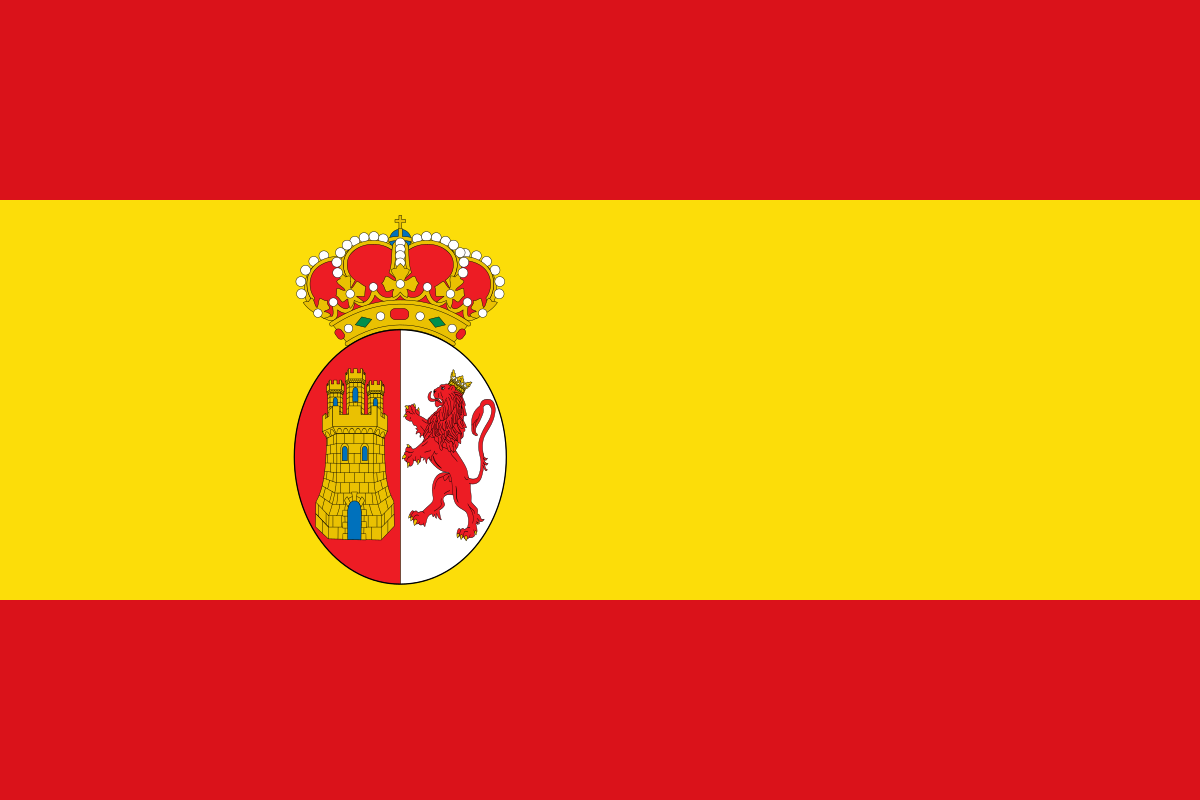
In 1785 Charles III chose the now-iconic red-yellow-red design as a high-visibility naval ensign, later extended to land. This basic scheme persisted through the monarchy and Bourbon Restoration.
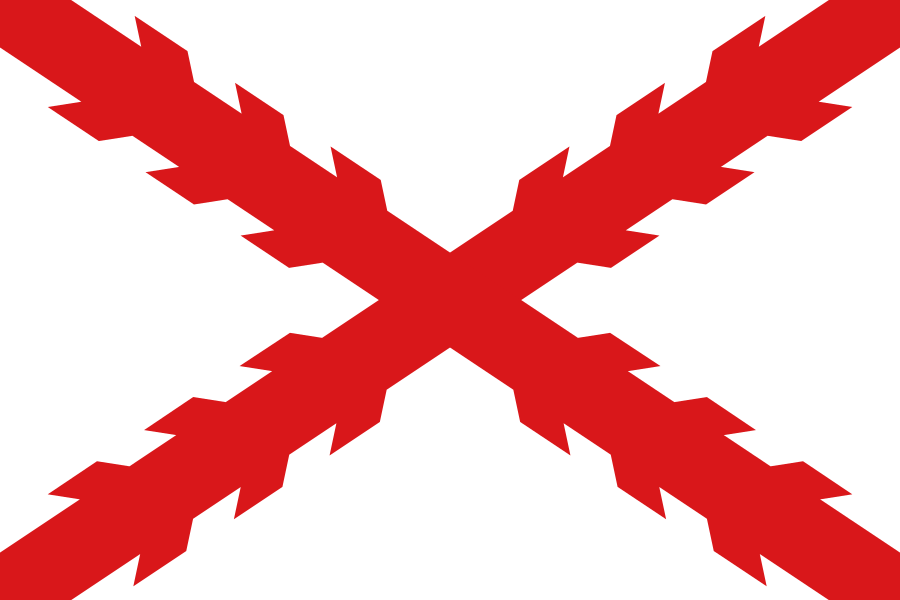
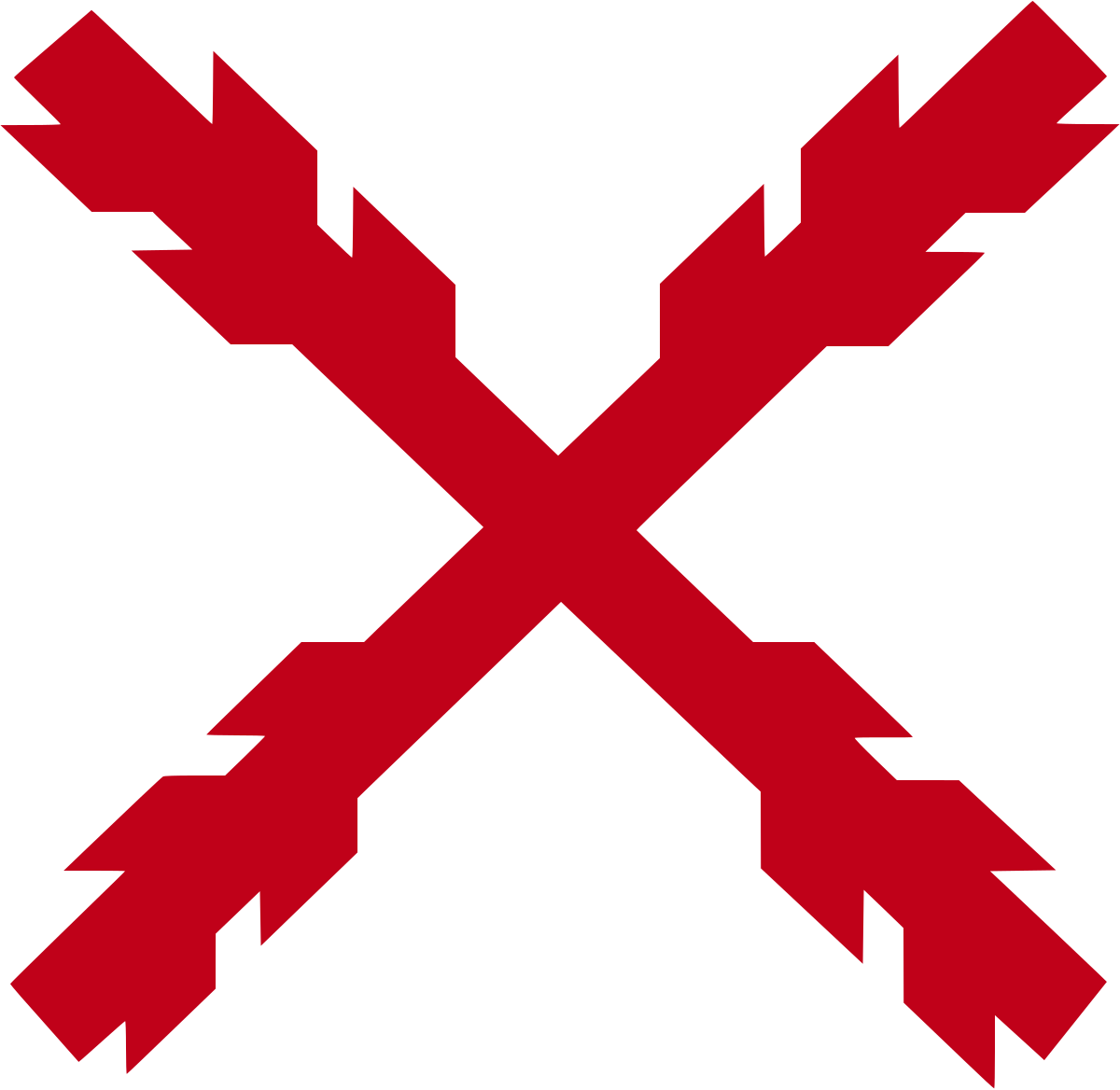
A red knotted saltire on a white field served as the de facto flag of the Spanish Empire under the Habsburgs and early Bourbons, flying over its global possessions and armies for nearly three centuries.
Empires, kingdoms and republics that once covered part of Spain.
The red saw-tooth saltire represents two crossed, roughly-pruned branches. It flew over Spanish armies and colonies across the Americas for nearly three centuries.
The republican tricolor added a purple lower band popularly linked to Castile, replacing the red-yellow monarchist flag until Franco's victory in 1939.
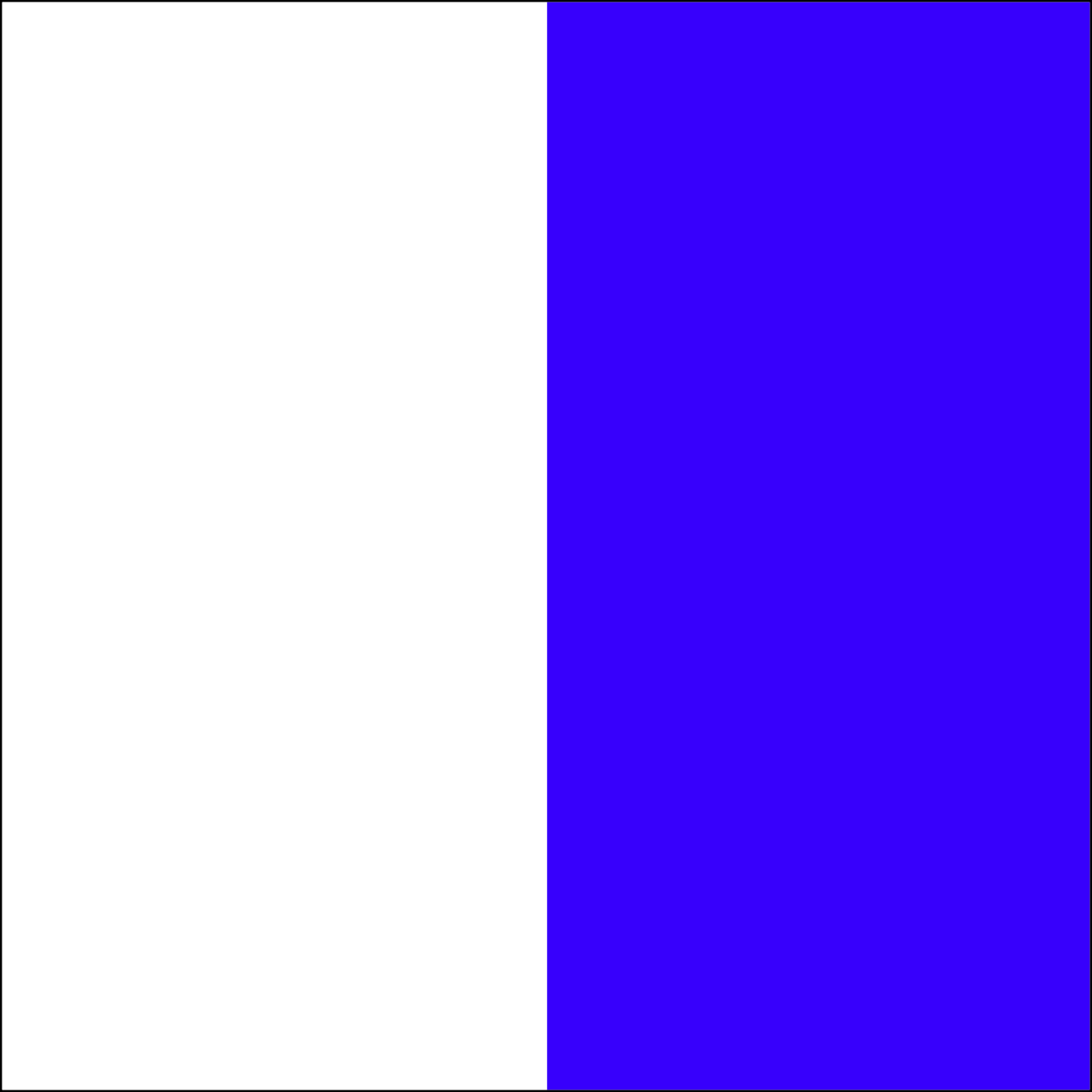
A self-governing 'mixed county' of three villages on the Galicia–Portugal border with its own asylum rights, partitioned between Spain and Portugal in 1864.
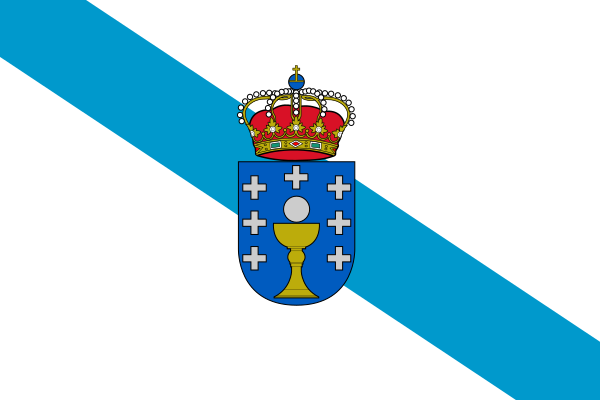
One of medieval Europe's oldest kingdoms, in Spain's far northwest; its modern white flag with a blue diagonal recalls the realm home to the pilgrim shrine of Santiago de Compostela.
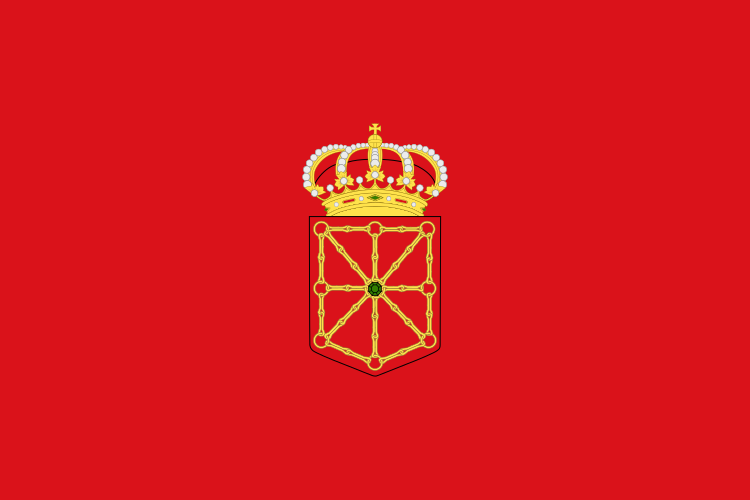
The Basque Pyrenean kingdom whose red flag bears golden chains, said to commemorate Navarrese knights breaking the chains around the Almohad caliph's tent in 1212.
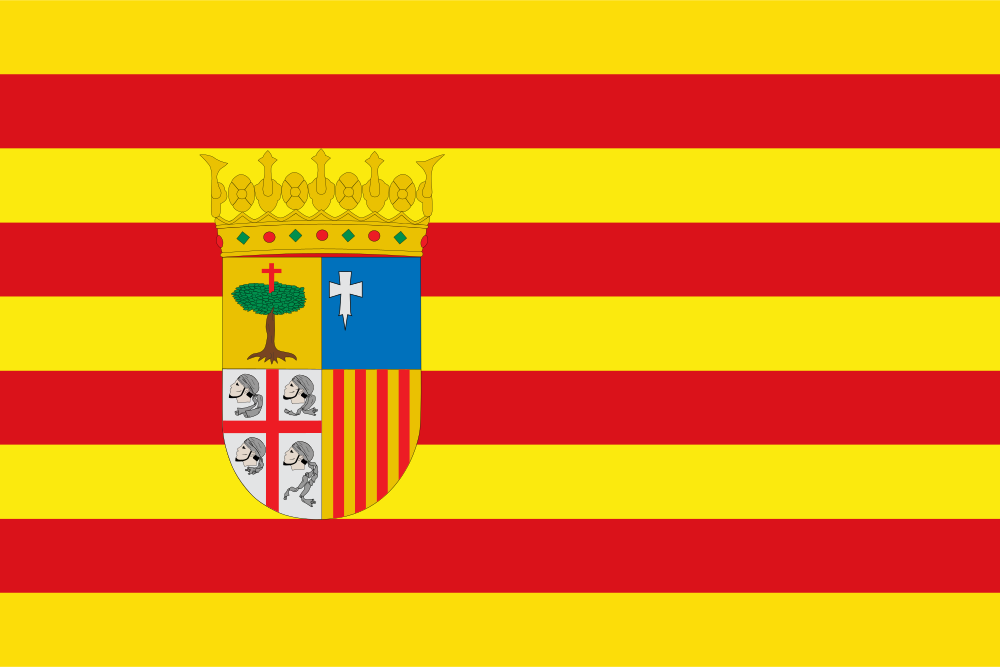
The four red bars on gold — the Senyera — flew over a Mediterranean empire that ruled Catalonia, Valencia, the Balearics, Sardinia, Sicily, and at times Naples and Athens.
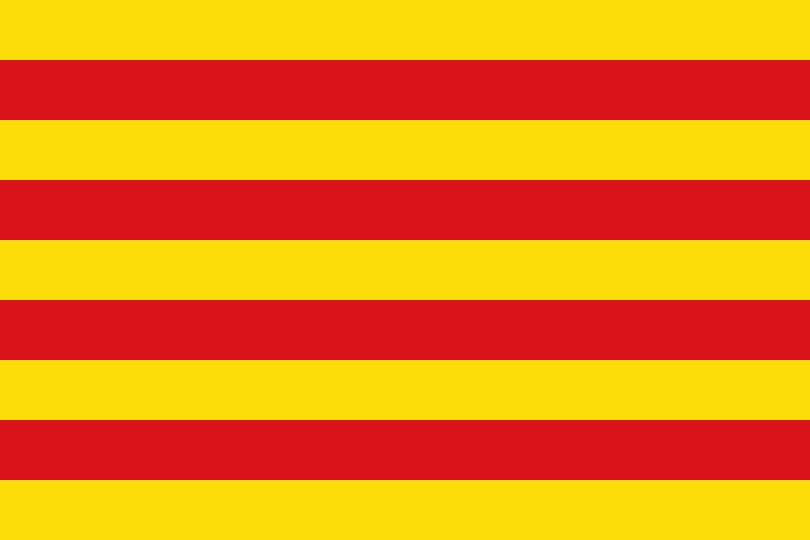
The Senyera of four red bars on gold flew over the Catalan lands within the Crown of Aragon; Barcelona's fall in 1714 ended its self-government, an event still marked each September 11.
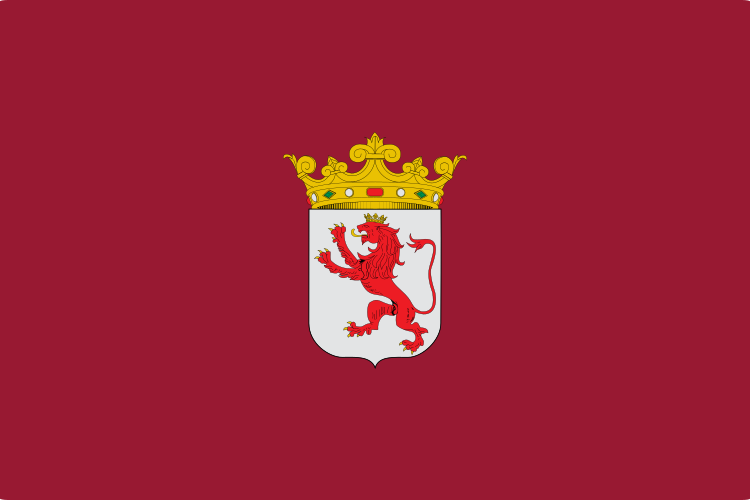
The purple lion on white of the early medieval Christian kingdom that drove the Reconquista; its parliament of 1188 is often called the oldest in Europe.
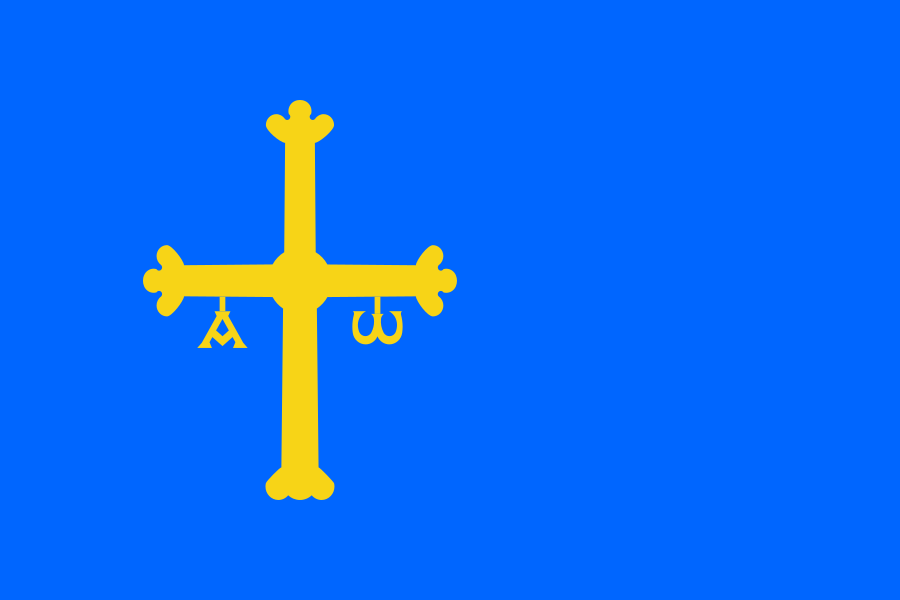
The blue flag with the gold Victory Cross marks the first Christian kingdom of the Reconquista, founded by Pelagius after his victory at Covadonga against the Moors.
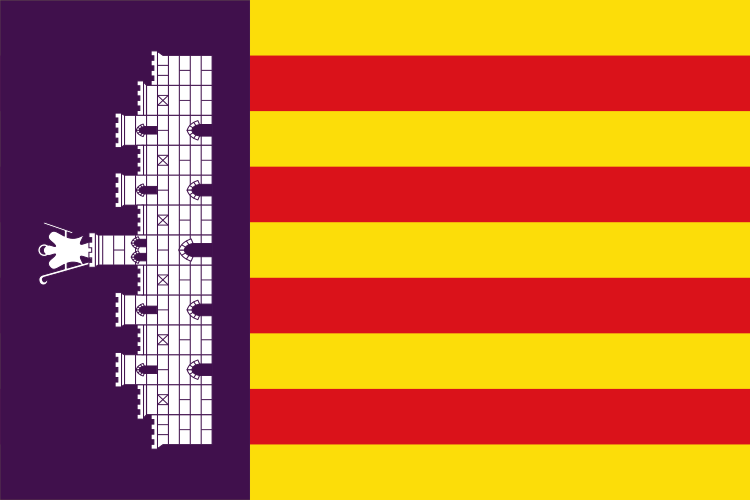
A short-lived independent Balearic kingdom carved out by James I of Aragon for a younger son, ruling the islands plus Roussillon and Montpellier on the mainland.
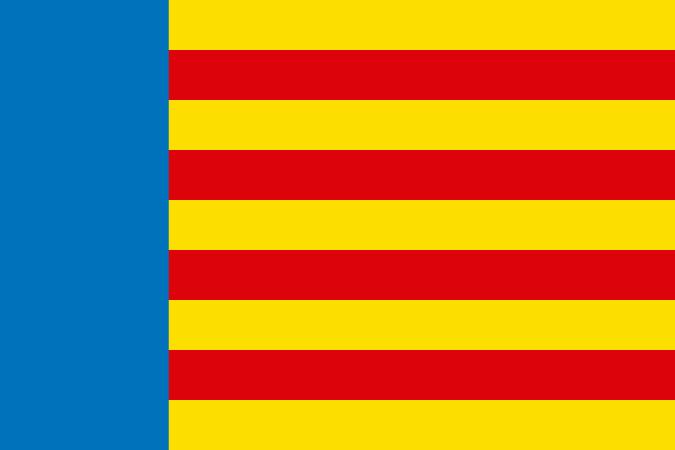
A realm of the Crown of Aragon whose Senyera added a crowned blue stripe at the hoist; it was abolished by the Bourbons after backing the losing side in the War of Spanish Succession.
For sixty years the Spanish and Portuguese crowns were joined under one Habsburg king, briefly creating a single empire spanning the globe, until Portugal revolted in 1640.
The 19 states, provinces and regions of Spain with their own flags.
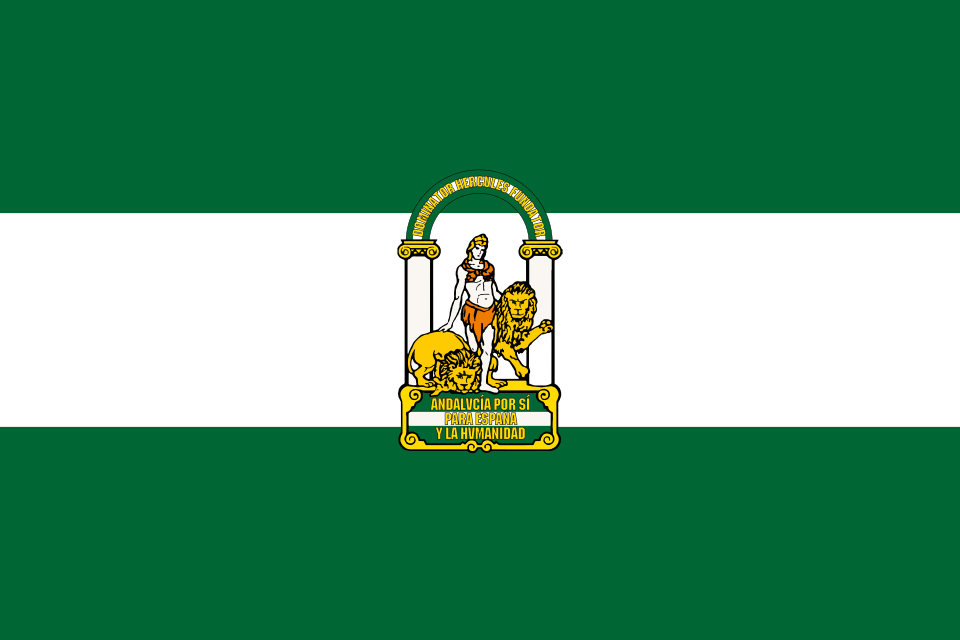 Andalusia Aragon Asturias
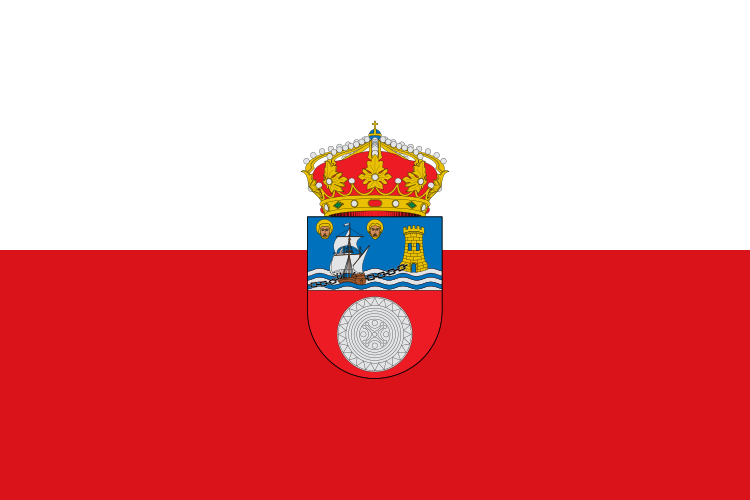 Cantabria
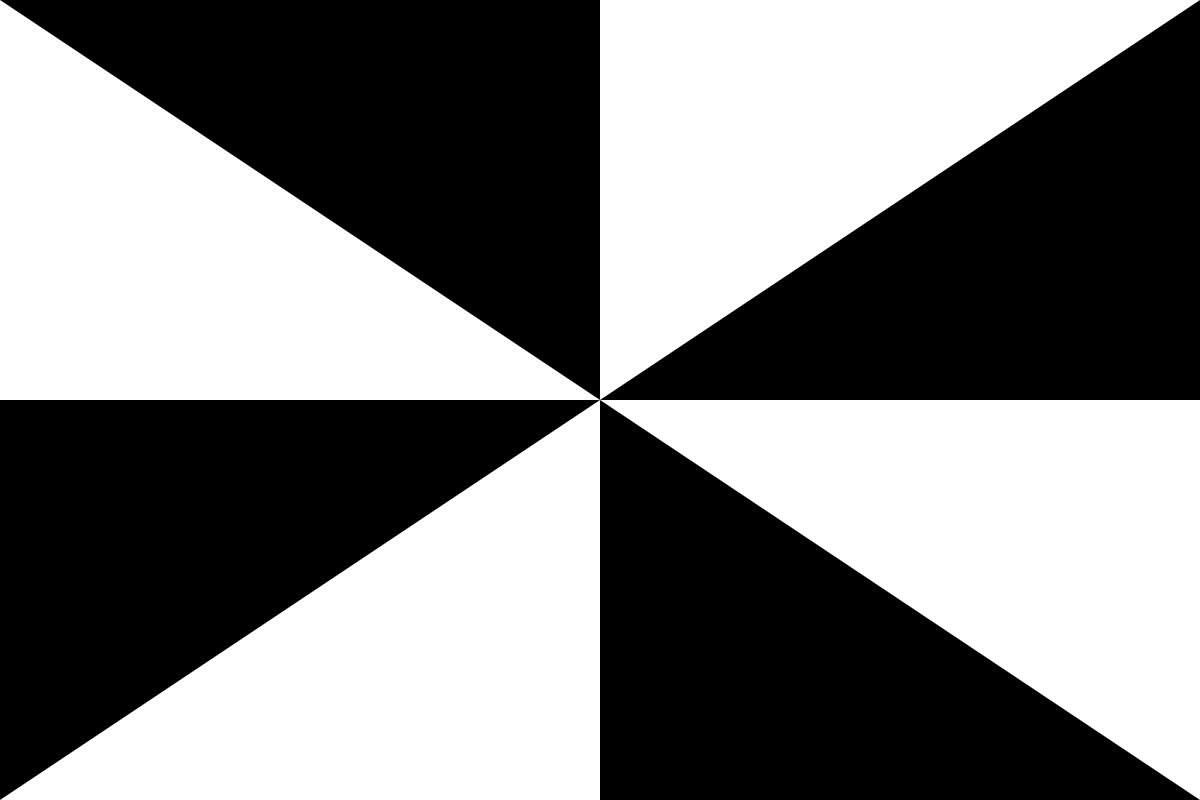 Ceuta
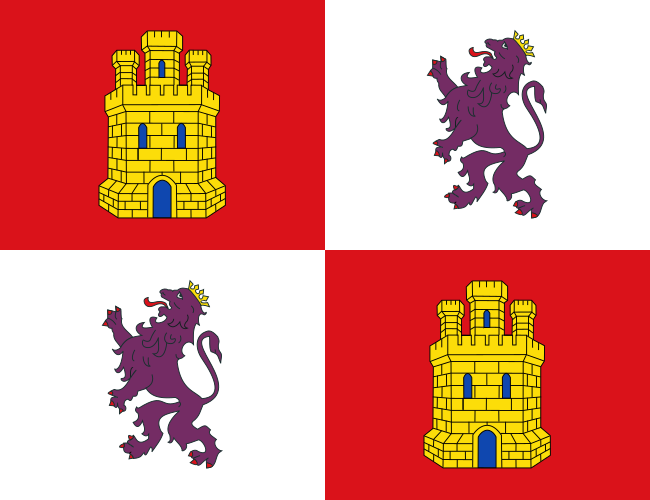 Castile and León
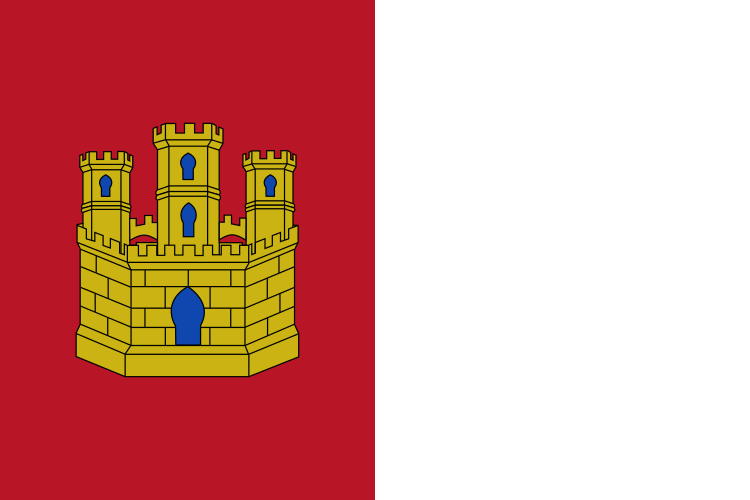 Castile-La Mancha
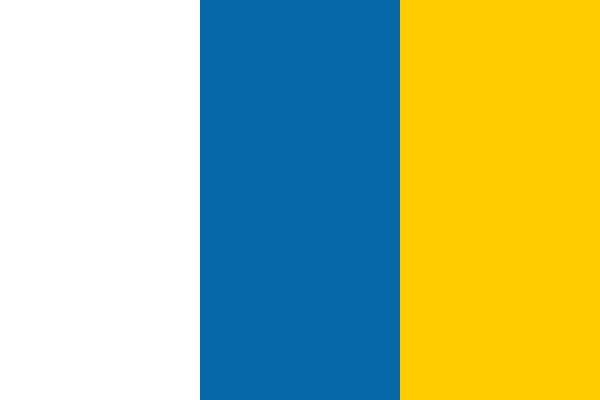 Canary Islands Catalonia
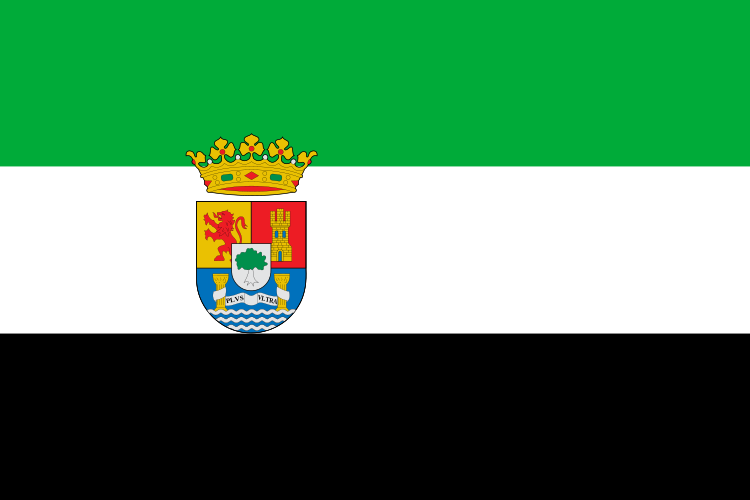 Extremadura
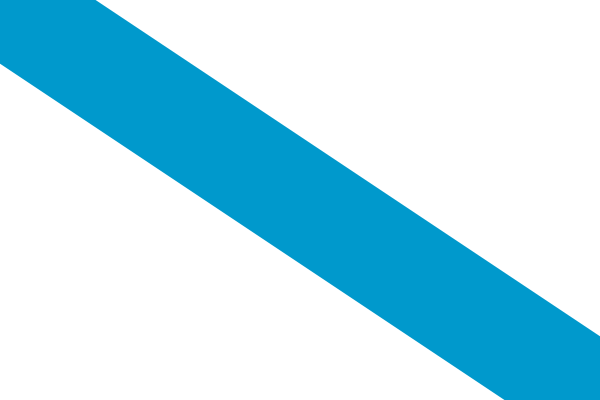 Galicia
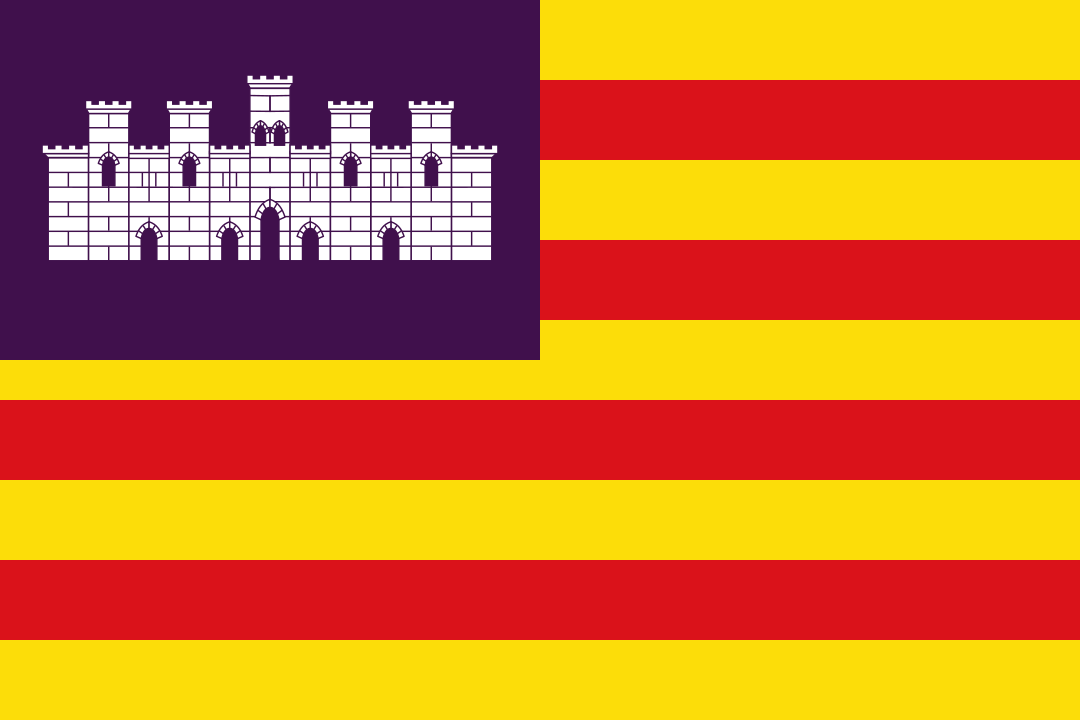 Balearic Islands
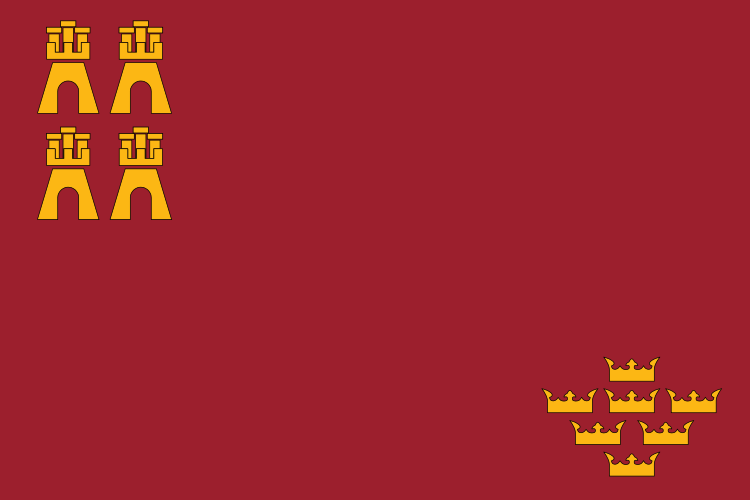 Region of Murcia
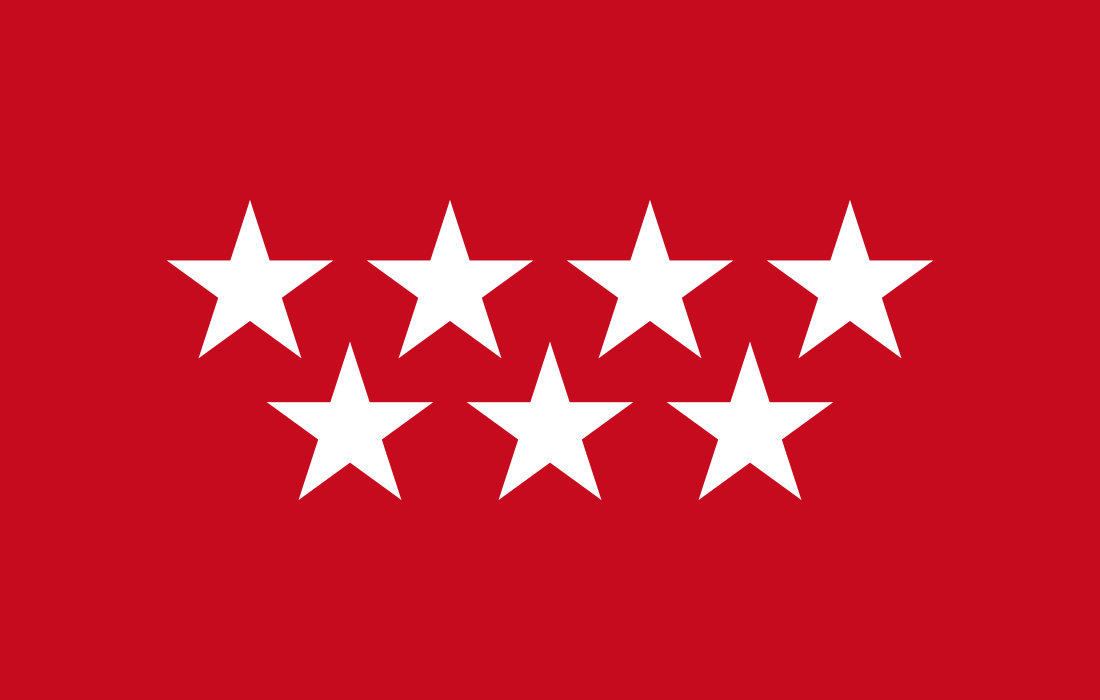 Community of Madrid
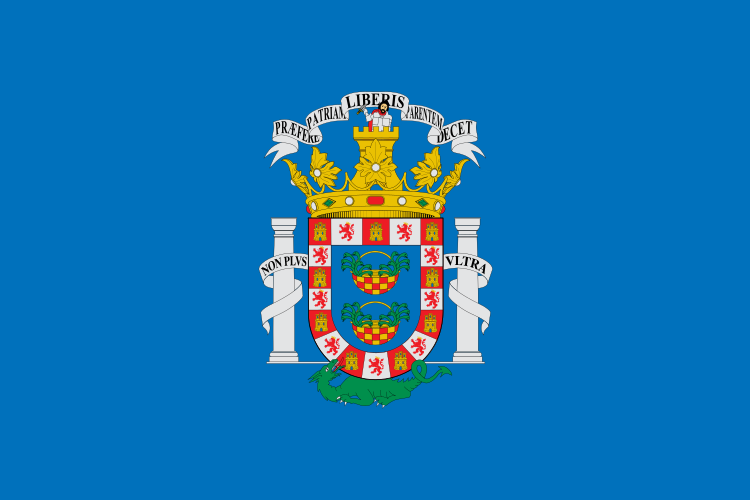 Melilla
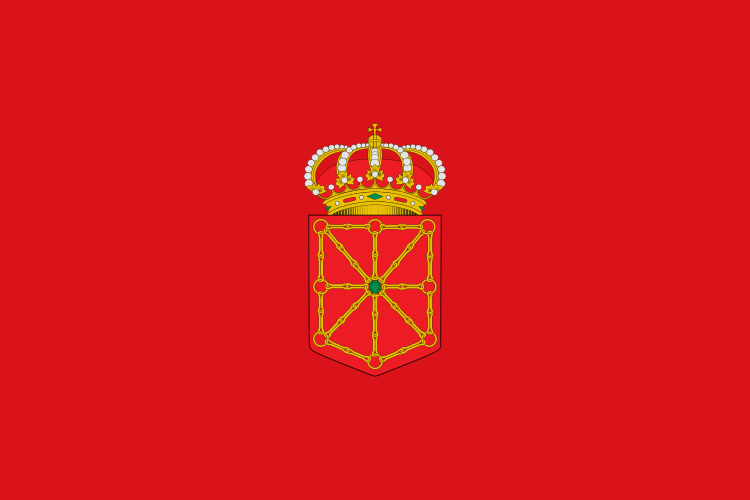 Navarre
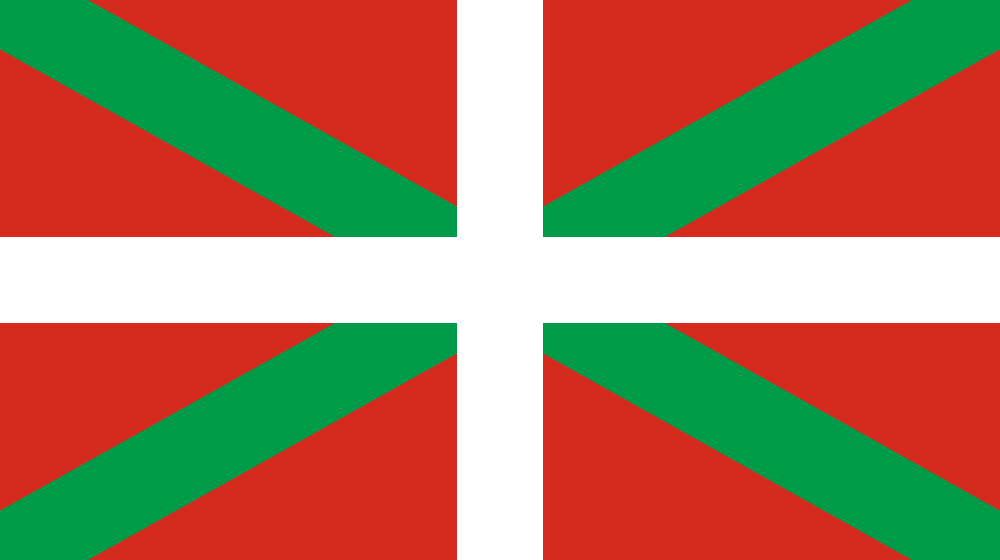 Basque Country
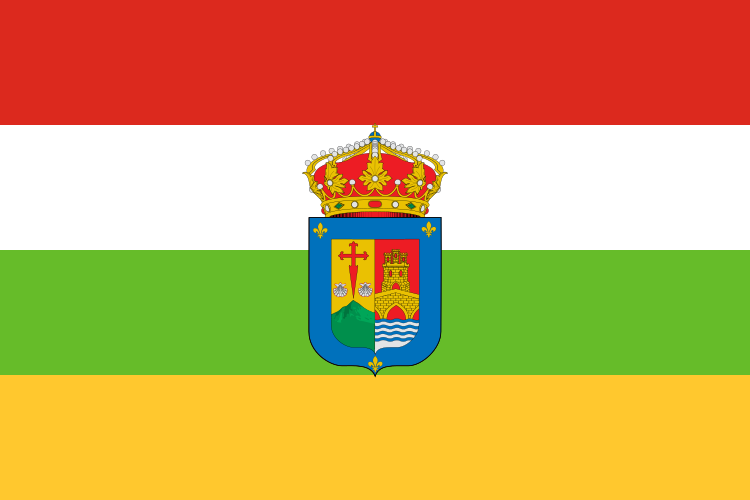 La Rioja
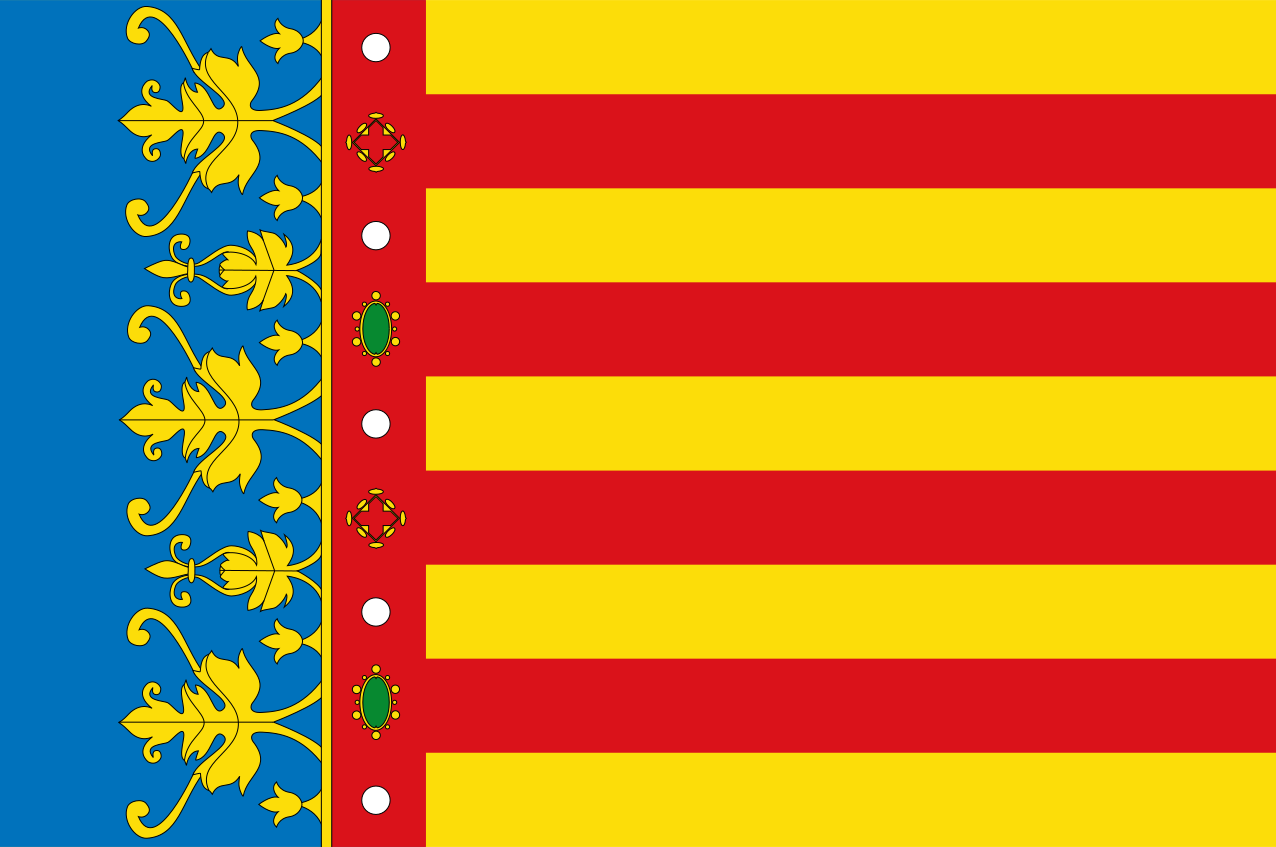 Valencia
Spain shares a land border with 3 countries: Andorra, France and Portugal.
5 other national flags use the same main colours as Spain's.
Play Globalio and learn Spain's flag Andorra
 France
 China
 Kyrgyzstan
 Montenegro
 North Macedonia
 Vietnam