 Turkmenistan
 Uzbekistan

1991–present
Republic of Azerbaijan
On regaining independence, Azerbaijan restored the 1918 tricolour of turquoise, red, and green with a white crescent and eight-pointed star. The blue honors Turkic heritage, red modernity, green Islam.
Azerbaijan is a South Caucasian country bordering the Caspian Sea, Georgia, Russia, Iran, and Armenia, and is one of the oldest oil-producing regions in the world, with records of oil collection dating to the 10th century. Baku, the capital, is known for its striking contrast of medieval walls and winding old city lanes alongside futuristic modern architecture including the flame-shaped Flame Towers. The country is also home to Yanar Dag ('Burning Mountain'), a natural gas seep that has burned continuously for centuries.
Population and area are rounded.
Blue represents Azerbaijan's Turkic heritage, red progress and modern democracy, and green Islam. The white crescent and eight-pointed star are often linked to the eight branches of the Turkic peoples. First adopted in 1918 by the Azerbaijan Democratic Republic, the flag was restored in 1991.
The tricolour was adopted by the Azerbaijan Democratic Republic in 1918, the first parliamentary republic in the Muslim world, which lasted until the Red Army arrived in 1920. It was restored in 1991. Baku's National Flag Square displays one of the largest flags in the world on a very tall flagpole, and Azerbaijan marks National Flag Day each year on 9 November.
Horizontal blue-red-green with a white crescent and eight-pointed star in the red stripe.
Azerbaijan was the world's first predominantly Muslim nation to operate as a democratic republic, in 1918.
Azerbaijan's flag is often mixed up with these. Learn to tell them apart:
Every flag that has flown over Azerbaijan, from today back through time.
On regaining independence, Azerbaijan restored the 1918 tricolour of turquoise, red, and green with a white crescent and eight-pointed star. The blue honors Turkic heritage, red modernity, green Islam.
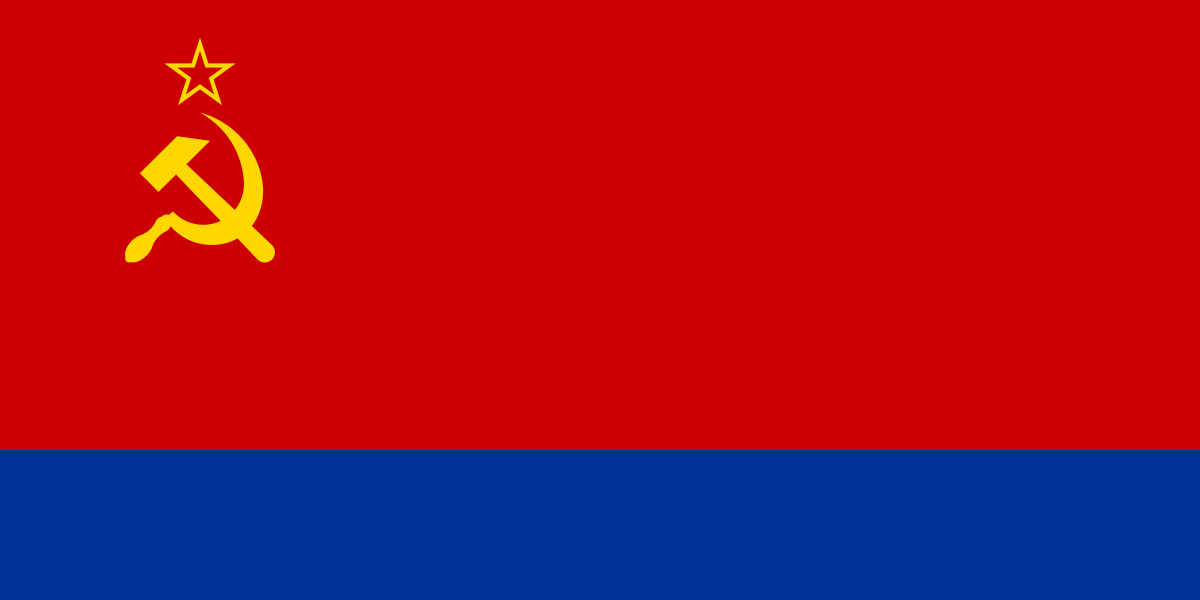
The final Soviet-era design added a blue horizontal band along the bottom of the red flag, evoking the Caspian Sea.
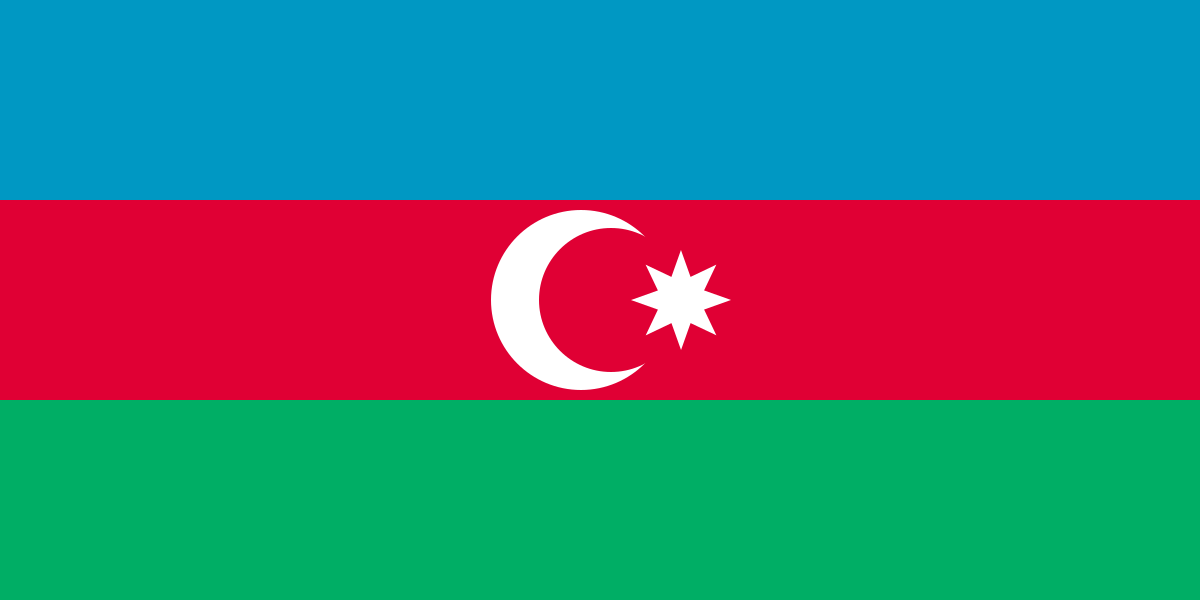
The first democratic, parliamentary republic in the Muslim world adopted this turquoise-red-green tricolour in 1918 — revived almost unchanged after 1991.
Empires, kingdoms and republics that once covered part of Azerbaijan.
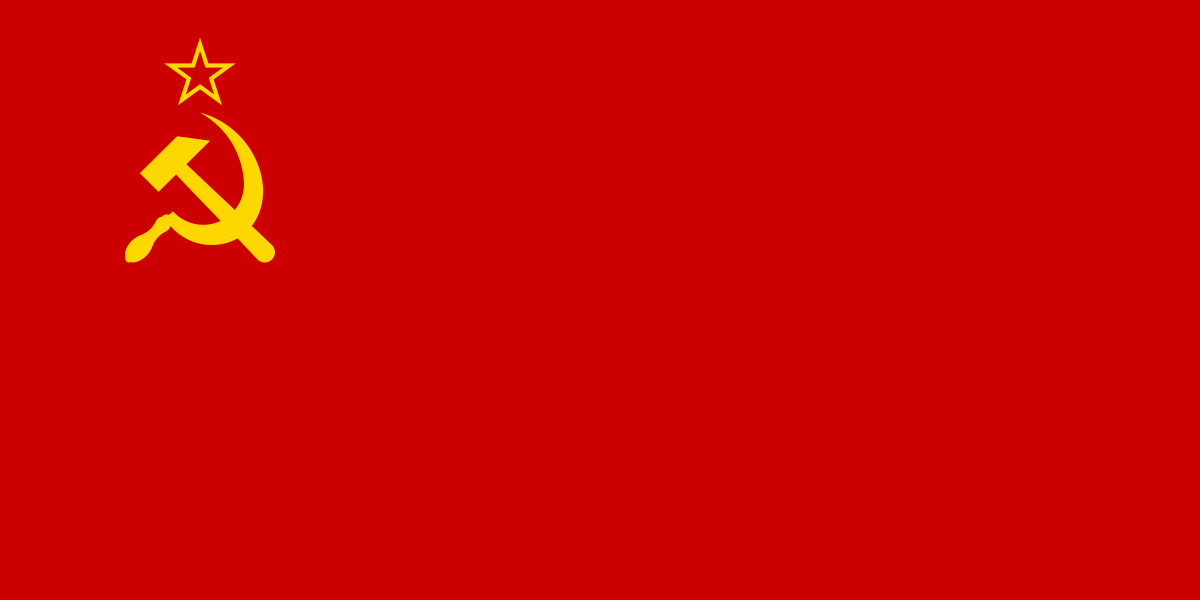
The gold hammer and sickle beneath a red star stood for the worker-peasant alliance. The exact shade and proportions were fixed by Soviet law in 1955.
The red Soviet flag of Azerbaijan with a blue lower band and the hammer, sickle and star, used until the republic restored its independence in 1991.
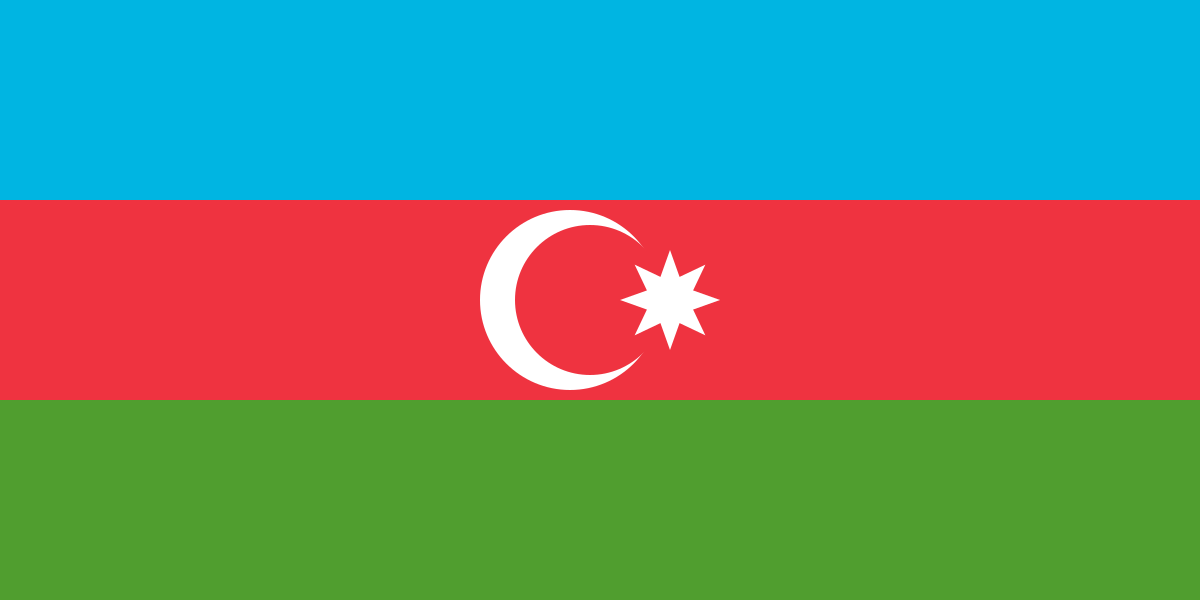
The first secular democratic republic in the Muslim world, which gave women the vote before many Western states; its blue-red-green flag flies over independent Azerbaijan again today.
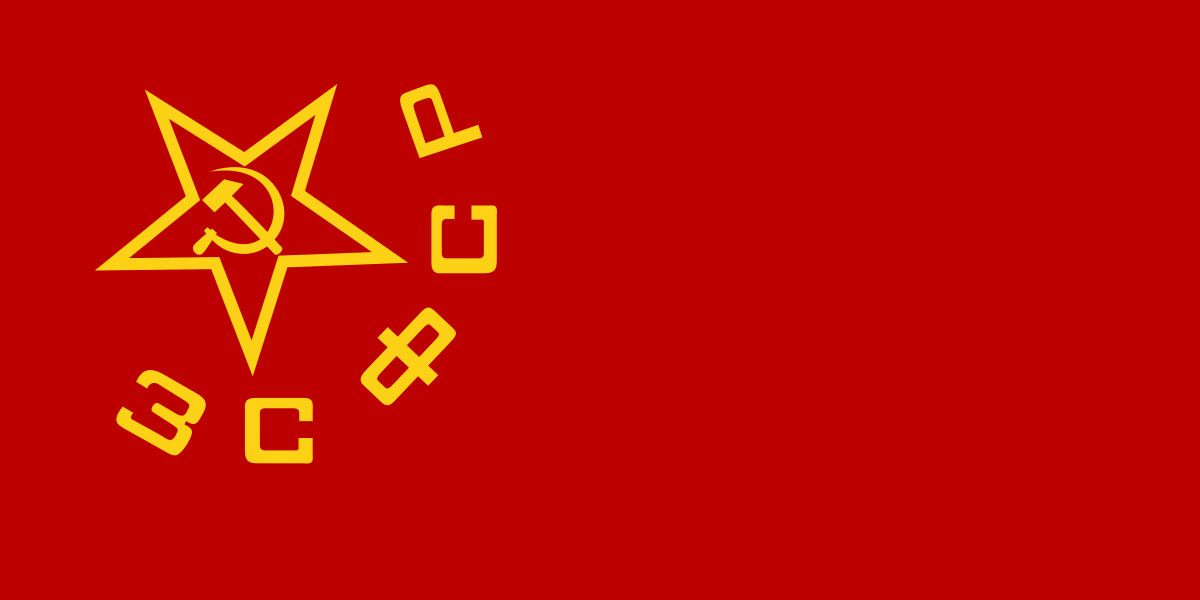
For 14 years Georgia, Armenia, and Azerbaijan were fused into a single Soviet republic — one of the four founding members of the USSR — before Stalin split them apart.
Azerbaijan shares a land border with 5 countries: Armenia, Georgia, Iran, Russia and Turkey.
4 other national flags use the same main colours as Azerbaijan's.
Play Globalio and learn Azerbaijan's flag Armenia
 Georgia
 Iran
 Russia
 Turkey
 Djibouti
 Equatorial Guinea
 Gambia