 Switzerland

2023–present
Yellow-white with keys and tiara
The 2023 Fundamental Law accompanied a minor revision of the emblem. The flag remains one of only two square national flags in the world, alongside Switzerland.
Vatican City is the world's smallest internationally recognised country, an independent city-state entirely within Rome covering just 44 hectares. It serves as the headquarters of the Roman Catholic Church and the residence of the Pope, giving this tiny territory immense religious significance for over 1.3 billion Catholics worldwide. Vatican City is home to St Peter's Basilica, the Sistine Chapel with Michelangelo's famous ceiling fresco, and some of the world's most important art and historical collections.
Population and area are rounded.
Yellow and white recall the gold and silver keys of Saint Peter, the “keys of the kingdom of heaven” that the Gospel says Christ gave him. The crossed keys are tied with a red cord and topped by the papal tiara. The flag was adopted in 1929, when the Lateran Treaty created Vatican City, and it is one of only two square national flags, with Switzerland's.
The colours of Vatican City continue those of the Papal States, whose ships flew yellow and white from the early 19th century. On the coat of arms, the gold key on the right stands for the power of the papacy in heaven and the silver key on the left for its spiritual authority on earth. At about 0.44 square kilometres, Vatican City is the smallest independent state in the world.
Vertical yellow-white with the papal tiara and crossed keys emblem on the white half.
Vatican City is the world's smallest internationally recognised state at just 0.44 km².
Vatican City's flag is often mixed up with these. Learn to tell them apart:
Every flag that has flown over Vatican City, from today back through time.
The 2023 Fundamental Law accompanied a minor revision of the emblem. The flag remains one of only two square national flags in the world, alongside Switzerland.
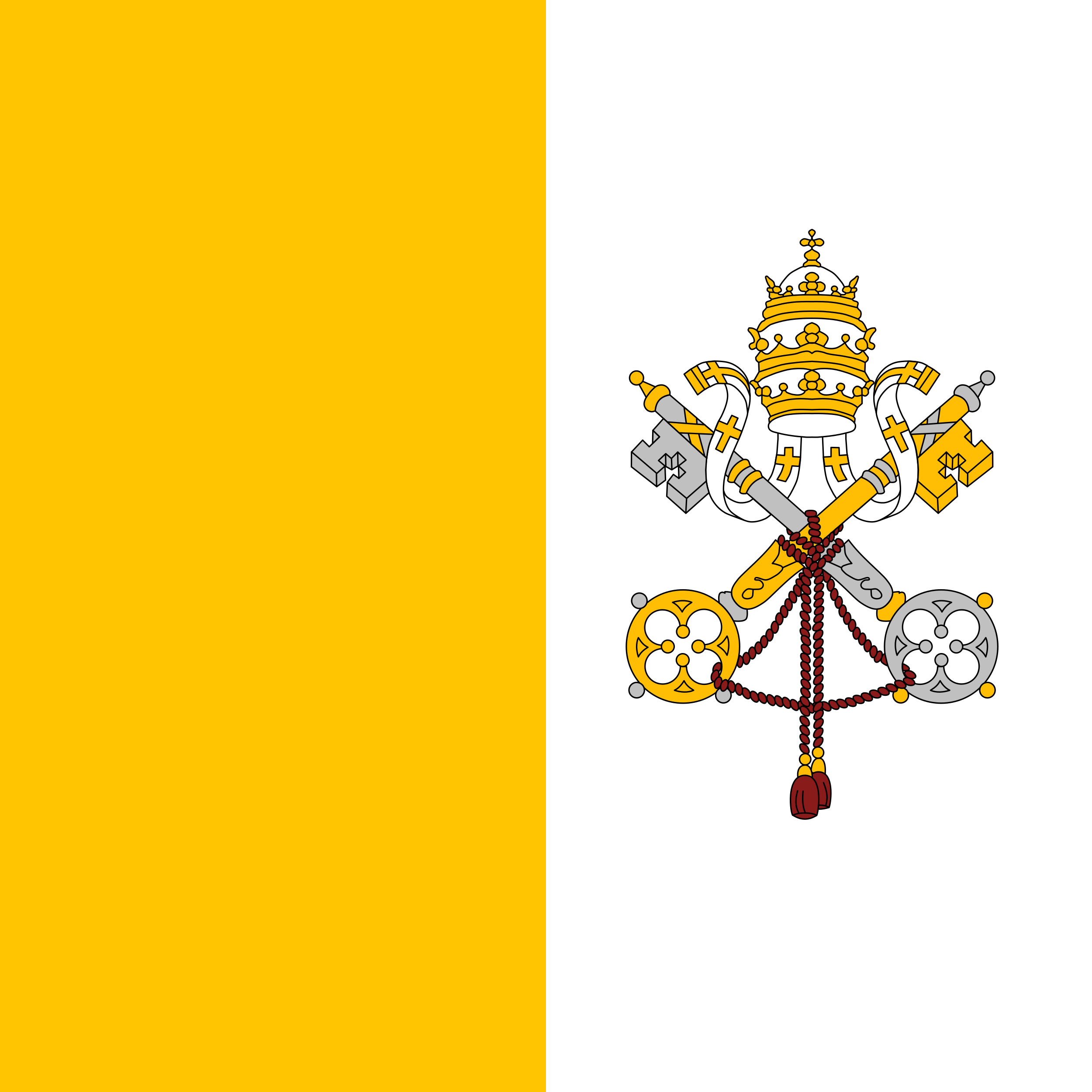
Adopted with the 1929 Lateran Treaty that created Vatican City, the square yellow-and-white bicolor bears the crossed keys of St. Peter and the papal tiara, derived from the flag of the Papal States.

For over a thousand years the popes ruled a sovereign state across central Italy. In 1808 its flag changed from yellow-and-red to the gold-and-white that still flies over the Vatican — the gold and silver of the keys of Saint Peter. The Papal States were swallowed by a unifying Italy in 1870, leaving the popes stateless until the 1929 Lateran Treaty created tiny Vatican City.
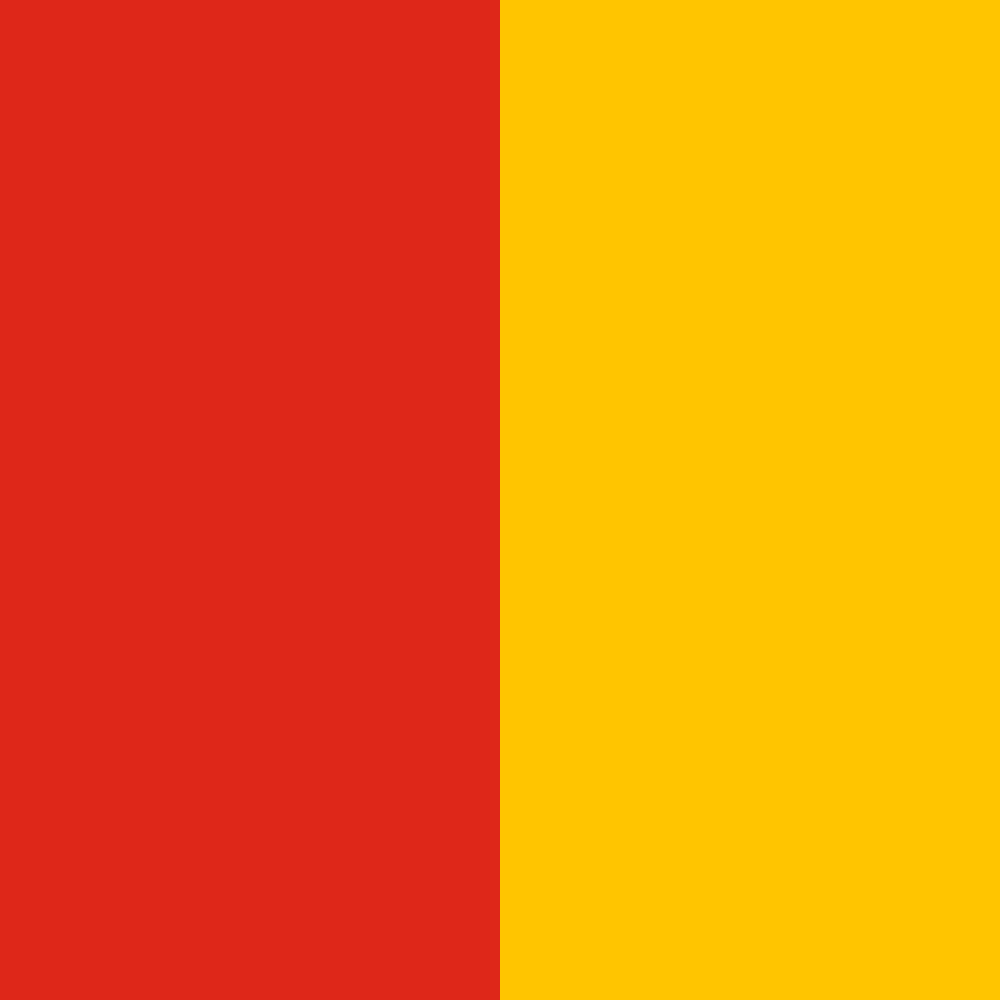
Before 1808 the Papal States flew yellow-and-red — the traditional colours of the senate and people of Rome, inherited from antiquity. Napoleon's occupation prompted the switch to the gold-and-white that became the modern papal colours.
Empires, kingdoms and republics that once covered part of Vatican City.
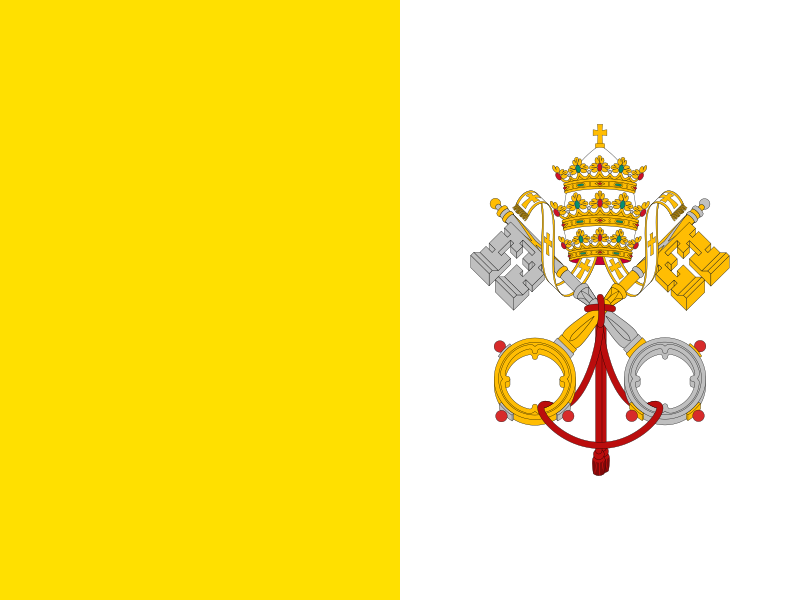
The yellow-and-white vertical bicolor with the crossed keys of St Peter beneath the papal tiara is the direct ancestor of today's Vatican City flag.
Vatican City shares a land border with one country: Italy.
Play Globalio and learn Vatican City's flag Italy