1889–1912
Qing Dynasty
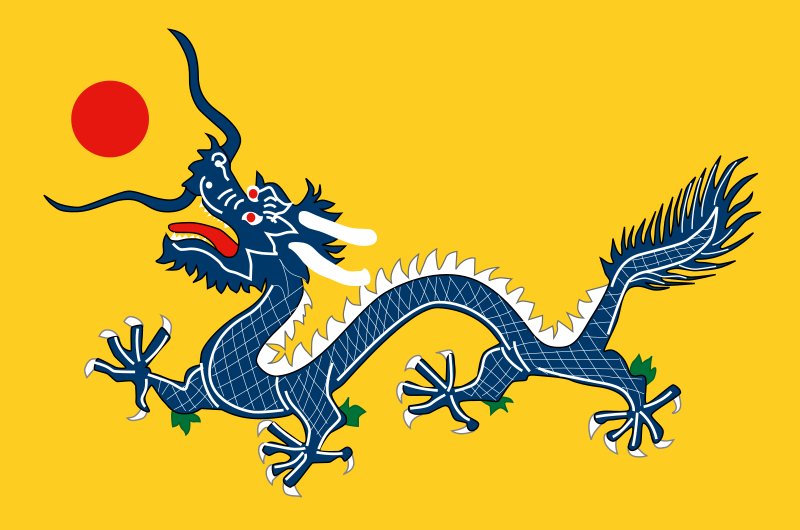
The 'Yellow Dragon Flag' shows the Azure Dragon chasing a flaming pearl. It began as a triangular naval ensign in 1862 and became China's first true national flag in 1889.
Today part of: China
132 kingdoms, empires, republics and short-lived states from Asia & Oceania that no longer exist, with the flags they flew and the story behind each one.
The 'Yellow Dragon Flag' shows the Azure Dragon chasing a flaming pearl. It began as a triangular naval ensign in 1862 and became China's first true national flag in 1889.
Today part of: China
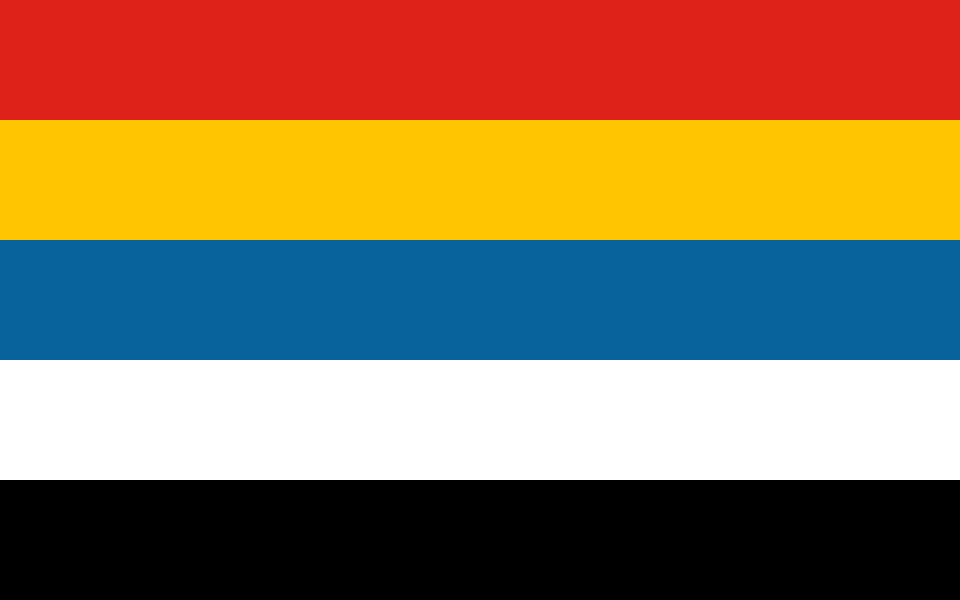
The five stripes stood for the Han, Manchu, Mongol, Hui, and Tibetan peoples under the 'Five Races Under One Union' ideal, until the KMT's Blue Sky flag replaced it in 1928.
Today part of: China
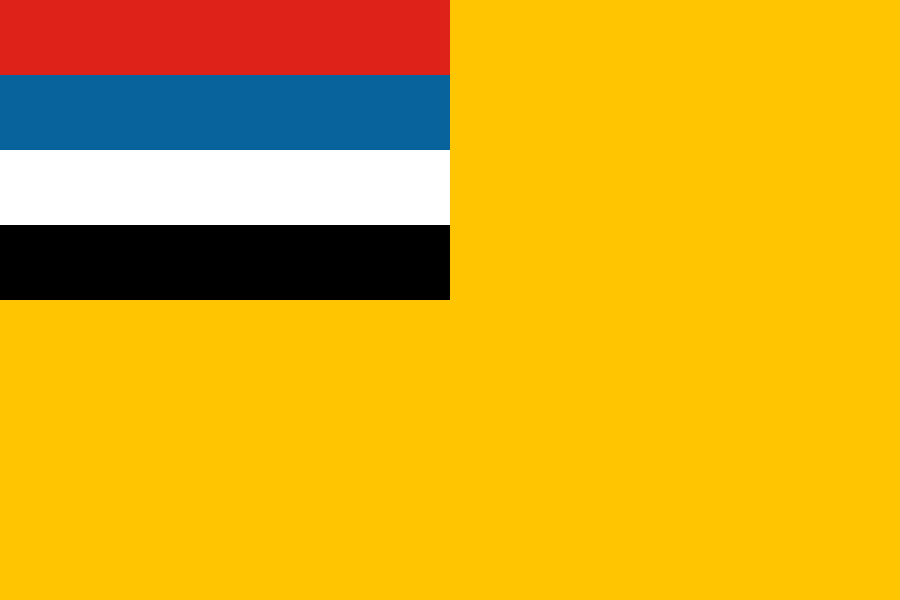
The Japanese puppet state's yellow flag with a four-color canton. Its head of state was Puyi — the same man who had been the last Qing emperor as a child.
Today part of: China

A white field bisected by a thick black stripe served as the standard of the Tokugawa bakufu, flown during the Sakoku period when Japan was largely closed to the world.
Today part of: Japan
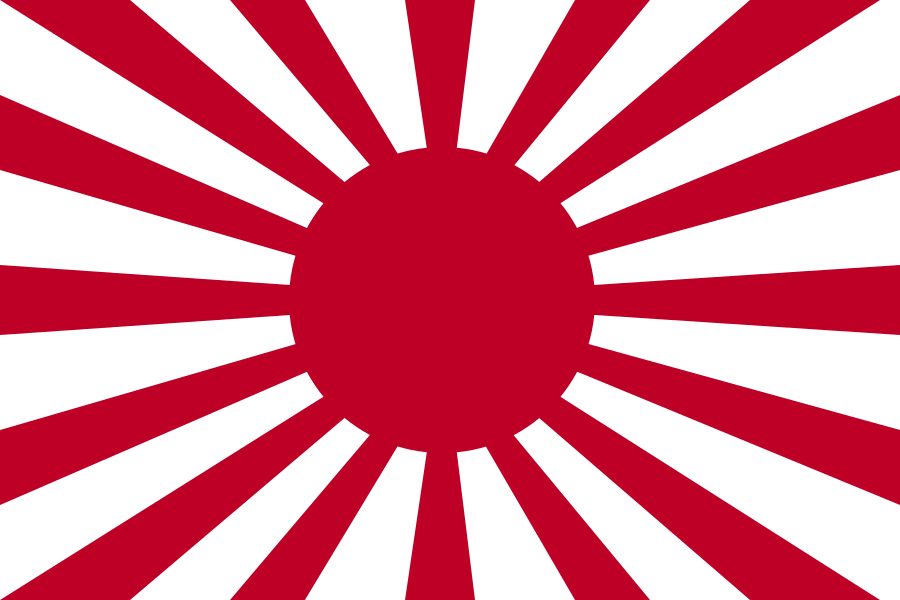
The 16-rayed Rising Sun was adopted as the Imperial Japanese Army's war flag in 1870; the rays-only design is still used today by the Maritime Self-Defense Force.
Today part of: Japan
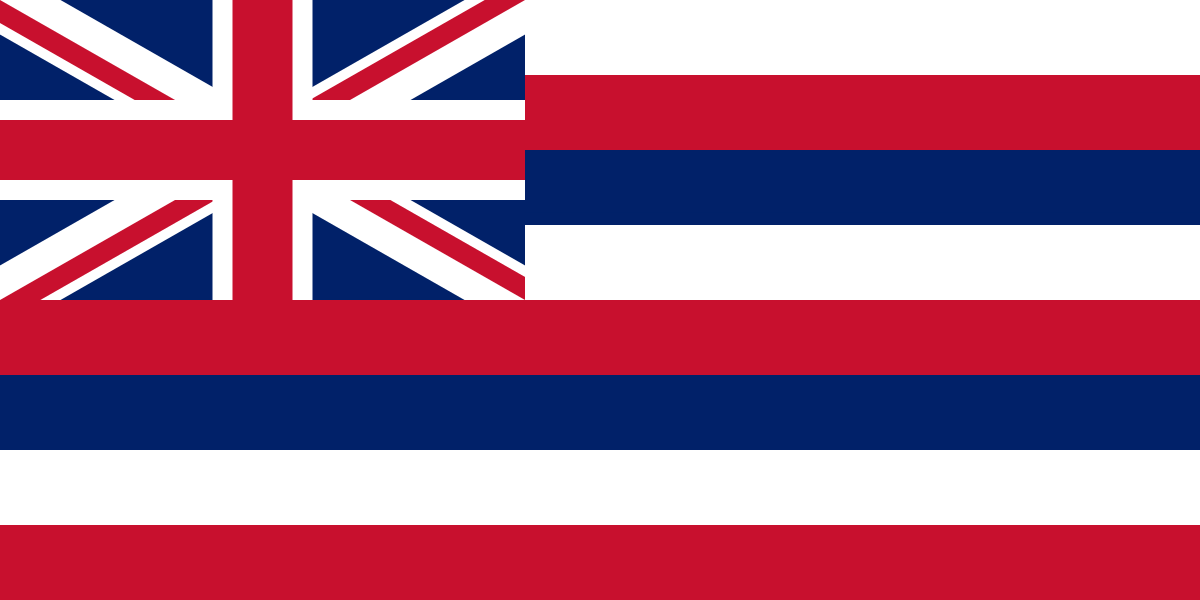
Identical to the modern US state flag: a Union Jack canton (a nod to British friendship under Kamehameha I) over eight stripes for the eight main islands.
Today part of: United States
Founded by rebel Tokugawa naval officer Enomoto Takeaki on Hokkaido, it is often called the first republic in Asia to hold an election. It lasted barely five months.
Today part of: Japan
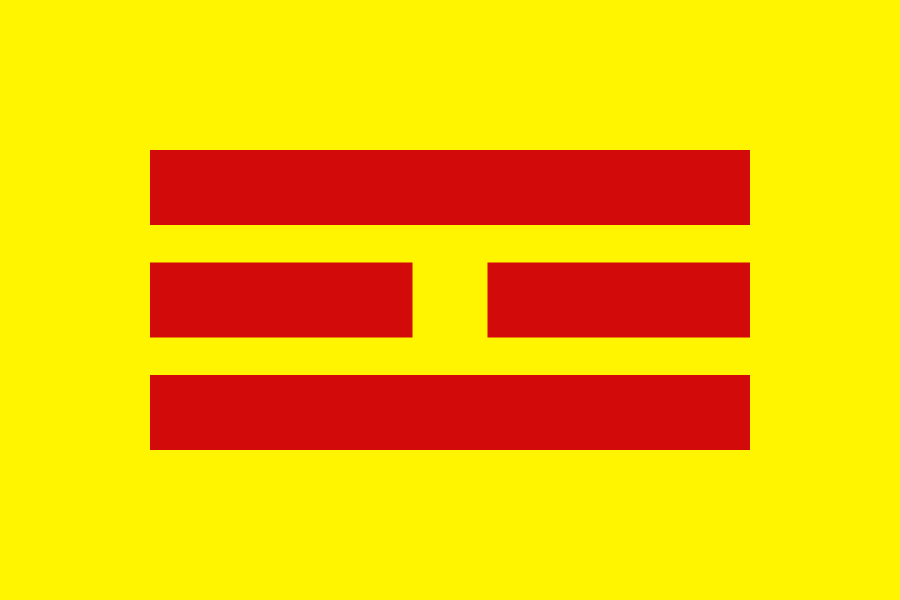
A yellow flag with a red 'li' trigram from the I Ching, symbolizing the south. It flew over the short-lived Japanese-sponsored Empire of Vietnam in 1945.
Today part of: Vietnam
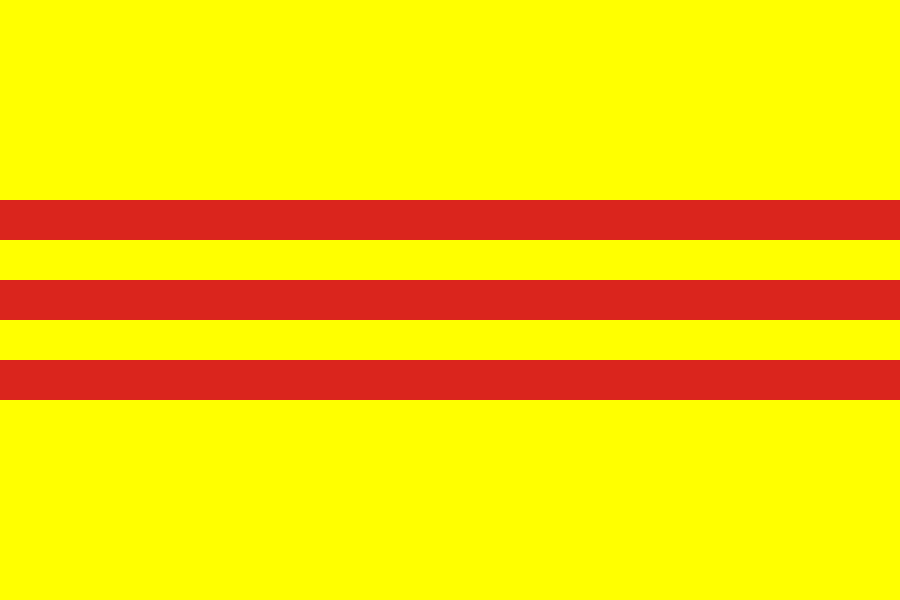
The 'Heritage Flag' — three red stripes on yellow for the three regions of Vietnam. It is still flown by Vietnamese diaspora communities worldwide.
Today part of: Vietnam
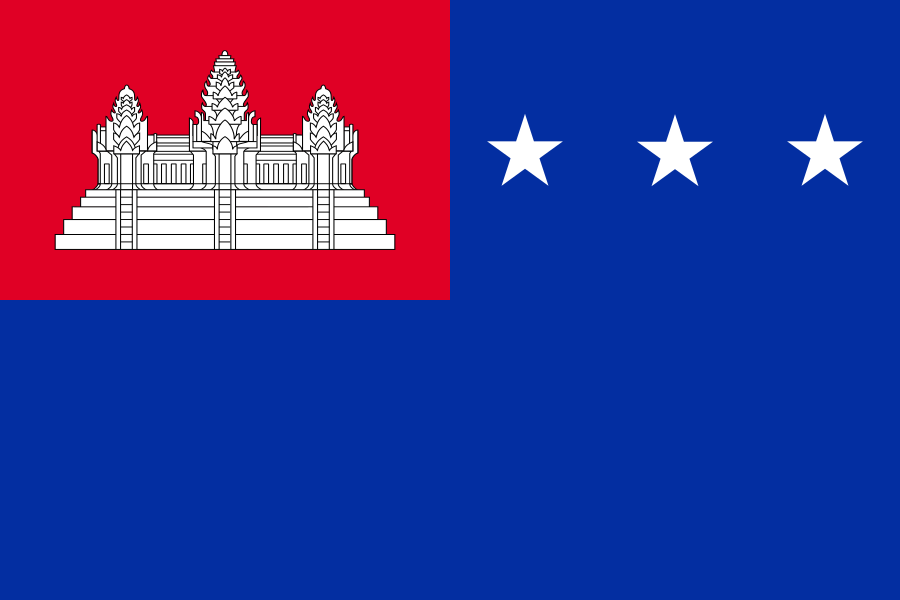
Lon Nol's republic replaced the royal flag; its three white stars stand for the nation, religion, and republic. Angkor Wat has appeared on every Cambodian flag since the 1800s.
Today part of: Cambodia
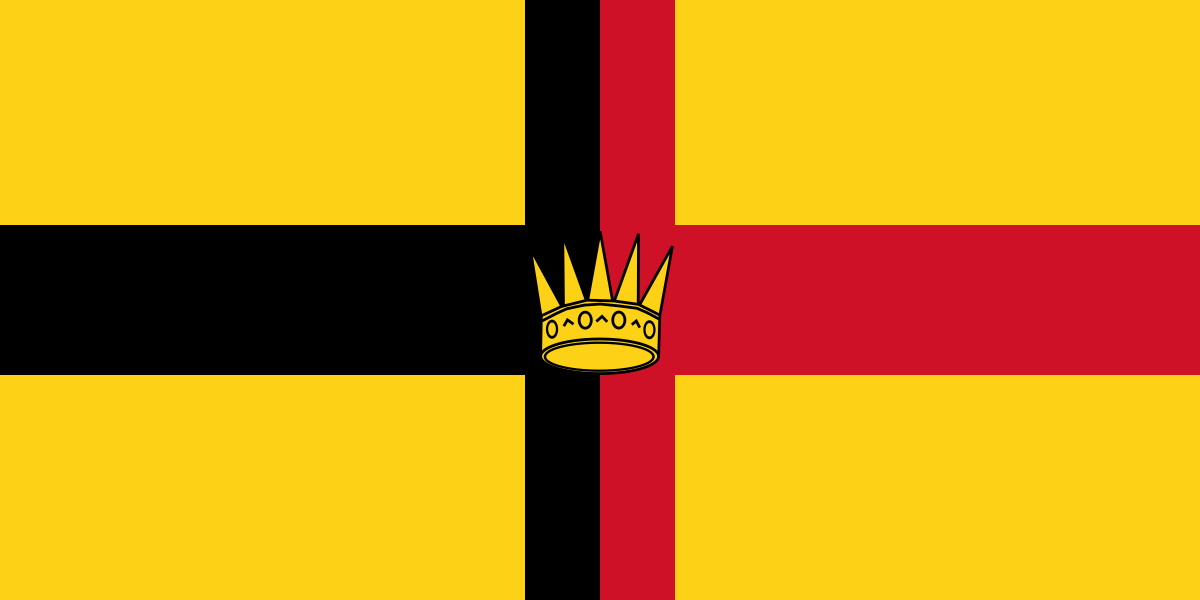
Sarawak was privately ruled by the Brooke family, English 'White Rajahs', for over a century. The split black-and-red cross is from the Brooke coat of arms.
Today part of: Malaysia
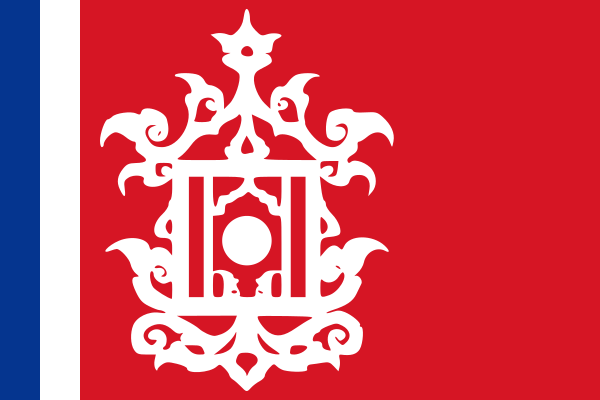
The Sulu Sultanate controlled the seas between the southern Philippines and Borneo; its 1878 lease of North Borneo is the root of the still-active Sabah dispute.
Today part of: Philippines
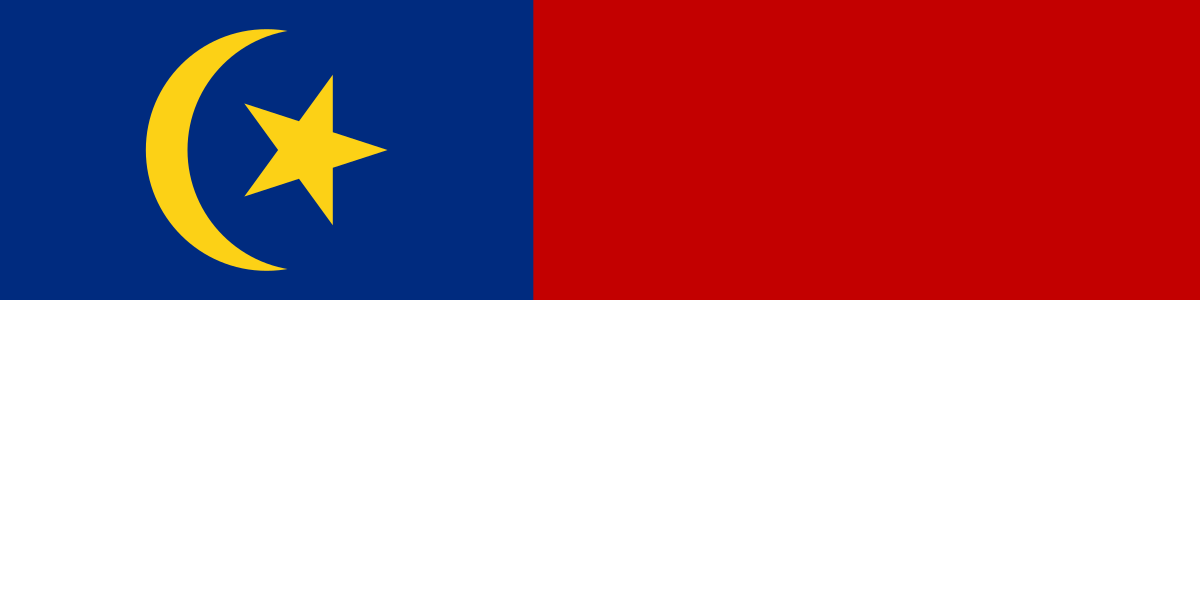
The 15th-century sultanate was a great Malay trading power; no authenticated period banner survives, so its red-and-white colors live on in the modern Malacca state flag.
Today part of: Malaysia
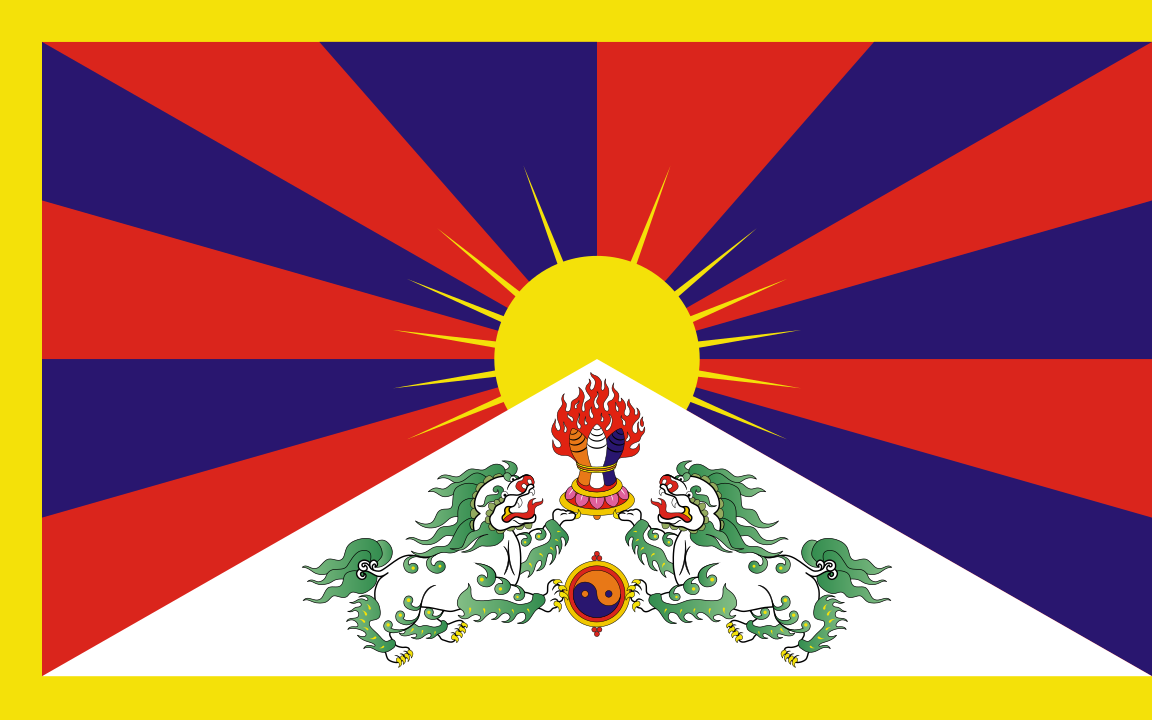
The 'Snow Lion Flag' shows two snow lions holding a jewel before a sun over a snow mountain. Designed under the 13th Dalai Lama, it is banned in China today.
Today part of: China
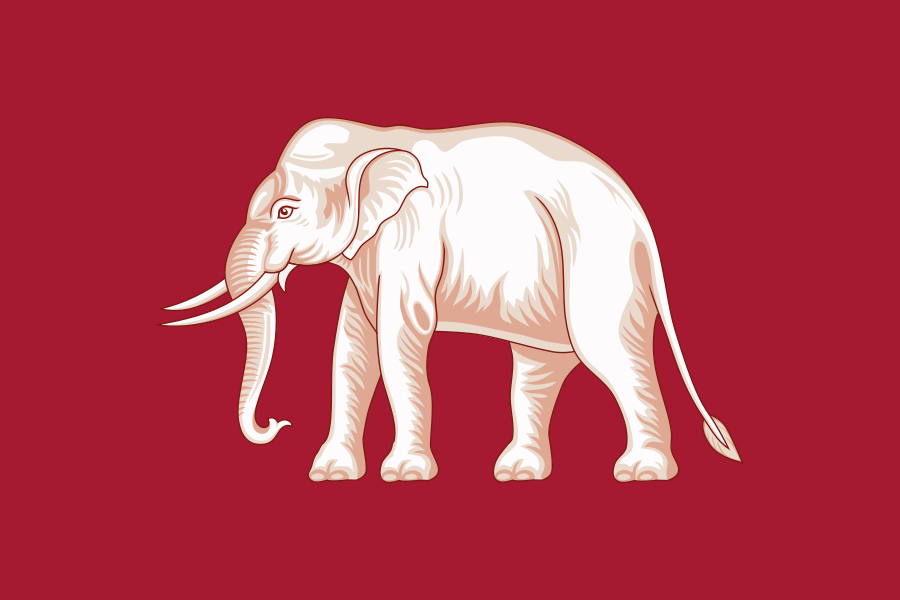
King Mongkut (Rama IV) placed a white royal elephant — a sacred symbol of royal power — on a plain red field after foreign traders couldn't distinguish Siam's earlier banner.
Today part of: Thailand
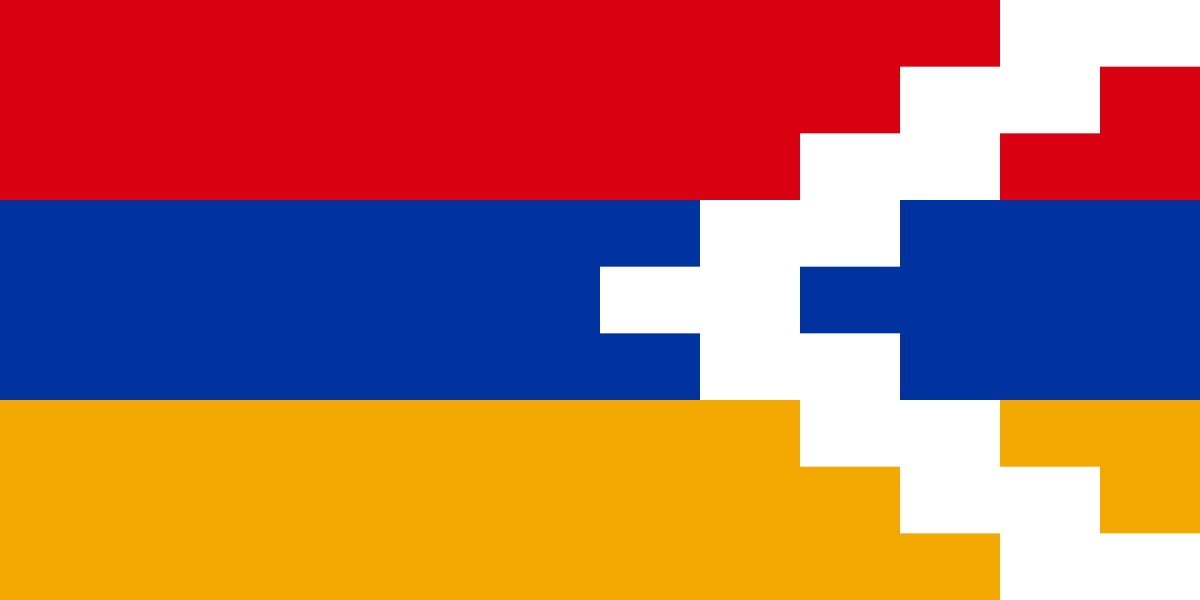
The Armenian red-blue-orange tricolor interrupted by a white stepped chevron, flown by the breakaway Nagorno-Karabakh republic until its dissolution in 2023.
Today part of: Armenia

The Taegukgi — white field with a blue-red taegeuk and four black trigrams — was adopted in 1883 and flew over the Joseon kingdom and the Korean Empire until Japan annexed Korea in 1910.
Today part of: South Korea
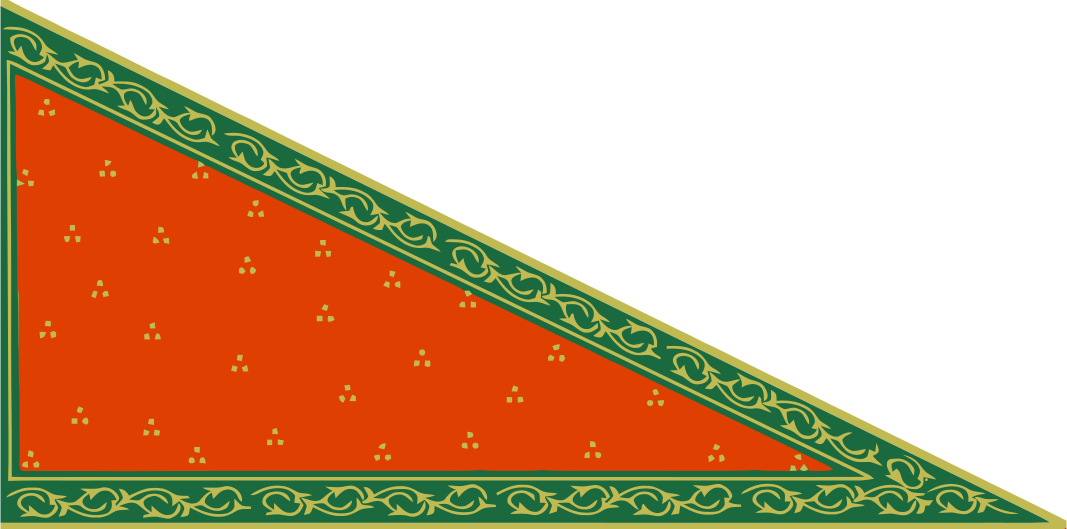
The triangular saffron Nishan Sahib of Ranjit Singh's Punjab empire, which united the Sikh misls and held the Khyber Pass against Afghan invasion.
Today part of: India
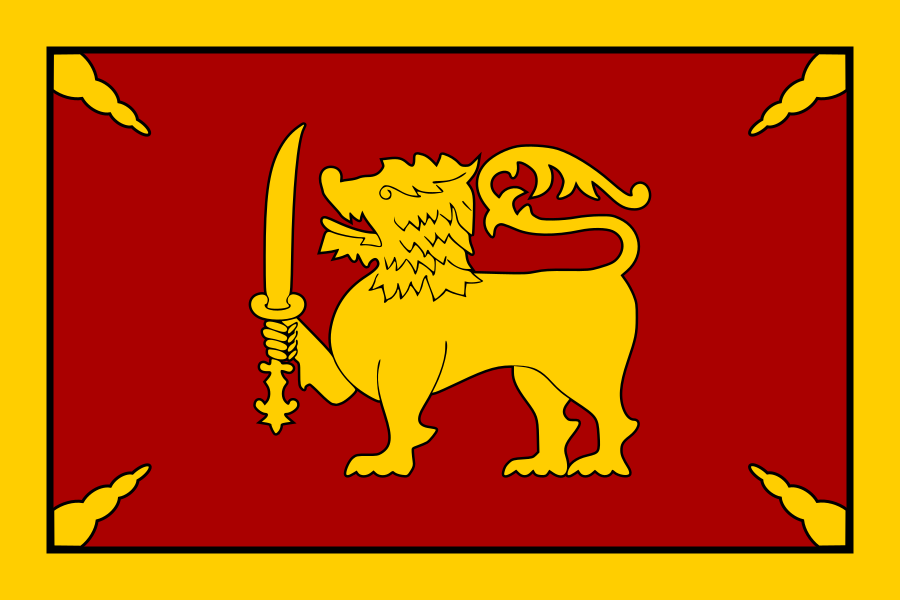
A maroon field bordered in gold with a golden lion holding a kastane sword. The royal standard of Sri Lanka's last independent kingdom became the basis of the modern flag.
Today part of: Sri Lanka
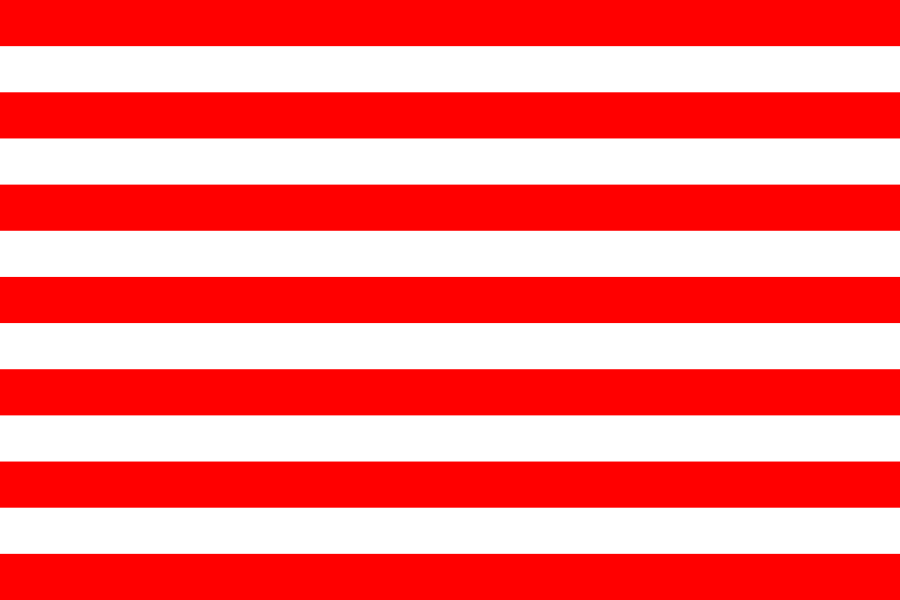
Alternating red-and-white stripes flown by the great Javanese maritime empire — the ancestral colors that became modern Indonesia's flag.
Today part of: Indonesia
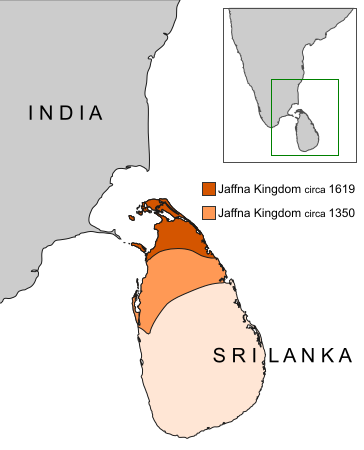
The saffron flag of the Aryacakravarti kings of northern Sri Lanka, bearing the sacred bull Nandi, a crescent and sun, conch, and parasol.
Today part of: Sri Lanka
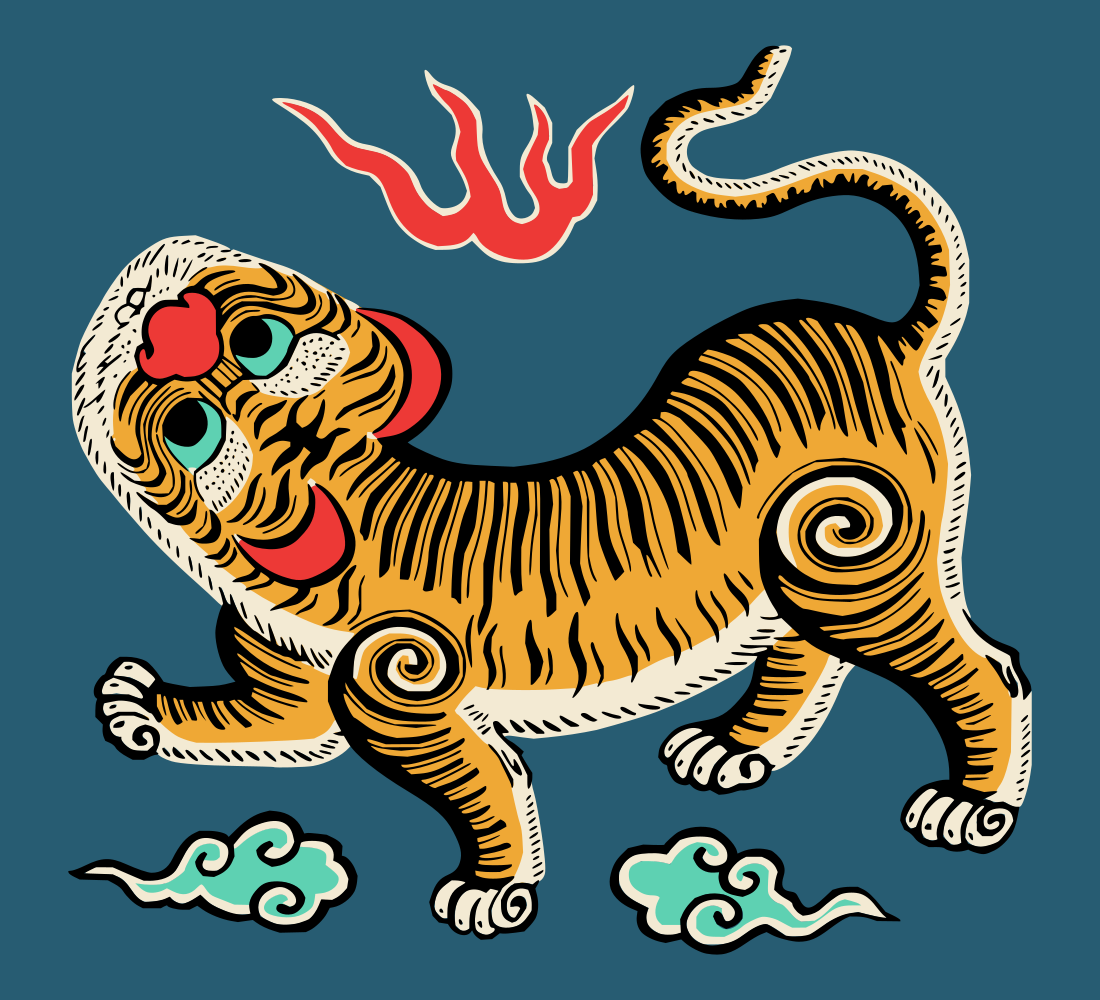
The 'Blue Ground Yellow Tiger Flag' of a republic that lasted from May to October 1895, declared on Taiwan to resist the Japanese takeover after the First Sino-Japanese War.
Today part of: Taiwan

A white field with the Shō dynasty's three-comma mitsudomoe swirl. The independent Okinawan trading kingdom was annexed by Japan in 1879.
Today part of: Japan
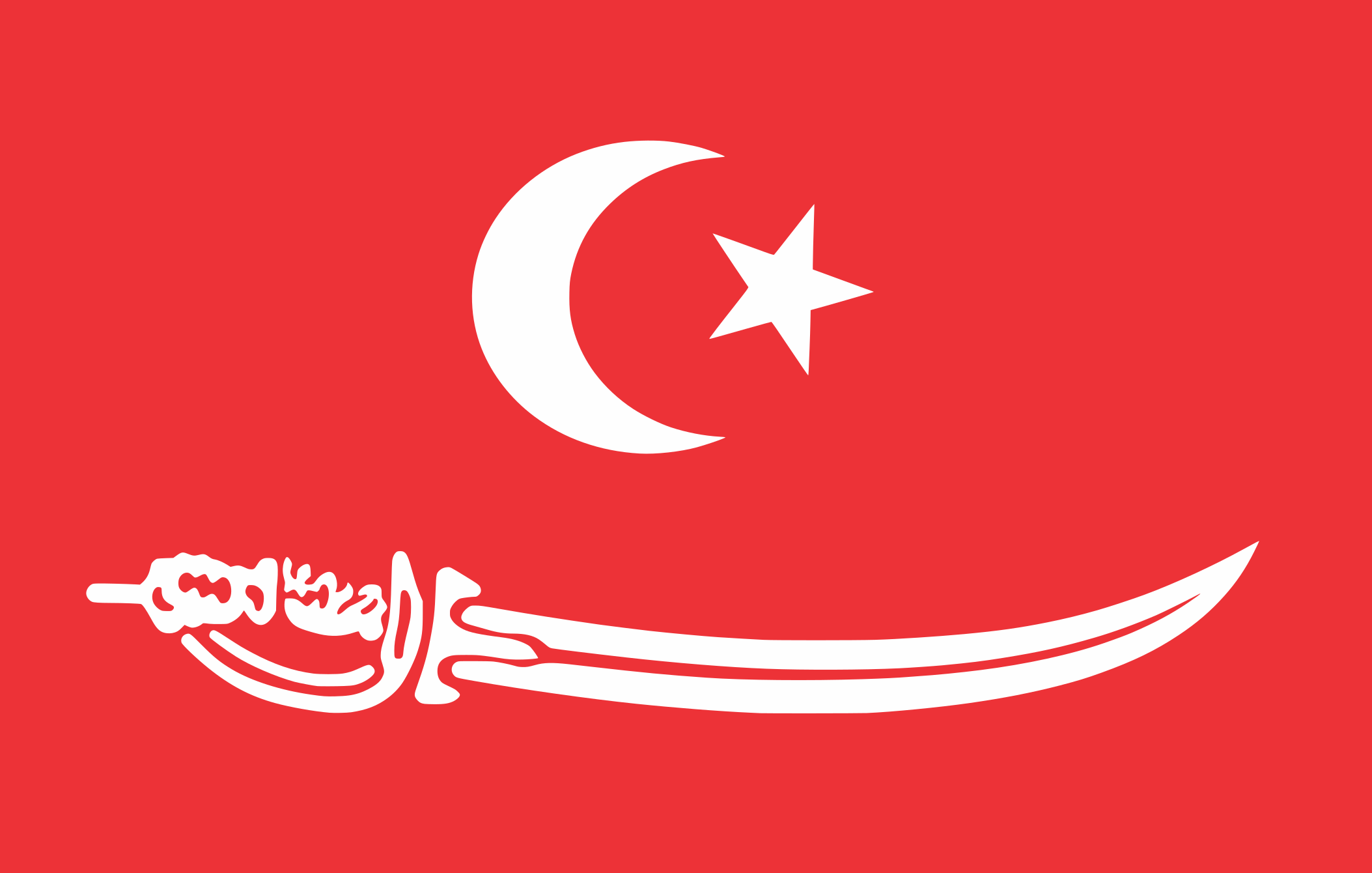
The Alam Peudeueng or 'Sword Standard' — a dark-red field with a white crescent, star, and sword, the crescent reflecting the sultanate's Ottoman alliance against the Portuguese.
Today part of: Indonesia
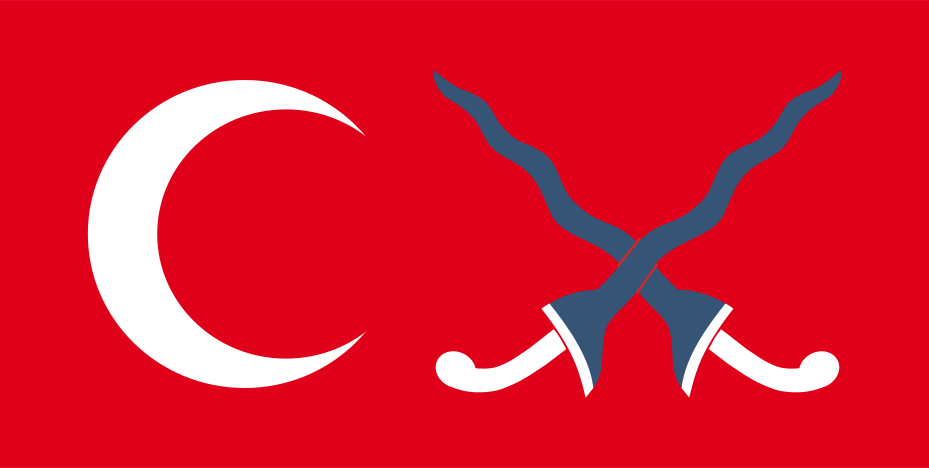
The greatest Islamic kingdom of central Java, which fought the Dutch East India Company for decades before being split into the Yogyakarta and Surakarta courts.
Today part of: Indonesia
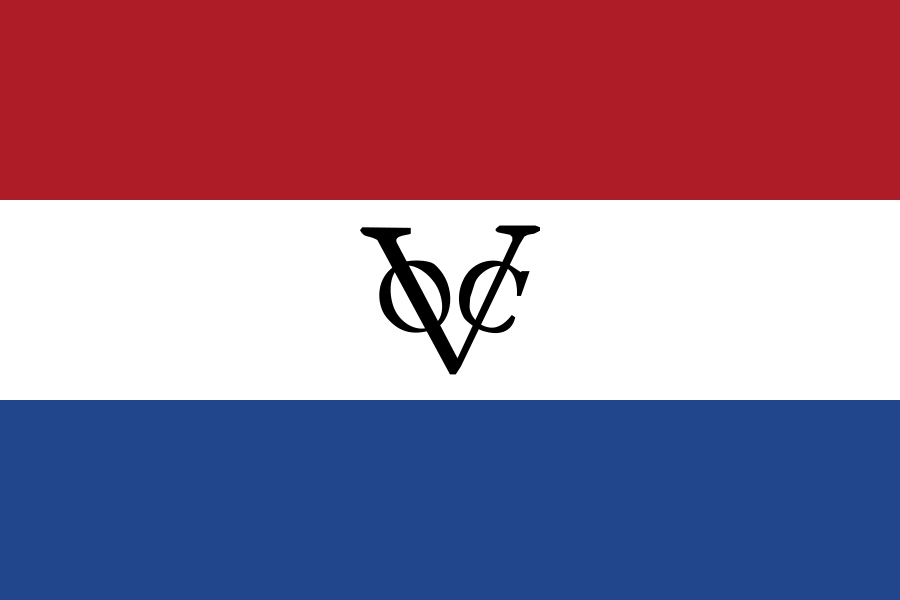
The red-white-blue tricolor with the 'VOC' monogram — the flag of the world's first multinational corporation, which ruled much of the Indies before the Dutch state took over.
Today part of: Indonesia
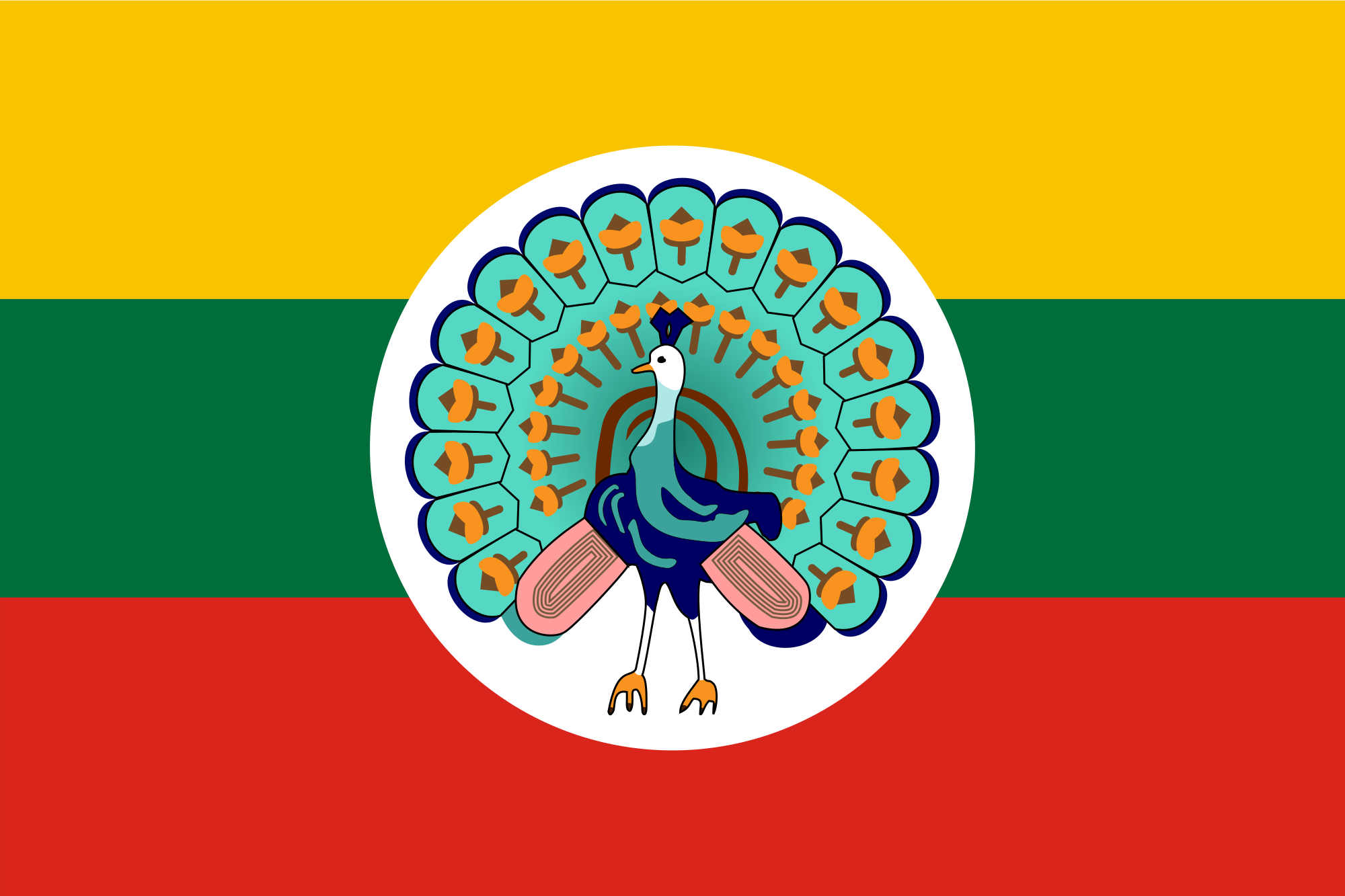
A yellow-green-red triband with a central peacock disk, flag of Ba Maw's Japanese-sponsored wartime state.
Today part of: Myanmar
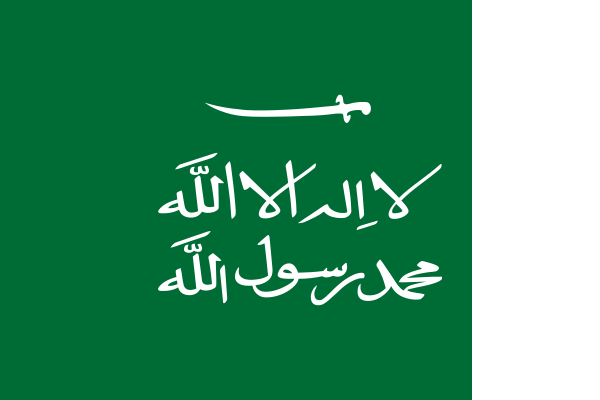
A green field with a white crescent, flown by the Al Saud state in central Arabia just before it conquered the Hejaz and became the Kingdom of Saudi Arabia.
Today part of: Saudi Arabia
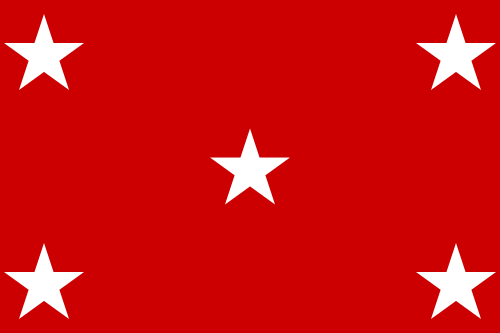
Red-and-white stripes with a canton of white stars, flown by the 19th-century Polynesian island kingdom before French annexation.
Today part of: France
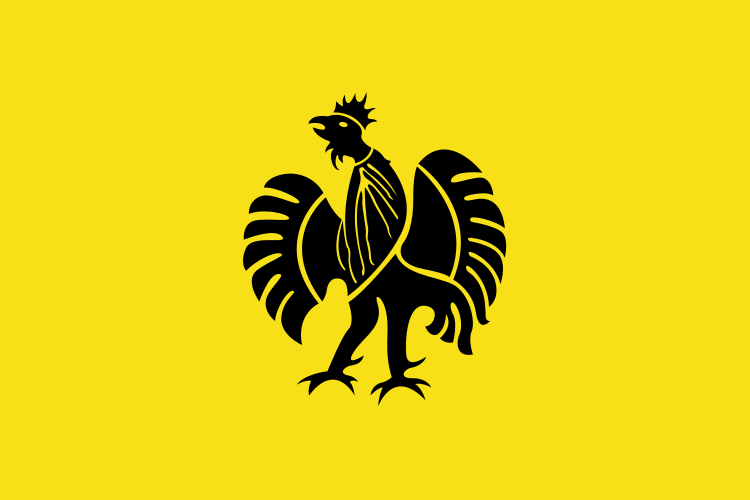
The dominant Makassarese power of South Sulawesi flew a deep-red field with a white canton and a kris dagger, until it fell to the Dutch after the Makassar War.
Today part of: Indonesia
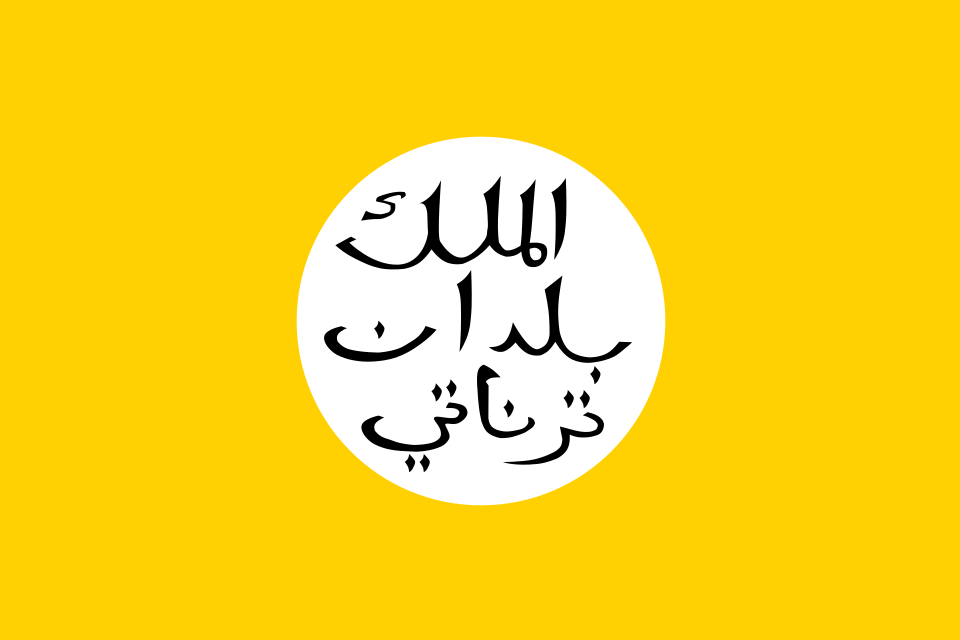
A yellow flag with a black ring reading 'the realm of Ternate'. This Moluccan clove kingdom was one of the original Spice Islands powers fought over by Europe.
Today part of: Indonesia
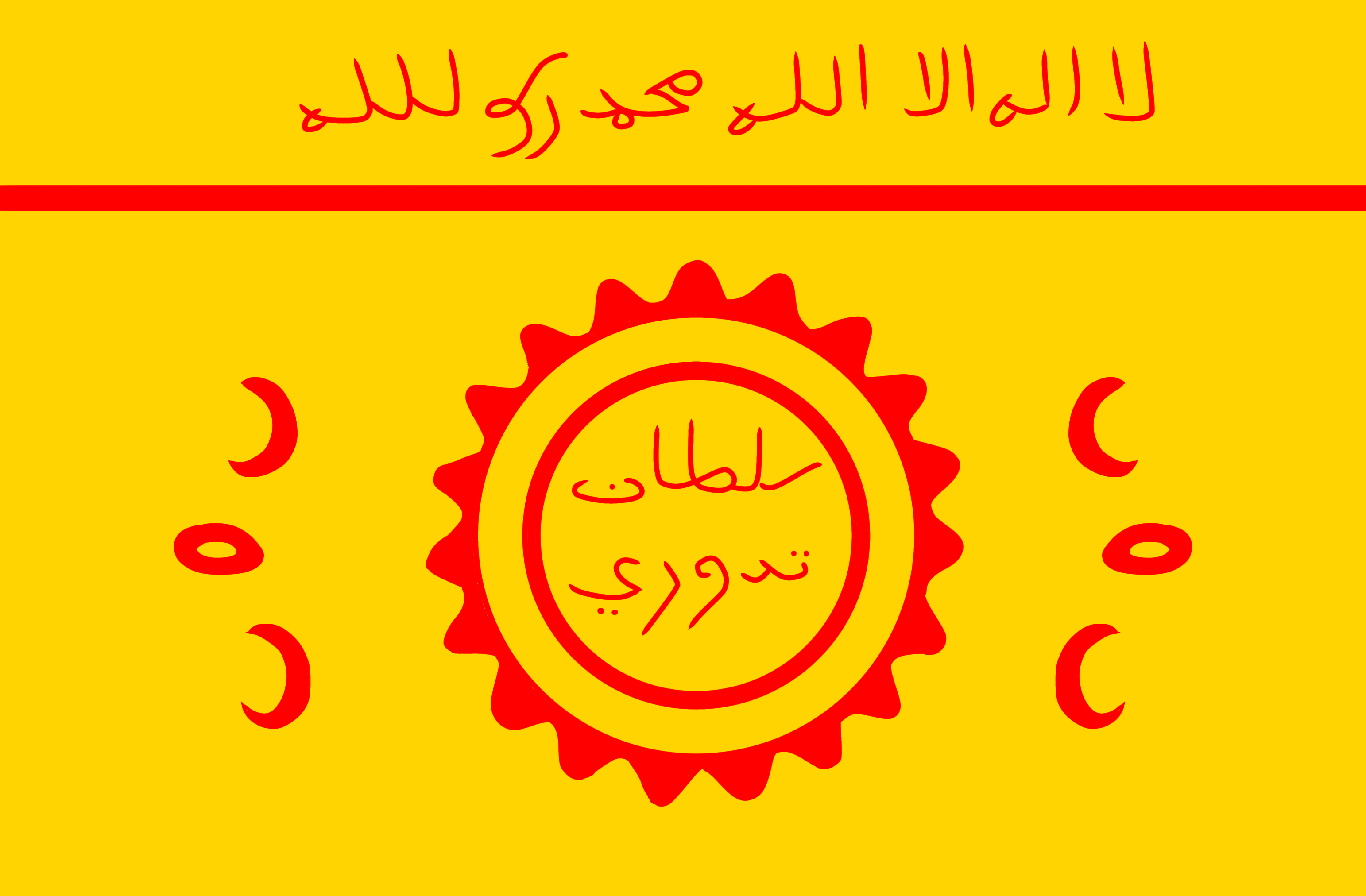
Ternate's great spice-trade rival in Maluku, whose flag carried Arabic inscriptions. At its height Tidore claimed influence as far as western New Guinea.
Today part of: Indonesia
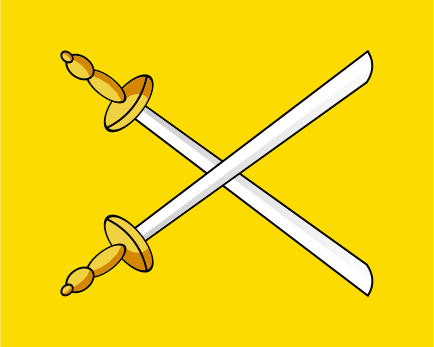
A white field with two crossed golden swords, flown by the wealthy pepper-trading Islamic sultanate of western Java until the Dutch abolished it.
Today part of: Indonesia
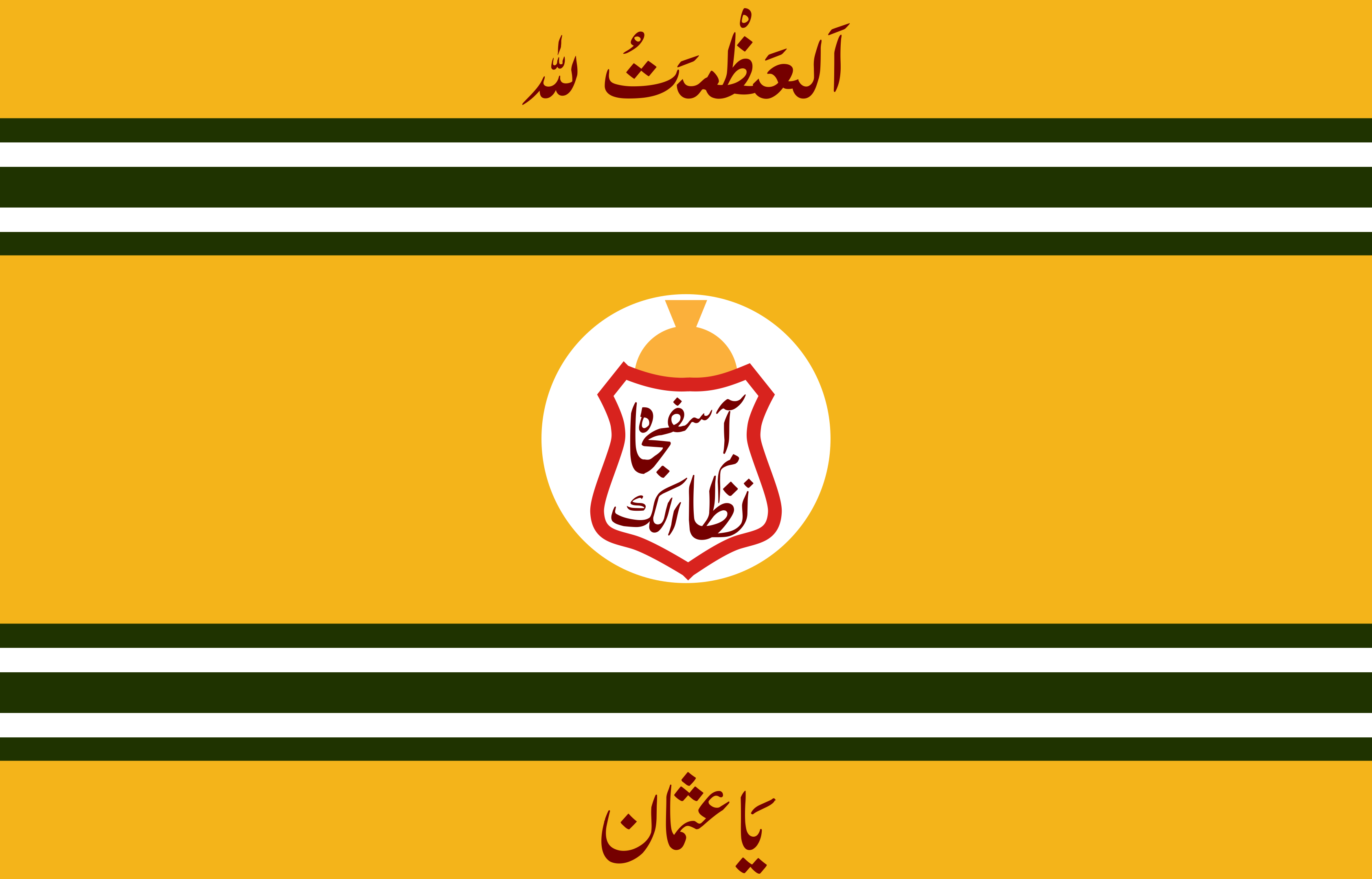
The yellow 'Asafia' flag of the fabulously wealthy Nizams, the largest princely state of British India, annexed by India in 1948.
Today part of: India

A red field with a mountain range and a hand (panja) symbol, flown by the Dogra maharajas whose 1947 accession sparked the still-unresolved Kashmir dispute.
Today part of: India
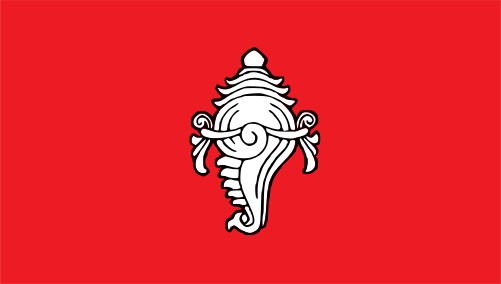
A red field with a white conch shell, the sankha of Vishnu and the dynastic emblem of the south Indian kingdom famed for its temples and backwaters.
Today part of: India

The saffron swallow-tailed 'Bhagwa Dhwaj' of Shivaji's empire, which at its peak ruled most of the Indian subcontinent before the British.
Today part of: India
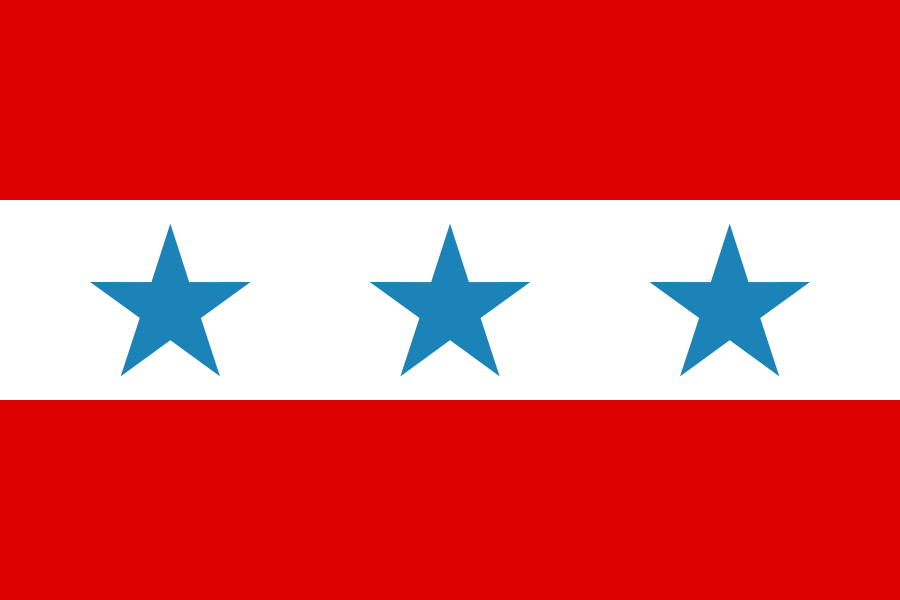
Red-white-red with three blue stars, flown by the Cook Islands kingdom before it became a British protectorate, then part of New Zealand.
Today part of: New Zealand

A red-and-white striped flag with a small French tricolor canton, from the Leeward Islands kingdom that resisted French annexation for years.
Today part of: France

A white field with a red cross and four blue stars, the historic flag of a kingdom in the Austral Islands of the South Pacific.
Today part of: France
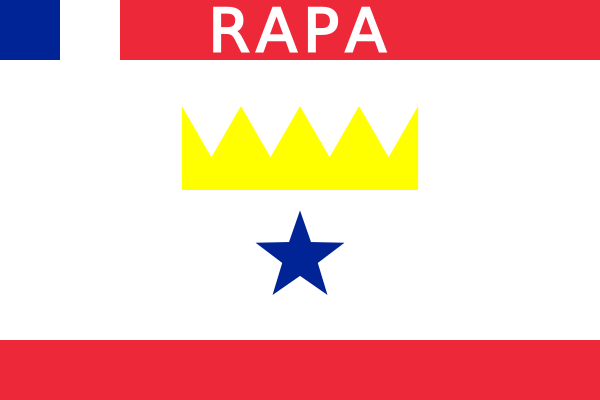
A remote Polynesian island kingdom whose flag carried a blue star beneath a crown with a French canton, before France absorbed it.
Today part of: France
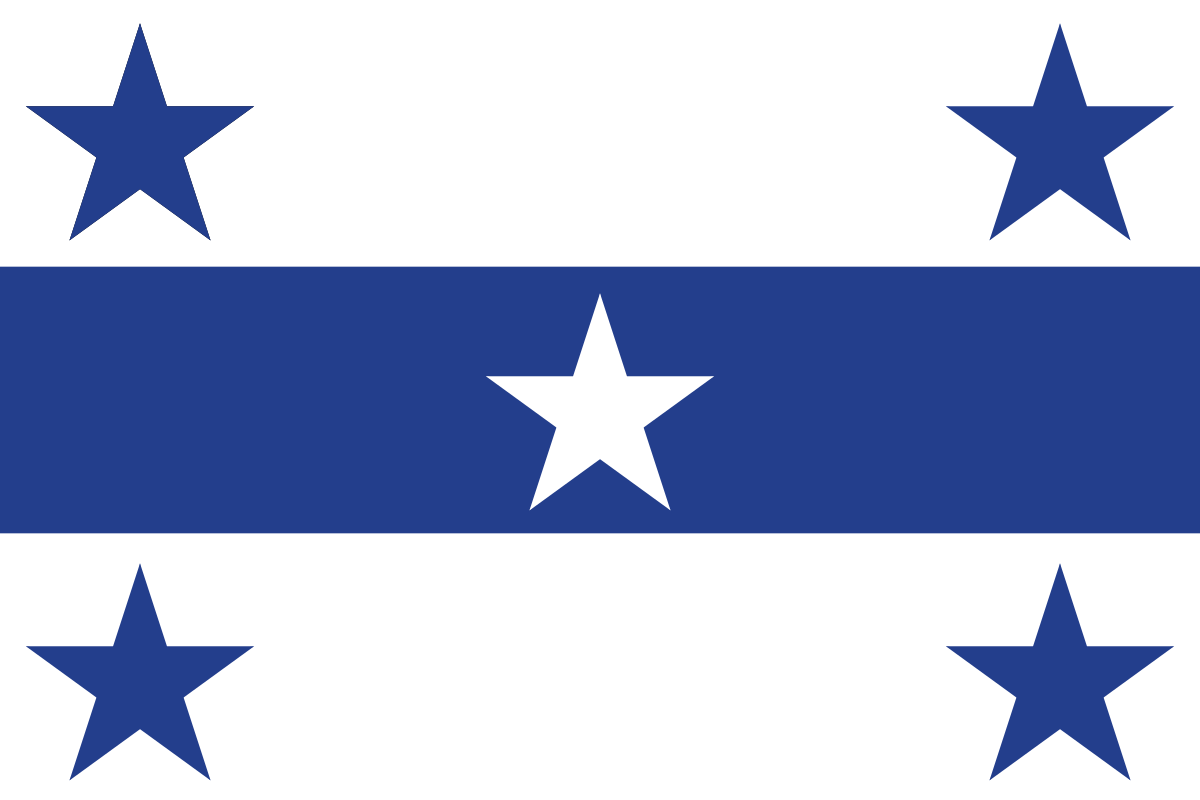
The Gambier Islands kingdom flew a banded flag with corner stars, attributed to the French explorer Dumont d'Urville, before becoming a French protectorate.
Today part of: France
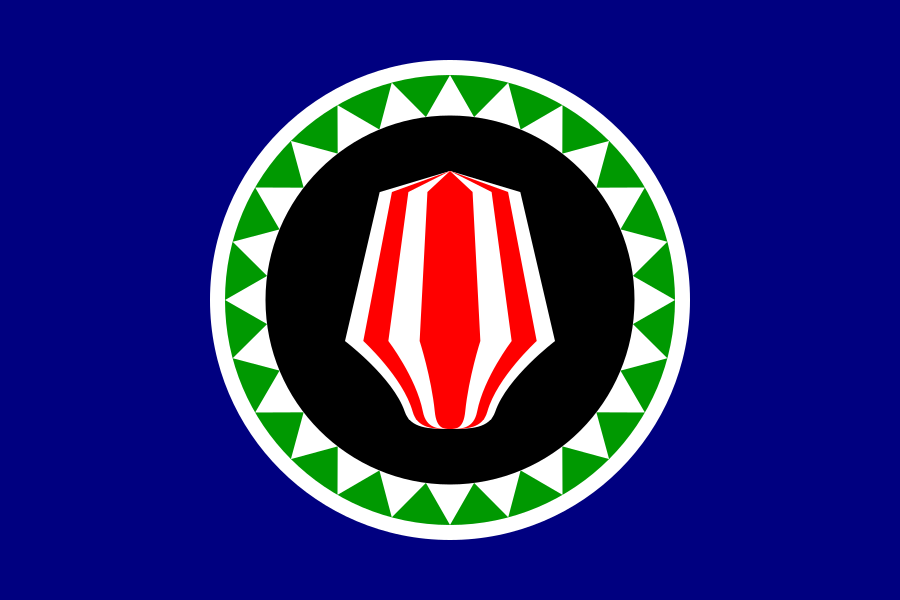
Bougainville's secessionists raised this blue flag with an 'upe' headdress and kapkap disc in 1975, days before Papua New Guinea's independence — the start of a long struggle.
Today part of: Papua New Guinea
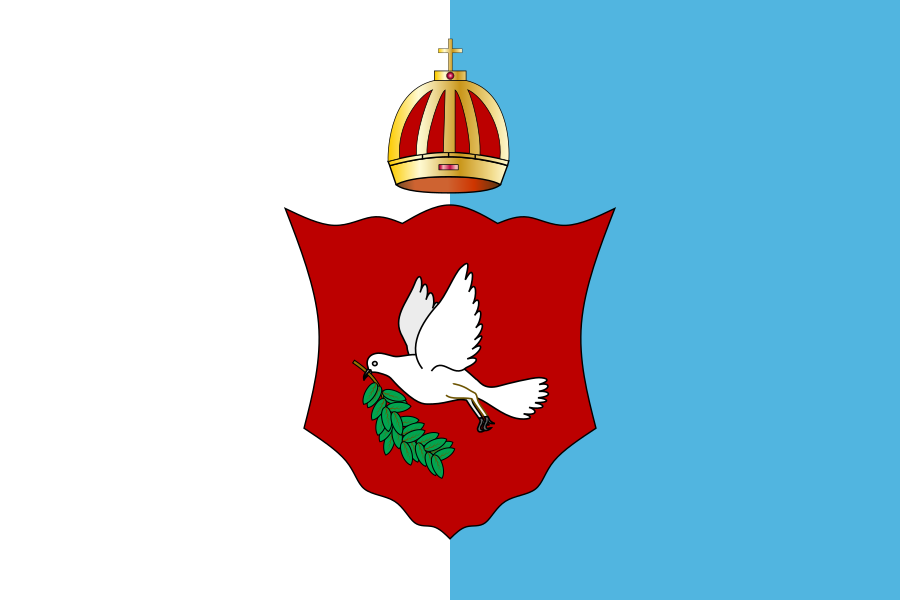
King Cakobau's united Kingdom of Fiji flew a blue-and-white flag with a crowned shield, until he ceded the islands to Britain in 1874.
Today part of: Fiji
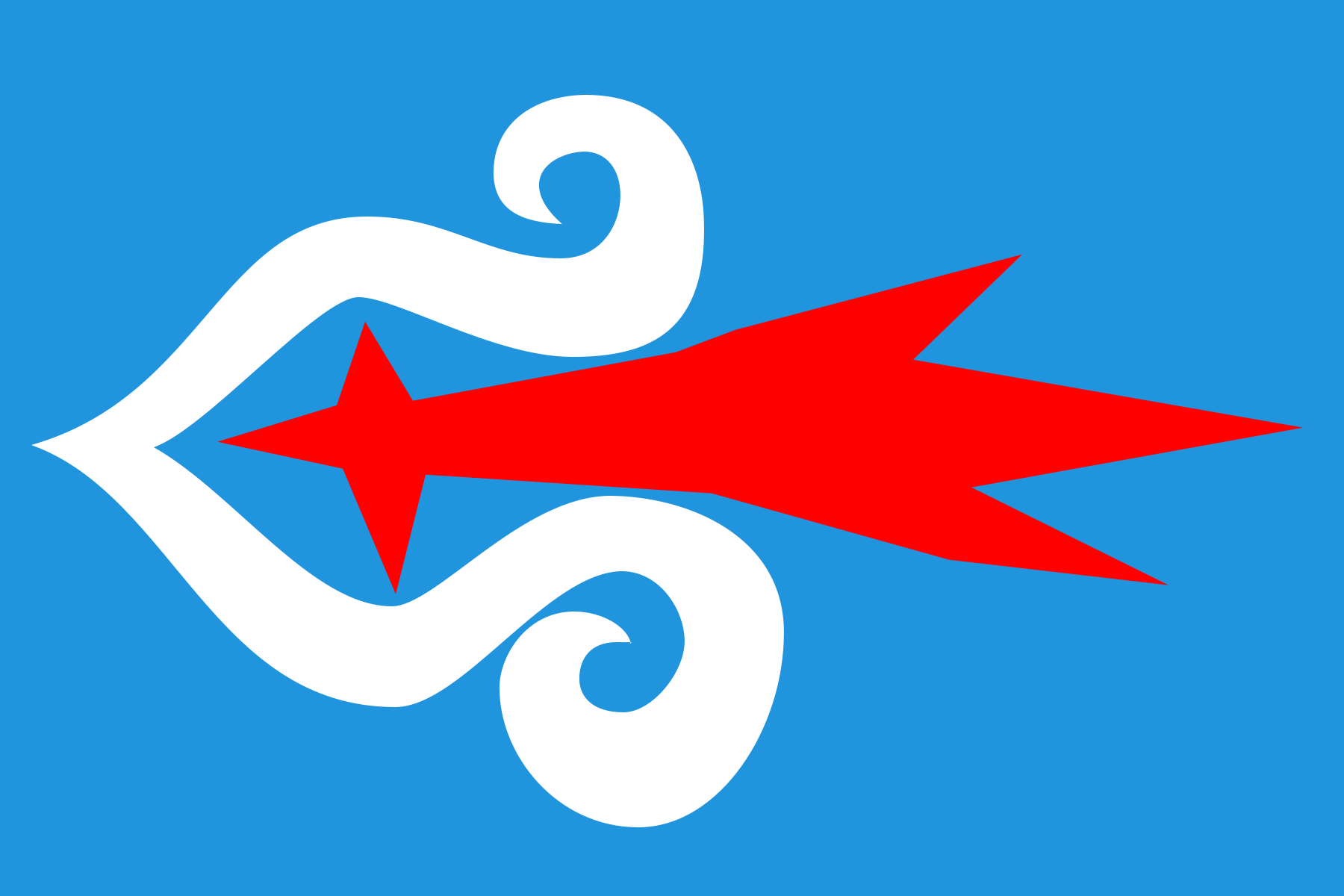
The flag of the indigenous Ainu of Hokkaido, designed in 1973: a blue field for sky and sea, a white wave for snow, and a red arrow for the aconite hunting poison.
Today part of: Japan

A powerful Muslim sultanate of Mindanao that resisted Spanish conquest for centuries, flying a plain yellow banner — the royal color.
Today part of: Philippines
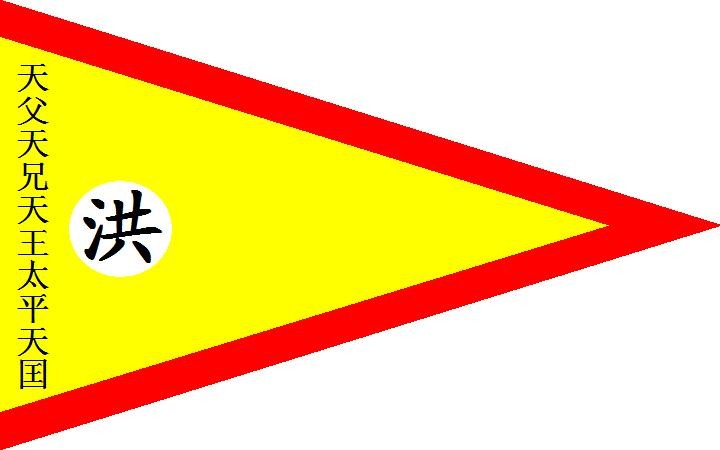
The vast quasi-Christian rebel kingdom whose civil war against the Qing killed an estimated 20 million people. It flew many ornate banners rather than one fixed flag.
Today part of: China
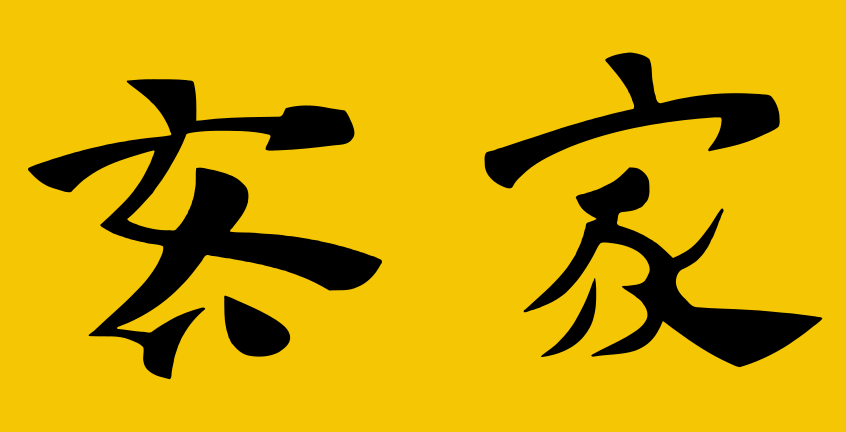
A Hakka Chinese mining state on Borneo, sometimes called one of Asia's first republics, with elected leaders — until the Dutch absorbed it.
Today part of: Indonesia
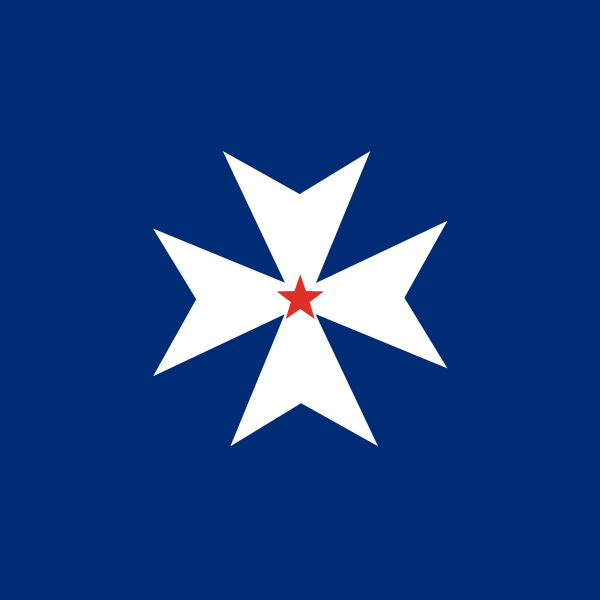
A blue flag with a white cross and red star, decreed by the French adventurer Charles-Marie David de Mayréna, who crowned himself King Marie I in the Vietnamese highlands.
Today part of: Vietnam
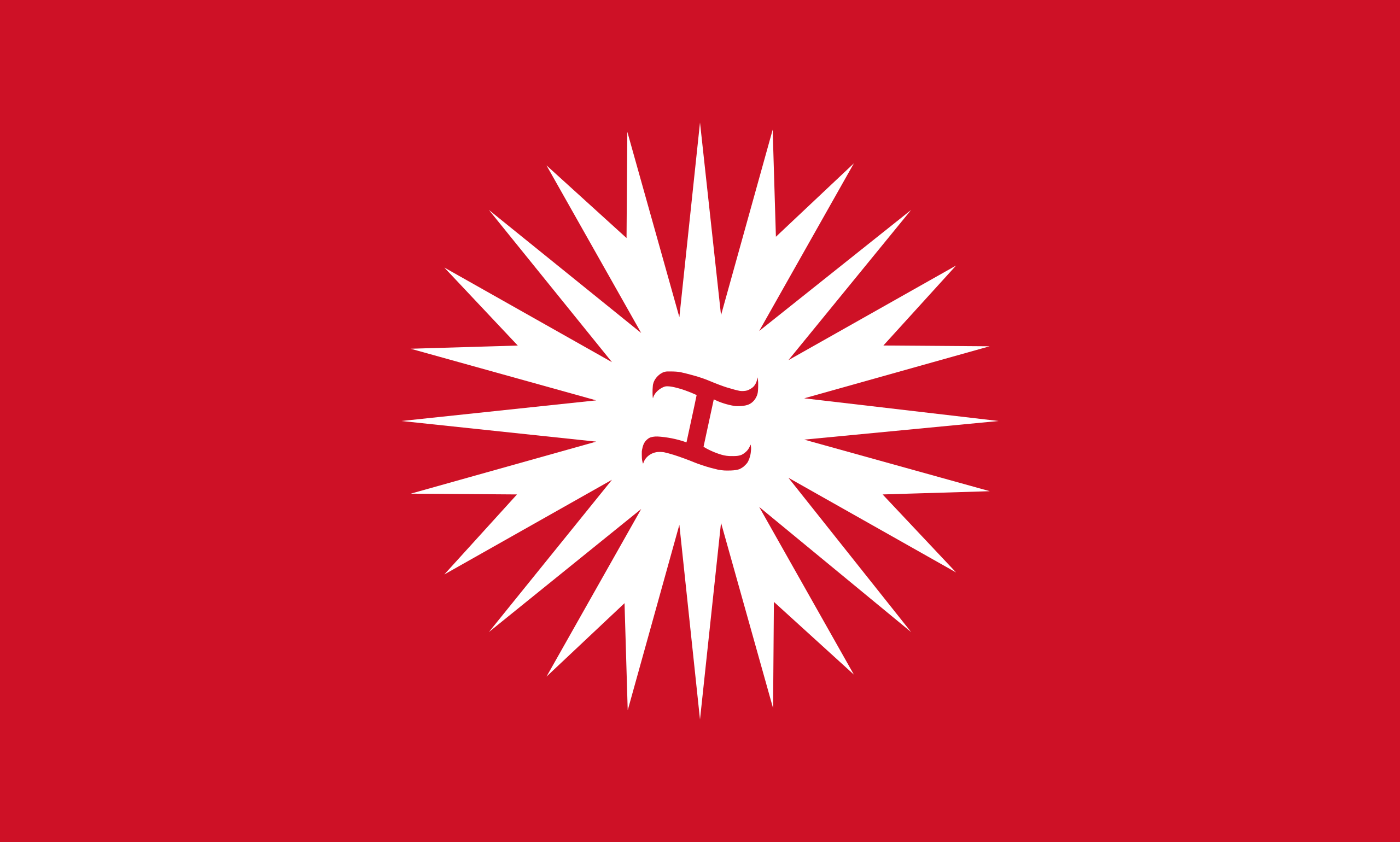
Emilio Aguinaldo's short-lived 1897 republic in a mountain stronghold, flying a blue-over-red flag with a white triangle and sun — a step toward Philippine independence.
Today part of: Philippines

The red banner with three white K's of the secret revolutionary society that launched the 1896 Philippine Revolution against Spain.
Today part of: Philippines
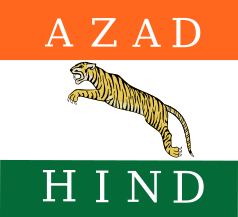
Subhas Chandra Bose's Japanese-allied Provisional Government of Free India flew a saffron-white-green tricolor with a springing tiger.
Today part of: India
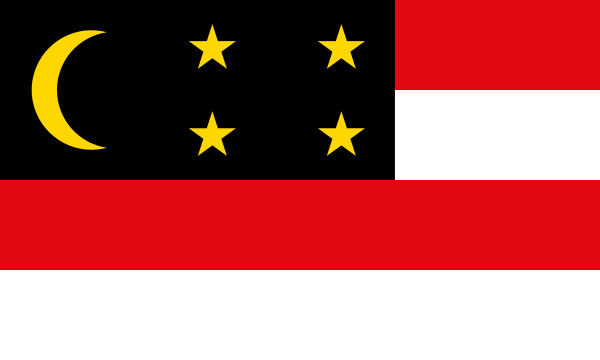
The banner of the movement seeking independence for the historically Malay-Muslim Patani region of southern Thailand: red-white stripes with a crescent and star.
Today part of: Thailand
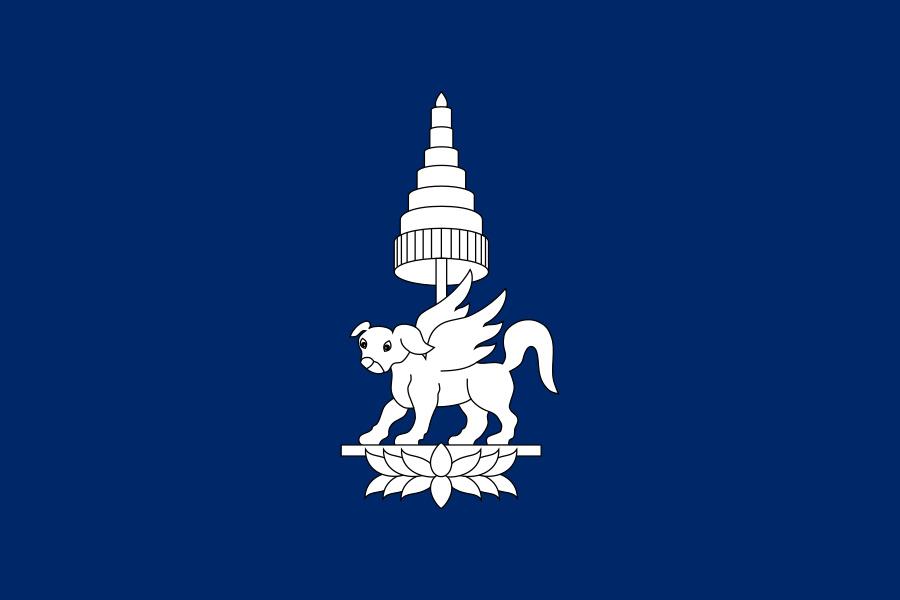
A blue flag with a white multi-tiered parasol, flown by one of the three Lao kingdoms before they were merged into modern Laos.
Today part of: Laos
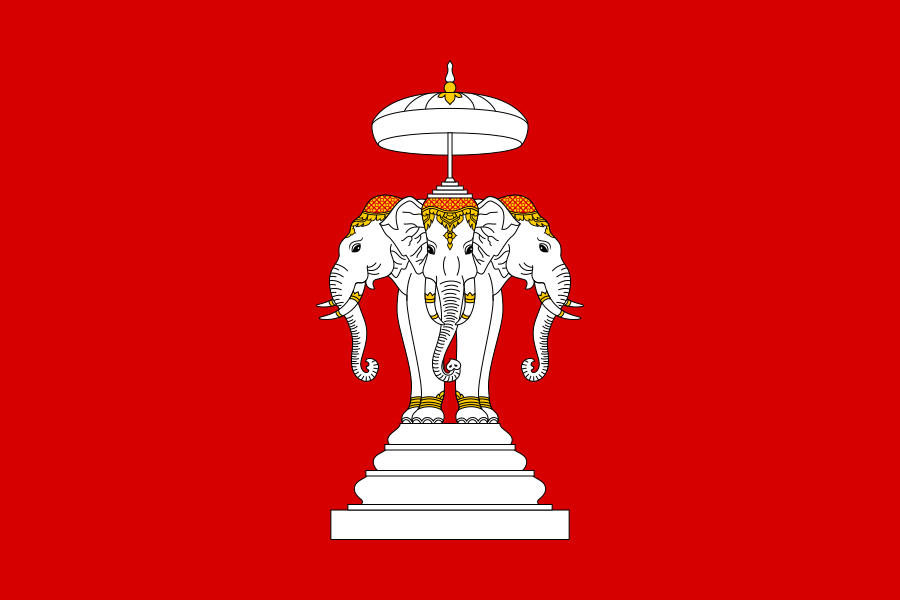
The royal Lao kingdom flew a red flag with the three-headed white elephant Erawan beneath a parasol — the same elephant later used by the Kingdom of Laos.
Today part of: Laos

The series of Muslim dynasties that ruled much of medieval India from Delhi, repelling the Mongols, before the Mughals supplanted them.
Today part of: India
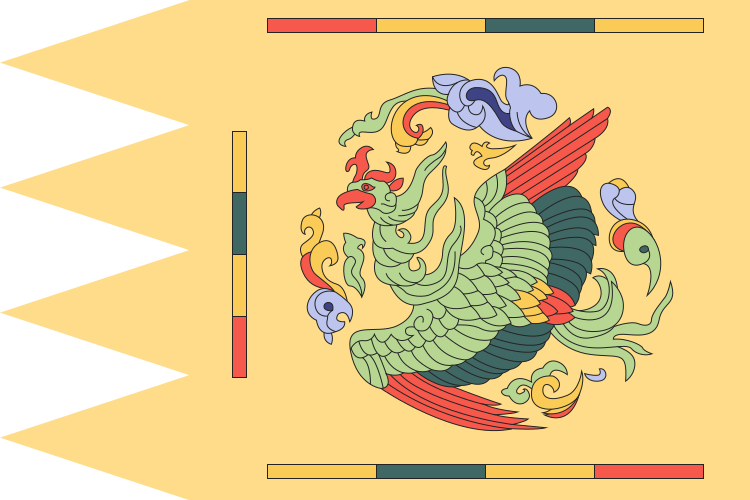
The medieval Korean dynasty that gave the country its English name. This reconstructed royal phoenix banner stands in for an era that used no national flag.
Today part of: South Korea
A Malay sultanate on Sumatra's east coast that grew rich on trade, flying black and yellow bands with a red hoist crest, until it joined the new Indonesian republic in 1945.
Today part of: Indonesia
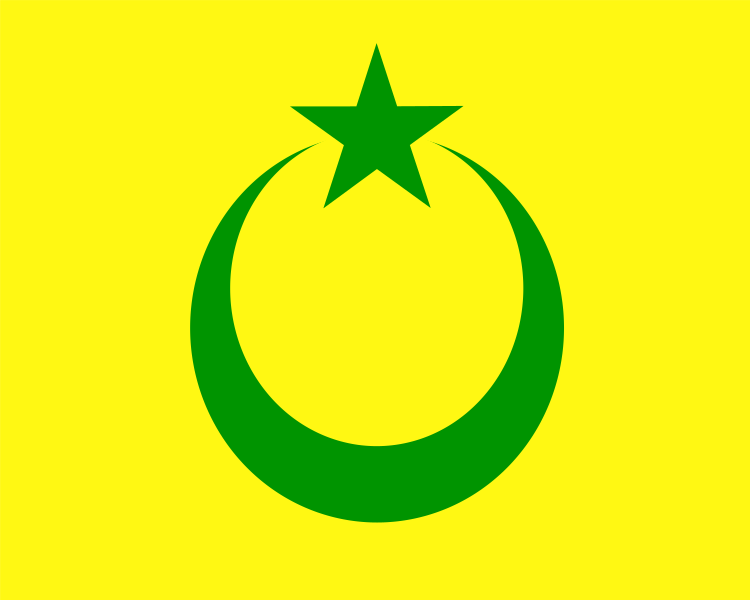
A Borneo sultanate founded at the mouth of the Kapuas River by an Arab sayyid, flying a yellow flag with a green crescent and star.
Today part of: Indonesia
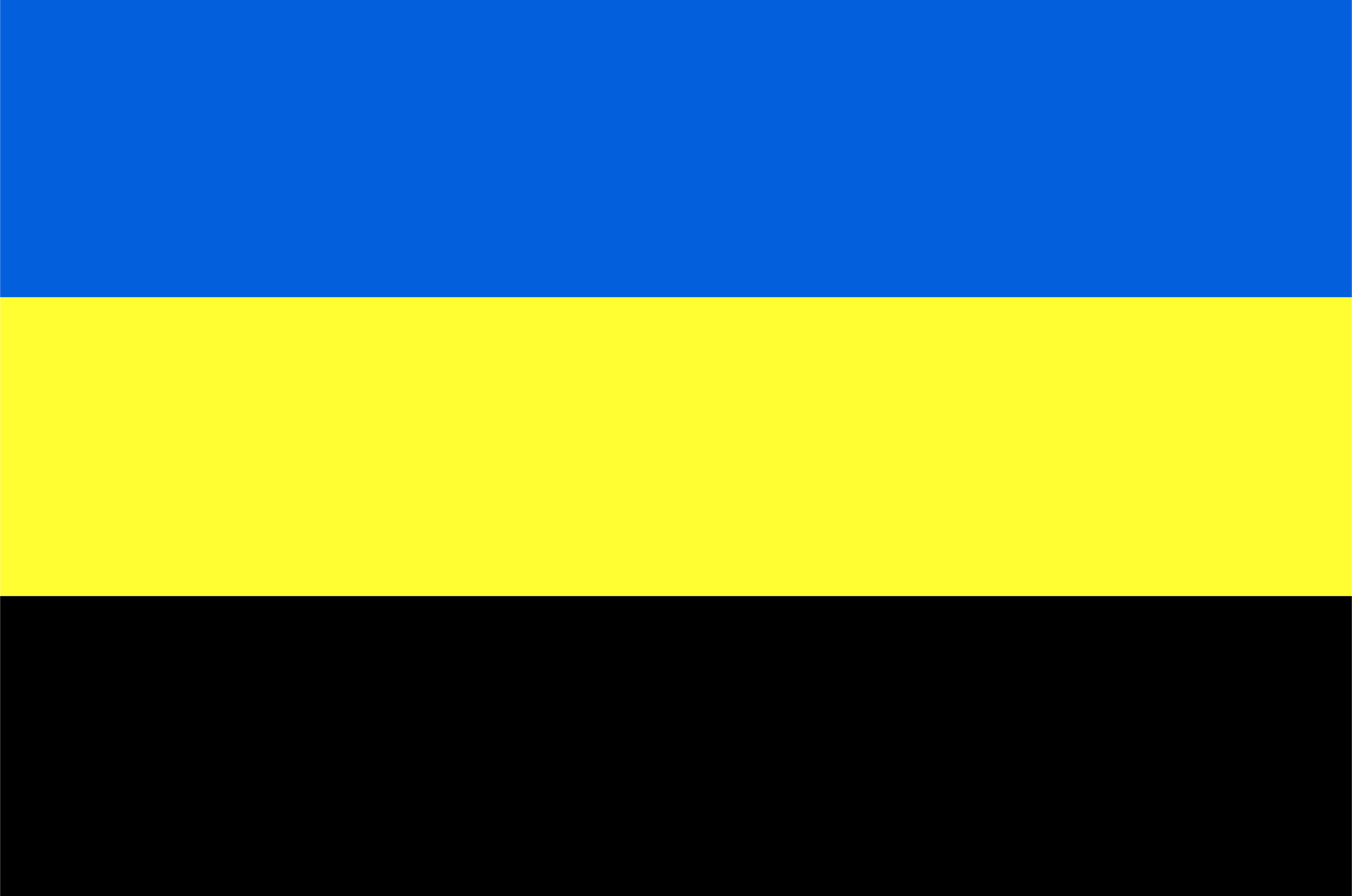
A North Kalimantan coastal sultanate with a simple yellow-over-blue flag, dissolved after a violent 1950s clash with the Indonesian republic.
Today part of: Indonesia
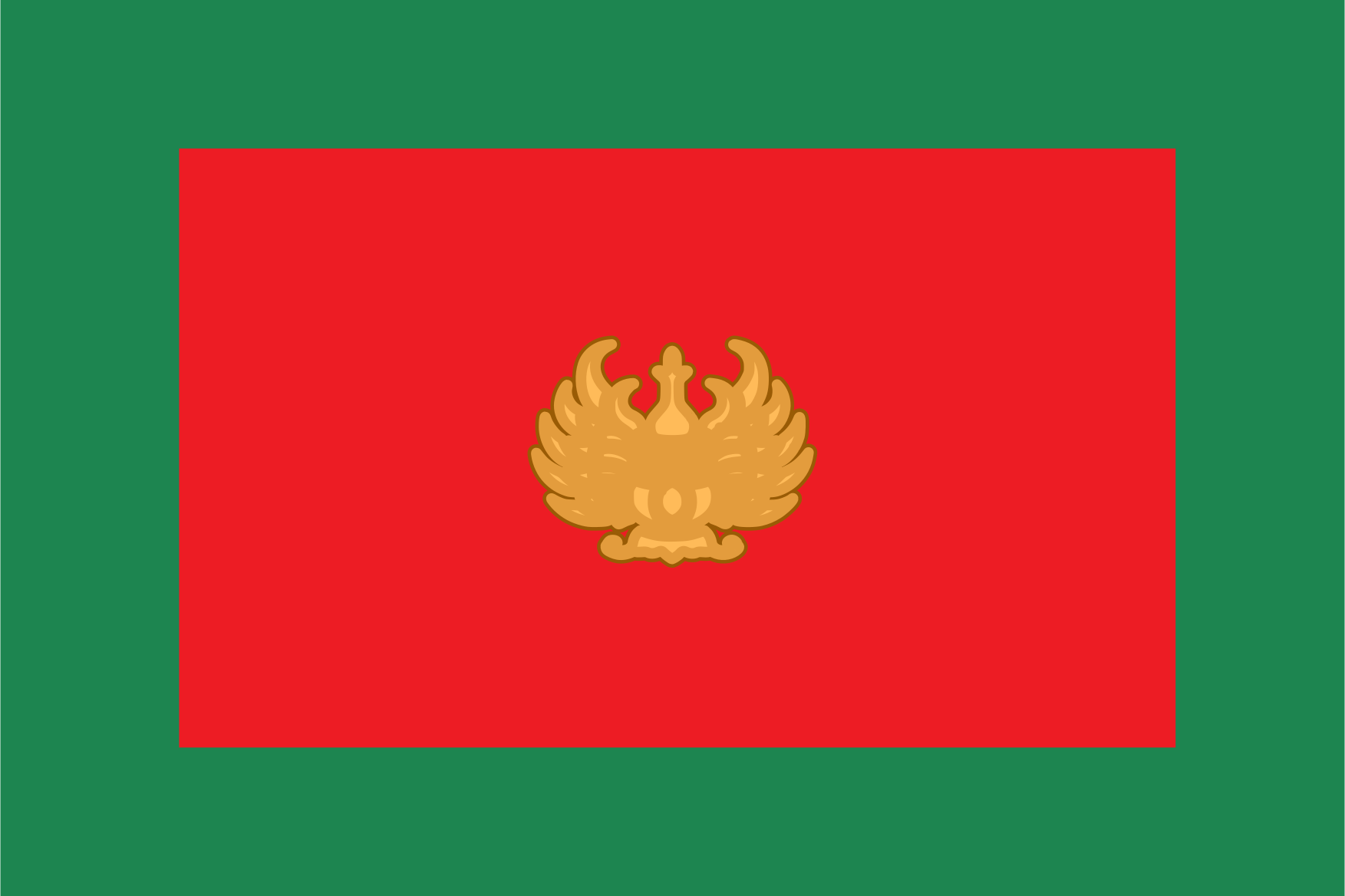
A Balinese kingdom in the island's east that once ruled neighbouring Lombok, before falling to the Dutch in the early 1900s.
Today part of: Indonesia
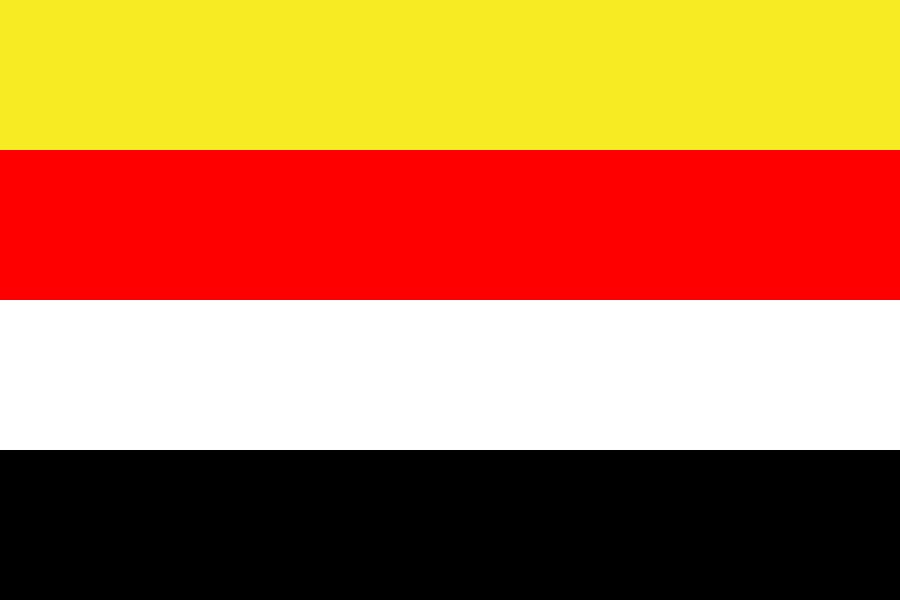
A long-lived island sultanate off southeast Sulawesi, strategically placed on the spice routes, with a distinctive constitution limiting the sultan's power.
Today part of: Indonesia
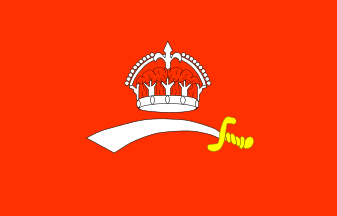
One of the wealthiest princely states of British India, ruled by the Maratha Gaekwad dynasty and famed for a pearl carpet and the gem-studded Star of the South diamond.
Today part of: India

The Scindia dynasty's powerful Maratha state in central India, whose flag bears a sun flanked by cobras; its great hilltop fort guarded the route to the Deccan.
Today part of: India

The Holkar dynasty's Maratha state, founded by the remarkable queen-regent Ahilyabai Holkar, who built temples and rest-houses across India.
Today part of: India
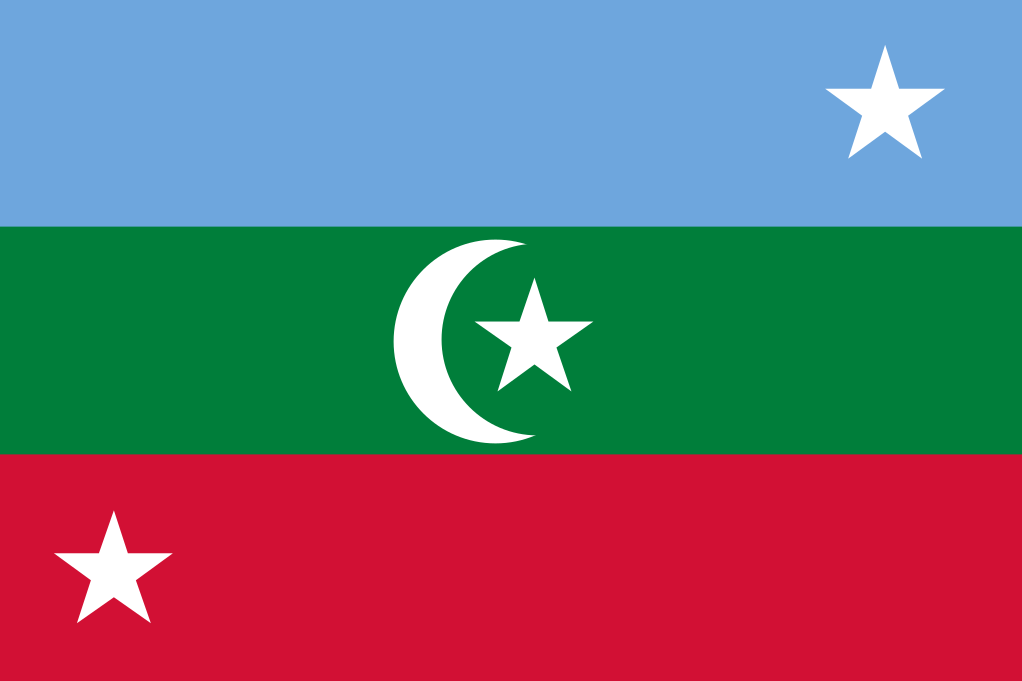
The three southern atolls of the Maldives broke away under Abdullah Afeef for four years; their blue-green-red flag carried a crescent and three stars before the rebellion collapsed.
Today part of: Maldives

A Society Islands kingdom that resisted France longer than its neighbours; its red-and-white flag with a French canton reflected an uneasy protectorate before annexation.
Today part of: France
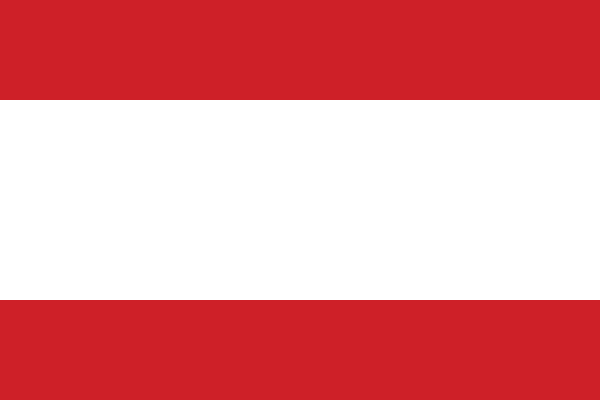
The Pōmare dynasty's red-white-red flag flew over the Society Islands kingdom until France annexed Tahiti in 1880, ending nearly a century of independent Polynesian rule.
Today part of: France
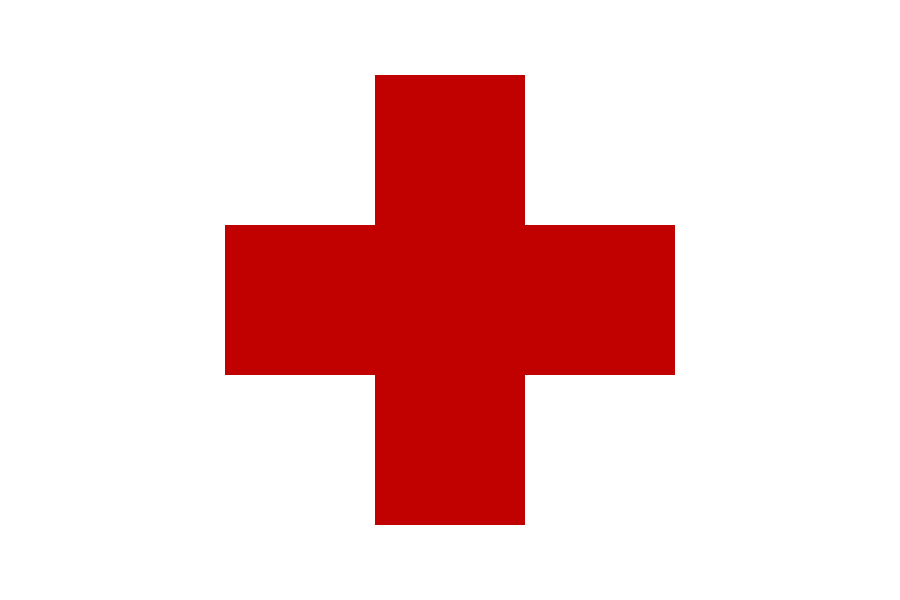
Tonga's first national flag was a plain white field with a red cross, but it proved too close to the new Red Cross emblem, so King George Tupou I added the red canton still used today.
Today part of: Tonga
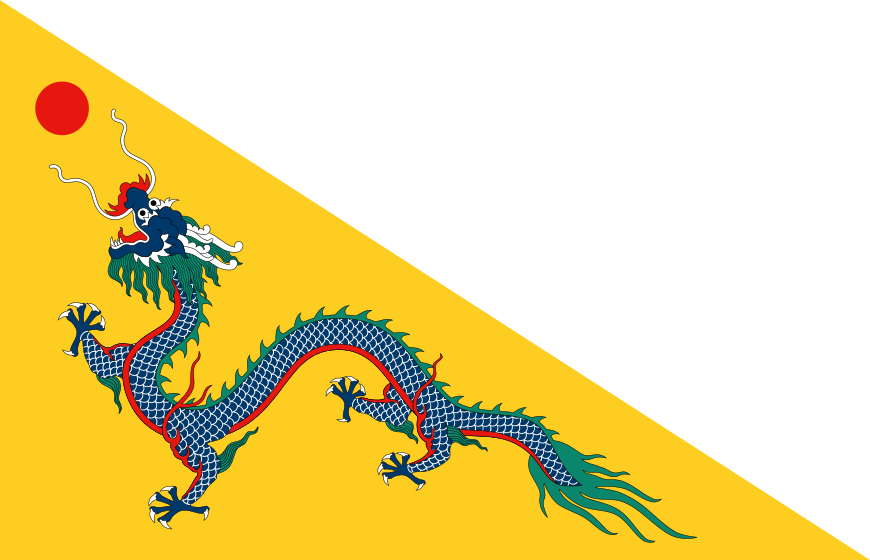
China's first national ensign was a triangular 'Yellow Dragon Flag' adopted for the imperial navy in 1862, before the familiar rectangular version replaced it in 1889.
Today part of: China
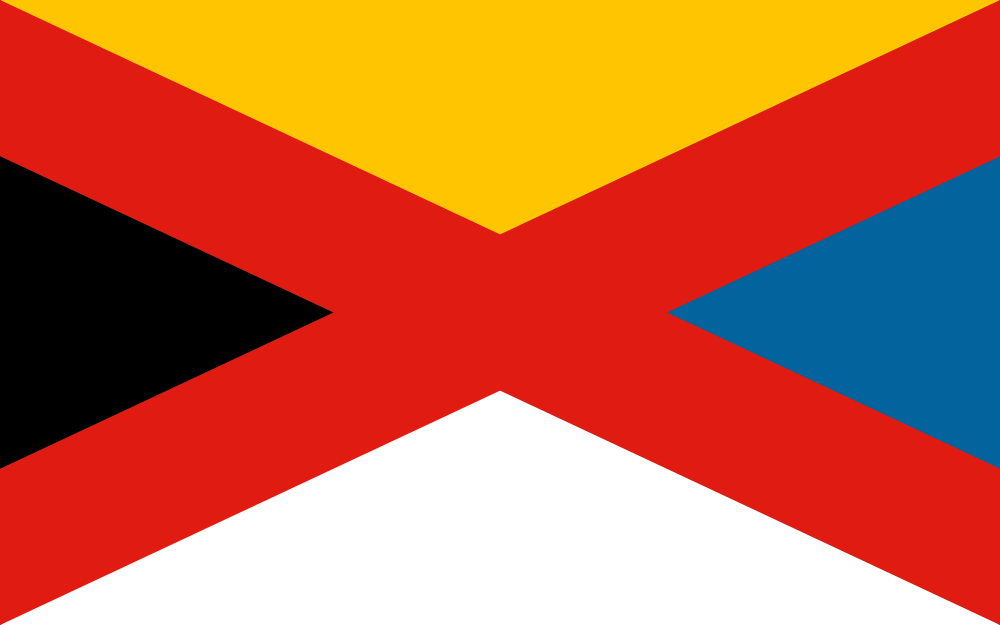
When president Yuan Shikai declared himself emperor in 1915, he revived a cross-and-stripes flag for his short-lived monarchy, which collapsed amid revolts within 83 days.
Today part of: China
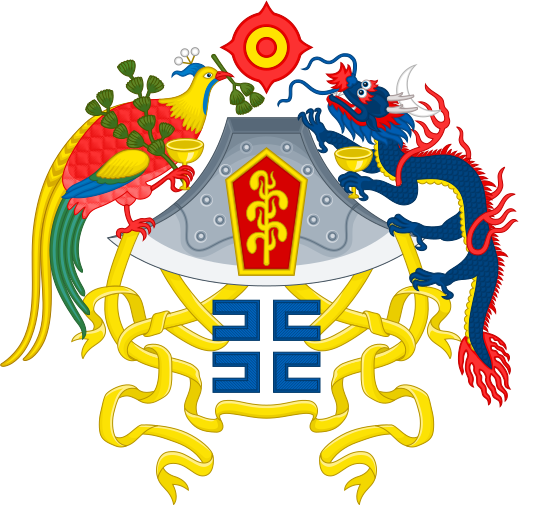
The early Republic's ornate state emblem, designed with input from the writer Lu Xun, combined the ancient Twelve Ornaments of imperial robes into a single republican coat of arms.
Today part of: China
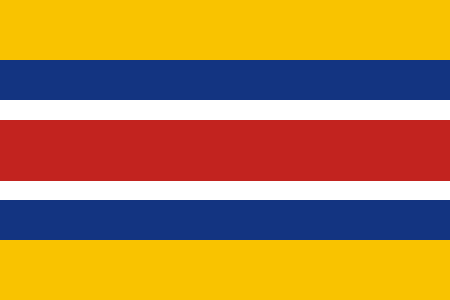
The Japanese-backed Mongol puppet state in Inner Mongolia flew a striped flag whose bands stood for the Mongol, Han, Japanese, Manchu, and Hui peoples it claimed to unite.
Today part of: China
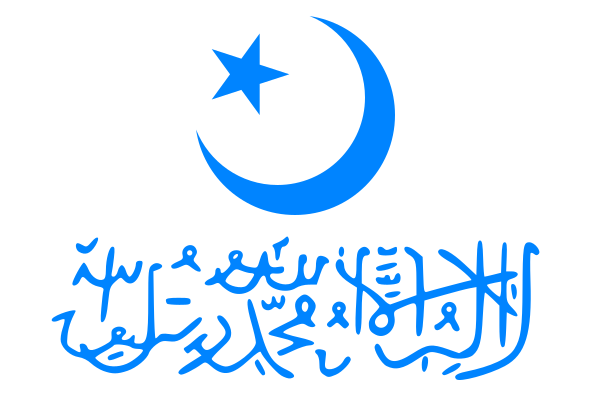
A short-lived Islamic republic proclaimed at Kashgar in Xinjiang, flying the sky-blue Kökbayraq with a white crescent and star, crushed within months by Chinese and Soviet-backed forces.
Today part of: China
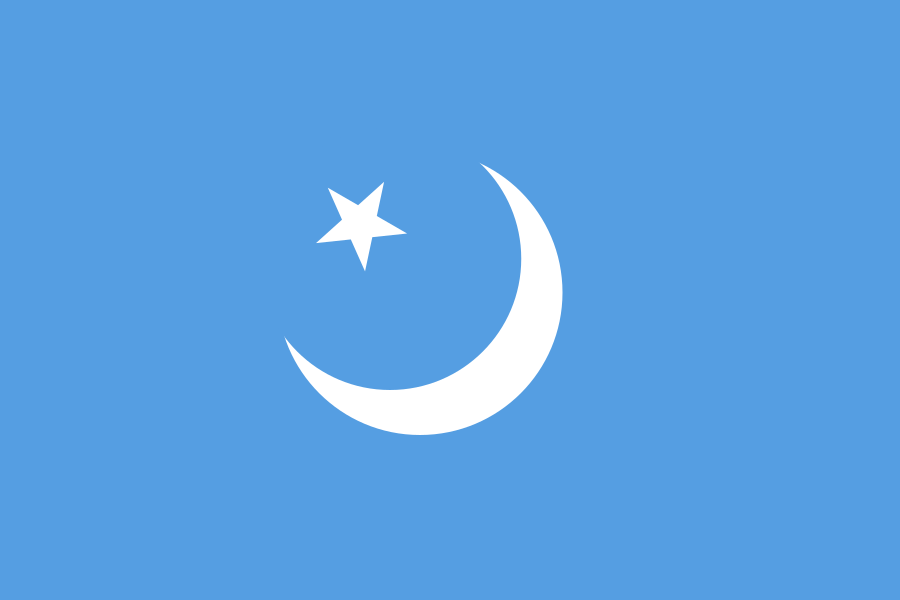
A Soviet-supported Uyghur and Kazakh republic in northern Xinjiang, absorbed into the People's Republic of China in 1949 after its leaders died in a mysterious plane crash.
Today part of: China
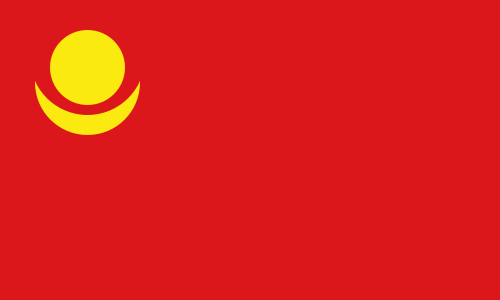
After breaking from China, Mongolia was ruled by the Bogd Khan, a Buddhist theocrat, whose soyombo flag preceded the communist People's Republic proclaimed on his death in 1924.
Today part of: Mongolia
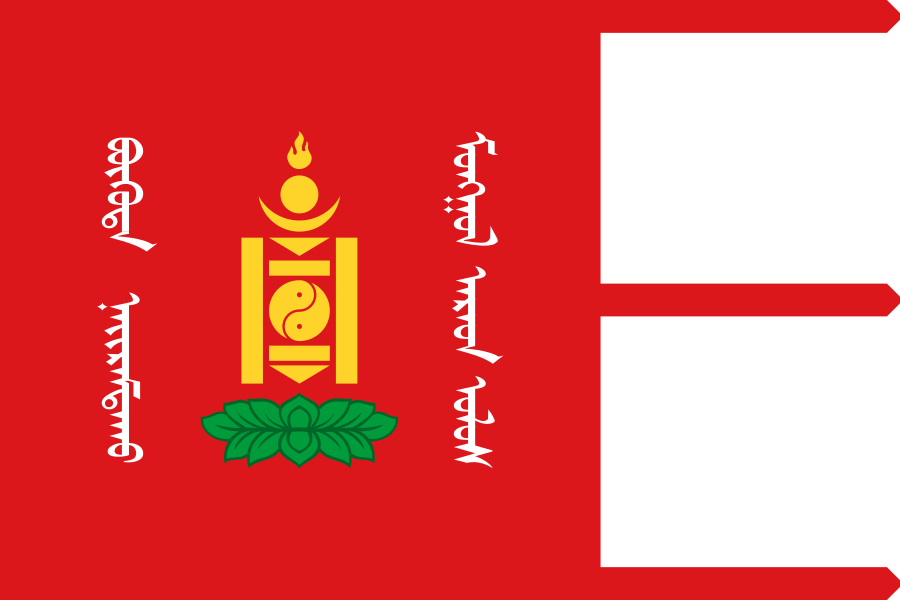
Asia's first communist state after the USSR flew a red flag bearing the national soyombo symbol, a fire-and-yin-yang emblem that still anchors the modern Mongolian flag.
Today part of: Mongolia
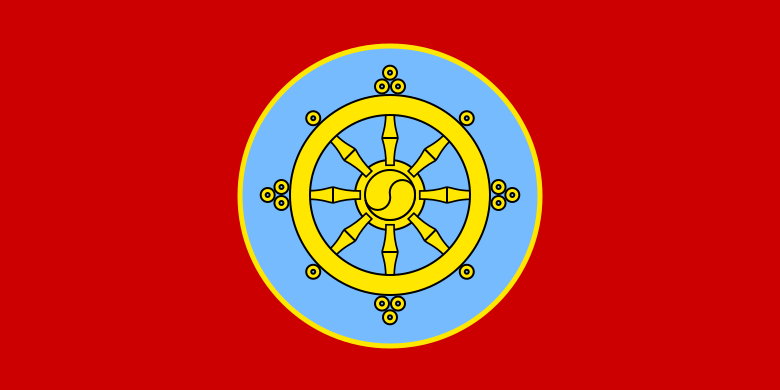
A tiny Soviet-aligned republic in southern Siberia, recognized only by the USSR and Mongolia; its famous triangular stamps were prized by collectors before the USSR annexed it in 1944.
Today part of: Russia
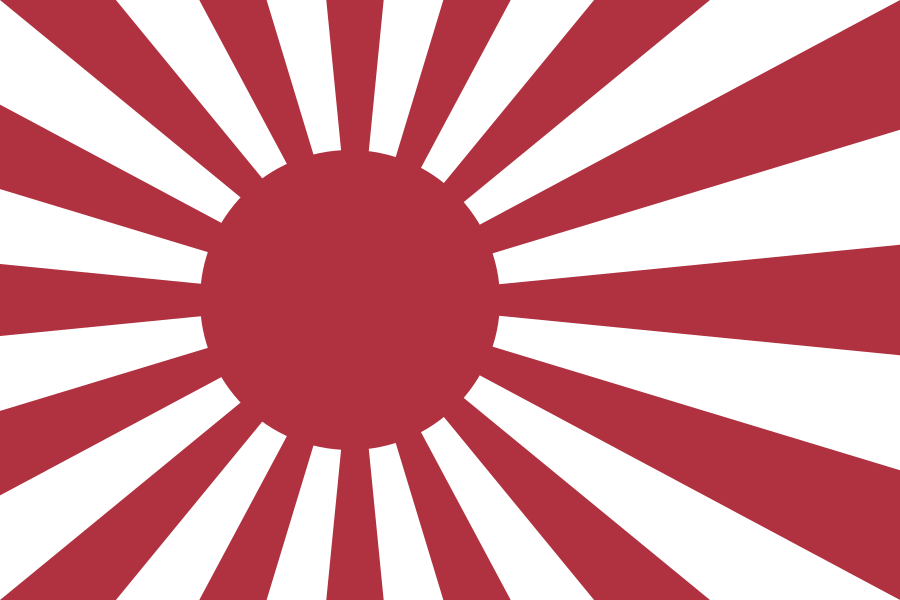
The 16-rayed Rising Sun naval ensign, with the disc offset toward the hoist, flew over the Imperial Japanese Navy and is still used by the Maritime Self-Defense Force today.
Today part of: Japan
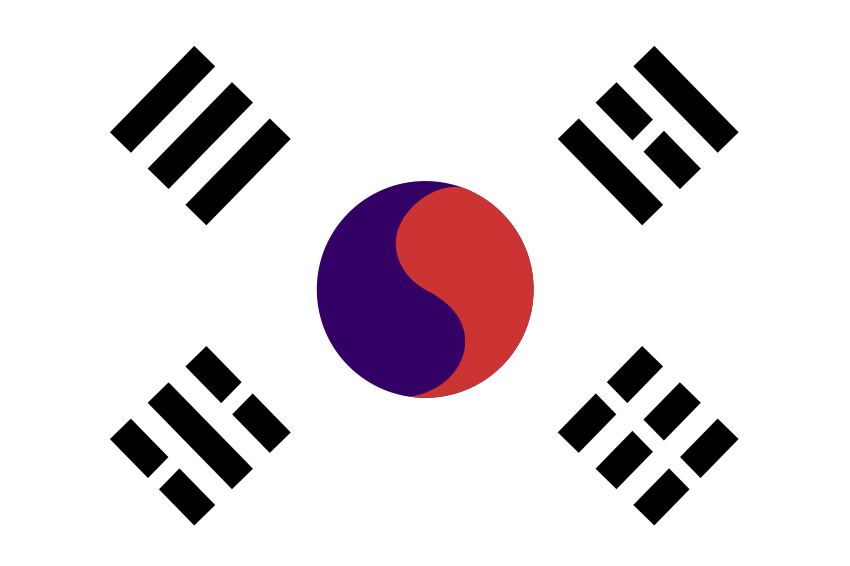
Exiled in Shanghai after Japan's annexation, Korea's provisional government flew an early Taegukgi as it lobbied for independence; its legacy is claimed by the modern Republic of Korea.
Today part of: South Korea
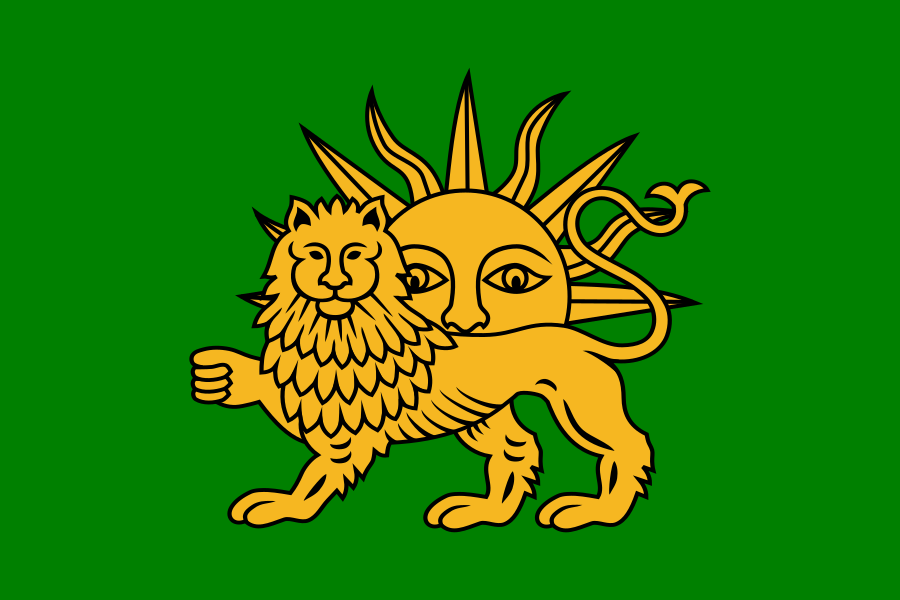
The Persian empire that made Twelver Shia Islam the state religion flew a green banner bearing a golden lion and sun, the Lion and Sun motif that would symbolize Iran for centuries.
Today part of: Iran
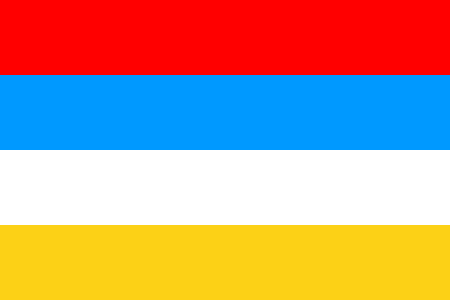
The empire of the conqueror Nader Shah, who sacked Delhi and seized the Peacock Throne; his imperial standard carried the lion and sun on a red and yellow field.
Today part of: Iran
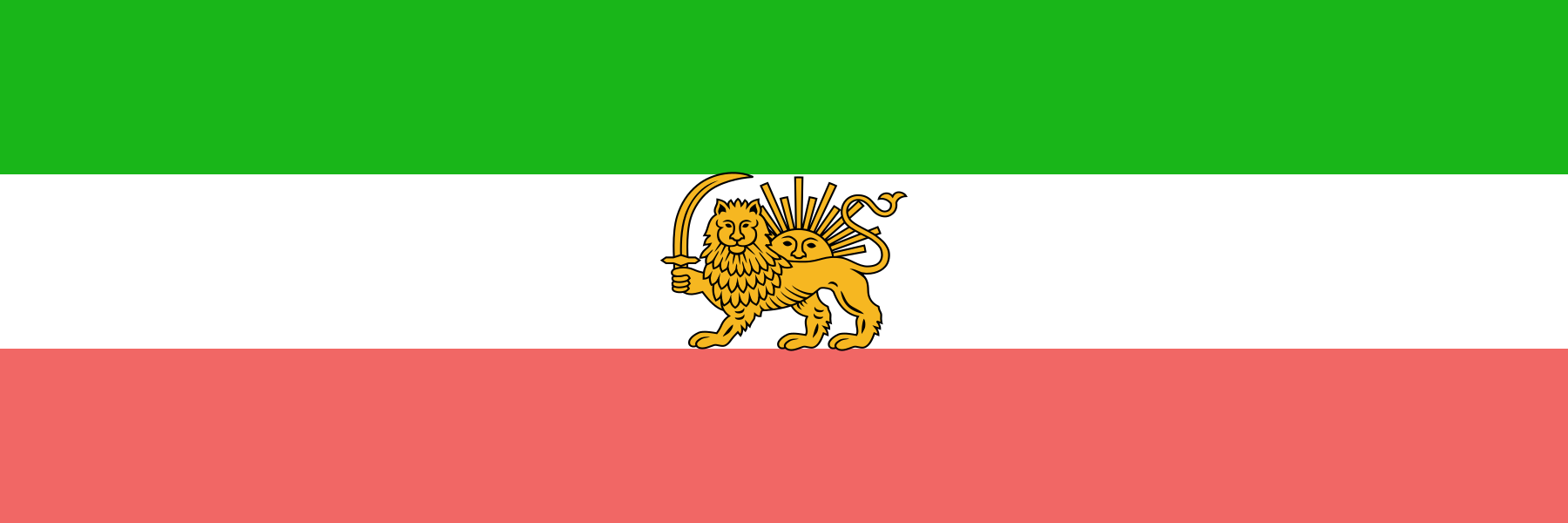
The Lion and Sun on a tricolor of green, white, and red became Persia's flag under the Qajar shahs and endured through the empire until the 1979 revolution removed the emblem.
Today part of: Iran
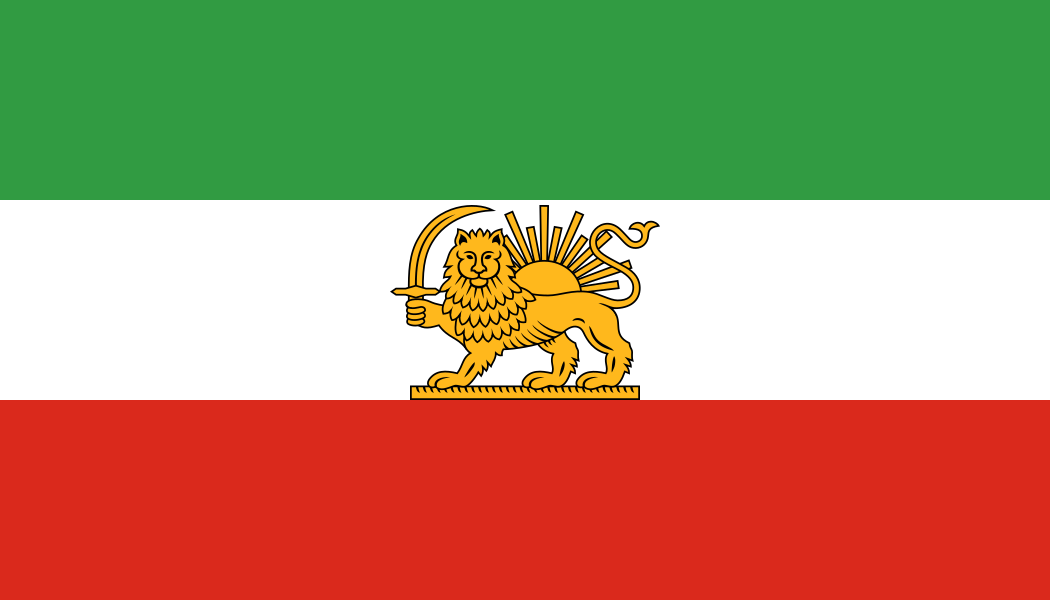
Under the Pahlavi shahs the green-white-red flag bore a crowned Lion and Sun; the crowned emblem was stripped away after the 1979 Islamic Revolution overthrew the monarchy.
Today part of: Iran

A plain black banner flown under Emir Abdur Rahman Khan, the 'Iron Amir', who consolidated the modern borders of Afghanistan as a buffer between the British and Russian empires.
Today part of: Afghanistan
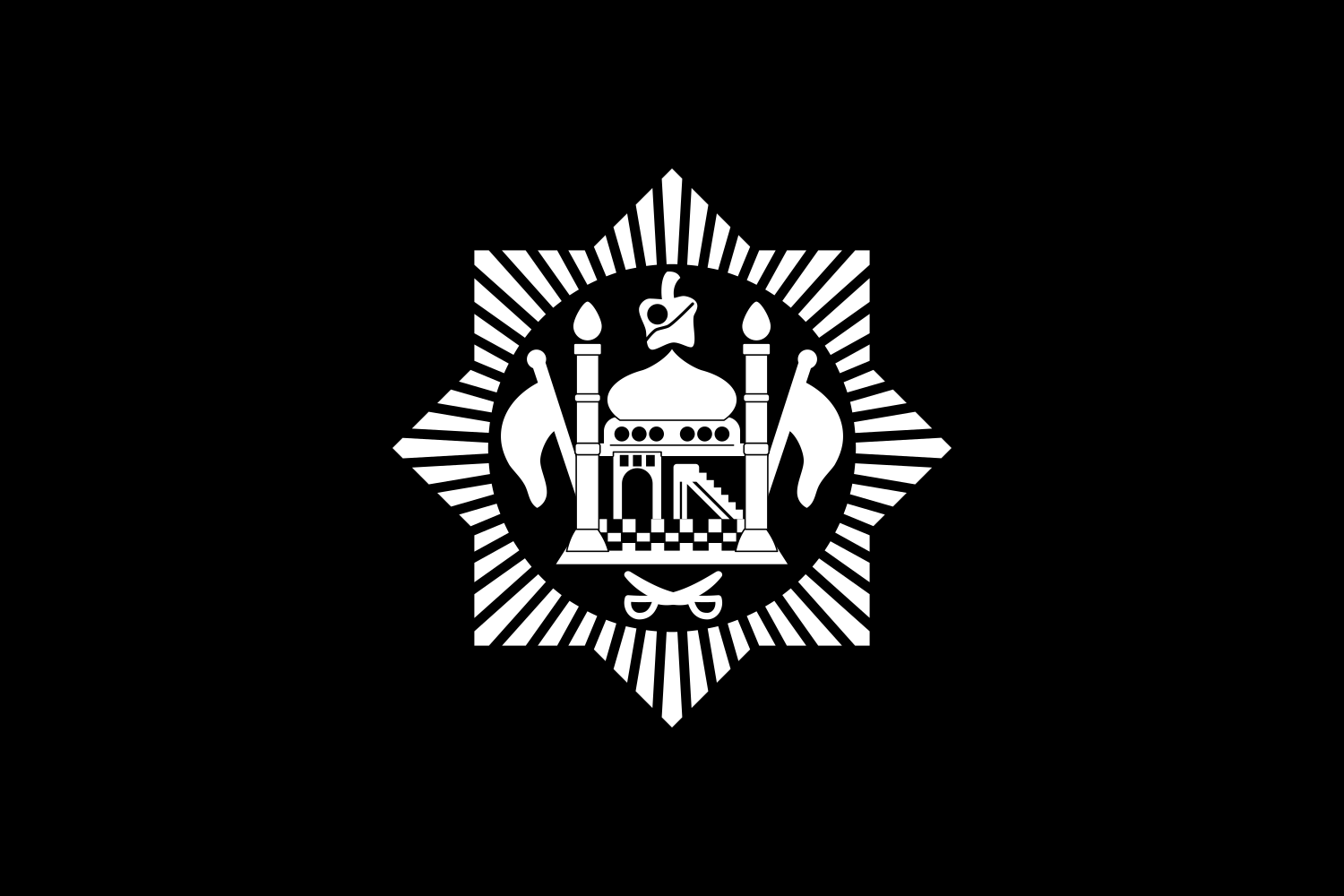
The black flag with a central mosque-and-mihrab emblem flew when Afghanistan won full independence from Britain in 1919 under the reformist King Amanullah Khan.
Today part of: Afghanistan

The brief flag of the Tajik rebel Habibullah Kalakani, who seized Kabul for nine months in 1929 during the civil war that toppled King Amanullah's modernizing reforms.
Today part of: Afghanistan
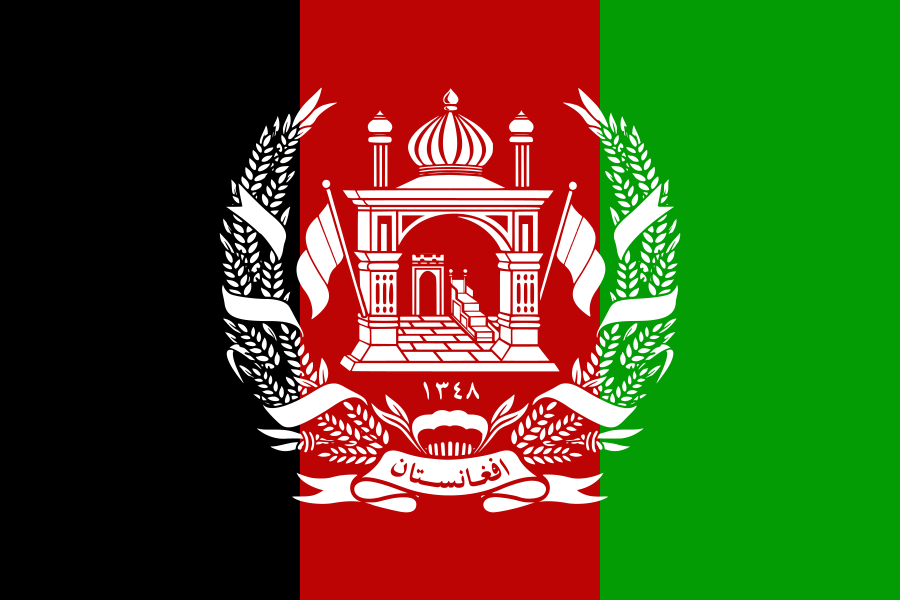
The black-red-green triband with a mosque emblem flew over the long reign of King Zahir Shah, until his cousin Daoud Khan abolished the monarchy in a 1973 coup.
Today part of: Afghanistan
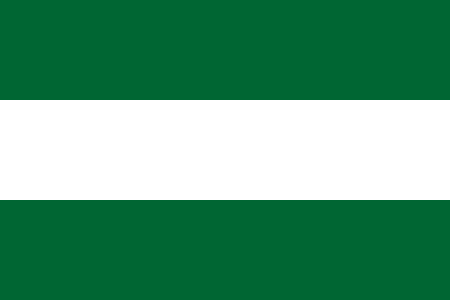
A semi-independent Afghan principality fought over by Persia and Britain in the 'Great Game', whose siege in 1837–38 helped trigger the First Anglo-Afghan War.
Today part of: Afghanistan
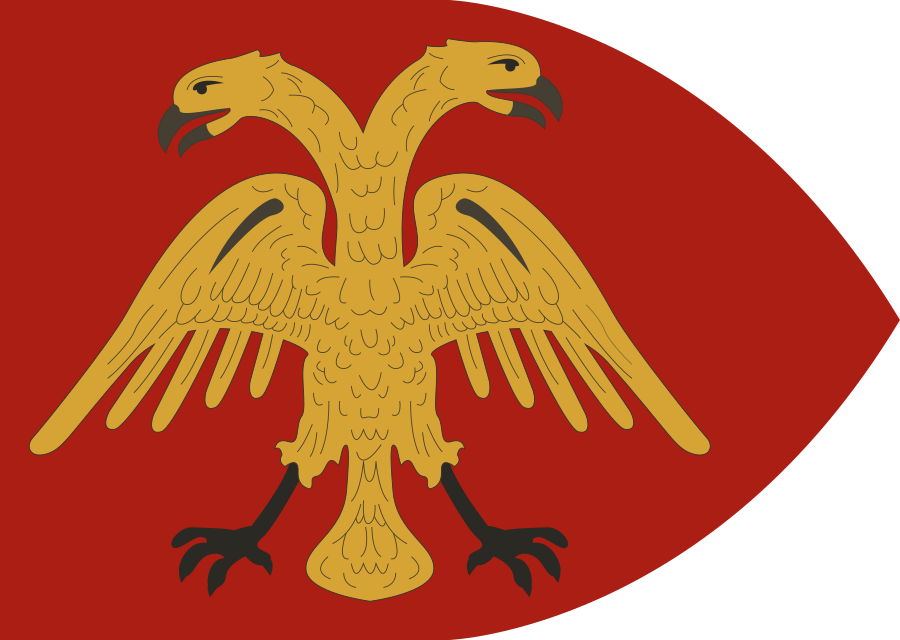
A Byzantine Greek successor state on the Black Sea coast of Anatolia, the last fragment of the Roman world, which outlasted Constantinople by eight years before falling to the Ottomans.
Today part of: Turkey
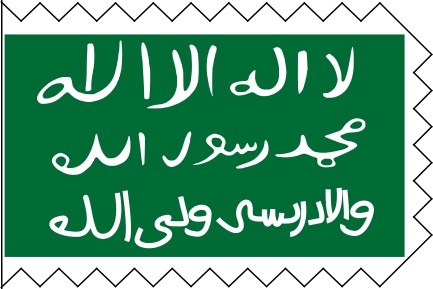
A small emirate in the mountains of southwestern Arabia between the Hejaz and Yemen, independent for a generation before Saudi Arabia absorbed it after the 1934 Saudi-Yemeni war.
Today part of: Saudi Arabia
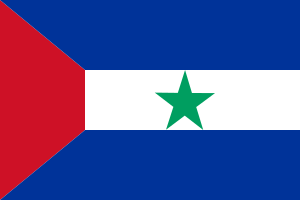
The British colony of Aden joined the Federation of South Arabia as a constituent state, flying a green-and-blue flag, just before independence as South Yemen in 1967.
Today part of: Yemen
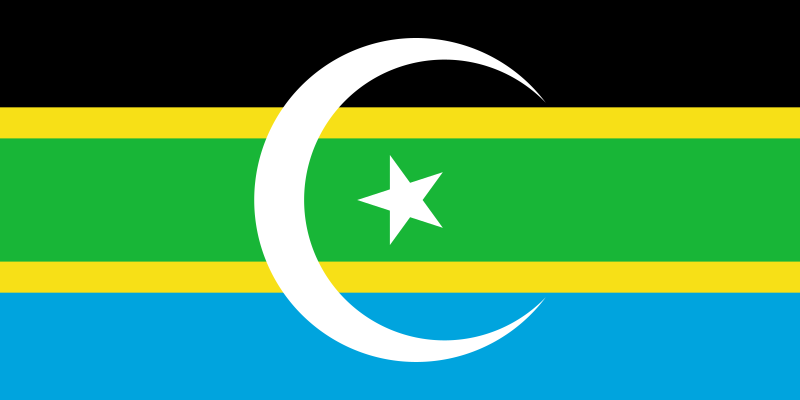
A British-sponsored union of Aden and surrounding sultanates and emirates; its green-yellow-blue flag flew until the federation collapsed into independent South Yemen in 1967.
Today part of: Yemen
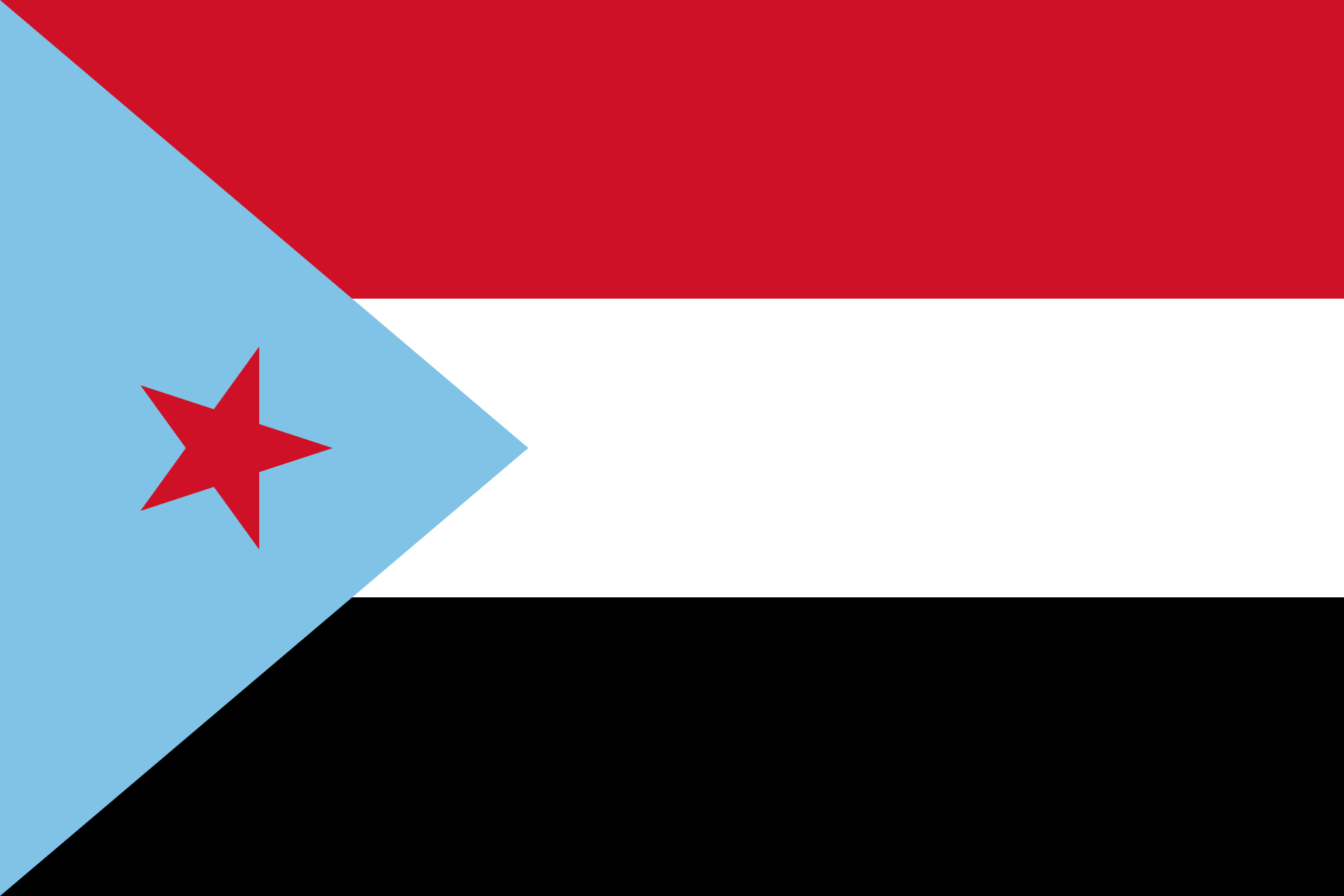
The Arab world's only Marxist state added a sky-blue triangle with a red star to the pan-Arab tricolor, until it merged with North Yemen to form the Republic of Yemen in 1990.
Today part of: Yemen

An Abdali sultanate north of Aden, one of the many South Arabian princely states, flying a green flag with a white border before being absorbed into independent South Yemen.
Today part of: Yemen
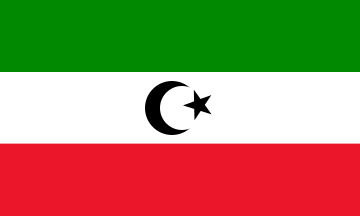
A long-lived sultanate of the Mahra people in far eastern South Arabia, which also ruled the island of Socotra, abolished when South Yemen became independent in 1967.
Today part of: Yemen

A plain red banner flew over the coastal Sultanate of Muscat, distinct from the inland Imamate of Oman, until Sultan Qaboos united the country and modernized its flag in 1970.
Today part of: Oman
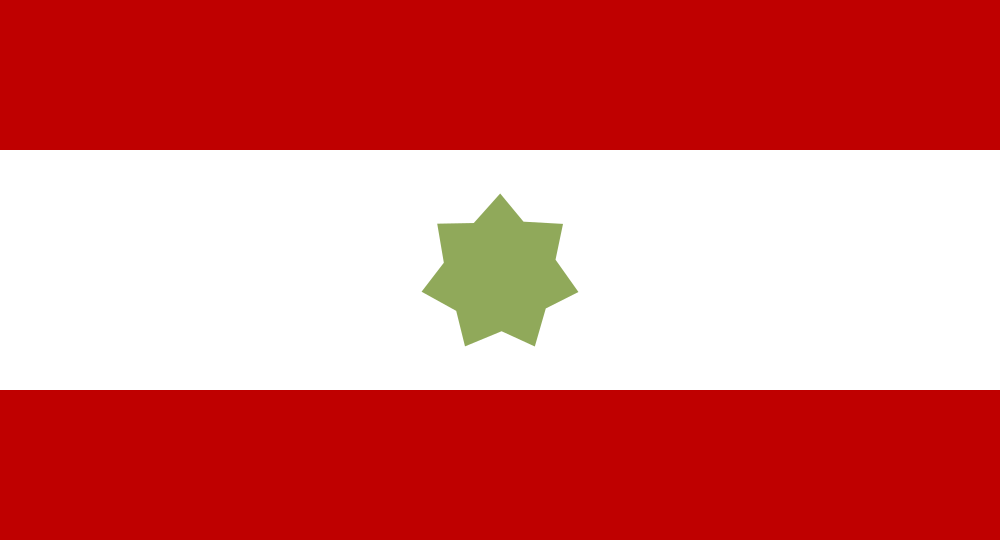
The collective flag of the British-protected sheikhdoms of the lower Gulf, a red field with a green-bordered white stripe, flown briefly before they federated as the United Arab Emirates.
Today part of: United Arab Emirates
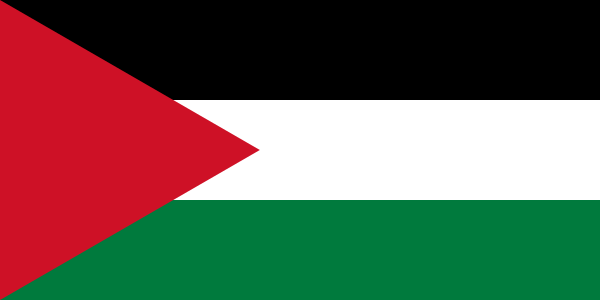
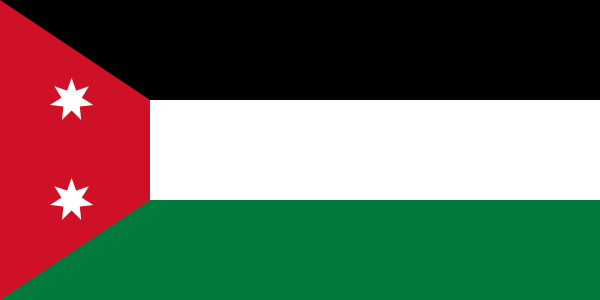
The Hashemite kingdom's black-green-white flag with a red trapezoid and two white stars derived from the Arab Revolt, flying until the 1958 coup that ended the monarchy.
Today part of: Iraq
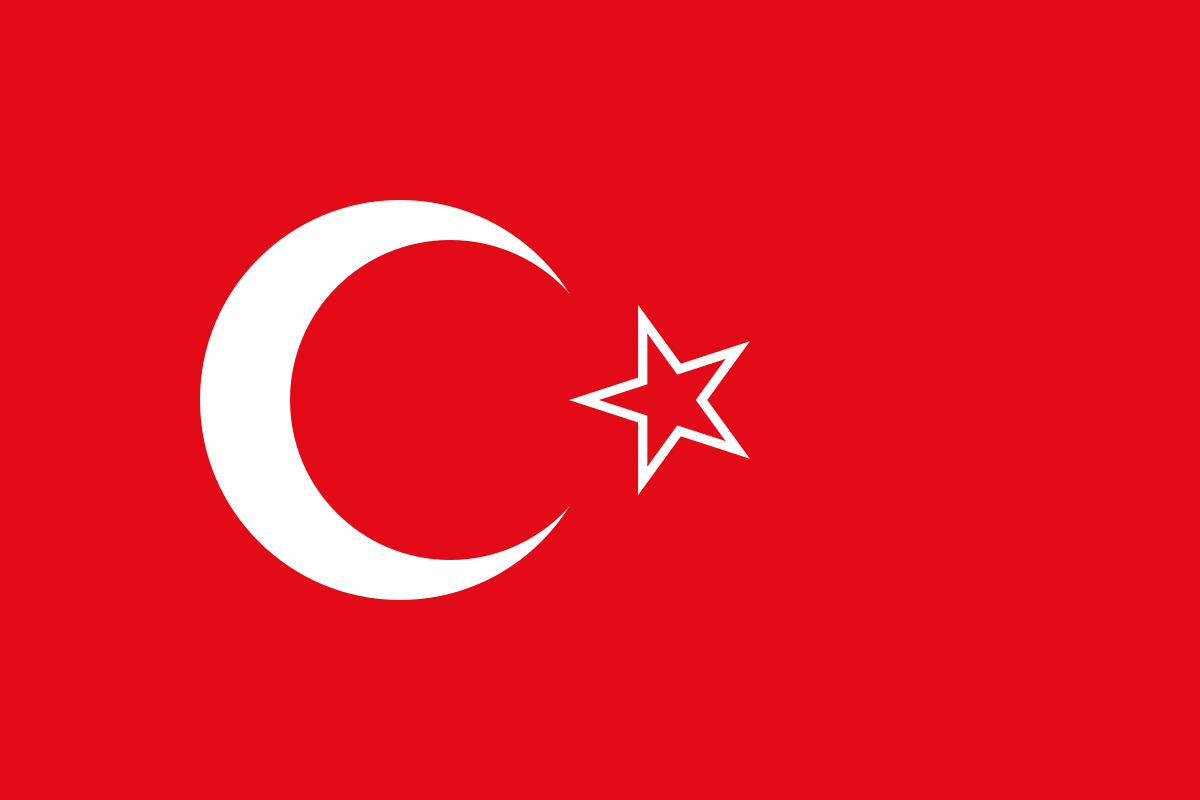
A short-lived republic around Alexandretta, carved from French-mandate Syria with a flag nearly identical to Turkey's, before it voted to join Turkey in 1939.
Today part of: Turkey
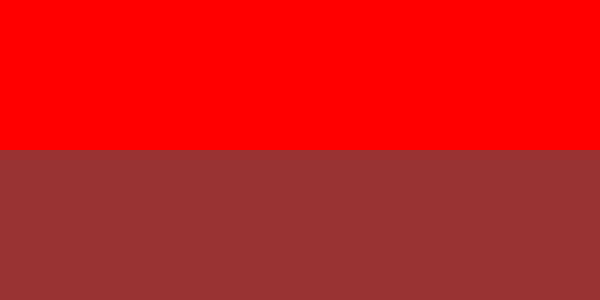
Ruled by the Wadiyar dynasty, the south Indian kingdom flew a flag bearing the mythical Gandaberunda, a two-headed eagle still used as the state emblem of Karnataka.
Today part of: India

An ancient kingdom on India's Malabar coast, an early ally of the Portuguese and Dutch, whose spice ports made it one of the wealthiest of the southern Indian states.
Today part of: India
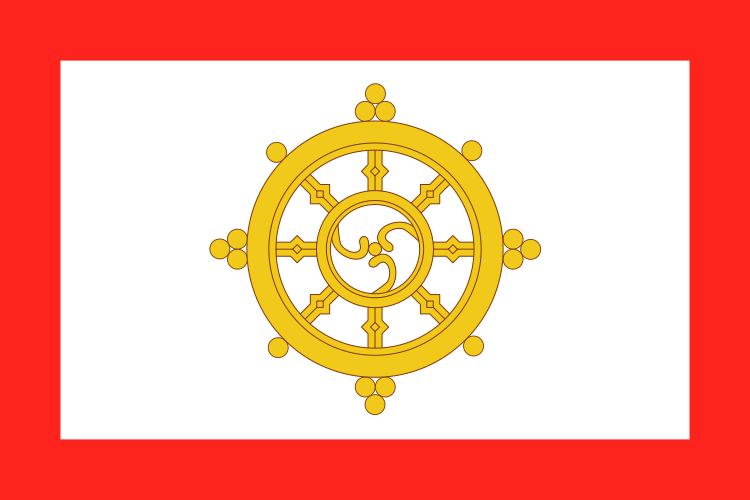
The Himalayan kingdom of the Namgyal dynasty flew a flag bearing a Buddhist gankyil and prayer wheel, until a 1975 referendum made it India's 22nd state.
Today part of: India
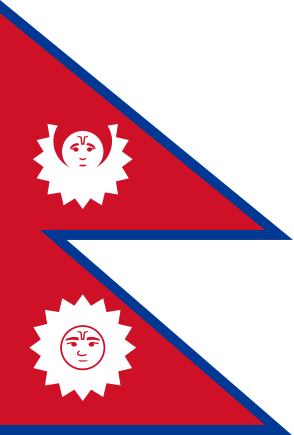
The world's only non-rectangular national flag, a double pennon of two stacked triangles bearing a moon and sun, flew over the Shah dynasty's kingdom until Nepal became a republic in 2008.
Today part of: Nepal
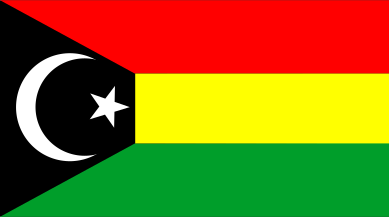
A wealthy princely state in the Punjab desert ruled by the Abbasi Nawabs, whose ruler was among the first to accede to the new nation of Pakistan in 1947.
Today part of: Pakistan
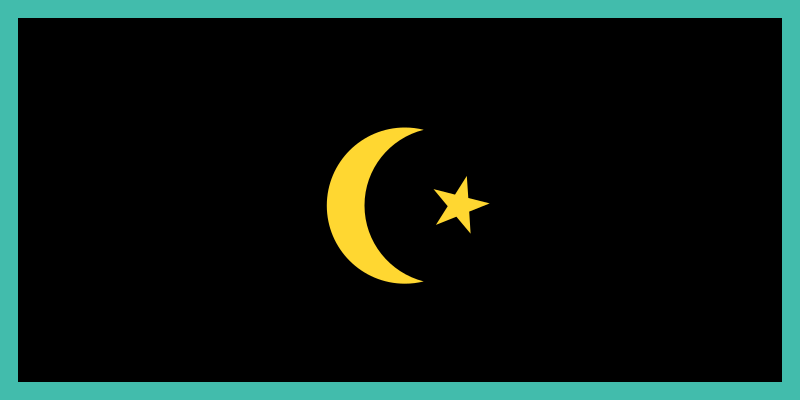
A Central Asian khanate on the oasis of Khwarezm, a major Silk Road and slave-trade center, which became a Russian protectorate before the Bolsheviks toppled its khan in 1920.
Today part of: Uzbekistan
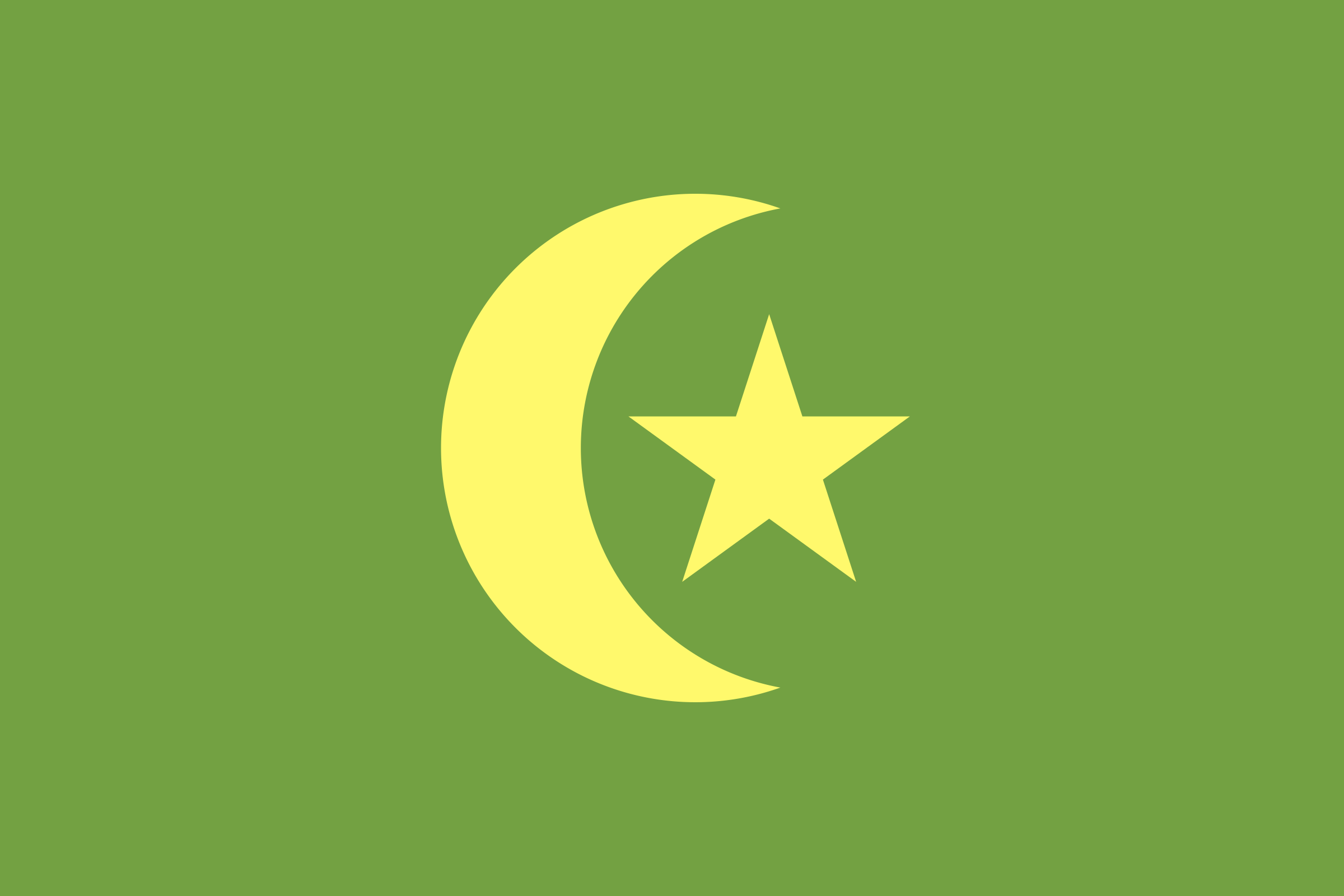
A khanate in the fertile Fergana Valley, one of the three great Uzbek states, conquered and annexed by the Russian Empire in 1876 during its advance across Central Asia.
Today part of: Uzbekistan
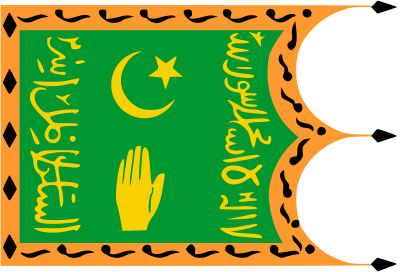
The last emir of this ancient Central Asian state, a Russian protectorate, fled when the Red Army stormed Bukhara in 1920, ending centuries of Uzbek dynastic rule.
Today part of: Uzbekistan
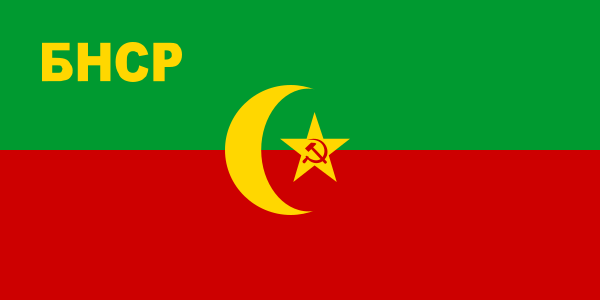
The Soviet-aligned republic that replaced the Emirate of Bukhara, flying a red flag with Arabic-script and a crescent, before being partitioned into the Uzbek and Turkmen SSRs.
Today part of: Uzbekistan
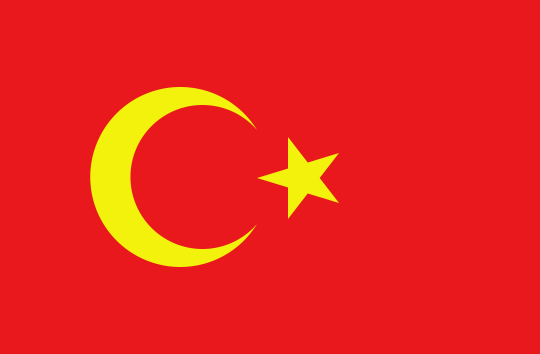
A short-lived Kazakh national government formed amid the Russian Civil War by the Alash Orda intelligentsia, suppressed by the Bolsheviks who then built the Kazakh SSR.
Today part of: Kazakhstan
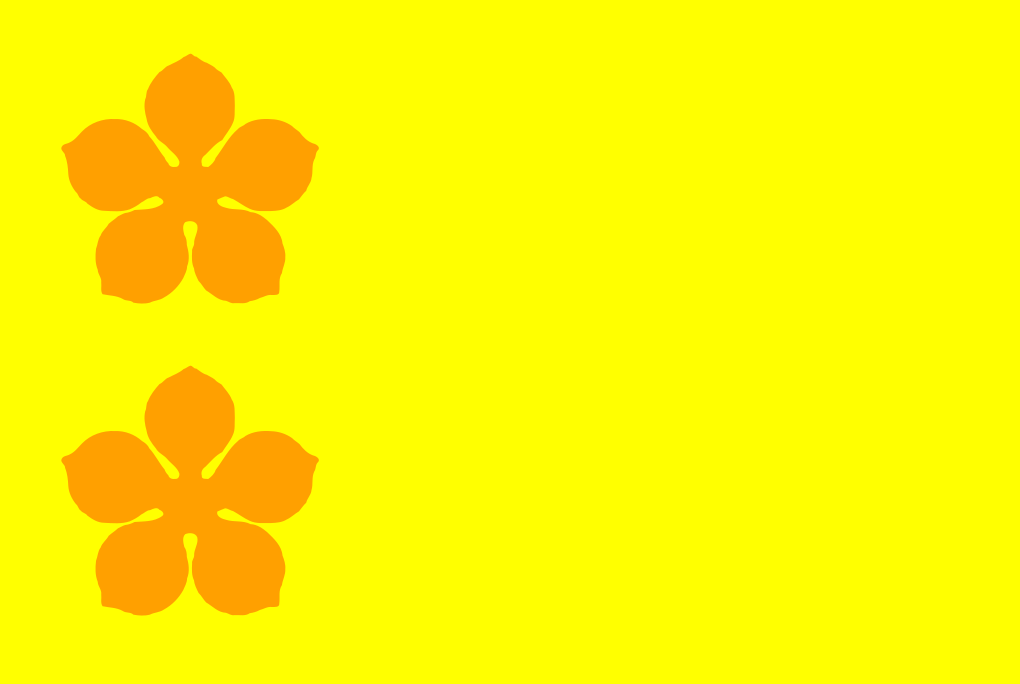
A Malay sultanate on Sumatra's east coast that grew immensely rich from Dutch tobacco plantations around Medan, before the 1946 social revolution swept away the Sumatran sultanates.
Today part of: Indonesia

Successor to the Malacca sultanate, Johor was a major Malay power on the peninsula's tip; its colors survive in the modern Malaysian state of Johor.
Today part of: Malaysia
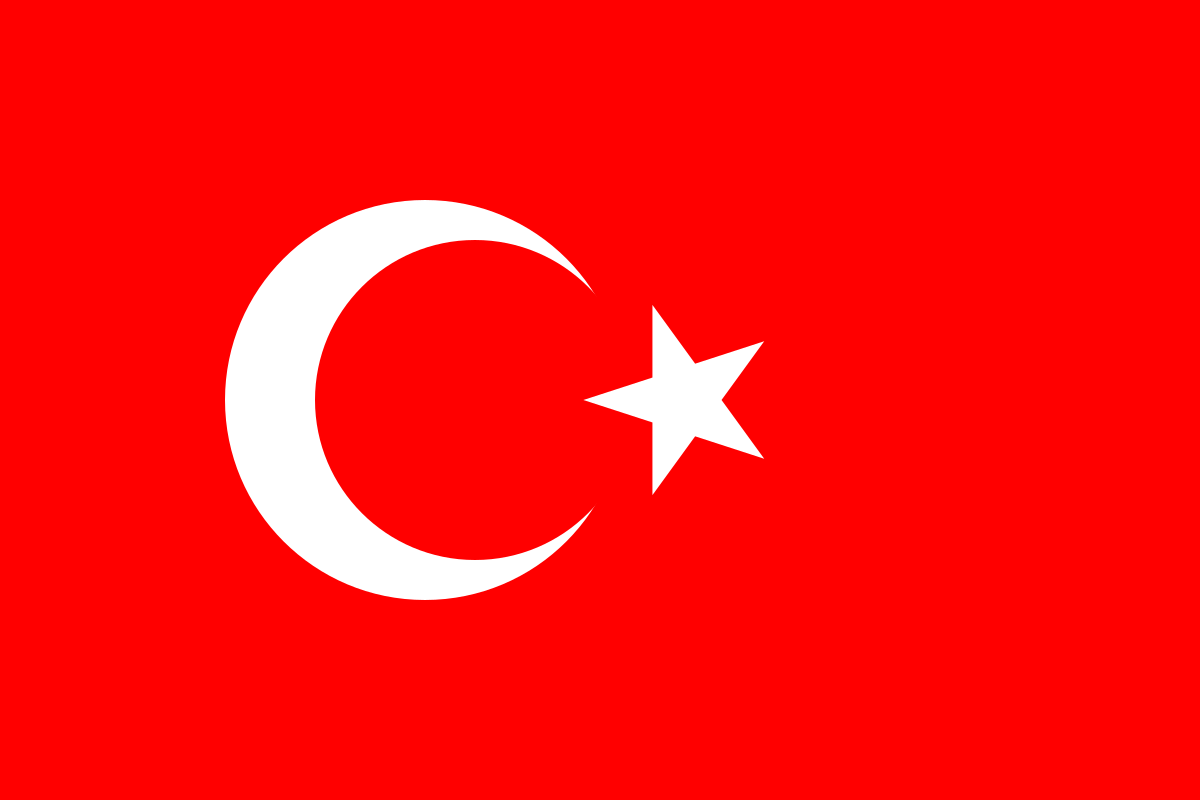
A Malay maritime sultanate of the islands between Sumatra and Borneo, formed when the British and Dutch split the old Johor realm, dissolved by the Dutch in 1911.
Today part of: Indonesia
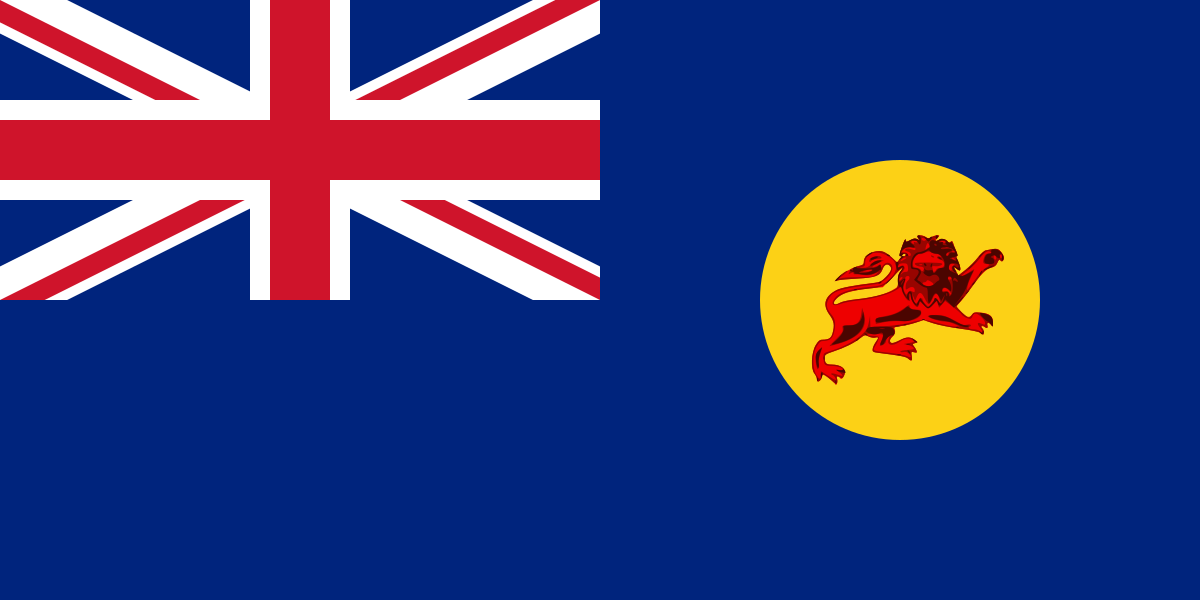
Modern Sabah was ruled for over sixty years by the British North Borneo Chartered Company, one of the last territories administered by a private trading company.
Today part of: Malaysia
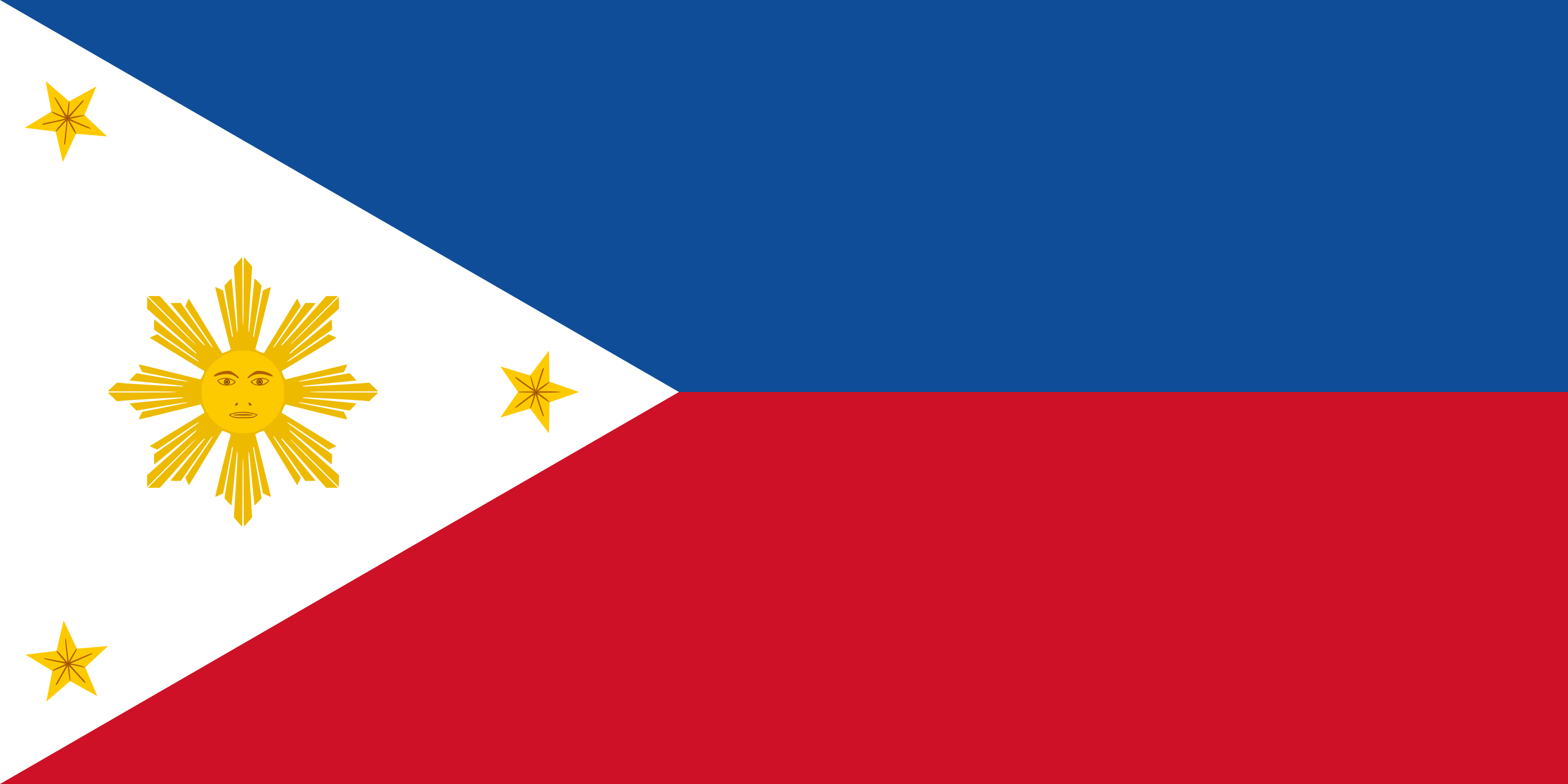
Asia's first constitutional republic, declared under Emilio Aguinaldo; its sun-and-stars flag — still the modern Philippine flag — flew in war against Spain and then the United States.
Today part of: Philippines
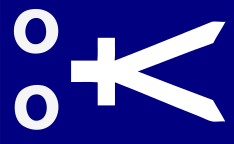
A short-lived republic on the Zamboanga Peninsula of Mindanao that declared independence amid the collapse of Spanish rule, before American forces incorporated it into the Philippines.
Today part of: Philippines
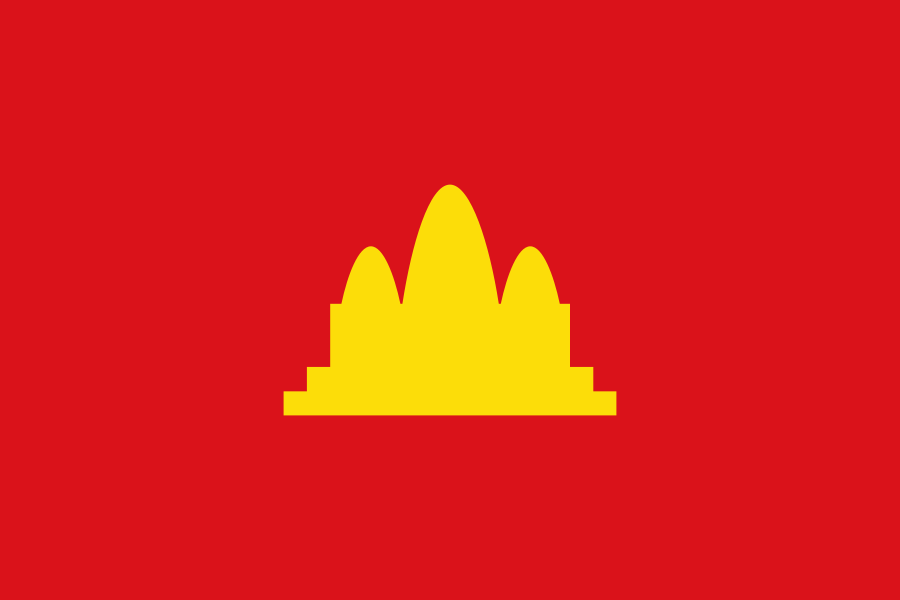
The Khmer Rouge state flew a red flag with a yellow three-towered Angkor Wat; its brutal four-year rule under Pol Pot killed an estimated quarter of Cambodia's population.
Today part of: Cambodia
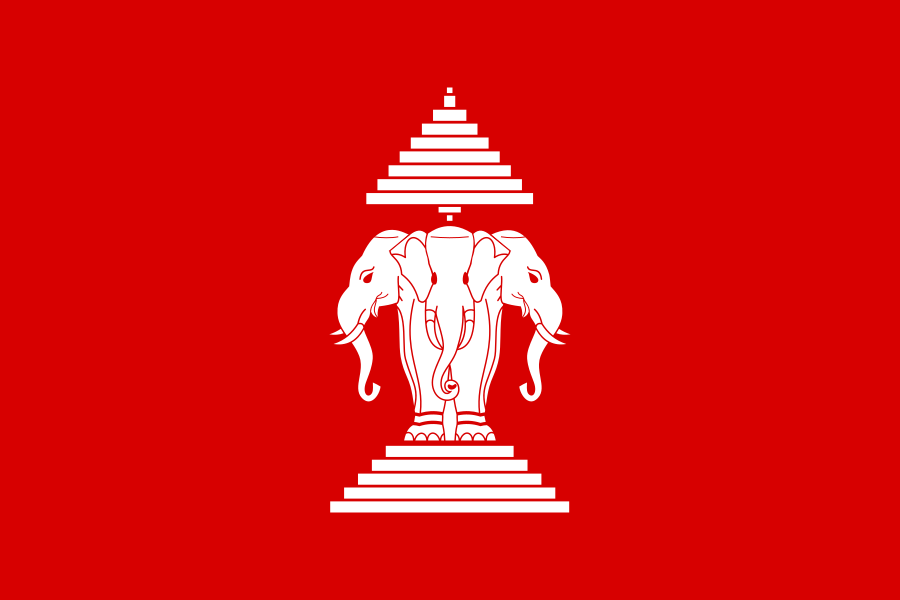
The royal kingdom flew a red flag with a white three-headed elephant beneath a parasol, the sacred Erawan, until the communist Pathet Lao abolished the monarchy in 1975.
Today part of: Laos
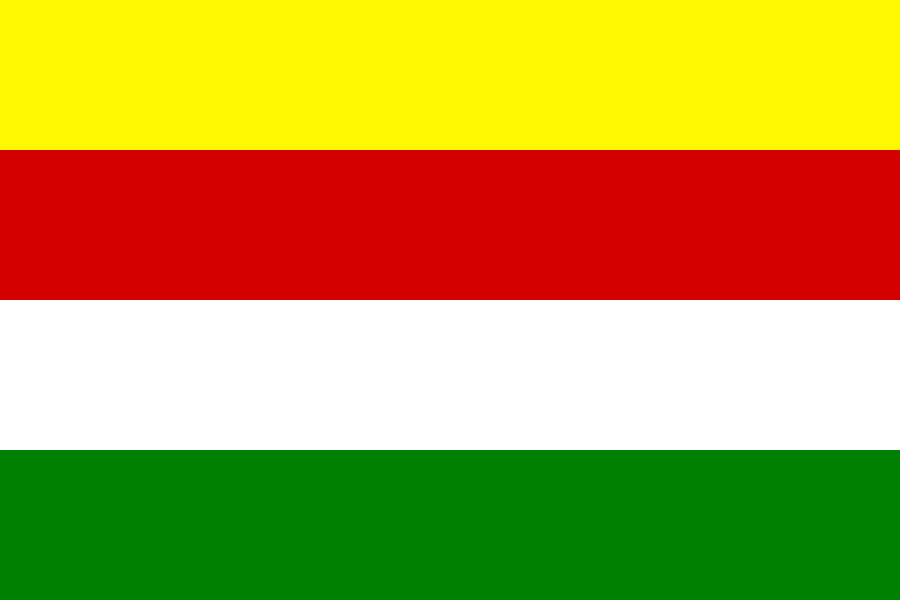
A Dutch-sponsored federal state covering Sulawesi and the eastern islands during the Indonesian National Revolution, dissolved into the unitary Republic of Indonesia in 1950.
Today part of: Indonesia
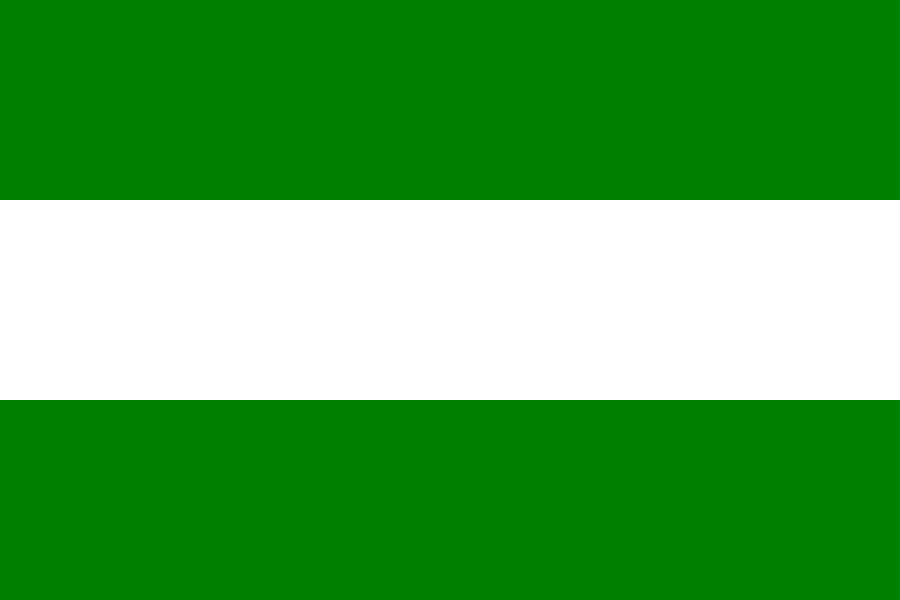
A Dutch-backed Sundanese federal state in West Java set up during the revolution, one of several puppet states that were quickly absorbed into the unitary Indonesian republic.
Today part of: Indonesia
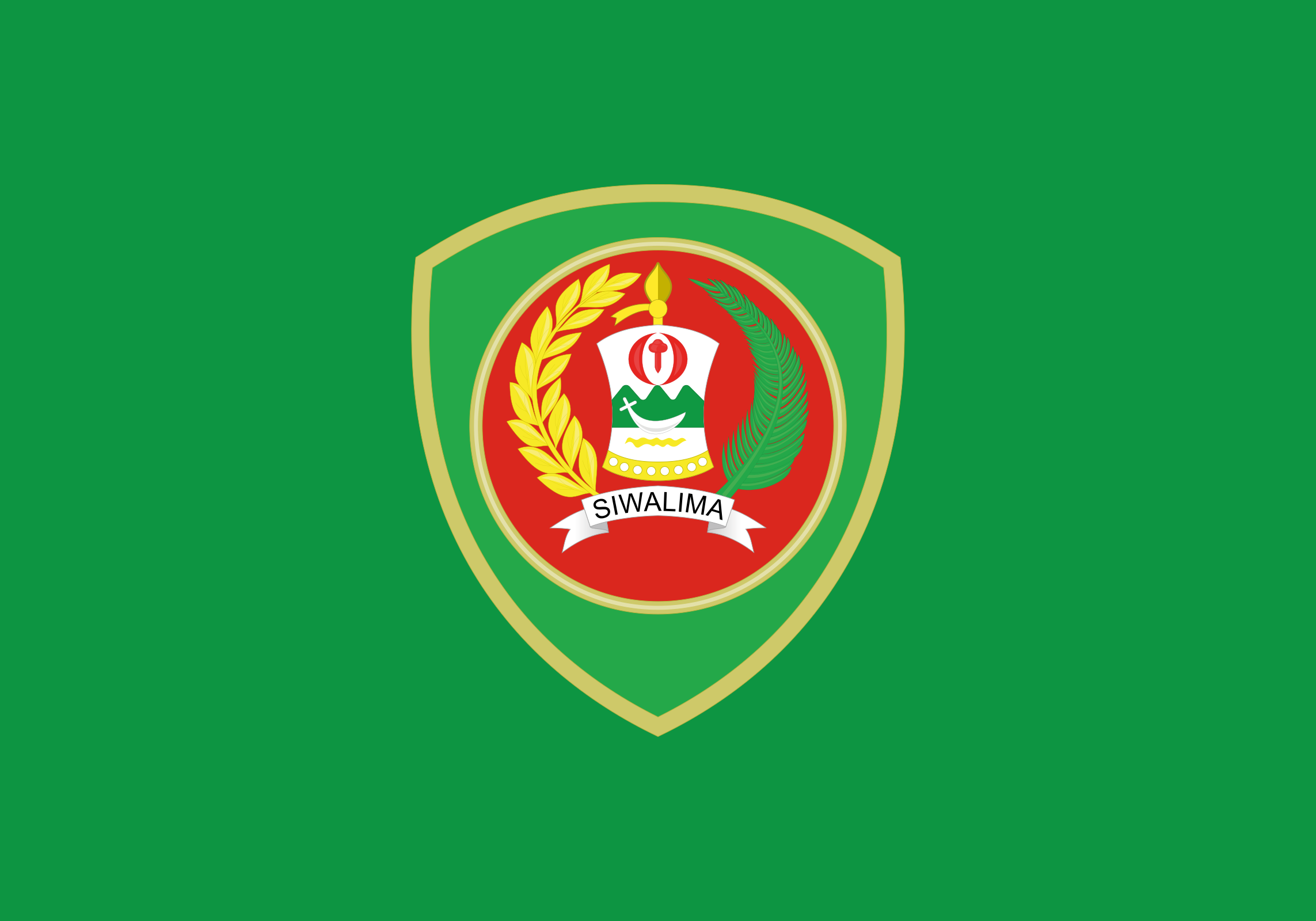
Largely Christian Ambonese proclaimed an independent republic in the Moluccas in 1950; its blue-white-green-red flag is still flown by an exiled government-in-exile in the Netherlands.
Today part of: Indonesia
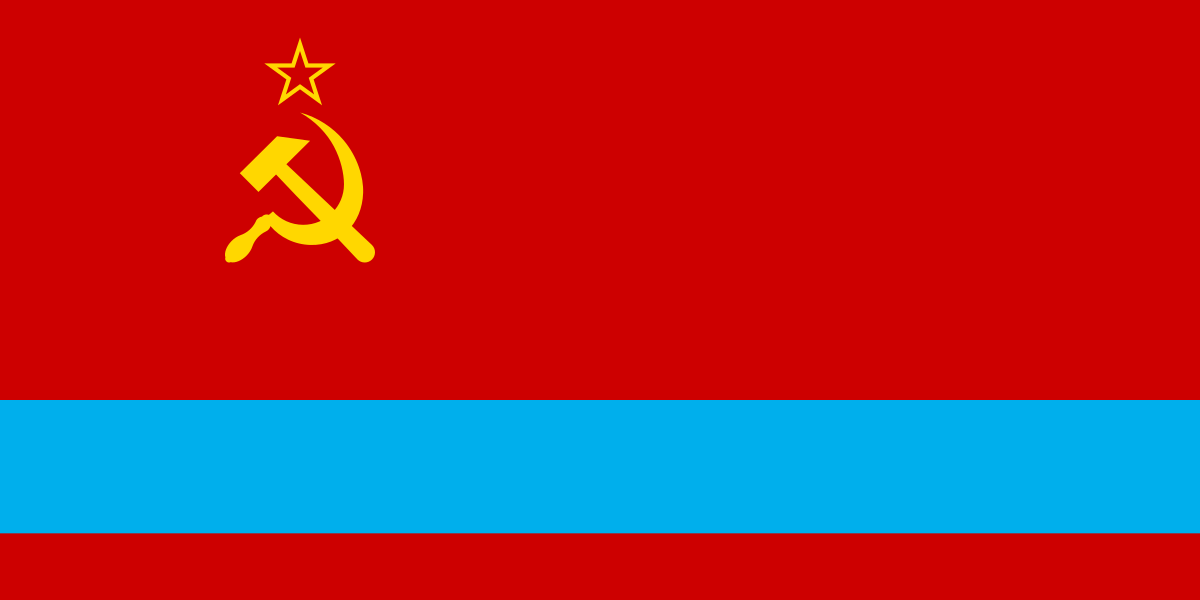
A red Soviet flag with a turquoise lower band and the hammer, sickle and star, flown over Soviet Kazakhstan until its independence in 1991.
Today part of: Kazakhstan
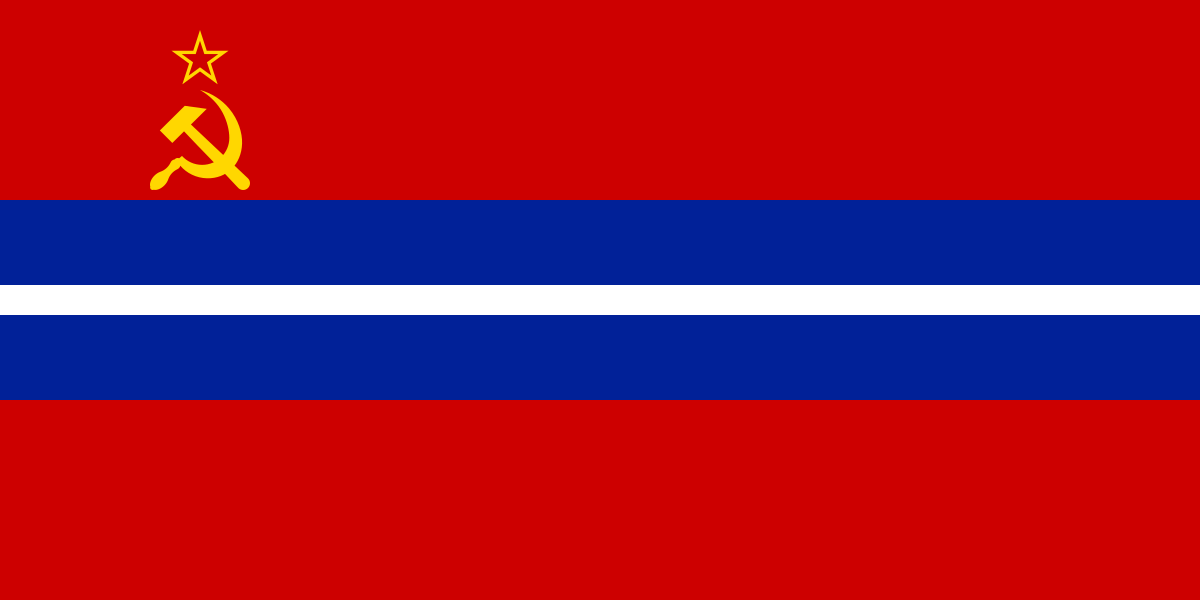
The red flag of Soviet Kyrgyzstan, crossed at its centre by blue-and-white stripes, used until the republic became independent Kyrgyzstan.
Today part of: Kyrgyzstan
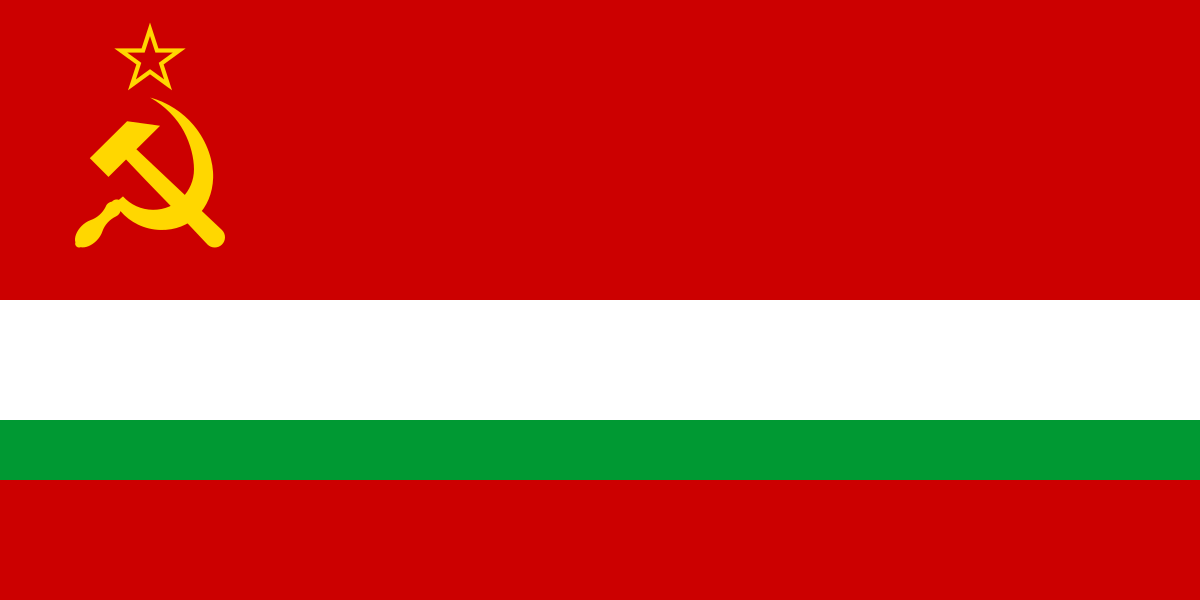
A red flag with white and green horizontal bands beneath the hammer, sickle and star — the Soviet flag of Tajikistan, carved out of the Uzbek SSR in 1929.
Today part of: Tajikistan
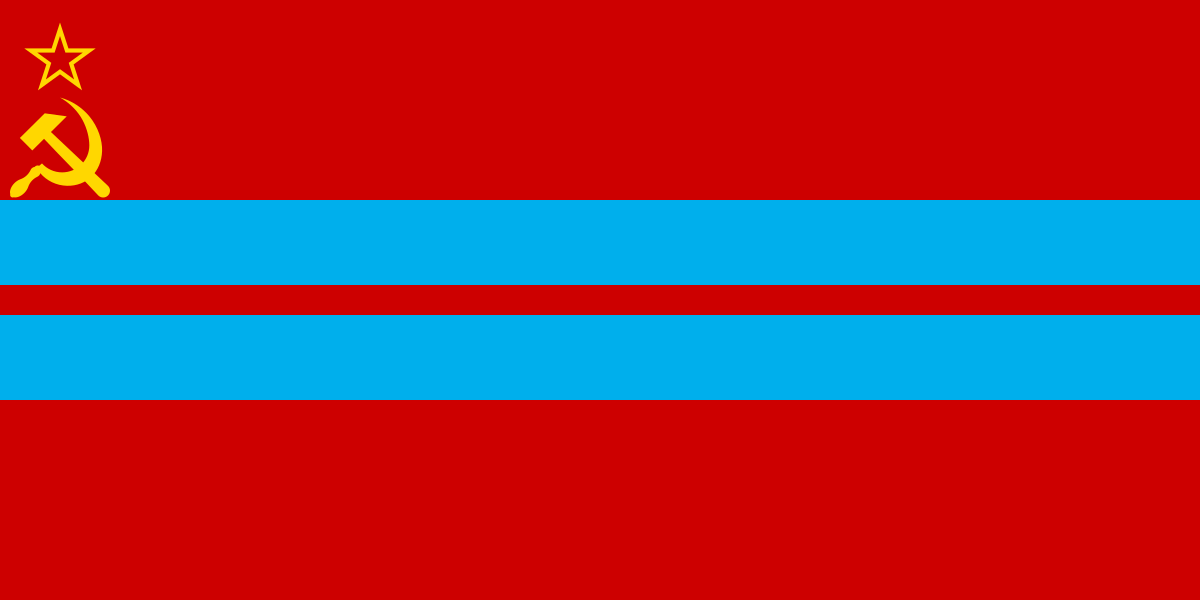
A red Soviet flag crossed by two blue stripes, flown over Soviet Turkmenistan; the modern country adopted its green national flag in 1992.
Today part of: Turkmenistan
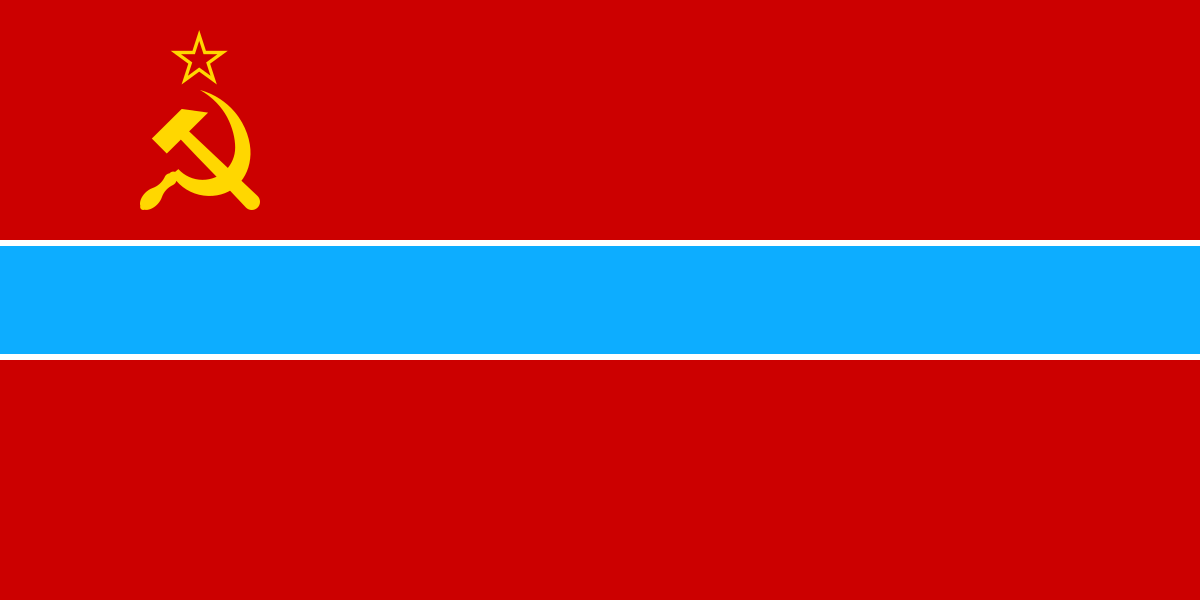
A red flag with a central blue band edged in white above and below the hammer, sickle and star — the Soviet flag of Uzbekistan until independence.
Today part of: Uzbekistan
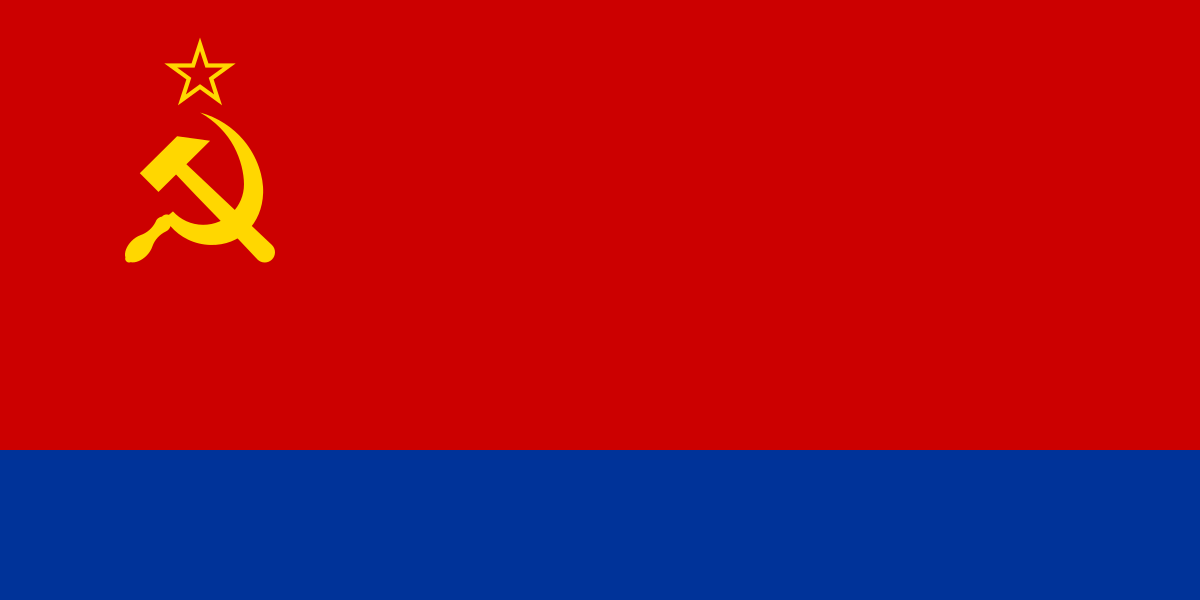
The red Soviet flag of Azerbaijan with a blue lower band and the hammer, sickle and star, used until the republic restored its independence in 1991.
Today part of: Azerbaijan
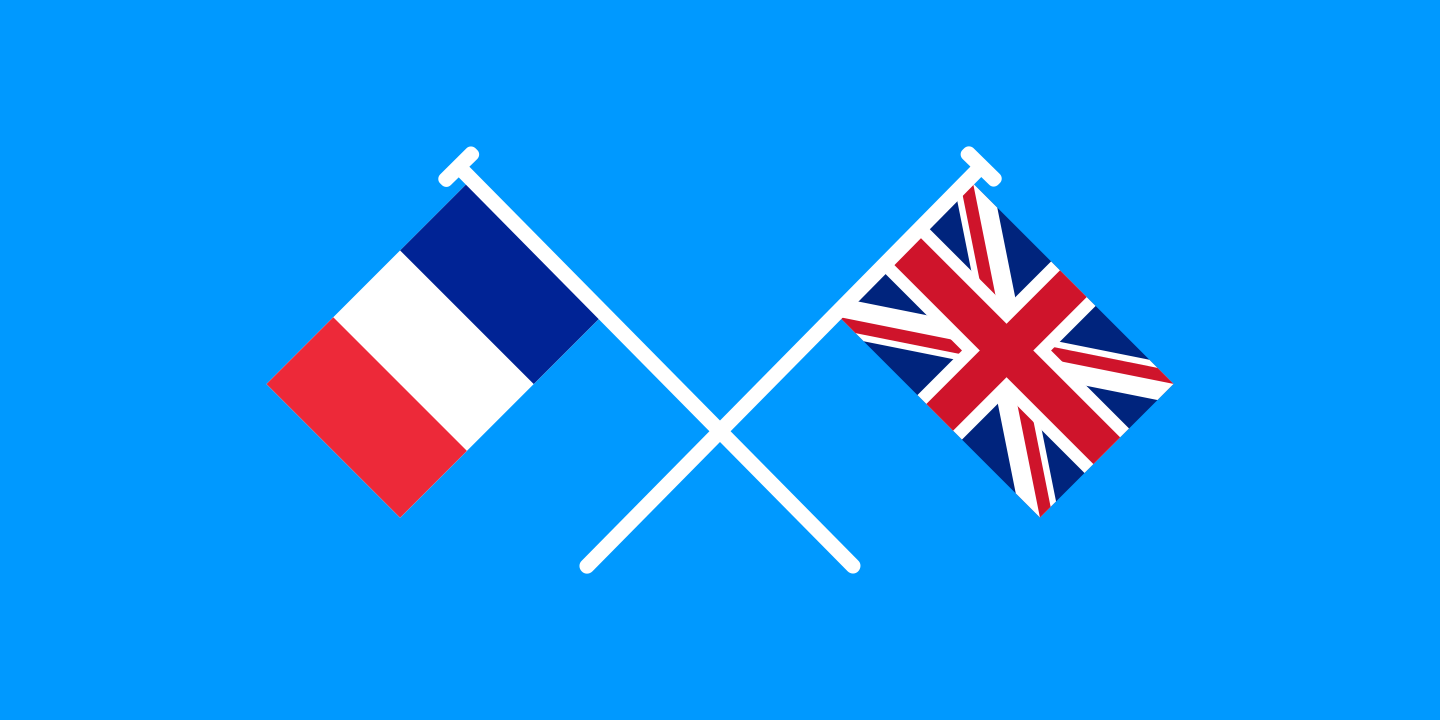
The Anglo-French condominium that jointly governed the islands of modern Vanuatu from 1906 until independence in 1980 — famously run by two parallel colonial administrations at once.
Today part of: Vanuatu
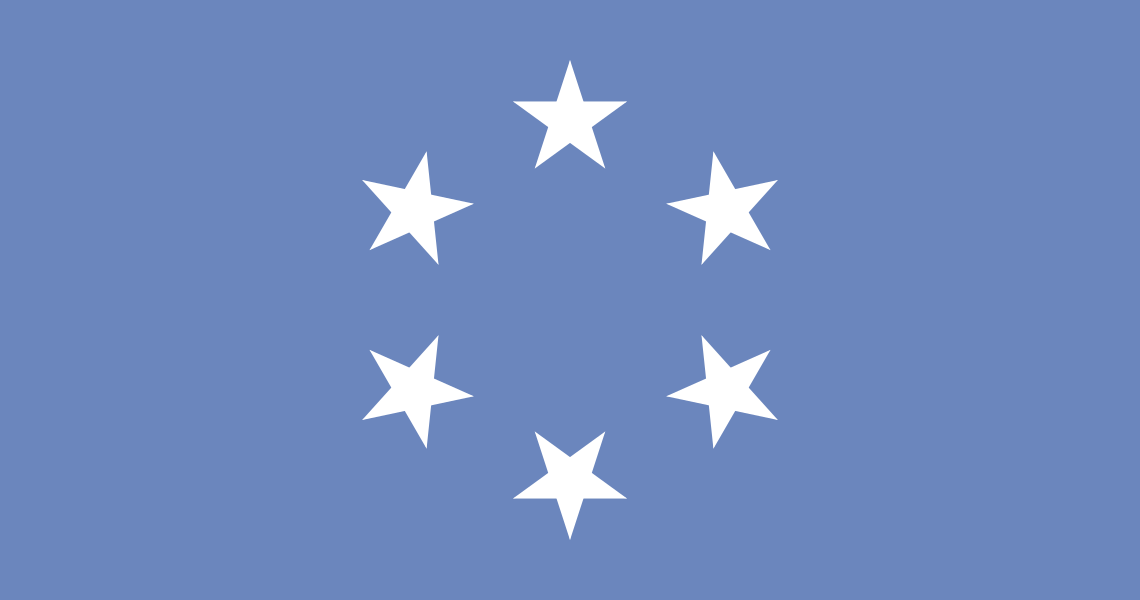
A US-administered UN trust territory across Micronesia after the Second World War, which split into the modern Federated States of Micronesia, Marshall Islands, Palau and the Northern Marianas.
Today part of: Micronesia, Marshall Islands, Palau

One of history's great empires, ruling most of the Indian subcontinent at its height; its green 'Alam' banner bore a lion and rising sun. Builders of the Taj Mahal, the Mughals were finally deposed by the British after the 1857 rebellion.
Today part of: India, Pakistan, Bangladesh
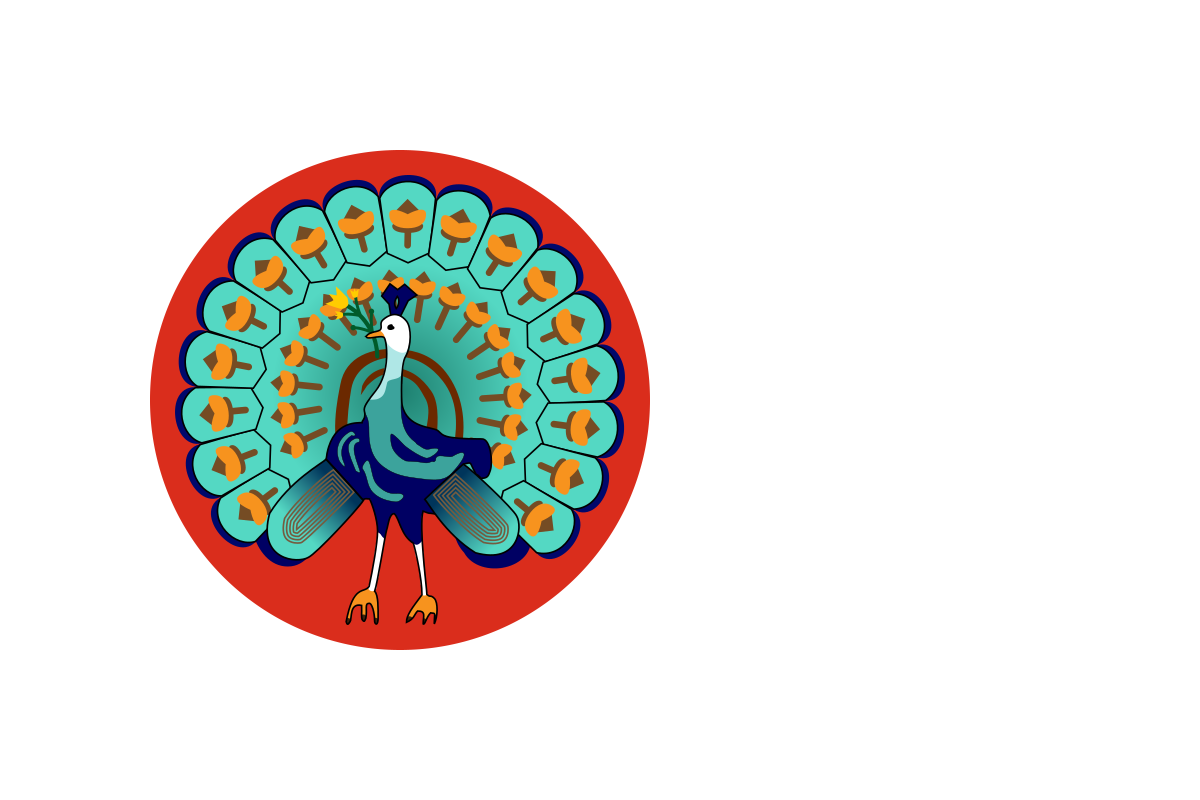
The last dynasty of Burmese kings — the 'Third Burmese Empire' — whose peacock banner flew until the British annexed Burma after three Anglo-Burmese Wars.
Today part of: Myanmar