Asia
Flag of China
China is the world's most populous country and has the world's second-largest economy, home to one of history's longest continuous civilisations spanning over 5,000 years. The Great Wall, the Terracotta Army, the Forbidden City, and the Li River karst landscape are among its most iconic landmarks. China's 'Four Great Inventions' — paper, printing, gunpowder, and the compass — transformed human civilisation worldwide, and the country has been a centre of philosophical, scientific, and artistic achievement throughout recorded history.

- CapitalBeijing
- RegionAsia
- Current flag since1949
- Main coloursRed, Yellow
- Populationabout 1.4 billion
- Areaabout 9,597,000 km²
- Flags in history11
Population and area are rounded.
What the flag of China means
Red stands for the communist revolution and yellow for the golden light of the Chinese nation. The large star represents the Communist Party, and the four smaller stars, each pointing towards it, the four social classes described by Mao Zedong: workers, peasants, the petty bourgeoisie and the national bourgeoisie. The flag was designed by Zeng Liansong and adopted in 1949.
How to recognise it
Red with one large yellow star and four smaller yellow stars in the upper left.
Did you know?
China is the world's oldest continuous civilisation, with a recorded history of over 5,000 years.
Easily confused with
China's flag is often mixed up with these. Learn to tell them apart:
Flag history of China
Every flag that has flown over China, from today back through time.
1949–present
People's Republic of China
Designed by Zeng Liansong and adopted in 1949, the large gold star represents the Communist Party while the four smaller stars represent the united classes of the Chinese people. The design was chosen from nearly 3,000 public submissions.
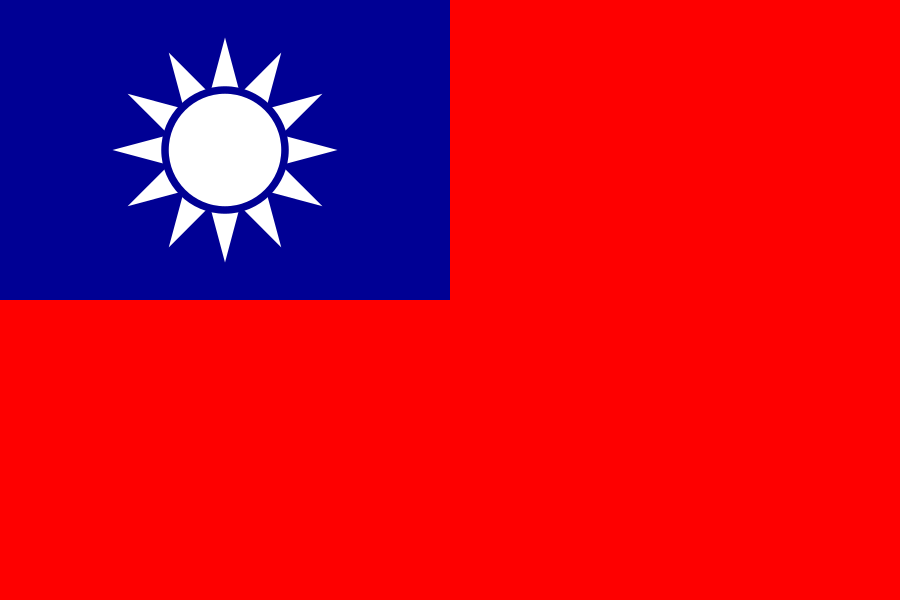
1928–1949
Republic of China
The "Blue Sky with a White Sun" canton — its twelve rays marking the twelve two-hour periods of the day — was adopted nationally in 1928 after the Kuomintang unified China. It remains the flag of Taiwan today.

1912–1928
Republic of China (Five-Colored Flag)
The five stripes — red, yellow, blue, white, and black — stood for "Five Races Under One Union": the Han, Manchu, Mongol, Hui, and Tibetan peoples. It served the Beiyang government until the Northern Expedition.
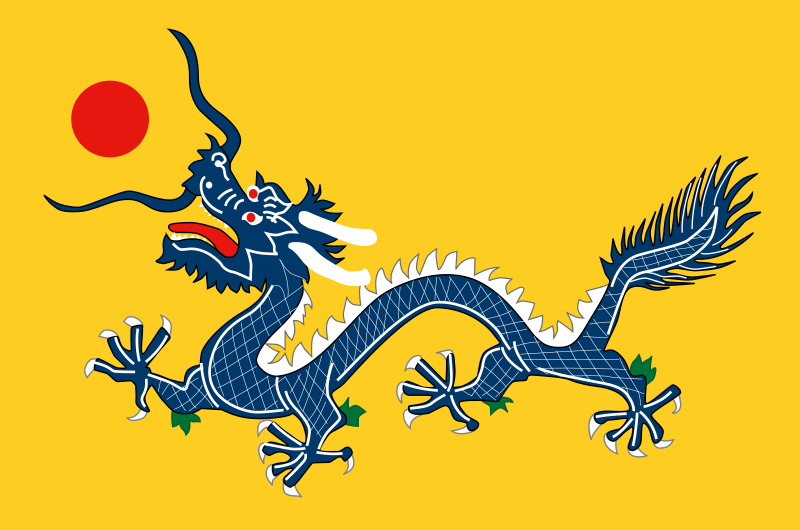
1889–1912
Qing Dynasty (Yellow Dragon)
The Azure Dragon chasing a red flaming pearl on a yellow field — yellow being the imperial color of the ruling house. An earlier triangular version dated to 1862 before the rectangular flag was standardized.

1938–1940
Reformed Government of the Republic of China
A Japanese-sponsored collaborationist government in occupied central China.
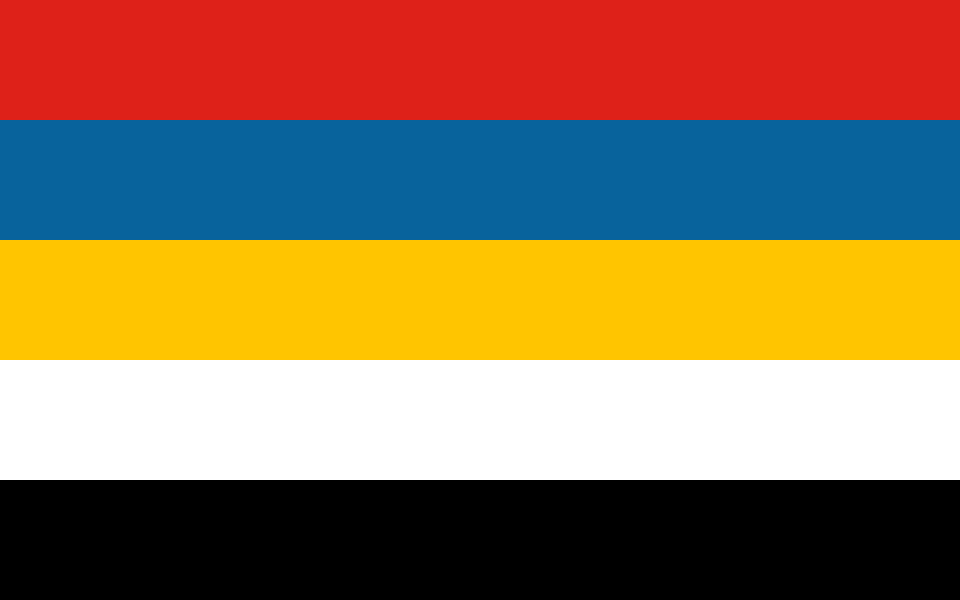
1935–1938
East Hebei Autonomous Government
A Japanese puppet regime in northern China, a stepping stone to the wider invasion.
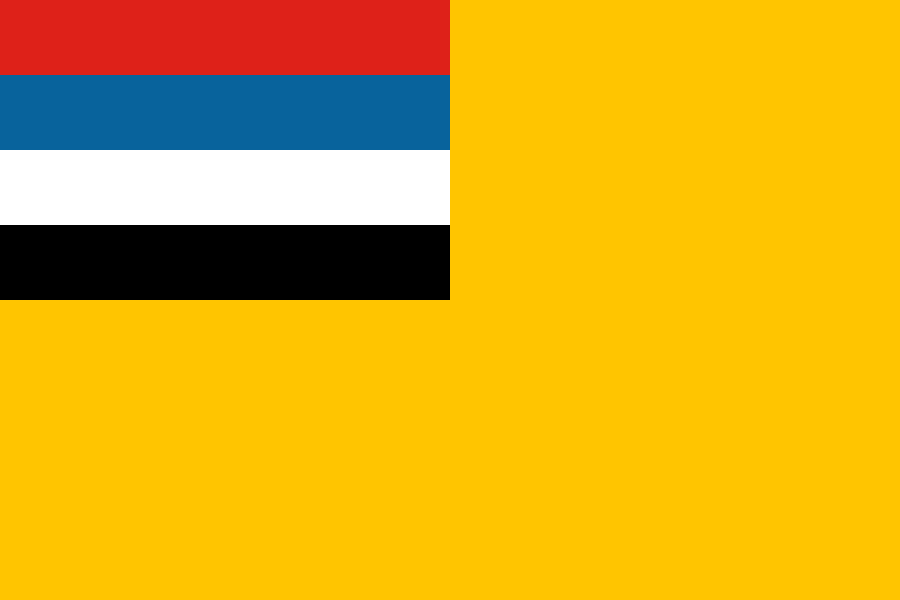
1932–1945
Manchukuo
The Japanese puppet empire in Manchuria, fronted by Puyi, China's last emperor — dissolved when the USSR invaded in 1945.
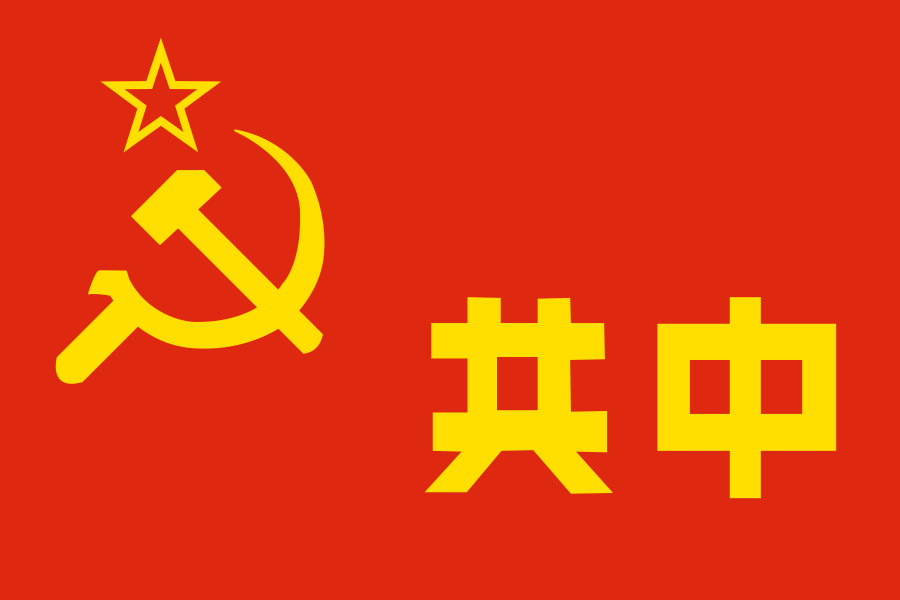
1931–1934
Jiangxi–Fujian Soviet
The Chinese Soviet Republic, Mao Zedong's first base area, abandoned at the start of the Long March.
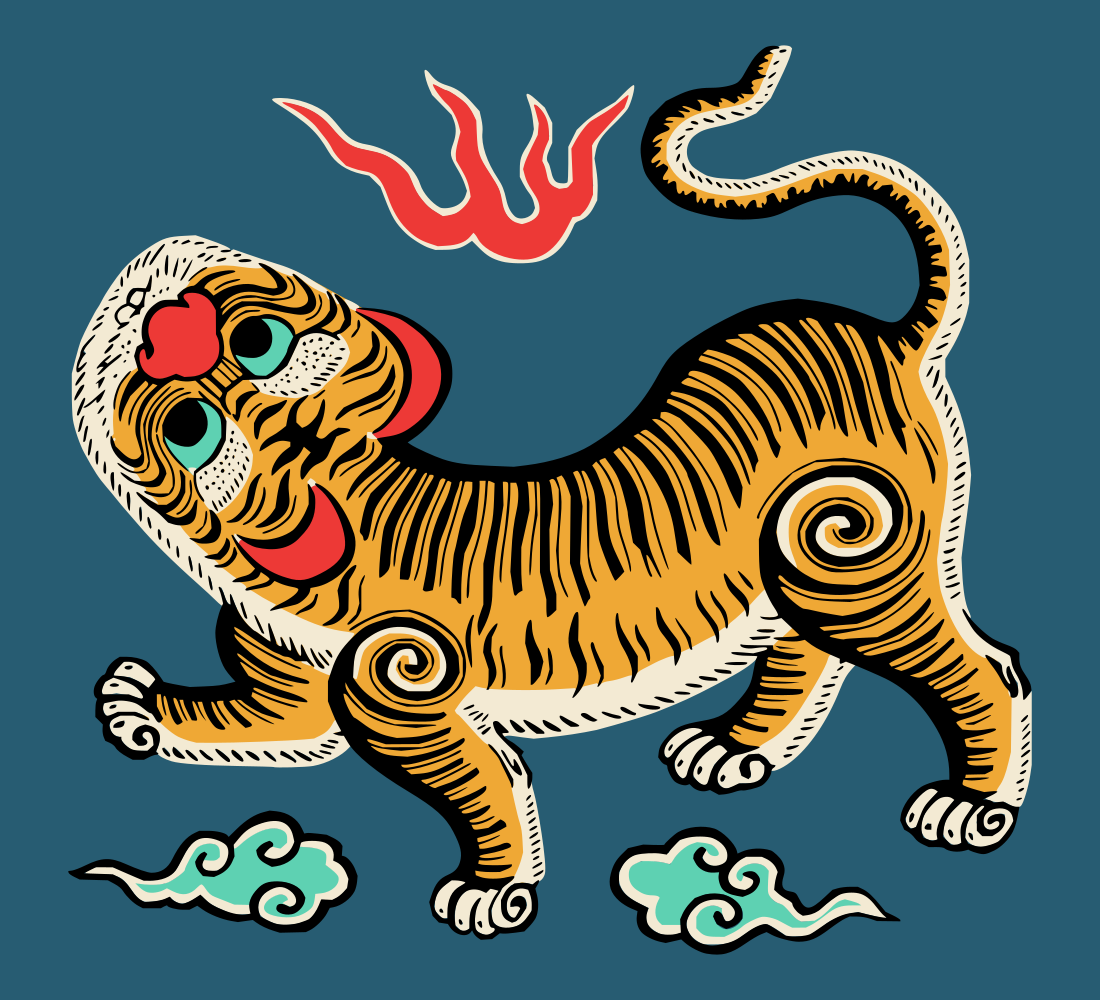
1895
Republic of Formosa
A short-lived republic declared on Taiwan to resist the island's cession to Japan; it lasted only months.
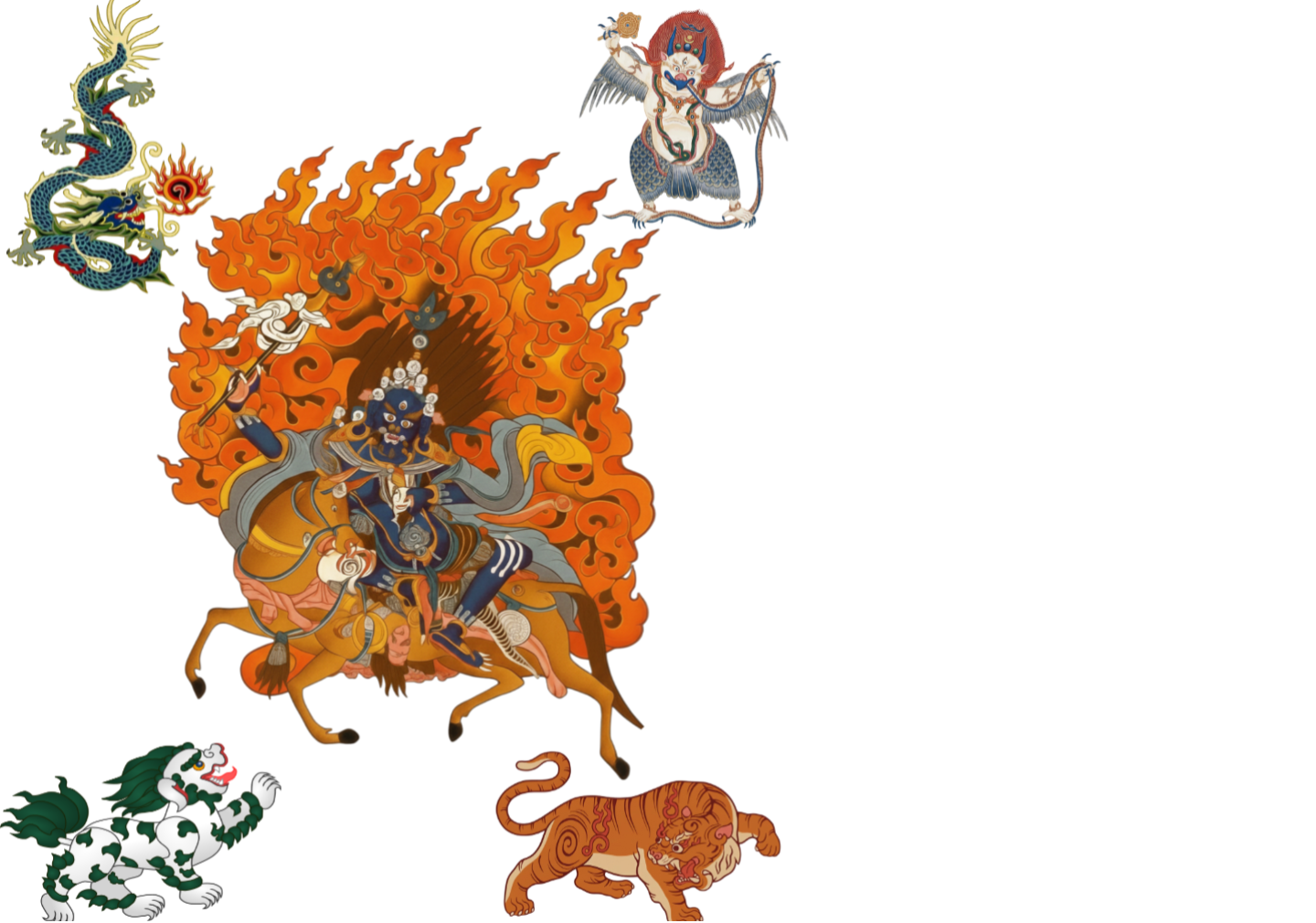
1642–1717
Khoshut Khanate
A Mongol khanate that ruled Tibet and installed the Fifth Dalai Lama's government before the Qing took control.
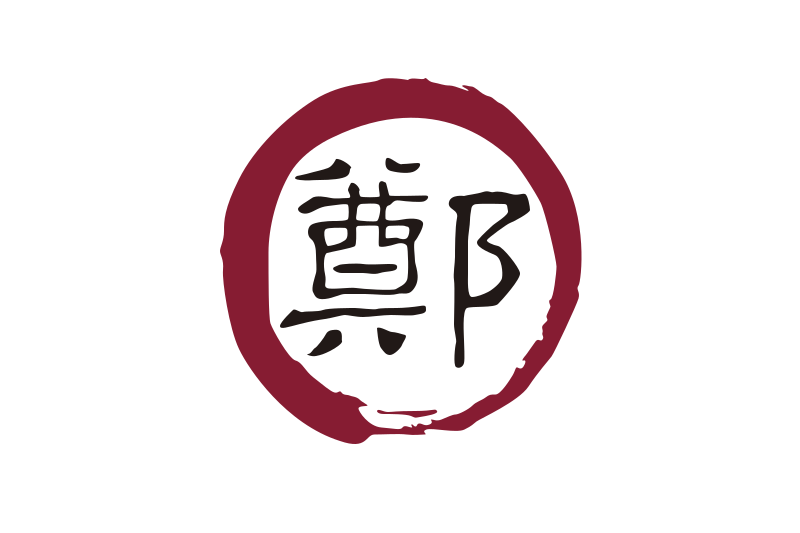
1661–1683
Kingdom of Tungning
The Ming-loyalist kingdom founded on Taiwan by the warlord Koxinga, who expelled the Dutch — the first Han Chinese state to rule the island, until the Qing took it.
Related historical states
Empires, kingdoms and republics that once covered part of China.
1889–1912
Qing Dynasty
The 'Yellow Dragon Flag' shows the Azure Dragon chasing a flaming pearl. It began as a triangular naval ensign in 1862 and became China's first true national flag in 1889.
1912–1928
Republic of China (1912)
The five stripes stood for the Han, Manchu, Mongol, Hui, and Tibetan peoples under the 'Five Races Under One Union' ideal, until the KMT's Blue Sky flag replaced it in 1928.
1932–1945
Manchukuo
The Japanese puppet state's yellow flag with a four-color canton. Its head of state was Puyi — the same man who had been the last Qing emperor as a child.
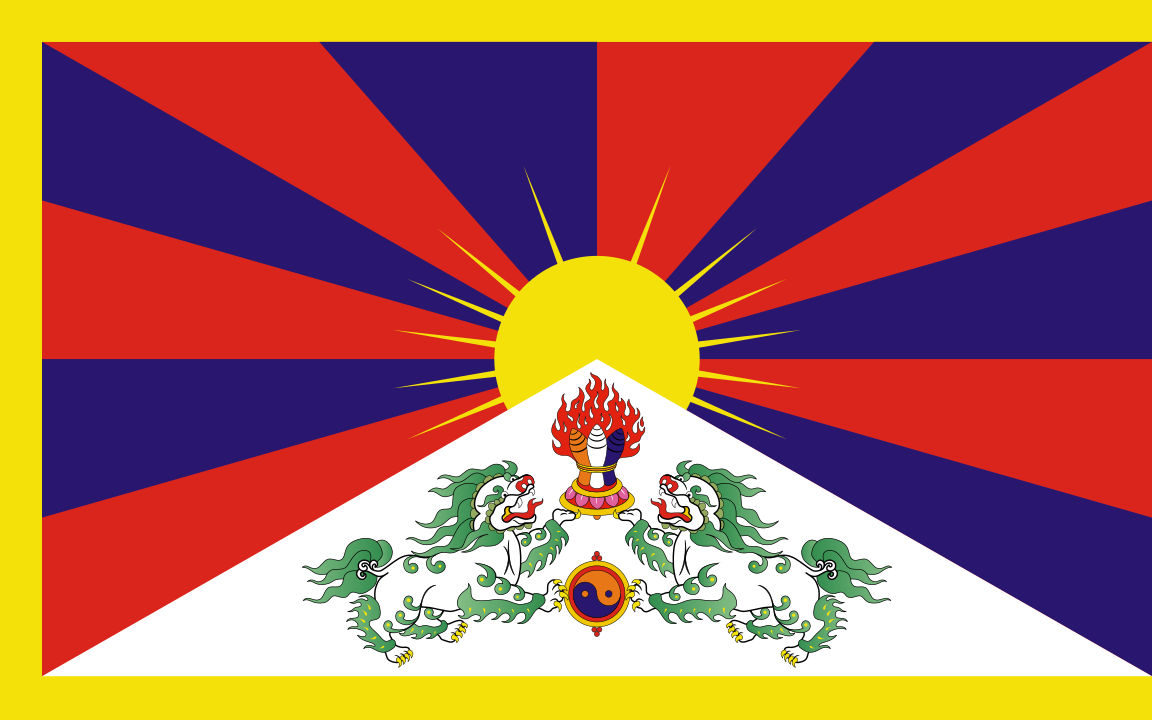
1916–1951
Tibet
The 'Snow Lion Flag' shows two snow lions holding a jewel before a sun over a snow mountain. Designed under the 13th Dalai Lama, it is banned in China today.
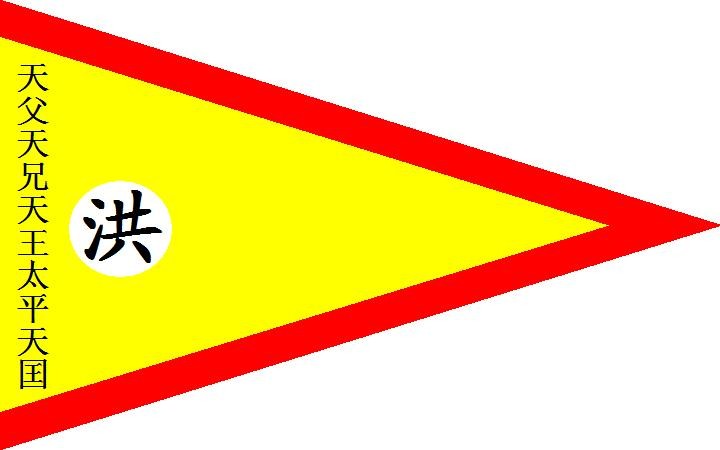
1851–1864
Taiping Heavenly Kingdom
The vast quasi-Christian rebel kingdom whose civil war against the Qing killed an estimated 20 million people. It flew many ornate banners rather than one fixed flag.
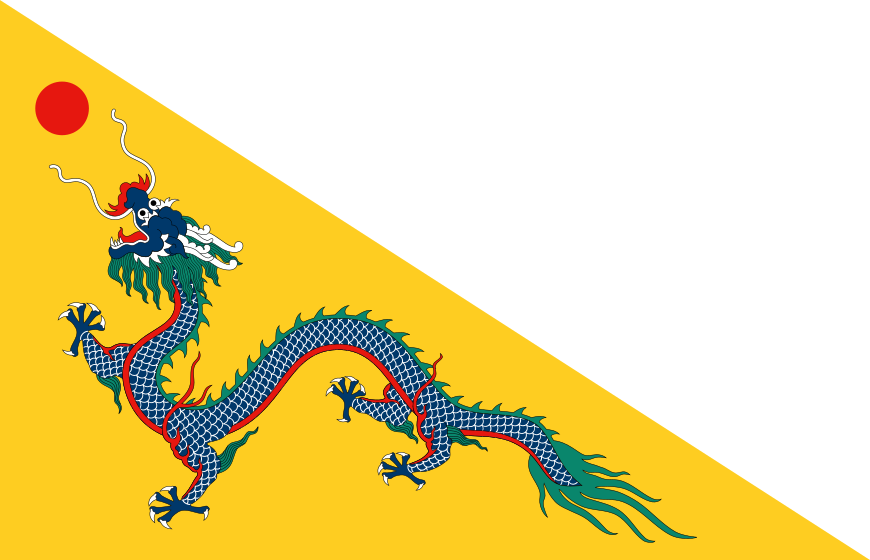
1862–1889
Qing Dynasty (Triangular Dragon)
China's first national ensign was a triangular 'Yellow Dragon Flag' adopted for the imperial navy in 1862, before the familiar rectangular version replaced it in 1889.
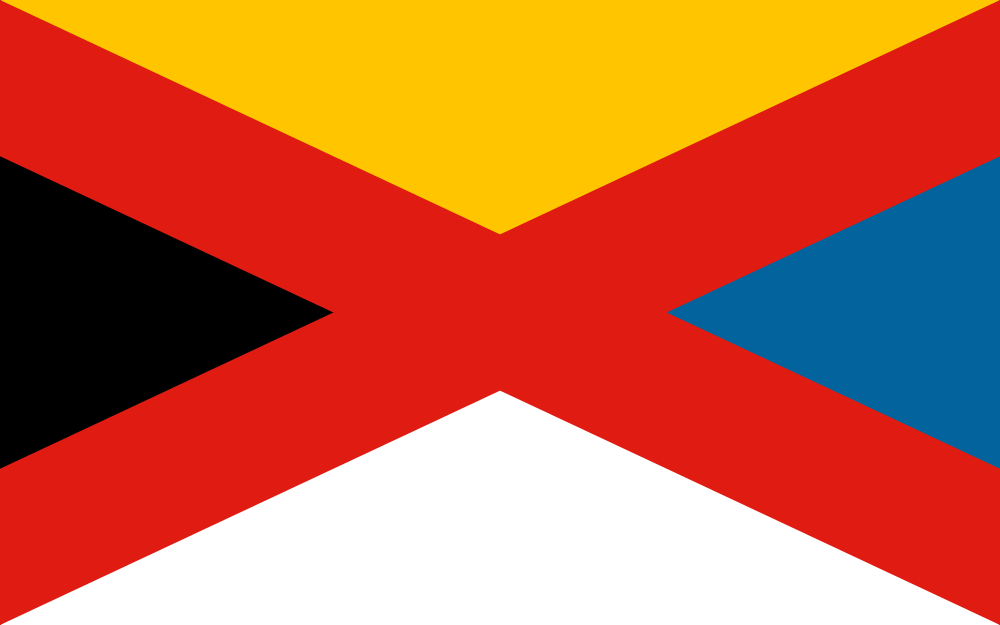
1915–1916
Empire of China (1915–1916)
When president Yuan Shikai declared himself emperor in 1915, he revived a cross-and-stripes flag for his short-lived monarchy, which collapsed amid revolts within 83 days.
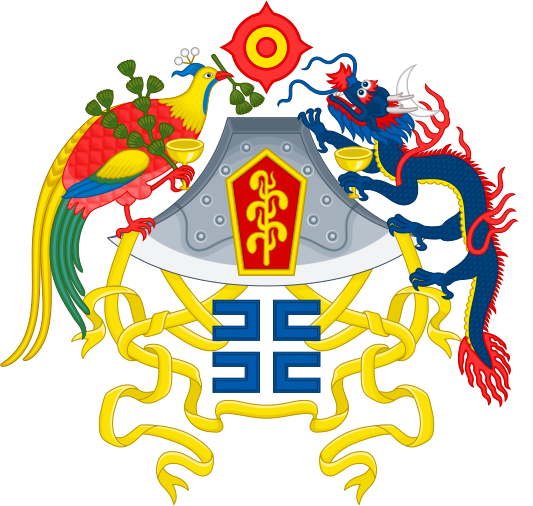
1913–1928
Republic of China (Twelve Symbols)
The early Republic's ornate state emblem, designed with input from the writer Lu Xun, combined the ancient Twelve Ornaments of imperial robes into a single republican coat of arms.
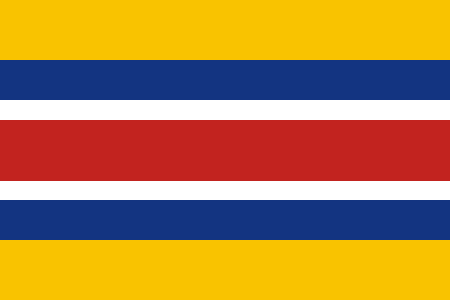
1939–1945
Mengjiang (Mengkukuo)
The Japanese-backed Mongol puppet state in Inner Mongolia flew a striped flag whose bands stood for the Mongol, Han, Japanese, Manchu, and Hui peoples it claimed to unite.
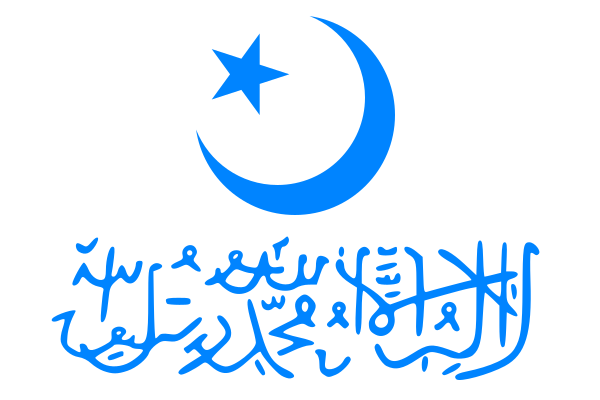
1933–1934
First East Turkestan Republic
A short-lived Islamic republic proclaimed at Kashgar in Xinjiang, flying the sky-blue Kökbayraq with a white crescent and star, crushed within months by Chinese and Soviet-backed forces.
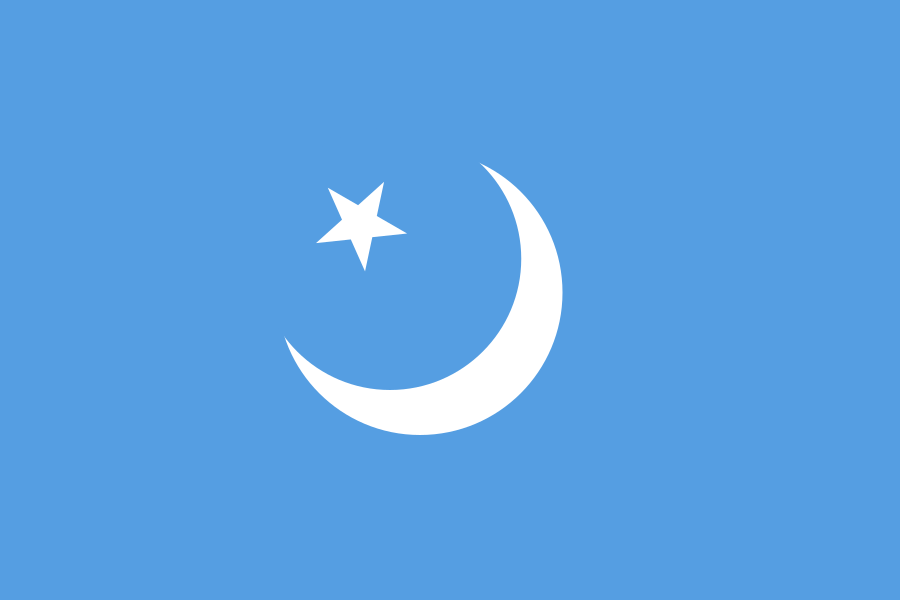
1944–1949
Second East Turkestan Republic
A Soviet-supported Uyghur and Kazakh republic in northern Xinjiang, absorbed into the People's Republic of China in 1949 after its leaders died in a mysterious plane crash.
Territories & dependencies
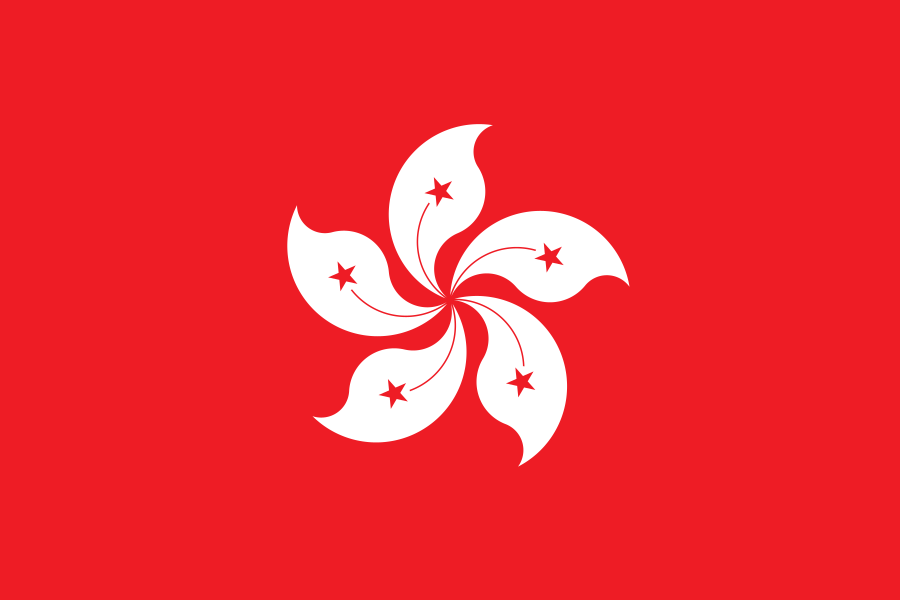
Special Administrative Region
Hong Kong
A former British colony returned to China in 1997, governed under 'one country, two systems' with its own legal system and currency. Its red flag bears a white five-petalled bauhinia flower.
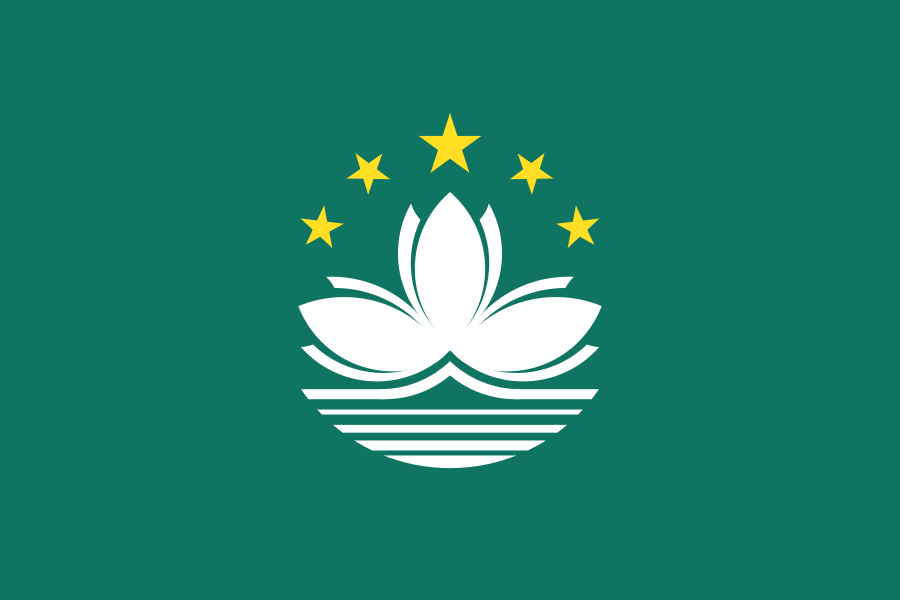
Special Administrative Region
Macau
A former Portuguese territory returned to China in 1999, also under 'one country, two systems'. The world's biggest gambling hub, its green flag shows a lotus over the Governor Nobre de Carvalho Bridge.
Regional flags of China
The 2 states, provinces and regions of China with their own flags.
Hong Kong
Macao
Neighbouring countries
China shares a land border with 14 countries: Afghanistan, Bhutan, India, Kazakhstan, Kyrgyzstan, Laos, Mongolia, Myanmar, Nepal, North Korea, Pakistan, Russia, Tajikistan and Vietnam.
Other flags in red and yellow
5 other national flags use the same main colours as China's.
Play Globalio and learn China's flag
 Vietnam
 Burkina Faso
 Turkey
 Afghanistan
 Bhutan
 India
 Kazakhstan
 Kyrgyzstan
 Laos
 Mongolia
 Myanmar
 Nepal
 North Korea
 Pakistan
 Russia
 Tajikistan
 Montenegro
 North Macedonia
 Spain