Middle East
Flag of the United Arab Emirates
The United Arab Emirates is a federation of seven emirates on the southeastern Arabian Peninsula that has transformed from a collection of small fishing and pearl-diving communities into one of the world's wealthiest nations in barely five decades, driven by oil revenues and economic diversification. Dubai is home to the Burj Khalifa, the world's tallest building, and has become a global hub for aviation, finance, tourism, and international business. Abu Dhabi, the capital emirate, holds the majority of the federation's oil wealth.

- CapitalAbu Dhabi
- RegionMiddle East
- Current flag since1971
- Main coloursRed, Green, White, Black
- Populationabout 9.4 million
- Areaabout 84,000 km²
- Flags in history2
Population and area are rounded.
What the flag of the United Arab Emirates means
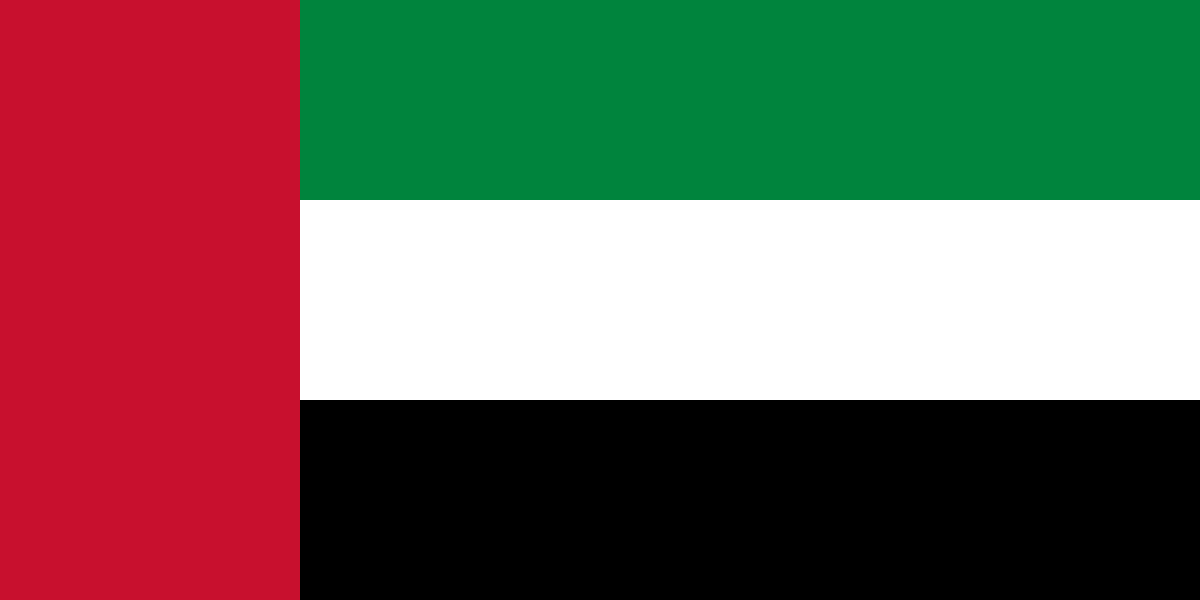
The flag uses the pan-Arab colours: green for fertility, white for neutrality, black for strength, and red for the unity of the emirates. It was designed by Abdullah Mohammed Al Maainah, then 19 years old, and first raised on 2 December 1971, when the federation was formed.
How to recognise it
Horizontal green-white-black with a vertical red stripe at the hoist.
Did you know?
The UAE is home to the world's tallest building, the Burj Khalifa, at 828 metres.
Easily confused with
The United Arab Emirates' flag is often mixed up with these. Learn to tell them apart:
Flag history of the United Arab Emirates
Every flag that has flown over the United Arab Emirates, from today back through time.
1971–present
United Arab Emirates (federation)
When seven Trucial States — Abu Dhabi, Dubai, Sharjah, Ajman, Fujairah, Ras al-Khaimah, and Umm al-Quwain — federated as the UAE on December 2, 1971, they adopted the pan-Arab green-white-black horizontal stripes with a red vertical stripe at the hoist. The flag was designed by Abdulla Mohamed Al Maainah, then 19 years old, who won the national design competition. Red is the traditional colour of the Kharijite and Gulf ruling families; the other three colours are pan-Arab.
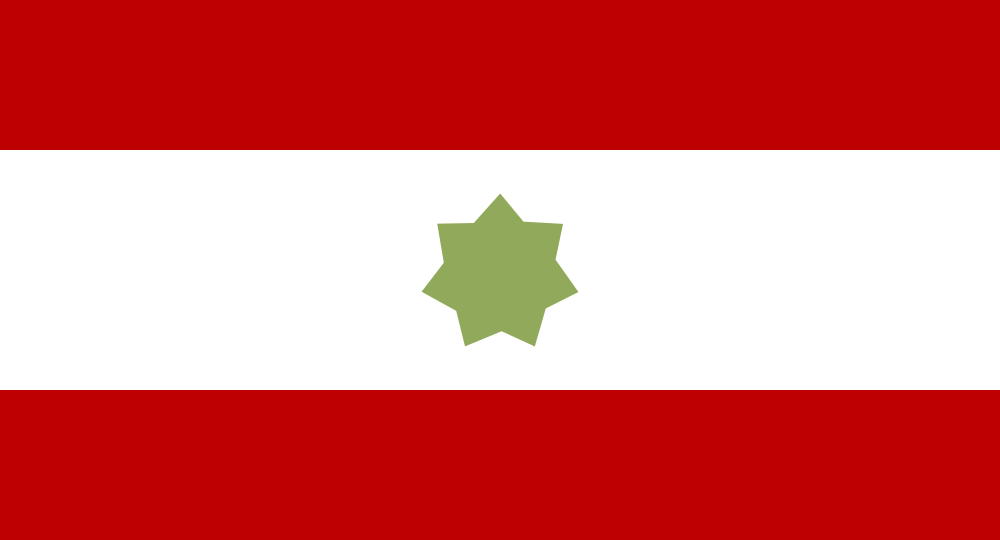
1820–1971
Trucial States (under British protection)
The seven emirates were known as the Trucial States under British protection from 1820, when a General Treaty with Britain ended widespread piracy in the Gulf. Each emirate flew its own red-and-white flag — red was the traditional colour of Gulf rulers, white added by treaty with Britain to identify peaceful vessels. The flags were nearly identical between emirates, distinguishable mainly by different proportions of red and white. Britain withdrew from "East of Suez" in 1971, prompting federation.
Related historical states
Empires, kingdoms and republics that once covered part of the United Arab Emirates.
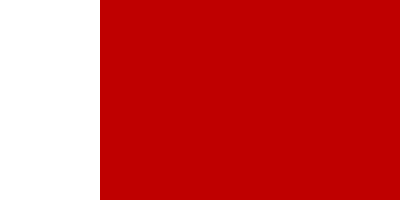
1961–1971
Emirate of Dubai (Trucial)
Before the UAE formed in 1971, Dubai flew a red field with a white hoist band, adopted to mark its ships at sea under the Trucial States agreements with Britain.
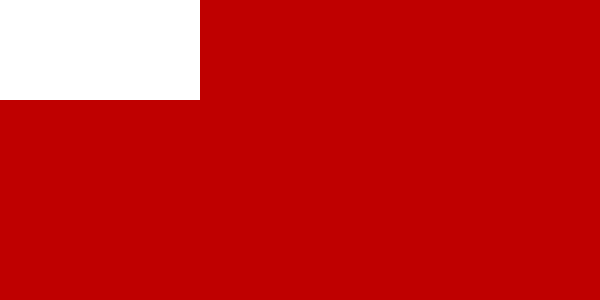
1958–1971
Emirate of Abu Dhabi (Trucial)
The largest of the Trucial emirates flew a red flag with a white canton before joining the United Arab Emirates in 1971.
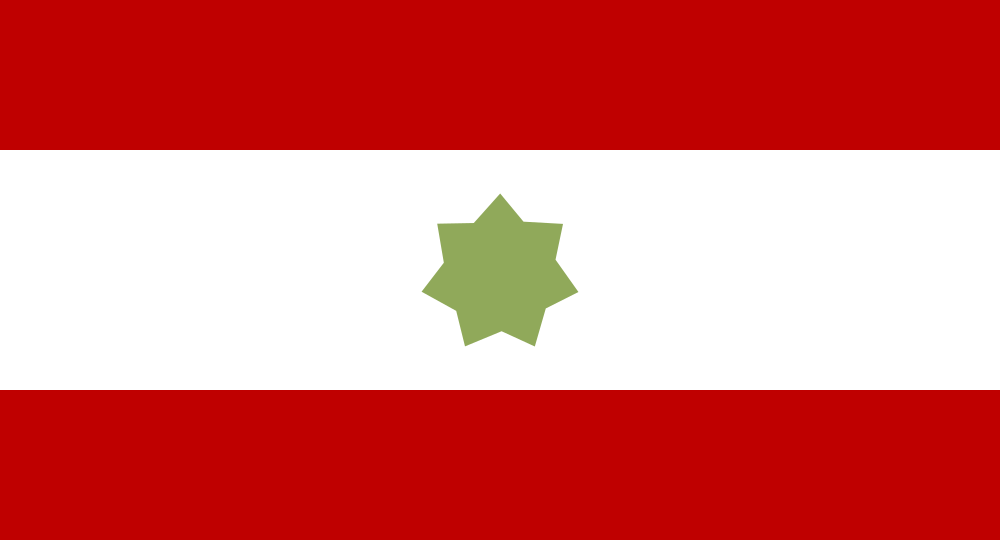
1968–1971
Trucial States
The collective flag of the British-protected sheikhdoms of the lower Gulf, a red field with a green-bordered white stripe, flown briefly before they federated as the United Arab Emirates.
Regional flags of the United Arab Emirates
The 7 states, provinces and regions of the United Arab Emirates with their own flags.
Abu Dhabi
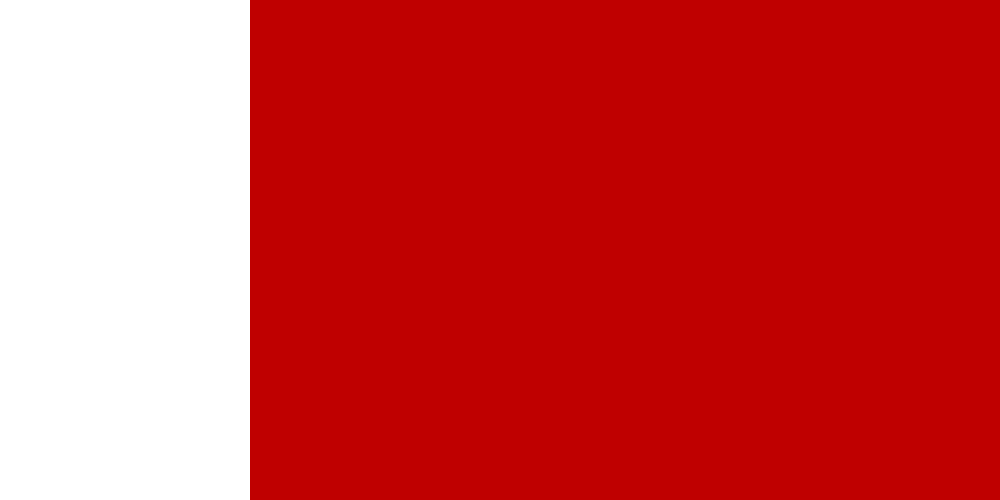
Ajman
Dubai
Fujairah

Ras al-Khaimah
Sharjah
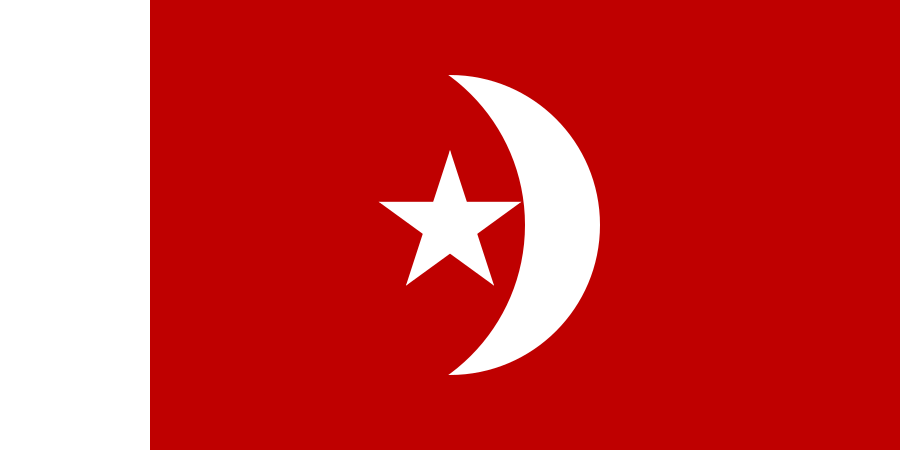
Umm al-Quwain
Neighbouring countries
The United Arab Emirates shares a land border with 2 countries: Oman and Saudi Arabia.
Other flags in red, green, white and black
8 other national flags use the same main colours as the United Arab Emirates'.
Play Globalio and learn the United Arab Emirates' flag
 Jordan
 Sudan
 Yemen
 Oman
 Saudi Arabia
 Afghanistan
 Kenya
 Kuwait
 Libya
 Palestine
 Syria