Middle East
Flag of Saudi Arabia
Saudi Arabia is the largest country in the Middle East and the birthplace of Islam, home to its two holiest cities — Mecca and Medina — which together receive around 15 million Muslim pilgrims annually for the Hajj and Umrah. The country holds the world's second-largest proven oil reserves and is the world's largest oil exporter, making it a central player in global energy markets. Saudi Arabia is governed as an absolute monarchy by the Al Saud royal family and is undergoing significant social and economic reform.

- CapitalRiyadh
- RegionMiddle East
- Current flag since1973
- Main coloursGreen, White
- Populationabout 37 million
- Areaabout 2,150,000 km²
- Flags in history8
Population and area are rounded.
What the flag of Saudi Arabia means
The Shahada, the Islamic declaration of faith, is written in white Thuluth script: “There is no god but God; Muhammad is the Messenger of God”. The sword stands for justice and for the House of Saud. Because the text is sacred, the flag is never flown at half-mast, and it is made double-sided so that the words read correctly from both sides.
How to recognise it
Dark green with white Arabic script (the Shahada) and a white sword below it.
Did you know?
Saudi Arabia is the world's largest country with no permanent river.
Easily confused with
Saudi Arabia's flag is often mixed up with these. Learn to tell them apart:
Flag history of Saudi Arabia
Every flag that has flown over Saudi Arabia, from today back through time.
1973–present
Kingdom of Saudi Arabia (current)
Saudi Arabia's flag — a green field bearing the Shahada ("There is no god but Allah, and Muhammad is his messenger") in white Thuluth script above a white sword — is one of the world's most religiously charged national flags. The sword's orientation was reversed in 1973 to always face forward (towards the hoist) regardless of which side of the flag you see. Green is the traditional colour of Islam; the sword symbolises the Kingdom's founding through military conquest.
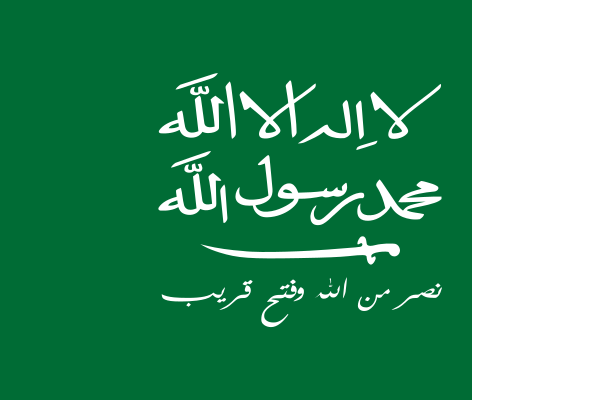
1926–1932
Kingdom of Hejaz and Nejd
After Ibn Saud conquered the Hejaz — and the holy cities of Mecca and Medina — in 1925, he ruled a dual kingdom of Hejaz and Nejd from 1926 until merging them into the single Kingdom of Saudi Arabia in 1932. Its green flag bore the Shahada and a white sword.
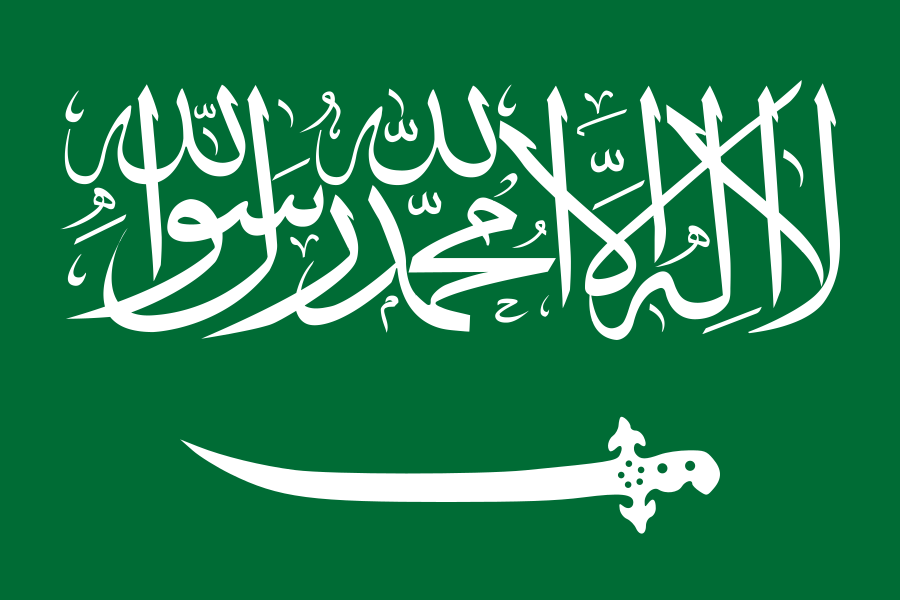
1938–1973
Kingdom of Saudi Arabia (1938)
An earlier standardisation in 1938 established the green-Shahada-sword design but with the sword pointing in different directions on each side — a heraldic oddity that was corrected in 1973. Before 1938 the exact form of the Shahada inscription and sword varied between different royal households and governors. Saudi Arabia is one of only three countries whose flag includes text.
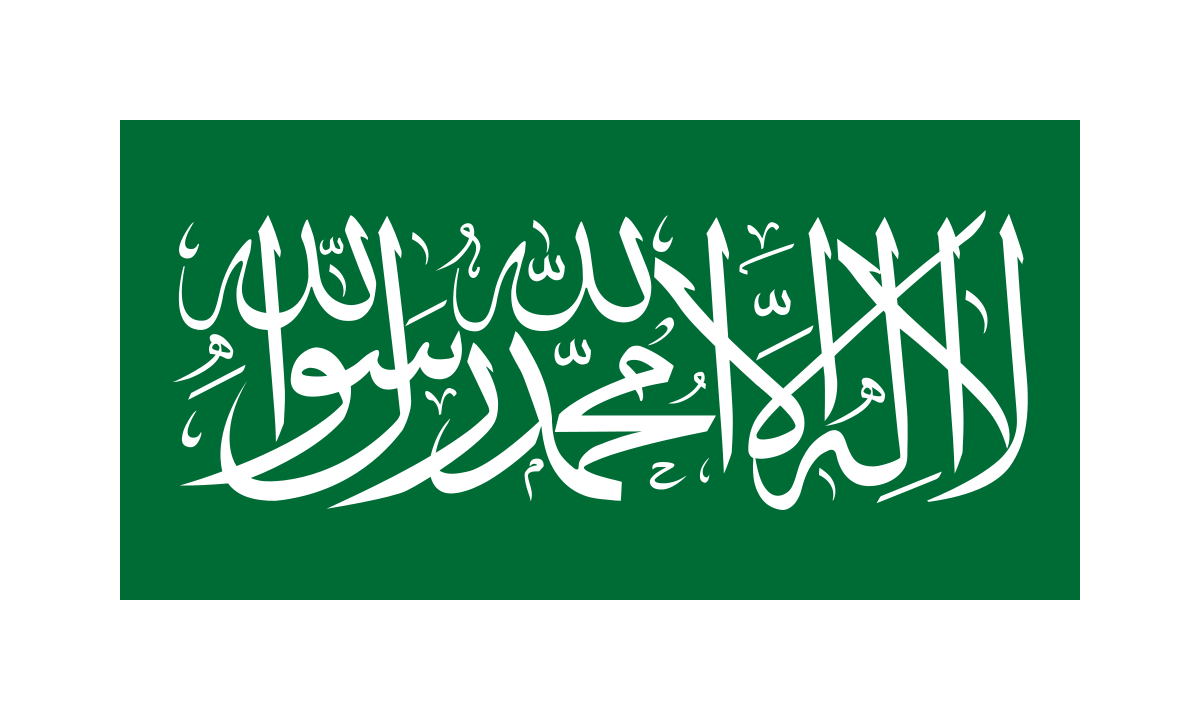
1902–1938
Sultanate/Kingdom of Nejd
Ibn Saud's early flags as he united the Arabian Peninsula were variants of a green field with the Shahada — the same core identity but without a standardised sword. When Ibn Saud captured Riyadh in 1902, beginning his 30-year campaign to unite Arabia, his banners were simpler religious standards. The sword emblem was formalised as the kingdom consolidated, symbolising both the founding wars and the Wahhabi religious authority underpinning the state.
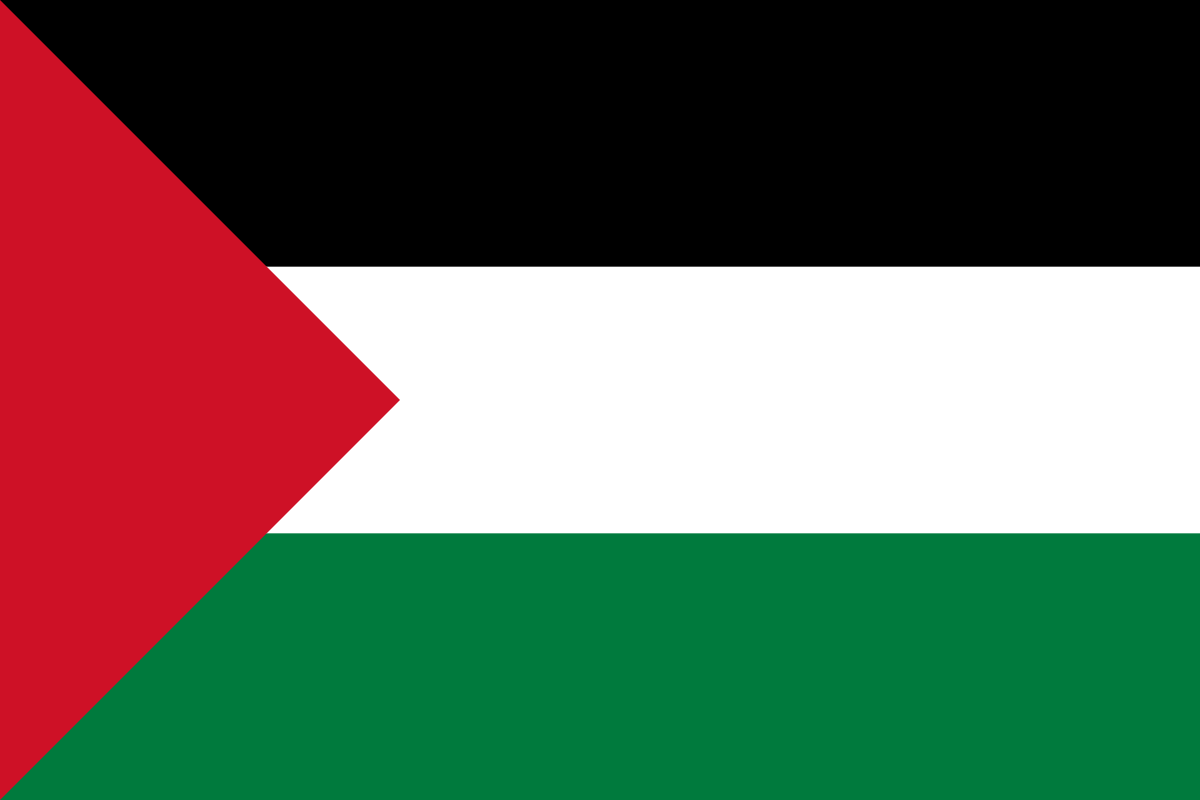
1916–1925
Kingdom of Hejaz (Hashemite)
Before the Saudis, the Hejaz — home to Mecca and Medina — was its own kingdom under Sharif Hussein bin Ali, who launched the Arab Revolt against the Ottomans in 1916 and flew its black-white-green flag with a red triangle (the ancestor of many Arab flags today). Ibn Saud conquered the Hejaz in 1925, ending Hashemite rule over the holy cities and folding it into what became Saudi Arabia.
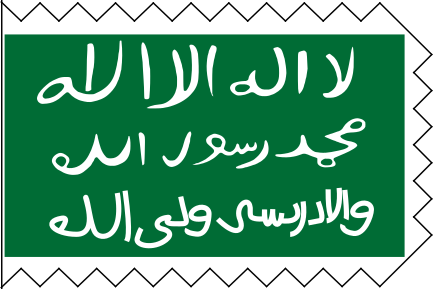
1906–1934
Emirate of Asir
An idrisid emirate on the Red Sea coast, annexed by Saudi Arabia after a short war with Yemen.
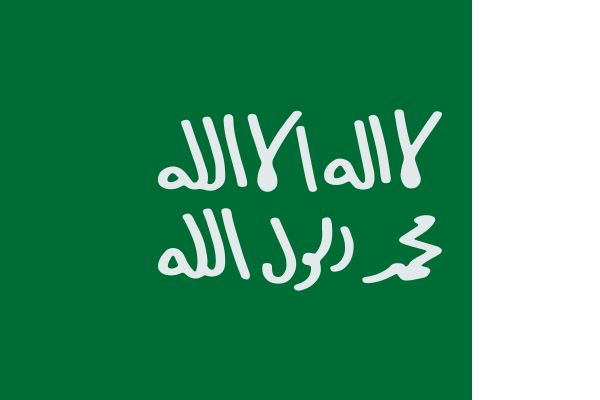
1727–1818
Emirate of Diriyah
The First Saudi State, the original alliance of the House of Saud and the Wahhabi movement, destroyed by an Ottoman-Egyptian army.
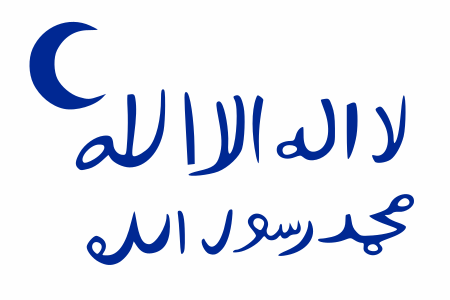
1906–1934
Sheikdom of Upper Asir
A highland sheikhdom of the Asir region, annexed by Saudi Arabia after the Saudi–Yemeni war.
Related historical states
Empires, kingdoms and republics that once covered part of Saudi Arabia.
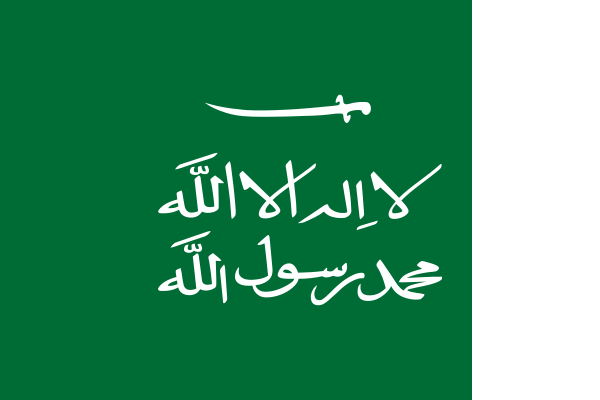
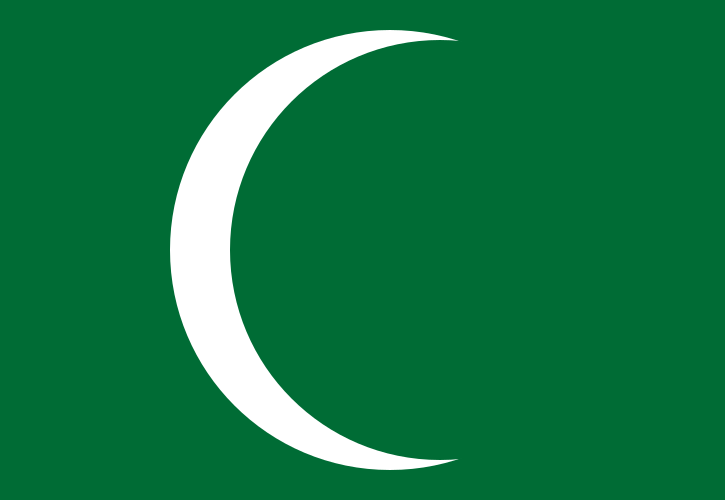
1921–1926
Sultanate of Nejd
A green field with a white crescent, flown by the Al Saud state in central Arabia just before it conquered the Hejaz and became the Kingdom of Saudi Arabia.
1824–1891
Emirate of Riyadh
The plain green banner with the white Arabic shahada served both the First and Second Saudi States ruled from Riyadh, the forerunners of modern Saudi Arabia.
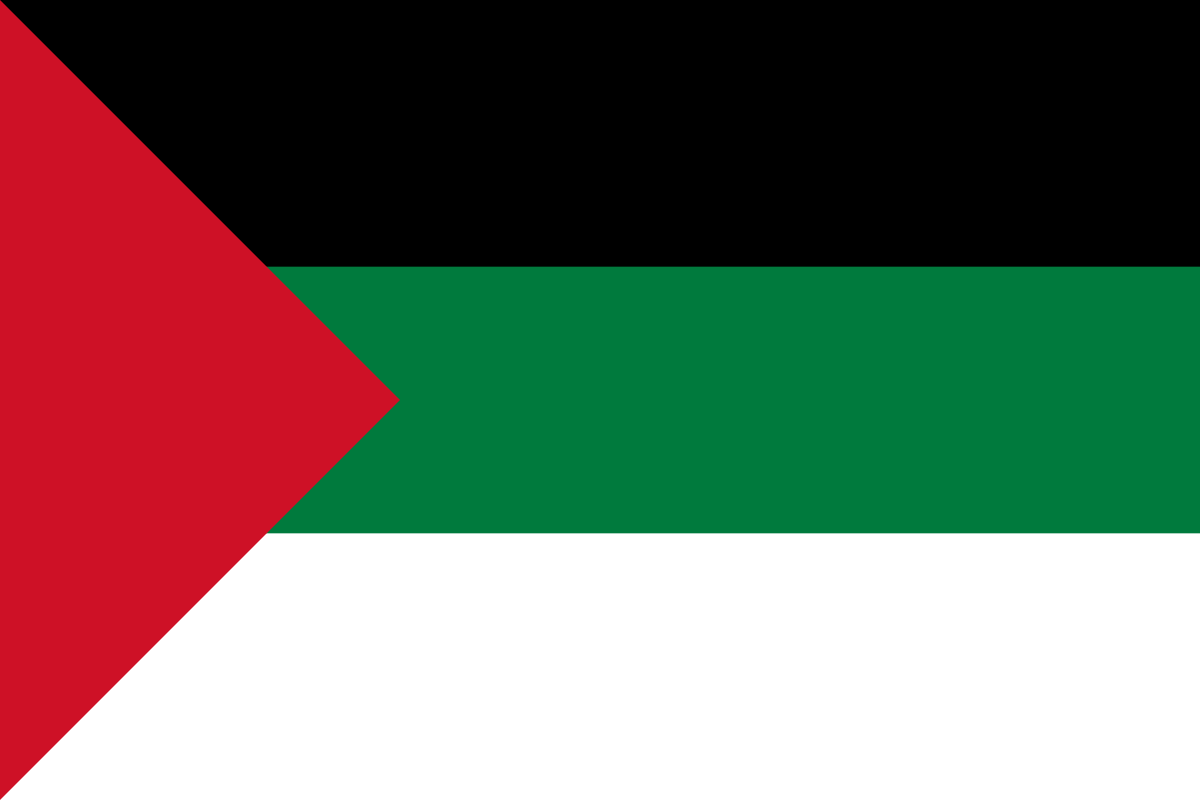
1916–1925
Kingdom of Hejaz
Sharif Hussein's black-green-white tricolor with a red hoist triangle was the flag of the Arab Revolt, the template for nearly every later pan-Arab flag.
1906–1934
Idrisid Emirate of Asir
A small emirate in the mountains of southwestern Arabia between the Hejaz and Yemen, independent for a generation before Saudi Arabia absorbed it after the 1934 Saudi-Yemeni war.
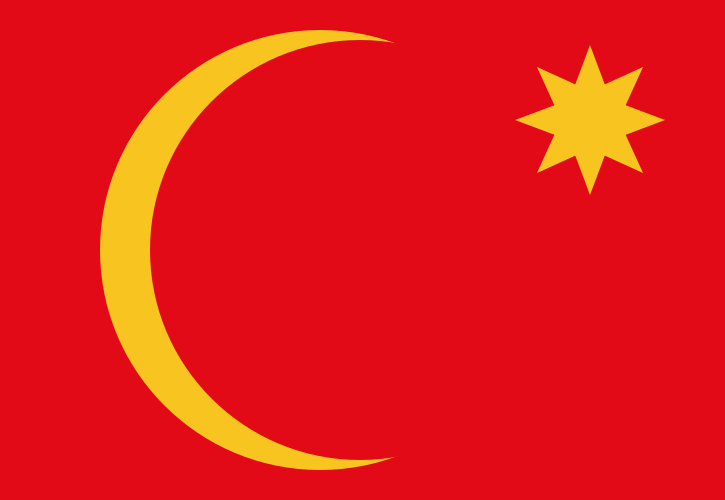
1836–1921
Emirate of Jabal Shammar
The Rashidi emirate centred on Ha'il in northern Arabia, the great rival of the House of Saud until Ibn Saud conquered it in 1921 and folded it into what became Saudi Arabia.
Neighbouring countries
Saudi Arabia shares a land border with 7 countries: Iraq, Jordan, Kuwait, Oman, Qatar, the United Arab Emirates and Yemen.
Other flags in green and white
2 other national flags use the same main colours as Saudi Arabia's.
Play Globalio and learn Saudi Arabia's flag
 Pakistan
 Libya
 Iraq
 Jordan
 Kuwait
 Oman
 Qatar
 United Arab Emirates
 Yemen
 Nigeria