Oceania
Flag of Fiji
Fiji is a South Pacific archipelago of more than 330 islands, of which about 110 are permanently inhabited, located northeast of New Zealand. The country is known for its crystal-clear lagoons, vibrant coral reefs, and a culture of warm hospitality centred around the greeting 'bula' (life, health, and happiness). Fiji has a diverse population of indigenous Fijians and Indo-Fijians descended from labourers brought by British colonial authorities, and has been independent since 1970.

- CapitalSuva
- RegionOceania
- Current flag since1970
- Main coloursBlue, White, Red
- Populationabout 900,000
- Areaabout 18,000 km²
- GeographyIsland nation
- Flags in history4
Population and area are rounded.
What the flag of Fiji means
Fiji's light blue stands for the Pacific Ocean. The shield shows a lion holding a cocoa pod, with sugar cane, a coconut palm, bananas and a dove of peace below. The flag was adopted at independence in 1970; plans announced in 2015 to replace it and remove the Union Jack were dropped in 2016.
How to recognise it
Light blue with the Union Jack in the canton and the Fijian shield on the right.
Did you know?
Fiji is an archipelago of over 330 islands, of which about 110 are permanently inhabited.
Easily confused with
Fiji's flag is often mixed up with these. Learn to tell them apart:
Flag history of Fiji
Every flag that has flown over Fiji, from today back through time.
1970–present
Flag of Fiji
Adopted at independence in 1970, the colonial dark blue was lightened to a sky blue for the Pacific Ocean, keeping the shield and the Union Jack. Fiji formally proposed removing the Union Jack in 2005 and 2015, but both efforts were abandoned.
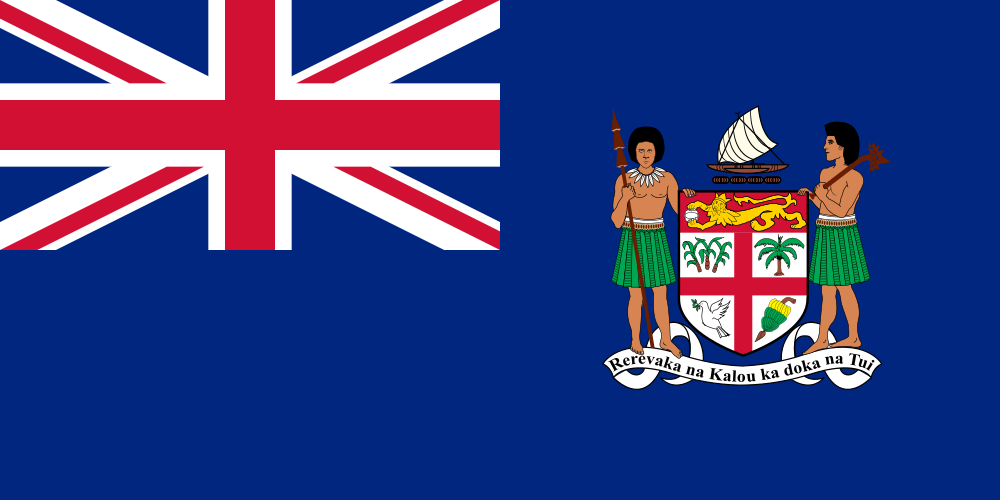
1924–1970
Colonial Blue Ensign (no disc)
The white disc behind the badge was dropped in 1924, leaving the colonial arms directly on the dark blue ensign — Fiji's flag right up to independence.
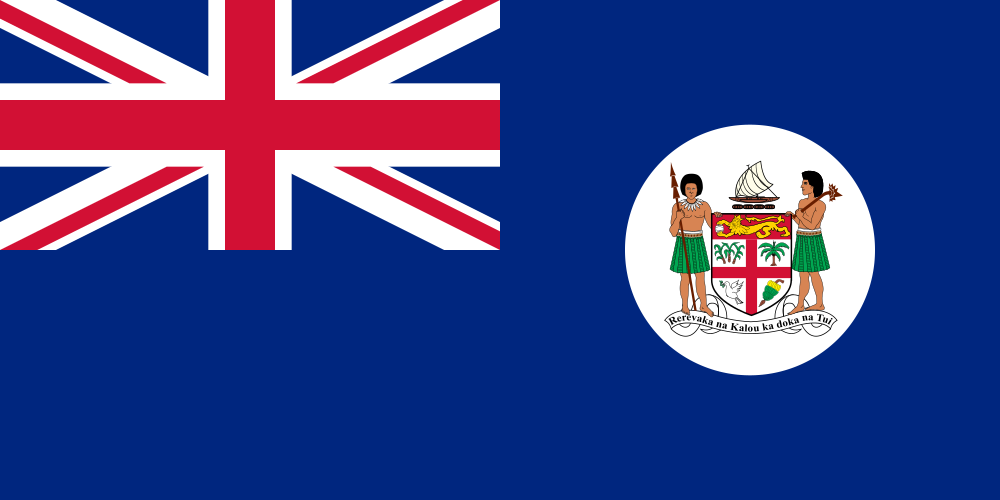
1908–1924
Colonial Blue Ensign (with disc)
A British Blue Ensign defaced with Fiji's colonial coat of arms, granted in 1908, set on a white disc.
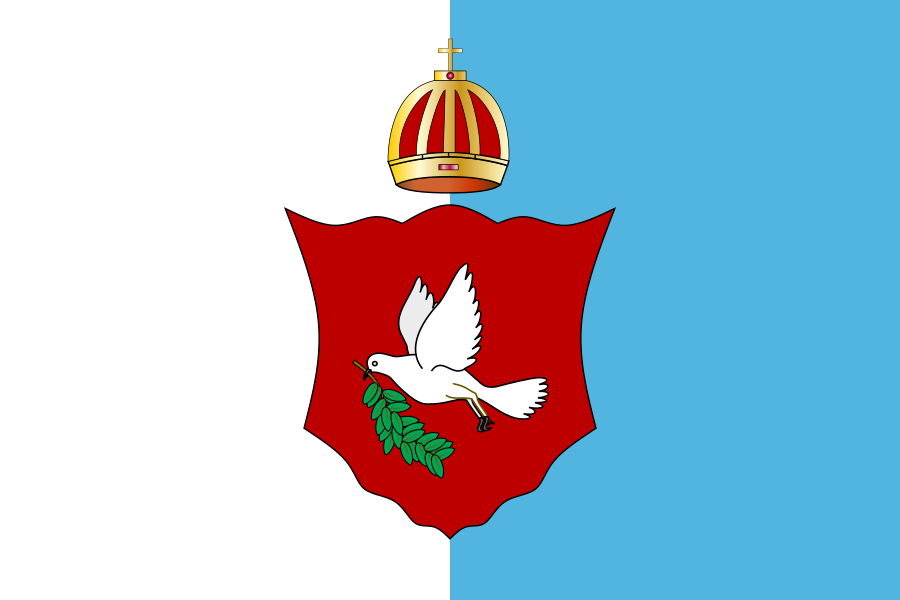
1871–1874
Kingdom of Fiji
Before Britain took over, the warrior chief Seru Epenisa Cakobau united much of the islands as the Kingdom of Fiji in 1871, flying a pale blue flag with a shield, a crown and a white dove of peace. Crippled by debt and unrest, Cakobau ceded Fiji to Britain in 1874 — the dove-and-shield motif lived on in the colonial and modern arms.
Related historical states
Empires, kingdoms and republics that once covered part of Fiji.
1871–1874
Kingdom of Fiji
King Cakobau's united Kingdom of Fiji flew a blue-and-white flag with a crowned shield, until he ceded the islands to Britain in 1874.
Other flags in blue, white and red
30 other national flags use the same main colours as Fiji's.
Play Globalio and learn Fiji's flag
 Australia
 New Zealand
 Tuvalu
 Belize
 Cambodia
 Chile
 Costa Rica
 Croatia
 Cuba
 Czech Republic
 Dominican Republic
 France
 Iceland
 Laos
 Liberia
 Luxembourg
 Nepal
 Netherlands
 North Korea
 Norway
 Panama
 Paraguay
 Russia
 Samoa
 Serbia
 Slovakia
 Slovenia
 Taiwan
 Thailand
 United Kingdom
 United States