 Saudi Arabia
 Maldives
 Turkmenistan

1947–present
Flag of Pakistan
Adopted days before independence in 1947. The white hoist stripe represents religious minorities, while the green field and white crescent-and-star represent the Muslim majority. It has been stable ever since.
Pakistan is a South Asian country created from British India in 1947 as a homeland for South Asian Muslims during Partition. It is the world's second-most populous Muslim-majority country and has a complex ethnic tapestry including Punjabis, Pashtuns, Sindhis, and Baloch peoples. Pakistan is home to K2 (the world's second-highest mountain), the ancient Indus Valley city of Mohenjo-daro, and some of the most spectacular mountain scenery on Earth in the Karakoram and Hindu Kush ranges.
Population and area are rounded.
Dark green represents the Muslim majority and the white stripe the country's religious minorities. The crescent stands for progress and the five-pointed star for light and knowledge. Based on the flag of the All-India Muslim League, it was adopted on 11 August 1947, three days before independence.
Dark green with a white vertical stripe at the hoist and a white crescent and star.
Pakistan is home to five of the world's fourteen 8,000-metre peaks.
Pakistan's flag is often mixed up with these. Learn to tell them apart:
Every flag that has flown over Pakistan, from today back through time.
Adopted days before independence in 1947. The white hoist stripe represents religious minorities, while the green field and white crescent-and-star represent the Muslim majority. It has been stable ever since.
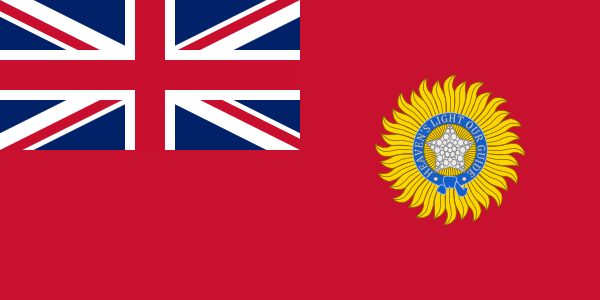
Before Partition, the lands that became Pakistan were part of British India, governed under the Union Jack and the unofficial "Star of India" red ensign. The Muslim League's campaign for a separate Muslim homeland culminated in the 1947 Partition, which created Pakistan as two wings (West and East) flanking India — the basis of its green-and-white flag was the League's own banner.
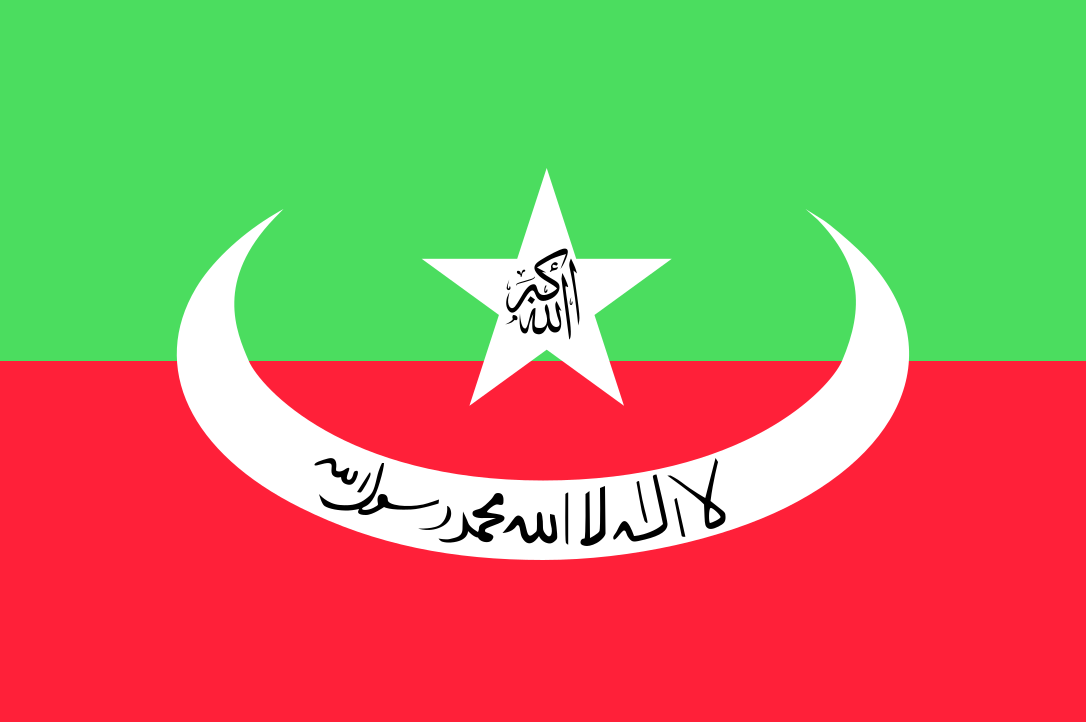
A Baloch khanate in what is now southwestern Pakistan, briefly independent in 1947–48 before acceding to Pakistan.
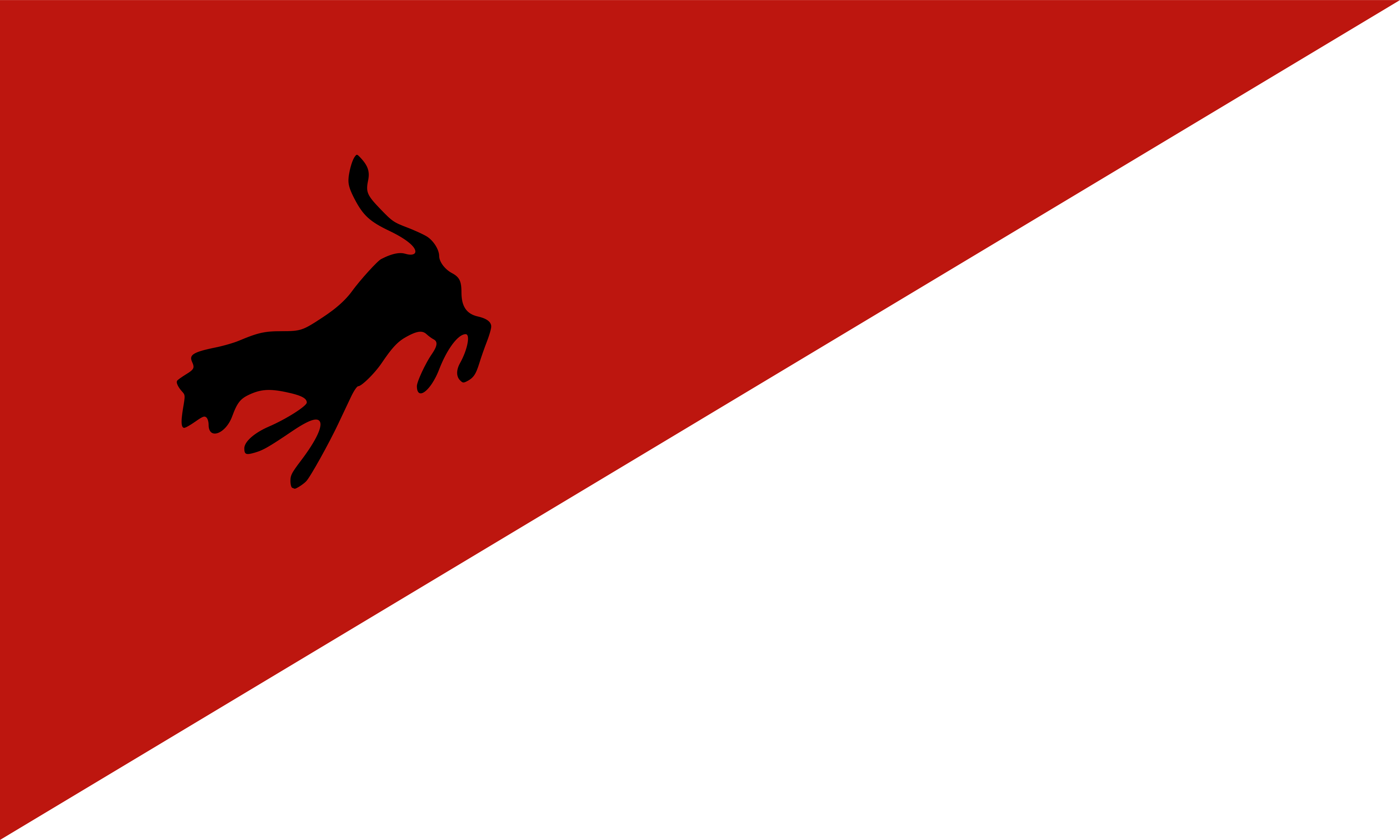
The Baloch dynasty that ruled Sindh (in modern Pakistan), flying the flag of Sindh, until the British conquered it at the Battle of Miani.
Empires, kingdoms and republics that once covered part of Pakistan.
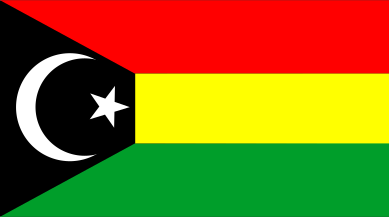
A wealthy princely state in the Punjab desert ruled by the Abbasi Nawabs, whose ruler was among the first to accede to the new nation of Pakistan in 1947.
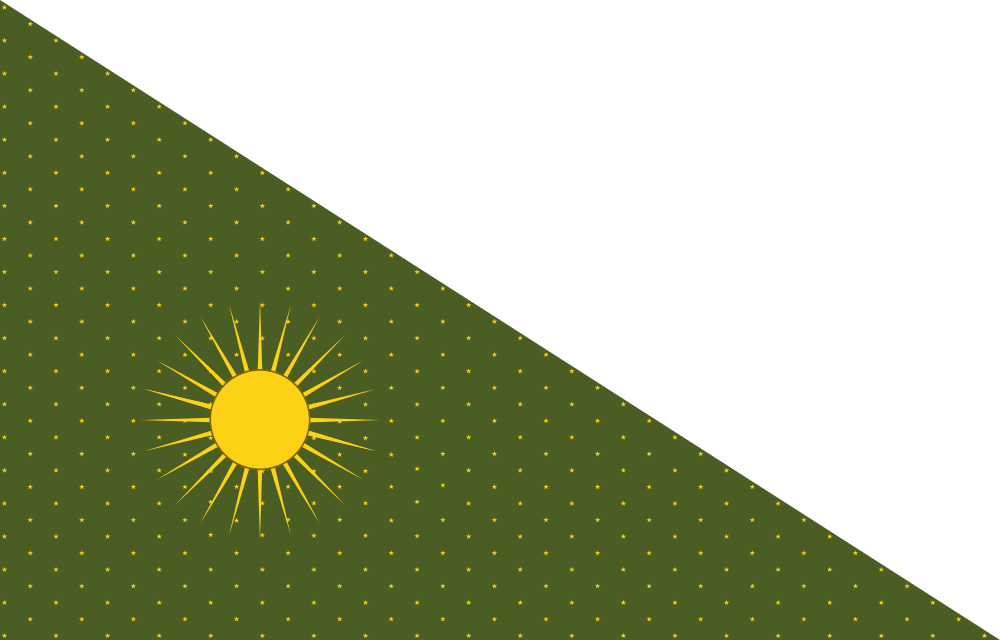
One of history's great empires, ruling most of the Indian subcontinent at its height; its green 'Alam' banner bore a lion and rising sun. Builders of the Taj Mahal, the Mughals were finally deposed by the British after the 1857 rebellion.
The 5 states, provinces and regions of Pakistan with their own flags.
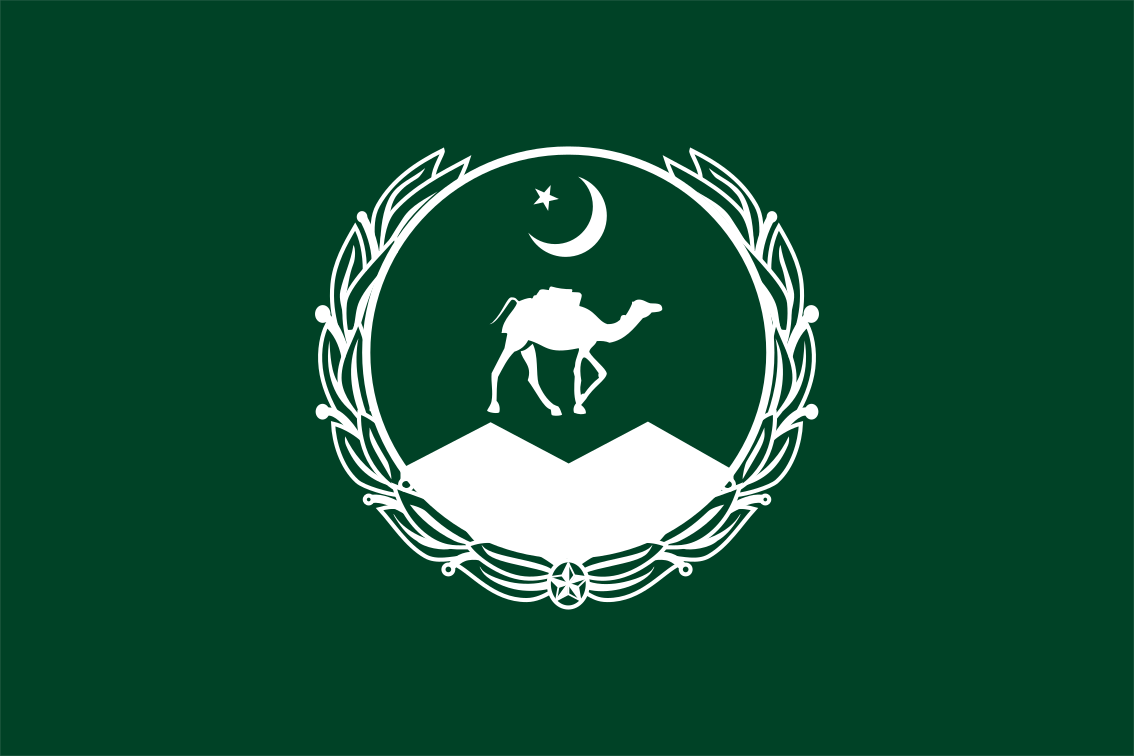 Balochistan
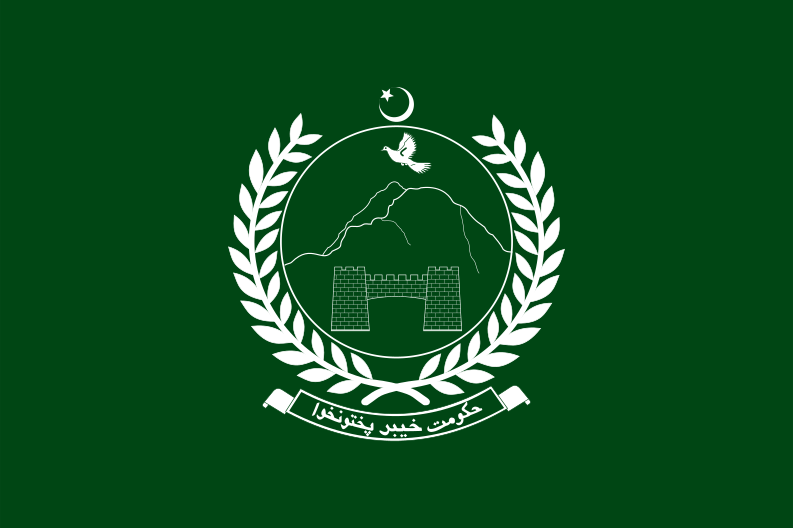 Khyber Pakhtunkhwa
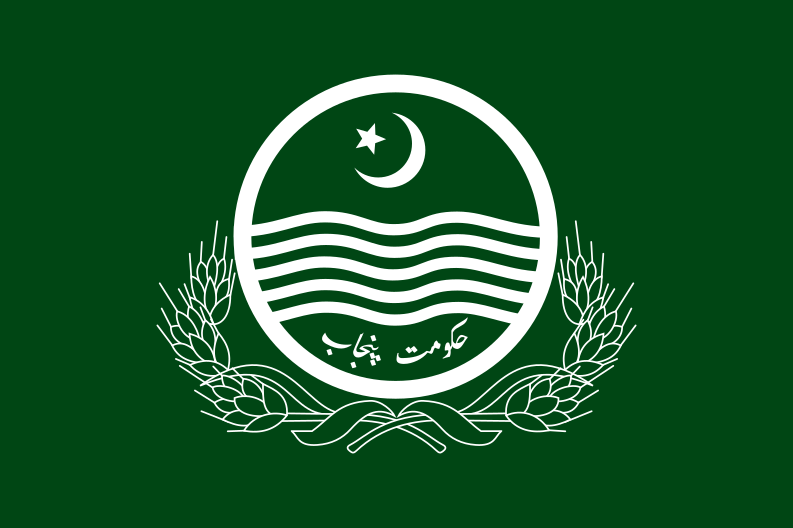 Punjab
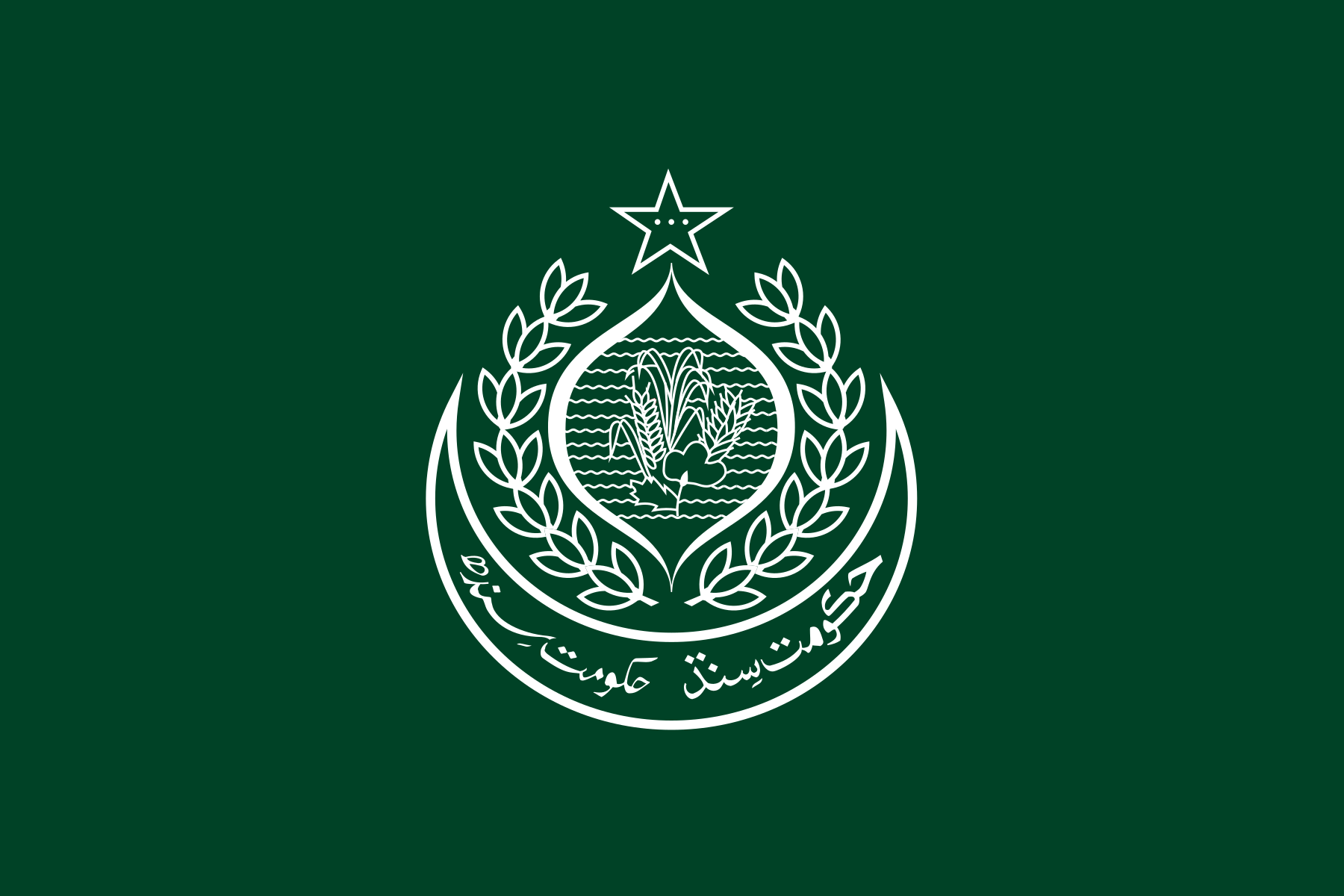 Sindh
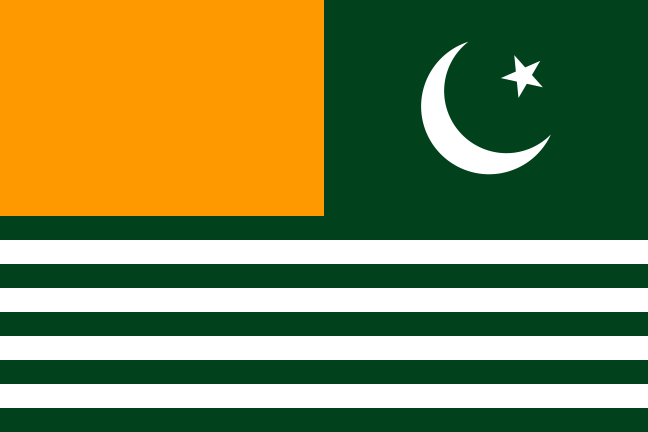 Azad Kashmir
Pakistan shares a land border with 4 countries: Afghanistan, China, India and Iran.
2 other national flags use the same main colours as Pakistan's.
Play Globalio and learn Pakistan's flag Afghanistan
 China
 India
 Iran
 Nigeria