 Malaysia
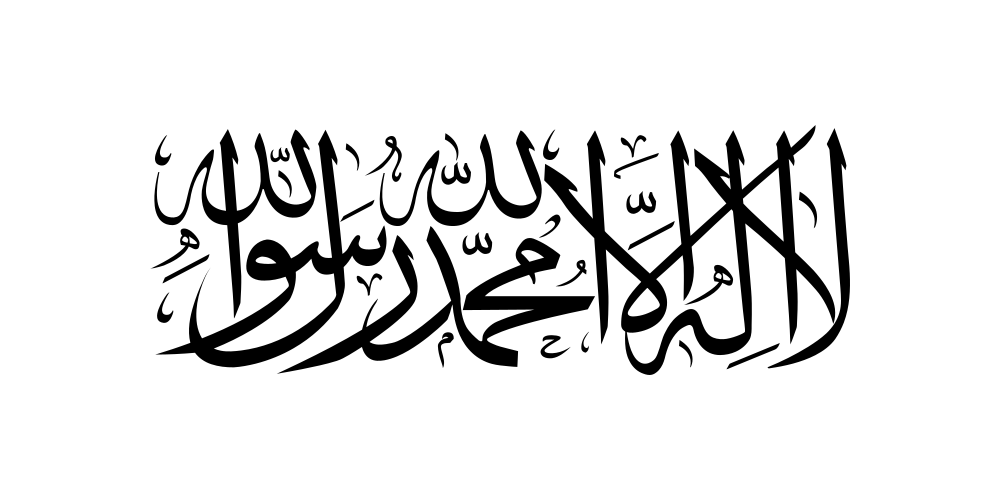
2021–present
Islamic Emirate (Taliban)
Re-adopted at the Taliban's August 2021 takeover: a white field bearing the black Shahada, the Islamic declaration of faith. Afghanistan has changed its flag more often than almost any nation on Earth.
Afghanistan is a landlocked country at the crossroads of Central and South Asia, bordered by Pakistan, Iran, Turkmenistan, Uzbekistan, Tajikistan, and China. It has been at the centre of geopolitical competition for centuries, often described as the 'Graveyard of Empires' for the many foreign powers who have attempted to subdue it. Afghanistan has extraordinary untapped mineral deposits including the world's largest known lithium reserves along with significant iron, copper, gold, and rare earth minerals.

Population and area are rounded.
Afghanistan changed its flag more often than any other country in the 20th century. The black, red and green tricolour of the Islamic Republic (2004–2021) stands for the troubled past, the blood of those who fought for independence, and hope; its emblem shows a mosque with a mihrab and minbar framed by wheat. Since 2021 the Taliban have flown a white flag with the black Shahada, while the tricolour is still widely used by Afghans abroad.
Black-red-green vertical stripes with the Shahada and mosque emblem in the centre.
Afghanistan has been a crossroads of civilisations for millennia and is home to the world's oldest oil paintings.
Afghanistan's flag is often mixed up with these. Learn to tell them apart:
Every flag that has flown over Afghanistan, from today back through time.
Re-adopted at the Taliban's August 2021 takeover: a white field bearing the black Shahada, the Islamic declaration of faith. Afghanistan has changed its flag more often than almost any nation on Earth.
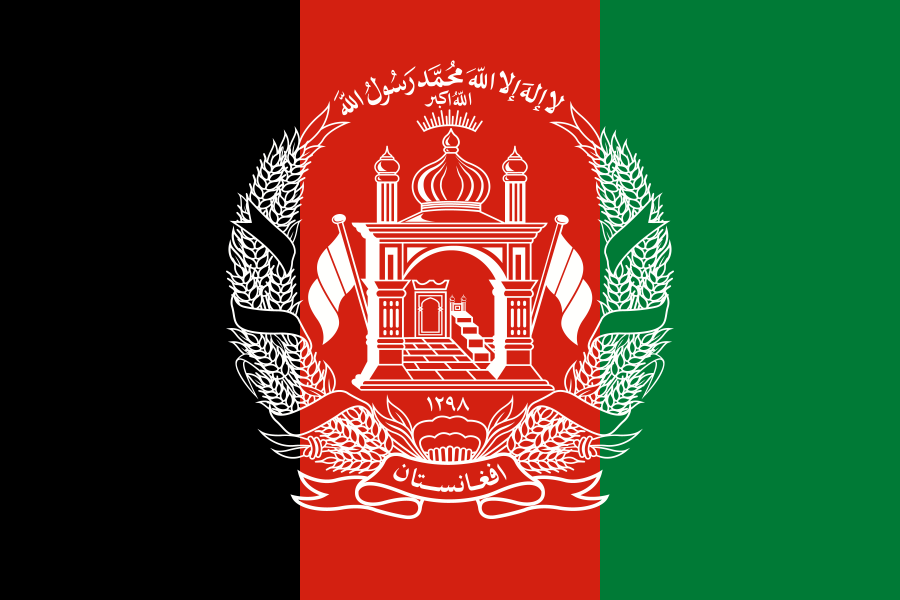
The black-red-green vertical tricolour with a white mosque emblem. It still represents Afghanistan at the UN and Olympics despite the 2021 government collapse.
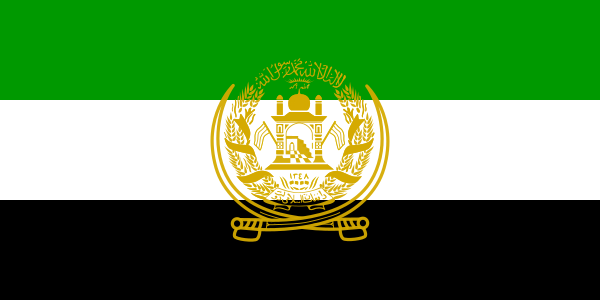
After the mujahideen took Kabul, this green-white-black tricolour became the flag of the internationally recognized Islamic State, flown by the Northern Alliance through the Taliban years.
Taliban-controlled areas (1996–2001):
The first Taliban regime flew a plain white banner — later adding the black Shahada — controlling most of the country at the same time the recognized Islamic State flag flew over the north.
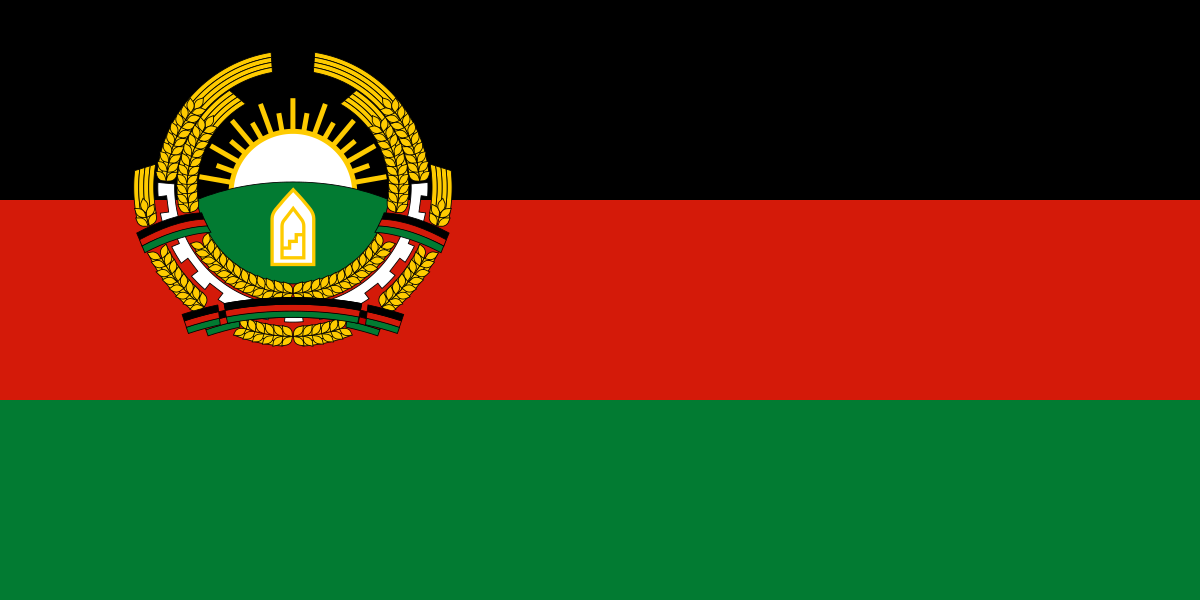
Under Najibullah's "national reconciliation," the word "Democratic" was dropped and the emblem revised, softening the overt communist iconography.
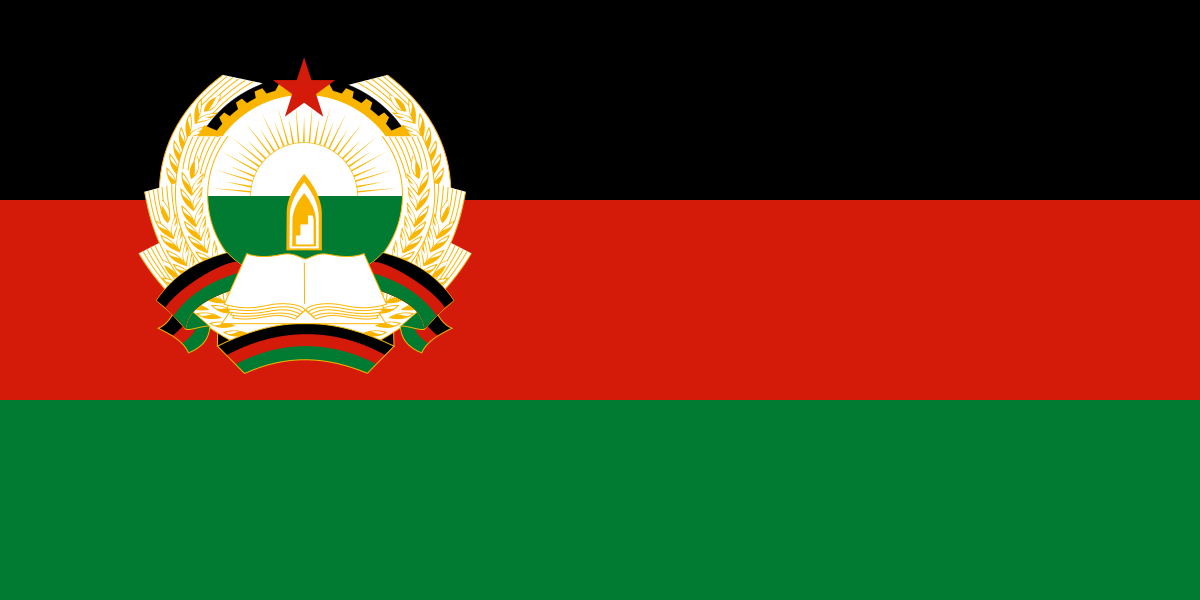
Following the Soviet intervention, the DRA restored the black-red-green tricolour with a new socialist emblem to broaden domestic appeal.
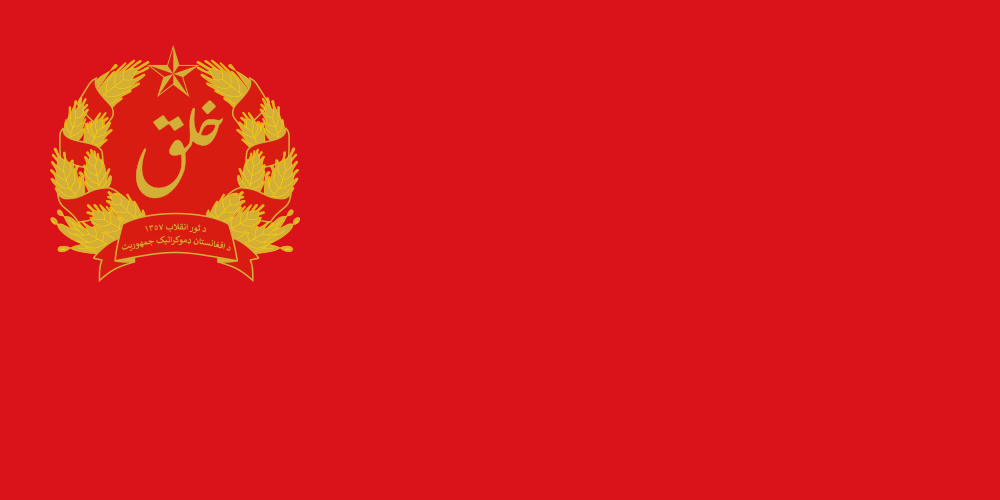
After the 1978 Saur Revolution, the communist PDPA adopted an almost entirely red flag — widely unpopular for resembling a Soviet banner.
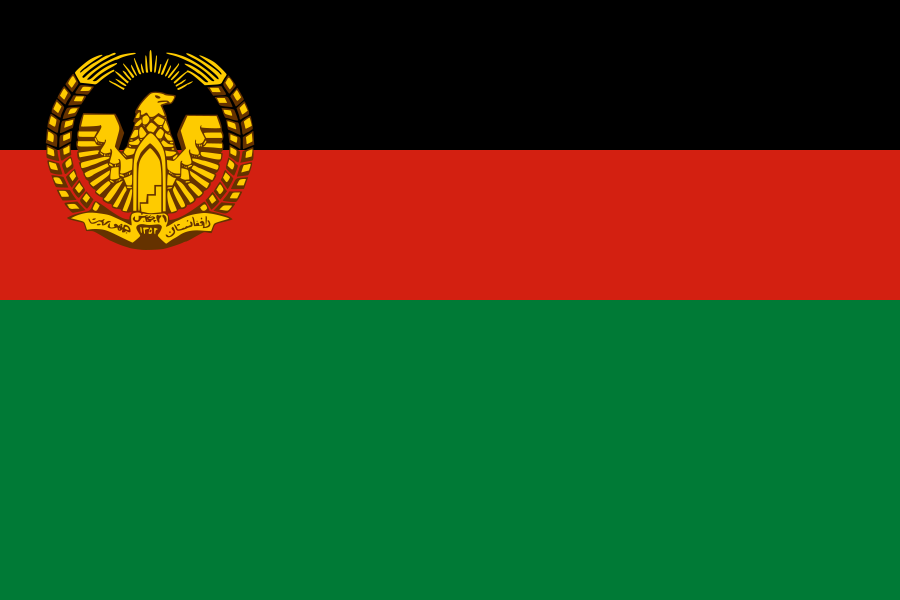
After Mohammed Daoud Khan's 1973 coup abolished the monarchy, his republic adopted a flag with an eagle emblem, marking the break from royal symbolism.
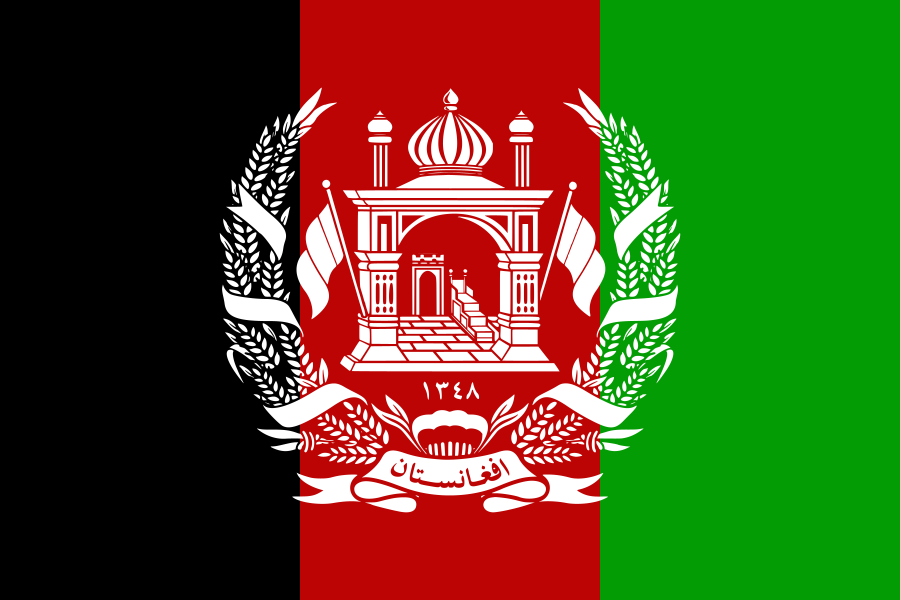
The black-red-green tricolour with the national emblem of a mosque and wheat sheaves flew throughout the long reign of Zahir Shah — Afghanistan's longest-lived flag.
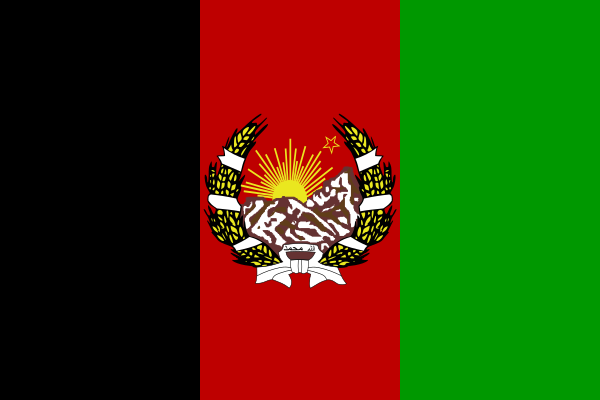
King Amanullah introduced Afghanistan's first black-red-green vertical tricolour in 1928 after a European tour — the basis for most later designs.
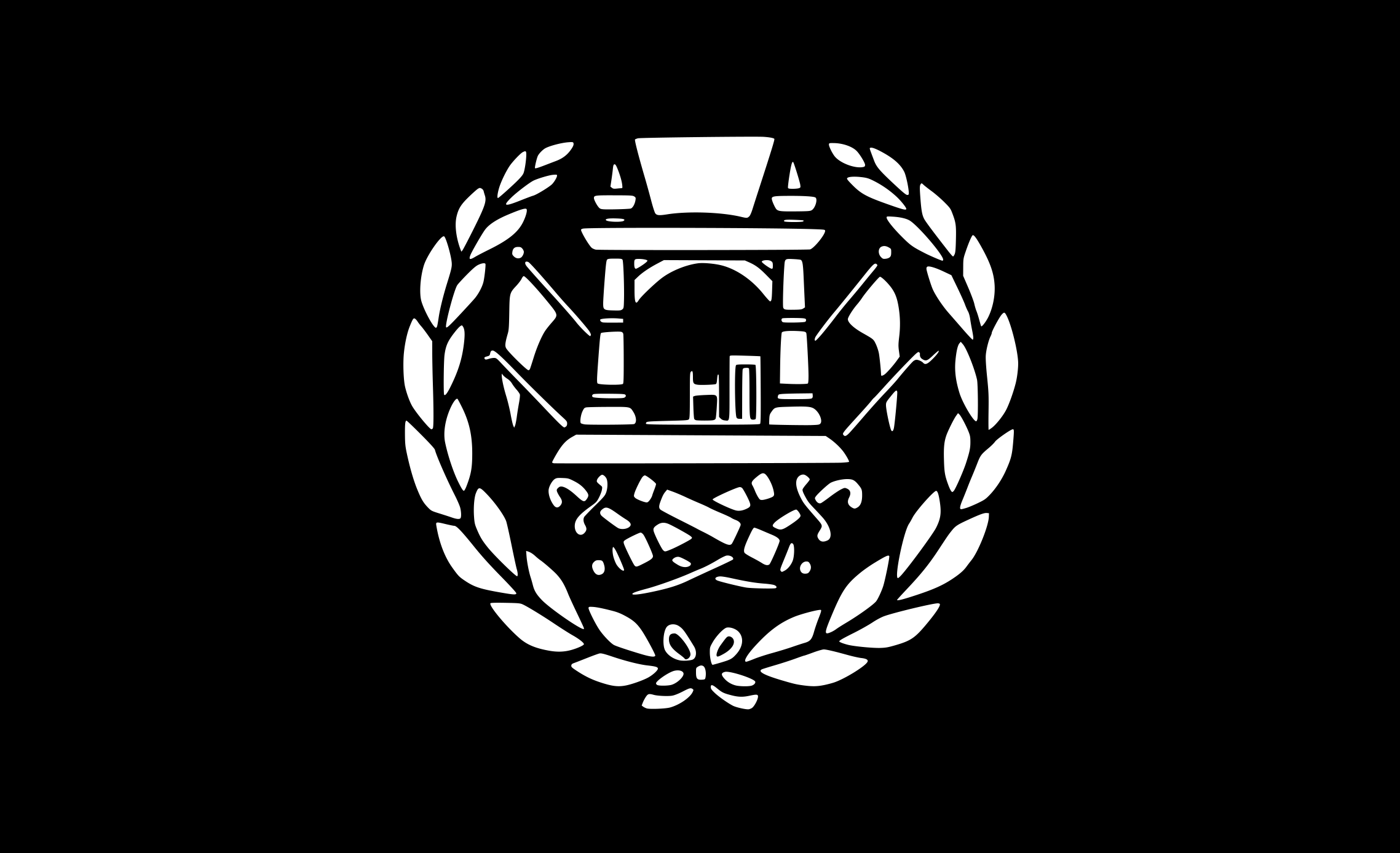
A plain black field used during the reign of Habibullah Khan, characteristic of the early Emirate before national emblems were added.
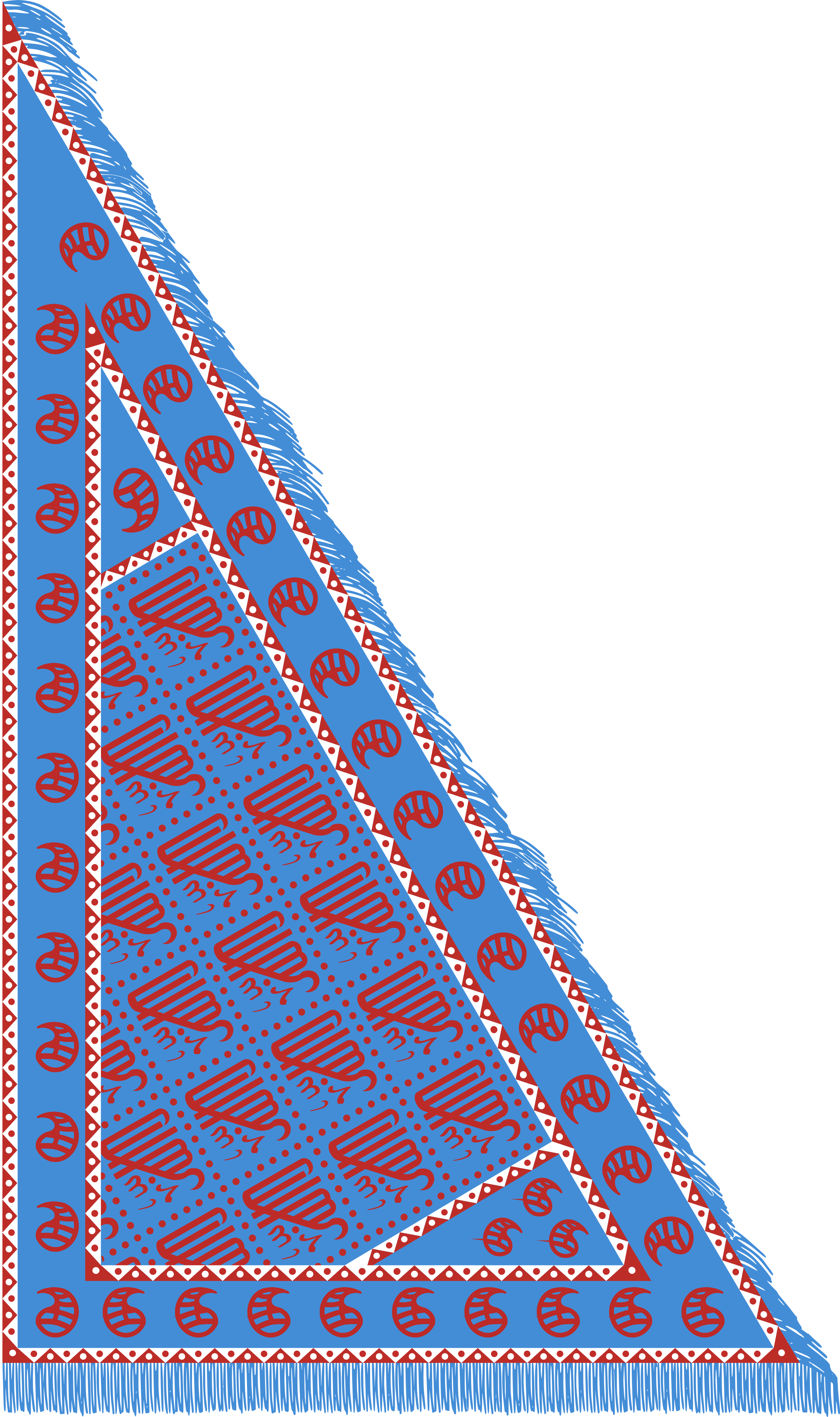
A Barakzai principality in southern Afghanistan during the fragmentation before the Durrani lands were reunified.
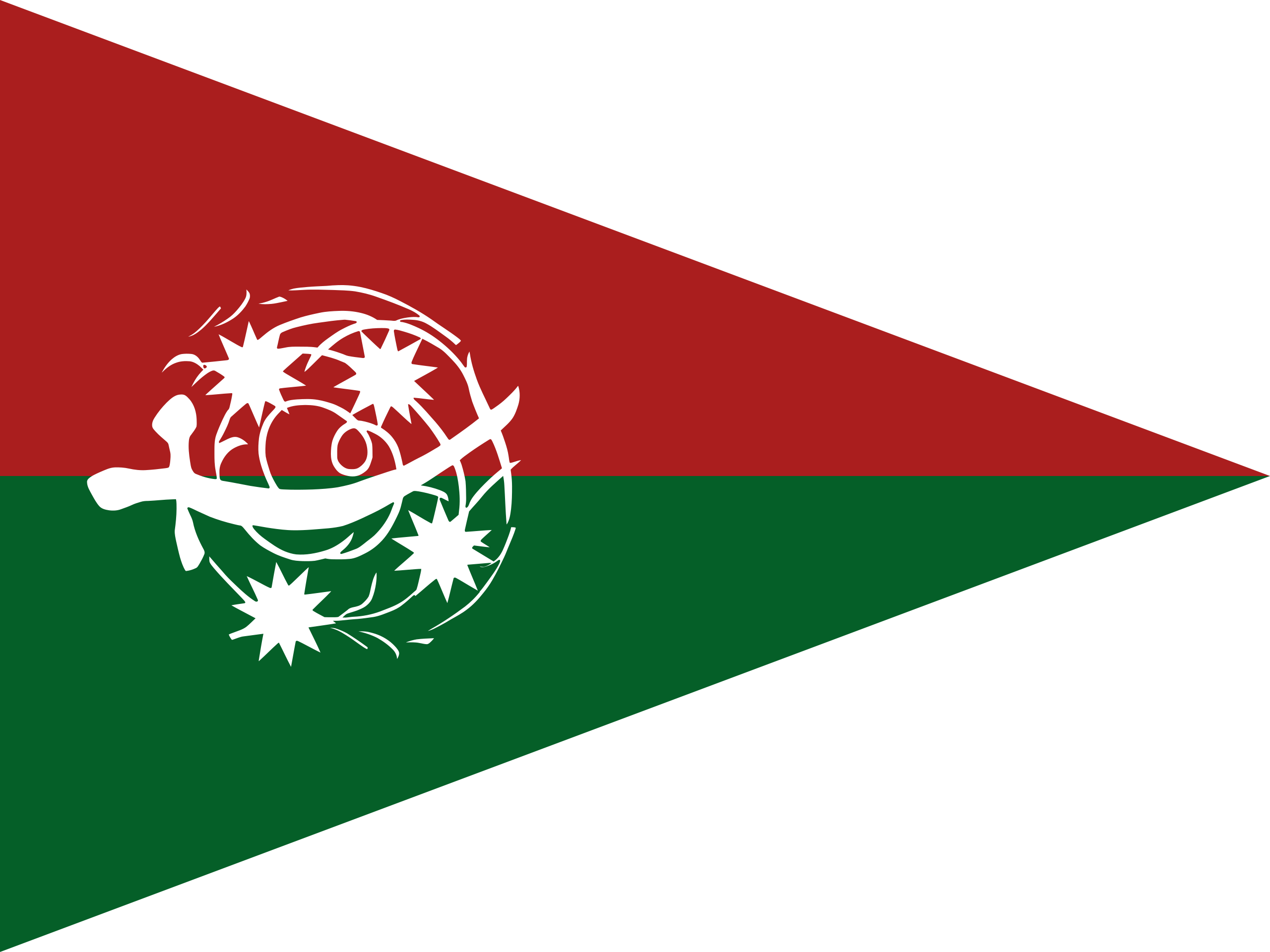
The empire of Ahmad Shah Durrani, regarded as the founder of modern Afghanistan, stretching from Persia to the Punjab.

A Pashtun dynasty from Kandahar that briefly overthrew the Persian Safavids before being crushed by Nader Shah.
Empires, kingdoms and republics that once covered part of Afghanistan.

A plain black banner flown under Emir Abdur Rahman Khan, the 'Iron Amir', who consolidated the modern borders of Afghanistan as a buffer between the British and Russian empires.
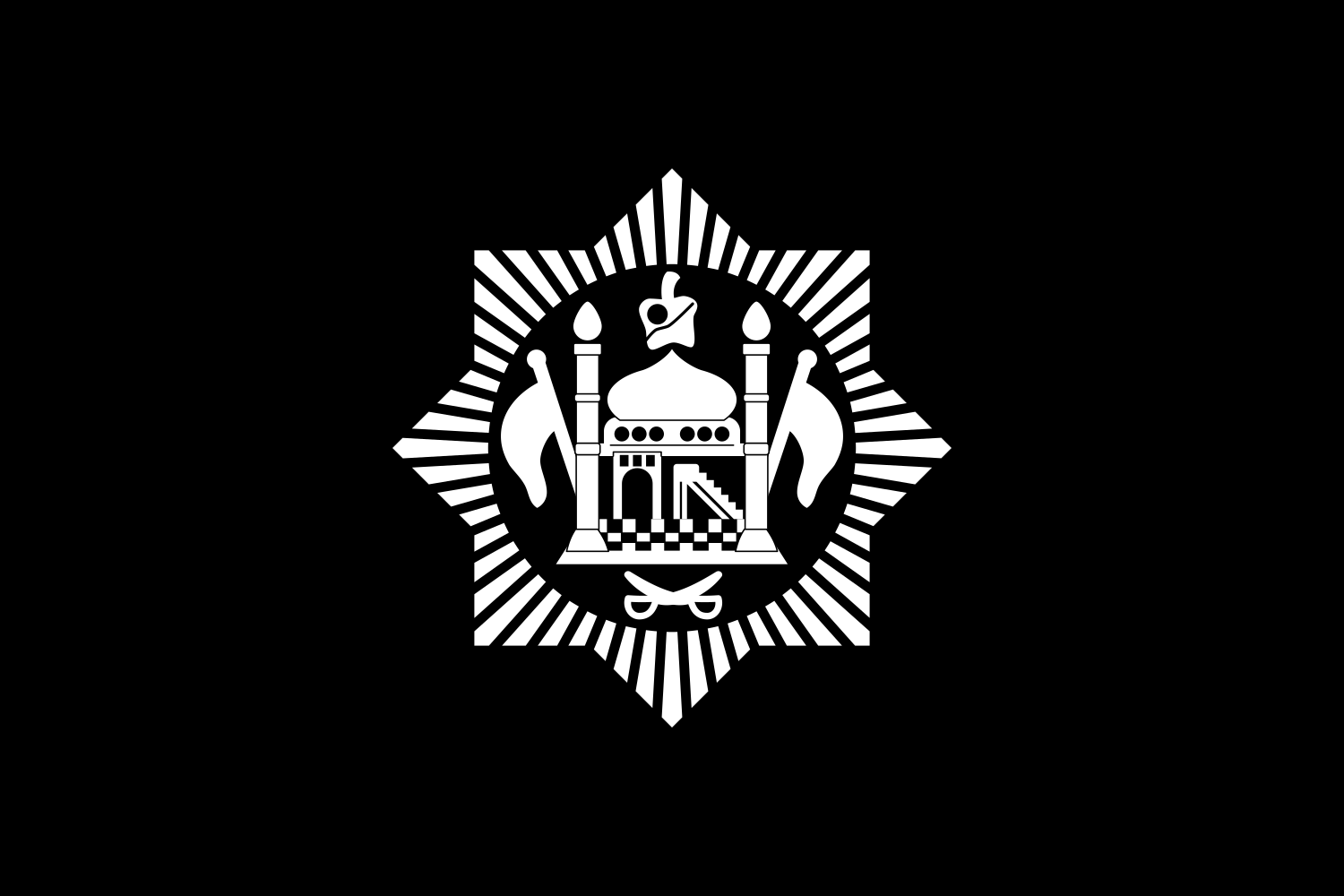
The black flag with a central mosque-and-mihrab emblem flew when Afghanistan won full independence from Britain in 1919 under the reformist King Amanullah Khan.

The brief flag of the Tajik rebel Habibullah Kalakani, who seized Kabul for nine months in 1929 during the civil war that toppled King Amanullah's modernizing reforms.
The black-red-green triband with a mosque emblem flew over the long reign of King Zahir Shah, until his cousin Daoud Khan abolished the monarchy in a 1973 coup.
A semi-independent Afghan principality fought over by Persia and Britain in the 'Great Game', whose siege in 1837–38 helped trigger the First Anglo-Afghan War.
Afghanistan shares a land border with 6 countries: China, Iran, Pakistan, Tajikistan, Turkmenistan and Uzbekistan.
8 other national flags use the same main colours as Afghanistan's.
Play Globalio and learn Afghanistan's flag China
 Iran
 Pakistan
 Tajikistan
 Turkmenistan
 Uzbekistan
 Jordan
 Kenya
 Kuwait
 Libya
 Palestine
 Sudan
 Syria
 United Arab Emirates