Middle East
Flag of Yemen
Yemen is located at the southern tip of the Arabian Peninsula where the Red Sea meets the Gulf of Aden, and is home to some of the Arabian Peninsula's oldest human settlements. The ancient city of Sana'a, the capital, features distinctive tower houses decorated with geometric plasterwork and is a UNESCO World Heritage Site. Yemen is one of the Arab world's poorest nations and the island of Socotra — part of Yemen — is sometimes called the 'Galápagos of the Indian Ocean' for its extraordinary endemic biodiversity.

- CapitalSanaa
- RegionMiddle East
- Current flag since1990
- Main coloursRed, White, Black
- Populationabout 34 million
- Areaabout 528,000 km²
- Flags in history12
Population and area are rounded.
What the flag of Yemen means
Red stands for the blood of martyrs and unity, white for a bright future, and black for the dark past. The flag was adopted on 22 May 1990, when North Yemen and South Yemen united, using the colours both had shared without the star and triangle that set their flags apart.
How to recognise it
Simple horizontal red-white-black stripes, no symbol. Similar to Egypt and Iraq but with NO emblem.
Did you know?
Yemen is home to the ancient city of Shibam, nicknamed the "Manhattan of the Desert" for its skyscraper mudbrick towers.
Easily confused with
Yemen's flag is often mixed up with these. Learn to tell them apart:
Flag history of Yemen
Every flag that has flown over Yemen, from today back through time.
1990–present
Republic of Yemen (unified)
When North and South Yemen reunified on May 22, 1990, the new republic adopted a simple red-white-black horizontal tricolor — the pan-Arab colours — shedding the communist star and triangle of the south and the complex arms of the north. The design was essentially a compromise between the two predecessor flags. Unification lasted only months before a civil war nearly split the country again; another civil war beginning in 2014 has since devastated the country.
South Yemen (existed simultaneously):
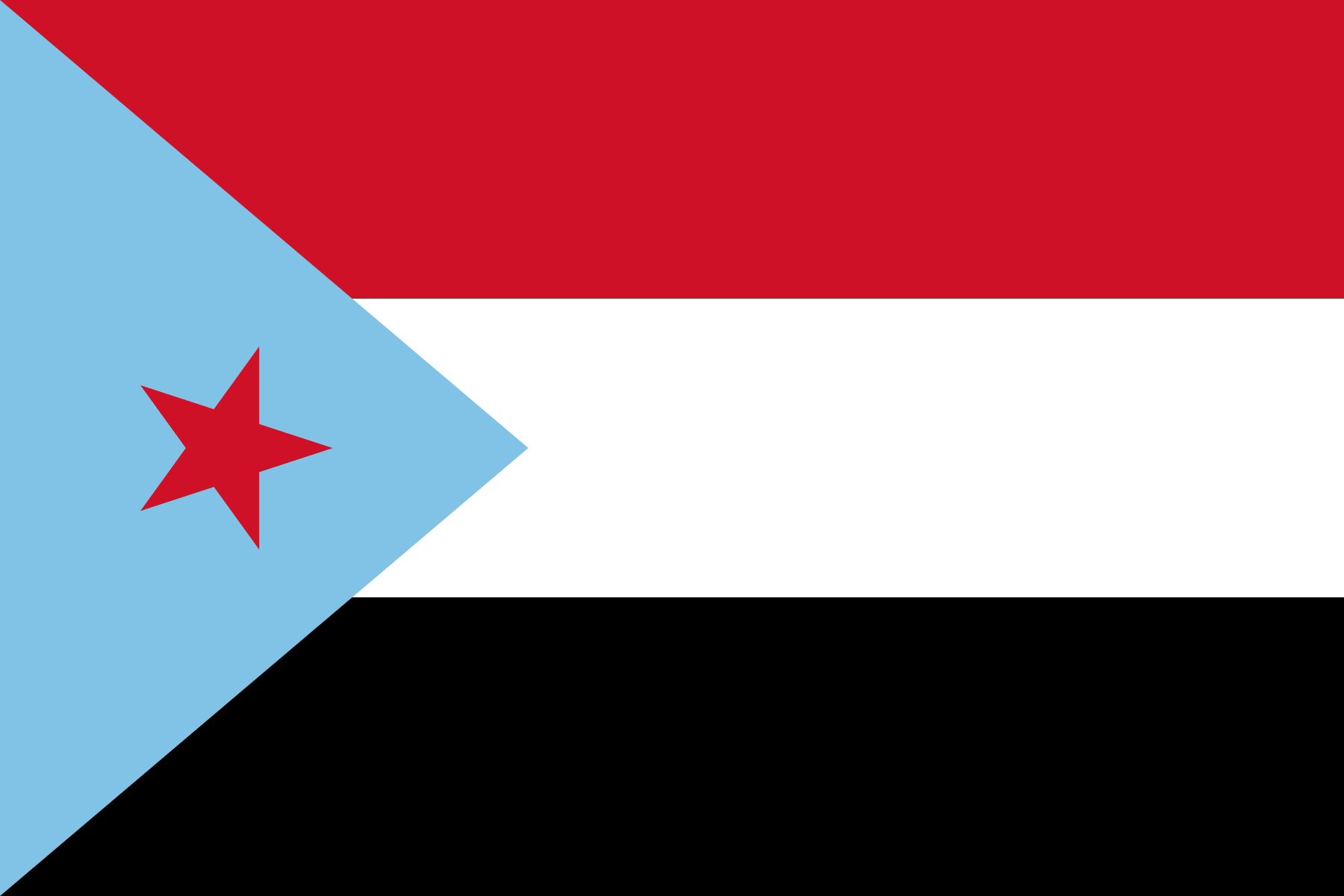
1967–1990
People's Democratic Republic of Yemen (South)
South Yemen — the only Marxist state in the Arab world — used a red-white-black tricolor with a sky-blue triangle at the hoist bearing a red star. It was one of the world's most radical communist regimes, nationalising land and businesses and fighting a brutal internal power struggle that killed thousands. The blue and red star disappeared entirely at unification.
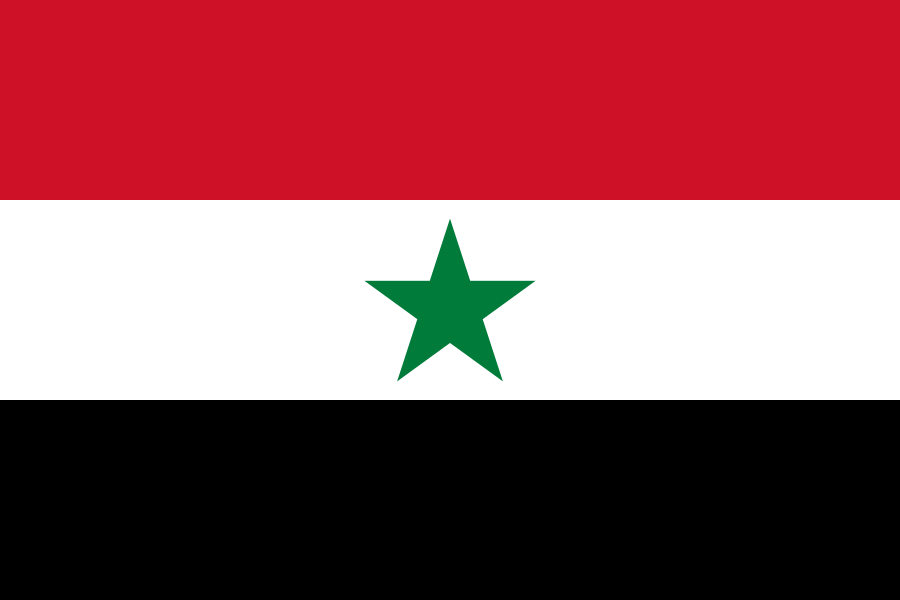
1962–1990
Yemen Arab Republic (North)
North Yemen's flag after the 1962 revolution that overthrew the Mutawakkilite Kingdom used red-white-black with a green star at the centre — the pan-Arab palette shared with Egypt, Syria, and Iraq. North Yemen was caught between the Cold War superpowers: a civil war (1962–1970) saw Egyptian-backed republicans fight Saudi-backed royalists, with the republic eventually prevailing. The green star was dropped from the unified flag in 1990.
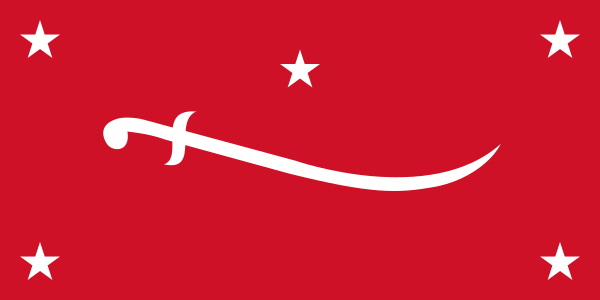
1927–1962
Mutawakkilite Kingdom of Yemen
After the Ottomans withdrew in 1918, the imams of the Zaydi Shia dynasty ruled North Yemen as the Mutawakkilite Kingdom — a deeply isolated theocratic monarchy that kept the country sealed off from the modern world much as medieval Yemen had been. Its flag was a plain red banner (sometimes bearing a white sword and stars), the traditional Islamic and Arab colour. The 1962 republican revolution that toppled the imamate triggered a brutal eight-year civil war.
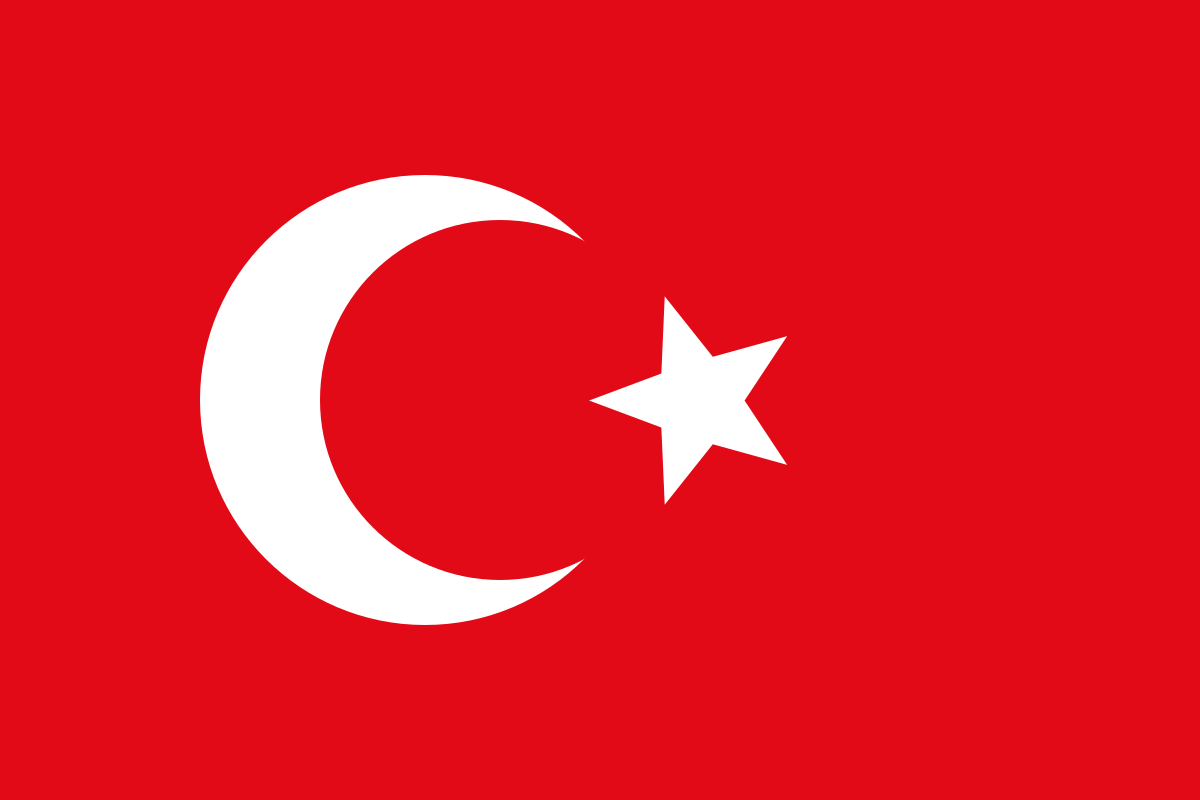
1849–1918
Ottoman Yemen
The Ottomans controlled the Yemeni highlands and the Red Sea coast through their Yemen Vilayet, flying the Ottoman star-and-crescent, though they never fully subdued the fiercely independent Zaydi tribes of the interior. Yemen's strategic position guarding the southern entrance to the Red Sea made it valuable to every empire — which is also why Britain seized the southern port of Aden in 1839, beginning the north–south division that would shape Yemen for the next 150 years.

1740–1967
Sultanate of Lahej
A principal South Arabian sultanate of the Aden Protectorate, Lahej flew a red-and-white flag with crossed daggers. Like the other southern states it was abolished in 1967 when the British-protected sultanates were absorbed into South Yemen.
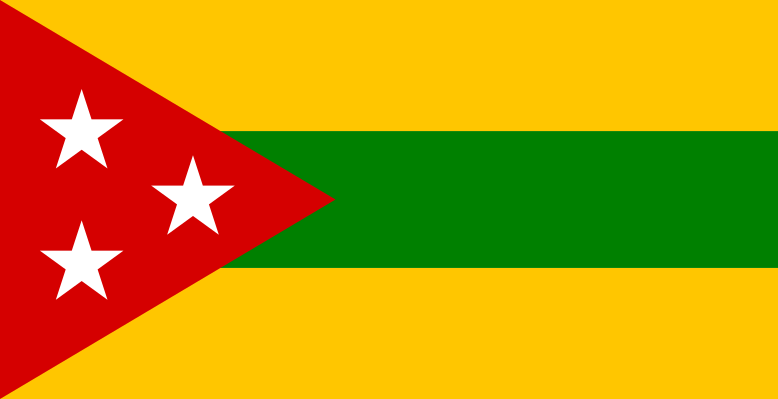
1395–1967
Kathiri State of Seiyun
A Hadhrami sultanate in the eastern Aden Protectorate, the Kathiri State of Seiyun flew a green-yellow-red flag with three stars. It too was dissolved into South Yemen in 1967, ending centuries of dynastic rule in the Hadhramaut valley.
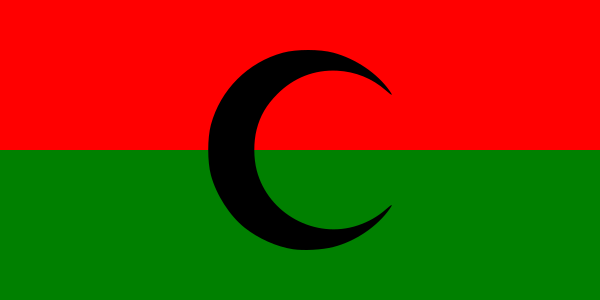
1700–1967
Emirate of Dhala
One of the many sultanates and emirates of the Aden Protectorate, absorbed into South Yemen at independence.
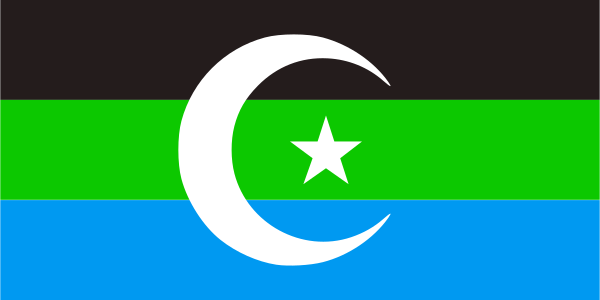
1700–1967
Fadhli Sultanate
A sultanate of the Aden Protectorate in southern Arabia, dissolved into independent South Yemen.
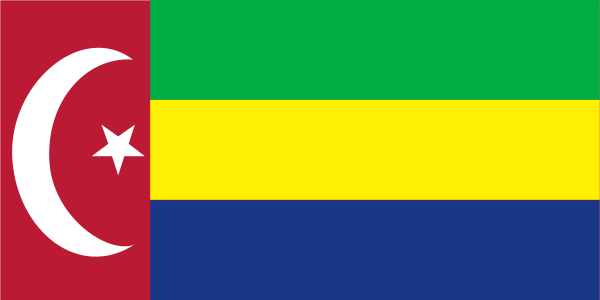
1700–1967
Wahidi Sultanate of Balhaf
One of the small Wahidi sultanates of the Aden Protectorate coast.
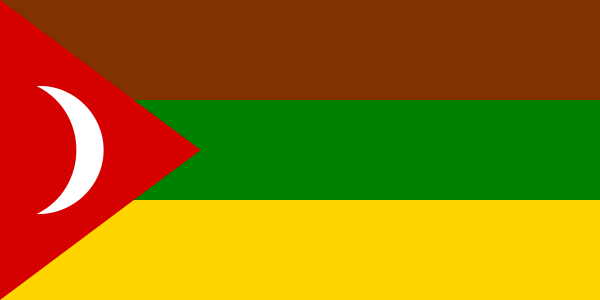
1700–1967
Emirate of Beihan
An emirate of the Aden Protectorate on the edge of the Empty Quarter.
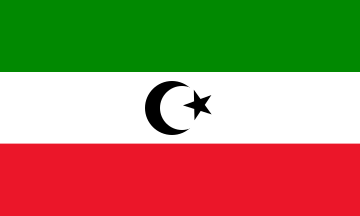
1500–1967
Mahra State of Qishn and Socotra
A sultanate of the far east of South Arabia that included the remote island of Socotra.
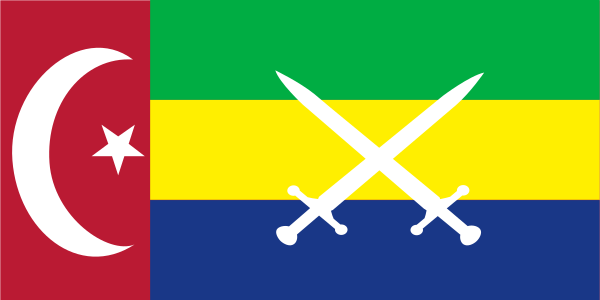
1700–1967
Wahidi Sultanate of Haban
One of the small Wahidi sultanates of the Aden Protectorate, dissolved into independent South Yemen.
Related historical states
Empires, kingdoms and republics that once covered part of Yemen.
1918–1962
Mutawakkilite Kingdom of Yemen
A red field with the white sword of Ali flanked by five white stars, flown by the Zaydi imams who ruled North Yemen until a 1962 coup founded a republic.
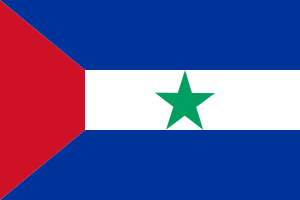
1963–1967
State of Aden
The British colony of Aden joined the Federation of South Arabia as a constituent state, flying a green-and-blue flag, just before independence as South Yemen in 1967.
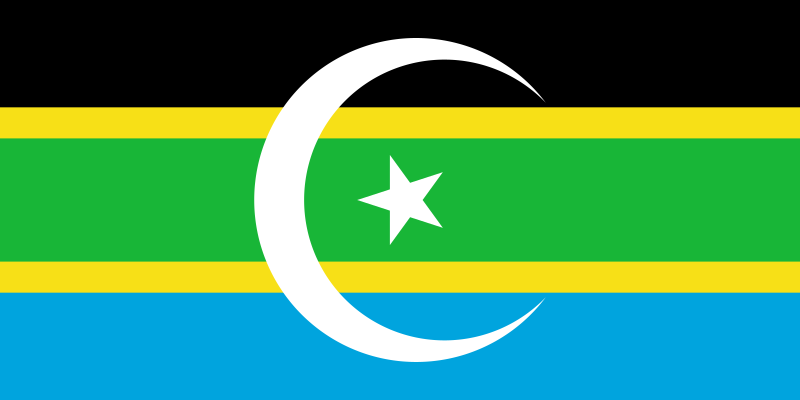
1962–1967
Federation of South Arabia
A British-sponsored union of Aden and surrounding sultanates and emirates; its green-yellow-blue flag flew until the federation collapsed into independent South Yemen in 1967.
1967–1990
South Yemen (PDRY)
The Arab world's only Marxist state added a sky-blue triangle with a red star to the pan-Arab tricolor, until it merged with North Yemen to form the Republic of Yemen in 1990.
1728–1967
Sultanate of Lahej
An Abdali sultanate north of Aden, one of the many South Arabian princely states, flying a green flag with a white border before being absorbed into independent South Yemen.
1432–1967
Mahra Sultanate
A long-lived sultanate of the Mahra people in far eastern South Arabia, which also ruled the island of Socotra, abolished when South Yemen became independent in 1967.
Neighbouring countries
Yemen shares a land border with 2 countries: Oman and Saudi Arabia.
Other flags in red, white and black
2 other national flags use the same main colours as Yemen's.
Play Globalio and learn Yemen's flag
 Egypt
 Syria
 Iraq
 Oman
 Saudi Arabia
 Trinidad and Tobago