Asia
Flag of Vietnam
Vietnam is a Southeast Asian country stretching 1,650 kilometres along the eastern Indochinese Peninsula with an extraordinarily long and varied coastline. Despite centuries of Chinese rule, French colonisation, and a devastating war with American involvement that ended in 1975, Vietnam has maintained a strong and distinct cultural identity. Since the Doi Moi economic reforms of 1986, Vietnam has become one of Asia's fastest-growing economies, transforming from an agricultural society to a major manufacturing and export hub.

- CapitalHanoi
- RegionAsia
- Current flag since1976
- Main coloursRed, Yellow
- Populationabout 98 million
- Areaabout 331,000 km²
- Flags in history5
Population and area are rounded.
What the flag of Vietnam means
The red field represents the revolution and the blood shed for it, and the yellow star the unity of workers, peasants, intellectuals, youth and soldiers. First used by the Viet Minh, it became the flag of North Vietnam in 1945 and of the reunified country in 1976.
How to recognise it
Solid red with ONE large five-pointed yellow star in the centre. China has FIVE stars in the upper left.
Did you know?
Vietnam is one of the world's largest exporters of coffee, second only to Brazil.
Easily confused with
Vietnam's flag is often mixed up with these. Learn to tell them apart:
Flag history of Vietnam
Every flag that has flown over Vietnam, from today back through time.
1976–present
Socialist Republic of Vietnam
When North and South Vietnam were formally reunified in July 1976, the gold five-pointed star on red — previously the flag of North Vietnam since 1945 — became the flag of the unified country. The red represents the revolution and the blood of those who died fighting for independence; the gold star represents the five main classes of Vietnamese society.
South Vietnam (existed at the same time):
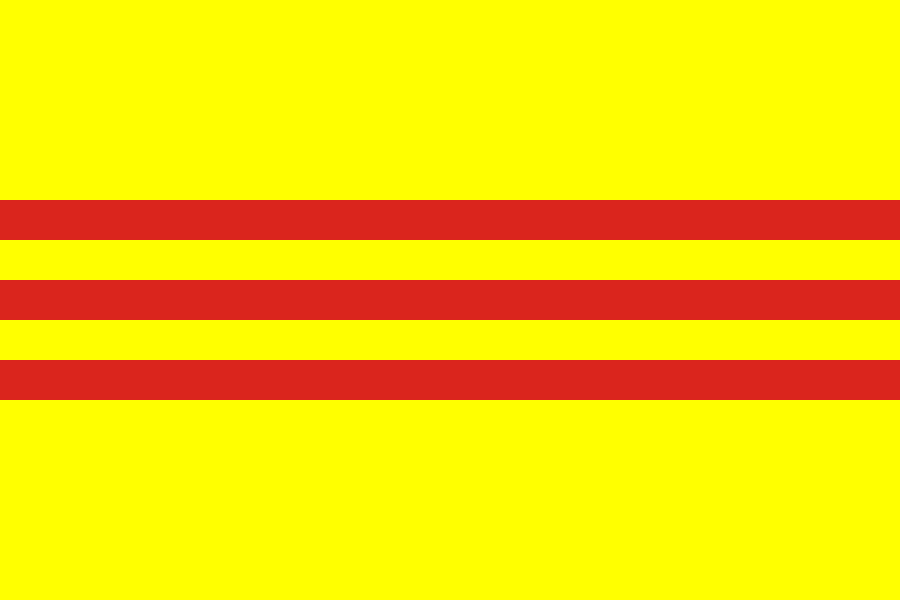
1955–1975
Republic of Vietnam (South)
South Vietnam's flag featured three horizontal red stripes on a yellow field. Yellow symbolised the imperial tradition; the three stripes represented the three regions of Vietnam (North, Centre, South). The flag flew until April 30, 1975, when Saigon fell and South Vietnam ceased to exist.
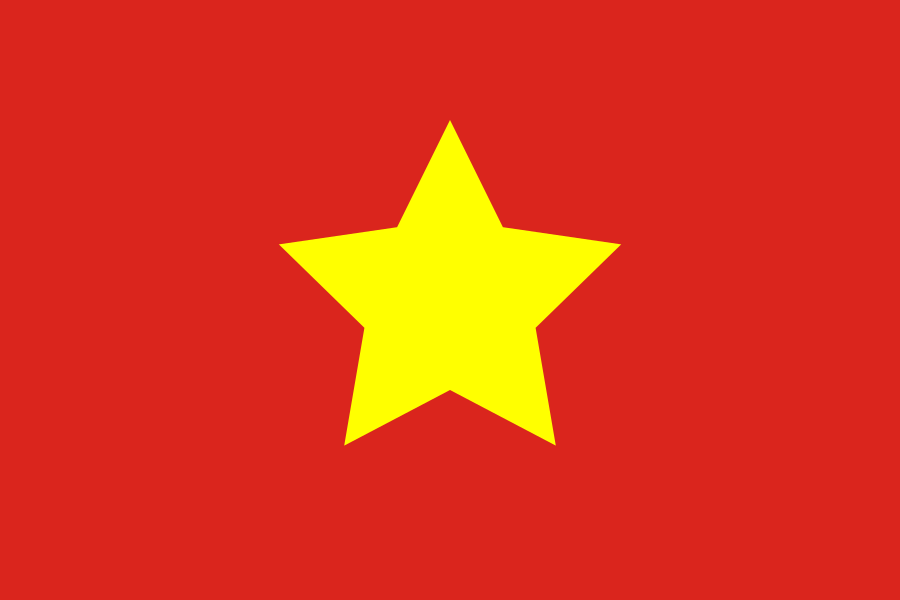
1945–1976
Democratic Republic of Vietnam
Ho Chi Minh proclaimed the Democratic Republic of Vietnam on September 2, 1945, adopting this red flag with a gold star. The same flag flew through the war with France (ending 1954), the division of Vietnam at the 17th parallel, and the long war with the United States and South Vietnam — making it one of the most recognised flags of 20th-century armed struggle.
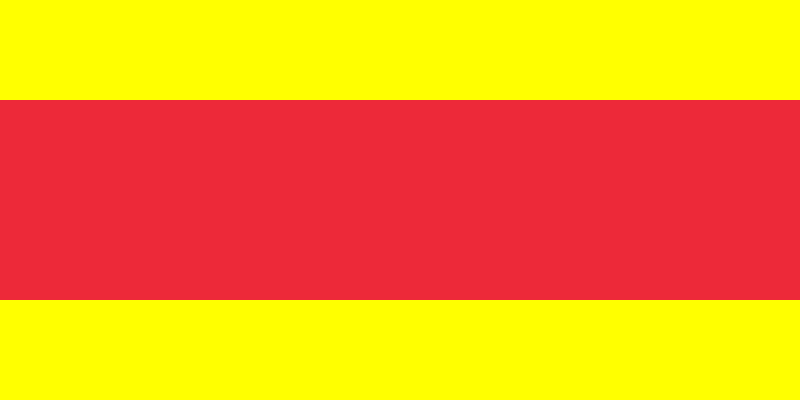
1802–1945
Nguyen Dynasty / French Indochina
The Nguyen emperors, who unified Vietnam in 1802, used a plain yellow flag. Under French colonial rule from the 1880s, a dragon motif was sometimes used on yellow for the protectorate of Annam. Yellow remained Vietnam's imperial colour for over a century — which is why South Vietnam's post-independence flag also used yellow as its field.

1946–1949
Republic of Cochinchina
A French-engineered puppet state in southern Vietnam, meant to split the south from Ho Chi Minh's republic.
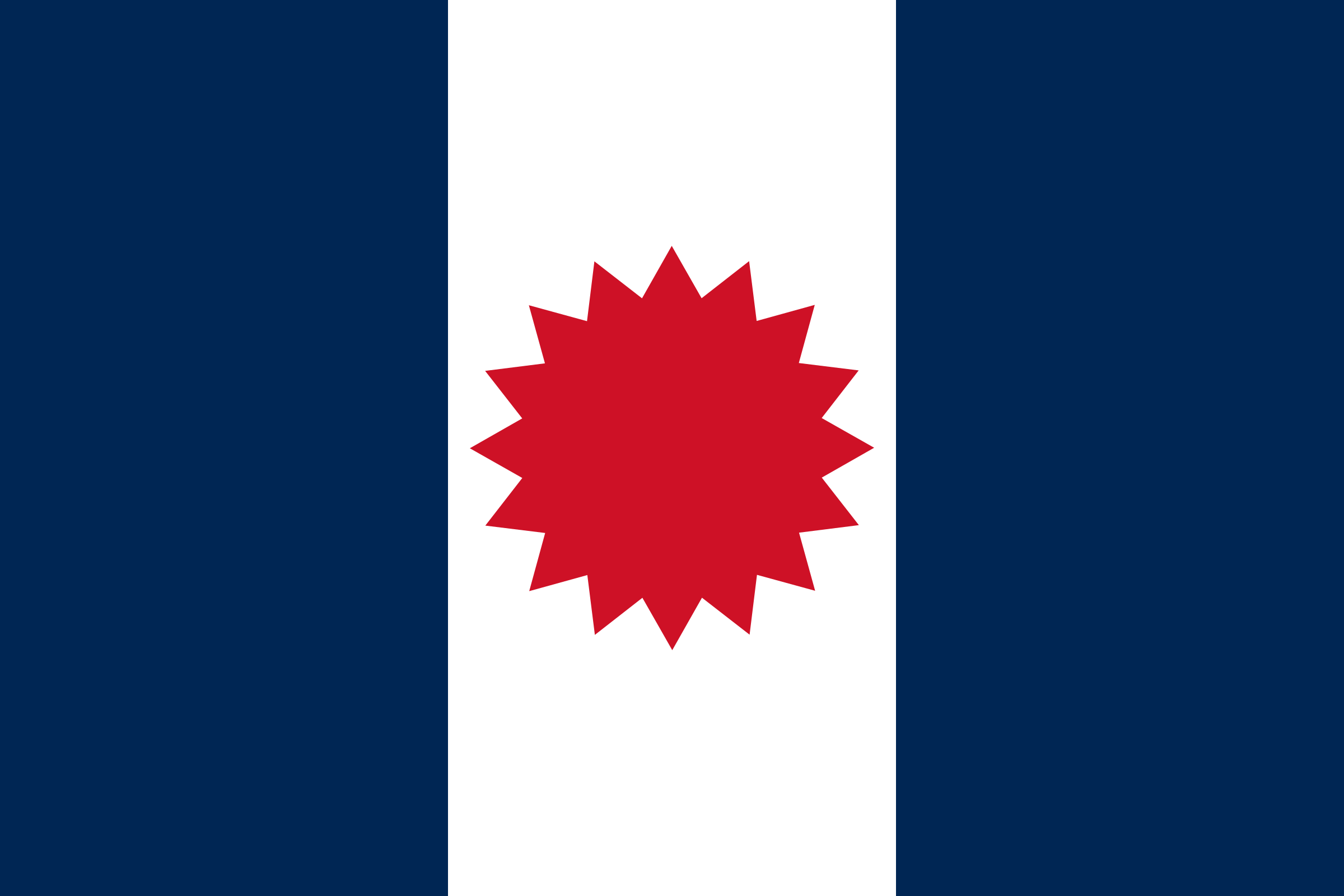
1948–1954
Sip Song Chau Tai
A federation of Tai chiefdoms in the northwest highlands of Vietnam, set up as an autonomous zone under French protection.
Related historical states
Empires, kingdoms and republics that once covered part of Vietnam.
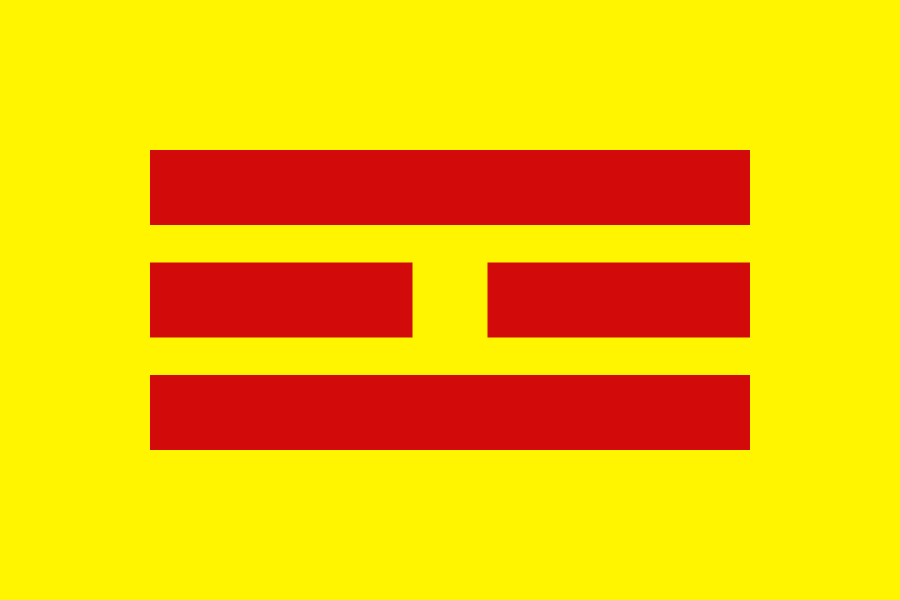
1945
Empire of Vietnam
A yellow flag with a red 'li' trigram from the I Ching, symbolizing the south. It flew over the short-lived Japanese-sponsored Empire of Vietnam in 1945.
1948–1975
South Vietnam
The 'Heritage Flag' — three red stripes on yellow for the three regions of Vietnam. It is still flown by Vietnamese diaspora communities worldwide.
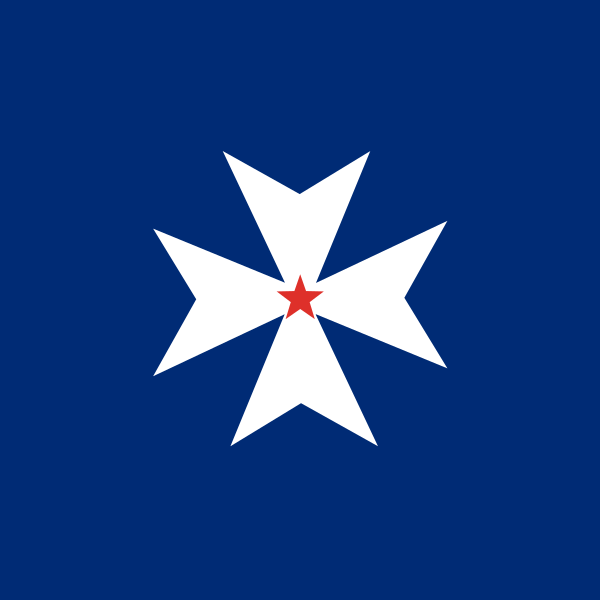
1888–1890
Kingdom of Sedang
A blue flag with a white cross and red star, decreed by the French adventurer Charles-Marie David de Mayréna, who crowned himself King Marie I in the Vietnamese highlands.
Neighbouring countries
Vietnam shares a land border with 3 countries: Cambodia, China and Laos.
Other flags in red and yellow
5 other national flags use the same main colours as Vietnam's.
Play Globalio and learn Vietnam's flag
 China
 Burkina Faso
 Cambodia
 Laos
 Kyrgyzstan
 Montenegro
 North Macedonia
 Spain