Middle East
Flag of Iraq
Iraq is located in the Fertile Crescent of western Asia, in the region of ancient Mesopotamia — the 'land between the rivers' of the Tigris and Euphrates — widely regarded as the birthplace of civilisation, where writing, codified law, agriculture, and the world's first cities all emerged. The ancient city of Babylon was one of the ancient world's most magnificent metropolises. Iraq holds the world's fifth-largest proven oil reserves and has extraordinary archaeological heritage including the ancient Sumerian city of Ur.

- CapitalBaghdad
- RegionMiddle East
- Current flag since2008
- Main coloursRed, White, Black
- Populationabout 44 million
- Areaabout 435,000 km²
- Flags in history8
Population and area are rounded.
What the flag of Iraq means
Red, white and black are pan-Arab colours, and the green writing is the Takbir, “Allahu Akbar”. The words were first added by Saddam Hussein in 1991, reportedly in his own handwriting. After his fall the script was changed to Kufic lettering, and in 2008 the three green stars of the Ba'athist design were removed.
How to recognise it
Horizontal red-white-black with the Takbir written in Arabic in the white stripe.
Did you know?
Iraq (Mesopotamia) is considered the cradle of civilisation — writing, law, and the wheel were invented there.
Easily confused with
Iraq's flag is often mixed up with these. Learn to tell them apart:
Flag history of Iraq
Every flag that has flown over Iraq, from today back through time.
2008–present
Republic of Iraq (current)
The 2008 revision updated the Kufic script "Allahu Akbar" to a standardised typeface (removing Saddam Hussein's handwriting) and removed the three green stars that had symbolised Ba'athist pan-Arab unity. The basic red-white-black horizontal tricolor with green text remains, connecting the flag to the broader pan-Arab colour tradition shared with Egypt, Syria, and Yemen.
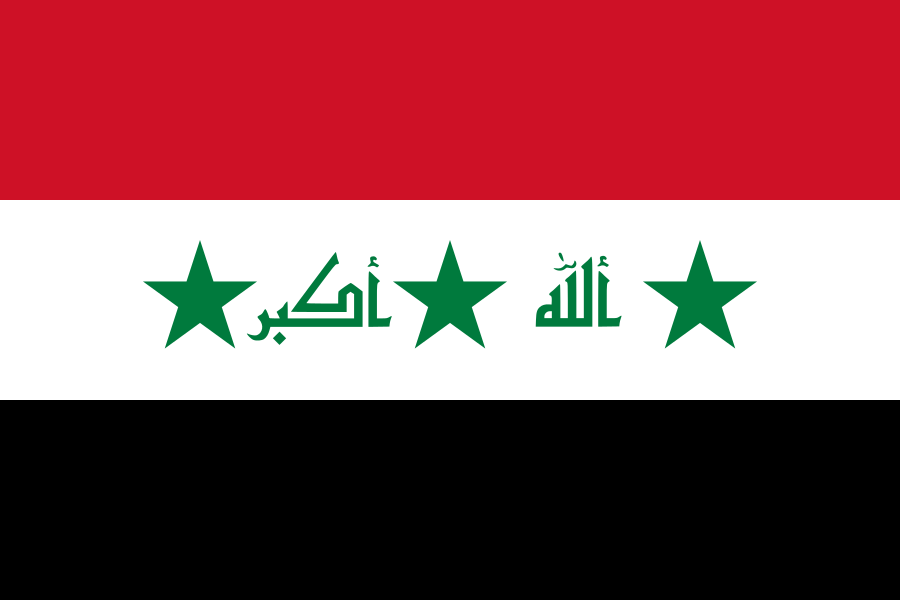
2004–2008
Coalition-era interim flag
After the 2003 invasion toppled Saddam, the tricolor was kept but in 2004 his handwritten "Allahu Akbar" was replaced with the phrase in a neutral green Kufic script — an interim compromise while a permanent flag was debated (an earlier proposed blue-and-white design had been rejected for resembling Israel's flag). It flew until the 2008 standardisation produced the current flag.
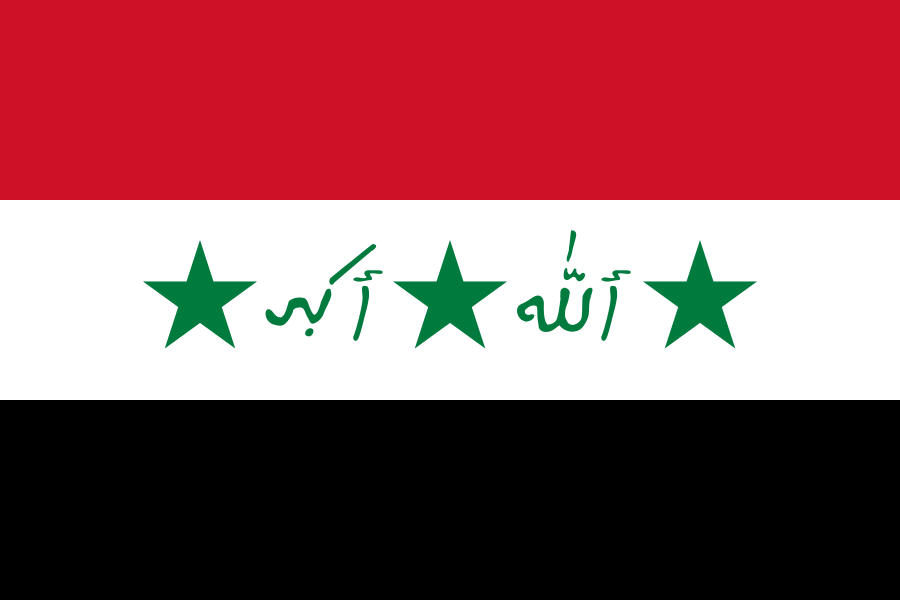
1991–2004
Saddam's "Allahu Akbar" Flag
On the eve of the Gulf War in January 1991, Saddam Hussein personally added the phrase "Allahu Akbar" (God is Greatest) to the flag — reportedly in his own handwriting — in green Kufic script between the three stars. The move was widely seen as a cynical appeal to Islamic sentiment to rally support for the invasion of Kuwait. This became the defining image of Saddam's Iraq and was immediately controversial.
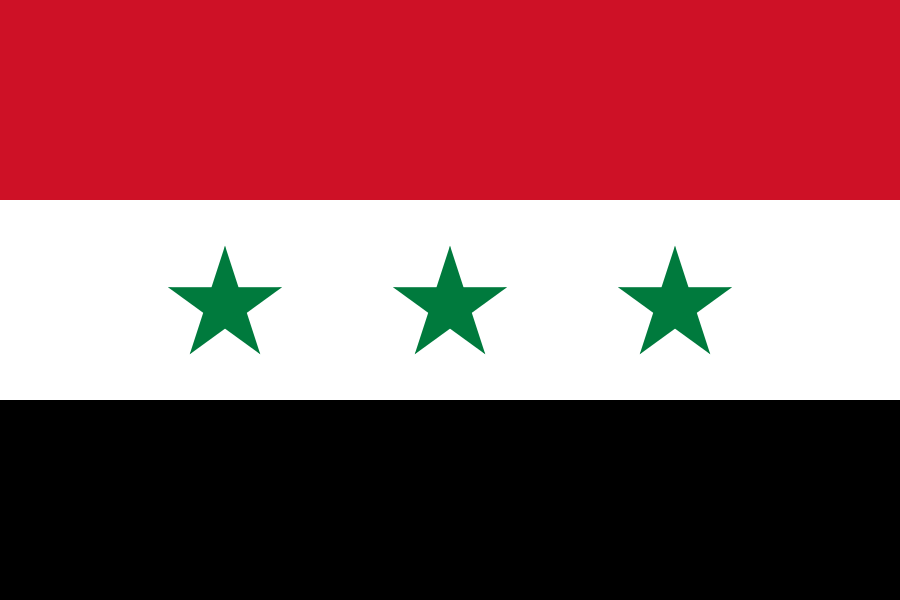
1963–1991
Ba'ath Era (three stars)
When the Ba'ath Party took power in 1963, the flag gained three green stars representing the hoped-for union of Iraq, Syria, and Egypt into a single Arab state — an ambition that was never realised. The pan-Arab red-white-black tricolor was adopted, shared with Syria and Egypt under Gamal Abdel Nasser's pan-Arab ideology. Iraq's flag was effectively a statement of political aspiration rather than current reality.
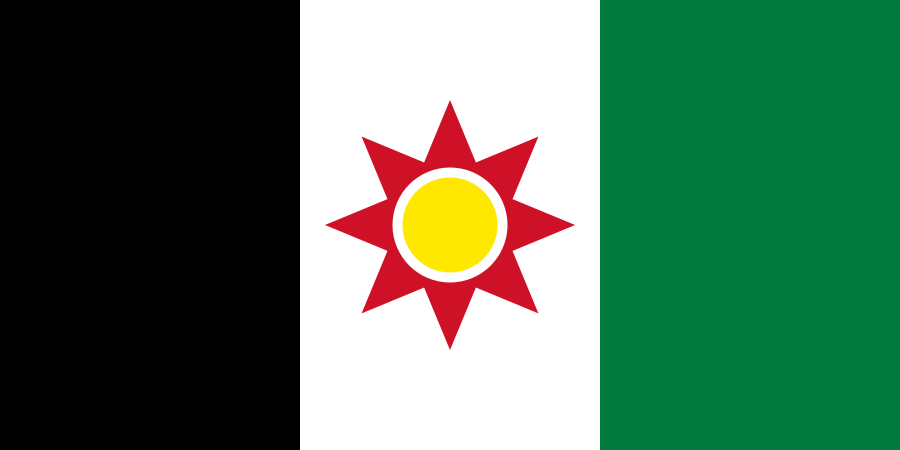
1958–1963
First Republic (after revolution)
The Iraqi monarchy was overthrown in the bloody revolution of July 14, 1958. The new republic adopted a black-white-green horizontal tricolor with a yellow sun (the Kurdish sun symbol) and a red star, replacing the Hashemite-era flag. This flag lasted only until the Ba'ath Party's 1963 coup, which replaced it with the pan-Arab design.
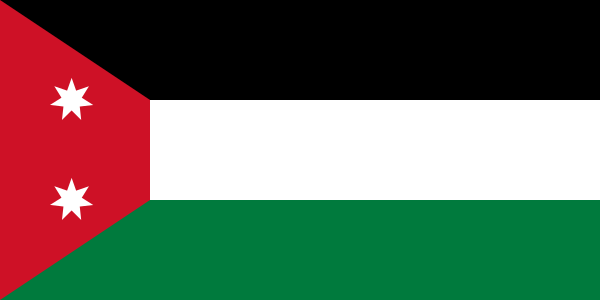
1921–1958
Kingdom of Iraq (Hashemite)
Britain installed the Hashemite prince Faisal as king of the new Kingdom of Iraq in 1921; from 1924 it flew an Arab Revolt–derived flag — black, white and green horizontal bands with a red trapezoid at the hoist bearing two white stars. Increasingly resented as a British client monarchy, it ruled until the violent revolution of 1958 swept the king and the flag away.
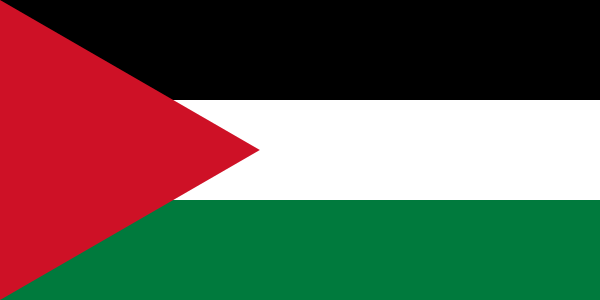
1958
Arab Federation
The brief union of Hashemite Iraq and Jordan, formed to counter Nasser's UAR and ended within months by the Iraqi revolution.
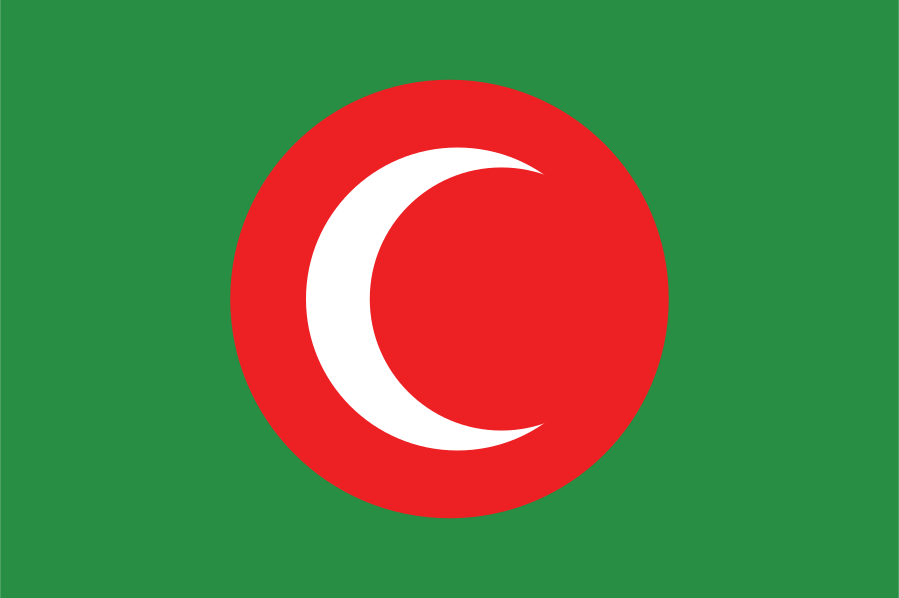
1922–1924
Kingdom of Kurdistan
A short-lived Kurdish kingdom proclaimed by Sheikh Mahmud Barzanji in northern Iraq against British control.
Related historical states
Empires, kingdoms and republics that once covered part of Iraq.

750–1258
Abbasid Caliphate
The Abbasids were nicknamed the 'Black Flags' — black was their dynastic color, recalling the banner of the Abbasid Revolution. They ruled a golden age from Baghdad.
1958
Arab Federation
A short-lived union of the Hashemite kingdoms of Iraq and Jordan, formed as a counterweight to the Egypt-Syria union and dissolved within months when a coup overthrew Iraq's monarchy.
1924–1959
Kingdom of Iraq
The Hashemite kingdom's black-green-white flag with a red trapezoid and two white stars derived from the Arab Revolt, flying until the 1958 coup that ended the monarchy.
Regional flags of Iraq
The 3 states, provinces and regions of Iraq with their own flags.
Neighbouring countries
Iraq shares a land border with 6 countries: Iran, Jordan, Kuwait, Saudi Arabia, Syria and Turkey.
Other flags in red, white and black
2 other national flags use the same main colours as Iraq's.
Play Globalio and learn Iraq's flag
 Egypt
 Syria
 Yemen
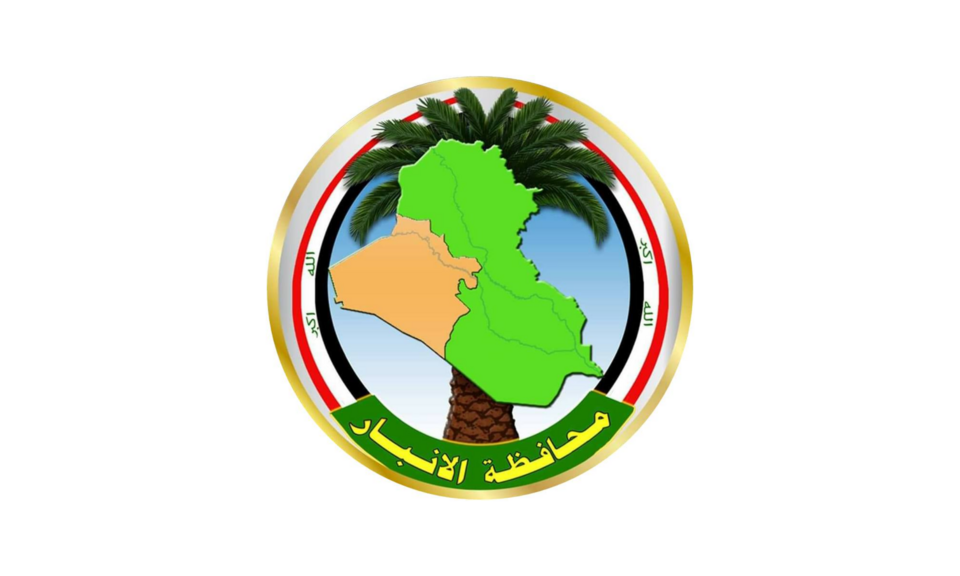 Al-Anbar
 Baghdad
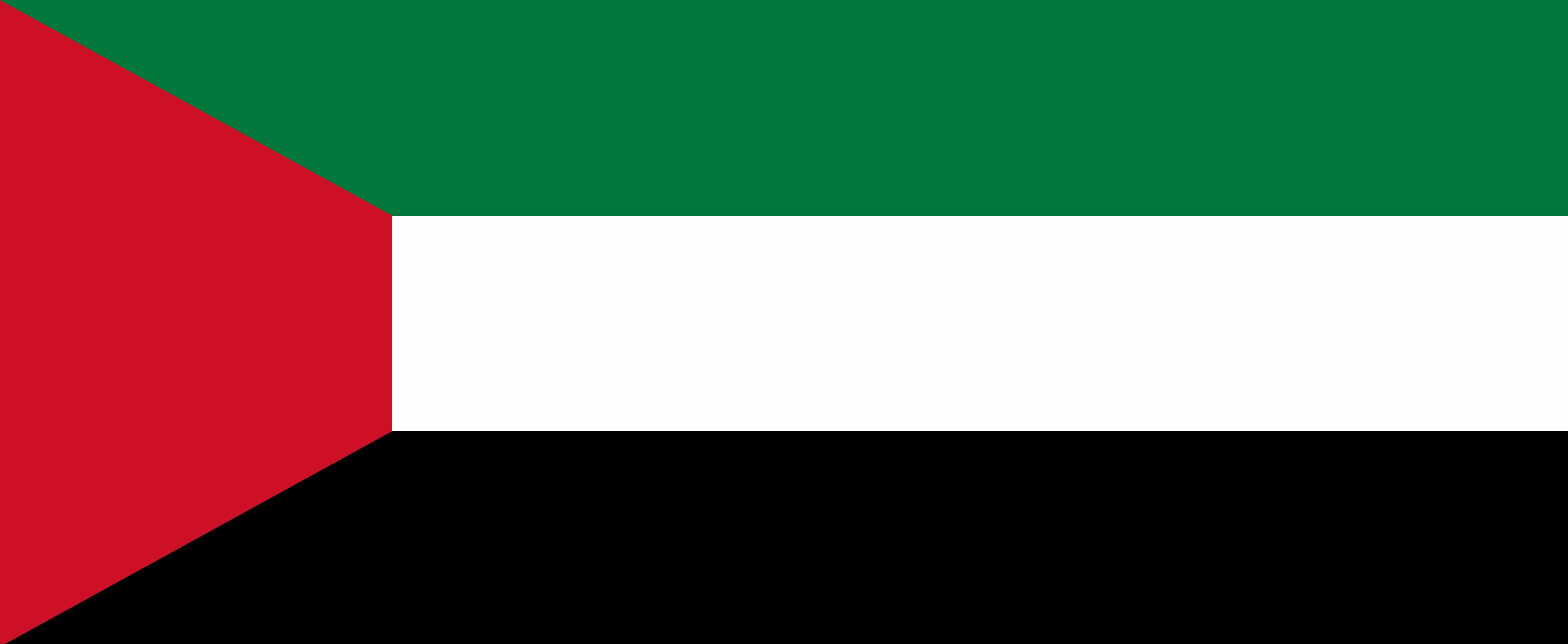 Karbala
 Iran
 Jordan
 Kuwait
 Saudi Arabia
 Turkey
 Trinidad and Tobago