Asia
Flag of the Philippines
The Philippines is a Southeast Asian archipelago of more than 7,100 islands, named after King Philip II of Spain, reflecting more than 300 years of Spanish colonial rule that ended in 1898. It is the world's third-largest English-speaking country and has a culture uniquely blending indigenous, Malay, Spanish, and American influences. The Philippines has extraordinary marine biodiversity, with Palawan and the Tubbataha Reef sitting within the Coral Triangle, the global centre of marine biodiversity.

- CapitalManila
- RegionAsia
- Current flag since1998
- Main coloursBlue, Red, White, Yellow
- Populationabout 117 million
- Areaabout 300,000 km²
- GeographyIsland nation
- Flags in history9
Population and area are rounded.
What the flag of the Philippines means
Blue stands for peace, truth and justice, red for patriotism and valour, and the white triangle for equality and brotherhood. The sun's eight rays represent the first eight provinces that rose against Spain in 1896, and the three stars Luzon, the Visayas and Mindanao. In time of war the flag is flown with the red stripe on top.
How to recognise it
Horizontal blue-over-red with a white equilateral triangle at the hoist containing a sun and three stars.
Did you know?
The Philippines is the only country in South-East Asia colonised by Spain, for over 300 years.
Easily confused with
The Philippines' flag is often mixed up with these. Learn to tell them apart:
Flag history of the Philippines
Every flag that has flown over the Philippines, from today back through time.
1998–present
Flag of the Philippines
The 1998 Flag and Heraldic Code fixed the blue as "Royal Blue." The eight sun rays represent the first eight provinces to revolt in 1896; three stars stand for Luzon, Visayas, and Mindanao.
Flown red-up in wartime:
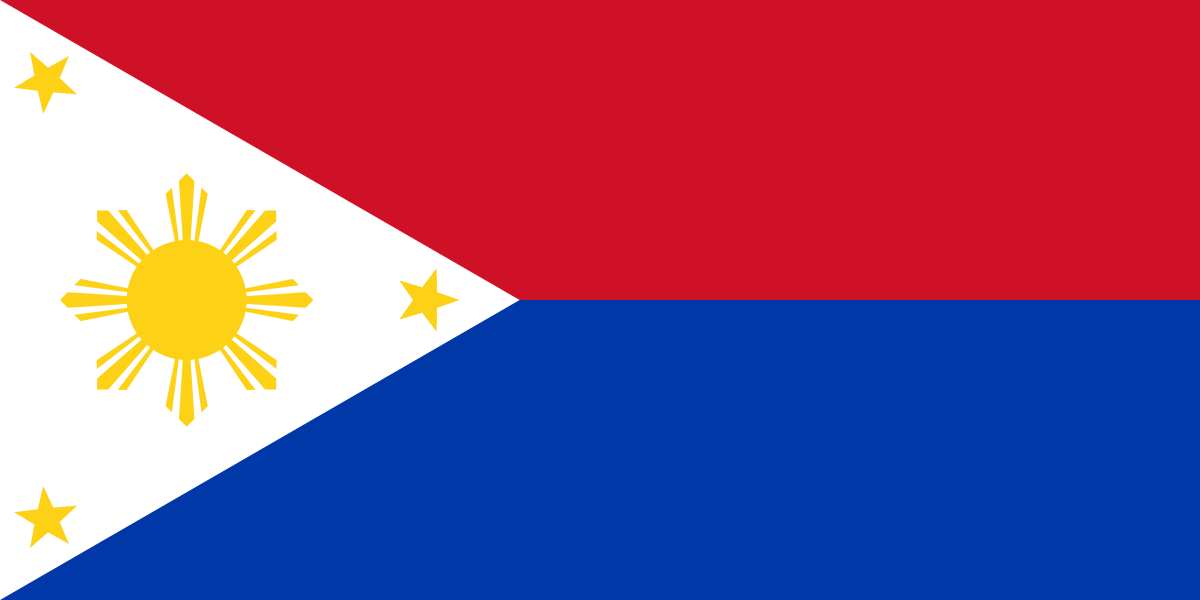
1899–present
War flag (red stripe up)
The Philippine flag is the only national flag deliberately designed to be flown inverted — red stripe on top — to signify a state of war, first done in 1899 at the start of the Philippine-American War.
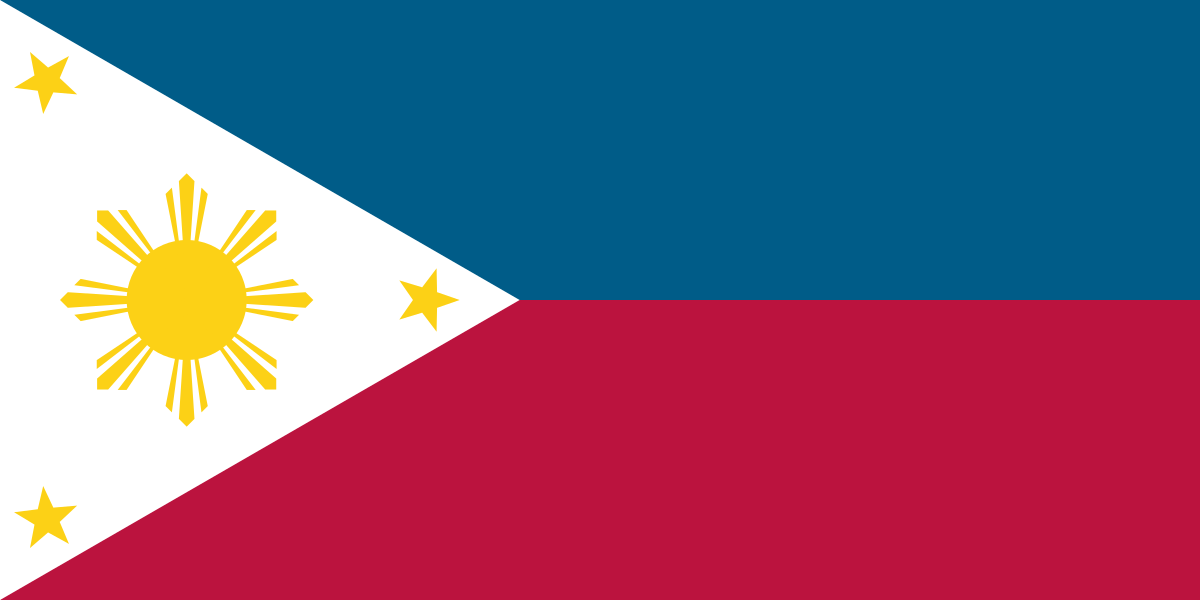
1985–1986
Marcos light-blue flag
In 1985 President Marcos changed the blue from navy to a lighter sky blue, believing the earliest republican flags had been light blue. It was reverted after the 1986 EDSA Revolution.
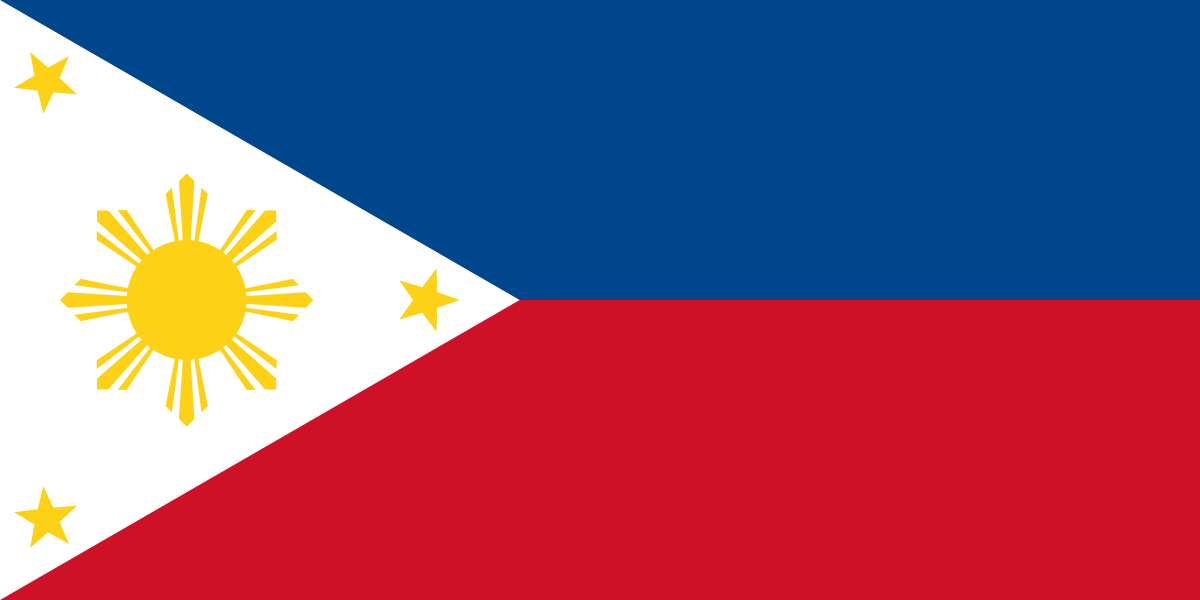
1943–1945
Second Republic (Japanese-sponsored)
The Japanese-backed republic under José P. Laurel adopted a flag with a faceless sun in 1943, lasting until the republic's dissolution in 1945.
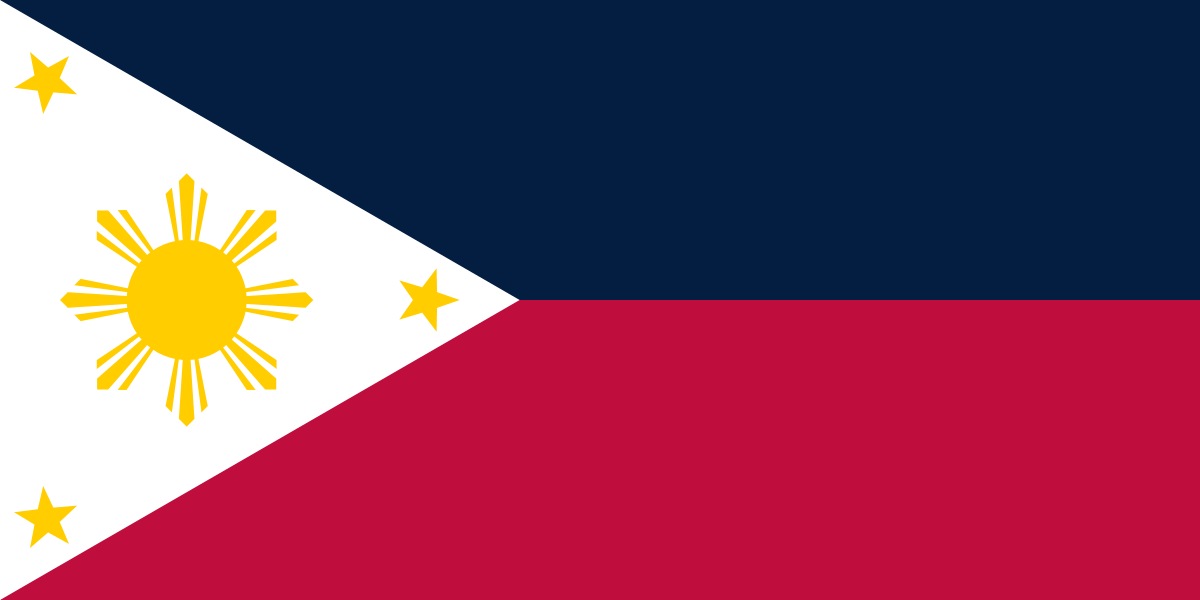
1936–1985
Standardized flag (faceless sun)
A 1936 order under President Quezon set exact specifications and formally removed the mythical face from the sun. This long-lived design also returned from 1986 to 1998.
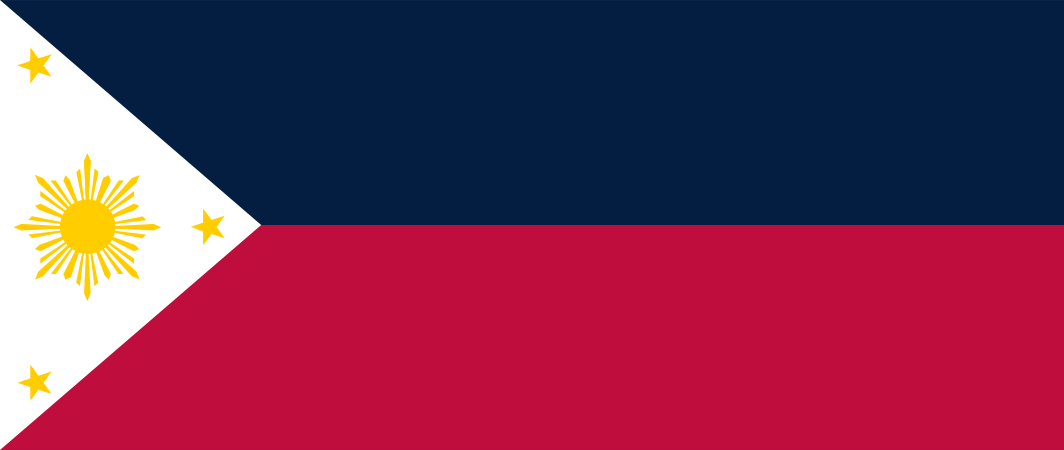
1919–1936
Revived flag (faced sun)
Display of the flag was banned under US rule from 1907; when the ban lifted in 1919 the revived flag used a darker navy blue and still retained the mythical sun face.
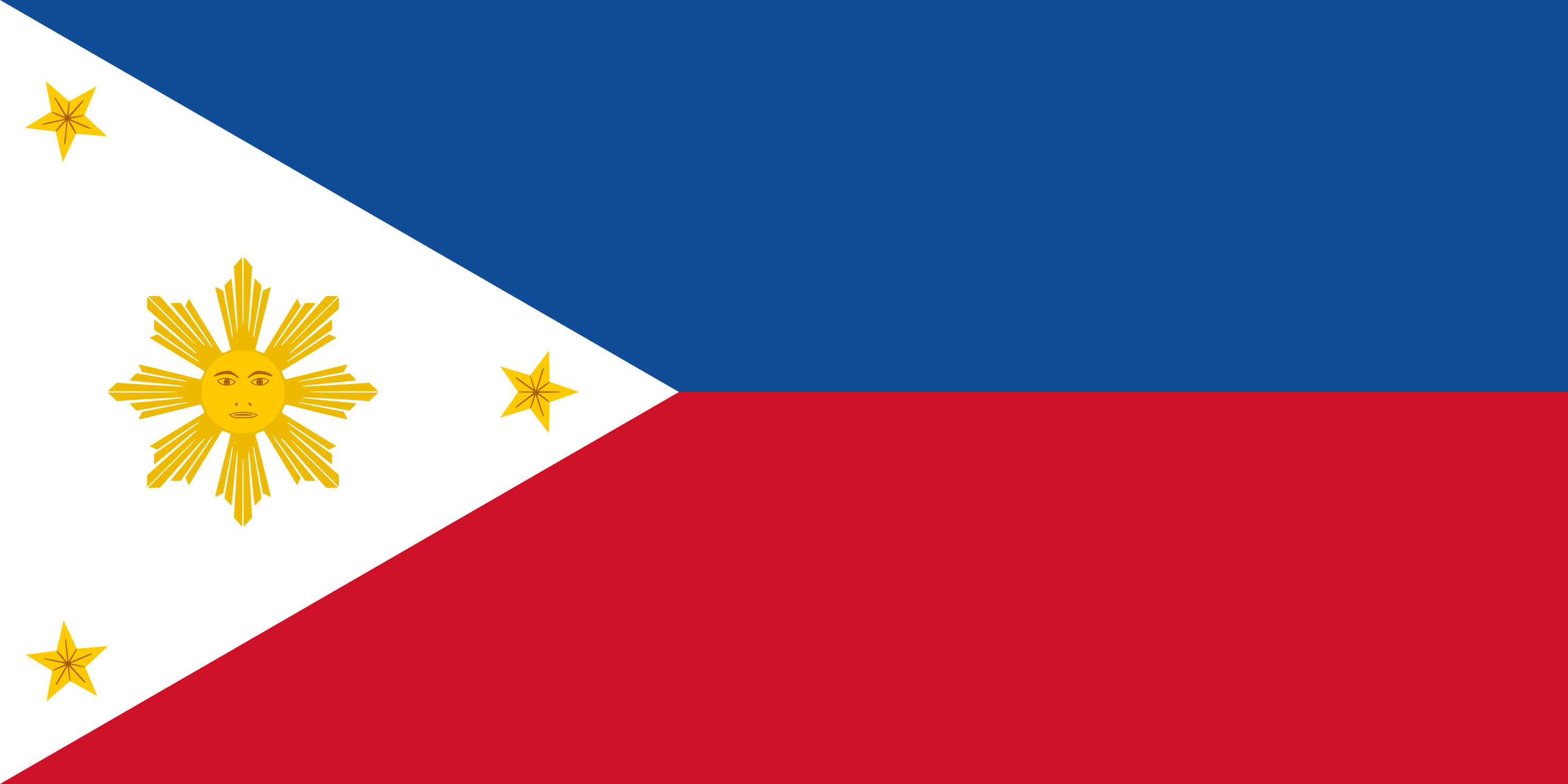
1898–1901
Original revolutionary flag
First unfurled in 1898, the golden sun bore a human-like mythical face echoing the Spanish-colonial "Sun of May" tradition. This was the flag of the First Philippine Republic.

1902–1906
Tagalog Republic
A peasant rebel republic that fought on against American rule after the official end of the Philippine–American War.
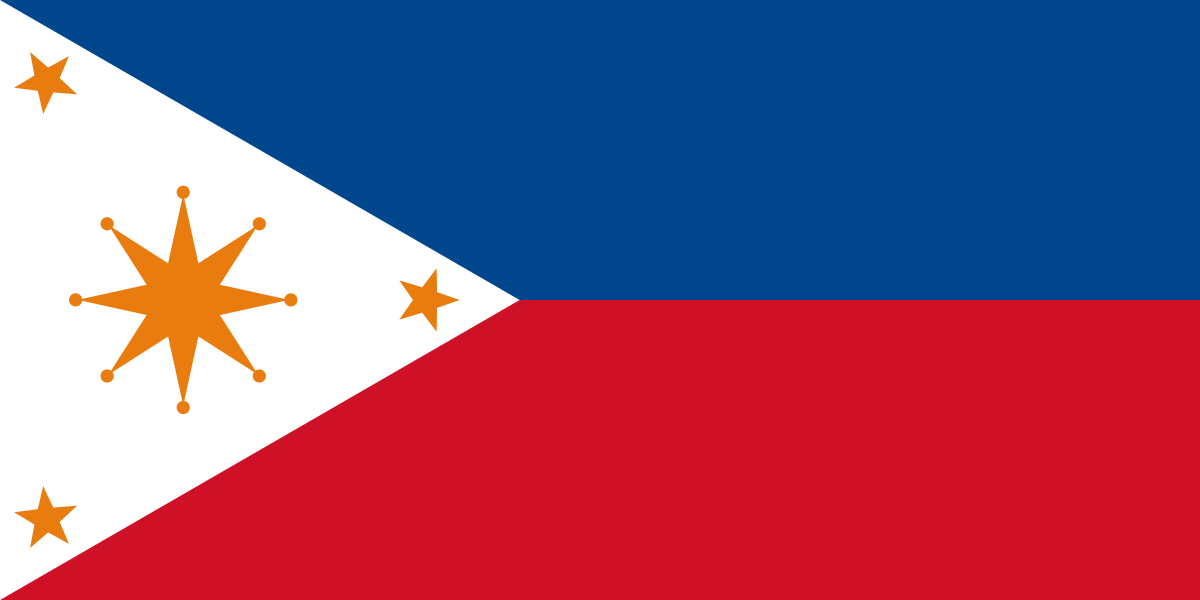
1898–1901
Republic of Negros
A short-lived republic on the sugar island of Negros that broke from Spain and was then absorbed by the United States.

1520–1888
Sultanate of Maguindanao
A powerful Muslim sultanate in Mindanao that long resisted Spanish conquest of the southern Philippines.
Related historical states
Empires, kingdoms and republics that once covered part of the Philippines.
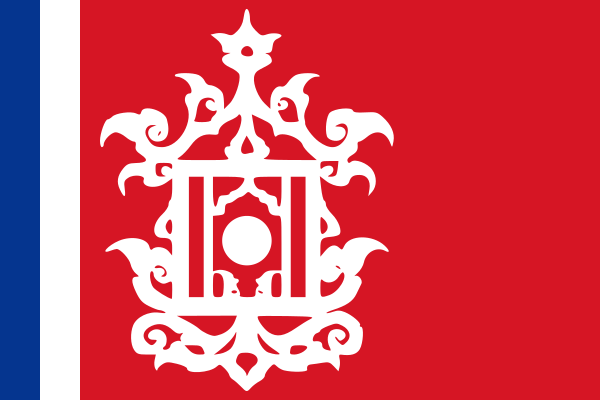
1457–1915
Sultanate of Sulu
The Sulu Sultanate controlled the seas between the southern Philippines and Borneo; its 1878 lease of North Borneo is the root of the still-active Sabah dispute.
1520–1888
Sultanate of Maguindanao
A powerful Muslim sultanate of Mindanao that resisted Spanish conquest for centuries, flying a plain yellow banner — the royal color.
1897
Republic of Biak-na-Bato
Emilio Aguinaldo's short-lived 1897 republic in a mountain stronghold, flying a blue-over-red flag with a white triangle and sun — a step toward Philippine independence.

1896–1897
Katipunan
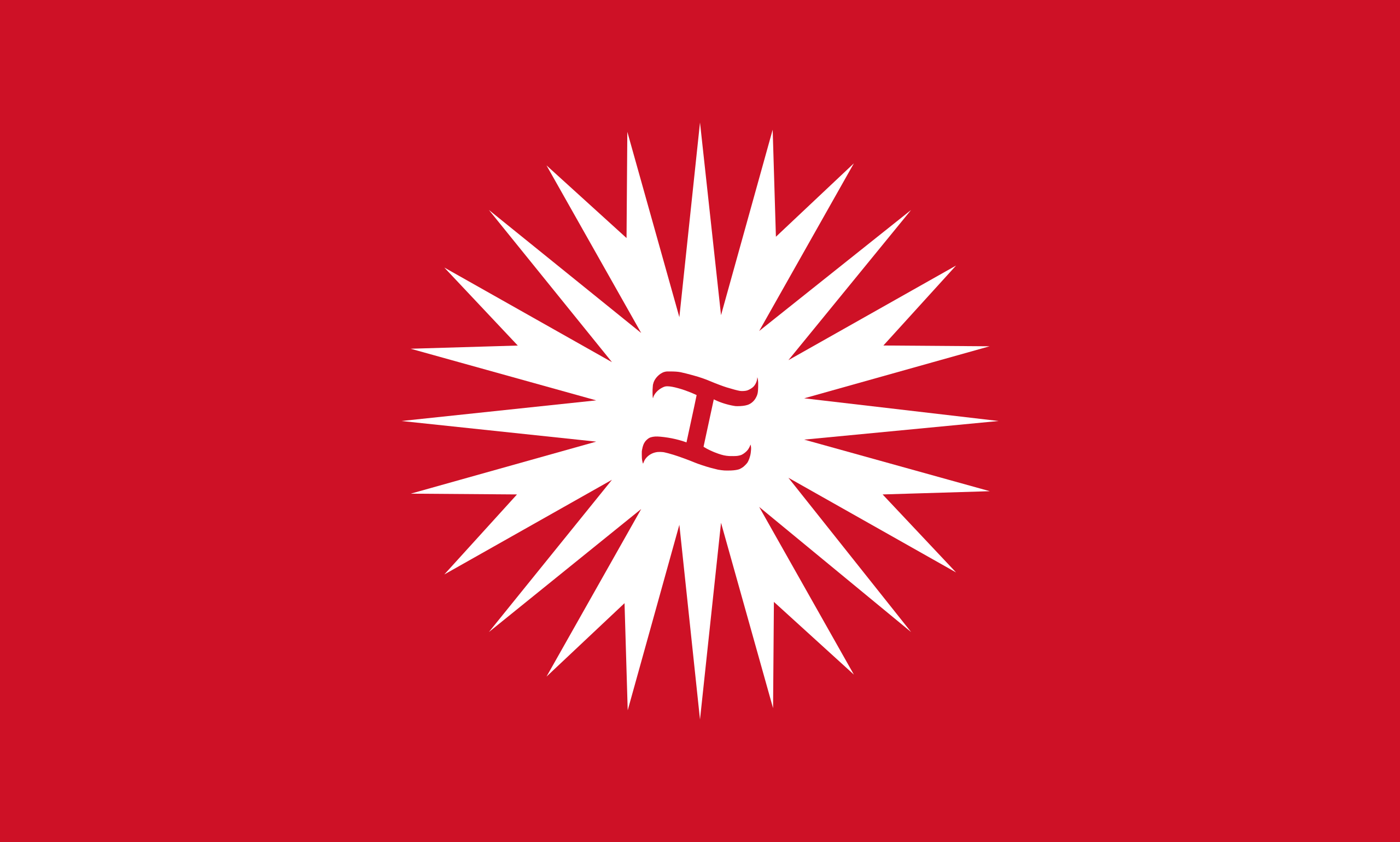
The red banner with three white K's of the secret revolutionary society that launched the 1896 Philippine Revolution against Spain.
1899–1901
First Philippine Republic
Asia's first constitutional republic, declared under Emilio Aguinaldo; its sun-and-stars flag — still the modern Philippine flag — flew in war against Spain and then the United States.

1899–1903
Republic of Zamboanga
A short-lived republic on the Zamboanga Peninsula of Mindanao that declared independence amid the collapse of Spanish rule, before American forces incorporated it into the Philippines.
Regional flags of the Philippines
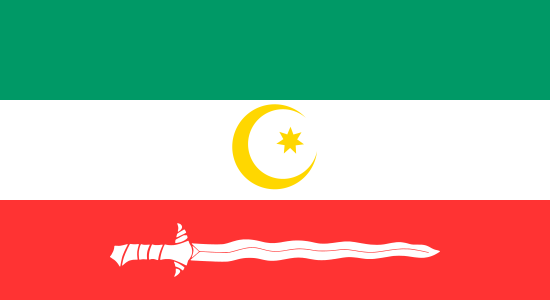
The 1 states, provinces and regions of the Philippines with their own flags.
Bangsamoro (BARMM)
Other flags in blue, red, white and yellow
4 other national flags use the same main colours as the Philippines'.
Play Globalio and learn the Philippines' flag
 Cuba
 Cape Verde
 Kiribati
 Malaysia
 Tuvalu