 Brunei

1972–present
Flag of Sri Lanka
When the country became the Republic of Sri Lanka in 1972, the corner pinnacles were replaced with four bo (pipal) tree leaves, a Buddhist symbol of compassion.
Sri Lanka is a teardrop-shaped island nation in the Indian Ocean off the southern tip of India, known as the 'Pearl of the Indian Ocean.' It has one of the oldest documented histories in Asia, with a continuous chronicle of rulers dating to the 6th century BCE. Sri Lanka is the world's leading exporter of Ceylon tea and has a rich Buddhist heritage with ancient cities such as Anuradhapura and Polonnaruwa, both UNESCO World Heritage Sites.
Population and area are rounded.
The golden lion holding a sword comes from the flag of the last Sinhalese kingdom, Kandy. The four bo leaves stand for the Buddhist virtues of loving kindness, compassion, sympathetic joy and equanimity. The green and orange stripes, added in 1951, represent the Muslim and Tamil communities, and the bo leaves were added in 1972.
Sri Lanka's flag is one of the oldest designs in Asia: the lion banner was flown by the kings of Kandy and taken to Britain after the kingdom fell in 1815. Shortly before independence in 1948, the lion flag was proposed again, and the green and orange stripes were added in 1951 after debate about representing minorities. Sri Lanka marks National Day on 4 February.
Dark red with a golden lion holding a sword, surrounded by four bo leaves; green and orange vertical stripes on the left.
Sri Lanka is the world's largest exporter of Ceylon tea and has over 1,000 species of flowering plants.
Sri Lanka's flag is often mixed up with these. Learn to tell them apart:
Every flag that has flown over Sri Lanka, from today back through time.
When the country became the Republic of Sri Lanka in 1972, the corner pinnacles were replaced with four bo (pipal) tree leaves, a Buddhist symbol of compassion.
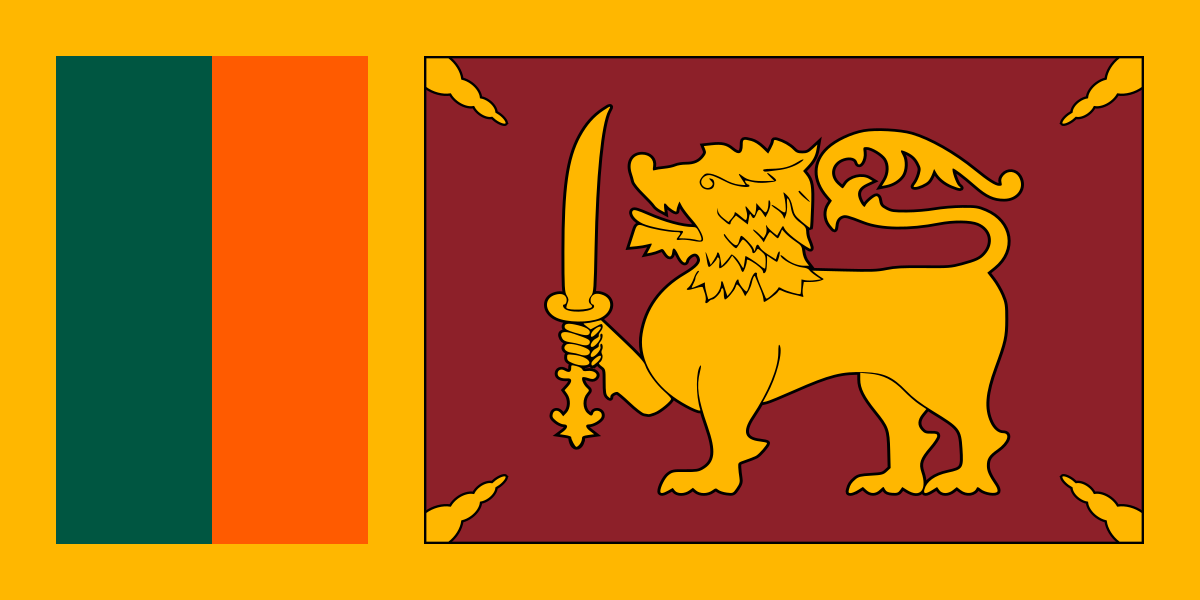
In 1951 two vertical stripes — green and orange — were added at the hoist to represent the Muslim and Tamil communities, broadening the flag's symbolism.
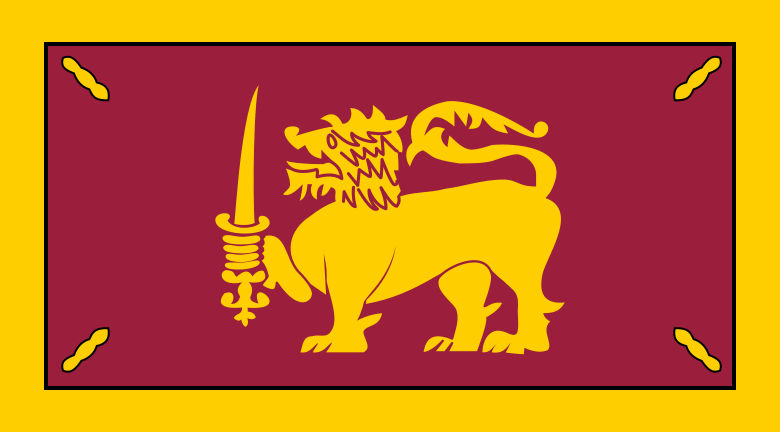
Hoisted at independence in 1948 — a yellow lion with sword on dark crimson, reviving the Kandyan royal standard.
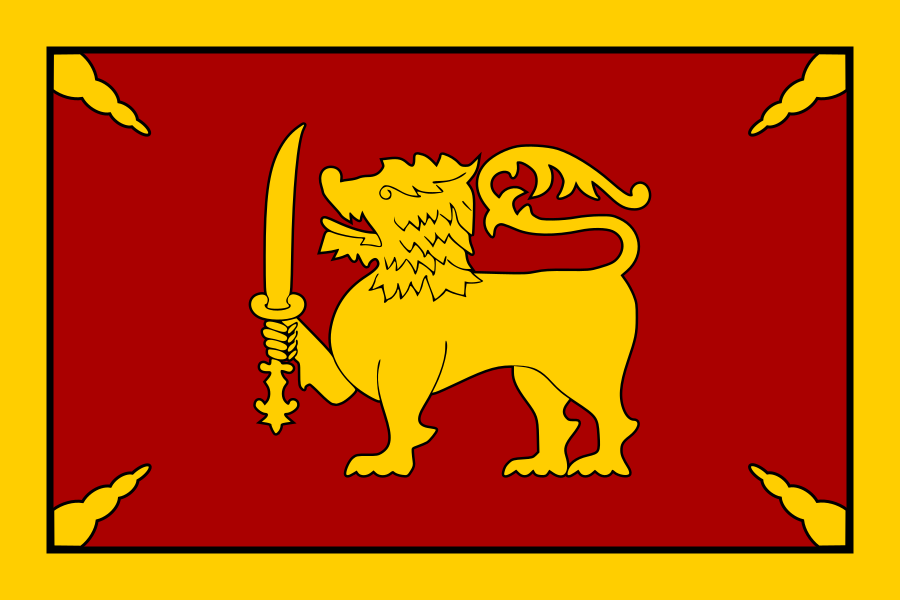
The royal standard of Sri Vikrama Rajasinha, captured by the British at the 1815 Kandyan Convention and rediscovered in London in 1908 — it became the model for independent Ceylon's flag.
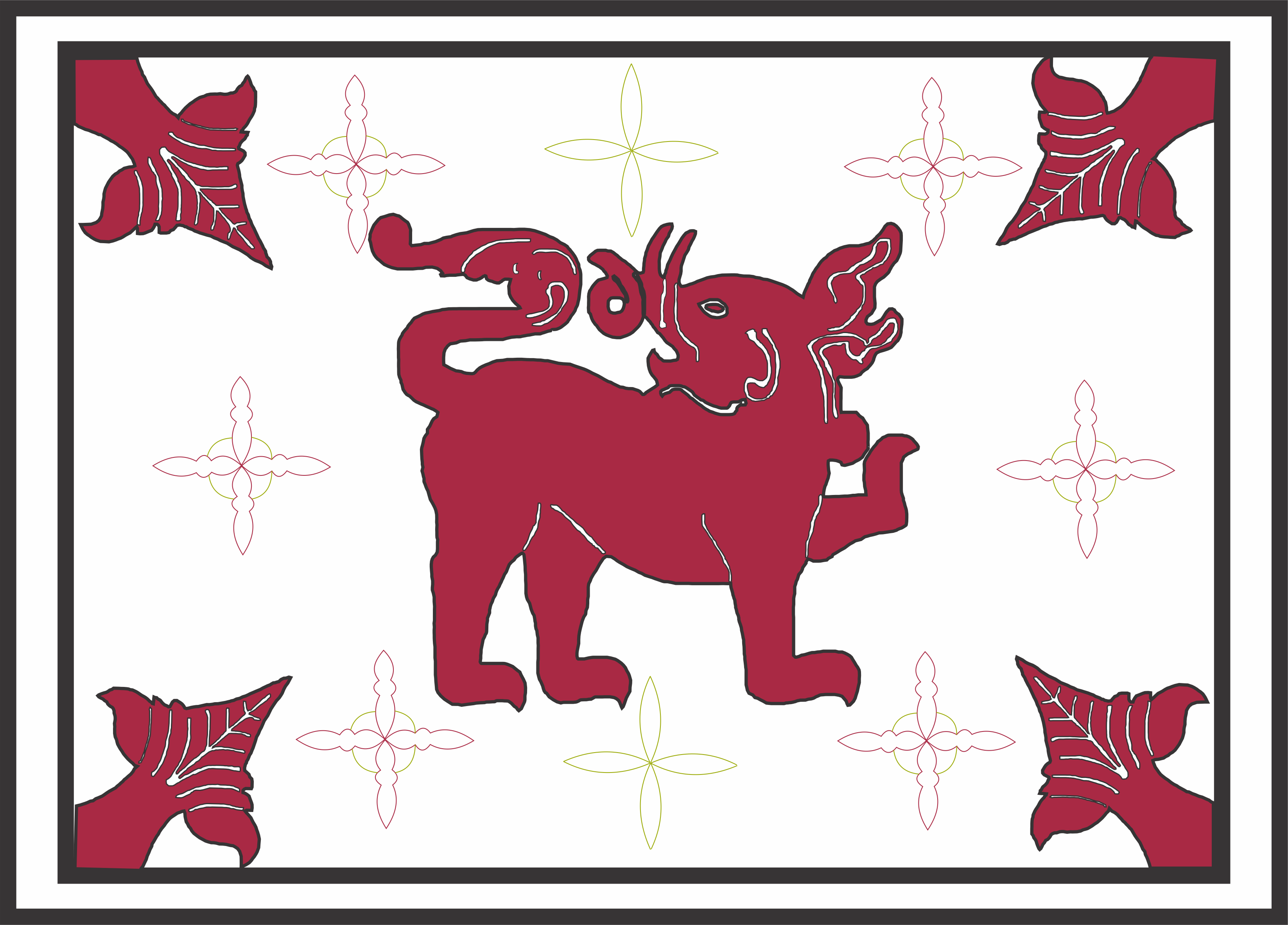
A kingdom of the Sri Lankan interior that mounted the fiercest resistance to Portuguese conquest of the island.
Empires, kingdoms and republics that once covered part of Sri Lanka.
A maroon field bordered in gold with a golden lion holding a kastane sword. The royal standard of Sri Lanka's last independent kingdom became the basis of the modern flag.
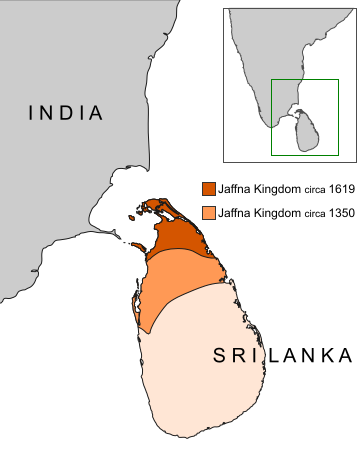
The saffron flag of the Aryacakravarti kings of northern Sri Lanka, bearing the sacred bull Nandi, a crescent and sun, conch, and parasol.
The 9 states, provinces and regions of Sri Lanka with their own flags.
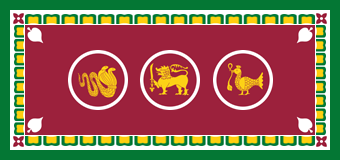 Western
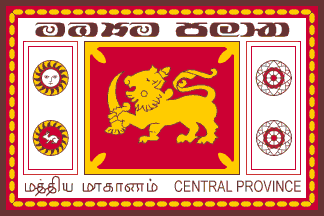 Central
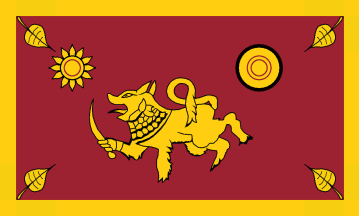 Southern
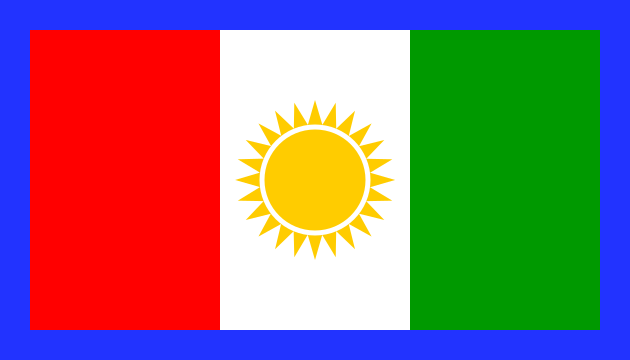 Northern
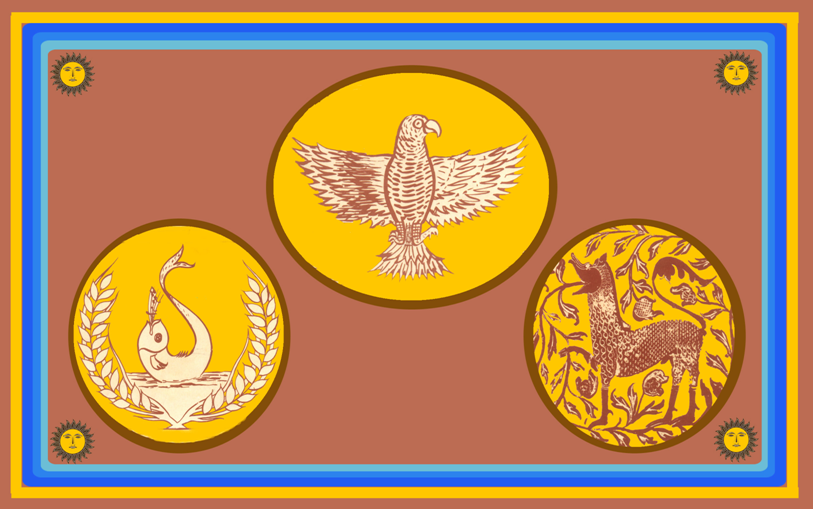 Eastern
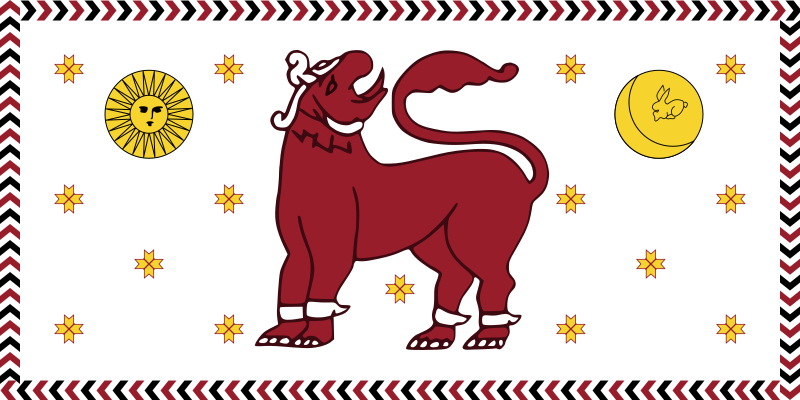 North Western
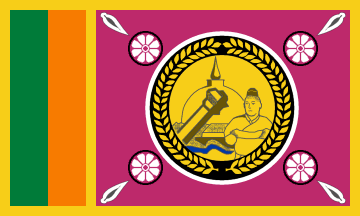 North Central
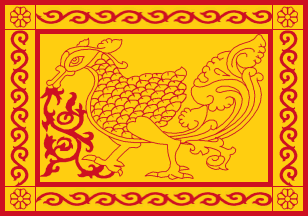 Uva
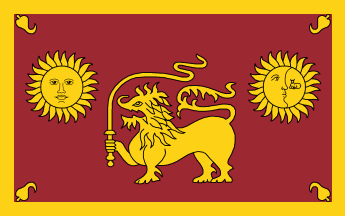 Sabaragamuwa