Americas
Flag of the Dominican Republic
The Dominican Republic shares the island of Hispaniola with Haiti and was the site of the first permanent European settlement in the Americas, established by Bartholomew Columbus in 1496. It is the most visited country in the Caribbean, with large resort areas along its northern and eastern coasts. Santo Domingo is home to the Cathedral of Santa María la Menor (1512), the oldest cathedral in the Americas.

- CapitalSanto Domingo
- RegionAmericas
- Current flag since1844
- Main coloursBlue, Red, White
- Populationabout 11 million
- Areaabout 49,000 km²
- Flags in history3
Population and area are rounded.
What the flag of the Dominican Republic means
The white cross stands for the people's struggle to keep their nation and faith, blue for liberty and red for the blood of the independence war. The coat of arms shows an open Bible, making it the only national flag with a Bible, and the motto “Dios, Patria, Libertad”. The flag was designed by Juan Pablo Duarte and adopted in 1844 after independence from Haiti.
How to recognise it
Quartered blue-red with a white cross and coat of arms in the centre.
Did you know?
The Dominican Republic shares the island of Hispaniola with Haiti — the only island shared by two sovereign nations in the Americas.
Easily confused with
The Dominican Republic's flag is often mixed up with these. Learn to tell them apart:
Flag history of the Dominican Republic
Every flag that has flown over the Dominican Republic, from today back through time.
1844–present
Dominican Republic
The Dominican flag — a white cross dividing blue and red quarters, with the coat of arms at centre — was designed by Juan Pablo Duarte for independence from Haiti in 1844. The white cross was deliberately chosen to set the Dominican flag apart from Haiti's blue-and-red (which had no cross), marking the cultural, religious, and political distinction the founders wanted to emphasise. The coat of arms features a Bible and cross, six Dominican flags, and the motto "God, Fatherland, Liberty."

1822–1844
Haitian Occupation
From 1822 to 1844 the eastern two-thirds of Hispaniola (the future Dominican Republic) was occupied and incorporated into Haiti by President Jean-Pierre Boyer. For 22 years the Haitian blue-and-red flew over what is now the Dominican Republic, a period known in Dominican history as the Haitian Unification — an occupation that profoundly shaped Dominican national identity and the desire for separation.
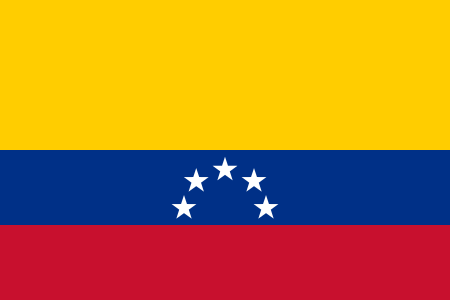
1821–1822
Republic of Spanish Haiti
For nine weeks in late 1821, the eastern half of Hispaniola declared independence from Spain as the "Republic of Spanish Haiti," flying a Gran Colombia-style tricolor with a white hoist bar. Haiti invaded and annexed it in February 1822, beginning the 22-year occupation.
Related historical states
Empires, kingdoms and republics that once covered part of the Dominican Republic.
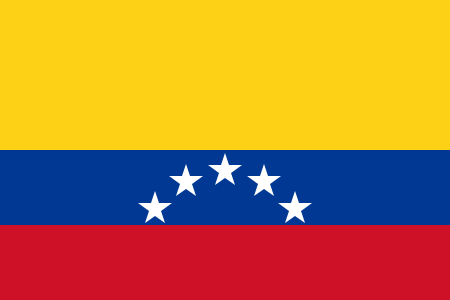
1821–1822
Republic of Spanish Haiti
A yellow-blue-red tricolor with silver stars, flown by the short-lived breakaway state of Santo Domingo before Haiti annexed it in 1822.
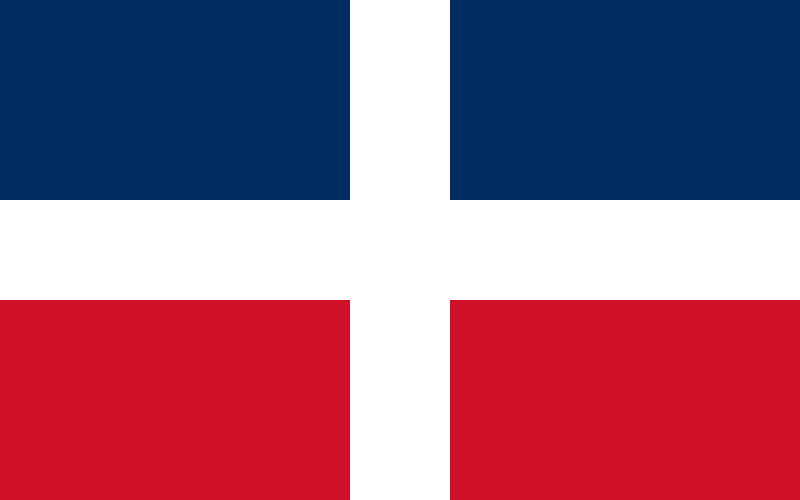
1844
First Dominican Republic
The flag raised when the Dominican Republic won independence from Haiti in 1844, a white cross dividing blue and red quarters — the design, with arms added, that endures today.
Regional flags of the Dominican Republic
The 4 states, provinces and regions of the Dominican Republic with their own flags.
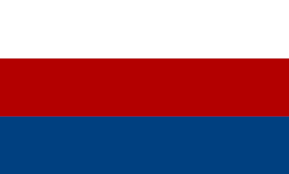
Independencia
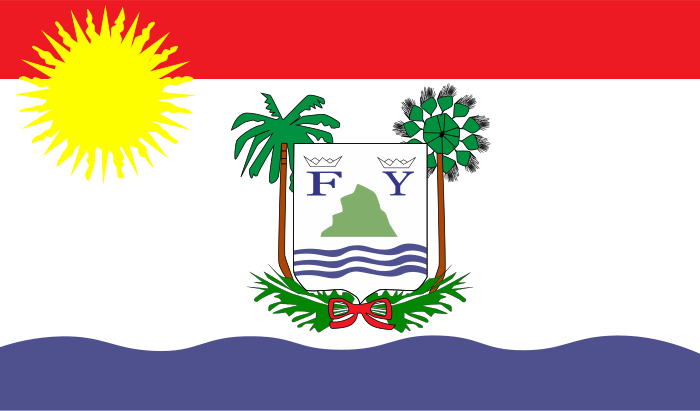
Puerto Plata
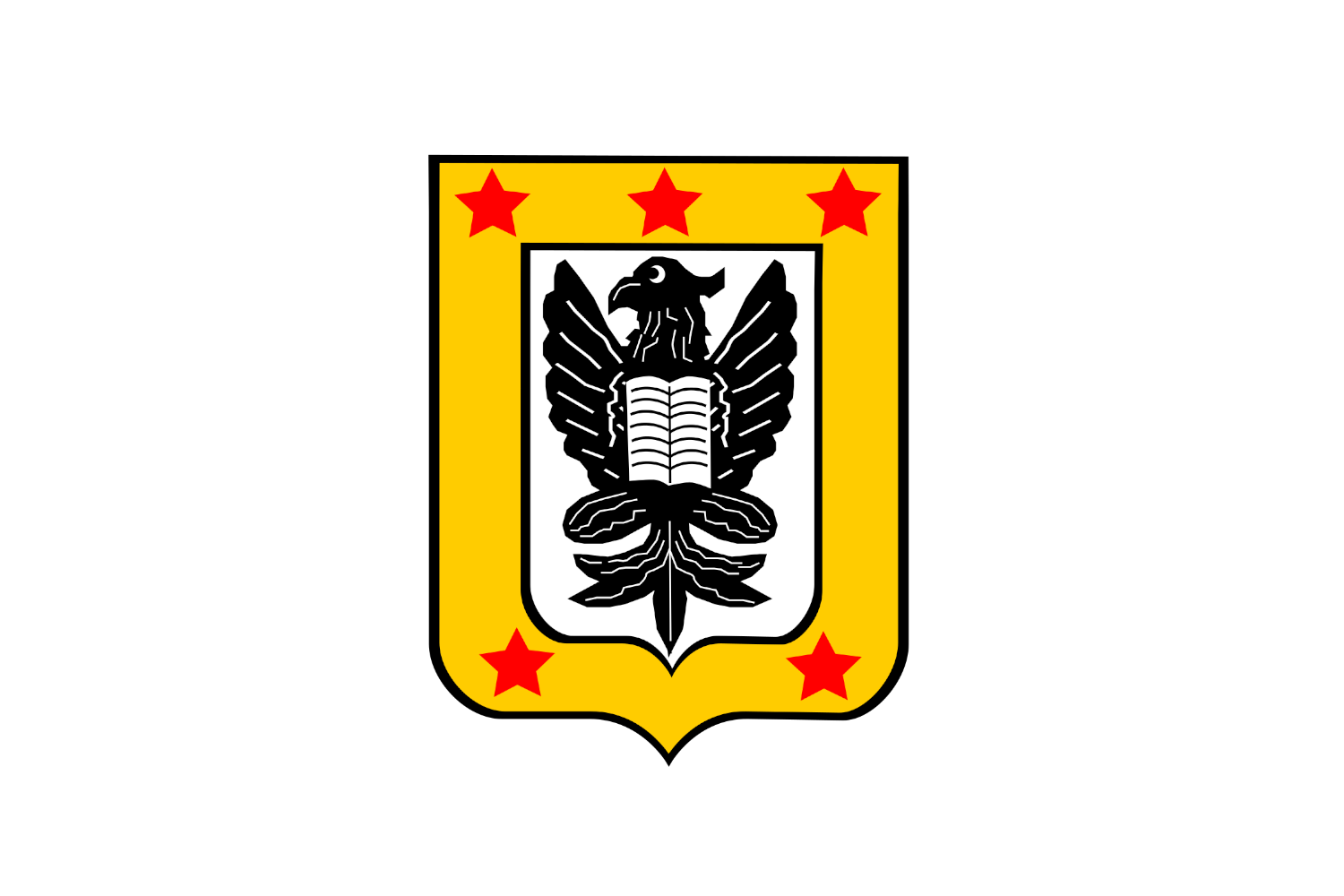
San Juan
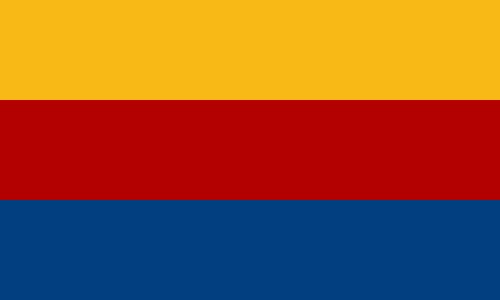
San Pedro de Macorís
Neighbouring countries
The Dominican Republic shares a land border with one country: Haiti.
Other flags in blue, red and white
30 other national flags use the same main colours as the Dominican Republic's.
Play Globalio and learn the Dominican Republic's flag
 Australia
 Belize
 Cambodia
 Chile
 Costa Rica
 Croatia
 Cuba
 Czech Republic
 Fiji
 France
 Iceland
 Laos
 Liberia
 Luxembourg
 Nepal
 Netherlands
 New Zealand
 North Korea
 Norway
 Panama
 Paraguay
 Russia
 Samoa
 Serbia
 Slovakia
 Slovenia
 Taiwan
 Thailand
 United Kingdom
 United States