Americas
Flag of Costa Rica
Costa Rica is a Central American country celebrated for its pioneering environmental policies and extraordinary biodiversity, protecting more than 25% of its territory in national parks, wildlife refuges, and biological reserves. It abolished its military in 1948 and has since channelled resources into education and healthcare. Costa Rica generates the vast majority of its electricity from renewable sources, primarily hydropower, wind, and geothermal energy from its chain of active volcanoes.

- CapitalSan Jose
- RegionAmericas
- Current flag since1906
- Main coloursBlue, White, Red
- Populationabout 5.2 million
- Areaabout 51,000 km²
- Flags in history2
Population and area are rounded.
What the flag of Costa Rica means
Blue stands for the sky, opportunity and perseverance, white for peace and wisdom, and red for the blood shed for freedom and the warmth of the people. The red stripe was added in 1848, inspired by that year's revolution in France, by Pacífica Fernández, wife of President José María Castro Madriz. The civil flag has no coat of arms.
How to recognise it
Horizontal blue-white-red-white-blue with a red centre band twice as wide as the others (the state flag adds a coat of arms).
Did you know?
Costa Rica has no army — it abolished its military in 1948 and is one of the most biodiverse countries on Earth.
Easily confused with
Costa Rica's flag is often mixed up with these. Learn to tell them apart:
Flag history of Costa Rica
Every flag that has flown over Costa Rica, from today back through time.
1906–present
Republic of Costa Rica (current)
Costa Rica distinguished its Central American tricolor in 1848 by adding a wide red horizontal stripe at the centre — inspired, according to tradition, by First Lady Pacífica Fernández, who admired the French Tricolore's colours. The result — blue-white-red-white-blue — is immediately distinct from its neighbours. The coat of arms on the state flag was standardised in 1906 and shows three volcanoes, two oceans, and rising sun.
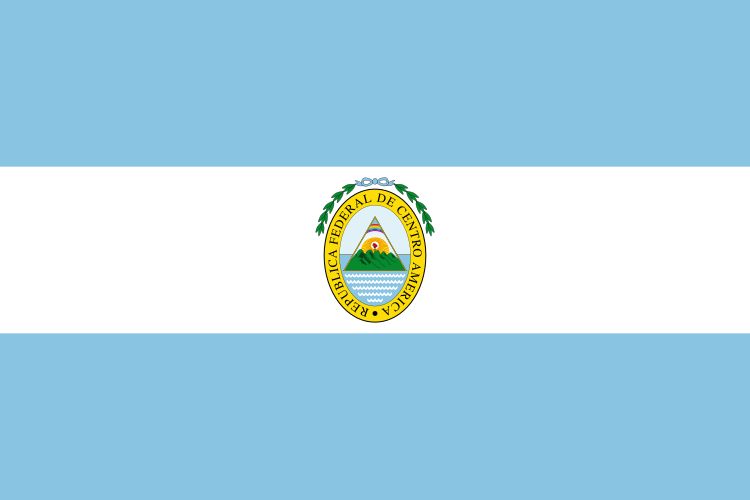
1823–1848
Federal Republic of Central America
Costa Rica was part of the Central American federation from 1823 to its dissolution in 1839. After the federation collapsed, Costa Rica spent years as part of various smaller unions before declaring itself a fully independent republic in 1848. That same year the flag was redesigned with the distinctive red stripe, marking a deliberate break from the plain blue-white-blue shared by the other former federation members.
Related historical states
Empires, kingdoms and republics that once covered part of Costa Rica.
1823–1841
Federal Republic of Central America
Its blue-white-blue stripes survive almost unchanged in the flags of Honduras, Nicaragua, El Salvador, and Guatemala. White stood for the land between the two oceans.
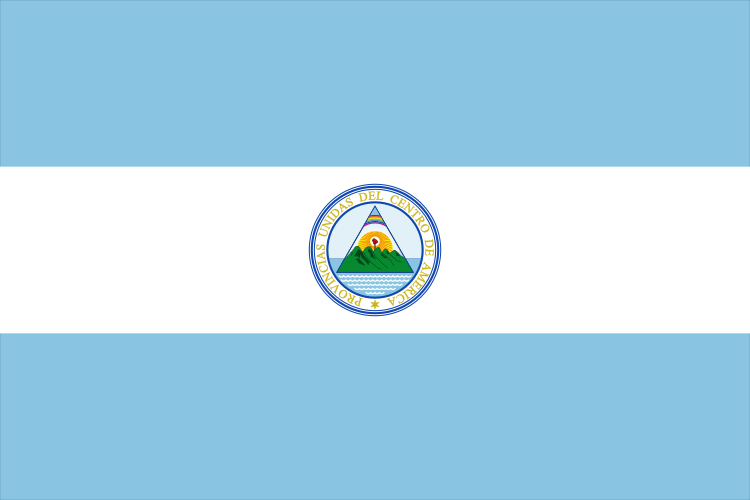
1823–1824
United Provinces of Central America
The first union of the Central American provinces after independence from Mexico, flying the blue-white-blue bands that preceded the Federal Republic and survive in five modern flags.
Regional flags of Costa Rica
The 7 states, provinces and regions of Costa Rica with their own flags.
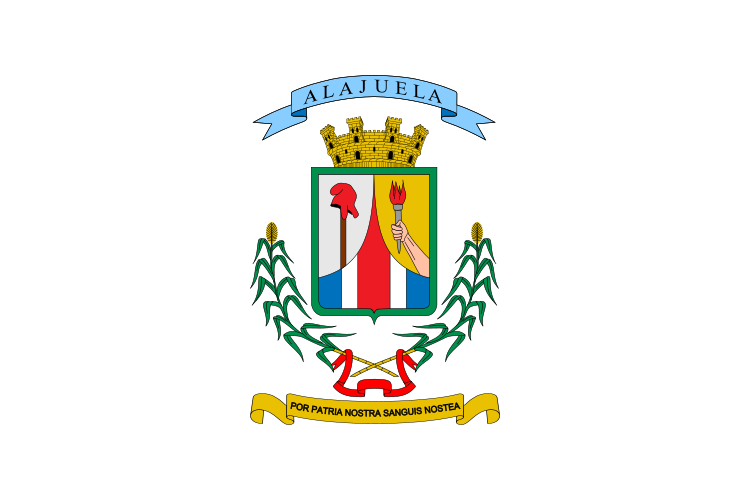
Alajuela
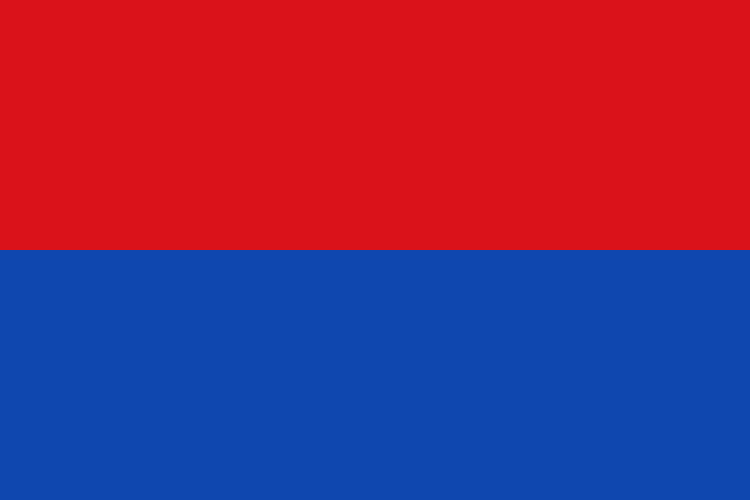
Cartago
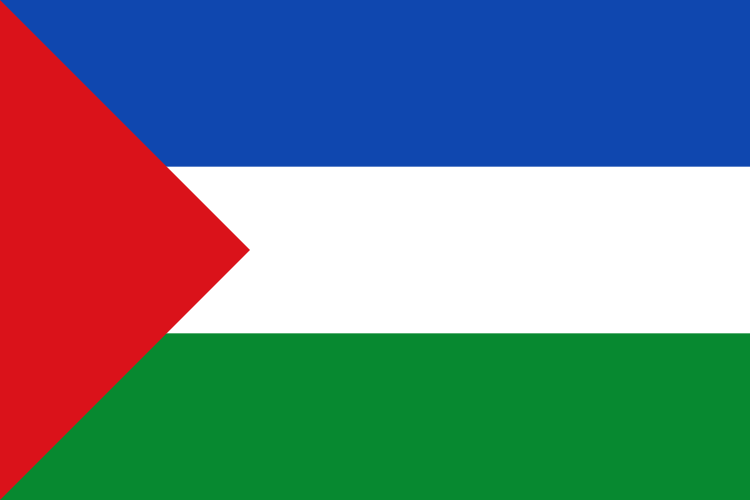
Guanacaste
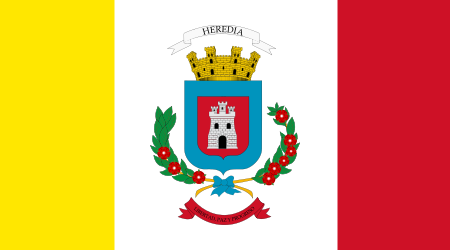
Heredia

Limón
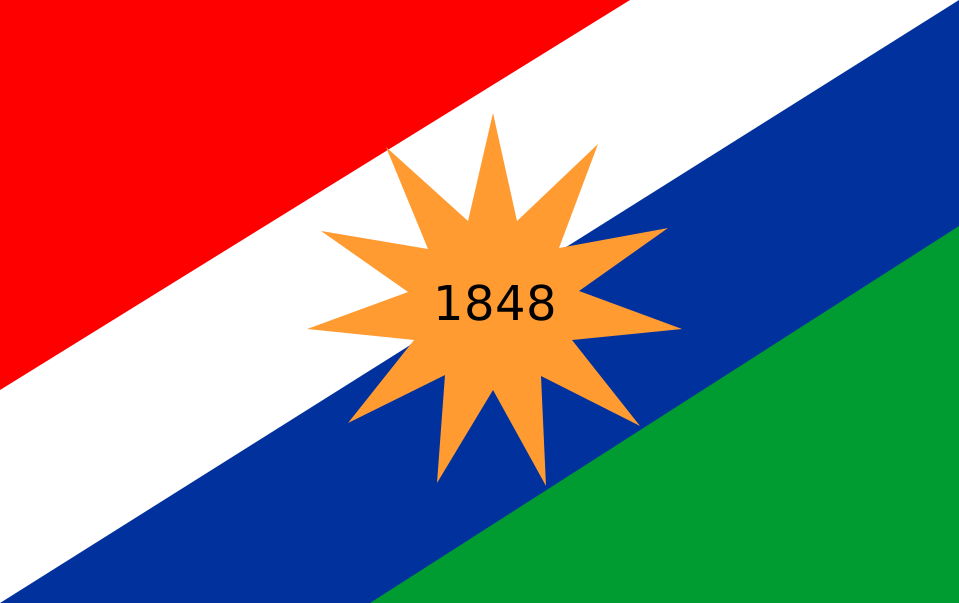
Puntarenas
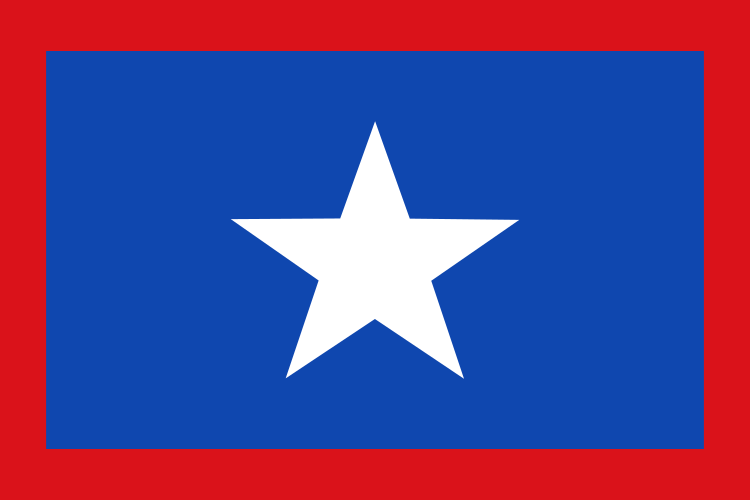
San José
Neighbouring countries
Costa Rica shares a land border with 2 countries: Nicaragua and Panama.
Other flags in blue, white and red
30 other national flags use the same main colours as Costa Rica's.
Play Globalio and learn Costa Rica's flag
 Thailand
 Netherlands
 Nicaragua
 Panama
 Australia
 Belize
 Cambodia
 Chile
 Croatia
 Cuba
 Czech Republic
 Dominican Republic
 Fiji
 France
 Iceland
 Laos
 Liberia
 Luxembourg
 Nepal
 New Zealand
 North Korea
 Norway
 Paraguay
 Russia
 Samoa
 Serbia
 Slovakia
 Slovenia
 Taiwan
 United Kingdom
 United States