 Finland
 Denmark

1944–present
Current Icelandic flag
The red-cross-on-white-on-blue design was retained when Iceland became a fully independent republic in 1944. The colors are said to represent the island's fire (red), ice (white) and mountains (blue).
Iceland is a Nordic island nation in the North Atlantic, the most sparsely populated country in Europe and one of the most geologically active places on Earth, home to active volcanoes, geysers, hot springs, and vast lava fields. Despite its position near the Arctic Circle, the Gulf Stream keeps its coastal areas relatively mild. Iceland's parliament, the Althing, founded in 930 AD, is the world's oldest parliament still in operation.
Population and area are rounded.
Iceland's flag was approved by the Danish king in 1915 and became the national flag of the republic in 1944. Blue stands for the mountains and the sea, white for snow and ice, and red for the volcanic fires of the island, so the flag is often described as fire and ice. As on the other Nordic flags, the cross is set towards the hoist.
Iceland was ruled from Denmark for centuries, and an earlier proposal, a white cross on blue known as the Hvítbláinn, was popular among those campaigning for independence before the red-edged design was chosen. Icelanders fly the flag on public holidays such as National Day, 17 June, the birthday of independence leader Jón Sigurðsson. A swallow-tailed version is used by government offices.
Blue with a red-bordered white Nordic cross. Norway swaps the colours: red with blue-bordered white.
Iceland has no army and has not been at war with another country since gaining independence in 1944.
Iceland's flag is often mixed up with these. Learn to tell them apart:
Every flag that has flown over Iceland, from today back through time.
The red-cross-on-white-on-blue design was retained when Iceland became a fully independent republic in 1944. The colors are said to represent the island's fire (red), ice (white) and mountains (blue).
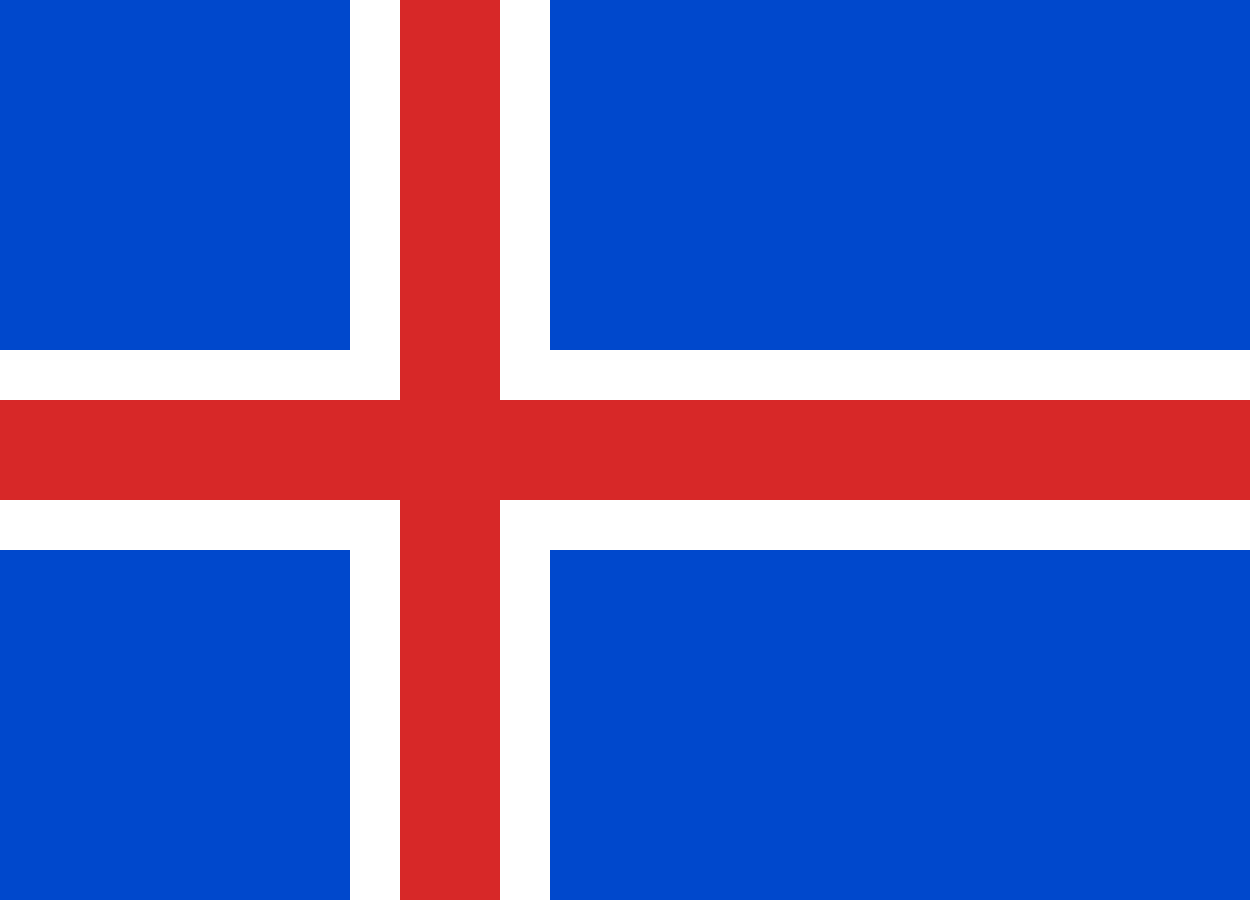
A red cross was added inside the white cross by royal decree in 1915, and this became Iceland's flag when it gained sovereignty under the Danish crown in 1918 — the same design as today.
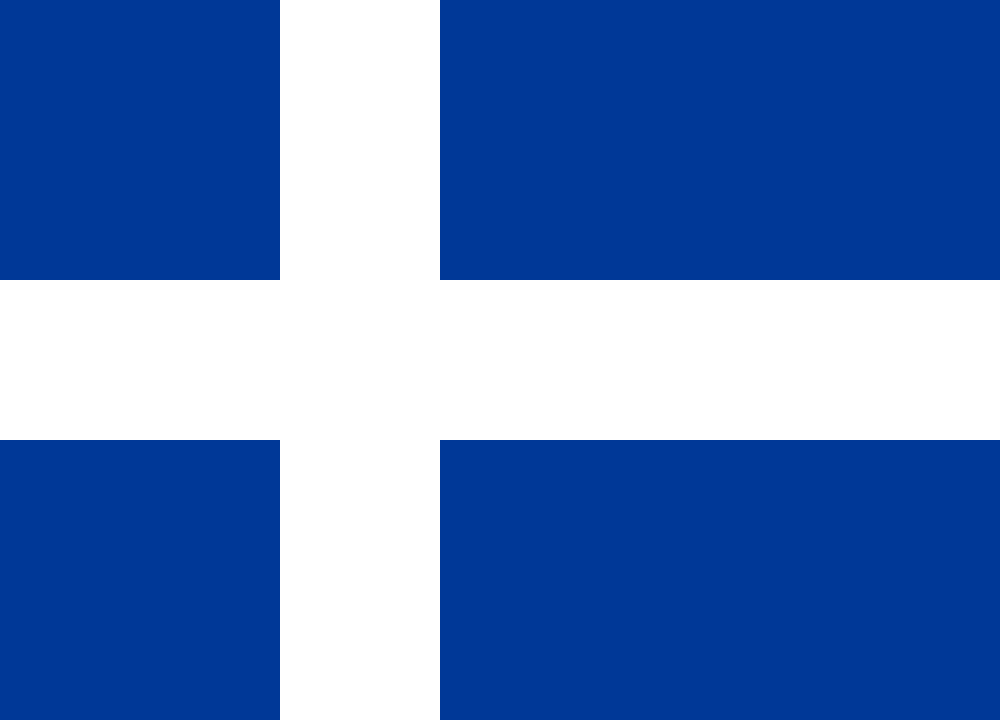
Before the modern flag, Icelandic nationalists rallied behind the Hvítbláinn — a white cross on a sky-blue field, designed in 1897. Denmark refused to recognise it because it resembled the flag of Greece, and the dispute pushed Iceland to add the red cross, producing the blue-white-red design adopted in 1915.
30 other national flags use the same main colours as Iceland's.
 Australia
 Belize
 Cambodia
 Chile
 Costa Rica
 Croatia
 Cuba
 Czech Republic
 Dominican Republic
 Fiji
 France
 Laos
 Liberia
 Luxembourg
 Nepal
 Netherlands
 New Zealand
 North Korea
 Norway
 Panama
 Paraguay
 Russia
 Samoa
 Serbia
 Slovakia
 Slovenia
 Taiwan
 Thailand
 United Kingdom
 United States