Americas
Flag of Cuba
Cuba is the largest island in the Caribbean Sea, known internationally for its preserved classic American cars from the 1950s, hand-rolled cigars, rum, and vibrant music and dance traditions including salsa, son cubano, and mambo. The country has been governed by a communist government since the Cuban Revolution of 1959. Despite economic challenges, Cuba has an unusually high number of doctors per capita and has developed a significant pharmaceutical and medical biotechnology sector.

- CapitalHavana
- RegionAmericas
- Current flag since1902
- Main coloursBlue, White, Red
- Populationabout 11 million
- Areaabout 110,000 km²
- GeographyIsland nation
- Flags in history4
Population and area are rounded.
What the flag of Cuba means
The three blue stripes stand for the three departments into which Cuba was divided at the time, and the two white stripes for the purity of the independence cause. The red triangle represents the blood shed for freedom and the equality of all, and the white star, La Estrella Solitaria, independence. Designed in 1849 by Narciso López and Miguel Teurbe Tolón, it was adopted in 1902.
How to recognise it
Five horizontal stripes (blue-white alternating) with a red equilateral triangle and white star at the hoist.
Did you know?
Cuba has one of the highest literacy rates in the world at over 99%.
Easily confused with
Cuba's flag is often mixed up with these. Learn to tell them apart:
Flag history of Cuba
Every flag that has flown over Cuba, from today back through time.
1902–present
Republic of Cuba
Cuba's flag — designed by exile Narciso López in 1849 — pre-dates Cuban independence by 50 years. López wanted to annex Cuba to the United States; later Cuban independence leaders adopted the same flag but stripped it of that meaning. The three blue stripes represent the three colonial provinces; the two white stripes represent peace; the red triangle stands for liberty, equality, and fraternity; the white star is the Lone Star of an independent Cuba. This design has flown without any change since 1902.

1898–1902
US military government
After the Spanish-American War of 1898 ended four centuries of Spanish rule, Cuba spent four years under a US military government flying the American flag, until the Republic was inaugurated in 1902. Independence came with strings attached — the Platt Amendment gave Washington the right to intervene and the lease on Guantánamo Bay — shaping a fraught US–Cuba relationship that endures.
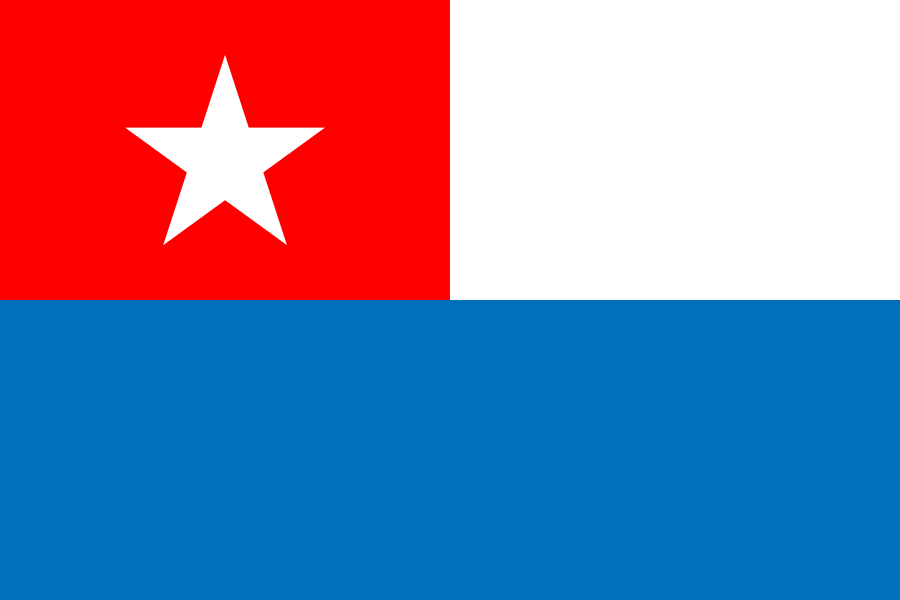
1869–1898
Ten Years' War rebel flag
During the Ten Years' War (1868–1878) — Cuba's first major independence uprising — rebels in the Oriente region used a flag of red, white, and blue horizontal stripes. The Bayamo flag, raised when rebels captured the town of Bayamo in 1868, is considered Cuba's first revolutionary banner. These regional rebel flags were eventually unified around López's 1849 design during the final push for independence.
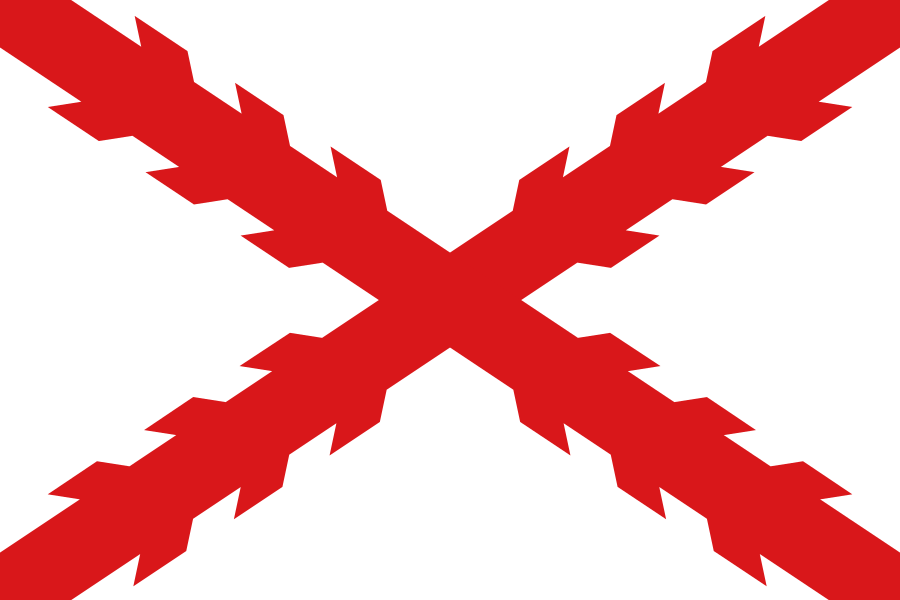
1516–1898
Spanish Colonial Cuba
Cuba was Spain's richest and most strategically important colonial possession — the "Pearl of the Antilles" — and one of the last two Spanish colonies in the Americas (along with Puerto Rico), not achieving independence until 1898 after the Spanish-American War. For nearly four centuries the Spanish flag flew over Havana's fortresses, changed only by the particular ensigns of successive Spanish dynasties.
Other flags in blue, white and red
30 other national flags use the same main colours as Cuba's.
Play Globalio and learn Cuba's flag
 Philippines
 Chile
 Australia
 Belize
 Cambodia
 Costa Rica
 Croatia
 Czech Republic
 Dominican Republic
 Fiji
 France
 Iceland
 Laos
 Liberia
 Luxembourg
 Nepal
 Netherlands
 New Zealand
 North Korea
 Norway
 Panama
 Paraguay
 Russia
 Samoa
 Serbia
 Slovakia
 Slovenia
 Taiwan
 Thailand
 United Kingdom