 Australia
 Fiji

1997–present
Flag of Tuvalu (restored)
In 1997 Tuvalu reverted to its original 1978 design — a light-blue ensign with the Union Jack and nine yellow stars mapping the geographic positions of the nine islands.
Tuvalu is one of the world's smallest, most remote, and most threatened nations — a Polynesian island group in the central Pacific with a highest point of just 4.6 metres above sea level. The country faces an existential threat from rising sea levels caused by climate change, with much of its land at risk of flooding and saltwater intrusion. Tuvalu licences its highly sought-after '.tv' internet domain extension for significant revenue, providing crucial income for this tiny nation.
Population and area are rounded.
Light blue stands for the Pacific Ocean, and the nine yellow stars for the islands of Tuvalu, set out as they appear on a map. The Union Jack shows the country's links with Britain. In 1995 a new flag without the Union Jack was adopted, but it was unpopular and the original was restored in 1997.
Tuvalu's name means eight standing together, after the eight traditionally inhabited islands, but the flag shows nine stars, including Niulakita, which was settled later. The stars are arranged as the islands appear on a map, with north at the top. Tuvalu, formerly the Ellice Islands, separated from the Gilbert Islands in 1975 and became independent on 1 October 1978.
Light blue with the Union Jack in the canton and nine yellow stars representing the nine atolls.
Tuvalu is the world's fourth-smallest country and one of the most threatened by rising sea levels.
Tuvalu's flag is often mixed up with these. Learn to tell them apart:
Every flag that has flown over Tuvalu, from today back through time.
In 1997 Tuvalu reverted to its original 1978 design — a light-blue ensign with the Union Jack and nine yellow stars mapping the geographic positions of the nine islands.
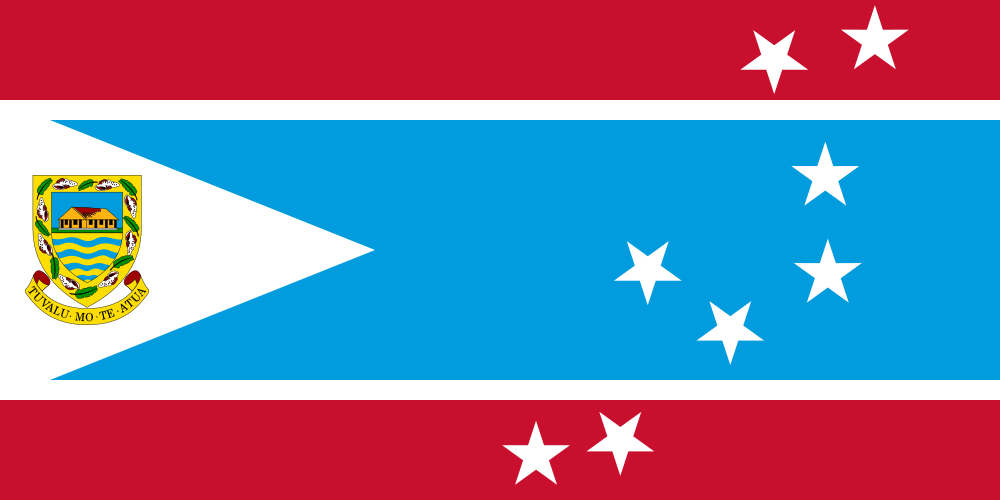
Following a 1995 push to end the monarchy, a new flag introduced in 1996 removed the Union Jack in favor of the national coat of arms on a red field. It proved unpopular and short-lived.
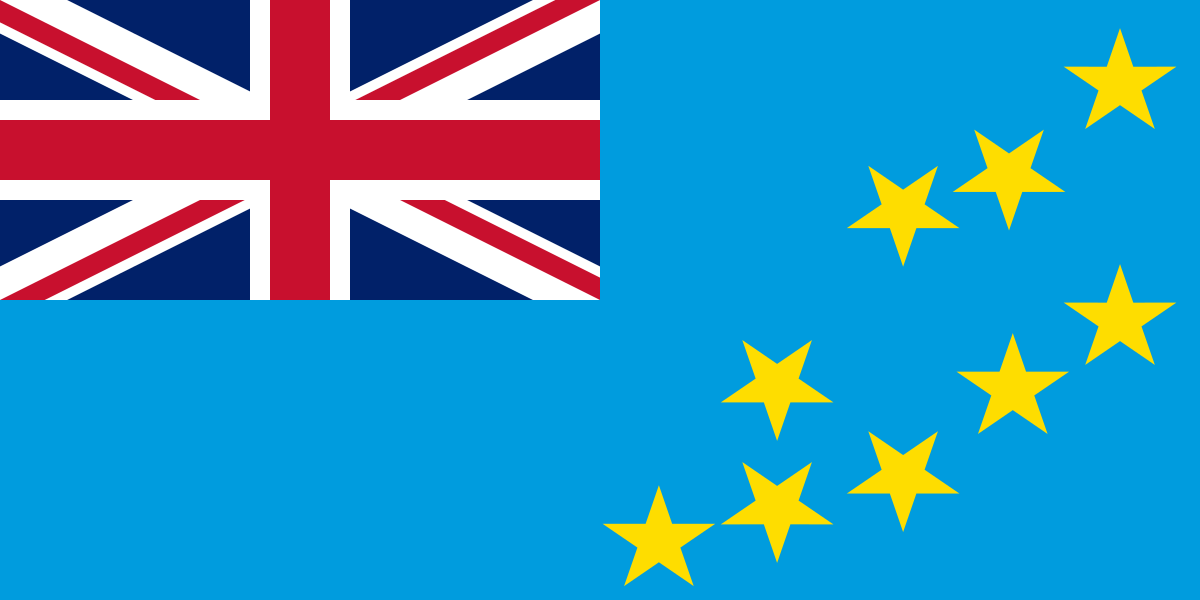
Adopted at independence in 1978, the original light-blue ensign with the Union Jack and nine stars — the same design restored in 1997.
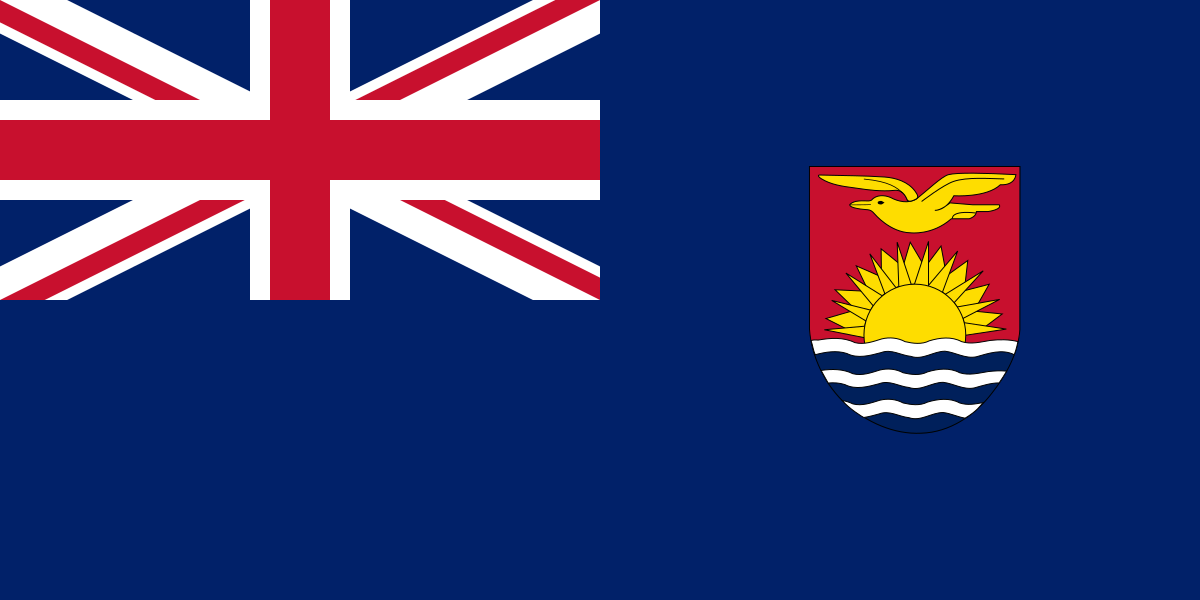
The Ellice Islands (now Tuvalu) were governed with the Gilberts (now Kiribati) as a single British colony, flying the Blue Ensign with the 1937 colonial badge of a frigatebird over a rising sun. The Ellice Islanders voted to separate in 1975, and Tuvalu became independent in 1978.
4 other national flags use the same main colours as Tuvalu's.
Play Globalio and learn Tuvalu's flag Cape Verde
 Kiribati
 Malaysia
 Philippines