Americas
Flag of Haiti
Haiti occupies the western third of Hispaniola in the Caribbean and in 1804 became the first Black republic in the world and the first nation established through a successful slave revolt — the Haitian Revolution inspired abolitionists worldwide. Haiti has a rich culture deeply connected to West African traditions, with Haitian Creole spoken nationwide and Vodou practised alongside Roman Catholicism. Despite significant challenges, it has a vibrant artistic tradition including internationally recognised painting and sculpture.

- CapitalPort-au-Prince
- RegionAmericas
- Current flag since1986
- Main coloursBlue, Red
- Populationabout 12 million
- Areaabout 28,000 km²
- Flags in history4
Population and area are rounded.
What the flag of Haiti means
Haiti's blue and red date from the 1803 revolution, when Jean-Jacques Dessalines tore the white out of a French tricolour to show the break with France. The coat of arms shows a royal palm topped by a cap of liberty, with cannons and the motto “L'Union fait la force”, unity is strength. Haiti celebrates Flag Day on 18 May.
How to recognise it
Horizontal blue-over-red with the Haitian coat of arms on a white square in the centre.
Did you know?
Haiti was the first Black republic in history, achieving independence from France in 1804.
Easily confused with
Haiti's flag is often mixed up with these. Learn to tell them apart:
Flag history of Haiti
Every flag that has flown over Haiti, from today back through time.
1986–present
Republic of Haiti (restored)
Haiti's distinctive blue-and-red bicolor was restored in 1986 after the fall of the Duvalier dictatorship. The flag is derived from the legendary act of 1803 in which Jean-Jacques Dessalines tore the white strip from a captured French Tricolore, stitching the remaining blue and red together as a symbol of the union between Black and mixed-race Haitians against the colonial power. The coat of arms — a palm tree, cannons, and the motto "L'Union Fait La Force" — sits in the white centre band of the state flag.
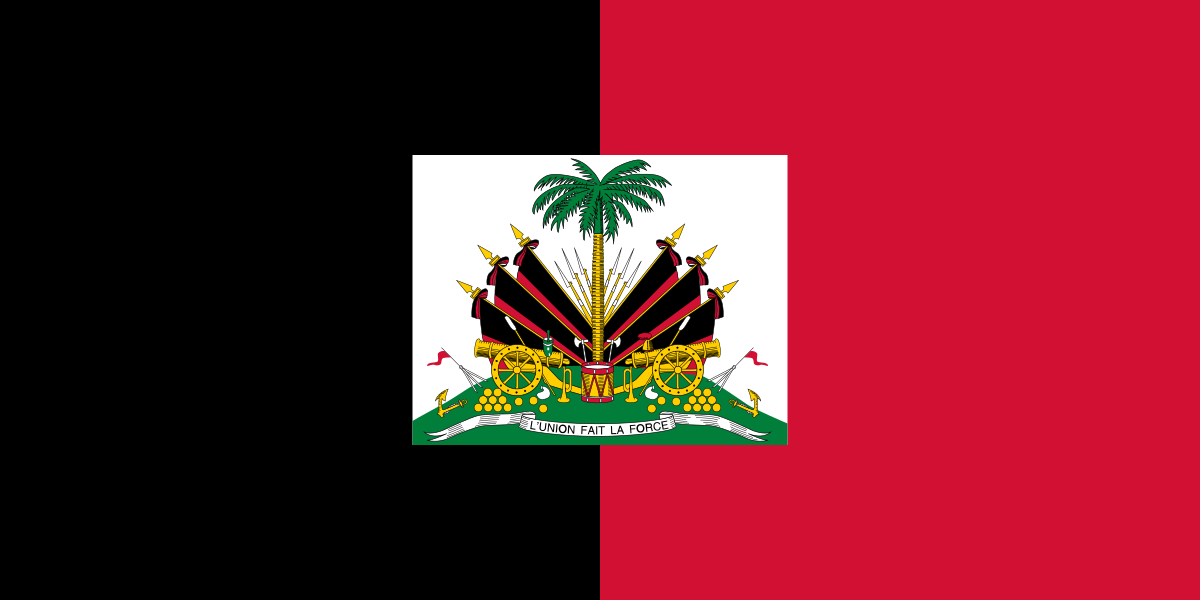
1964–1986
Duvalier Flag (black and red)
In 1964, "Papa Doc" Duvalier changed the flag's horizontal blue-and-red to vertical black-and-red, claiming to revive the pre-independence flag used by some revolutionary leaders who favoured black over blue. The black stripe represented the Black population; red represented the mixed-race (mulatto) population. After Duvalier's son "Baby Doc" was overthrown in 1986, the blue-and-red was immediately restored.
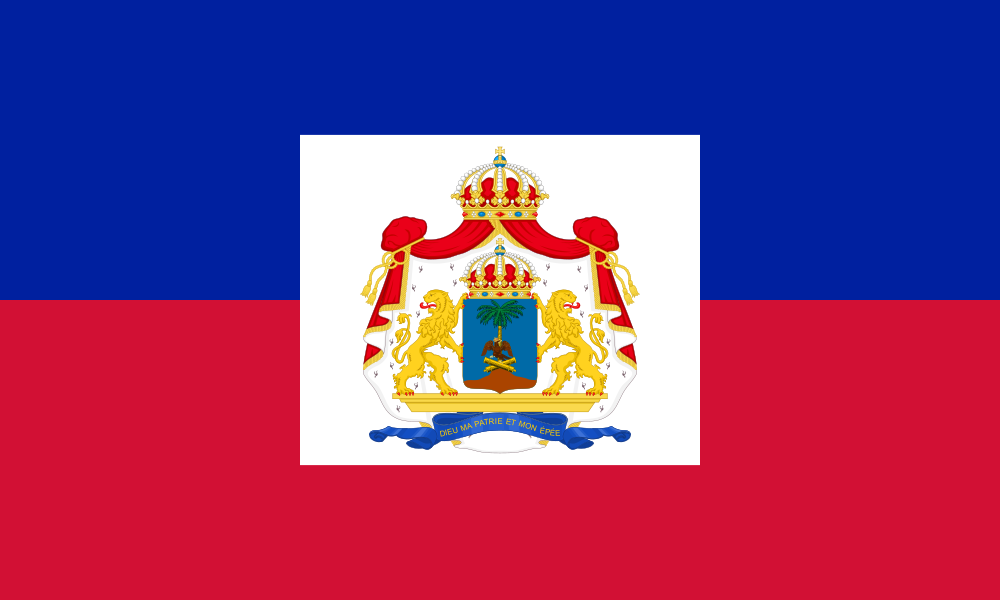
1849–1859
Second Empire of Haiti
In 1849 President Faustin Soulouque crowned himself Emperor Faustin I, ruling a decade-long Second Empire of Haiti. He kept the blue-and-red bicolor but replaced the republican arms with an elaborate imperial coat of arms beneath a crown. The empire collapsed in 1859 and Haiti returned to a republic.

1806–1820
Early Haitian Republic
Haiti declared independence on January 1, 1804 — the only successful slave rebellion in history to found a nation. In the chaotic early decades the country split between a black northern kingdom under Henri Christophe and a southern republic, each using different flags. The early horizontal blue-red bicolor was established by Pétion's republic and eventually became the national standard, though with continuing debates over whether the blue should be cobalt or midnight.
Related historical states
Empires, kingdoms and republics that once covered part of Haiti.
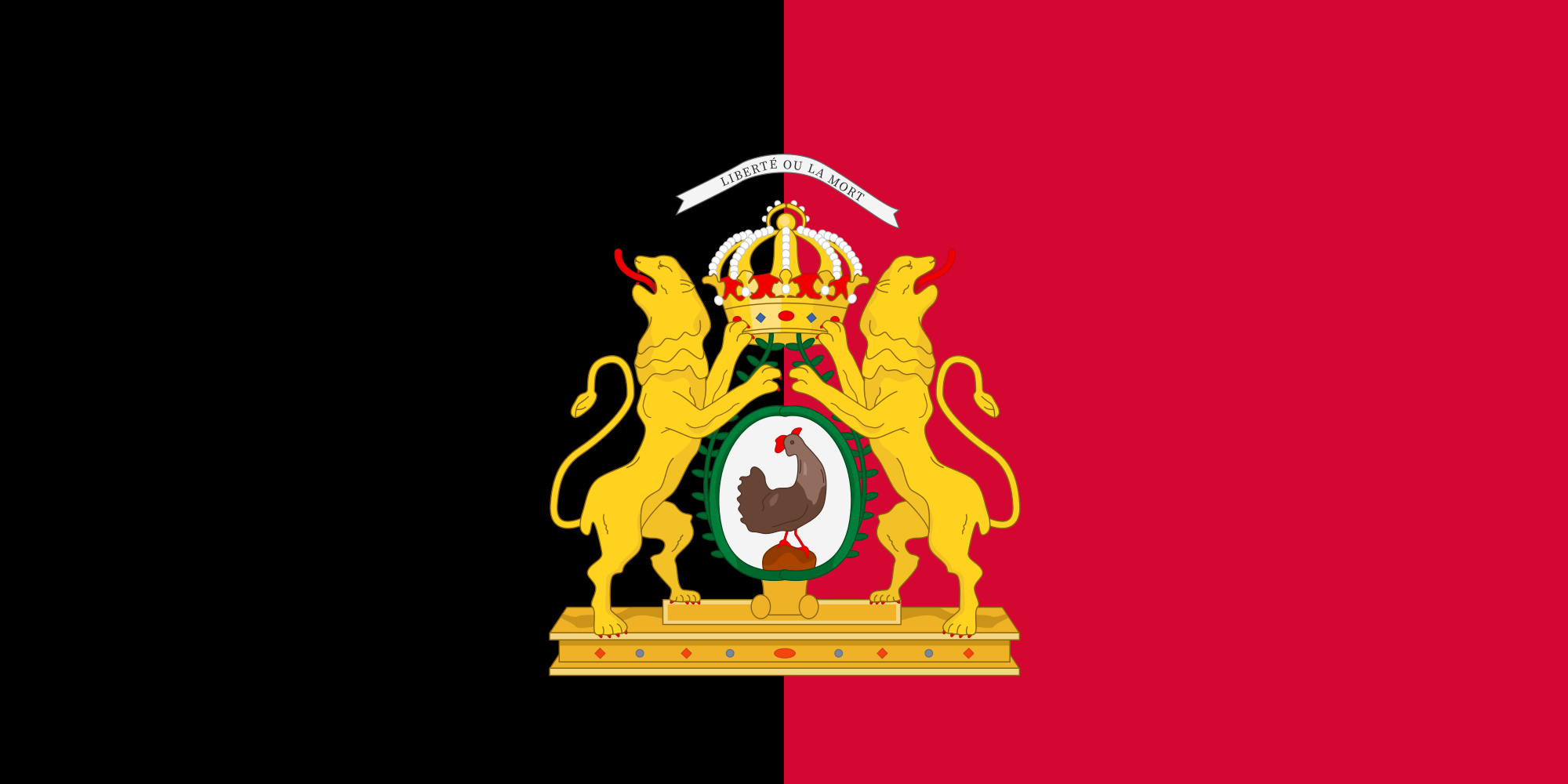
1804–1806
First Empire of Haiti
Jean-Jacques Dessalines, who declared Haiti's independence, crowned himself Emperor Jacques I. His black-and-red vertical bicolour symbolized the union of black and mixed-race Haitians against France.

1806–1811
State of Haiti
Henri Christophe's northern republic before he proclaimed himself king, flying the blue-and-red bicolour that became the basis of the modern Haitian flag.
Regional flags of Haiti
The 2 states, provinces and regions of Haiti with their own flags.
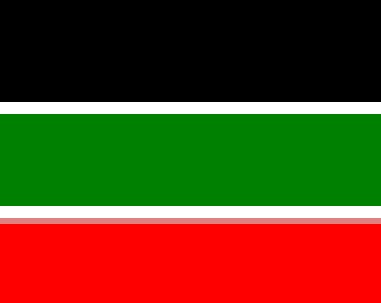
Nord-Est
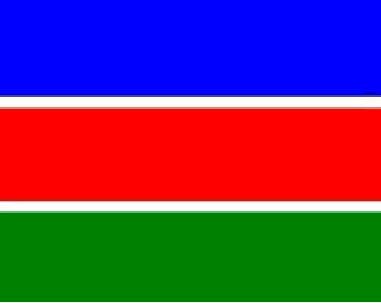
Nord-Ouest
Neighbouring countries
Haiti shares a land border with one country: the Dominican Republic.
Play Globalio and learn Haiti's flag
 Dominican Republic
 Liechtenstein