Americas
Flag of Nicaragua
Nicaragua is the largest country in Central America by area, known as the 'Land of Lakes and Volcanoes' for its dramatic landscape. Lake Nicaragua contains freshwater sharks, which adapted from the ocean over thousands of years as the lake's ancient Pacific connection closed. Nicaragua gained independence from Spain in 1821 and was the site of significant revolutionary conflict in the late 1970s and 1980s.

- CapitalManagua
- RegionAmericas
- Current flag since1908
- Main coloursBlue, White
- Populationabout 7 million
- Areaabout 130,000 km²
- Flags in history2
Population and area are rounded.
What the flag of Nicaragua means
The blue stripes stand for the two oceans and the white for the land and peace. The coat of arms shows a triangle for equality, five volcanoes for the five members of the old Central American federation, a rising sun, a cap of liberty and a rainbow for peace. Because of the rainbow, it is one of only two national flags that use purple.
How to recognise it
Horizontal blue-white-blue with the Nicaraguan coat of arms containing a rainbow and triangle.
Did you know?
Nicaragua has the largest lake in Central America and two active volcanoes on an island in that lake.
Easily confused with
Nicaragua's flag is often mixed up with these. Learn to tell them apart:
Flag history of Nicaragua
Every flag that has flown over Nicaragua, from today back through time.
1908–present
Republic of Nicaragua (current)
Nicaragua's blue-white-blue horizontal tricolor — again from the Central American Federation — was definitively standardised in 1908. The coat of arms uniquely shows a rainbow over five volcanoes between two bodies of water, with a Phrygian cap of liberty and the words "Republic of Nicaragua — Central America." Nicaragua is the largest country in Central America and its flag uniquely uses the word "Central America" in the arms, keeping alive the unification ideal.
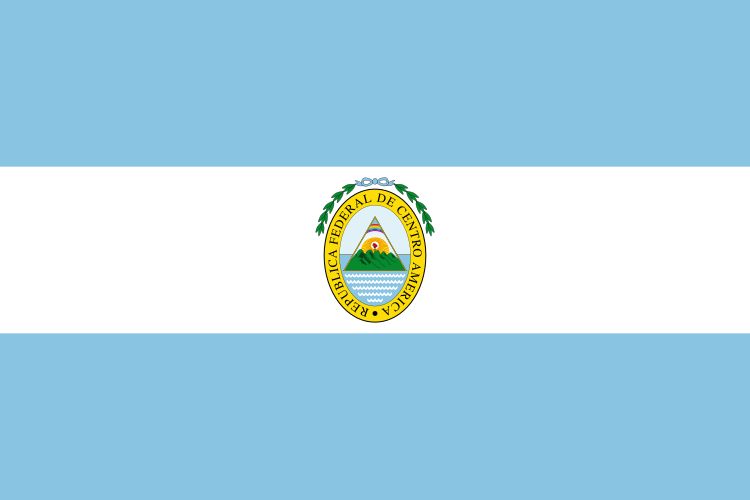
1823–1839
Federal Republic of Central America
Nicaragua was one of the founding members of the Central American federation. After its dissolution, Nicaragua experienced decades of political turmoil, US military interventions, the Somoza dynasty, the Sandinista Revolution of 1979, and the Contra war — each chapter in the country's flag history shaped by these events, though the Central American tricolor endured through all of them.
Related historical states
Empires, kingdoms and republics that once covered part of Nicaragua.
1823–1841
Federal Republic of Central America
Its blue-white-blue stripes survive almost unchanged in the flags of Honduras, Nicaragua, El Salvador, and Guatemala. White stood for the land between the two oceans.
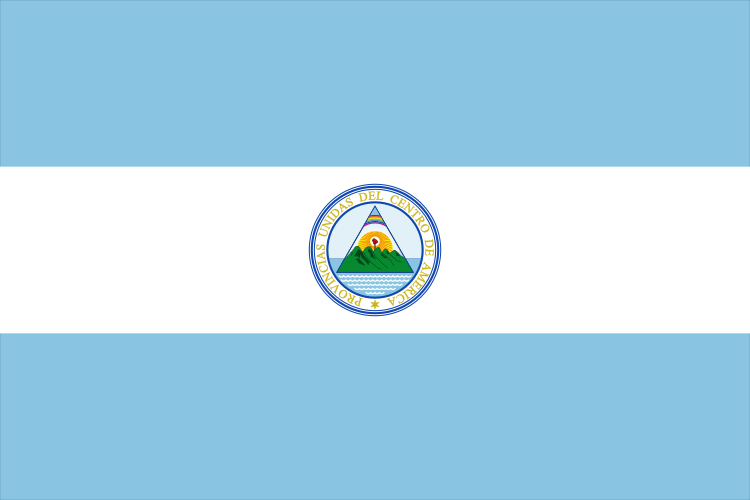
1823–1824
United Provinces of Central America
The first union of the Central American provinces after independence from Mexico, flying the blue-white-blue bands that preceded the Federal Republic and survive in five modern flags.
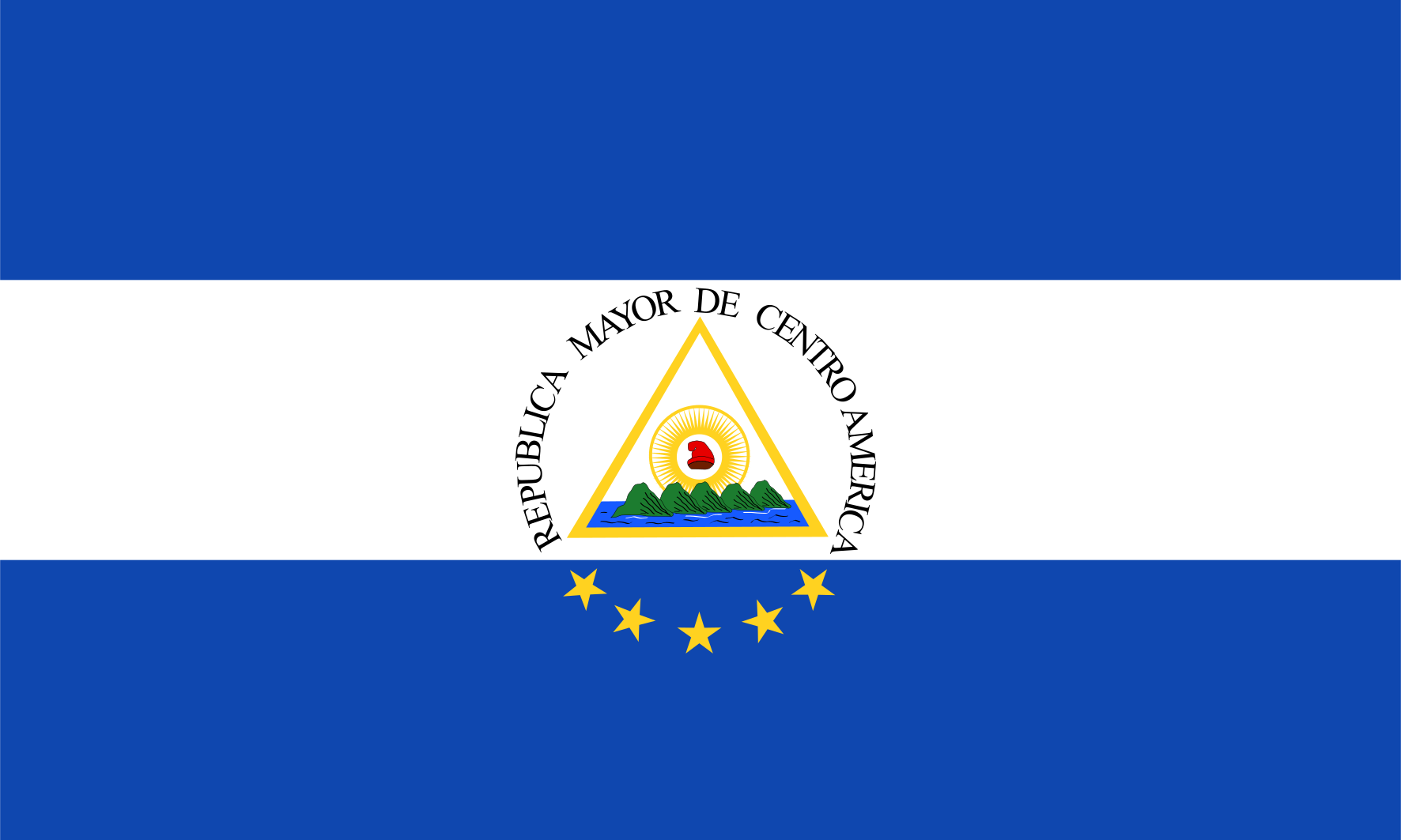
1896–1898
Greater Republic of Central America
A short-lived attempt to reunify Nicaragua, Honduras, and El Salvador; its blue-white-blue flag carried five volcanoes and stars before the union dissolved within two years.
Regional flags of Nicaragua
The 14 states, provinces and regions of Nicaragua with their own flags.
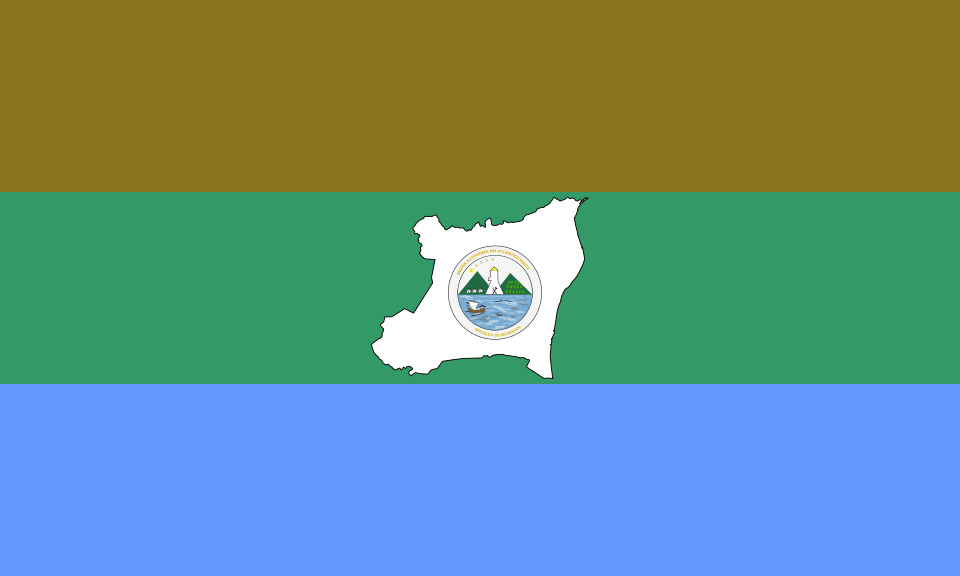
Costa Caribe Norte
Costa Caribe Sur
Boaco
Chinandega
Estelí
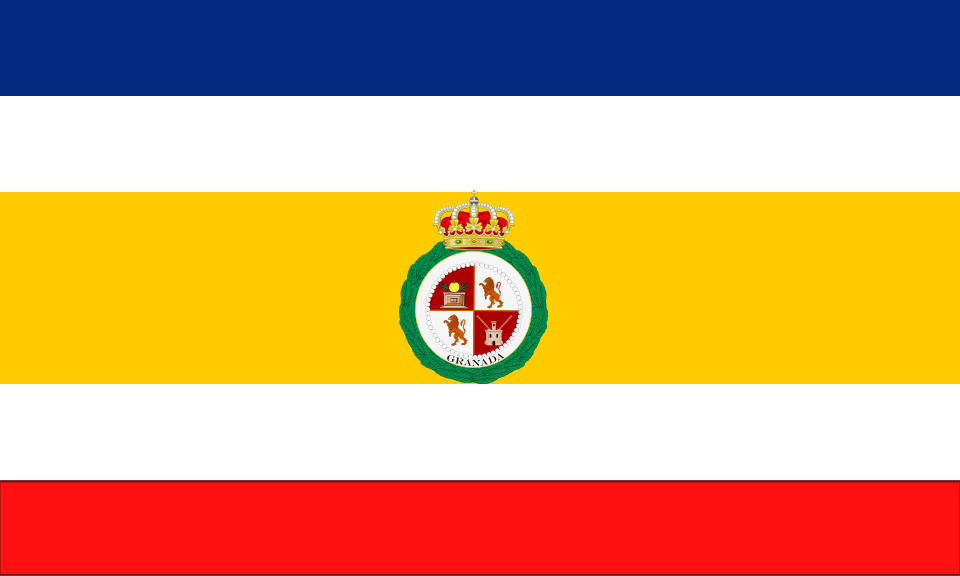
Granada
Jinotega
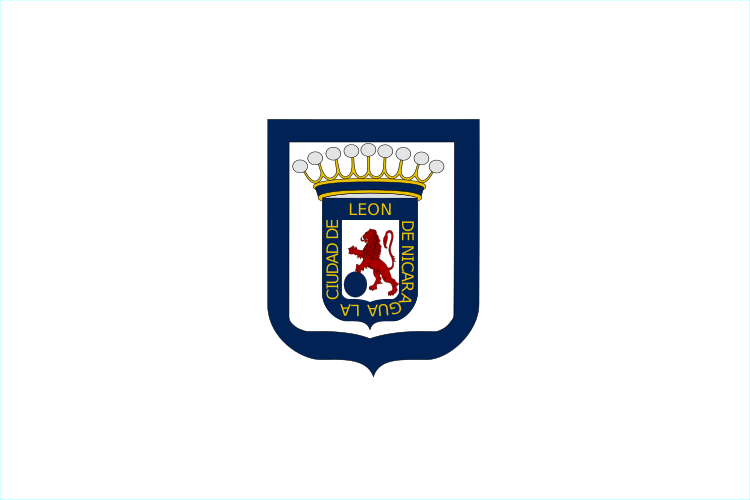
León
Madriz
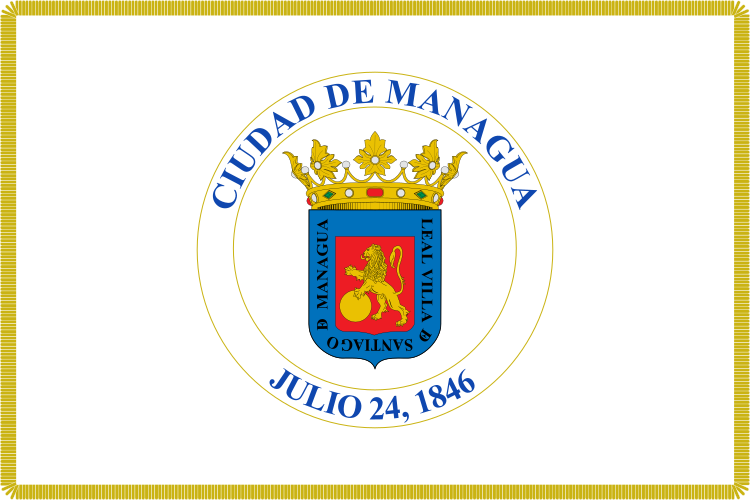
Managua
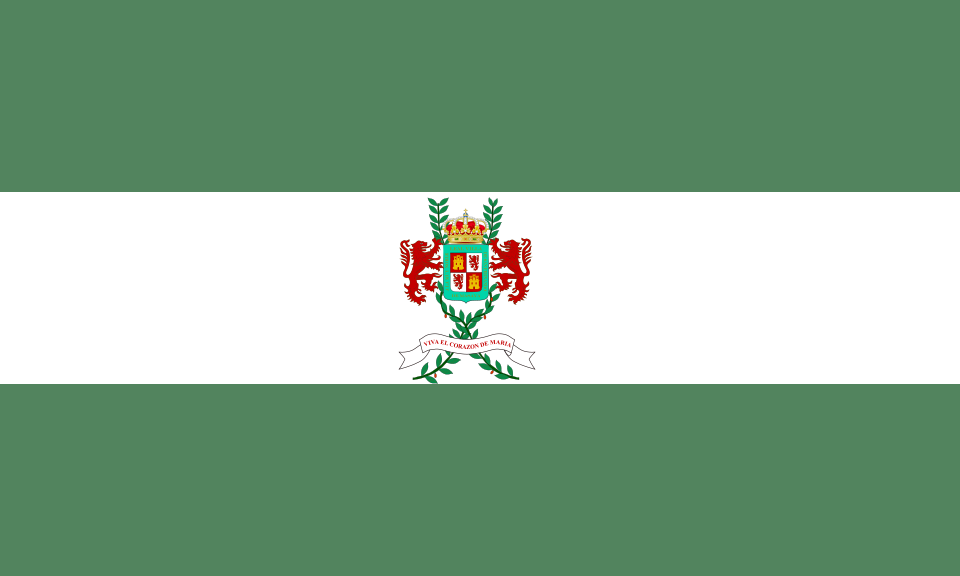
Masaya
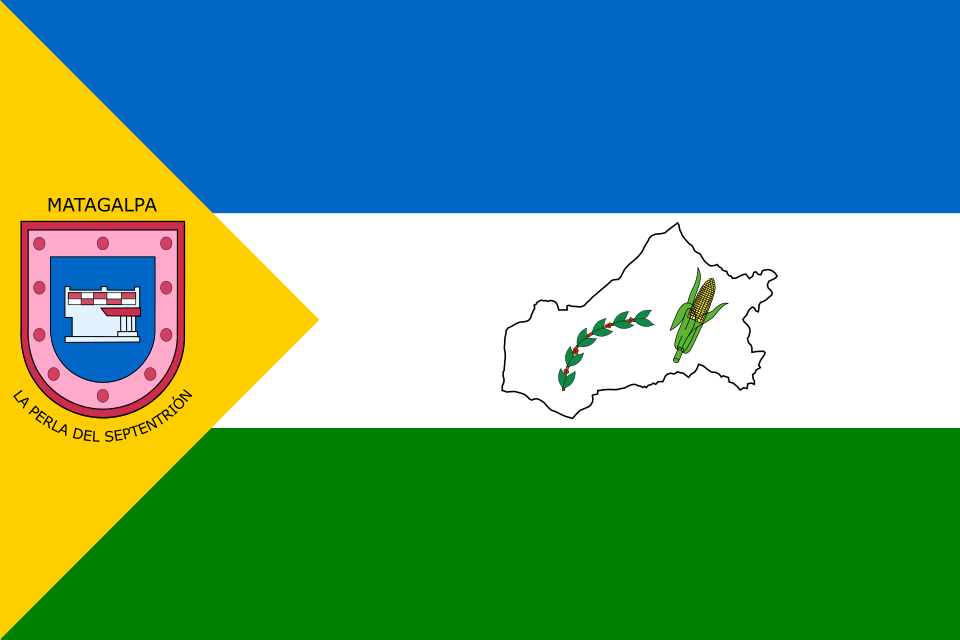
Matagalpa
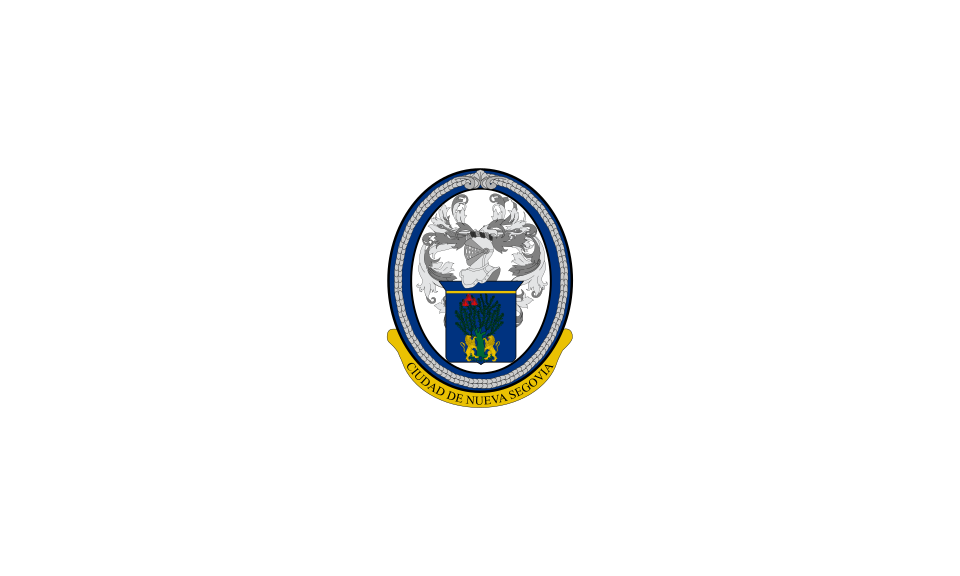
Nueva Segovia
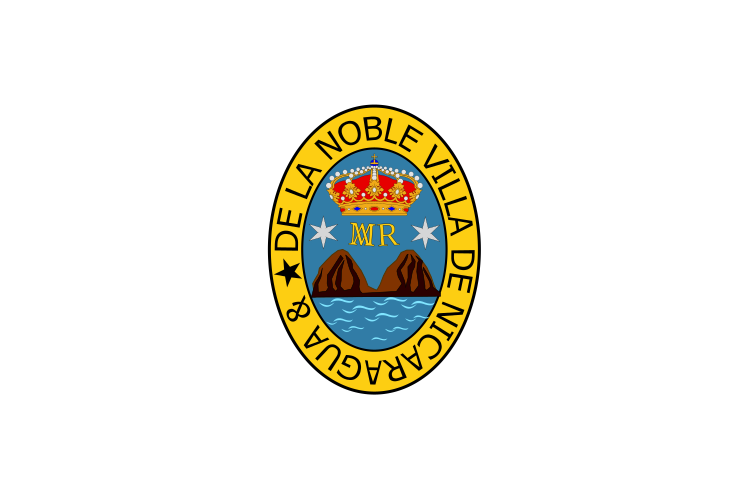
Rivas
Neighbouring countries
Nicaragua shares a land border with 2 countries: Costa Rica and Honduras.
Other flags in blue and white
9 other national flags use the same main colours as Nicaragua's.
Play Globalio and learn Nicaragua's flag
 El Salvador
 Honduras
 Guatemala
 Costa Rica
 Finland
 Greece
 Israel
 Micronesia
 San Marino
 Somalia