 China
 Vietnam
 Ghana

1984–present
Flag of Burkina Faso
In 1984 revolutionary leader Thomas Sankara renamed the country Burkina Faso ("Land of Upright People") and introduced this red-and-green flag with a central yellow star for revolution and the nation's riches.
Burkina Faso is a landlocked West African country with a rich tradition of art, music, and film despite being one of the world's least economically developed nations. It was formerly known as Upper Volta before being renamed in 1984 to mean 'Land of Incorruptible People' in two local languages. The country hosts FESPACO, one of Africa's most prestigious film and television festivals, held every two years in the capital Ouagadougou.
Population and area are rounded.
Red recalls the revolution and green the country's agricultural wealth; the yellow star is the guiding light of the revolution. The flag was introduced in 1984 by Thomas Sankara when he renamed Upper Volta as Burkina Faso, “land of upright people”. It replaced the black-white-red tricolour of Upper Volta, which stood for the Black, White and Red Volta rivers.
Burkina Faso, formerly Upper Volta, is a landlocked country in West Africa with its capital at Ouagadougou. Thomas Sankara introduced the flag, a new national anthem and the new name on the first anniversary of his revolution, 4 August 1984. He was killed in a coup in 1987, but the flag and the name remained. The red and green echo the Pan-African colours used by Ghana and other neighbours.
Horizontal red-over-green with a yellow five-pointed star in the centre.
Burkina Faso means "Land of Incorruptible People" in the Mossi and Dioula languages.
Burkina Faso's flag is often mixed up with these. Learn to tell them apart:
Every flag that has flown over Burkina Faso, from today back through time.
In 1984 revolutionary leader Thomas Sankara renamed the country Burkina Faso ("Land of Upright People") and introduced this red-and-green flag with a central yellow star for revolution and the nation's riches.
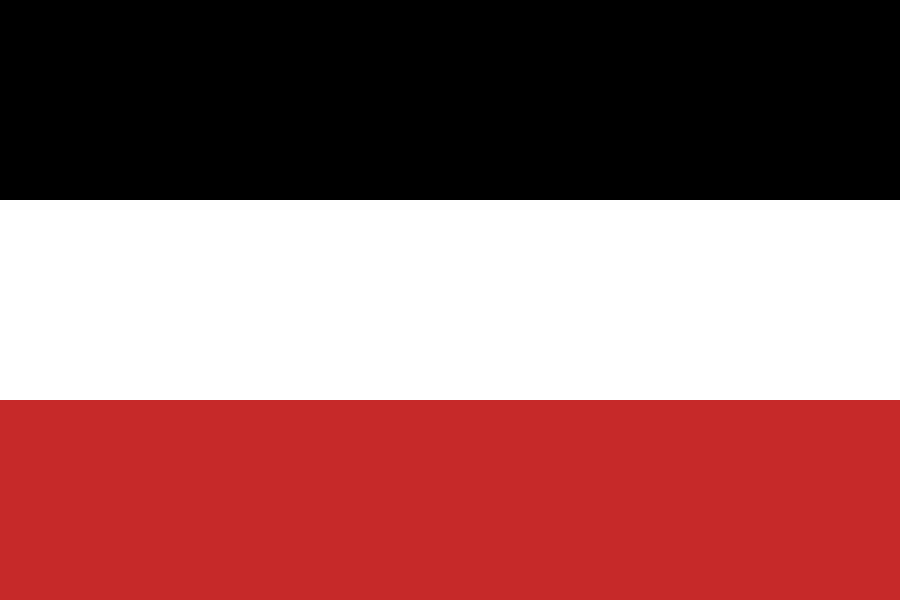
The Republic of Upper Volta flew black-white-red stripes representing the three tributaries of the Volta River — the Black, White, and Red Volta — until the 1984 renaming.
Empires, kingdoms and republics that once covered part of Burkina Faso.
A black-white-red tricolor for the Black, White, and Red Volta rivers, flown until Thomas Sankara renamed the country Burkina Faso in 1984.
Burkina Faso shares a land border with 6 countries: Benin, Côte d'Ivoire, Ghana, Mali, Niger and Togo.
11 other national flags use the same main colours as Burkina Faso's.
 Benin
 Bolivia
 Cameroon
 Grenada
 Guinea
 Lithuania
 Mali
 Mauritania
 Portugal
 Republic of the Congo
 Senegal
 Côte d'Ivoire
 Niger
 Togo