
1961–present
Flag of Mali
In 1961 the black human figure (kanaga) was removed — reportedly after objections from Islamic groups to depicting the human form — leaving a plain green-gold-red pan-African tricolour.
Mali is a large landlocked country in West Africa, much of which is covered by the Sahara Desert. It was home to three successive powerful empires — the Ghana, Mali, and Songhai Empires — which were major centres of trans-Saharan trade and Islamic scholarship from the 8th to the 16th centuries. Timbuktu, once one of the world's great centres of Islamic learning, is a UNESCO World Heritage Site in northern Mali.
Population and area are rounded.
Green stands for hope and the fertile land, yellow for purity and the country's mineral wealth, and red for the blood shed for independence. Mali's first flag carried a black kanaga, a human-like figure from Dogon art, in the centre; it was removed in 1961 after objections that Islam discourages depicting human figures.
Vertical green-yellow-red with no symbol. Senegal has a green star; Guinea reverses the order.
Timbuktu, a city in Mali, was once one of the wealthiest cities in the world and a major Islamic scholarship centre.
Mali's flag is often mixed up with these. Learn to tell them apart:
Every flag that has flown over Mali, from today back through time.
In 1961 the black human figure (kanaga) was removed — reportedly after objections from Islamic groups to depicting the human form — leaving a plain green-gold-red pan-African tricolour.
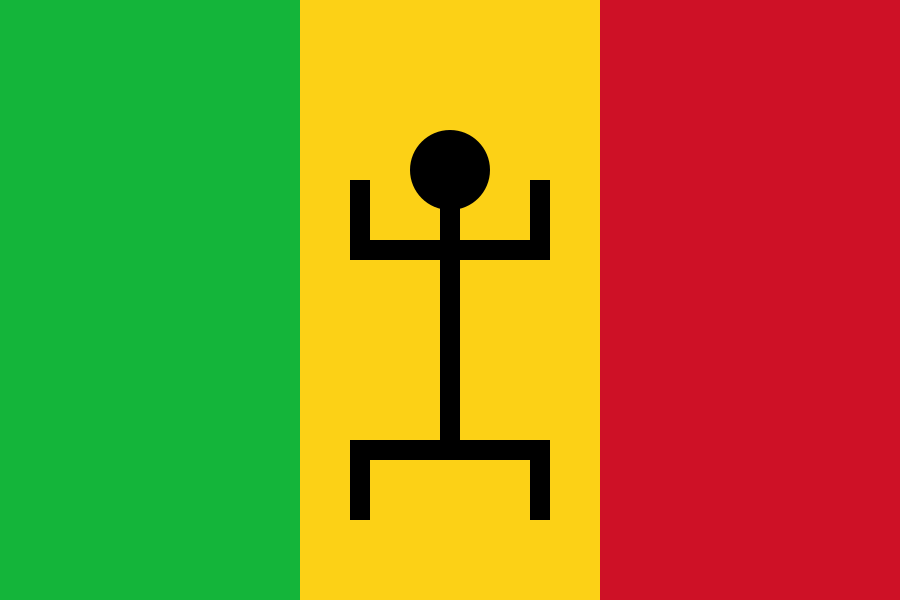
Mali (as French Sudan) joined the Mali Federation in 1959 under a tricolour charged with a black kanaga, a stylized human figure with arms raised to the sky, kept briefly after independence.

Modern Mali was the colony of French Sudan, the largest territory in French West Africa, flying the French flag. Its name deliberately recalled the medieval empires of Ghana, Mali and Songhai that once made this stretch of the Niger — and the fabled trading city of Timbuktu — a centre of gold, salt and Islamic scholarship under rulers like Mansa Musa.
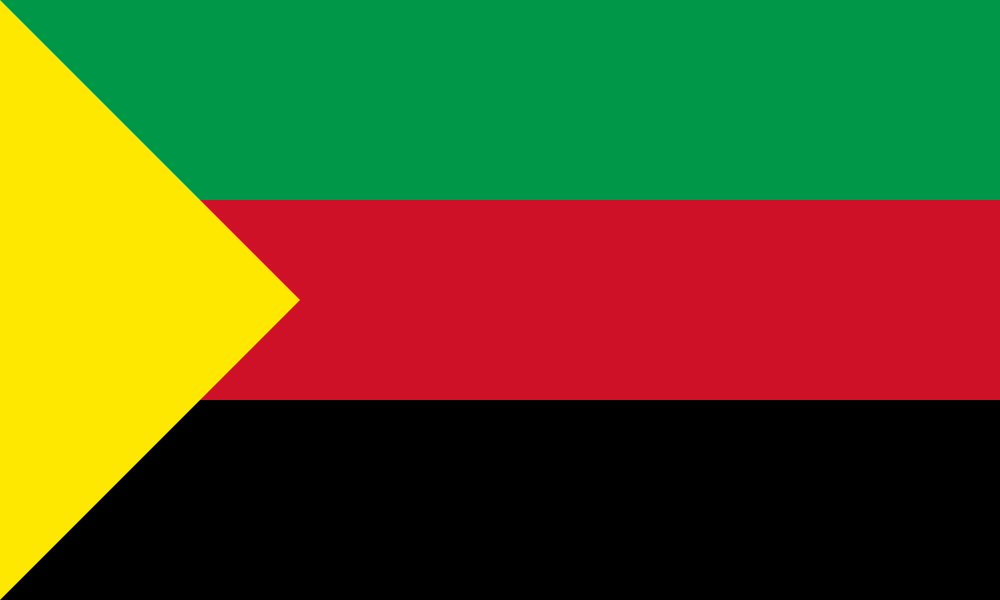
The northern Mali homeland declared by Tuareg separatists (the MNLA) in 2012 before Islamist militias and the French intervened.
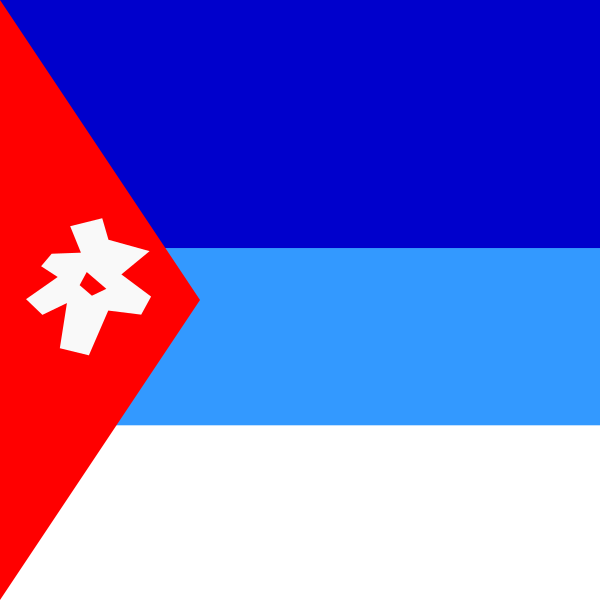
The empire of Samori Ture, which mounted one of the fiercest and longest armed resistances to French conquest in West Africa.
Empires, kingdoms and republics that once covered part of Mali.
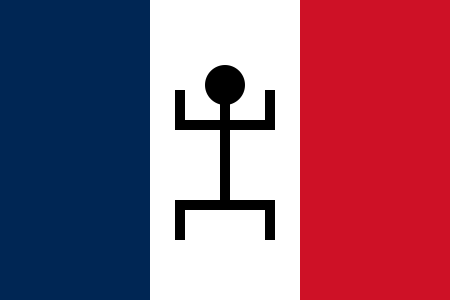
A green-yellow-red tricolor with a black Kanaga (a Dogon stick-figure) on the center stripe. The Kanaga was dropped in 1961, leaving the present plain Mali flag.
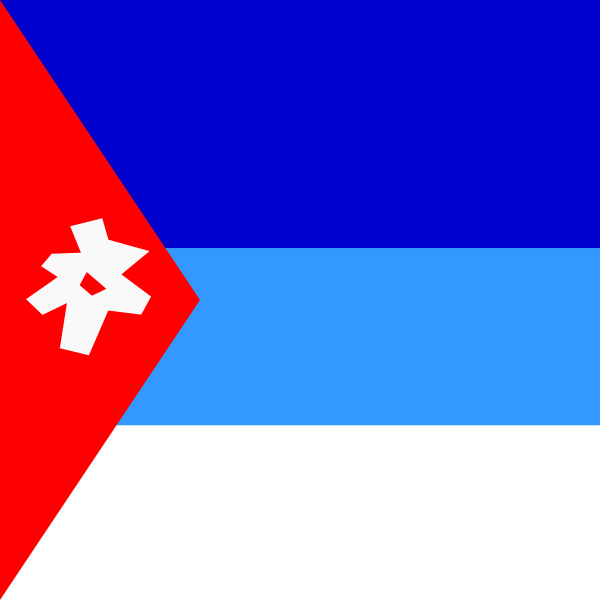
The West African empire built by Samori Ture, a brilliant military strategist who resisted French conquest for nearly two decades before his capture, flying a blue-white-red horizontal triband.
A brief union of Senegal and French Sudan, its green-yellow-red flag bore a black 'kanaga' human figure. After Senegal withdrew in months, French Sudan kept the name Mali and dropped the figure.
Tuareg rebels of the MNLA declared an independent state of Azawad across northern Mali in 2012, flying this green-red-black flag with a yellow triangle, before Islamist allies pushed them aside.
Mali shares a land border with 7 countries: Algeria, Burkina Faso, Côte d'Ivoire, Guinea, Mauritania, Niger and Senegal.
11 other national flags use the same main colours as Mali's.
 Benin
 Bolivia
 Burkina Faso
 Cameroon
 Grenada
 Guinea
 Lithuania
 Mauritania
 Portugal
 Republic of the Congo
 Senegal
 Algeria
 Côte d'Ivoire
 Niger