 Gambia

1960–present
Flag of Senegal
On full independence in 1960 after the Mali Federation broke up, Senegal kept the vertical green-yellow-red tricolour but replaced the central figure with a green five-pointed star for unity and hope.
Senegal is located on the westernmost tip of the African mainland and is one of West Africa's most stable and long-standing democracies. Known as the 'Gateway to Africa,' its capital Dakar was historically the administrative capital of French West Africa. Senegal's culture is celebrated for its traditional wrestling, its rich griot oral historian tradition, and internationally renowned artists like Youssou N'Dour.
Population and area are rounded.
Senegal uses the Pan-African colours: green for hope and the faith of the people, yellow for wealth and the arts, and red for life and the struggle for independence. The green star stands for unity and hope. The design comes from the flag of the short-lived Mali Federation of 1959–1960, which carried a kanaga figure where the star is now.
Senegal became independent on 20 August 1960 when the Mali Federation broke up, and replaced the federation's kanaga figure with a green star. Its capital, Dakar, is the westernmost city on the African mainland. The country's national symbol is the lion, and its football team, the Lions of Teranga, wears the flag's colours.
Vertical green-yellow-red with a green star in the yellow centre band.
Dakar, Senegal's capital, was the finish line of the famous Paris-Dakar Rally for nearly 30 years.
Senegal's flag is often mixed up with these. Learn to tell them apart:
Every flag that has flown over Senegal, from today back through time.
On full independence in 1960 after the Mali Federation broke up, Senegal kept the vertical green-yellow-red tricolour but replaced the central figure with a green five-pointed star for unity and hope.
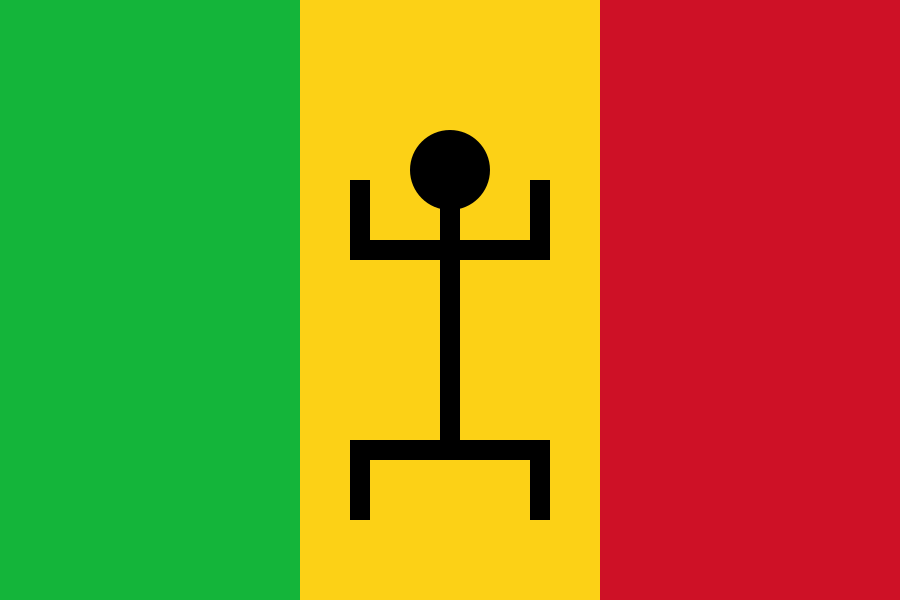
When Senegal united with French Sudan in 1959, it flew a green-yellow-red tricolour bearing a black kanaga — a human figure derived from Dogon culture and the Negritude movement.
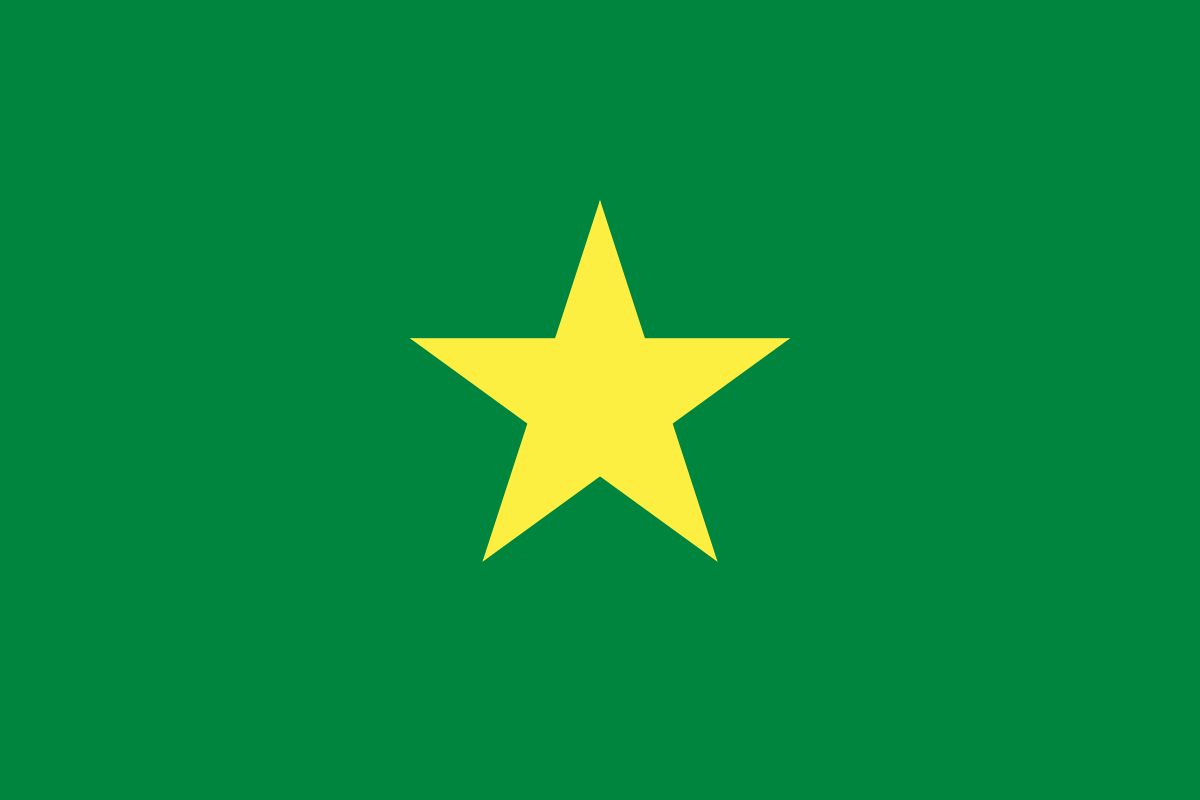
As an autonomous republic within the French Community in 1958, Senegal used a green-yellow-red tricolour with a green star, close to its modern flag, before joining the Mali Federation.
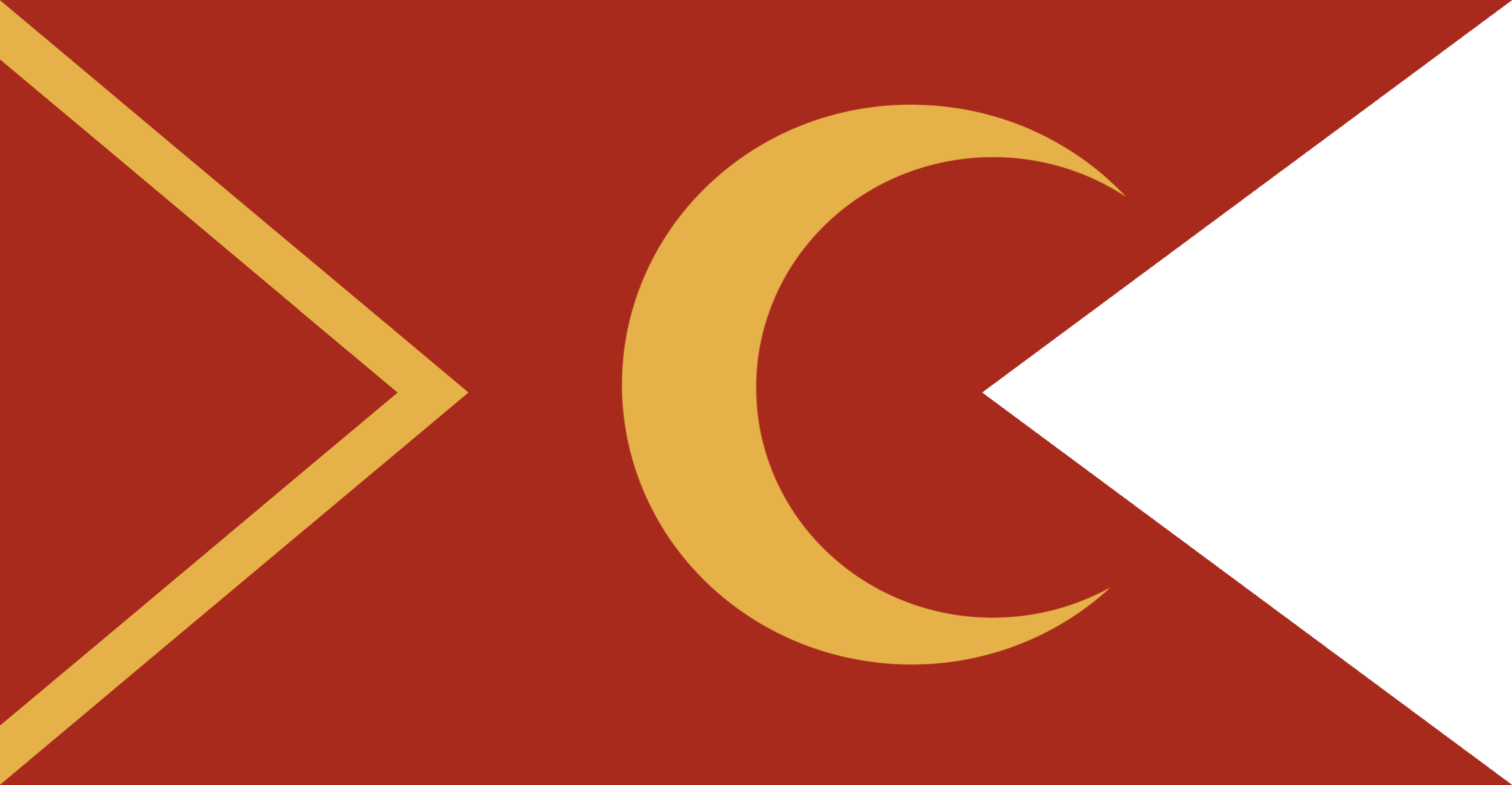
A powerful Wolof kingdom on the Senegalese coast that long resisted French expansion before falling in the 19th century.
Empires, kingdoms and republics that once covered part of Senegal.
A brief union of Senegal and French Sudan, its green-yellow-red flag bore a black 'kanaga' human figure. After Senegal withdrew in months, French Sudan kept the name Mali and dropped the figure.
Senegal shares a land border with 5 countries: the Gambia, Guinea, Guinea-Bissau, Mali and Mauritania.
11 other national flags use the same main colours as Senegal's.
 Benin
 Bolivia
 Burkina Faso
 Cameroon
 Grenada
 Guinea
 Lithuania
 Mali
 Mauritania
 Portugal
 Republic of the Congo
 Guinea-Bissau