Americas
Flag of Grenada
Grenada, the 'Spice Isle,' is the world's second-largest producer of nutmeg and mace after Indonesia, along with cinnamon, cloves, and ginger. This small Caribbean island gained independence from Britain in 1974. St George's, the capital, with its horseshoe-shaped harbour ringed by colourful colonial buildings and overlooked by a French fort, is widely considered one of the most beautiful harbour towns in the Caribbean.

- CapitalSaint George's
- RegionAmericas
- Current flag since1974
- Main coloursRed, Yellow, Green
- Populationabout 120,000
- Areaabout 340 km²
- GeographyIsland nation
- Flags in history3
Population and area are rounded.
What the flag of Grenada means
The seven stars stand for the island's seven parishes, the central one for St George's, the capital. The nutmeg recalls Grenada's nickname, the Spice Isle, and its most famous export. Red stands for courage, yellow for the sun and the warmth of the people, and green for the land. The flag was adopted at independence in 1974.
More about the flag
Grenada became independent from Britain on 7 February 1974. The nutmeg on the flag is a reminder that Grenada is one of the world's largest producers of the spice, along with mace, which comes from the same fruit. The island was invaded by the United States in 1983 after a coup, and the flag stayed the same throughout.
How to recognise it
Red border with yellow stars, green-yellow-green triangles inside, and a red disc with a yellow star plus a nutmeg.
Did you know?
Grenada is the world's second-largest exporter of nutmeg, after Indonesia.
Flag history of Grenada
Every flag that has flown over Grenada, from today back through time.
1974–present
Grenada (independence)
Grenada's flag — red border surrounding four gold stars at top and bottom, with green and yellow triangles and a red circle bearing one gold star at centre, plus a nutmeg on the green triangle — was adopted at independence from Britain in 1974. The nutmeg reflects Grenada's status as one of the world's largest nutmeg producers. In 1983 the United States invaded Grenada ("Operation Urgent Fury"), temporarily replacing the government; the flag was maintained throughout.
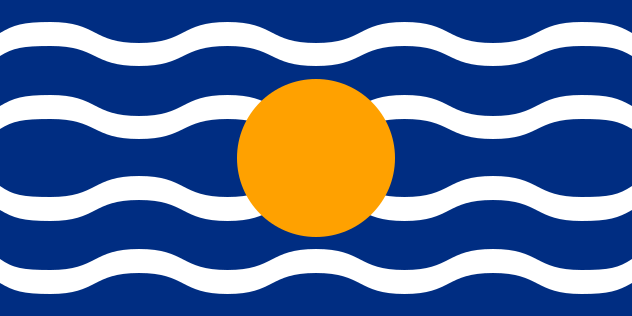
1958–1962
West Indies Federation
Grenada joined the West Indies Federation in 1958. Notably, Grenadian premier and later Governor-General was a strong federalist — and after the federation collapsed in 1962, Grenada briefly explored a "unitary state" union with Trinidad and Tobago before opting for its own independence in 1974. The federation's blue-and-sun flag represented a Caribbean unity that never fully materialised.
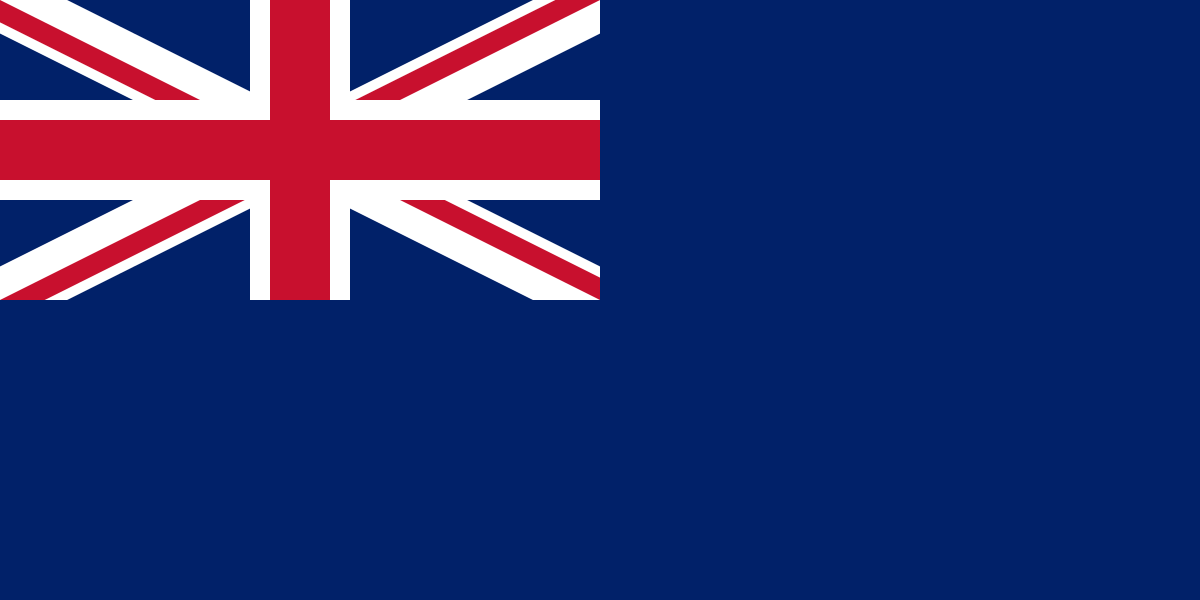
1763–1958
British Windward Islands (colonial era)
Grenada passed from French to British control in 1763. Under Britain it became a major producer of nutmeg and mace after the spice was introduced in 1843 — earning the nickname "Isle of Spice" and putting the nutmeg on its eventual national flag. As part of the British Windward Islands, Grenada flew the defaced Blue Ensign until the federation era.
Other flags in red, yellow and green
11 other national flags use the same main colours as Grenada's.
Play Globalio and learn Grenada's flag
 Benin
 Bolivia
 Burkina Faso
 Cameroon
 Guinea
 Lithuania
 Mali
 Mauritania
 Portugal
 Republic of the Congo
 Senegal