
1990–present
Flag of Benin (restored)
With the collapse of Marxism-Leninism, Benin restored its original 1959 Dahomey flag in 1990 — a rare case of a nation returning exactly to its pre-socialist flag without any redesign.
Benin is a small West African nation historically home to the powerful Kingdom of Dahomey, known for its sophisticated military, its all-female royal regiment called the Agojie, and its significant role in the Atlantic slave trade. The country is considered the birthplace of Vodun (Voodoo) religion, which spread to Haiti and other parts of the Americas through the slave trade. Benin was renamed from the Republic of Dahomey in 1975.
Population and area are rounded.
Green stands for hope and renewal, yellow for wealth, and red for courage. The Pan-African colours were chosen in 1959, as the country, then called Dahomey, moved towards independence from France. From 1975 to 1990 the People's Republic of Benin used a green flag with a red star; the original tricolour was restored in 1990 after the end of Marxist rule.
The country was known as Dahomey until 1975, when a Marxist military government renamed it the People's Republic of Benin and changed the flag. After a national conference in 1990 ended one-party rule, both the democracy and the original flag returned. Benin is the birthplace of the Vodun religion, and its old kingdom of Dahomey was known for its women soldiers.
Vertical green stripe on the left, with horizontal yellow-red on the right.
Benin is considered the birthplace of Vodun (Voodoo), which originated here and spread to the Americas.
Benin's flag is often mixed up with these. Learn to tell them apart:
Every flag that has flown over Benin, from today back through time.
With the collapse of Marxism-Leninism, Benin restored its original 1959 Dahomey flag in 1990 — a rare case of a nation returning exactly to its pre-socialist flag without any redesign.
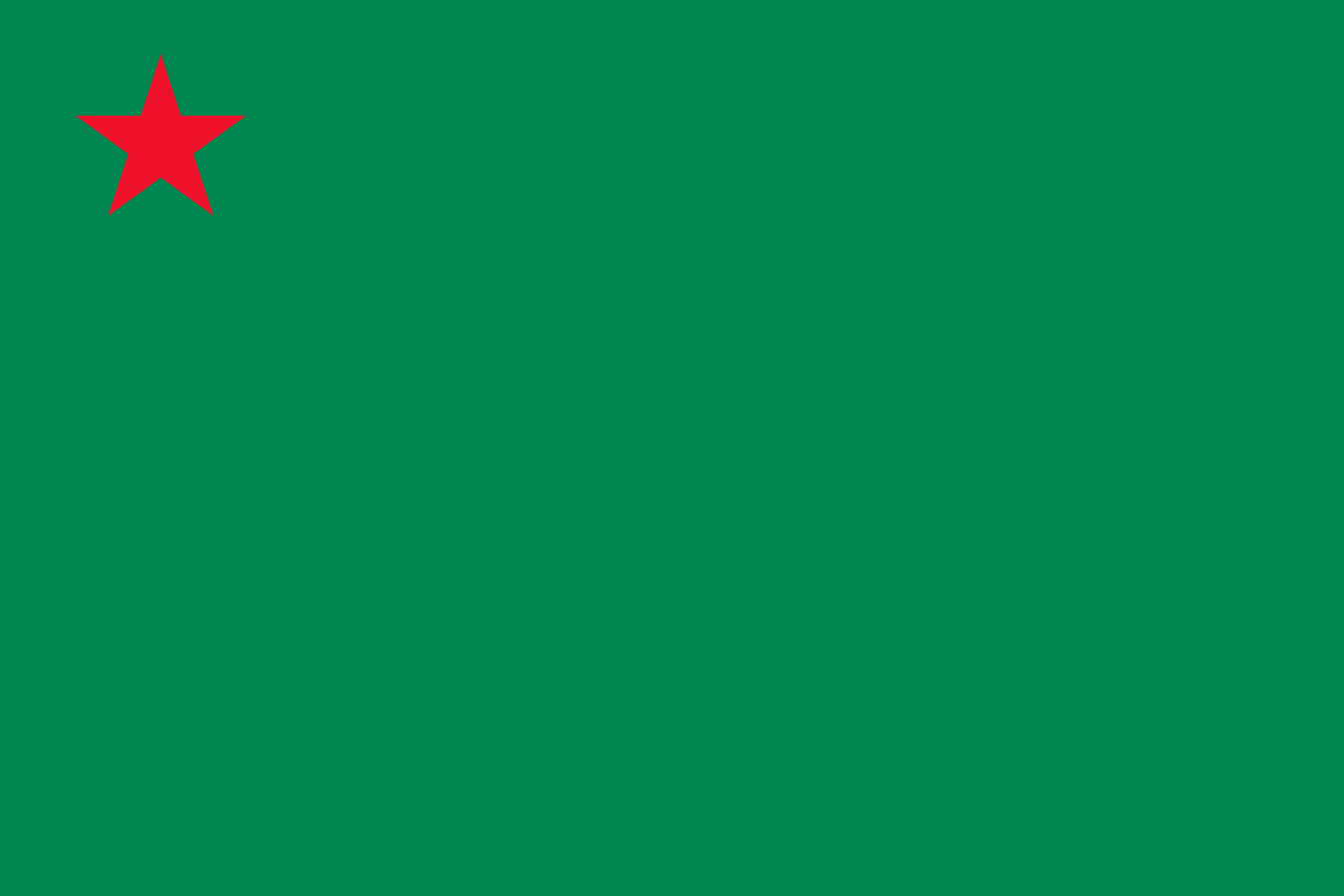
After a Marxist-Leninist coup the country was renamed Benin in 1975 and adopted a plain green field with a red star — green for agriculture and hope, the star for revolution.
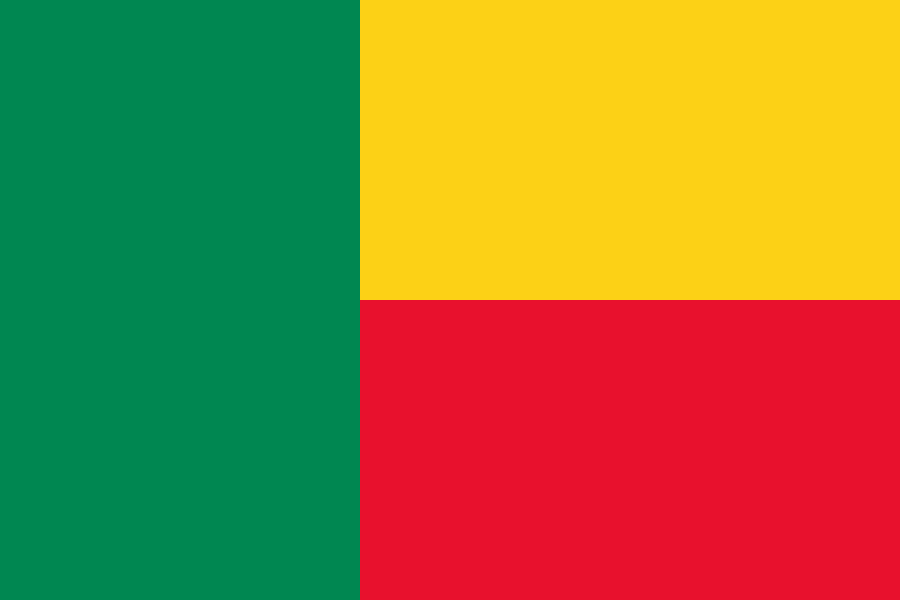
Adopted in 1959 by the autonomous Republic of Dahomey, with a green hoist band and yellow and red bands in the pan-African colors — identical to the flag restored in 1990.
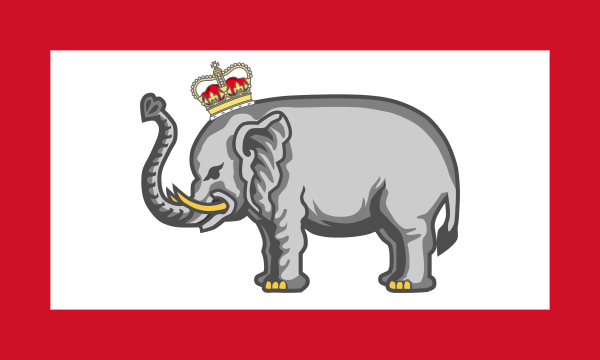
Benin takes the modern shape of the Kingdom of Dahomey, one of West Africa's most formidable powers — famed for its all-female warrior regiment, the "Dahomey Amazons," and for selling captives into the Atlantic slave trade from its coast, the "Slave Coast." Its kings flew banners bearing royal emblems until France conquered the kingdom in 1894 and made it the colony of French Dahomey.
Empires, kingdoms and republics that once covered part of Benin.
A yellow field with a wide red border and a crowned white elephant, attributed to King Ghezo of the West African kingdom famed for its all-female Dahomey Amazon regiment.
After Mathieu Kérékou's Marxist coup, Dahomey was renamed Benin and flew a plain green flag with a red star, until multi-party reform in 1990 restored the older yellow-green-red colours.
Benin shares a land border with 4 countries: Burkina Faso, Niger, Nigeria and Togo.
11 other national flags use the same main colours as Benin's.
 Bolivia
 Burkina Faso
 Cameroon
 Grenada
 Guinea
 Lithuania
 Mali
 Mauritania
 Portugal
 Republic of the Congo
 Senegal
 Niger
 Nigeria
 Togo