 Azerbaijan

1999–present
Flag of Tunisia
A 1999 law formalized the flag for the first time, only slightly adjusting the crescent and proportions of a design that had flown almost unchanged since 1831 — among the oldest in the Arab world.
Tunisia is the northernmost country in Africa, where the continent reaches closest to Europe with just 140 kilometres separating it from the Italian island of Sicily. The ancient Carthaginian civilisation, a rival of Rome, was centred near modern-day Tunis. Tunisia was the birthplace of the Arab Spring in late 2010, when protests sparked a wave of revolutionary movements that spread across the Arab world.
Population and area are rounded.
Tunisia's flag dates from the 1830s, under the Husainid beys, and closely follows the Ottoman flag. The red crescent and star inside a white disc are symbols of Islam and of unity, and red is said to represent the blood of the martyrs. It became the flag of independent Tunisia in 1956 and its exact design was fixed by law in 1999.
The crescent and star echo the Ottoman flag because Tunisia was nominally part of the Ottoman Empire when the beys adopted it, though it had become largely self-governing. After 75 years as a French protectorate, Tunisia became independent in 1956 and a republic in 1957. The 2011 Tunisian Revolution, which began the Arab Spring, was fought under the same flag.
Red with a white circle containing a red crescent and star.
Tunisia is where Star Wars was filmed for several scenes — the desert town of Matmata was Luke Skywalker's home planet.
Tunisia's flag is often mixed up with these. Learn to tell them apart:
Every flag that has flown over Tunisia, from today back through time.
A 1999 law formalized the flag for the first time, only slightly adjusting the crescent and proportions of a design that had flown almost unchanged since 1831 — among the oldest in the Arab world.
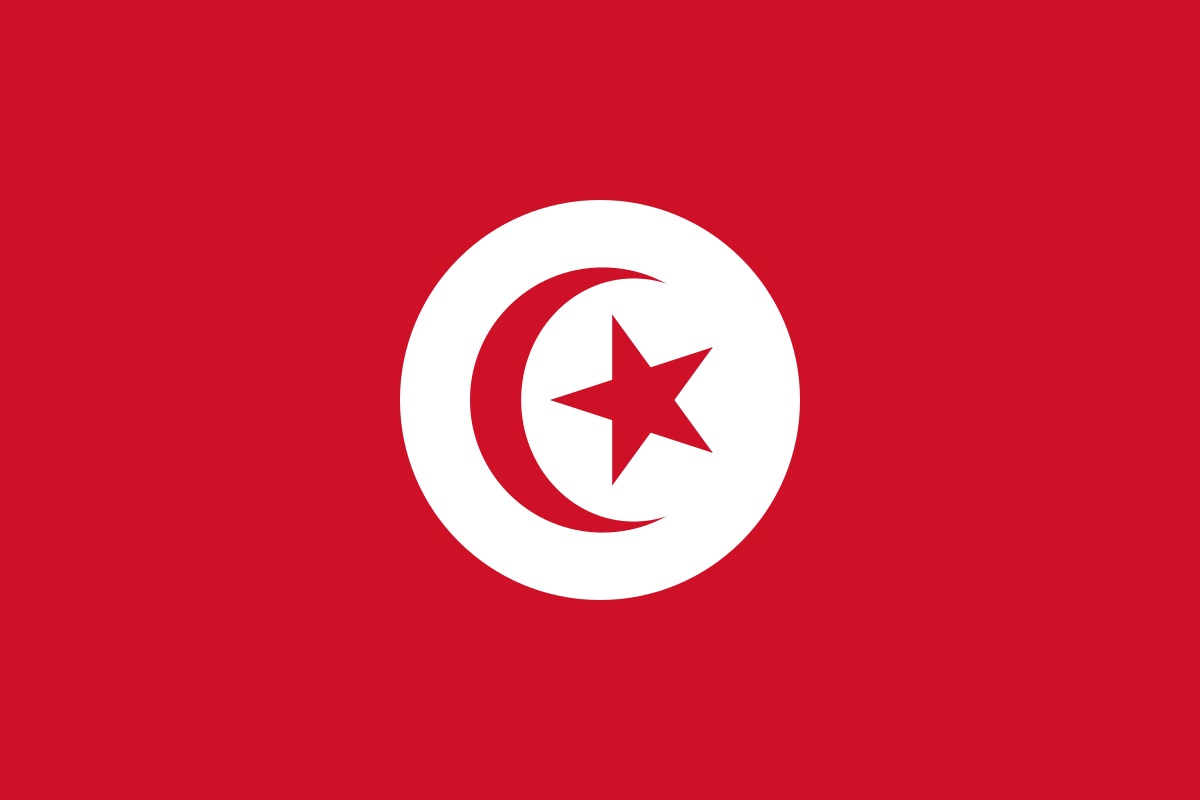
Hussein II created this red flag with a white disc, crescent, and star around 1831 to distinguish the Tunisian fleet. It survived the French protectorate and independence essentially unchanged.
Empires, kingdoms and republics that once covered part of Tunisia.
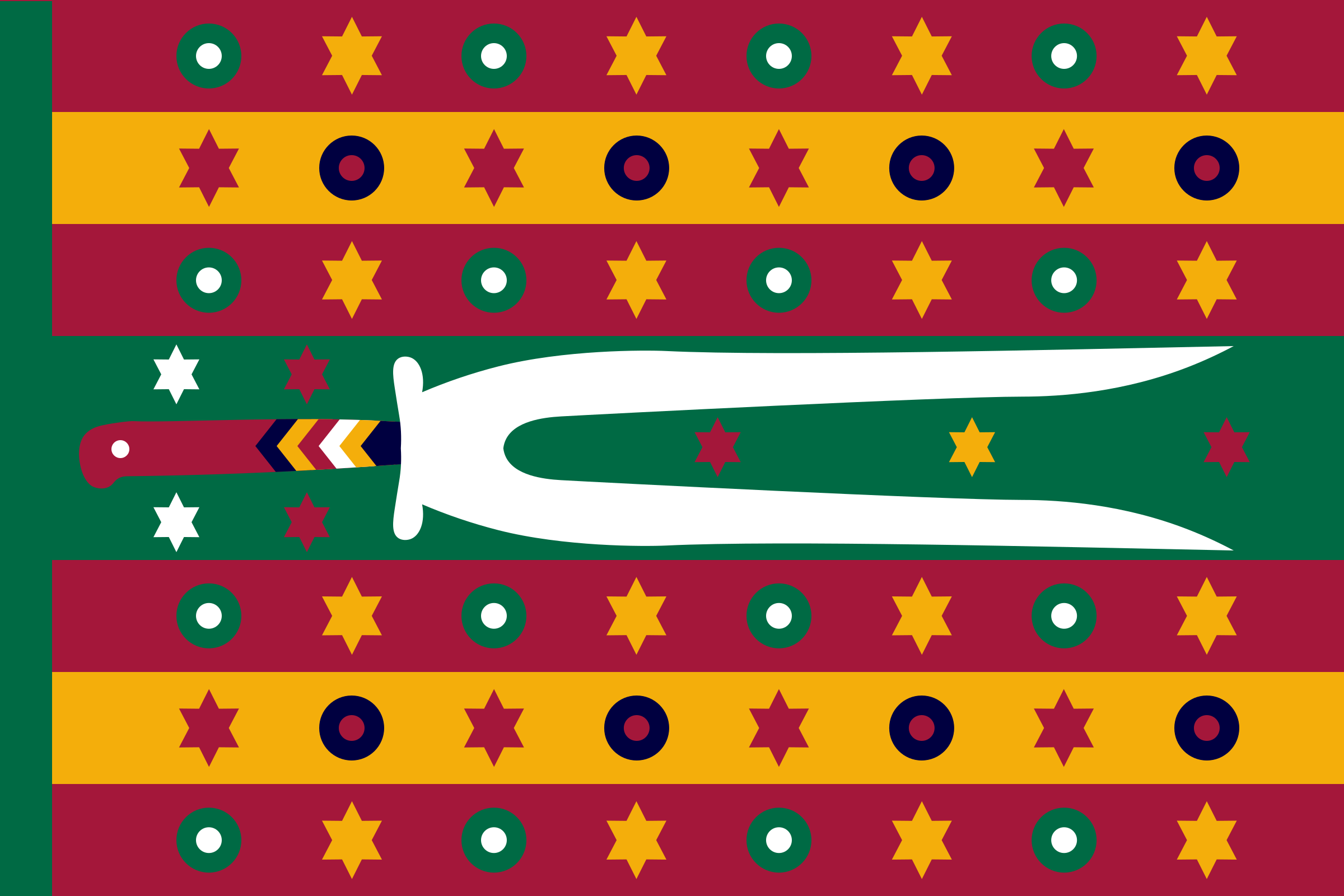
The Husainid beys ruled Tunis as an autonomous Ottoman province, flying an early ensign with horizontal bands and a crescent, before the French protectorate of 1881.
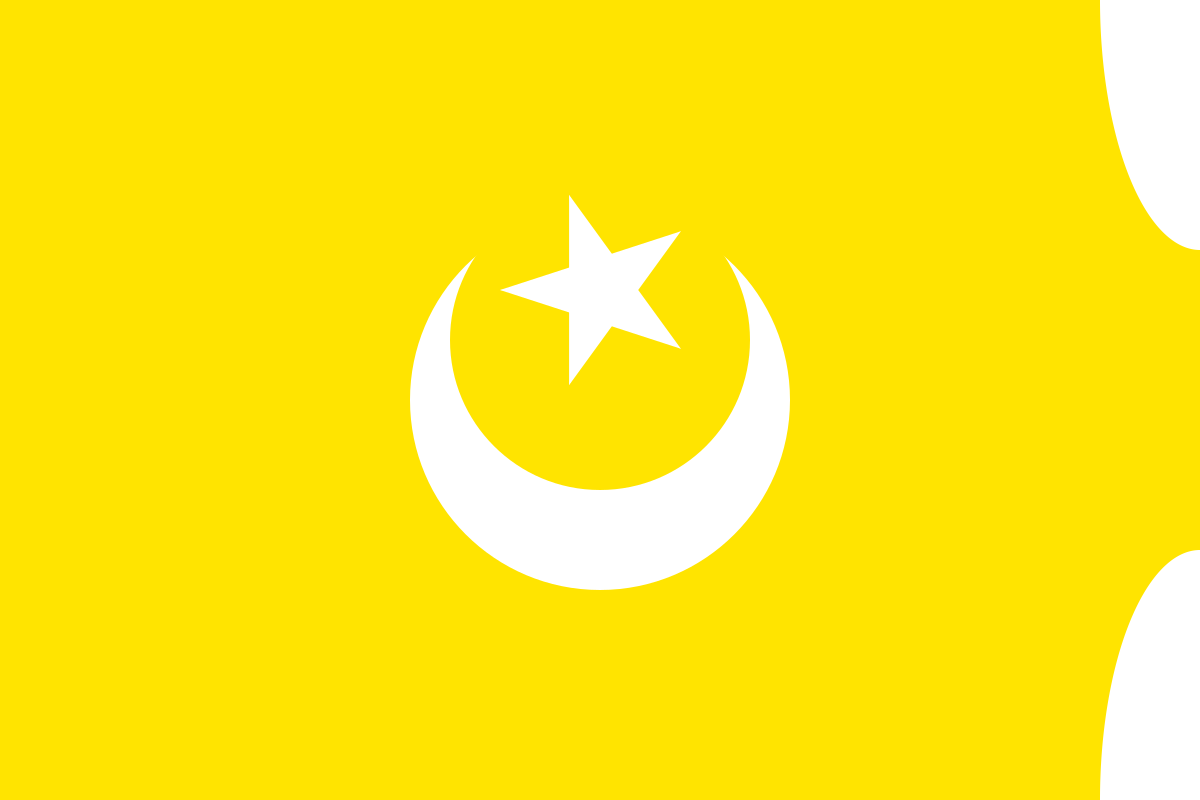
The Berber dynasty that ruled Ifriqiya (modern Tunisia) from Tunis for over three centuries, a major Mediterranean trading power, until it fell to the Ottomans.
Tunisia shares a land border with 2 countries: Algeria and Libya.
17 other national flags use the same main colours as Tunisia's.
 Austria
 Bahrain
 Canada
 Denmark
 Georgia
 Indonesia
 Japan
 Latvia
 Malta
 Monaco
 Peru
 Poland
 Qatar
 Singapore
 Switzerland
 Tonga
 Turkey
 Algeria
 Libya