Africa
Flag of Libya
Libya is the fourth-largest country in Africa, situated in North Africa on the Mediterranean coast between Egypt and Tunisia. It has the continent's largest proven oil reserves, discovered in 1959, which transformed the country's economy. Libya was an Italian colonial territory from 1911 and gained independence in 1951. The ancient Roman cities of Leptis Magna and Sabratha on its Mediterranean coast are UNESCO World Heritage Sites of extraordinary grandeur.

- CapitalTripoli
- RegionAfrica
- Current flag since2011
- Main coloursBlack, Red, Green, White
- Populationabout 6.8 million
- Areaabout 1,760,000 km²
- Flags in history5
Population and area are rounded.
What the flag of Libya means
The flag was first adopted in 1951 for the newly independent Kingdom of Libya. Its centre band and white crescent and star come from the black banner of the Senussi order of Cyrenaica, and the three bands are often linked to the historic regions of Fezzan (red), Cyrenaica (black) and Tripolitania (green). Gaddafi's plain green flag replaced it from 1977 until it was restored in 2011.
How to recognise it
Horizontal red-black-green with a white crescent and star in the centre.
Did you know?
Libya has the largest proven oil reserves in Africa.
Easily confused with
Libya's flag is often mixed up with these. Learn to tell them apart:
Flag history of Libya
Every flag that has flown over Libya, from today back through time.
2011–present
Restored Independence Flag
After Muammar Gaddafi's regime fell in the 2011 civil war, Libya restored the flag of the original Kingdom of Libya — a red-black-green horizontal tricolour with a white crescent and star at the centre. The black centre band comes from the banner of the Senussi order of Cyrenaica, and the three bands are often linked to the regions of Fezzan (red), Cyrenaica (black) and Tripolitania (green). Adopted originally in 1951, this flag had been suppressed for 42 years by Gaddafi's all-green design.

1977–2011
Gaddafi's All-Green Flag
In 1977 Muammar Gaddafi declared the "Great Socialist People's Libyan Arab Jamahiriya" and adopted the world's only completely monochrome national flag — a plain, unadorned field of green. Green symbolised Islam and Gaddafi's "Green Book" political philosophy. For 34 years Libya was instantly recognisable on any map or chart by its solid green rectangle. No other sovereign nation has ever had or is likely to have a flag so radically minimal.
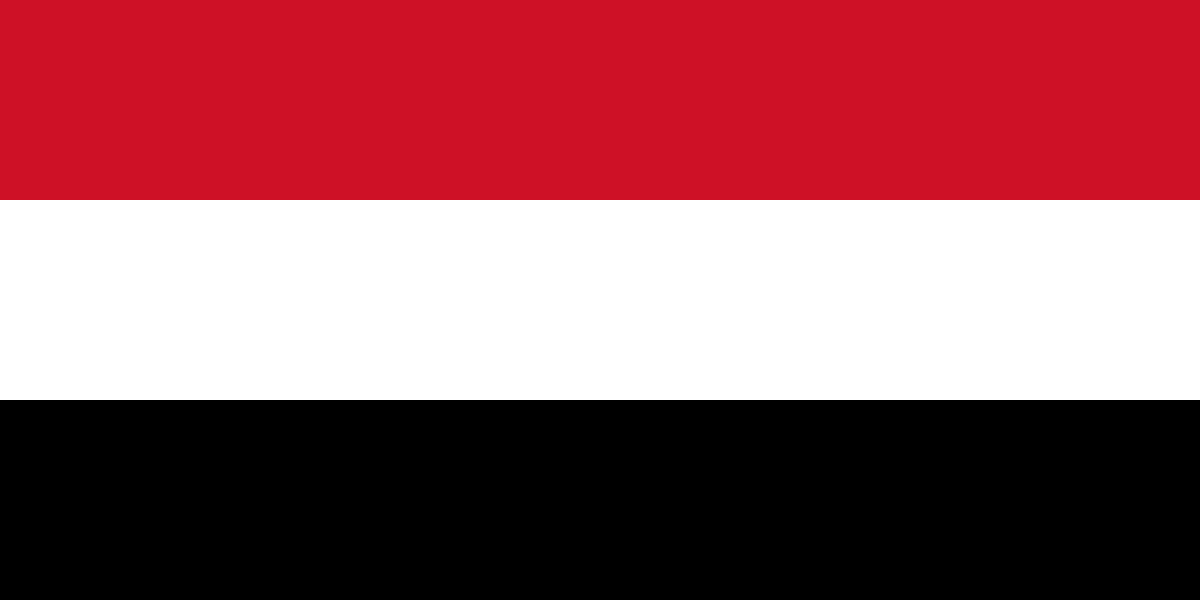
1969–1977
Arab Republic of Libya (Gaddafi coup)
After the 27-year-old Colonel Gaddafi's bloodless coup deposed King Idris in September 1969, Libya adopted the pan-Arab red-white-black tricolor — the same colours used by Egypt, Syria, and Iraq. Between 1972 and 1977 Libya joined a short-lived Federation of Arab Republics with Egypt and Syria, using a flag with the Hawk of Quraish, before Gaddafi's dramatic switch to plain green.
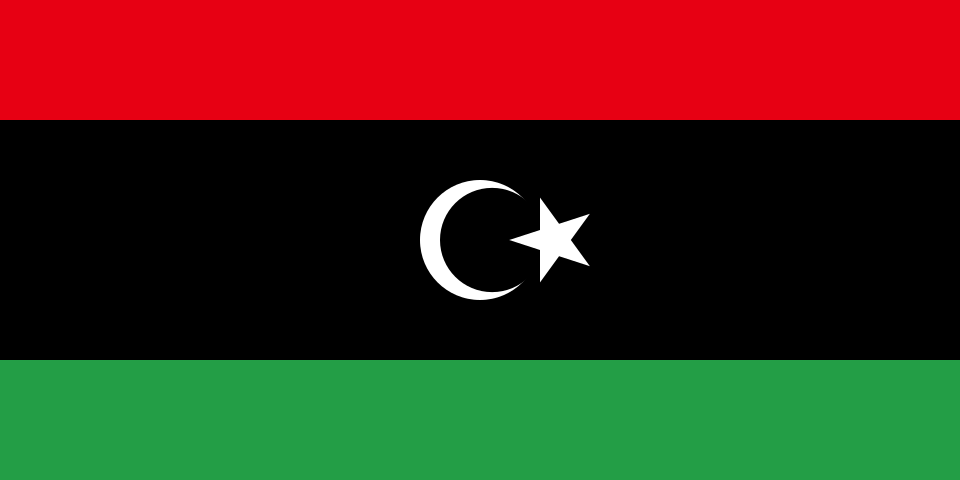
1951–1969
Kingdom of Libya (independence)
When Libya achieved independence from Italian and Allied administration on December 24, 1951 — becoming the first African country to gain independence via the United Nations — it adopted this flag under King Idris. The crescent and star are traditional Islamic symbols; the three horizontal bands represent the three historical regions: Cyrenaica (black), Fezzan (green), and Tripolitania (red). This flag was suppressed under Gaddafi and triumphantly restored in 2011.
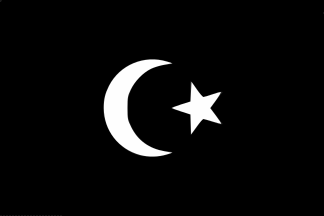
1837–1969
Senussi Order
The Sufi religious order that led resistance to Italian colonisation and whose leader became the first and only king of independent Libya.
Related historical states
Empires, kingdoms and republics that once covered part of Libya.
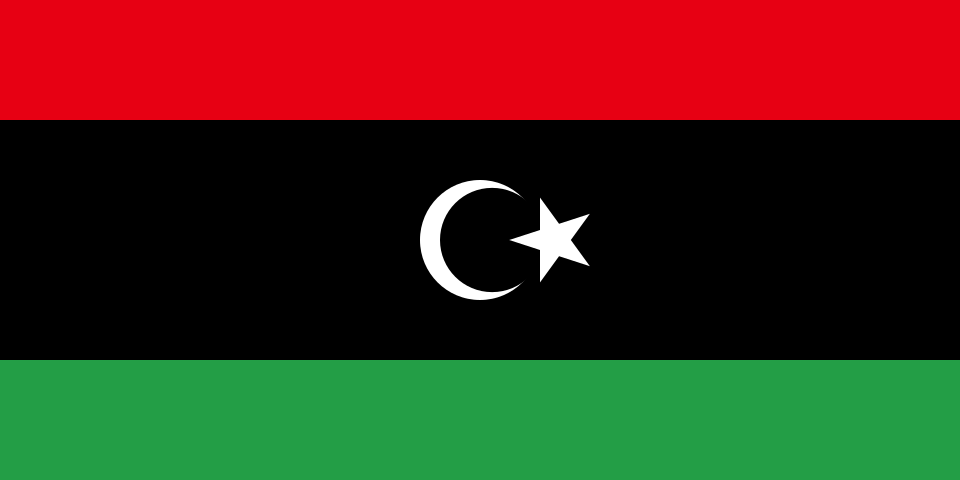
1951–1969
Kingdom of Libya
A red-black-green triband with a double-height black band bearing a white crescent and star. Designed under King Idris and triumphantly restored after Gaddafi fell in 2011.

1977–2011
Libyan Arab Jamahiriya
A plain solid green field — the only single-color national flag in modern history. Gaddafi adopted it after Egypt's peace with Israel broke up the Federation of Arab Republics.
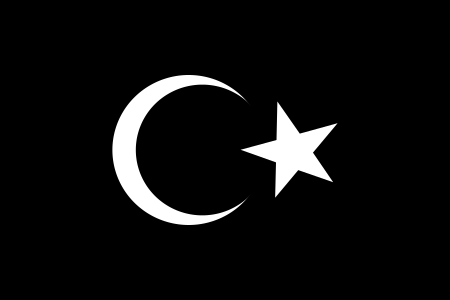
1949–1951
Emirate of Cyrenaica
A solid black field with a white crescent and star, adopted by Emir Idris. With red and green stripes added, it became the basis of the Kingdom of Libya's flag.
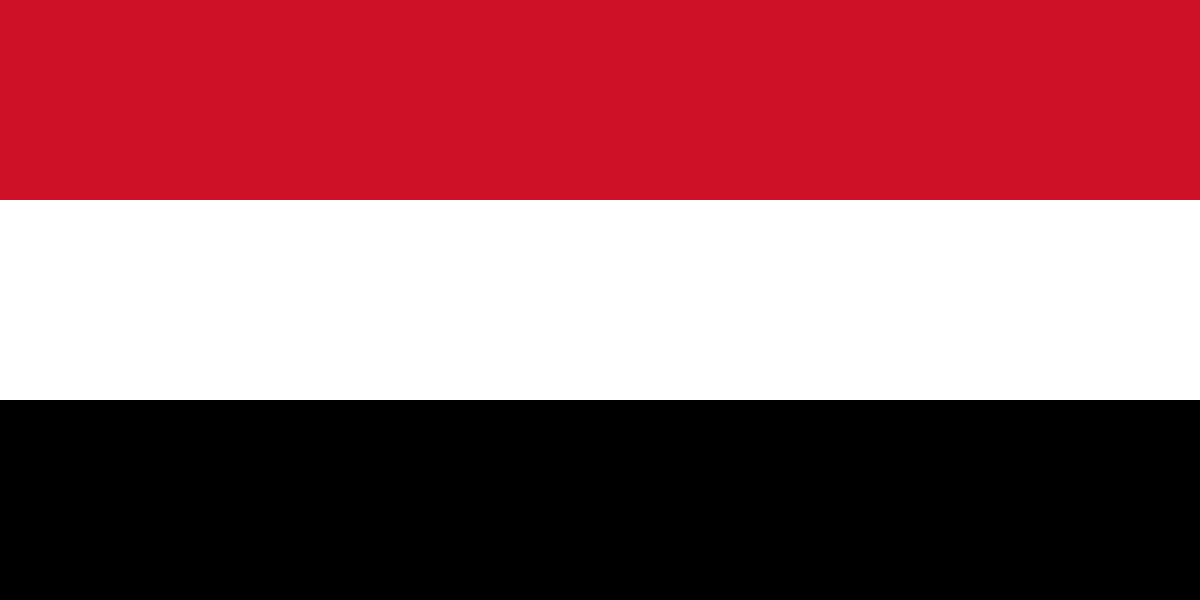
1969–1972
Libyan Arab Republic
After Gaddafi's 1969 coup toppled the monarchy, Libya flew the plain red-white-black Arab Liberation tricolour, before joining Egypt and Syria's Federation of Arab Republics flag in 1972.
Neighbouring countries
Libya shares a land border with 6 countries: Algeria, Chad, Egypt, Niger, Sudan and Tunisia.
Other flags in black, red, green and white
8 other national flags use the same main colours as Libya's.
Play Globalio and learn Libya's flag
 Jordan
 Palestine
 Algeria
 Chad
 Egypt
 Niger
 Sudan
 Tunisia
 Afghanistan
 Kenya
 Kuwait
 Syria
 United Arab Emirates