Middle East
Flag of Palestine
Palestine refers to the Palestinian territories of the West Bank and the Gaza Strip, home to a population of around 5 million Palestinians. The region has deep historical and religious significance to Judaism, Christianity, and Islam — Jerusalem contains some of the most sacred sites for all three faiths. The Palestinian Authority, established following the 1993 Oslo Accords, exercises limited self-governance in parts of the West Bank.

- CapitalRamallah
- RegionMiddle East
- Current flag since1964
- Main coloursBlack, White, Green, Red
- Populationabout 5.4 million
- Areaabout 6,000 km²
- Flags in history3
Population and area are rounded.
What the flag of Palestine means
The Palestinian flag is based on the flag of the Arab Revolt and uses the pan-Arab colours. The black, white and green stripes are linked to the Abbasid, Umayyad and Fatimid caliphates, and the red triangle to the Hashemite dynasty and the blood of martyrs. It was adopted by the Palestine Liberation Organization in 1964 and declared the flag of the State of Palestine in 1988.
How to recognise it
Horizontal black-white-green with a red triangle at the hoist — similar to Jordan but no star.
Did you know?
Palestine is recognised as a state by over 140 UN member states.
Easily confused with
Palestine's flag is often mixed up with these. Learn to tell them apart:
Flag history of Palestine
Every flag that has flown over Palestine, from today back through time.
1964–present
State of Palestine
The Palestinian flag — horizontal black-white-green stripes with a red triangle at the hoist — is almost identical to Jordan's flag, sharing the same Arab Revolt ancestry. The PLO adopted it in 1964; it was formally declared the flag of the State of Palestine in 1988. The design deliberately references the pan-Arab colours and the shared heritage of the Arab Revolt. As of 2012, Palestine is a UN non-member observer state; the flag flies at the UN headquarters in New York.
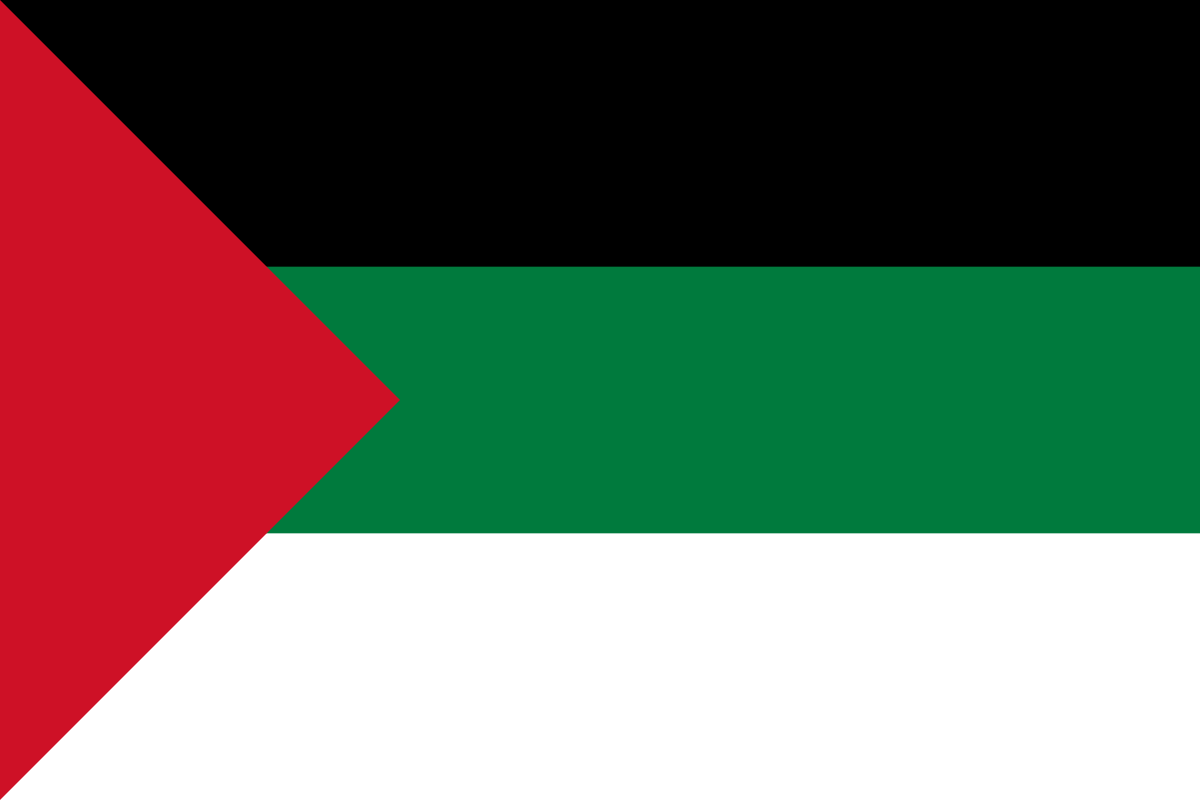
1916–1948
Arab Revolt heritage
Palestine's flag shares its direct ancestor with Jordan's: the Arab Revolt flag of 1916. After World War I, Palestinian Arabs flew variations of the Revolt's black-white-green-red banner in their own national movement. The similarity between the Palestinian and Jordanian flags reflects the political reality of 1920s British Mandate geography — Jordan's Emir Abdullah added a white star specifically to distinguish his flag from the Palestinian one, the two were so close.
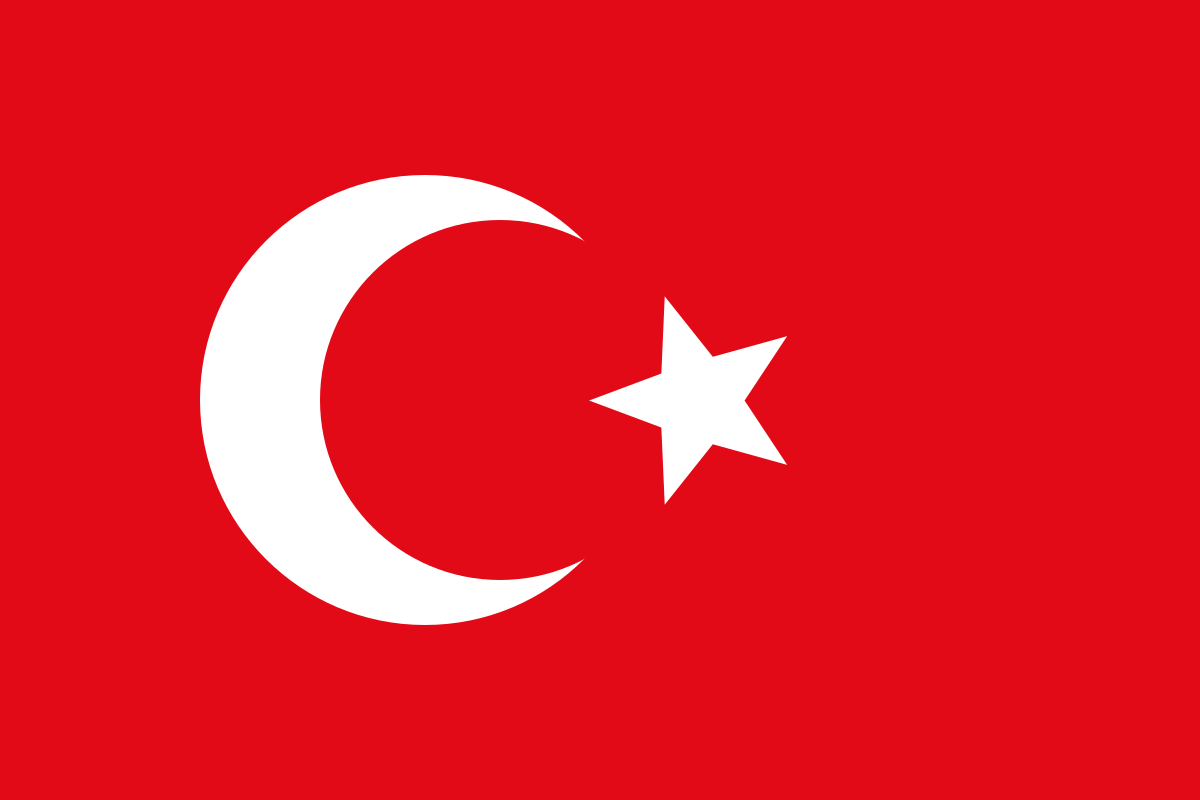
1517–1916
Ottoman era
Like all the Levant, the land of Palestine was an Ottoman possession for four centuries, flying the Ottoman star-and-crescent. The Arab Revolt of 1916 — launched against Ottoman rule from the Hejaz — was the moment Arab nationalism produced its own banner, the black-white-green-red flag that became the ancestor of the Palestinian, Jordanian, and several other Arab national flags. Before that, there was no distinct Palestinian flag; the territory was simply Ottoman.
Neighbouring countries
Palestine shares a land border with 3 countries: Egypt, Israel and Jordan.
Other flags in black, white, green and red
8 other national flags use the same main colours as Palestine's.
Play Globalio and learn Palestine's flag
 Jordan
 Kuwait
 United Arab Emirates
 Egypt
 Israel
 Afghanistan
 Kenya
 Libya
 Sudan
 Syria