 Mozambique

1975–present
Flag of Angola
Adopted at independence from Portugal in 1975, red over black with a yellow machete, half-cogwheel, and star from the ruling MPLA's emblem. The design deliberately echoes the Soviet hammer-and-sickle.
Angola is a large country on the southwestern coast of Africa, rich in oil, diamonds, and other natural resources. It was a Portuguese colony for nearly 500 years before gaining independence in 1975, which was immediately followed by a devastating civil war that lasted until 2002. Luanda, the capital, grew rapidly into one of Africa's most expensive cities due to the oil boom, though the country's wealth remains very unevenly distributed.
Population and area are rounded.
Red stands for the blood shed during the liberation struggle and black for Africa. The yellow emblem, half a cog wheel crossed by a machete with a star, echoes the hammer and sickle: the wheel for industrial workers, the machete for farm workers and the armed struggle, and the star for international solidarity and progress. The flag is based on that of the MPLA, which took power at independence in 1975.
Horizontal red-over-black with a yellow machete, star, and half-gear wheel in the centre.
Angola has one of the fastest-growing economies in Africa, fuelled by vast oil reserves.
Angola's flag is often mixed up with these. Learn to tell them apart:
Every flag that has flown over Angola, from today back through time.
Adopted at independence from Portugal in 1975, red over black with a yellow machete, half-cogwheel, and star from the ruling MPLA's emblem. The design deliberately echoes the Soviet hammer-and-sickle.

Angola was a Portuguese possession for some four centuries — first a source of enslaved people for Brazil, later a settler colony — flying the flag of Portugal. Portugal's refusal to decolonise triggered a 14-year war of independence from 1961; when the 1974 Carnation Revolution toppled the regime in Lisbon, Angola finally won independence in 1975, only to fall straight into a long civil war.
Long before the Portuguese, northern Angola and the lower Congo were the heart of the Kingdom of Kongo, a sophisticated Central African state whose king converted to Christianity in 1491 and corresponded with European monarchs as an equal. The Atlantic slave trade slowly hollowed it out, and it survived as a shadow until the Portuguese abolished the monarchy in the 19th century.
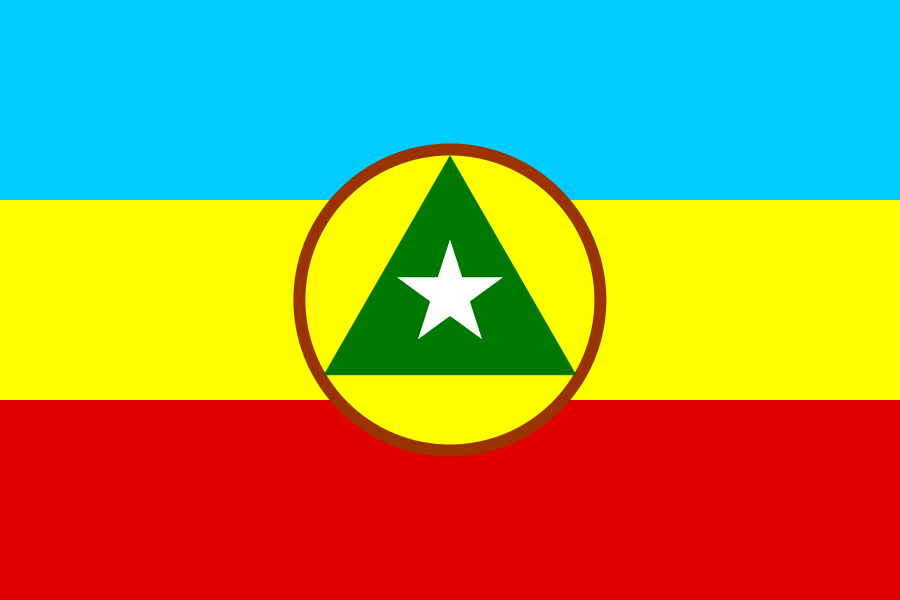
The separatist republic declared in the oil-rich Cabinda enclave when Portugal withdrew, before Angola annexed it.
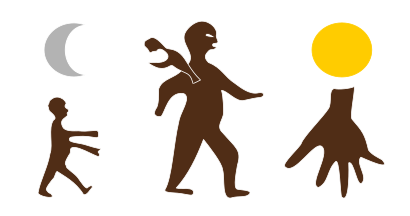
A small Kongo kingdom of the Cabinda coast, north of the Congo River mouth.
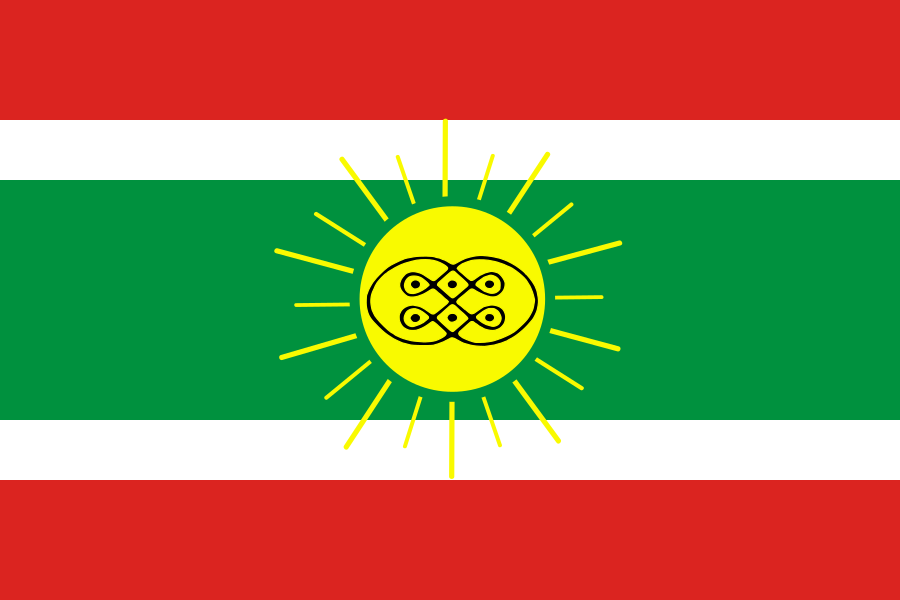
The states of the Chokwe people of northeastern Angola, celebrated for their sophisticated art and ivory carving.
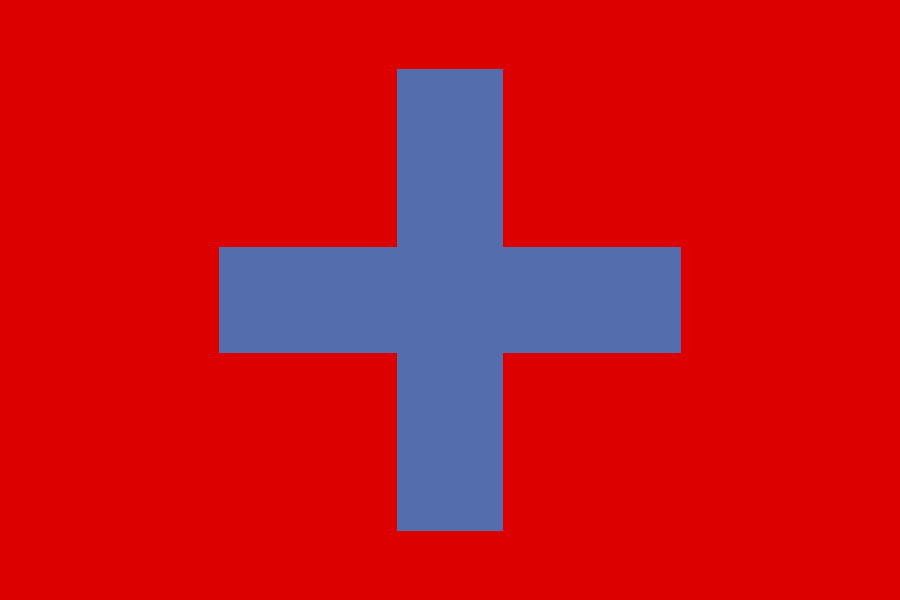
An Mbundu kingdom of Angola whose Queen Njinga waged a decades-long war against Portuguese slavers.

A kingdom of the Mbunda people in southeastern Angola, known for its woodcarving and the Makishi masquerade.
Empires, kingdoms and republics that once covered part of Angola.
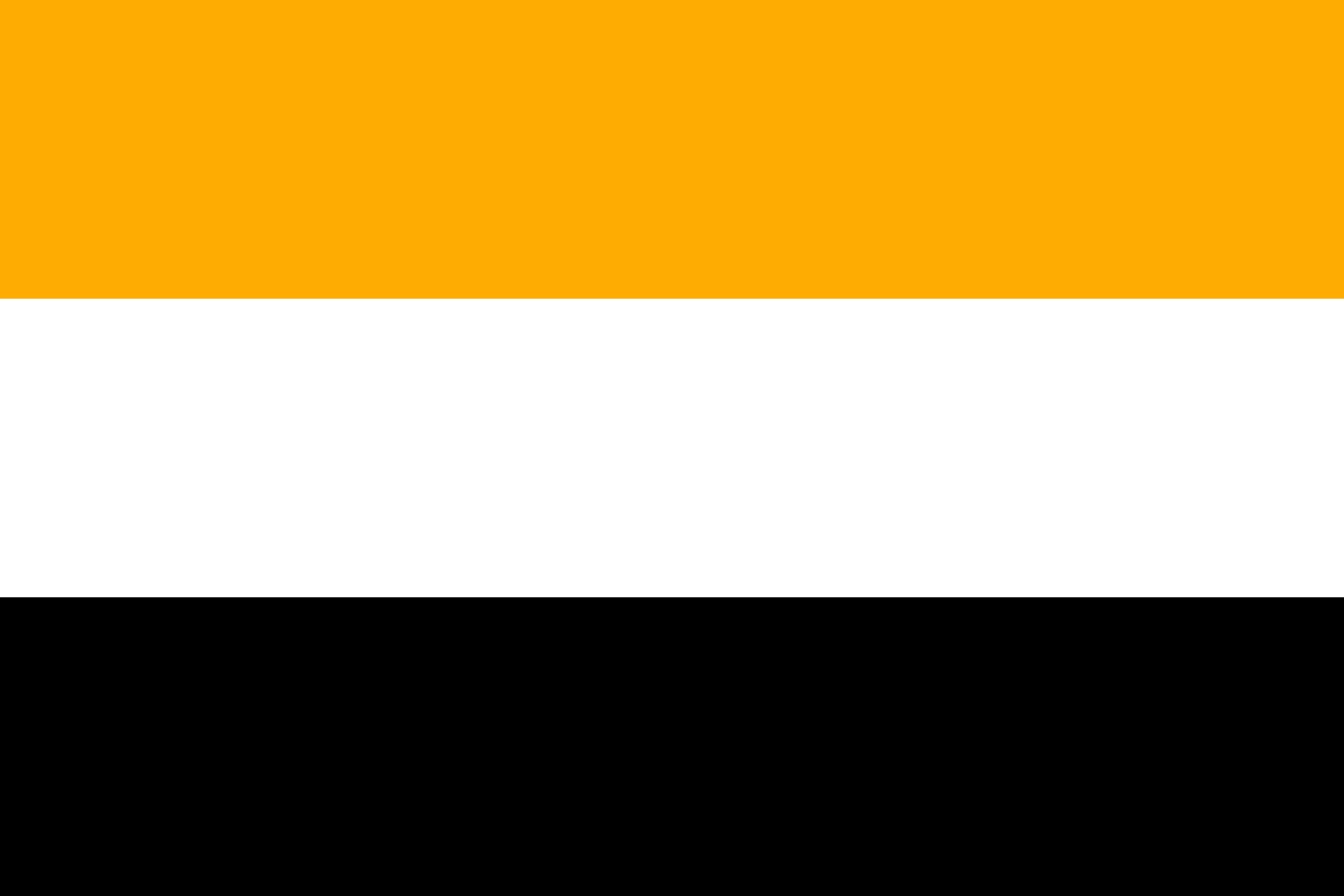
An oil-rich exclave separated from the rest of Angola by a strip of DR Congo; its separatist movement FLEC has flown this blue-yellow-red flag with a star in a long, low-level independence struggle.
Angola shares a land border with 4 countries: the DR Congo, Namibia, the Republic of the Congo and Zambia.
2 other national flags use the same main colours as Angola's.
Play Globalio and learn Angola's flag DR Congo
 Namibia
 Republic of the Congo
 Zambia
 Belgium
 Germany