
2006–present
Flag of the DR Congo
The 2006 constitution confirmed a sky-blue flag with a yellow star and a red, yellow-bordered diagonal stripe. Blue stands for peace, red for the blood of martyrs, and yellow for the country's wealth.
The Democratic Republic of the Congo is the second-largest country in Africa and home to the Congo Rainforest, the world's second-largest tropical rainforest, sometimes called the 'lungs of Africa.' The country has extraordinary mineral wealth, including the majority of the world's cobalt reserves along with significant coltan, diamonds, and gold, though this has been a persistent source of conflict. Kinshasa is one of the most populous cities in Africa.
Population and area are rounded.
Sky blue represents peace, red the blood of the country's martyrs, yellow its wealth and the star a radiant future. The current flag, adopted in 2006, is based on the one used from 1963 to 1971. The country has changed its flag several times since independence in 1960, including the green Zaire flag with a hand holding a torch, used from 1971 to 1997.
Blue with a diagonal red stripe edged in yellow and a yellow star in the upper left.
The DR Congo contains the world's second-largest tropical rainforest, after the Amazon.
The DR Congo's flag is often mixed up with these. Learn to tell them apart:
Every flag that has flown over the DR Congo, from today back through time.
The 2006 constitution confirmed a sky-blue flag with a yellow star and a red, yellow-bordered diagonal stripe. Blue stands for peace, red for the blood of martyrs, and yellow for the country's wealth.
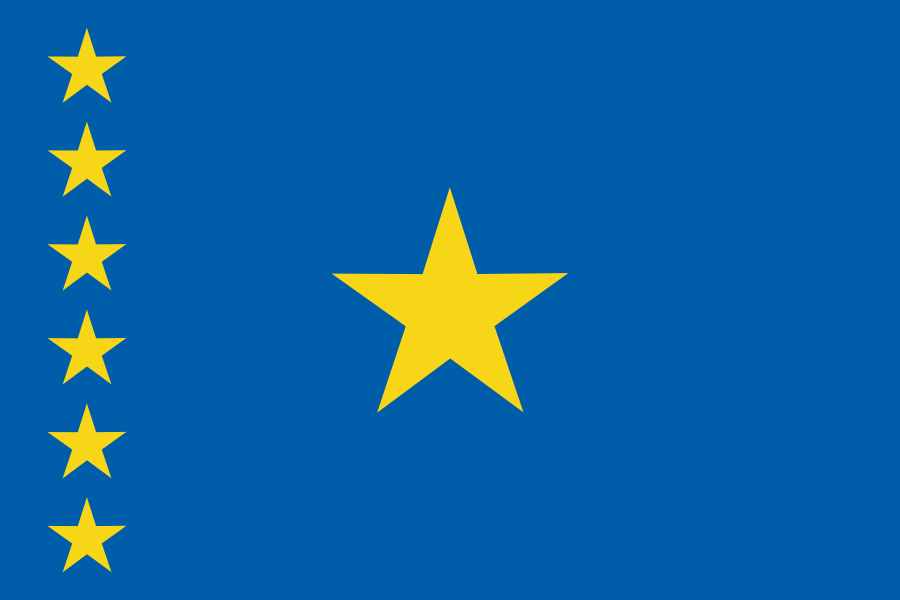
After Laurent-Désiré Kabila overthrew Mobutu, the country reverted to a 1960s-style blue flag with a single star and red diagonal, in a deeper royal blue.
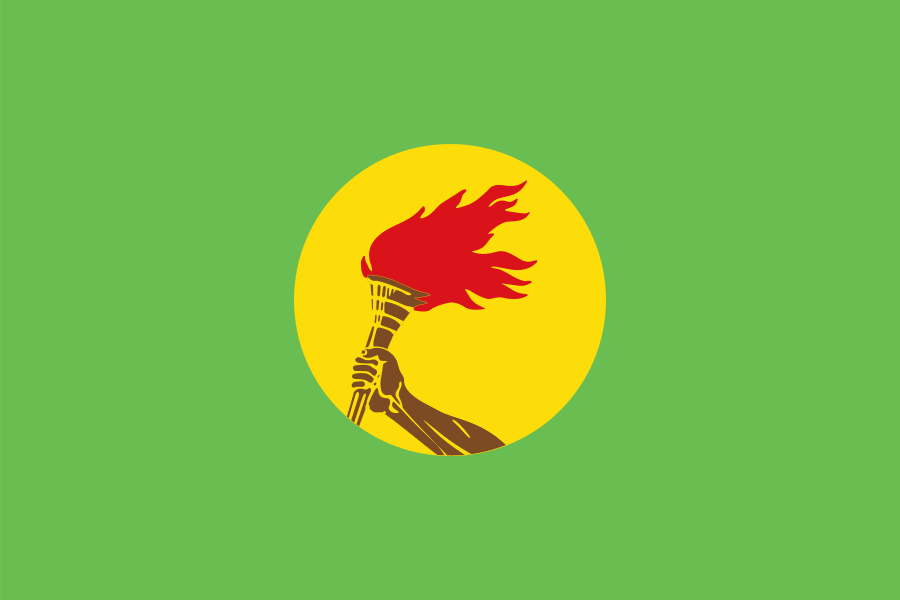
Mobutu Sese Seko renamed the country Zaire and adopted a green flag with a yellow disc bearing a hand holding a flaming torch, symbolizing revolution and "authenticité".
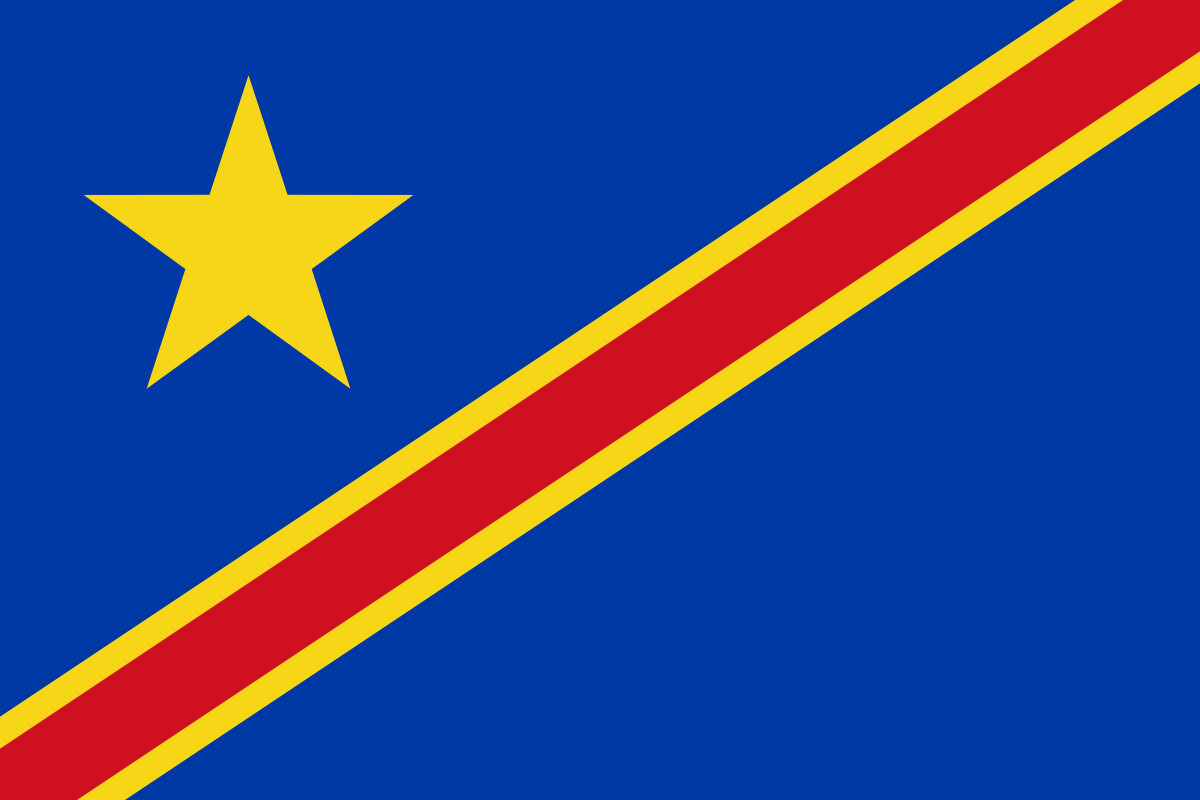
A large yellow star in the upper hoist and a yellow-edged red diagonal across the blue field — the design later revived as the basis of the modern flag.
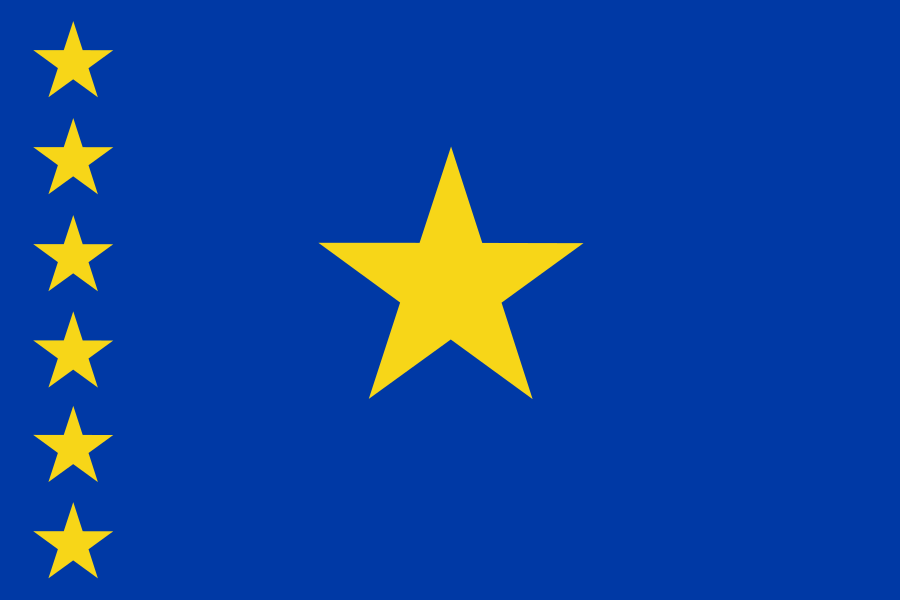
At independence from Belgium in 1960, the flag was blue with one large yellow star and six small stars for the founding provinces of the new state.
Secessionist states of the Congo Crisis:
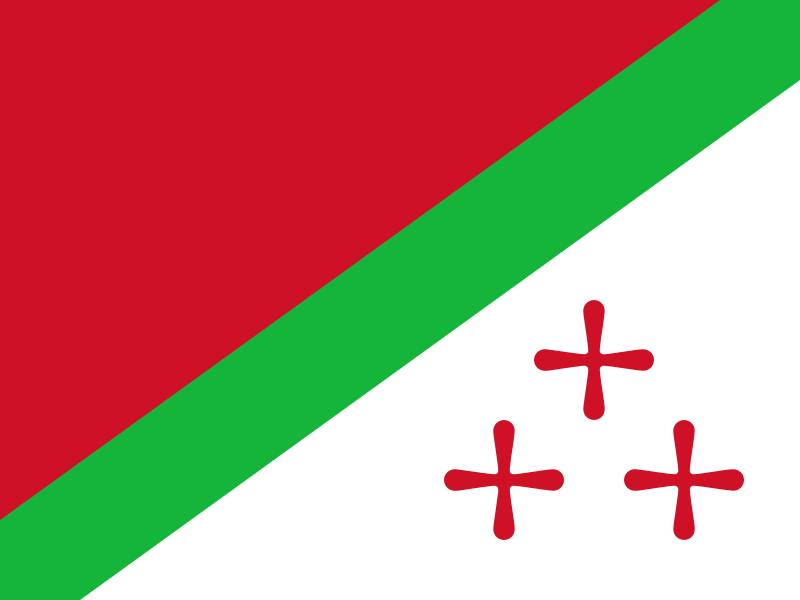
The mineral-rich Katanga province seceded under Moïse Tshombe days after Congo's 1960 independence, backed by Belgian mining interests. Its flag bore three red croisettes (copper-cross currency). UN forces ended the secession in 1963.
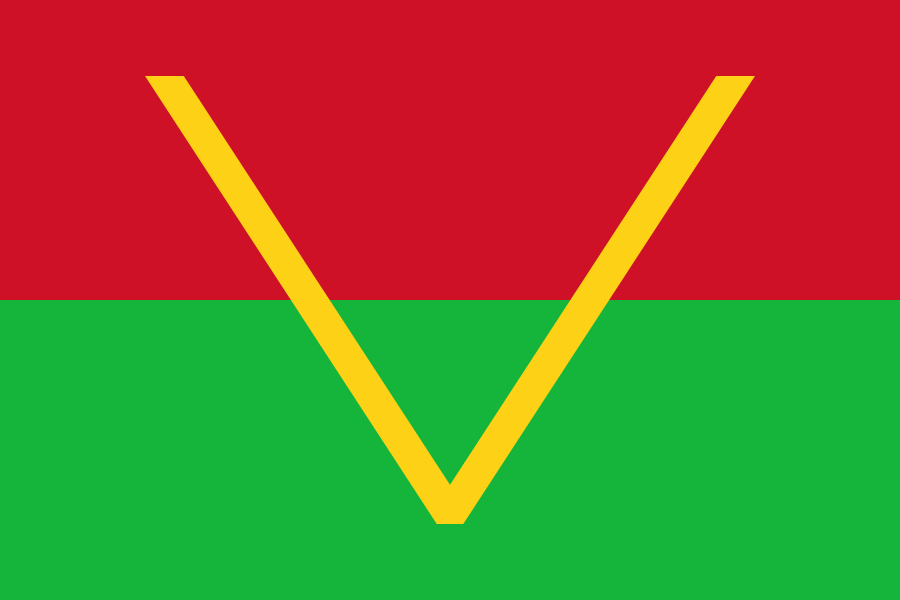
The diamond-rich South Kasai region also seceded in 1960 under Albert Kalonji, flying a flag with a hand holding the region's mineral wealth. It was reconquered by the central government in 1962.
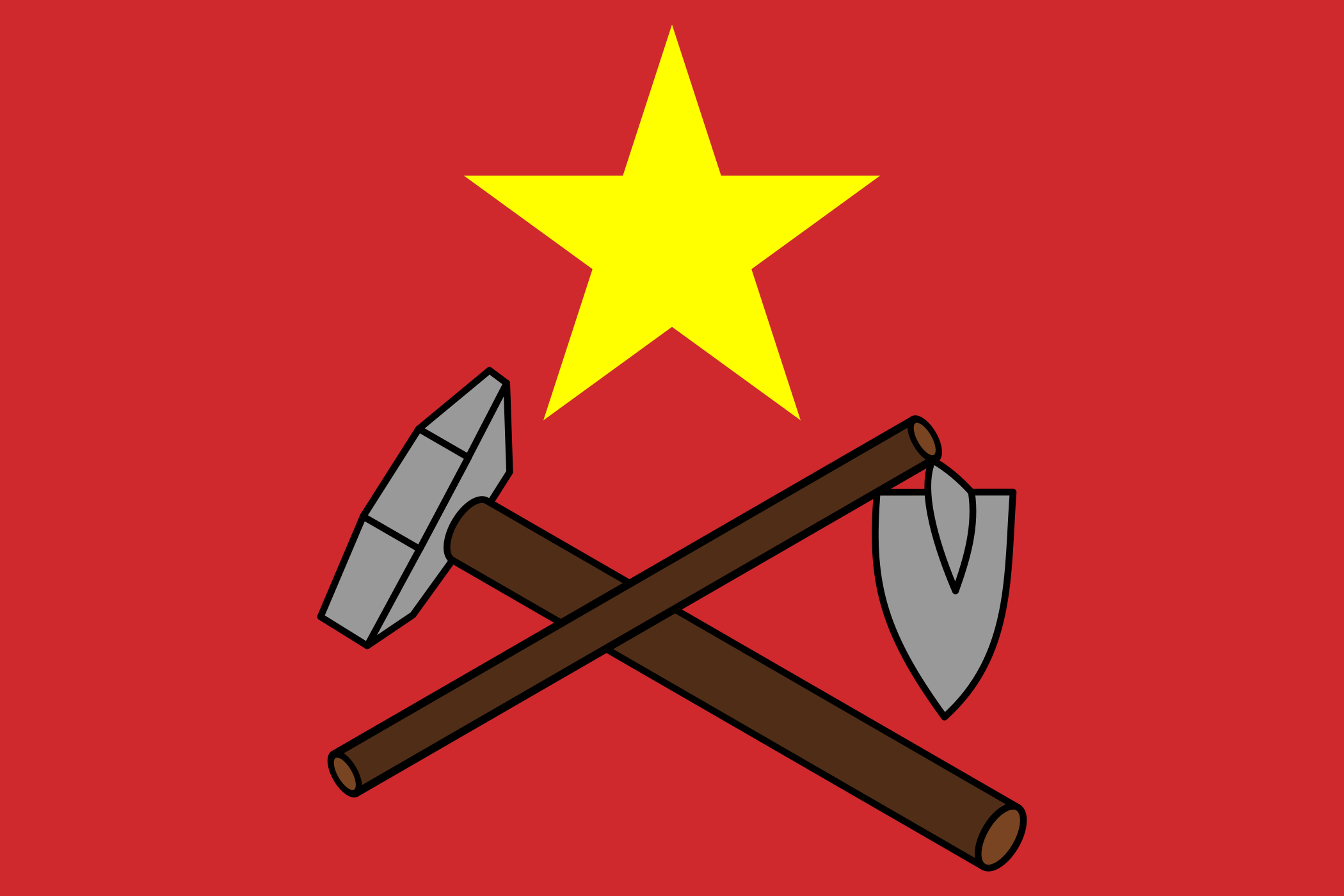
A Lumumbist rebel 'people's republic' in the eastern Congo's Simba rebellion, briefly aided by Che Guevara.
Empires, kingdoms and republics that once covered part of the DR Congo.
Moïse Tshombe's mineral-rich province seceded days after Congo's independence, triggering a UN war; its flag's three red croisettes are traditional Katangese copper crosses.
A diamond-rich Congolese region that broke away alongside Katanga, flying a red-and-green flag with a gold 'V' for victory before the central government reconquered it.
The newly independent Congo flew a blue flag with a large yellow star and six small stars for its provinces, through the chaotic Congo Crisis that followed Belgian withdrawal in 1960.
Under Mobutu Sese Seko's 'authenticity' campaign, the country was renamed Zaire and flew a green flag with a hand bearing a flaming torch, until his overthrow restored the name Congo.
The DR Congo shares a land border with 9 countries: Angola, Burundi, the Central African Republic, the Republic of the Congo, Rwanda, South Sudan, Tanzania, Uganda and Zambia.
 Angola
 Burundi
 Central African Republic
 Republic of the Congo
 Rwanda
 South Sudan
 Tanzania
 Uganda
 Zambia
9 other national flags use the same main colours as the DR Congo's.
Play Globalio and learn the DR Congo's flag Andorra
 Chad
 Colombia
 Ecuador
 Liechtenstein
 Moldova
 Mongolia
 Romania
 Venezuela