Africa
Flag of Tanzania
Tanzania is East Africa's largest country and home to some of the continent's most iconic landscapes and wildlife. Mount Kilimanjaro, Africa's highest peak, the Serengeti's annual wildebeest migration, and the Ngorongoro Crater are all within its borders. The semi-autonomous archipelago of Zanzibar, once a powerful independent sultanate and centre of the Indian Ocean spice trade, merged with mainland Tanganyika to form Tanzania in 1964.

- CapitalDodoma
- RegionAfrica
- Current flag since1964
- Main coloursGreen, Yellow, Black, Blue
- Populationabout 67 million
- Areaabout 945,000 km²
- Flags in history3
Population and area are rounded.
What the flag of Tanzania means
Green represents the land and its vegetation, yellow the mineral wealth, black the people, and blue the many lakes and rivers and the Indian Ocean. The diagonal design combines the flags of Tanganyika and Zanzibar, which united in 1964 to form Tanzania.
More about the flag
Tanganyika became independent from Britain in 1961 with a green flag crossed by a black band edged in gold. Zanzibar's revolutionary flag of 1964 was blue, black and green. When the two united on 26 April 1964, the new flag combined them diagonally. Tanzania is home to Mount Kilimanjaro, Africa's highest mountain, and to the Serengeti.
How to recognise it
Diagonal black stripe with yellow borders going from lower left to upper right; green top left, blue bottom right.
Did you know?
Tanzania is home to Mount Kilimanjaro, the highest peak in Africa at 5,895 metres.
Easily confused with
Tanzania's flag is often mixed up with these. Learn to tell them apart:
Flag history of Tanzania
Every flag that has flown over Tanzania, from today back through time.
1964–present
Flag of Tanzania
After Tanganyika and Zanzibar united in 1964, a new flag merged Tanganyika's green and black with Zanzibar's blue into a yellow-edged black diagonal. Green is land, blue sea, black the people, yellow mineral wealth.
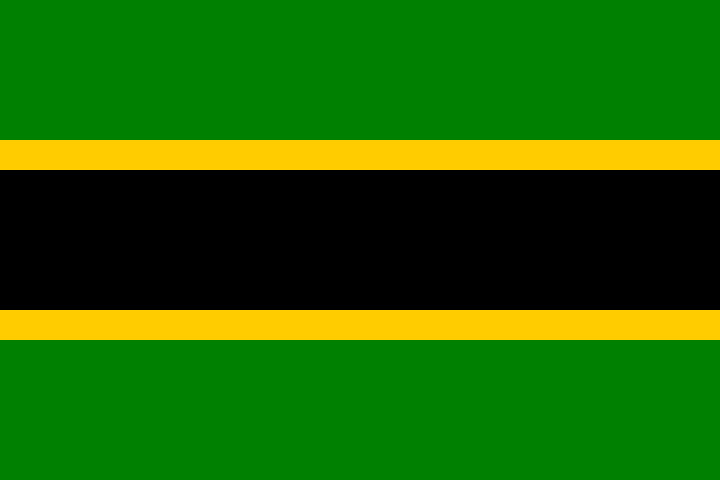
1961–1964
Flag of Tanganyika
Independent Tanganyika flew a green field with a central black, yellow-edged stripe — colors that carried directly into the union flag.
Zanzibar, which united with Tanganyika to form Tanzania:
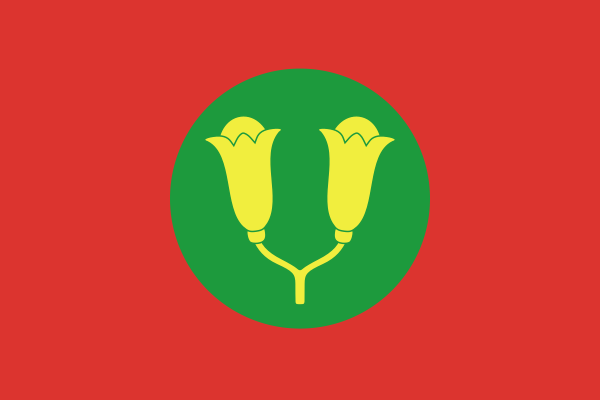
1963–1964
Sultanate of Zanzibar
Zanzibar gained independence from Britain as a constitutional sultanate in December 1963, flying a plain red flag (the historic colour of its Omani-descended dynasty). It lasted barely a month before being overthrown.
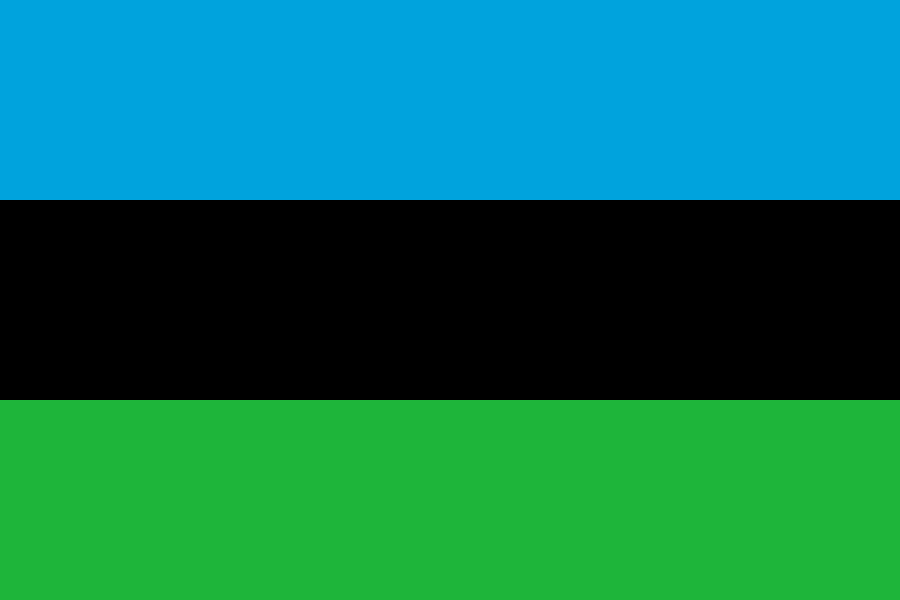
1964
People's Republic of Zanzibar
The January 1964 revolution overthrew the sultan and raised a blue-black-green flag. In April 1964 it merged with Tanganyika to form Tanzania — the "Tan" + "Zan" of the new name.
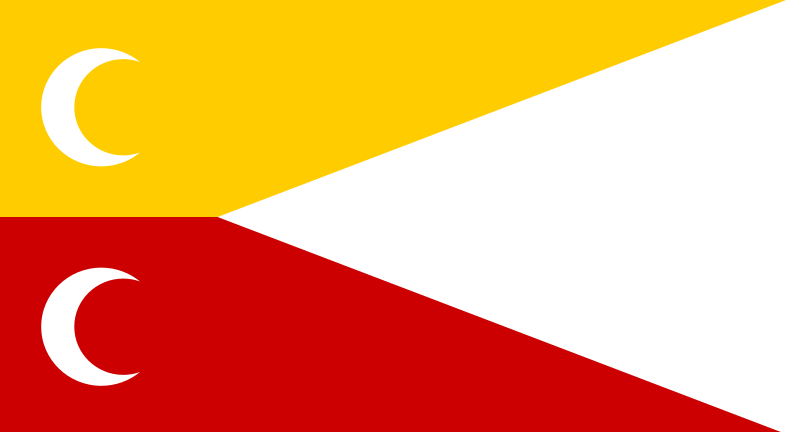
975–1513
Kilwa Sultanate
A fabulously wealthy Swahili-coast sultanate on an island off Tanzania, controlling the medieval gold trade from Great Zimbabwe.
Related historical states
Empires, kingdoms and republics that once covered part of Tanzania.
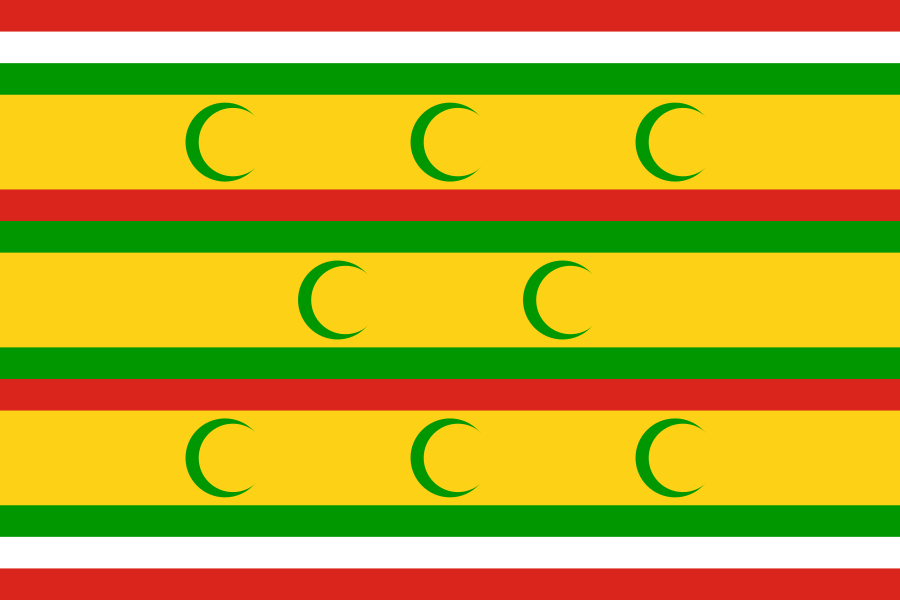
1856–1964
Sultanate of Zanzibar
The plain red banner derives from the Sultanate of Oman, whose Busaidi dynasty ruled Zanzibar until the 1964 revolution that led to union with Tanganyika as Tanzania.
1961–1964
Tanganyika
Newly independent Tanganyika flew a green-black-green flag before merging with Zanzibar in 1964; the union's name, Tanzania, fused 'Tan-' from Tanganyika with 'Zan-' from Zanzibar.
Neighbouring countries
Tanzania shares a land border with 8 countries: Burundi, the DR Congo, Kenya, Malawi, Mozambique, Rwanda, Uganda and Zambia.
Play Globalio and learn Tanzania's flag
 Zambia
 Mozambique
 Burundi
 DR Congo
 Kenya
 Malawi
 Rwanda
 Uganda