Africa
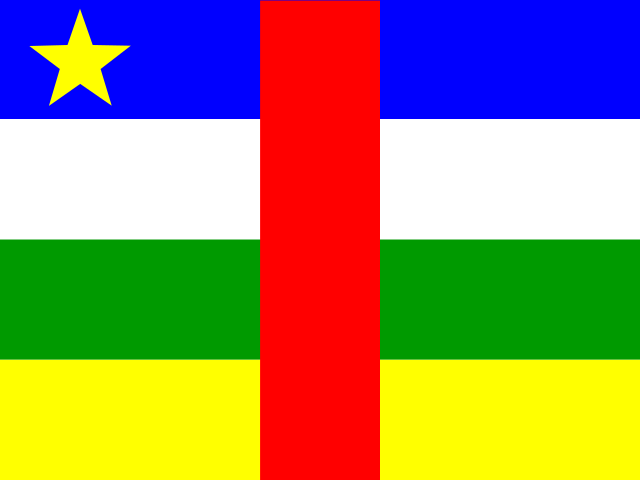
Flag of the Central African Republic
The Central African Republic is a landlocked country in Central Africa, one of the world's least developed and most sparsely populated nations despite having significant timber, diamond, gold, and uranium resources. Bangui, the capital, sits on the Ubangi River which forms the border with the Democratic Republic of the Congo. The country has experienced persistent political instability and armed conflict since independence from France in 1960.
- CapitalBangui
- RegionAfrica
- Current flag since1958
- Main coloursBlue, White, Green, Yellow, Red
- Populationabout 5.5 million
- Areaabout 623,000 km²
- GeographyLandlocked
- Flags in history2
Population and area are rounded.
What the flag of the Central African Republic means
The flag was designed by Barthélemy Boganda, who hoped to unite former French colonies in a larger central African state. It combines the blue, white and red of France with the Pan-African green, yellow and red, to show friendship between Europe and Africa. The vertical red band joining them stands for the blood all people share, and the yellow star for independence. It was adopted in 1958.
More about the flag
Barthélemy Boganda, who designed the flag, died in a plane crash in 1959, a year before the Central African Republic became independent on 13 August 1960. The flag stayed the same when Jean-Bédel Bokassa declared himself emperor of the Central African Empire from 1976 to 1979. It is one of very few flags that cross horizontal stripes with a vertical one.
How to recognise it
Four horizontal stripes (blue, white, green, yellow) crossed by a vertical red stripe with a yellow star top left.
Did you know?
The Central African Republic contains some of the oldest human settlements in central Africa.
Flag history of the Central African Republic
Every flag that has flown over the Central African Republic, from today back through time.
1958–present
Flag of the Central African Republic
Designed by founding father Barthélemy Boganda in 1958, it uniquely fuses the French blue-white-red with the pan-African red-green-yellow, crossed by a vertical red "blood of unity" stripe. It was even kept unchanged during Bokassa's 1976–1979 "Central African Empire."
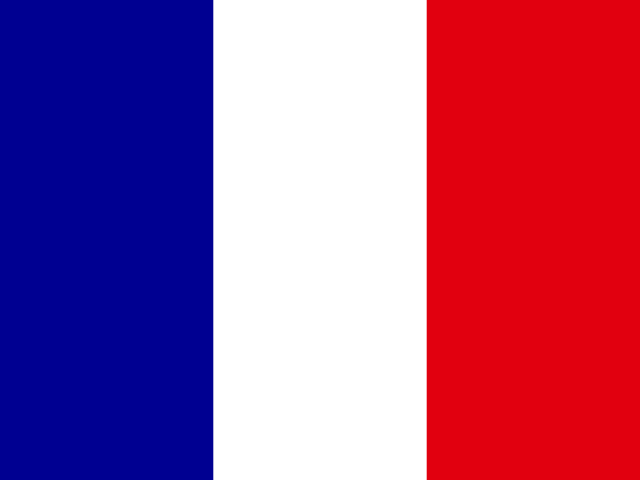
1903–1958
French Ubangi-Shari
The territory was the French colony of Ubangi-Shari, part of French Equatorial Africa, flying the French tricolor. It was one of the most neglected and harshly exploited colonies in the French empire — run largely through brutal concession companies — until Barthélemy Boganda led it to autonomy and gave it both its name and its flag in 1958.
Neighbouring countries
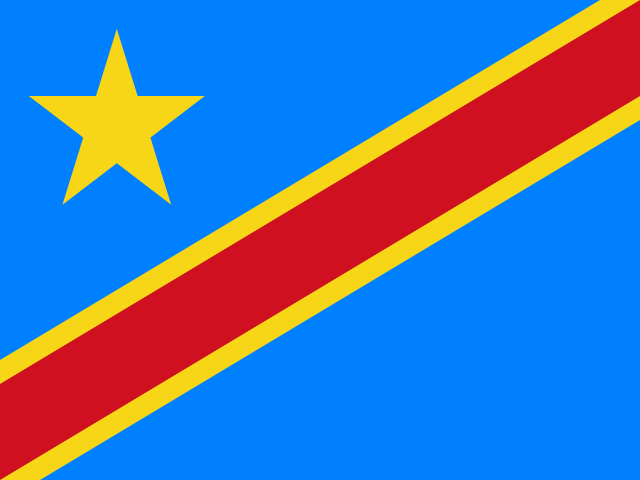
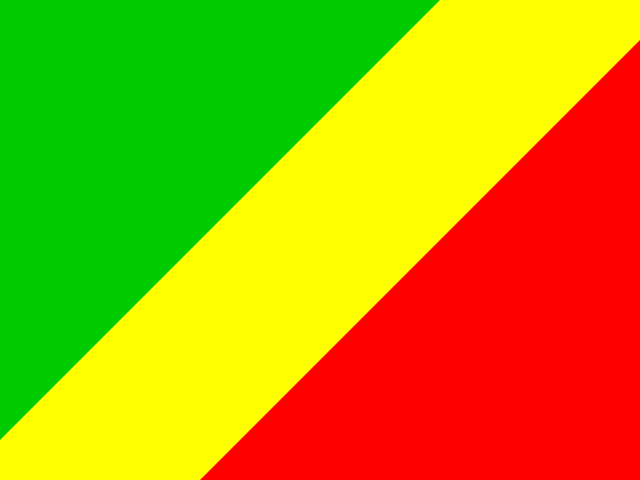
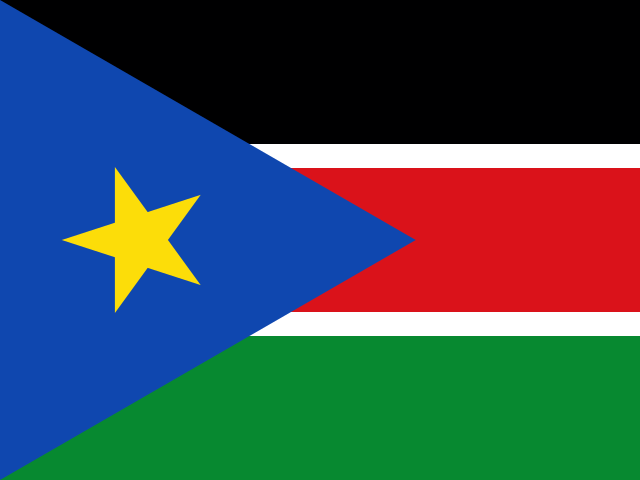
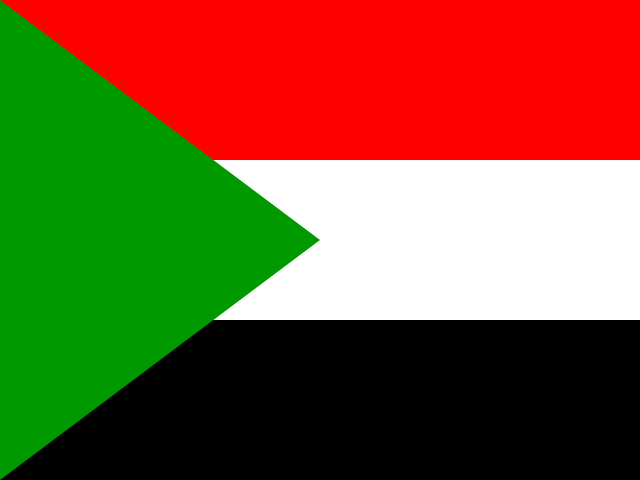
The Central African Republic shares a land border with 6 countries: Cameroon, Chad, the DR Congo, the Republic of the Congo, South Sudan and Sudan.
Other flags in blue, white, green, yellow and red
3 other national flags use the same main colours as the Central African Republic's.
Play Globalio and learn the Central African Republic's flag
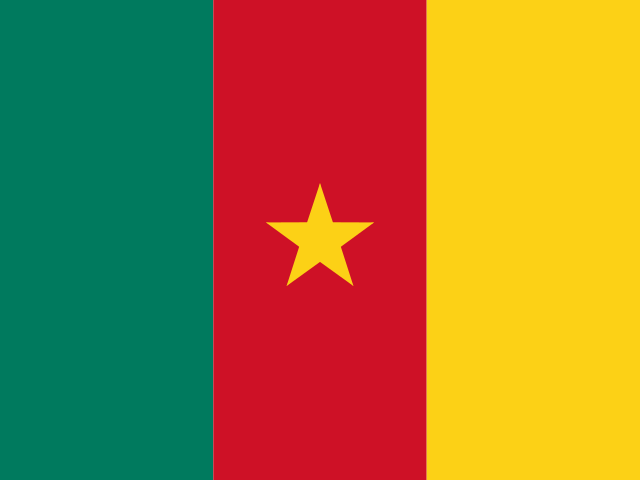 Cameroon
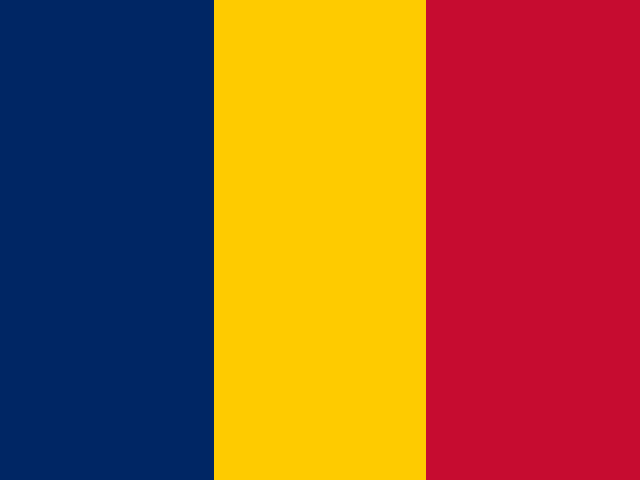 Chad
 DR Congo
 Republic of the Congo
 South Sudan
 Sudan
 Comoros
 Namibia
 Seychelles