Americas
Flag of Suriname
Suriname is the smallest sovereign country in South America by area and the only South American country where Dutch is the official language, a legacy of its colonial history as Dutch Guiana. More than 90% of its territory is covered by tropical rainforest, one of the most intact such ecosystems in the world. Paramaribo, the capital, has a historic inner city of Dutch colonial wooden architecture that is a UNESCO World Heritage Site.

- CapitalParamaribo
- RegionAmericas
- Current flag since1975
- Main coloursGreen, Yellow, White, Red
- Populationabout 620,000
- Areaabout 164,000 km²
- Flags in history3
Population and area are rounded.
What the flag of Suriname means
Green represents the fertile land, white justice and freedom, and red progress and love. The yellow star stands for unity and a golden future. The flag was adopted at independence from the Netherlands in 1975, replacing a white flag with five coloured stars for the country's main ethnic groups.
More about the flag
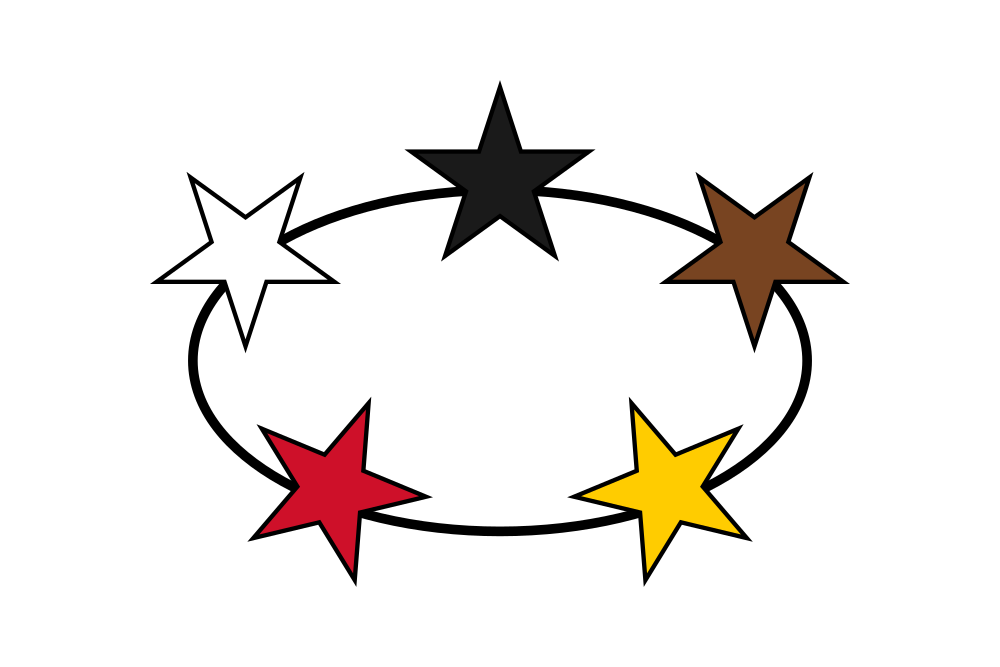
Suriname's flag was chosen in a national competition before independence from the Netherlands on 25 November 1975 and was designed by Jack Pinas. It replaced a flag with five coloured stars linked by an ellipse, which represented the country's main ethnic groups. Suriname is the smallest country in South America and the only one with Dutch as its official language.
How to recognise it
Horizontal green-white-red-white-green with a yellow star in the red stripe.
Did you know?
Suriname is the smallest independent country in South America.
Easily confused with
Suriname's flag is often mixed up with these. Learn to tell them apart:
Flag history of Suriname
Every flag that has flown over Suriname, from today back through time.
1975–present
Republic of Suriname (independence)
Suriname's flag — five horizontal stripes of green, white, red, white, and green, with a large yellow star at the centre — was adopted when the country gained independence from the Netherlands in 1975. Green represents the forests and agriculture; white represents justice and freedom; red represents progress and love; the yellow star represents the unity of all the ethnic groups in Suriname's famously diverse population (Hindustanis, Creoles, Maroons, Javanese, Amerindians, and others).
1959–1975
Autonomous Suriname
When Suriname became an autonomous country within the Kingdom of the Netherlands in 1954, it adopted its own flag in 1959: a white field with five stars — black, brown, yellow, red and white — linked by an ellipse, each colour standing for one of the territory's major ethnic groups. It flew until the green-white-red star flag of full independence replaced it in 1975.
1667–1959
Dutch Suriname (colonial era)
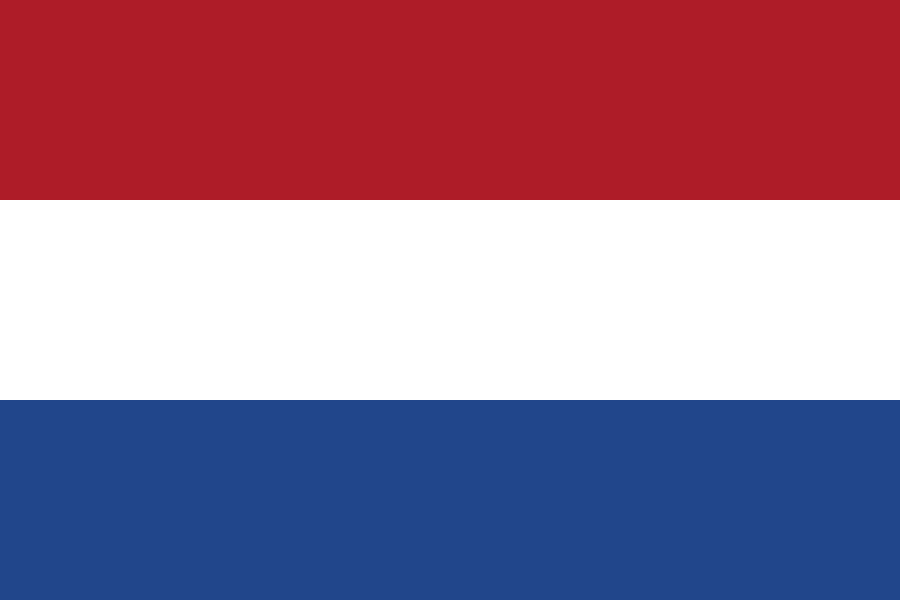
Suriname was a Dutch colony from 1667 (when England traded it to the Netherlands in exchange for New Amsterdam — the future New York). The Dutch plantation economy relied on enslaved Africans and later indentured labourers from Asia, creating Suriname's extraordinary ethnic diversity. Suriname was one of the last countries in the Americas to gain independence, doing so in 1975 — though a significant portion of the population emigrated to the Netherlands before and after.
Neighbouring countries
Suriname shares a land border with 2 countries: Brazil and Guyana.
Other flags in green, yellow, white and red
3 other national flags use the same main colours as Suriname's.
Play Globalio and learn Suriname's flag
 Guyana
 Brazil
 Myanmar
 Tajikistan
 Togo