Africa
Flag of the Seychelles
Seychelles is an archipelago of 115 islands in the Indian Ocean off East Africa, and is Africa's smallest sovereign country by both area and population. Long uninhabited, it was settled under French rule and later held by Britain before independence in 1976. Today it has the highest GDP per capita in Africa, driven by upmarket tourism and tuna fishing, and is celebrated for its biodiversity — including the giant Aldabra tortoise and the coco de mer palm, which produces the largest seed in the plant kingdom.

- CapitalVictoria
- RegionAfrica
- Current flag since1996
- Main coloursBlue, Yellow, Red, White, Green
- Populationabout 100,000
- Areaabout 460 km²
- GeographyIsland nation
- Flags in history4
Population and area are rounded.
What the flag of the Seychelles means
The five oblique bands fanning out from the lower hoist suggest a young country moving into the future. Blue stands for the sky and sea, yellow for the sun, red for the people and their work, white for justice and harmony, and green for the land. The flag was adopted in 1996, combining the colours of the main political parties.
More about the flag
The Seychelles is an archipelago of 115 islands in the Indian Ocean that became independent from Britain on 29 June 1976. It has had three flags since then: one at independence, a red and green flag with a white wave used during one-party rule from 1977, and the current design from 1996. Its capital, Victoria, is one of the smallest capitals in the world.
How to recognise it
Five oblique bands of blue, yellow, red, white and green fanning out from the lower-hoist corner.
Did you know?
Seychelles is Africa's smallest country — an Indian Ocean archipelago of 115 islands, home to the giant Aldabra tortoise and the coco de mer, which bears the world's largest seed.
Flag history of the Seychelles
Every flag that has flown over the Seychelles, from today back through time.
1996–present
Flag of Seychelles
Adopted in 1996, the flag radiates five bands — blue, yellow, red, white and green — fanning out from the lower hoist like rays of a rising sun, symbolising a dynamic young country moving into the future. It is one of the few national flags using all the colours of its two main political parties together.
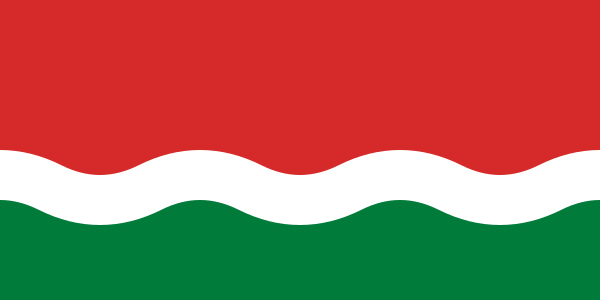
1977–1996
One-party era
After a 1977 coup ushered in a socialist one-party state, Seychelles flew a red-white-green design with wavy lines. It was replaced by the multi-coloured rays flag in 1996 when the country returned to multi-party democracy.
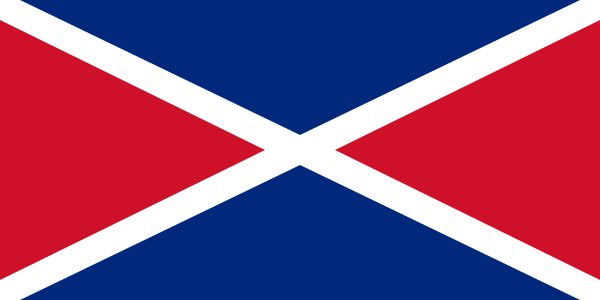
1976–1977
Independence flag
At independence from Britain in 1976, Seychelles adopted a flag diagonally divided into blue, red, white and green quarters — the colours of the two parties that formed the first coalition government, which lasted barely a year before the coup.
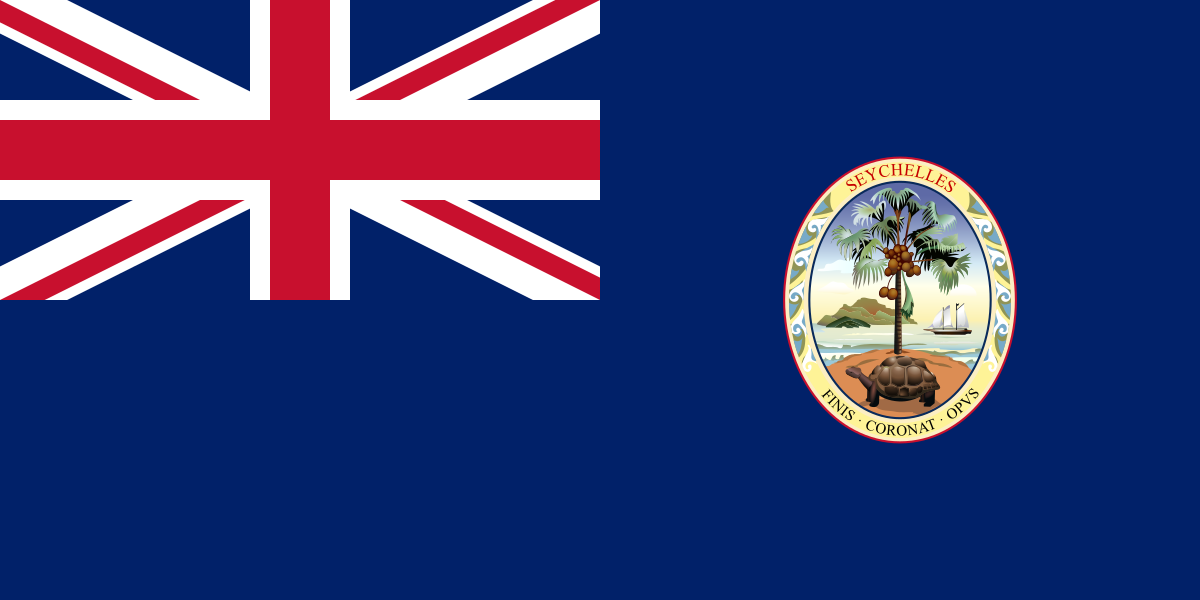
1903–1976
British colony
Settled by the French in the 18th century and captured by Britain in 1814, the Seychelles became a separate British Crown Colony in 1903, flying a Blue Ensign defaced with a colonial badge of a giant tortoise and palm. The islands' isolation in the Indian Ocean made them a place of exile for troublesome rulers from across the Empire.
Other flags in blue, yellow, red, white and green
3 other national flags use the same main colours as the Seychelles'.
Play Globalio and learn the Seychelles' flag
 Central African Republic
 Comoros
 Namibia