 Botswana
 South Africa

1990–present
Flag of Namibia
Adopted at independence from South African rule in 1990, assembled from three finalist designs. Its diagonal red band, blue and green triangles, and golden sun reflect the colors of SWAPO.
Namibia is a southern African country known for the Namib Desert — one of the world's oldest deserts, having been arid for at least 55 million years — from which the country takes its name. It is one of Africa's most sparsely populated countries despite being larger than France. Namibia has spectacular wildlife experiences including the desert-adapted elephants and lions of Damaraland and the vast seal colonies of Cape Cross.
Population and area are rounded.
Blue represents the sky, the Atlantic Ocean and the importance of water; red the people and their heroism; green the vegetation; and white peace and unity. The golden sun with twelve triangular rays stands for life and energy. The flag was adopted at independence from South Africa in 1990, combining colours of the country's main political parties.
Namibia was governed by South Africa from the end of the First World War until independence on 21 March 1990, after a long struggle led by SWAPO. The flag was chosen from public designs by a committee shortly before independence. Namibia contains the Namib, often called the world's oldest desert, and its sand dunes at Sossusvlei are among the tallest on Earth.
Diagonal red-white stripe from lower left to upper right; blue in upper left, green in lower right, with a yellow sun.
Namibia has the second-lowest population density in the world after Mongolia.
Namibia's flag is often mixed up with these. Learn to tell them apart:
Every flag that has flown over Namibia, from today back through time.
Adopted at independence from South African rule in 1990, assembled from three finalist designs. Its diagonal red band, blue and green triangles, and golden sun reflect the colors of SWAPO.
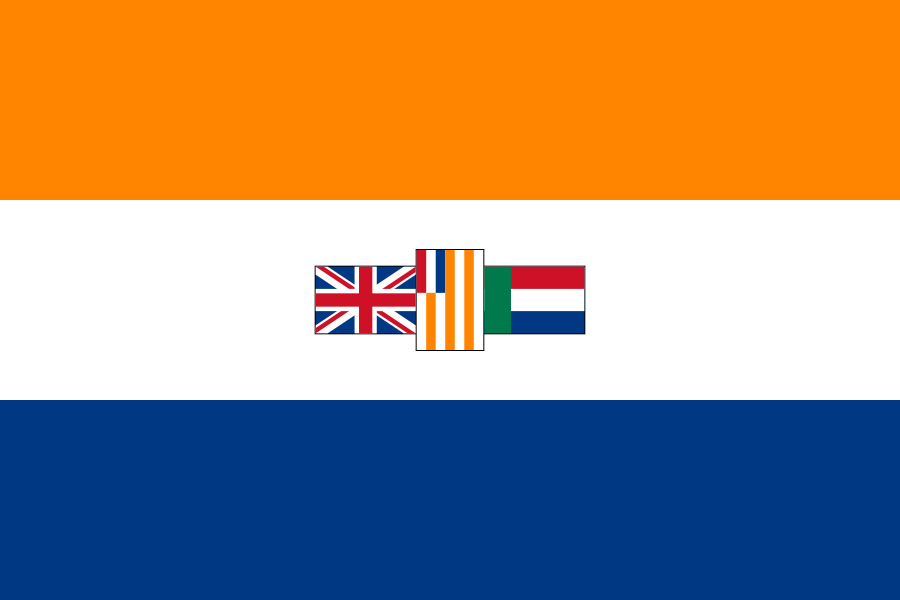
After seizing it from Germany in 1915, South Africa governed the territory as South West Africa, eventually flying the orange-white-blue "Oranje-Blanje-Blou." Pretoria refused to relinquish the mandate and extended apartheid into the territory, triggering a decades-long liberation war by SWAPO until independence in 1990 — the last country in mainland Africa to be freed from colonial-style rule.
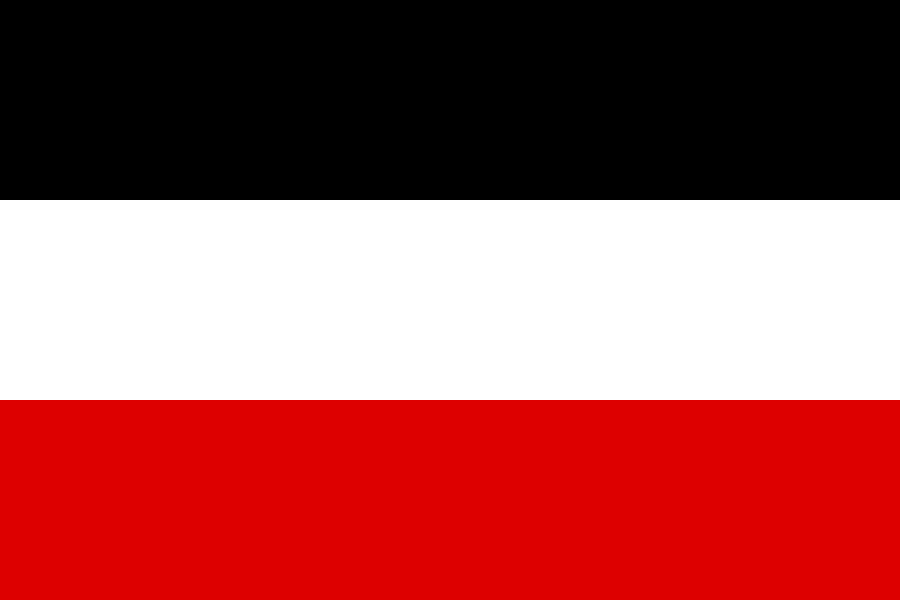
A short-lived Boer trekker republic in northern Namibia, abandoned amid conflict with the Ovambo.
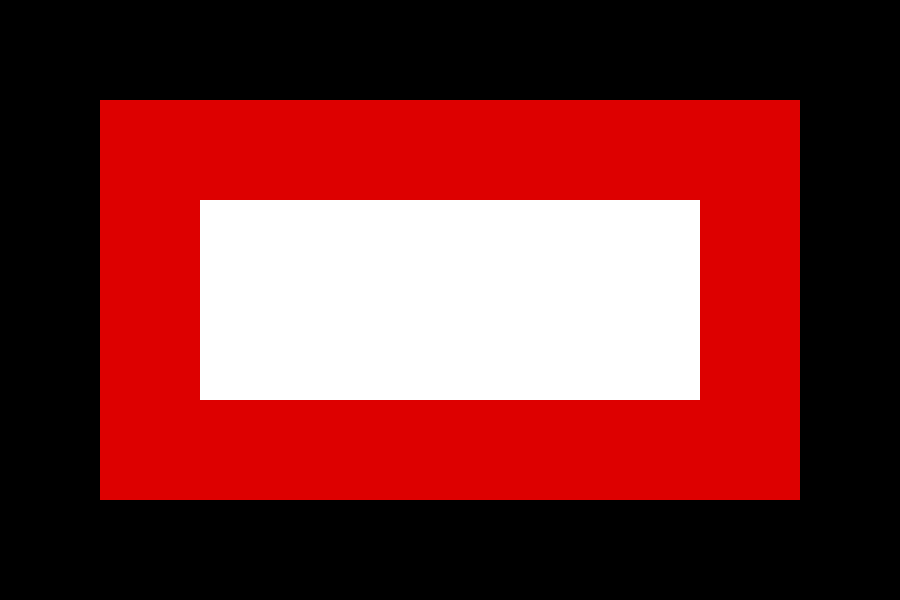
A self-governing state of the Baster people in central Namibia before German colonisation.
Namibia shares a land border with 4 countries: Angola, Botswana, South Africa and Zambia.
3 other national flags use the same main colours as Namibia's.
Play Globalio and learn Namibia's flag Angola
 Zambia
 Central African Republic
 Comoros
 Seychelles