Africa
Flag of South Africa
South Africa is the southernmost country in Africa and one of the continent's most economically developed and culturally diverse nations. The country peacefully ended its apartheid system of racial segregation in 1994, holding its first fully democratic elections that year and electing Nelson Mandela as president. South Africa has extraordinary natural diversity spanning the Cape Floristic Region, Kruger National Park, and the Drakensberg Mountains, and is the only country to have voluntarily dismantled its nuclear weapons programme.

- CapitalPretoria
- RegionAfrica
- Current flag since1994
- Main coloursGreen, Yellow, Red, Blue, White, Black
- Populationabout 60 million
- Areaabout 1,221,000 km²
- Flags in history16
Population and area are rounded.
What the flag of South Africa means
Adopted for the first fully democratic elections in 1994, the flag was designed by State Herald Frederick Brownell in a matter of weeks. It has no official meaning, but the Y shape is widely seen as different parts of society coming together and moving forward as one. It includes red, white and blue from the Boer republics and Britain, and black, green and gold from the flag of the ANC.
How to recognise it
Unique Y-shaped green chevron splitting red-blue horizontals from a black-yellow-white wedge at the hoist.
Did you know?
South Africa has three capital cities: Pretoria (executive), Cape Town (legislative), and Bloemfontein (judicial).
Easily confused with
South Africa's flag is often mixed up with these. Learn to tell them apart:
Flag history of South Africa
Every flag that has flown over South Africa, from today back through time.
1994–present
Rainbow flag
Designed by Frederick Brownell and first flown on 27 April 1994 at the dawn of democracy, it is the only national flag with six colors. The Y-shape is widely read as the convergence of a diverse society onto a single path forward.
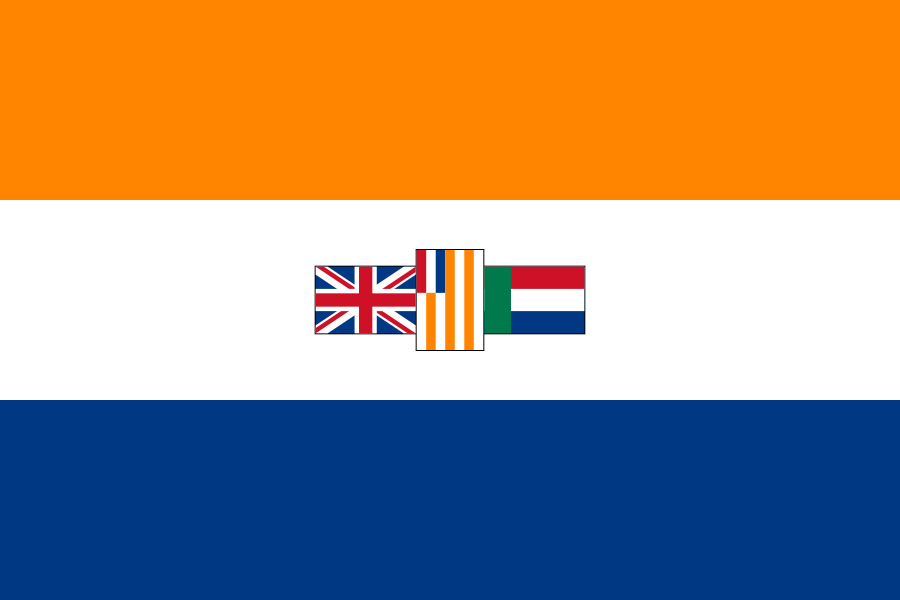
1928–1994
Oranje-Blanje-Blou
Based on the orange-white-blue Dutch Prinsenvlag, with three tiny flags centered on the white band — the Union Jack and the flags of the old Orange Free State and Transvaal republics. It became internationally synonymous with the apartheid era.
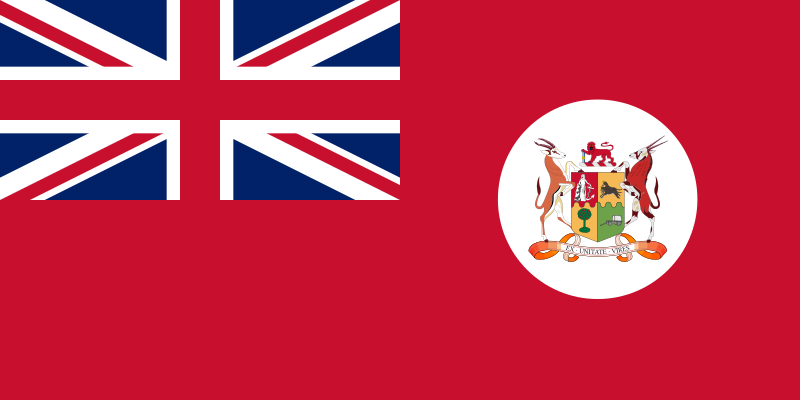
1910–1928
South African Red Ensign
After the Union of South Africa formed in 1910, the British Red Ensign defaced with the Union coat of arms served as the de facto flag, while the Union Jack remained the only flag with full official status.
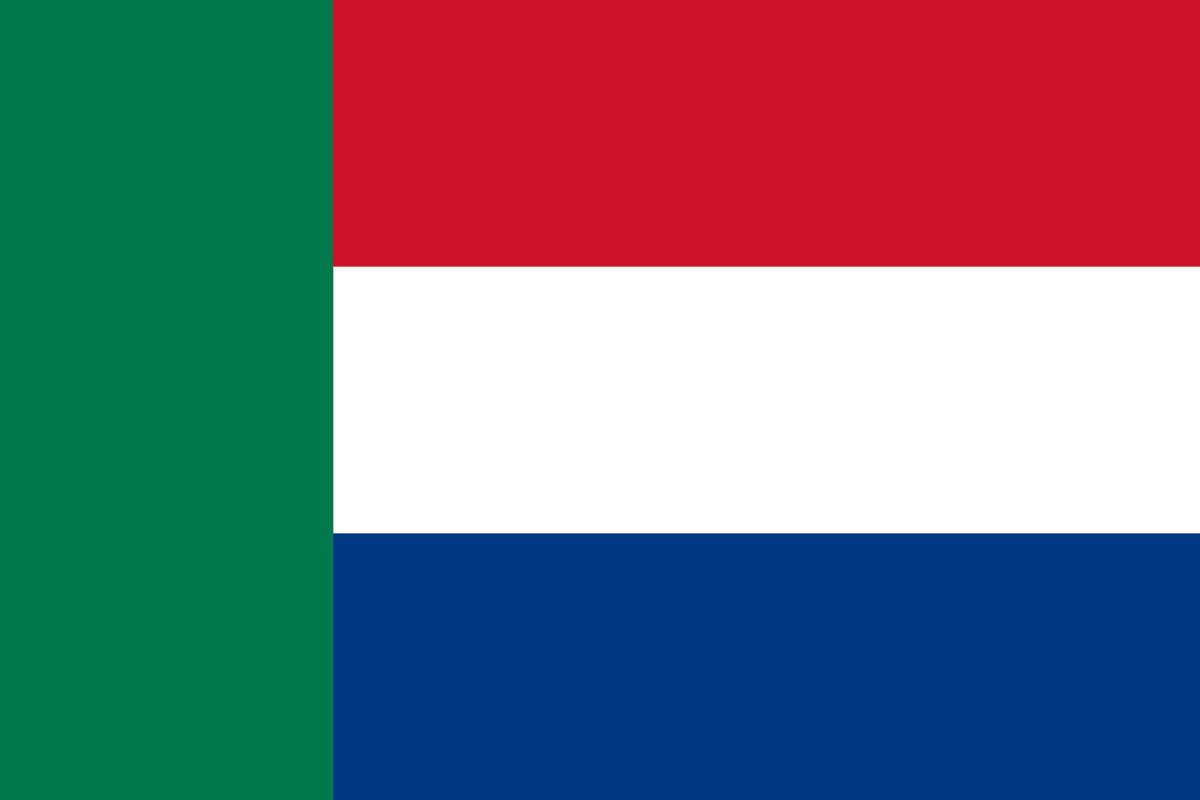
1857–1902
South African Republic (Transvaal)
In the interior, Dutch-descended Boer settlers fleeing British rule founded their own republics — the South African Republic (Transvaal), whose green-banded "Vierkleur" flew over the gold-rich Witwatersrand. The discovery of that gold drew the British in, and the two sides fought the bitter Second Boer War (1899–1902); the republic's defeat paved the way for the Union of South Africa.
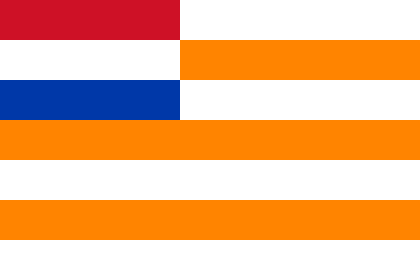
1854–1902
Orange Free State
The other main Boer republic, the Orange Free State, flew an orange-and-white flag with the Dutch tricolour in the canton. Like the Transvaal it was independent for half a century before being annexed by Britain in the Boer War — both republics' flags were later miniaturised onto the apartheid-era national flag.
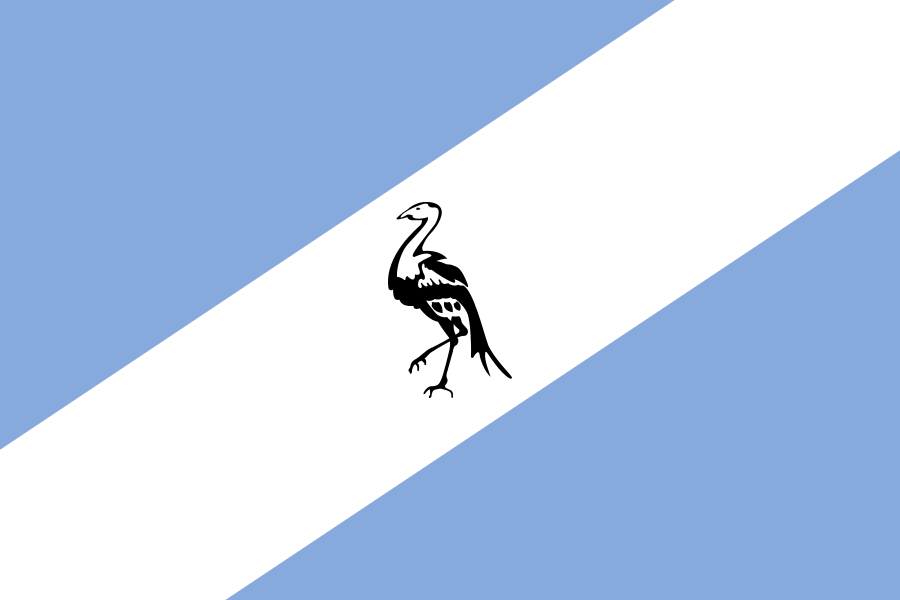
1981–1994
Ciskei
A small apartheid-era Bantustan for Xhosa people in the Eastern Cape, dissolved into democratic South Africa in 1994.
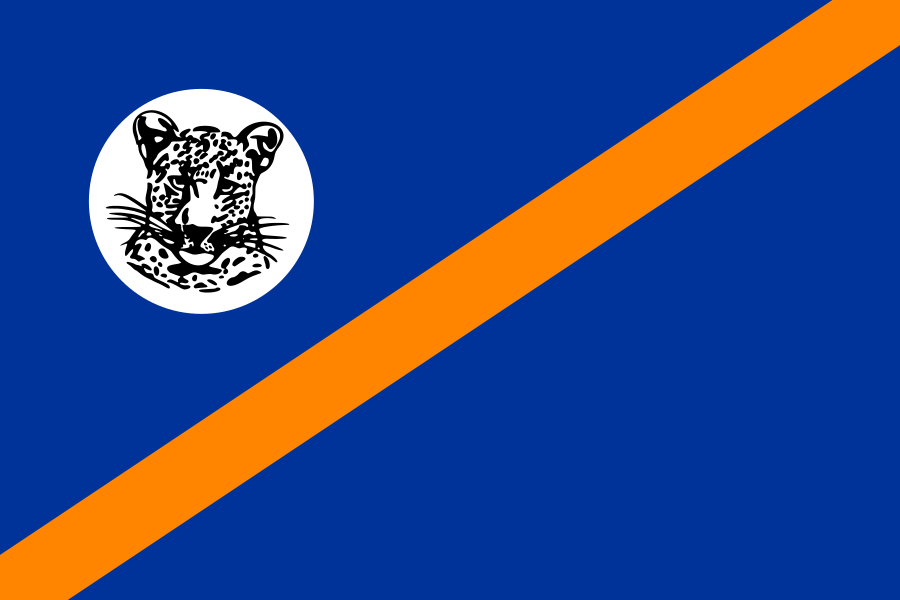
1977–1994
Bophuthatswana
A fragmented apartheid-era Bantustan for Tswana people, reabsorbed into South Africa at the end of apartheid.
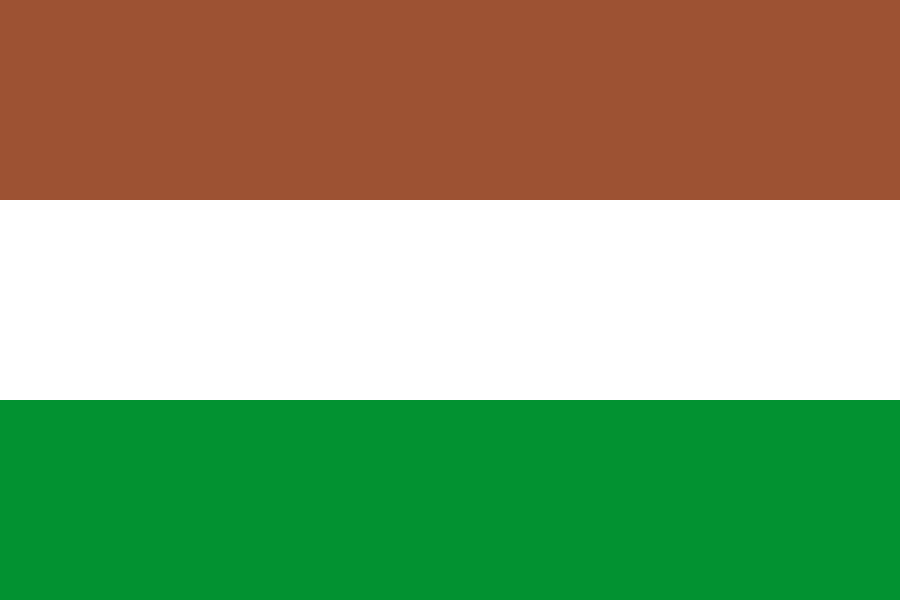
1976–1994
Transkei
The first of apartheid South Africa's nominally independent Black 'homelands' (Bantustans), recognised by no other country.
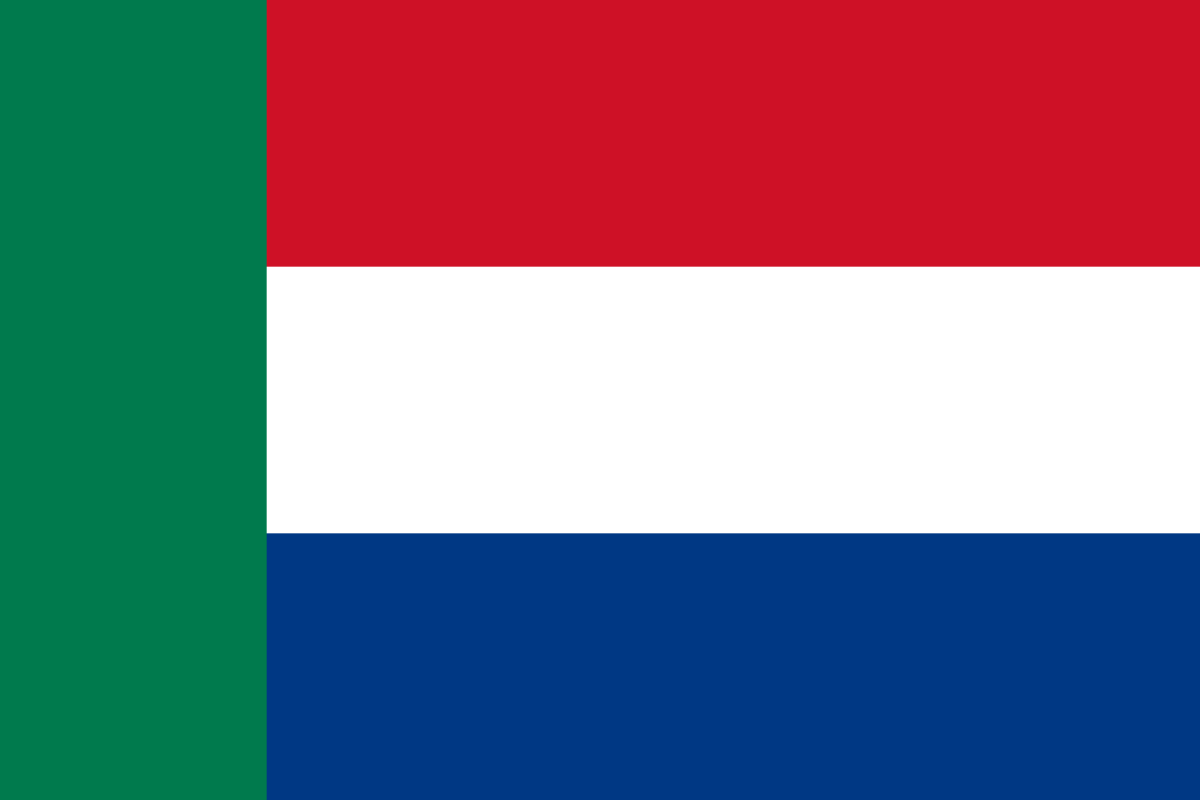
1886–1891
Klein Vrystaat
A minuscule Boer 'Little Free State' that voluntarily joined the South African Republic after a few years.
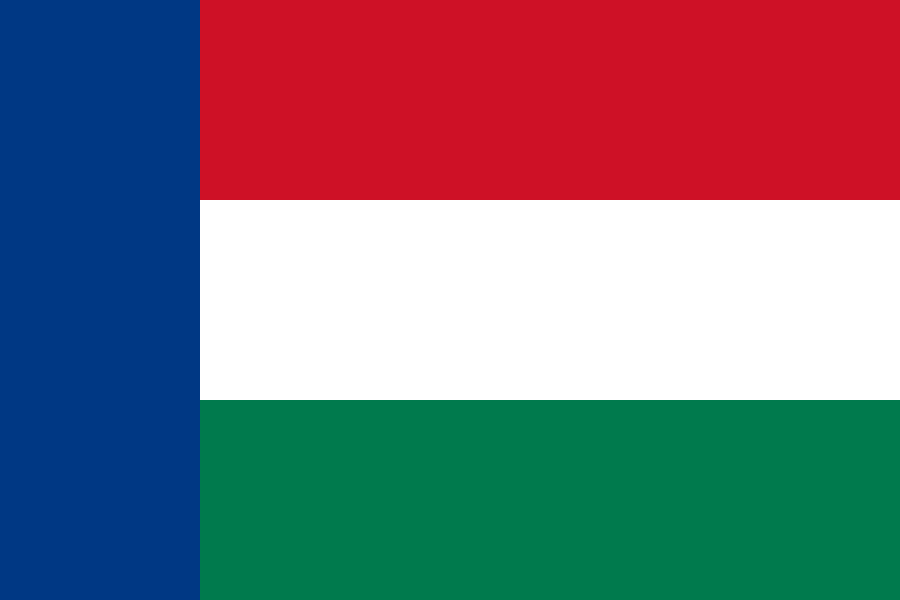
1884–1888
Nieuwe Republiek
A Boer 'New Republic' carved out of Zululand around Vryheid, later joined to the Transvaal.
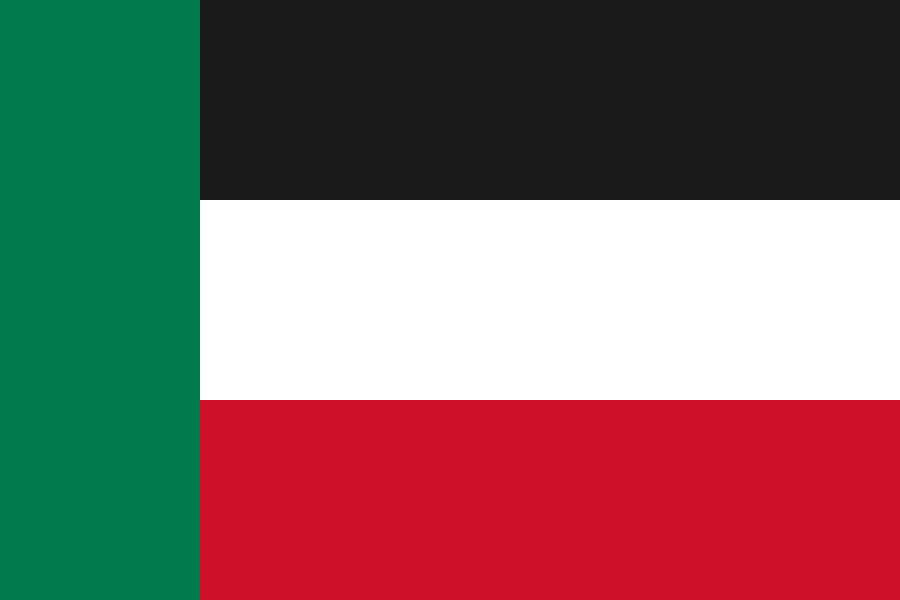
1882–1883
State of Goshen
A tiny Boer freebooter republic on the Transvaal border, later folded into British Bechuanaland.
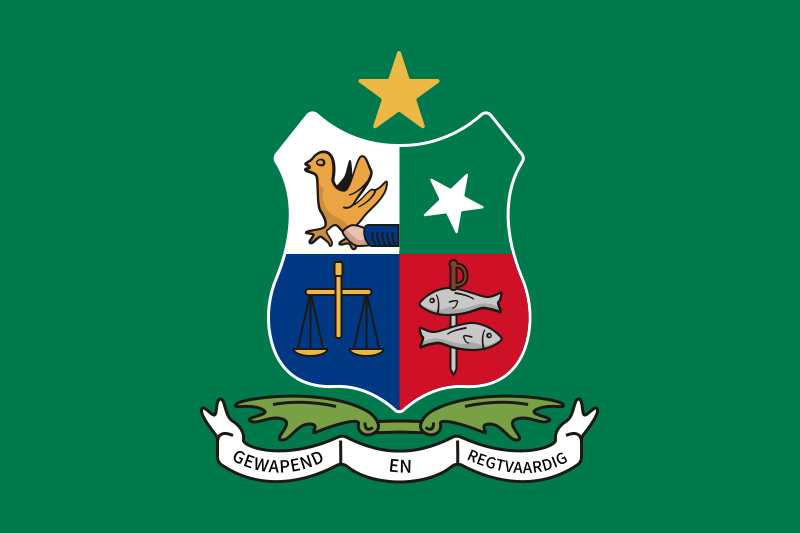
1882–1885
Republic of Stellaland
A small Boer republic proclaimed by frontier farmers, named for a comet, annexed into British Bechuanaland.
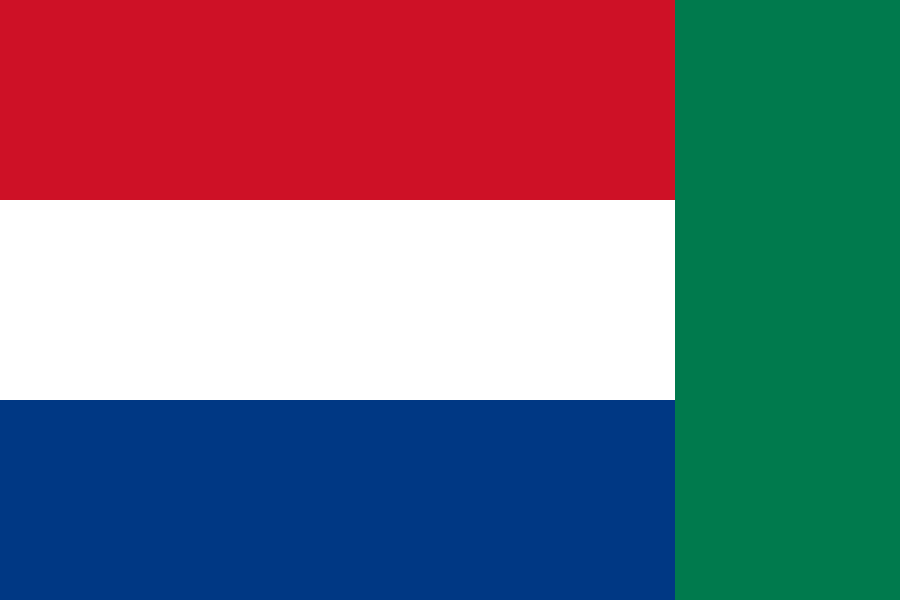
1870–1880
Griqualand West
A Griqua state on the Cape frontier annexed by Britain after diamonds were found at Kimberley.
1861–1879
Griqualand East
A Griqua state in the eastern Cape settled after a great trek over the Drakensberg, later annexed by the Cape Colony.
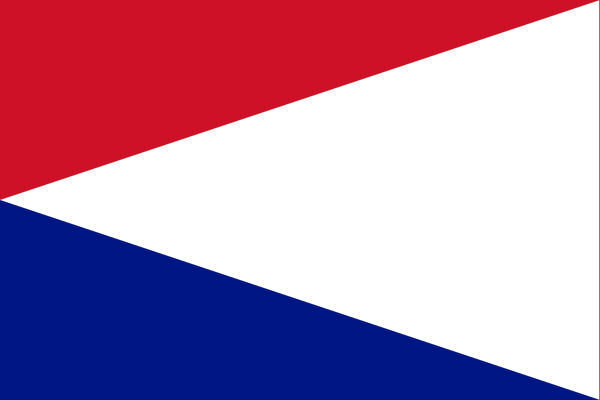
1839–1843
Natalia Republic
A short-lived Boer republic in Natal, founded by Voortrekkers after the defeat of the Zulu, soon annexed by Britain.
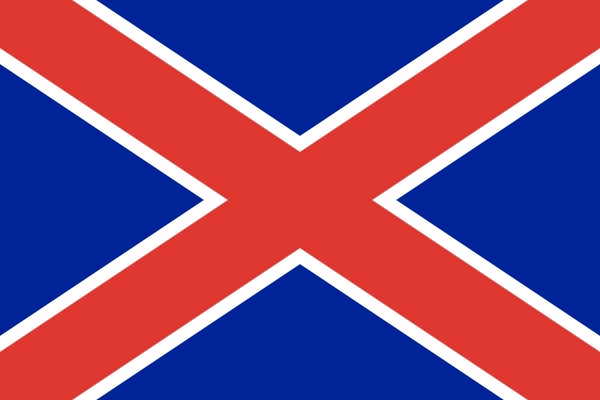
1835–1864
Republic of Zoutpansberg
An isolated Boer republic in the far north of the Transvaal, eventually absorbed into the South African Republic.
Related historical states
Empires, kingdoms and republics that once covered part of South Africa.
1928–1994
Apartheid South Africa
Based on the Dutch Prinsenvlag, its white stripe carries three miniature flags — the Union Flag, the Orange Free State, and the Transvaal Vierkleur — for the territories of the Union.
1854–1902
Orange Free State
This Boer republic placed the Dutch tricolor in the canton over orange-and-white stripes. The flag was later embedded inside the apartheid-era South African flag.
1857–1902
South African Republic (Transvaal)
The Boer 'Vierkleur' added a green vertical stripe to the Dutch red-white-blue. It flew over Paul Kruger's republic through the Anglo-Boer Wars.
1839–1843
Natalia Republic
A short-lived Voortrekker republic in present-day KwaZulu-Natal, annexed by Britain in 1843; its flag was a Dutch-style design with a white hoist triangle.
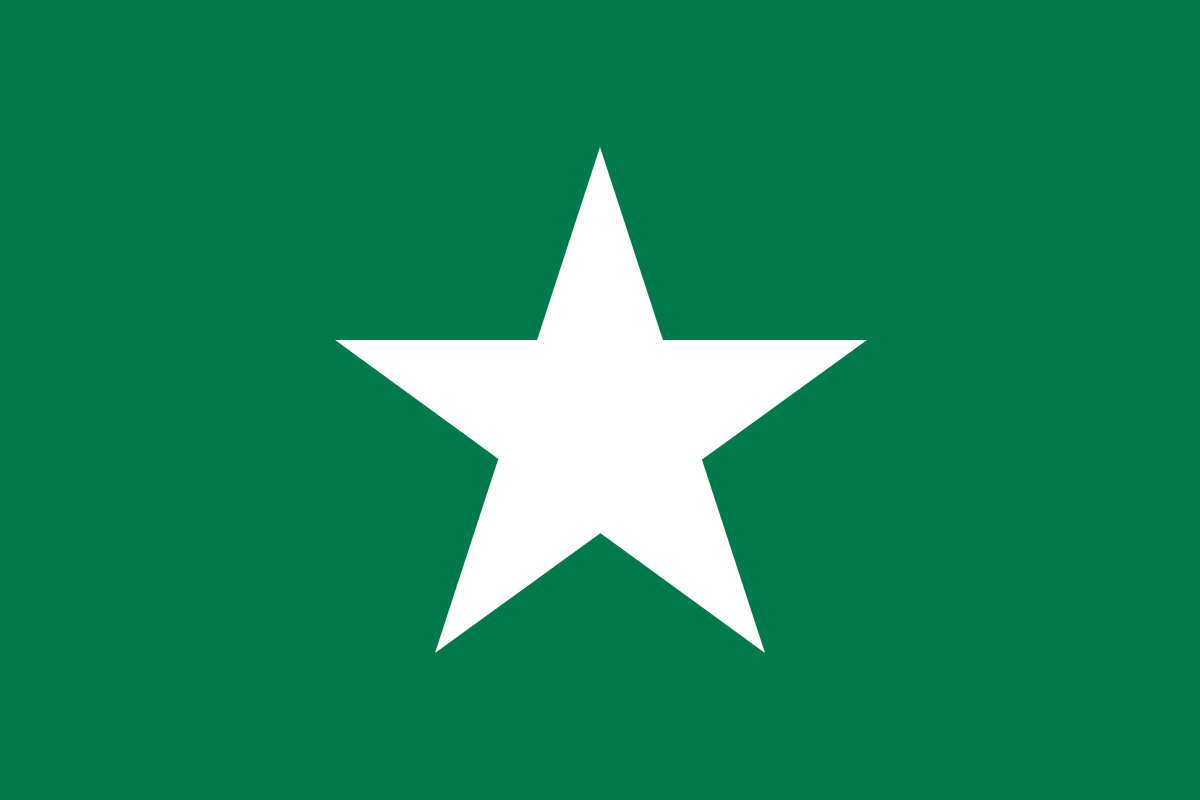
1882–1885
Stellaland
A Boer republic — its name means 'star land' for a comet seen at its founding — with a green flag and a single white star, soon annexed into British Bechuanaland.
1882–1883
State of Goshen
A tiny Boer republic near the Transvaal border, which briefly merged with neighbouring Stellaland before Britain absorbed both.
1884–1888
Nieuwe Republiek
A Boer 'New Republic' around Vryheid, carved out of Zulu land as a reward for backing a claimant to the Zulu throne, before joining the Transvaal.
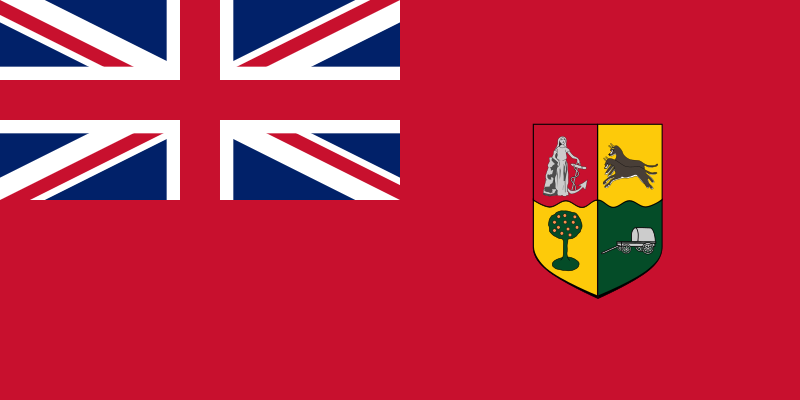
1910–1928
Union of South Africa (1910–1912 ensign)
Before the 1928 'oranje-blanje-blou' was designed, the new Union flew the British Red Ensign defaced with a South African shield — a stopgap that lingered as a de facto national flag for years.
1976–1994
Transkei
The first of the nominally independent apartheid 'homelands', its ochre-white-green flag was recognized by no country but South Africa. Its Xhosa-majority population were stripped of South African citizenship.
1977–1994
Bophuthatswana
A Tswana bantustan scattered across seven non-contiguous enclaves, its orange flag bore a leopard's head. Its casino resort of Sun City became a way for foreigners to sidestep the cultural boycott of South Africa.
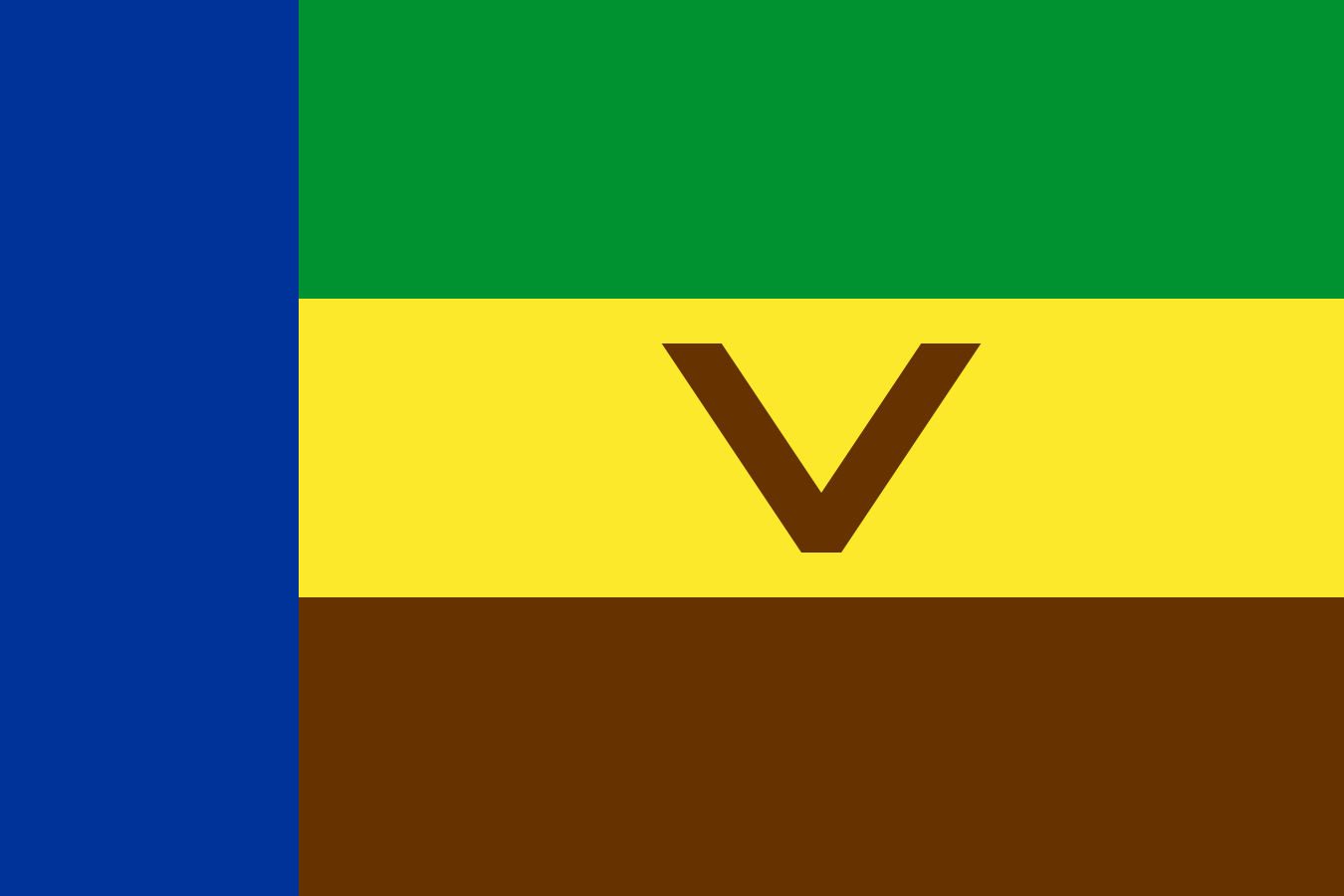
1979–1994
Venda
A small Venda-speaking homeland in the far north, one of the four bantustans that accepted nominal 'independence' from apartheid South Africa before all were reabsorbed in 1994.
1981–1994
Ciskei
A Xhosa homeland on the west bank of the Great Kei River; its flag's diagonal stripe and rising sun did little to disguise a state propped up entirely by Pretoria, the scene of the 1992 Bisho massacre.
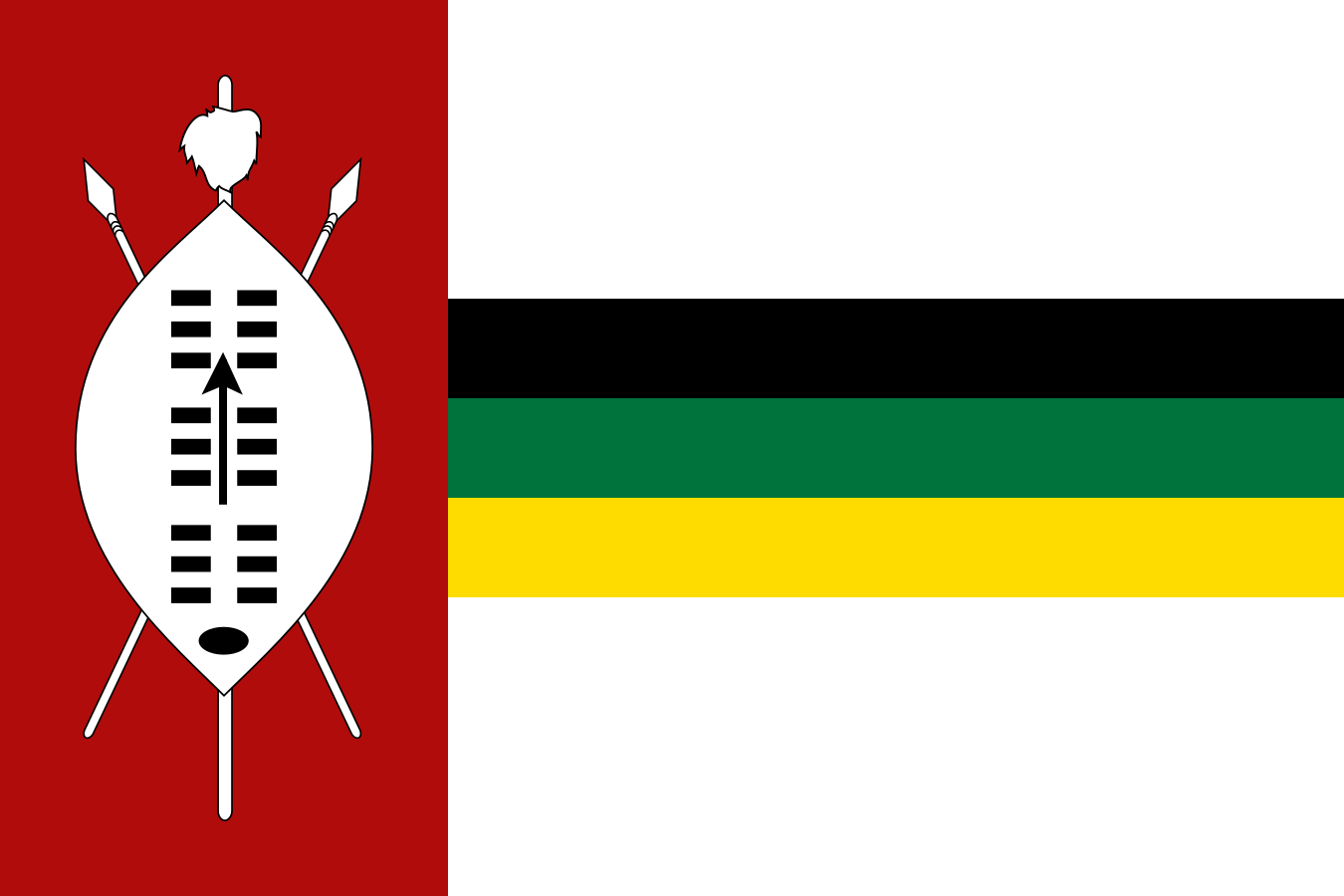
1981–1994
KwaZulu
The Zulu homeland under Chief Mangosuthu Buthelezi never took the 'independence' offered by apartheid, but flew its own lion-and-shield flag as a self-governing territory until 1994.
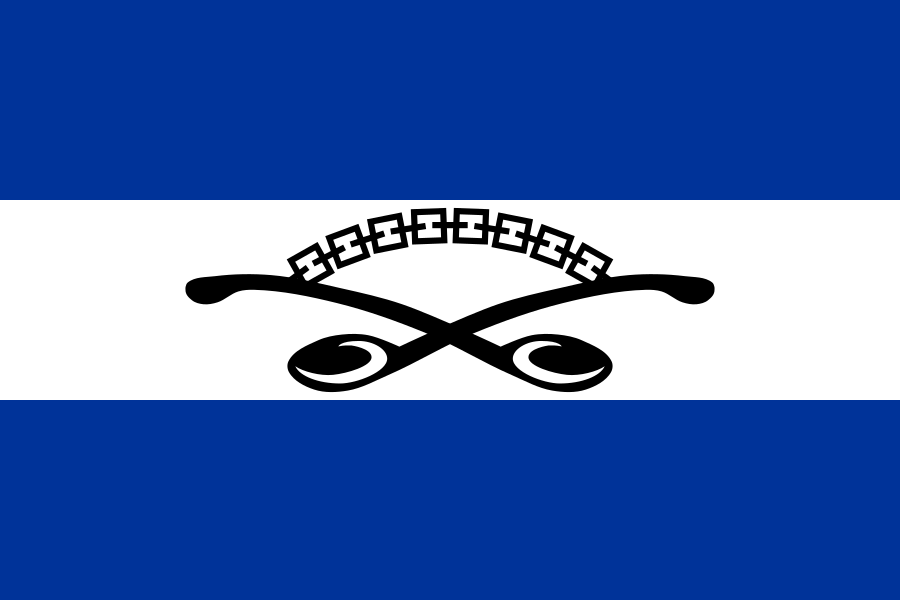
1971–1994
Gazankulu
A Tsonga-Shangaan self-governing homeland in the northeast Transvaal; its green flag carried a yellow elephant tusk, and unlike the TBVC states it declined nominal independence.
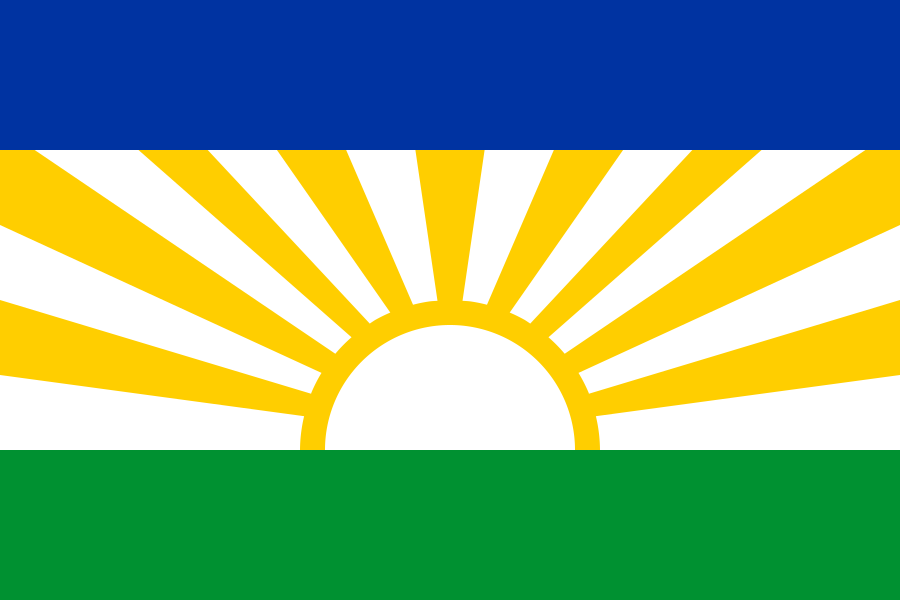
1972–1994
Lebowa
A self-governing homeland for the Northern Sotho (Pedi) people, its green-and-white flag bearing a stylized head of cattle, before South Africa's homelands were dissolved in 1994.
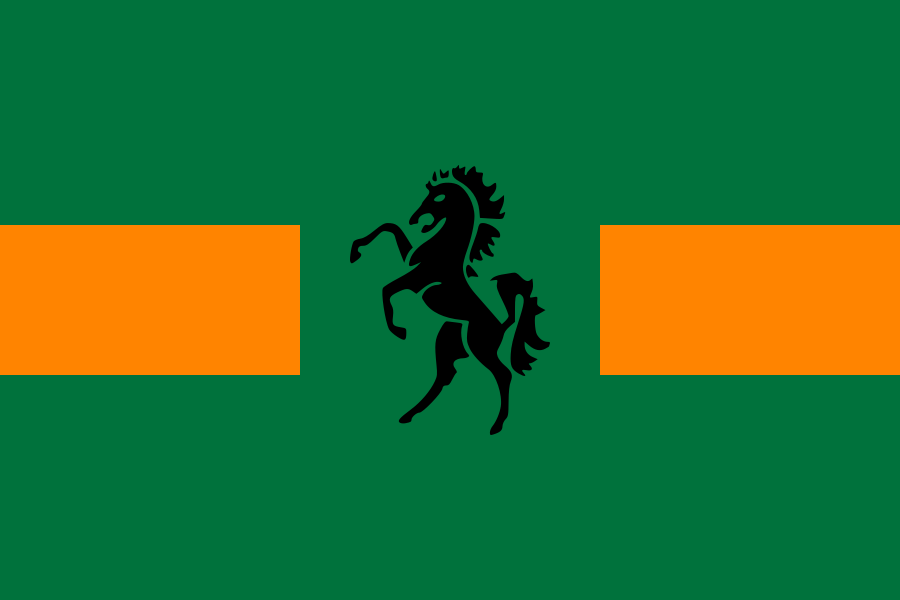
1974–1994
QwaQwa
The smallest of the homelands, a tiny mountainous enclave for Southern Sotho speakers wedged against Lesotho; its name means 'whiter than white' for the sandstone cliffs above it.
Regional flags of South Africa
The 1 states, provinces and regions of South Africa with their own flags.

Mpumalanga
Neighbouring countries
South Africa shares a land border with 6 countries: Botswana, Eswatini, Lesotho, Mozambique, Namibia and Zimbabwe.
Other flags in green, yellow, red, blue, white and black
One other national flag uses the same main colours as South Africa's.
Play Globalio and learn South Africa's flag
 Zimbabwe
 Zambia
 Botswana
 Eswatini
 Lesotho
 Mozambique
 Namibia
 South Sudan