Americas
Flag of Guyana
Guyana is the only English-speaking country in South America, sharing borders with Venezuela, Brazil, and Suriname, and was formerly British Guiana before independence in 1966. More than 80% of its territory is covered by tropical rainforest, among the most intact in South America. The discovery of major offshore oil reserves in 2015 has made Guyana one of the world's fastest-growing economies.

- CapitalGeorgetown
- RegionAmericas
- Current flag since1966
- Main coloursGreen, Yellow, White, Red, Black
- Populationabout 800,000
- Areaabout 215,000 km²
- Flags in history3
Population and area are rounded.
What the flag of Guyana means
Known as the Golden Arrowhead, the flag uses green for farming and forests, white for rivers and water, gold for mineral wealth and the nation's future, black for endurance, and red for the zeal of nation-building. It was designed by the American vexillologist Whitney Smith and adopted at independence in 1966.
More about the flag
Guyana became independent from Britain on 26 May 1966. Its flag was designed by the American flag scholar Whitney Smith, who coined the word vexillology; the original design had no black and white borders, which were added by the College of Arms in London. Guyana is the only country in South America with English as its official language.
How to recognise it
Green with a white-edged golden arrowhead, and a black-edged red triangle at the hoist (the Golden Arrowhead).
Did you know?
Guyana is the only English-speaking country in South America.
Easily confused with
Guyana's flag is often mixed up with these. Learn to tell them apart:
Flag history of Guyana
Every flag that has flown over Guyana, from today back through time.
1966–present
Cooperative Republic of Guyana
Guyana's flag — nicknamed "The Golden Arrowhead" — was designed by American vexillologist Whitney Smith and adopted at independence from Britain in 1966. A gold arrowhead points from the hoist towards the fly, fringed in white; beneath it a red triangle fringed in black. Green represents the forests; gold the mineral wealth; white the rivers; black the endurance of the people; red the zeal for nation-building. It remains one of the most distinctive flag designs in the Americas.
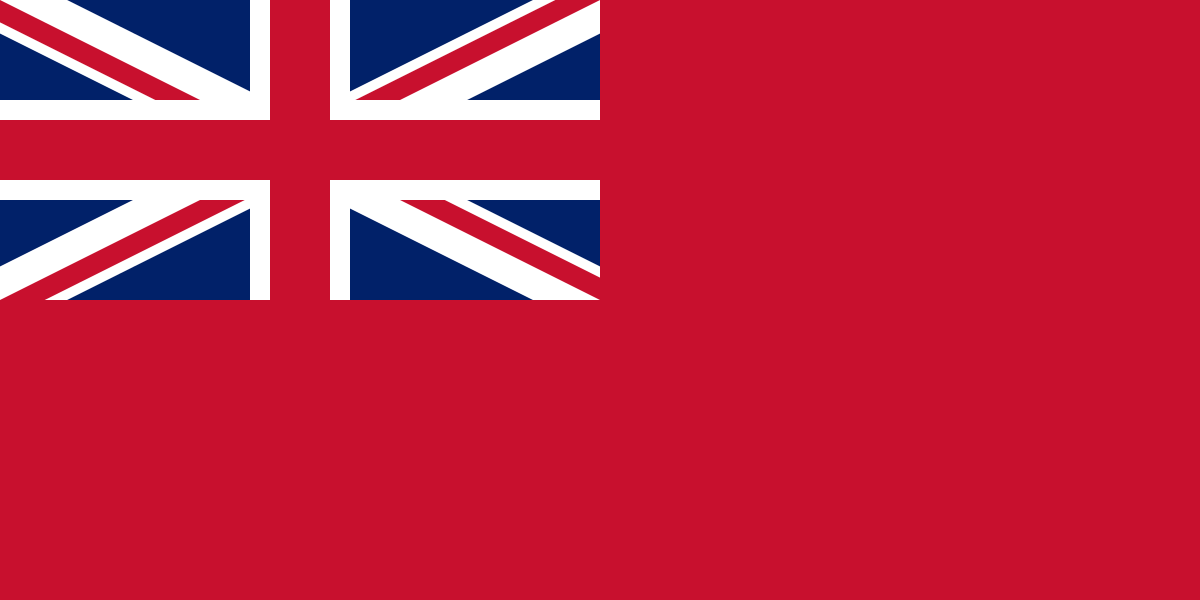
1814–1966
British Guiana (colonial era)
The Guiana coast was colonised by the Dutch in the 17th century before Britain took control during the Napoleonic Wars. British Guiana (as it was known) was the site of one of the deadliest incidents in American religious history — the 1978 Jonestown mass death of over 900 members of the Peoples Temple cult. Independence came in 1966 under Forbes Burnham's People's Progressive Party, and Guyana has since aligned more with South America than the Caribbean.

1667–1814
Dutch Guiana
Like neighbouring Suriname, the colonies of Essequibo, Demerara and Berbice that became Guyana were Dutch — plantation economies worked by enslaved Africans under the flag of the Netherlands. Britain seized them during the Napoleonic Wars and formally took them in 1814, merging them into British Guiana in 1831. The Dutch legacy survives in place names and the sea-wall engineering that holds back the Atlantic from the coast.
Regional flags of Guyana
The 1 states, provinces and regions of Guyana with their own flags.
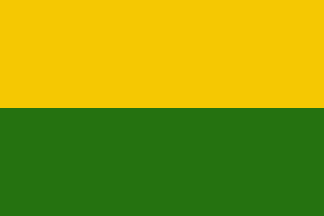
Barima-Waini
Neighbouring countries
Guyana shares a land border with 3 countries: Brazil, Suriname and Venezuela.
Other flags in green, yellow, white, red and black
4 other national flags use the same main colours as Guyana's.
Play Globalio and learn Guyana's flag
 Belize
 Brazil
 Suriname
 Venezuela
 Dominica
 Mozambique
 Saint Kitts and Nevis
 Zimbabwe