Americas
Flag of Saint Kitts and Nevis
Saint Kitts and Nevis is the smallest sovereign state in the Western Hemisphere by both area and population, a twin-island Caribbean nation in the Lesser Antilles. Saint Kitts was Britain's first Caribbean colony, established in 1623, and served as the base for subsequent colonisation of other islands. The island gained independence in 1983 and Brimstone Hill Fortress — a UNESCO World Heritage Site — stands as an impressive reminder of the colonial era.

- CapitalBasseterre
- RegionAmericas
- Current flag since1983
- Main coloursGreen, Yellow, Black, Red, White
- Populationabout 48,000
- Areaabout 260 km²
- GeographyIsland nation
- Flags in history3
Population and area are rounded.
What the flag of Saint Kitts and Nevis means
Green stands for the fertile land, yellow for sunshine, black for the African heritage of the people, and red for the struggle from slavery to independence. The two white stars stand for hope and liberty. The flag was chosen in a national competition and adopted at independence in 1983.
More about the flag
Saint Kitts and Nevis, the smallest sovereign state in the Western Hemisphere, became independent from Britain on 19 September 1983. The flag was chosen from entries in a national competition and was designed by Edris Lewis. The capital, Basseterre, is on Saint Kitts, while Nevis has the right under the constitution to vote on leaving the federation.
How to recognise it
Diagonal green-black-red with two white stars on the black stripe.
Did you know?
Saint Kitts and Nevis is the smallest sovereign state in the Western Hemisphere.
Flag history of Saint Kitts and Nevis
Every flag that has flown over Saint Kitts and Nevis, from today back through time.
1983–present
Saint Kitts and Nevis (independence)
Saint Kitts and Nevis gained independence from Britain on September 19, 1983 — the last British Caribbean territory on the mainland of the Lesser Antilles to do so. The flag's diagonal black stripe with two white stars on green and red was designed by Edrice Lewis. The stars represent the two islands; the green represents fertility; the red recalls the African heritage and the struggle for freedom; black is for the African heritage; yellow for the sunshine.
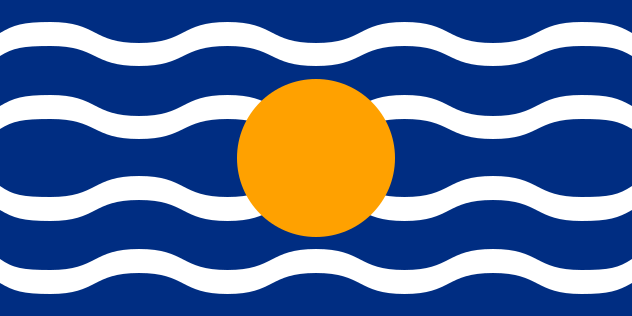
1958–1962
West Indies Federation
Saint Kitts–Nevis–Anguilla was part of the West Indies Federation from 1958 to 1962. After it collapsed, the three-island colony became an associated state in 1967 — prompting Anguilla to rebel and break away rather than be ruled from Saint Kitts. The federation's flag of waves and sun symbolised a unity that, even at this small scale, proved difficult to hold together.
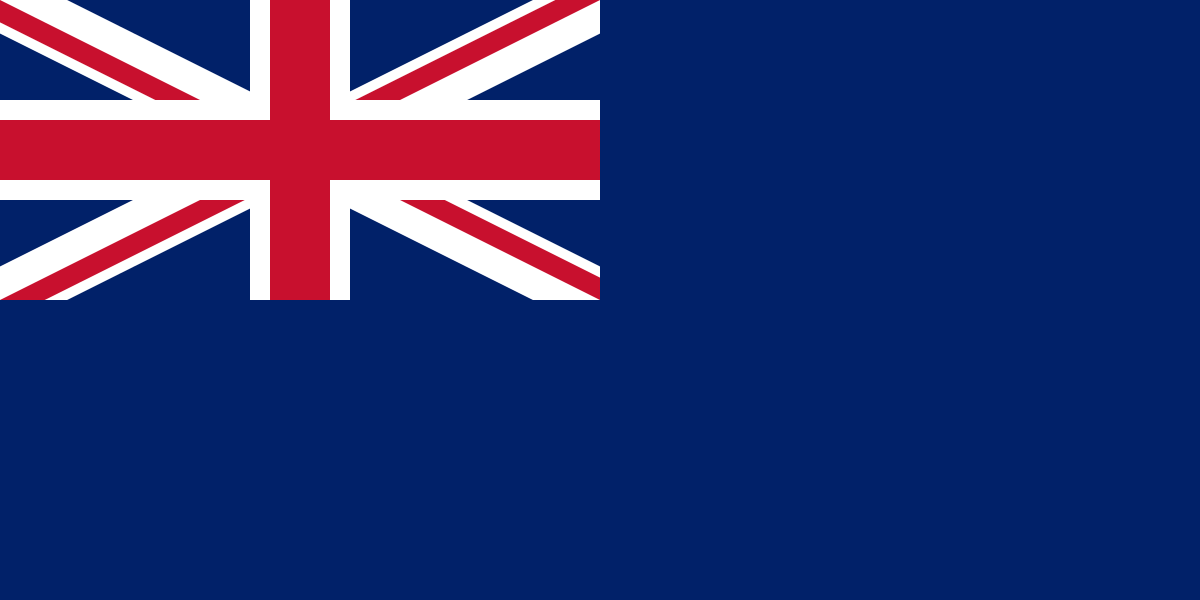
1623–1958
British Leeward Islands (colonial era)
Saint Kitts was Britain's first Caribbean colony, settled in 1623, and was used as the launching point for the colonisation of surrounding islands — earning it the nickname "The Mother Colony of the West Indies." French and English settlers initially shared the island before the English prevailed. As part of the British Leeward Islands, Saint Kitts flew the defaced Blue Ensign. Brimstone Hill Fortress, a UNESCO site, dates from this colonial era.
Regional flags of Saint Kitts and Nevis
The 1 states, provinces and regions of Saint Kitts and Nevis with their own flags.
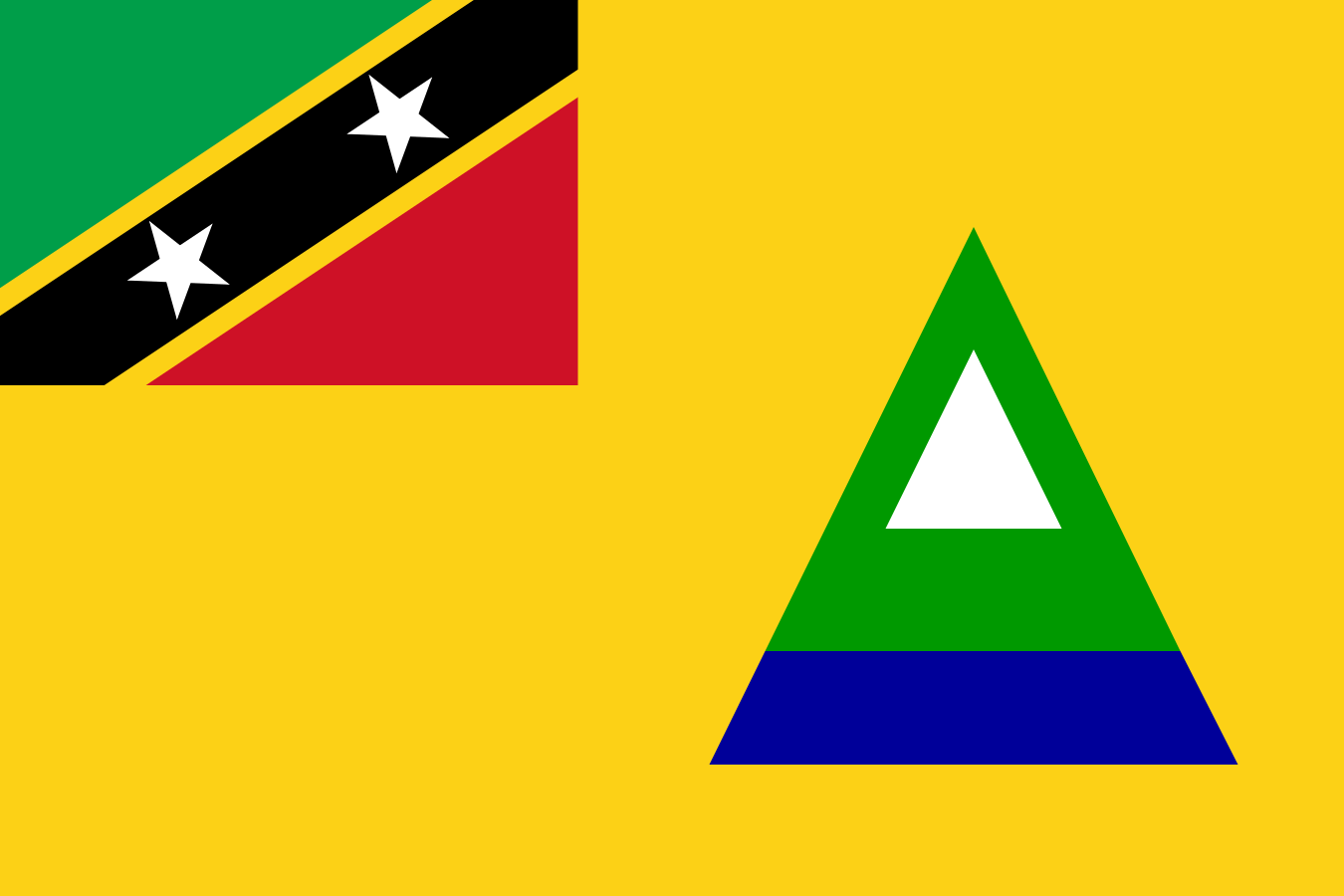
Nevis
Other flags in green, yellow, black, red and white
4 other national flags use the same main colours as Saint Kitts and Nevis'.
Play Globalio and learn Saint Kitts and Nevis' flag
 Dominica
 Guyana
 Mozambique
 Zimbabwe