Americas
Flag of Dominica
Dominica is known as the 'Nature Isle of the Caribbean' for its lush, volcanic landscape, hot springs, and some of the last well-preserved primary rainforest in the Eastern Caribbean. Not to be confused with the Dominican Republic, Dominica is home to the Kalinago people — the last pre-Columbian indigenous community in the Eastern Caribbean — who maintain their own territory on the island's eastern coast. The island has a growing eco-tourism industry.

- CapitalRoseau
- RegionAmericas
- Current flag since1978
- Main coloursGreen, Yellow, Black, White, Red
- Populationabout 73,000
- Areaabout 750 km²
- GeographyIsland nation
- Flags in history3
Population and area are rounded.
What the flag of Dominica means
The Sisserou parrot, found only on Dominica, stands for flight towards higher goals, and the ten green stars around it for the island's ten parishes. The cross of yellow, black and white represents Christianity: yellow for the soil and the island's first peoples, black for the African heritage of most Dominicans, and white for its clear rivers and waterfalls. Green stands for the forests. Adopted in 1978, it is one of only two national flags that use purple.
More about the flag
Dominica, in the eastern Caribbean, became independent from Britain on 3 November 1978. The Sisserou parrot, also called the imperial amazon, lives only in the island's mountain rainforest and is endangered. Dominica's flag has been altered slightly several times, including the colour of the parrot's eye and the outlines of the stars. The island is home to the Kalinago, the descendants of its first inhabitants.
How to recognise it
Green with a cross of yellow-black-white and a purple Sisserou parrot in the centre.
Did you know?
Dominica's flag is one of only two national flags with purple in it (on the parrot). The other is Nicaragua's, in the rainbow on its coat of arms.
Flag history of Dominica
Every flag that has flown over Dominica, from today back through time.
1978–present
Commonwealth of Dominica (independence)
Dominica's flag is one of the world's most distinctive — a green field with a cross of yellow, black, and white stripes, and at the centre a red circle bearing the rare Sisserou parrot (the imperial Amazon, found only in Dominica). The flag was adopted at independence from Britain in 1978 and is one of only two national flags to prominently feature purple (in the parrot). It was modified in 1981 and 1988 before reaching its current form.
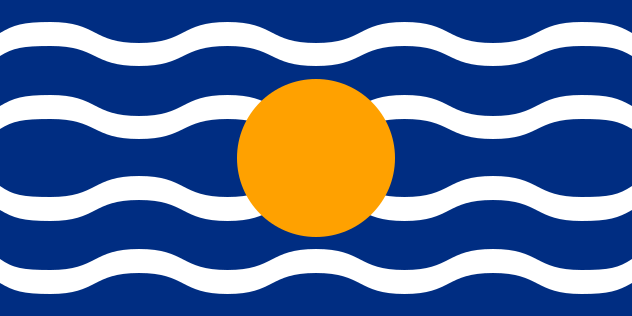
1958–1962
West Indies Federation
Dominica was one of the ten territories in the West Indies Federation (1958–1962), the failed attempt to forge a single independent Caribbean nation from Britain's colonies. Its blue flag with white waves and an orange sun represented the unity of the islands and the sea that both joined and separated them. When the federation dissolved, Dominica remained a British associated state until full independence in 1978.
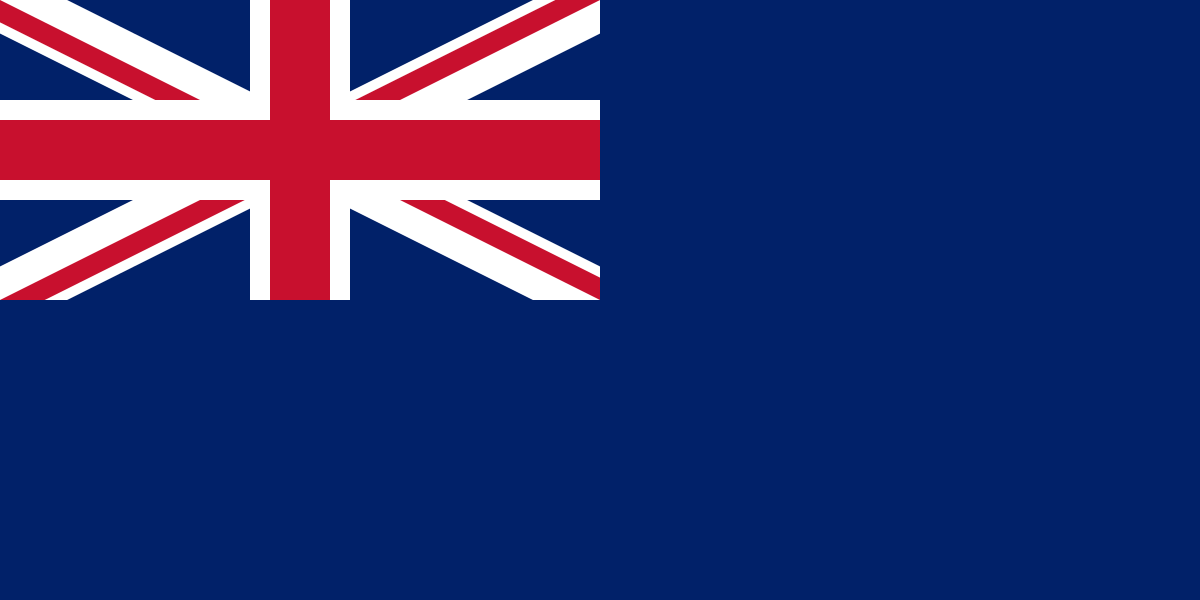
1763–1958
British Windward Islands (colonial era)
France and Britain contested Dominica for over a century — the island's rugged interior allowed the indigenous Kalinago (Carib) people and escaped enslaved Africans to resist colonisation longer than almost anywhere else in the Caribbean. Britain secured it in 1763 and governed it within the British Windward Islands colony, flying the defaced Blue Ensign. Dominica still has the Caribbean's only surviving pre-Columbian Kalinago population.
Other flags in green, yellow, black, white and red
4 other national flags use the same main colours as Dominica's.
Play Globalio and learn Dominica's flag
 Guyana
 Mozambique
 Saint Kitts and Nevis
 Zimbabwe