Africa
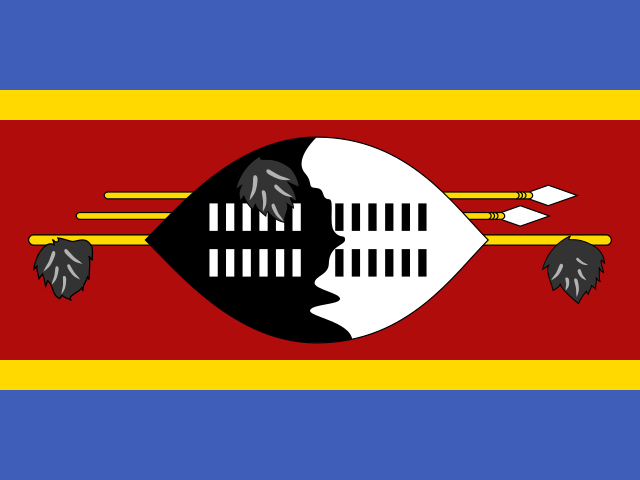
Flag of Eswatini
Eswatini (formerly Swaziland, renamed in 2018) is a small landlocked kingdom in Southern Africa almost entirely surrounded by South Africa. It is one of the world's last remaining absolute monarchies, ruled by King Mswati III. The country is known for its colourful cultural traditions, including the annual Umhlanga (Reed Dance) ceremony and the Incwala first fruits festival.
- CapitalMbabane
- RegionAfrica
- Current flag since1968
- Main coloursBlue, Yellow, Red, Black, White
- Populationabout 1.2 million
- Areaabout 17,000 km²
- GeographyLandlocked
- Flags in history2
Population and area are rounded.
What the flag of Eswatini means
Blue stands for peace, yellow for the country's resources, and crimson for past battles. The centre shows a Nguni shield of black and white ox-hide with two spears and a staff decorated with tassels of widowbird feathers, symbols of the monarchy. The flag is based on a banner given to the Swazi Pioneer Corps in 1941 and was adopted in 1968.
More about the flag
Eswatini became independent from Britain on 6 September 1968, and the flag was adopted a month later. The shield, spears and staff are those of the Emasotsha regiment. In 2018 King Mswati III changed the country's name from Swaziland to Eswatini, but the flag stayed the same. Eswatini is one of the last absolute monarchies in the world.
How to recognise it
Horizontal blue-yellow-red-yellow-blue with a black-and-white Swazi shield and spears in the centre.
Did you know?
Eswatini (formerly Swaziland) is one of the last absolute monarchies in the world.
Flag history of Eswatini
Every flag that has flown over Eswatini, from today back through time.
1968–present
Flag of Eswatini
Adopted at independence in 1968, based on a military banner King Sobhuza II gave the Swazi Pioneer Corps in 1941, featuring a black-and-white Nguni shield with two spears and a fighting staff. The country renamed itself Eswatini in 2018, but the flag was unchanged.
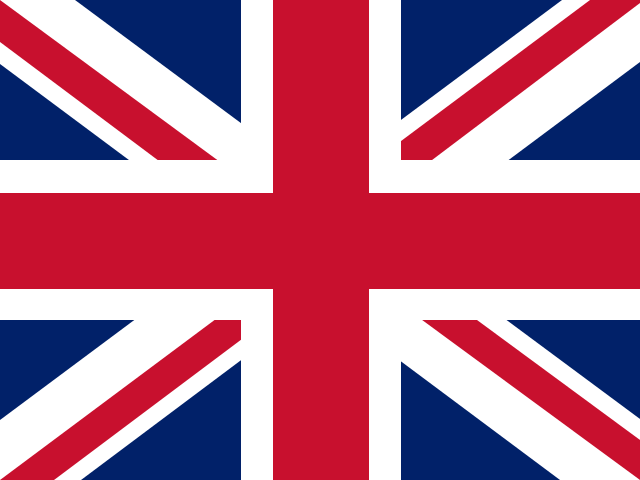
1903–1968
Swaziland Protectorate
Swaziland was a British protectorate from 1903 until independence in 1968, under the Union Jack. The Swazi monarchy survived the colonial era intact, and King Sobhuza II — who reigned for nearly 83 years, one of the longest in recorded history — led the nation to independence with its traditional kingship fully restored.
Neighbouring countries
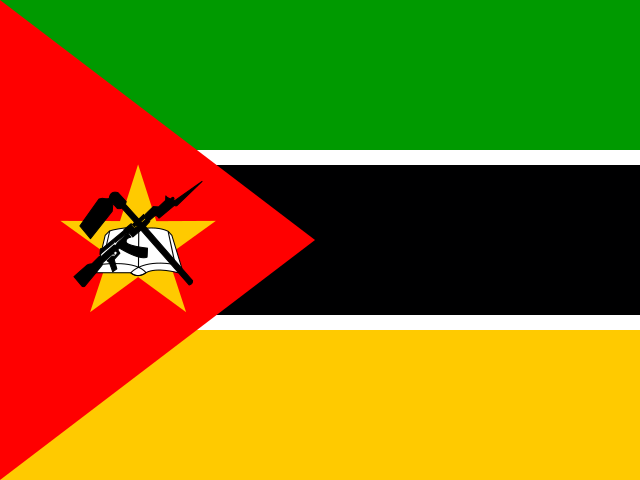
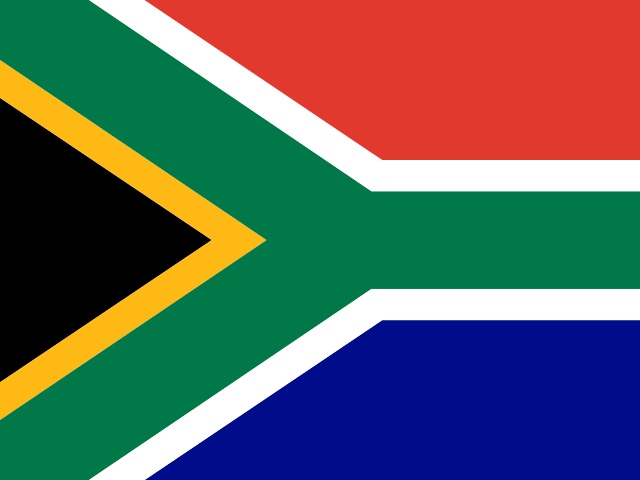
Eswatini shares a land border with 2 countries: Mozambique and South Africa.
Other flags in blue, yellow, red, black and white
One other national flag uses the same main colours as Eswatini's.
Play Globalio and learn Eswatini's flag
 Mozambique
 South Africa
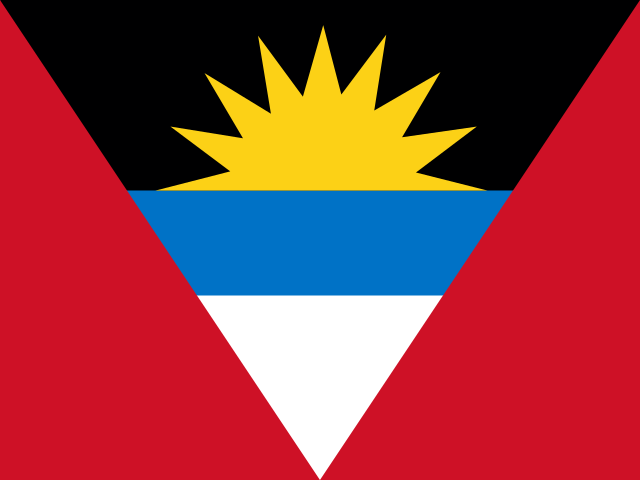 Antigua and Barbuda